Saint Paul Minnesota Requests for Admissions
Description



Form popularity
FAQ
Yes, under certain conditions, you can be served by mail in Minnesota. This method ensures that legal documents reach individuals who may be difficult to serve in person. For those engaged in legal cases involving Saint Paul Minnesota Requests for Admissions, understanding service options is crucial to ensure that all parties receive necessary information promptly.
Rule 37 of the Minnesota Rules of Civil Procedure deals with failure to comply with discovery requests, including requests for admissions. It provides penalties for parties who do not respond adequately to these requests, ensuring the discovery process remains fair and efficient. If you are facing challenges concerning compliance in Saint Paul Minnesota Requests for Admissions, seeking guidance can be critical.
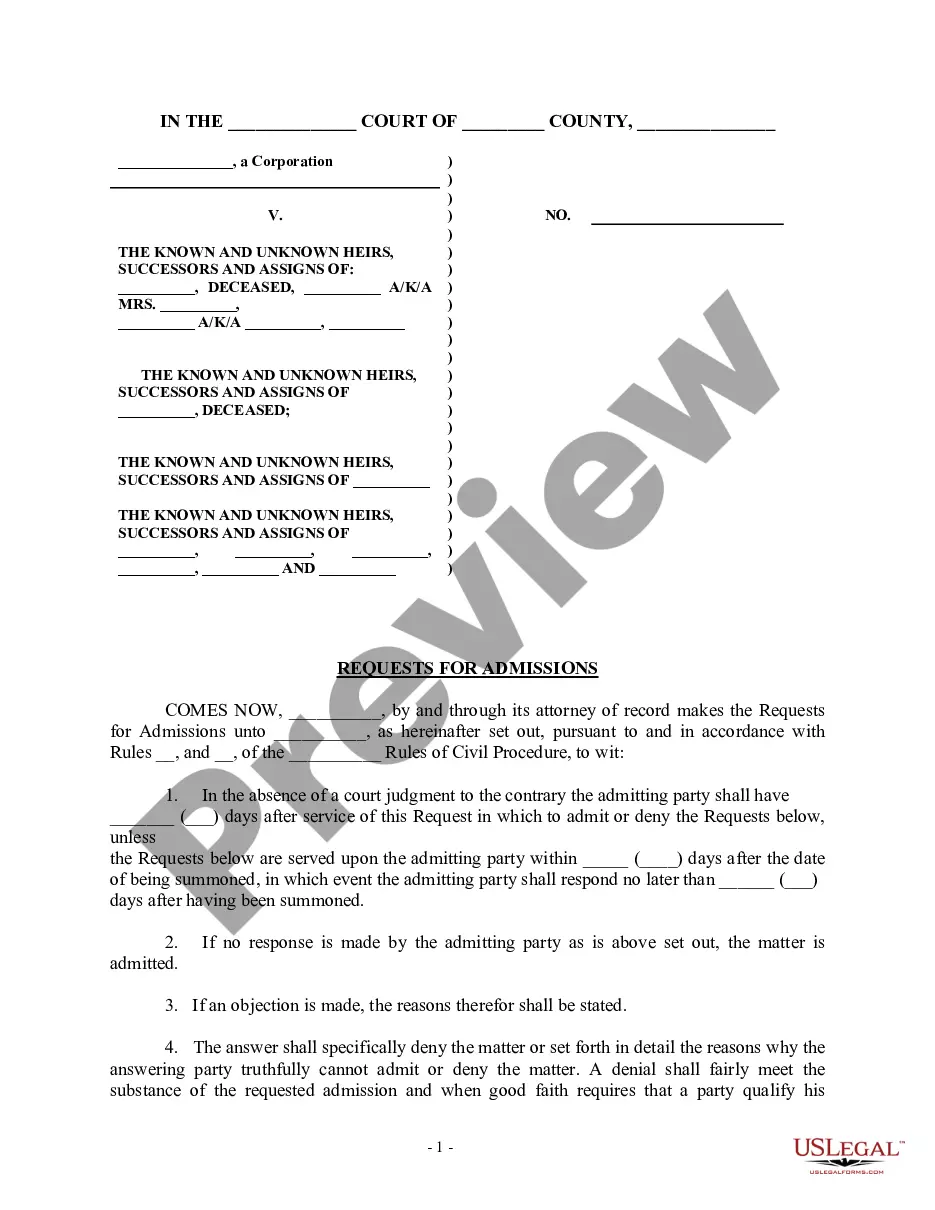
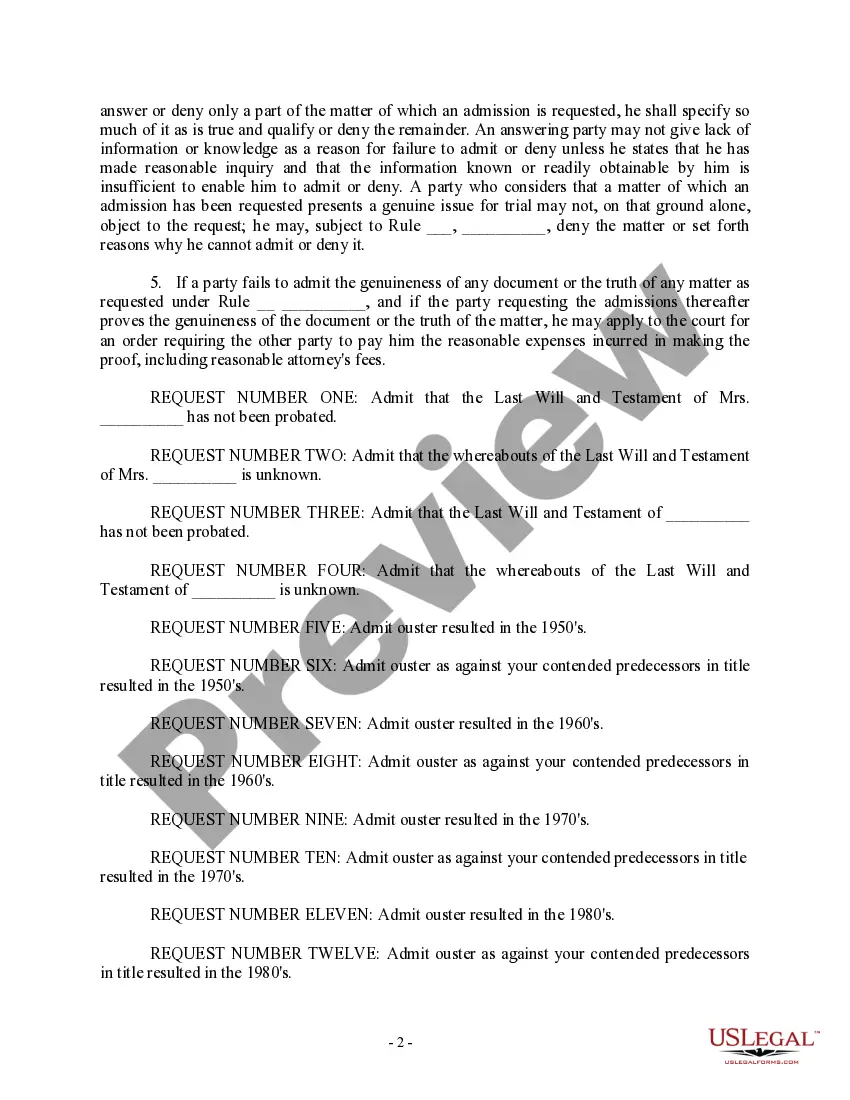
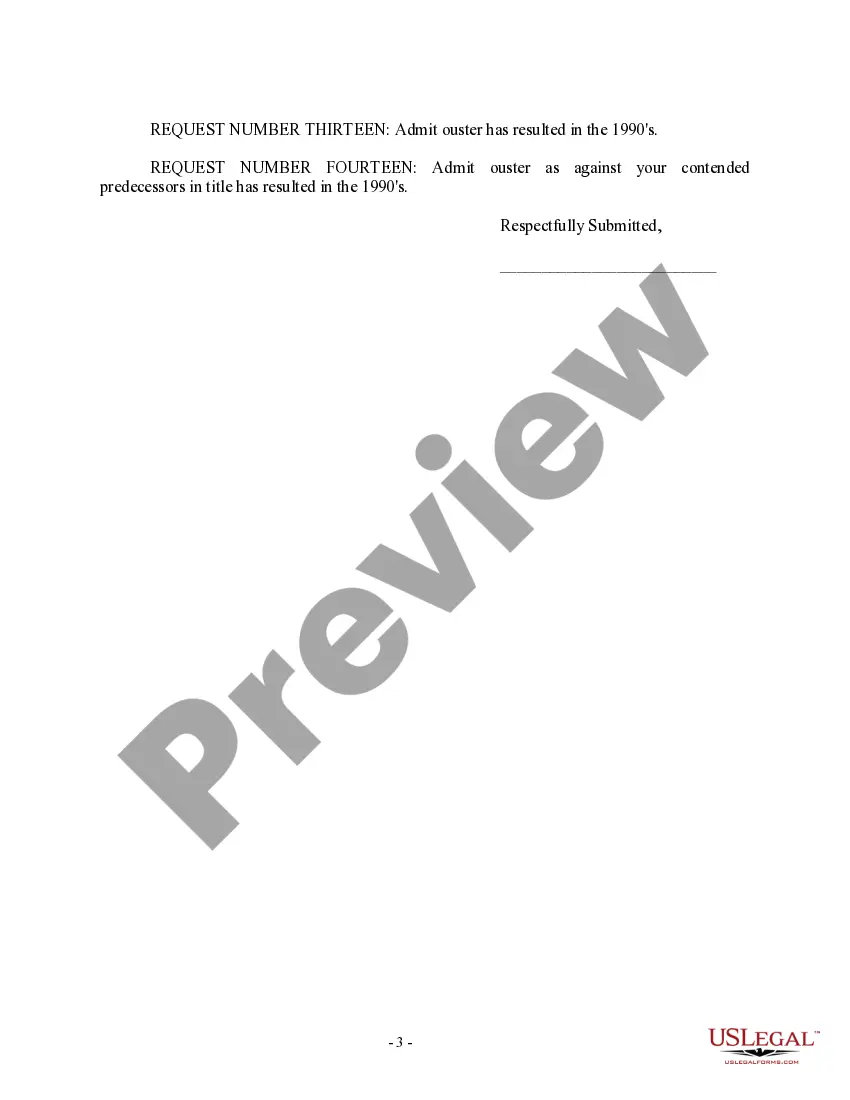
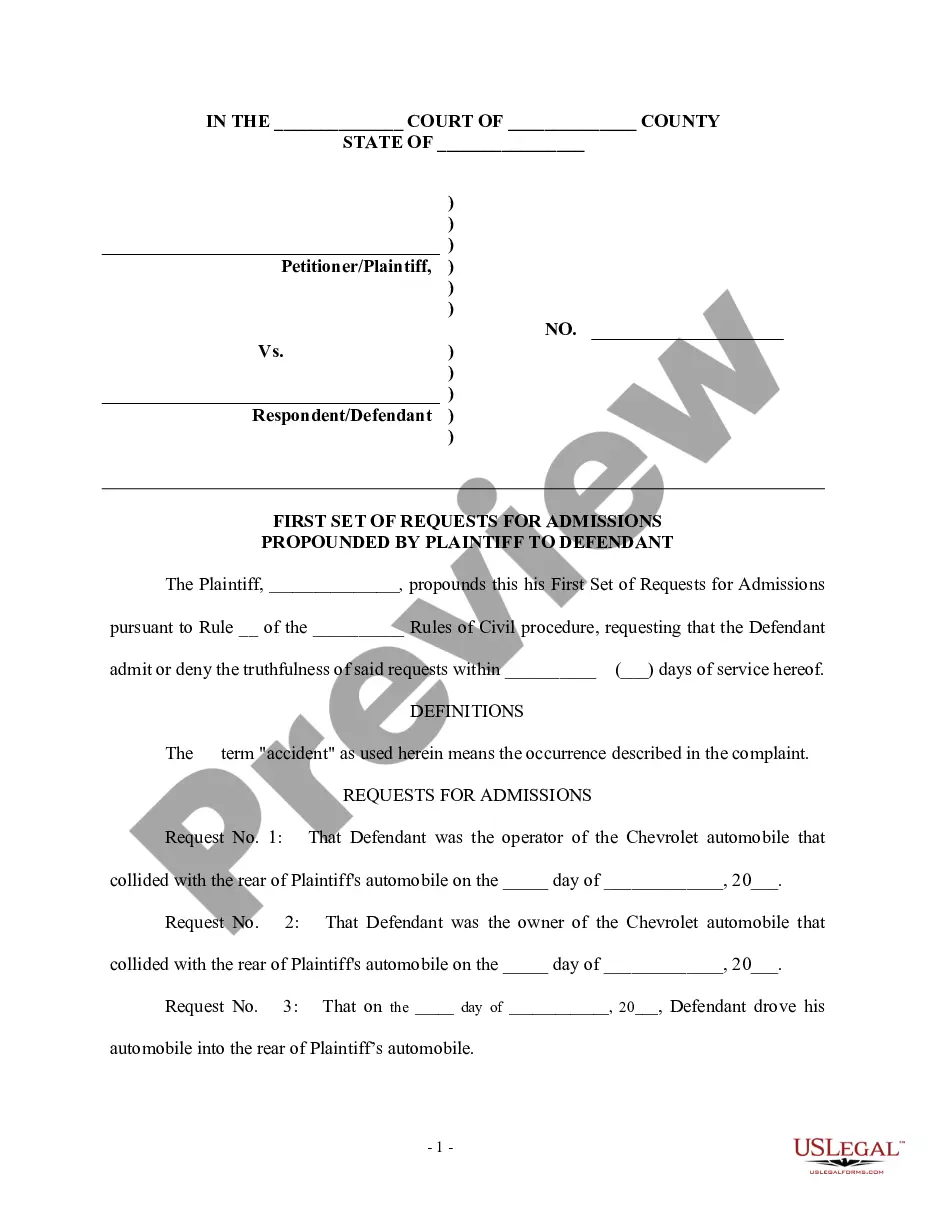
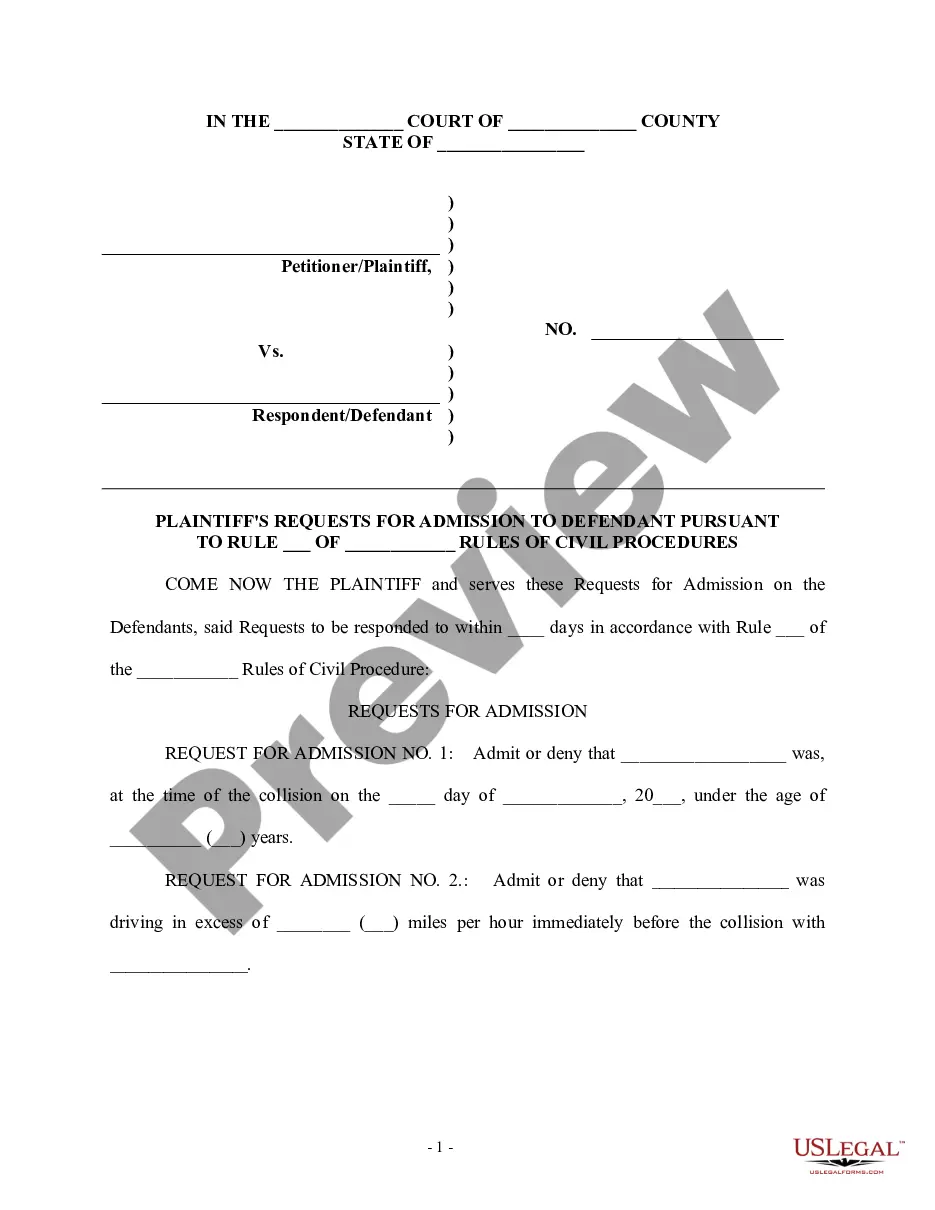
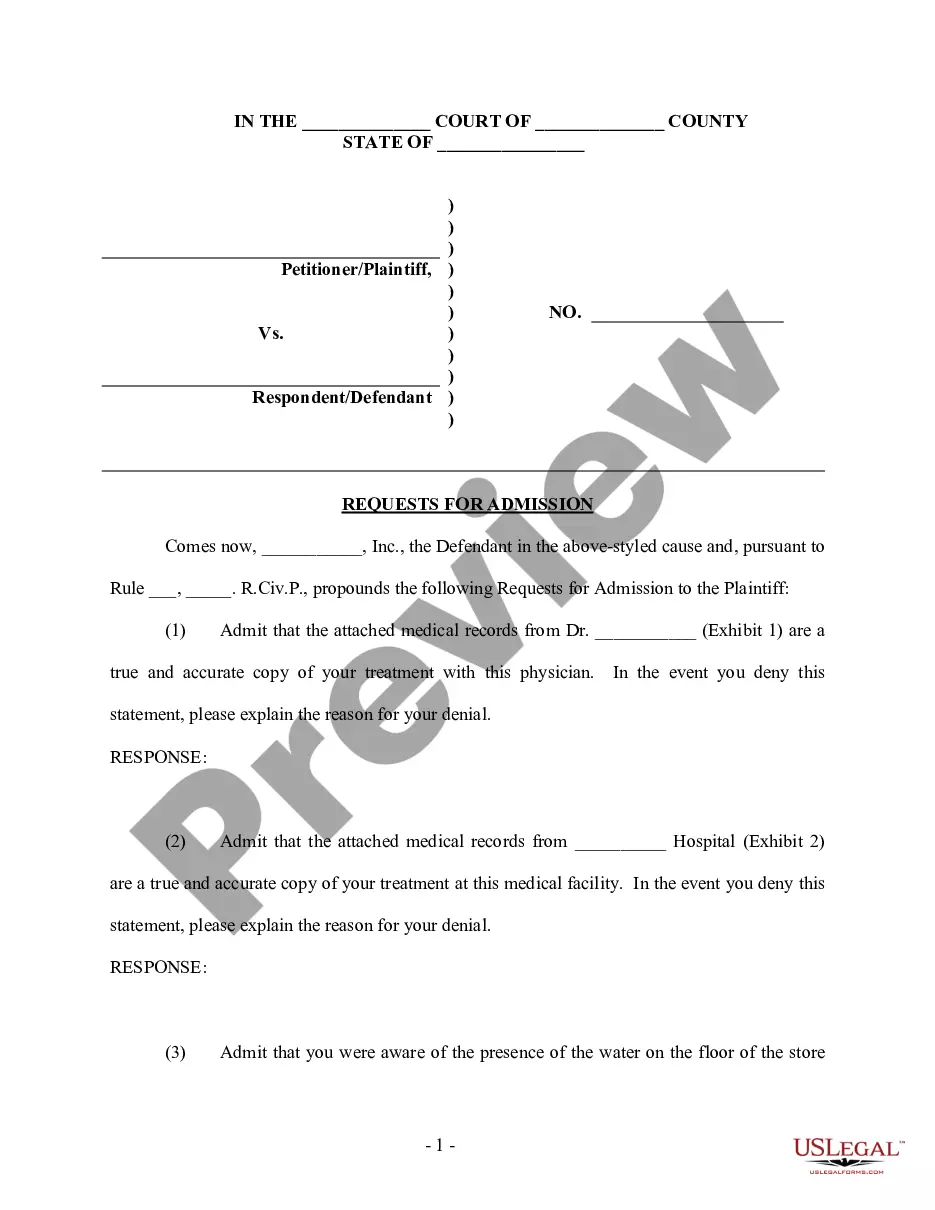
A request for admission is a legal tool that allows one party to request the other to admit or deny the truth of certain statements. This process serves to simplify trials by eliminating the need to litigate facts that both parties accept as true. Thus, in the context of Saint Paul Minnesota Requests for Admissions, using this tool can lead to a smoother and more focused trial experience.
The rule 36 for requests for admission, found in various states' procedural codes, permits a party to request the other party to admit or deny specific statements. This tool is essential in litigation as it reduces the need to prove uncontested facts at trial. For those utilizing Saint Paul Minnesota Requests for Admissions, understanding rule 36 can make your legal process more efficient.
The South Carolina Rule 36 also addresses requests for admissions, enabling one party to ask the other to confirm certain facts. This rule is designed to facilitate quicker resolution of disputes by helping parties acknowledge agreed facts. If you are navigating legal matters in Saint Paul, Minnesota, understanding similar requests can aid in your case's progress.
The Massachusetts Rule 36 relates to requests for admissions, allowing parties in a legal case to request the other party to admit the truth of specific statements. This process can streamline litigation by narrowing down the issues that need to be proven in court. Understanding how these requests work can benefit those dealing with Saint Paul Minnesota Requests for Admissions, as it enhances clarity and efficiency in legal proceedings.
Rule 33 in the Minnesota Rules of Civil Procedure outlines the rules governing Requests for Admissions. It specifies the format and requirements for making such requests, ensuring clarity and efficiency in the legal process. This rule is essential for attorneys and parties involved in litigation as it helps shape the course of the case. For those looking to navigate the legal landscape in Saint Paul, Minnesota Requests for Admissions, leveraging Rule 33 is crucial for effective legal practice.
Rule 33 means that parties in a lawsuit can simplify their cases by formally asking the opposing party to admit certain facts. This process helps both sides understand which facts are agreed upon, curtailing unnecessary disputes. By using Rule 33 effectively, parties in Saint Paul, Minnesota Requests for Admissions can minimize trial time and streamline the legal process. This clear approach encourages cooperation and resolution.
Common examples of Rule 33 include requests regarding the authenticity of documents or the validity of certain claims made in the case. Another example is asking for admission of visible facts that are easily observable, such as ownership of property or happening of an event. These admissions facilitate a smoother path through litigation by narrowing down the areas that need further discussion and legal argument. Utilizing this approach effectively in Saint Paul, Minnesota Requests for Admissions can lead to quicker resolutions.
Rule 33 in Minnesota refers to the procedural guideline governing Requests for Admissions in civil litigation. This rule allows parties to request the other side to admit or deny facts, which can streamline the litigation process. By clarifying what is not in dispute, Rule 33 helps focus on the critical issues that require legal resolution. For those in Saint Paul, Minnesota, understanding this rule can significantly enhance the efficiency of legal proceedings.