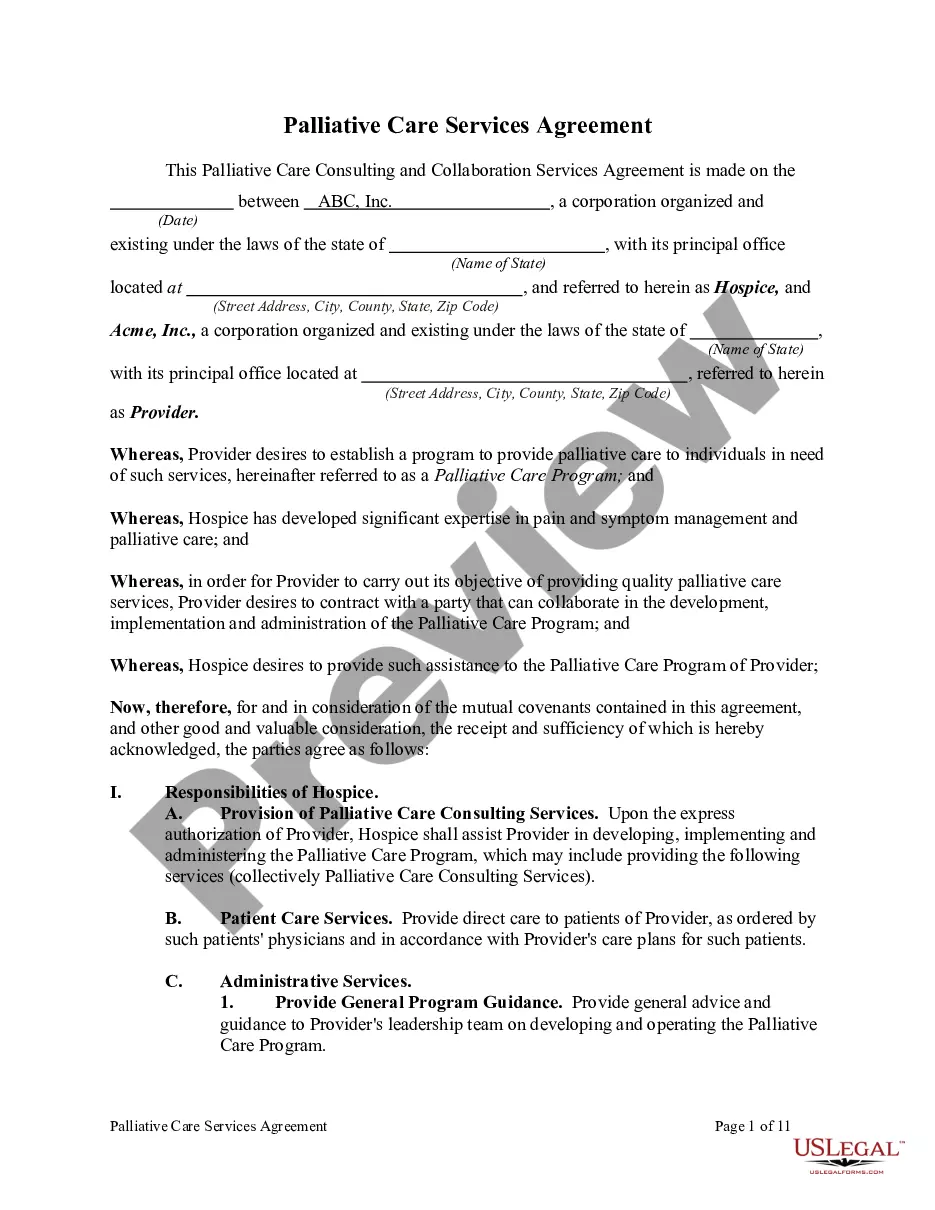
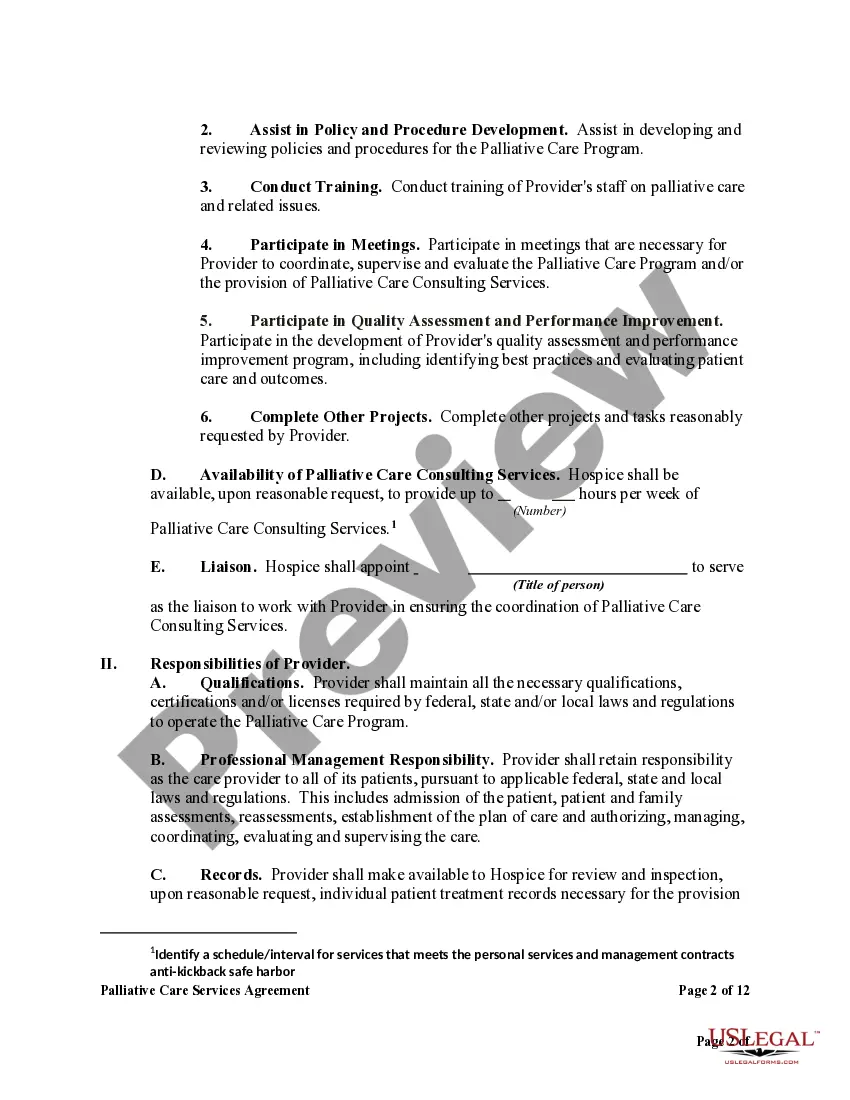
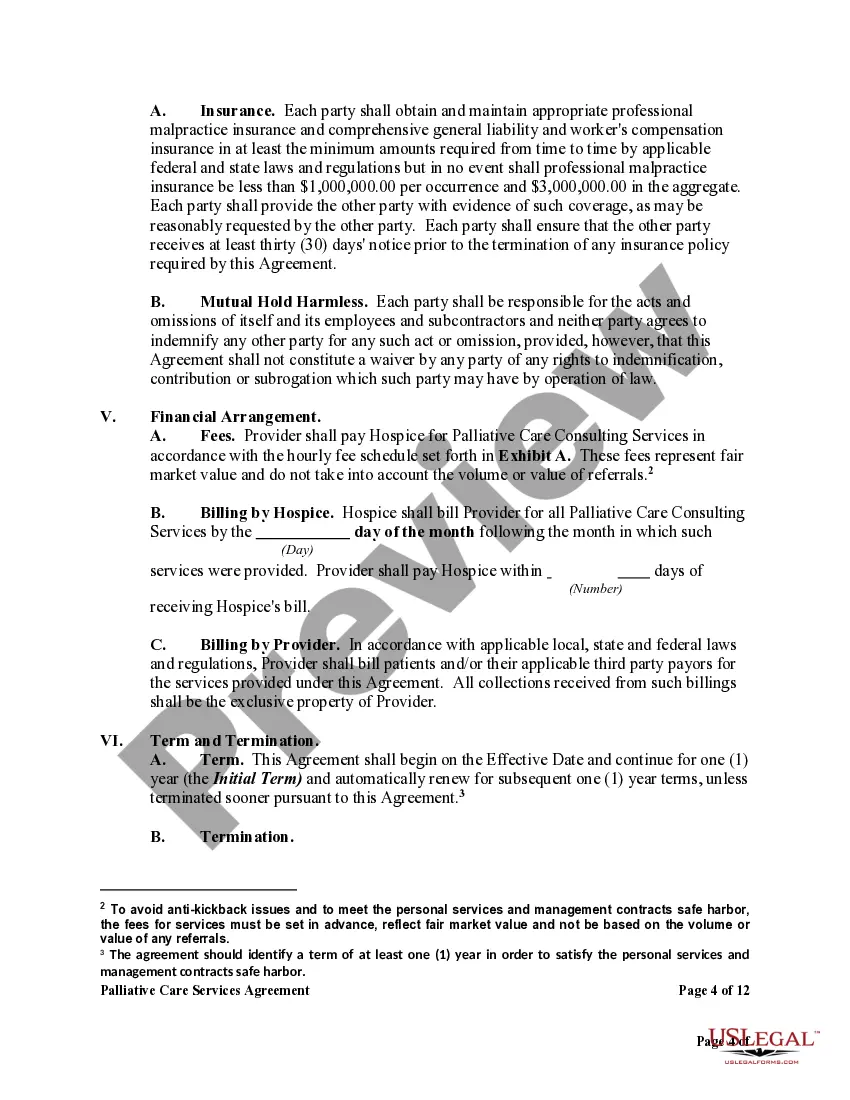
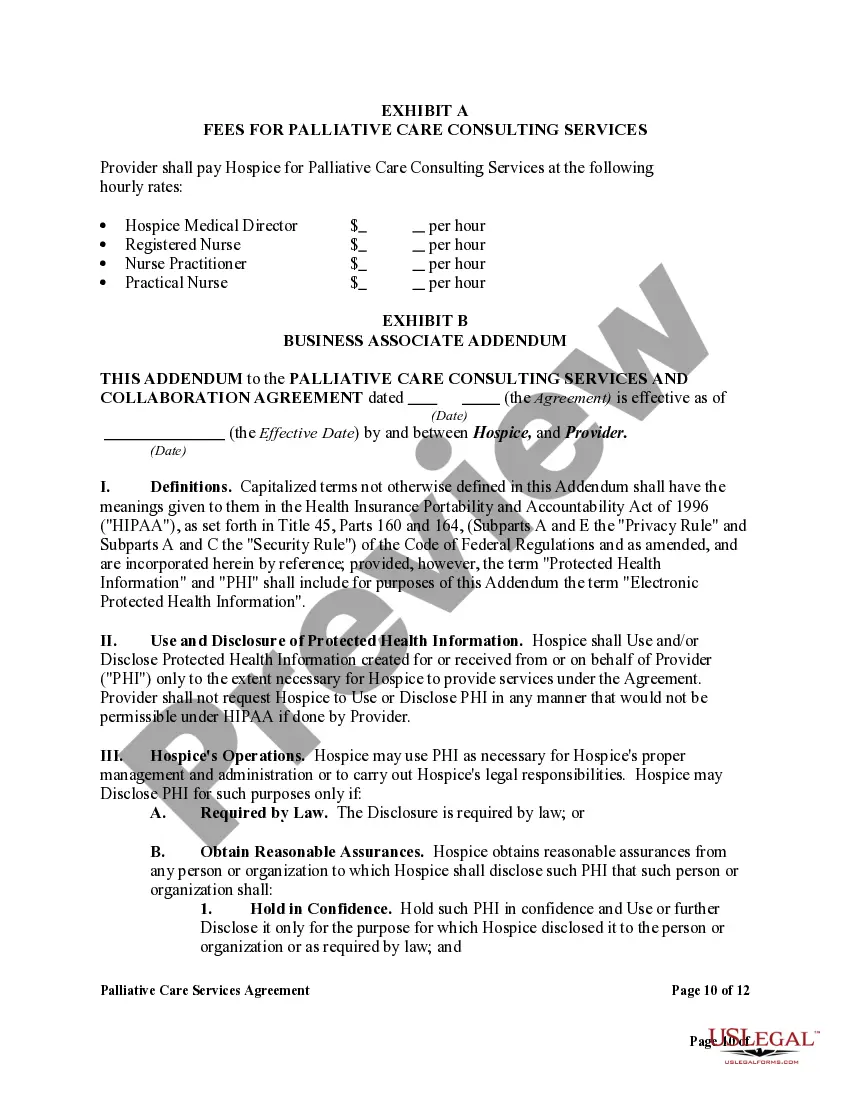
Hospices offer palliative and supportive care to the terminally ill, focusing on managing pain and other symptoms instead of seeking curative treatment for an illness. Recently, the concept of palliative care has expanded beyond the boundaries of hospice care to include care and services provided to patients suffering from progressive, incurable illnesses, who may or may not be eligible for hospice care, depending on whether their life expectancy is greater than six months.
Mesa Arizona Palliative Care Services Agreement Related Searches
How to fill out mesa online
mesa exemptions
mesa information request
mesa permit
mesa college application
mgl c 131a
rare animals in massachusetts
are cattails protected in massachusetts
How to get mesa warframe
How to get mesa reddit
Interesting Questions
Yes indeed! Your family plays a crucial role and will be included in discussions, decisions, and support options to ensure everyone’s on board and feeling supported.
Meeting frequency can vary based on your needs. It could be every week, every month, or as necessary. It’s about tailoring the support to fit your situation like a glove.
Absolutely! Palliative care can be paired with other treatments to help manage symptoms and improve your overall comfort while you’re undergoing medical care.
A palliative care agreement typically outlines the services you'll receive, the team's roles, and how things will be coordinated. It’s like putting everything in writing to make sure everyone’s on the same page.
Palliative care is focused on improving quality of life at any stage of an illness, while hospice care is specifically for folks nearing the end of life. Think of palliative care as a supportive friend throughout the journey.
Anyone dealing with a serious illness can benefit from palliative care, no matter their age or stage of the disease. It's for those looking to improve their quality of life and find some peace during challenging times.
Palliative care services are all about providing comfort and support to folks who are facing serious illnesses. It's a way to help manage pain and other tough symptoms, while also giving emotional and spiritual support.