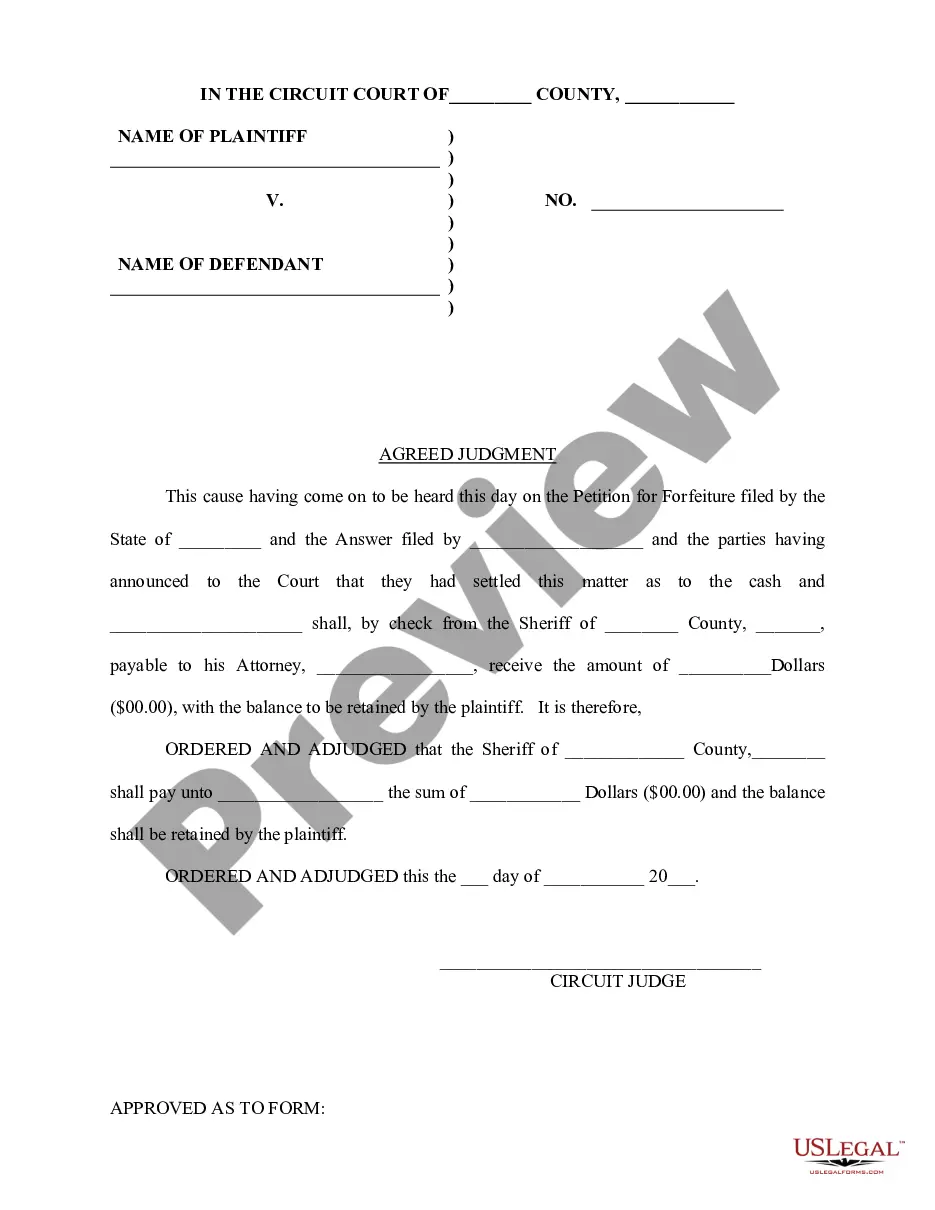
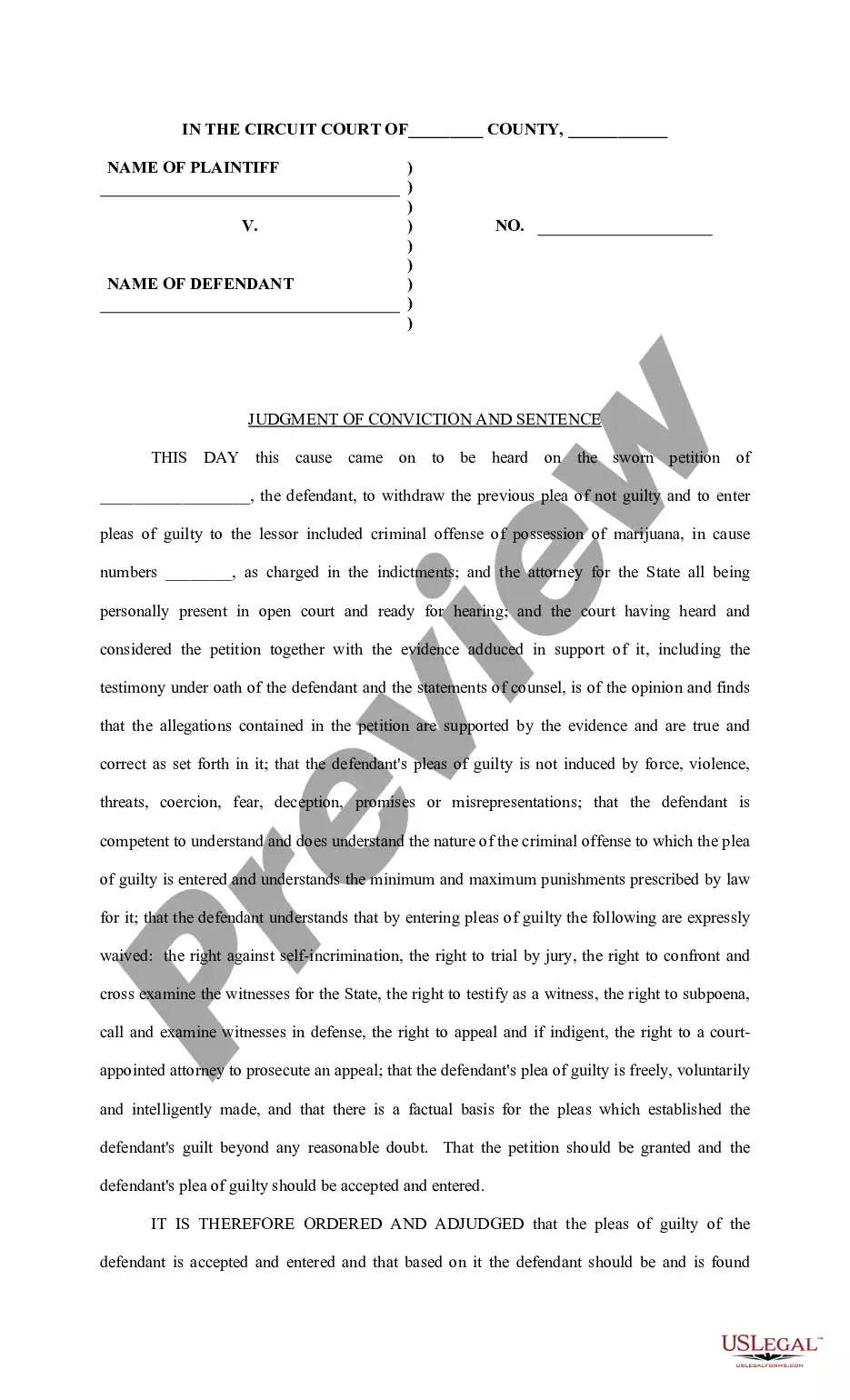
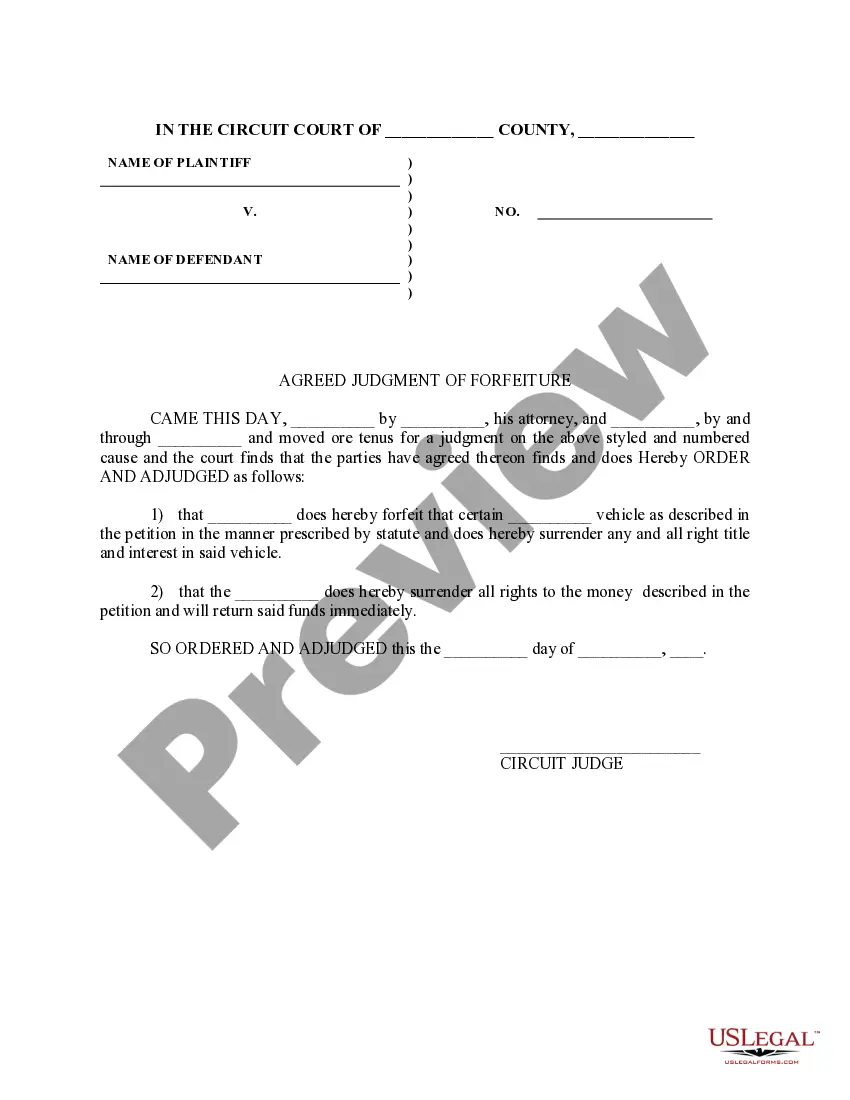
Detroit Michigan Agreed Judgment
Description


Form popularity
FAQ
A judgment lien in Michigan is a legal claim on your property granted to a creditor after a judgment is entered against you. When a Detroit Michigan Agreed Judgment is obtained, it can become a lien against your real estate, impacting your ability to sell or refinance that property. This lien typically lasts until the judgment is satisfied or expires. Knowing the implications of a lien can help you make informed decisions regarding your assets.
Being judgment proof in Michigan means that you have little or no assets for creditors to seize in order to satisfy a judgment. If you find yourself in this situation after a Detroit Michigan Agreed Judgment, you may not need to worry about wage garnishments or bank levies. Understanding your financial status can help you determine the best approach to manage potential judgments. Consulting legal resources can provide clarity on your options.
Once you obtain a judgment in Michigan, you can begin the collection process by issuing a demand for payment to the debtor. If they fail to respond, you may need to file a motion for enforcement, which allows you to explore options like wage garnishments or bank levies. Understanding the complexities of collections, particularly in cases involving a Detroit Michigan Agreed Judgment, is crucial to effectively recover what is owed. Resources from US Legal Forms can help clarify your next steps and required processes.
Introduction. On July 24, 1701, Antoine de La Mothe Cadillac, accompanied by approximately one hundred fellow Frenchmen and an additional one hundred Algonquian Indians, established Fort Pontchartrain du Detroit on a site that is today in downtown Detroit.
The Metro Detroit area, home to 4.3 million people, is the second-largest in the Midwest after the Chicago metropolitan area and the 14th-largest in the United States.
Long known as the automobile capital of the world, Detroit is also famous for its distinctive Motown music sound from the 1960s. Detroit is home to a rich mix of people from various ethnic backgrounds, including citizens of Italian, English, German, Polish, Irish, Mexican, Middle Eastern, African, and Greek descent.
Long known as the automobile capital of the world, Detroit is also famous for its distinctive Motown music sound from the 1960s. Detroit is home to a rich mix of people from various ethnic backgrounds, including citizens of Italian, English, German, Polish, Irish, Mexican, Middle Eastern, African, and Greek descent. Detroit History detroitmi.gov ? departments ? detroit-history detroitmi.gov ? departments ? detroit-history
Introduction. On July 24, 1701, Antoine de La Mothe Cadillac, accompanied by approximately one hundred fellow Frenchmen and an additional one hundred Algonquian Indians, established Fort Pontchartrain du Detroit on a site that is today in downtown Detroit.
Rich in Culture Having played a significant role in the country's automobile industry, sports scene, the arts community, and more, Detroit's story is rich and one worth exploring.
Detroit, Michigan's largest city, had seen an exodus of people since the 1950s. Yet the estimates released Thursday show the population of Michigan's largest city rose by just 1,852 people from 631,366 in 2022 to 633,218 last year.