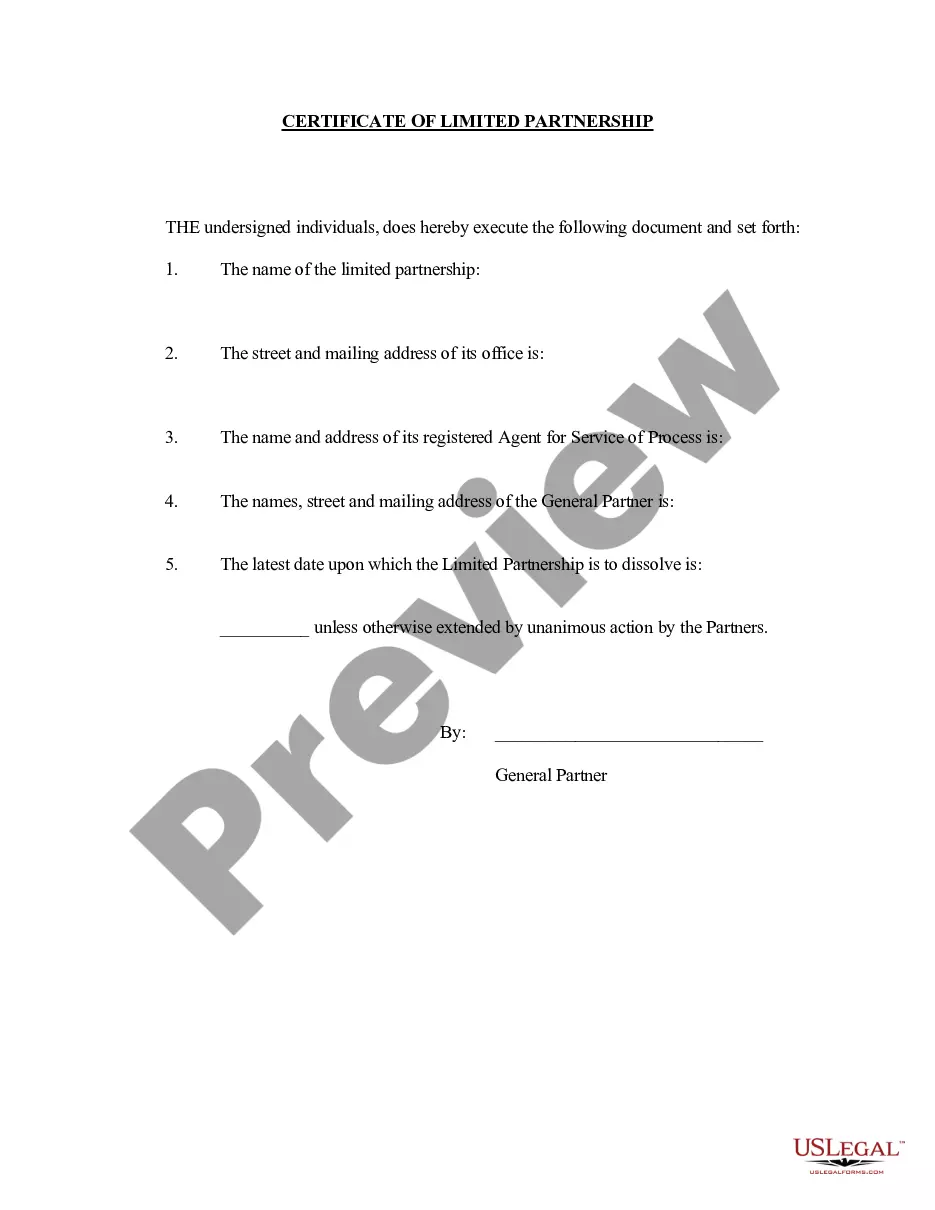
Harris Texas Limited Partnership Agreement Between Limited Liability Company and Limited Partner
Description
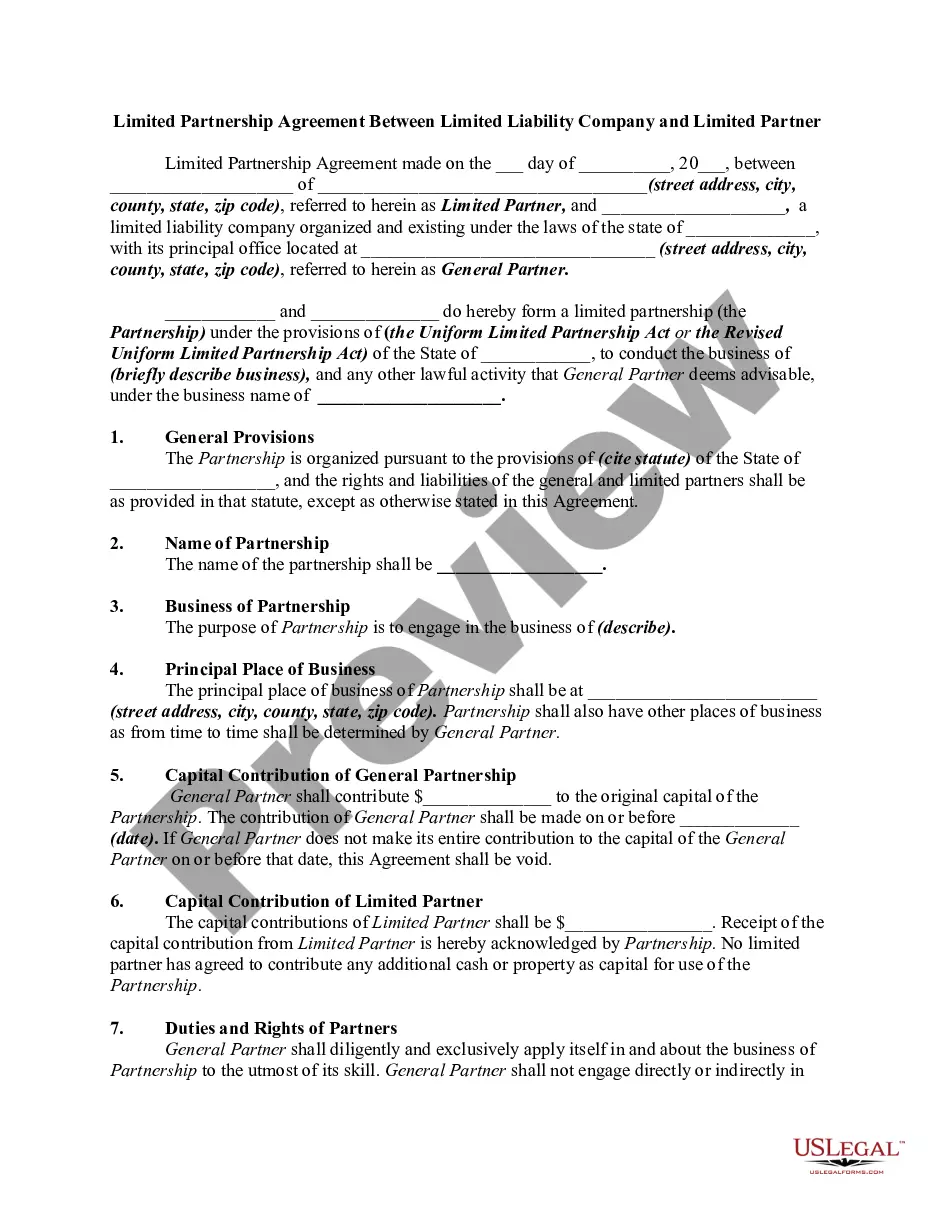
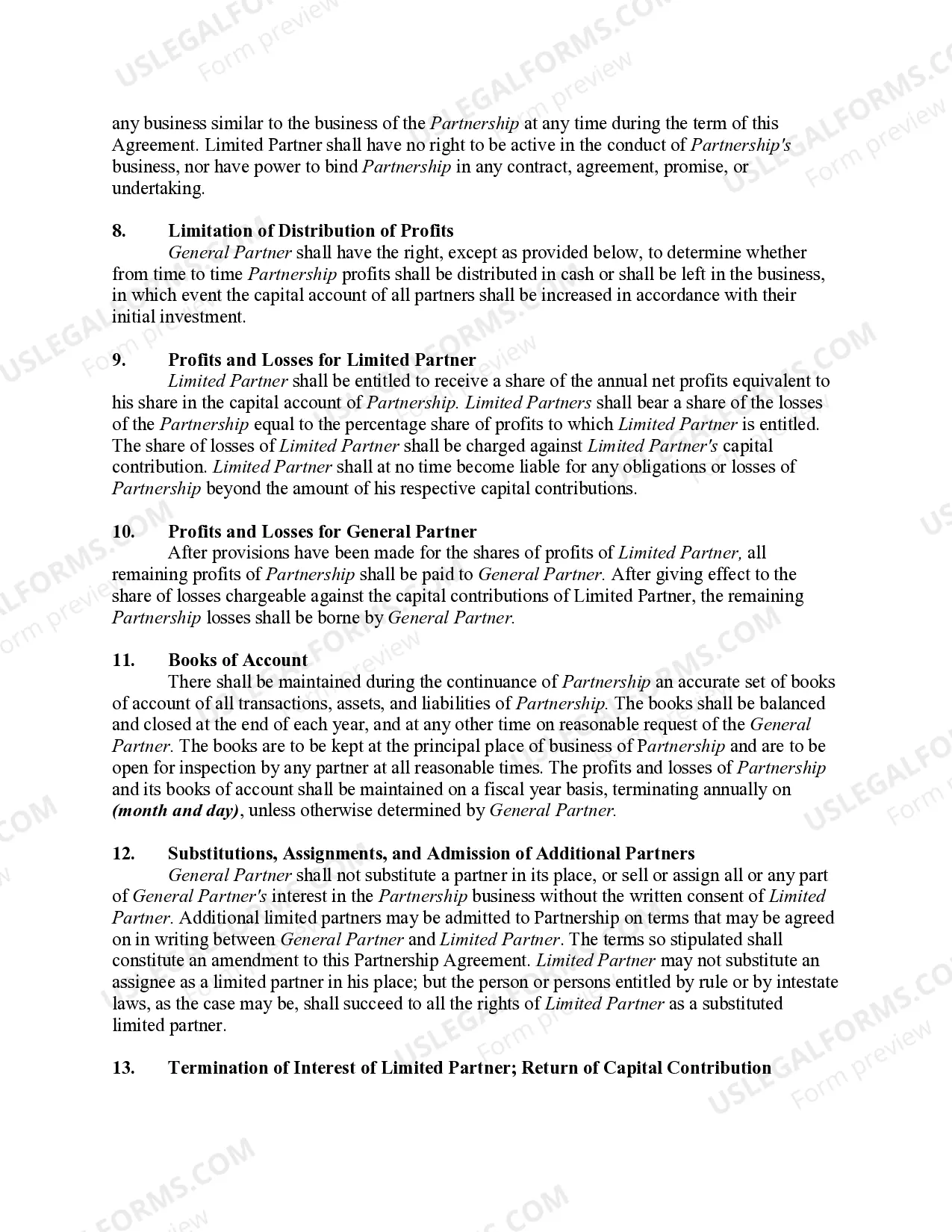
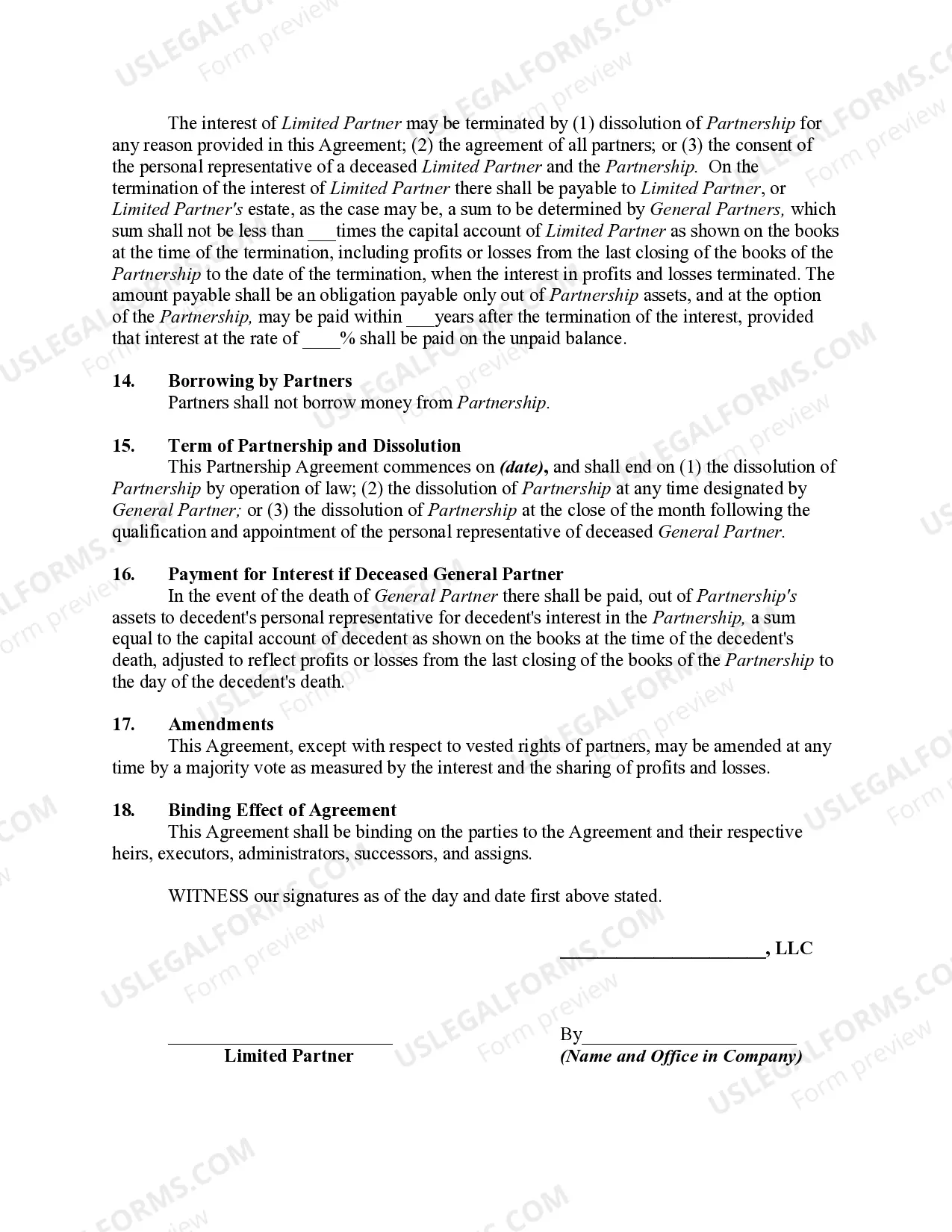
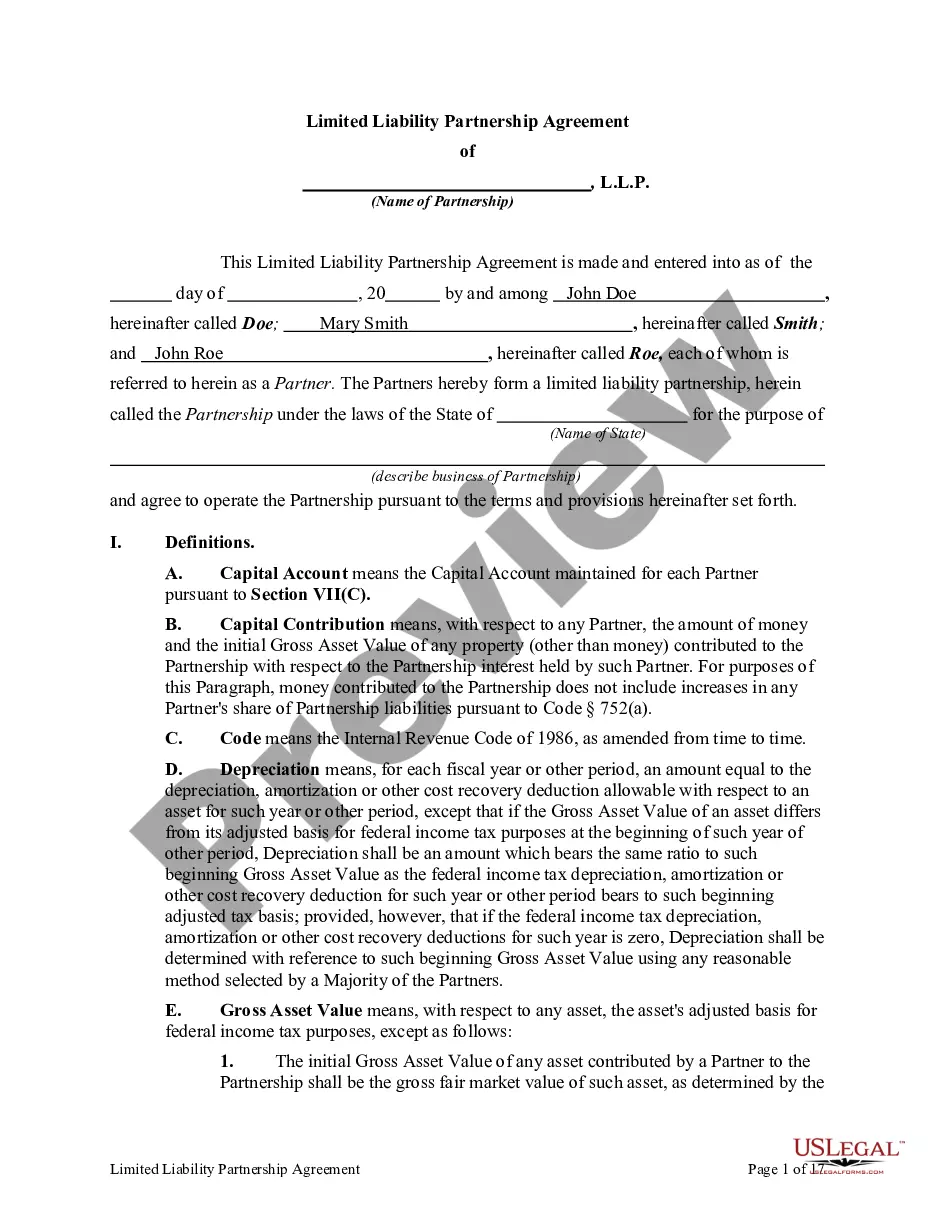
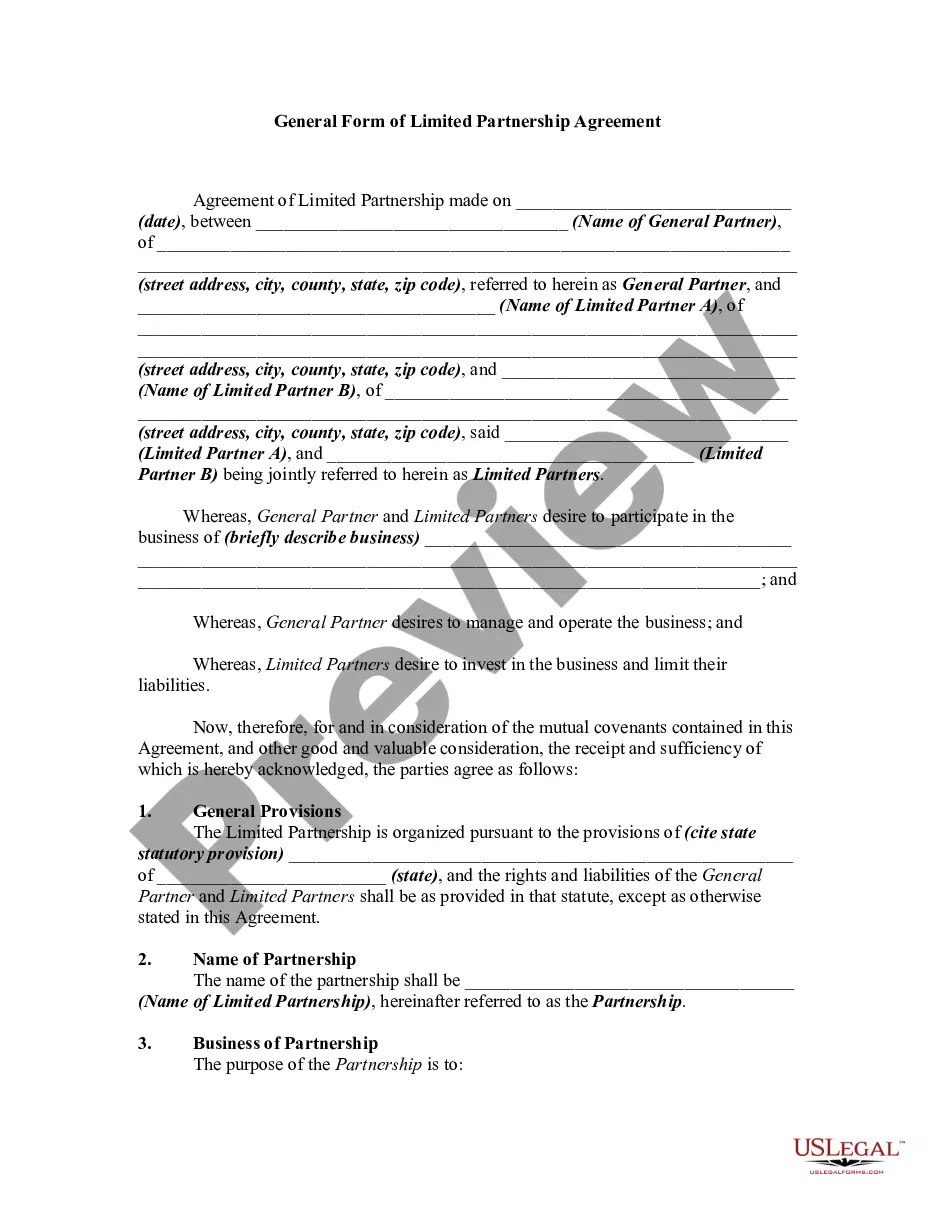
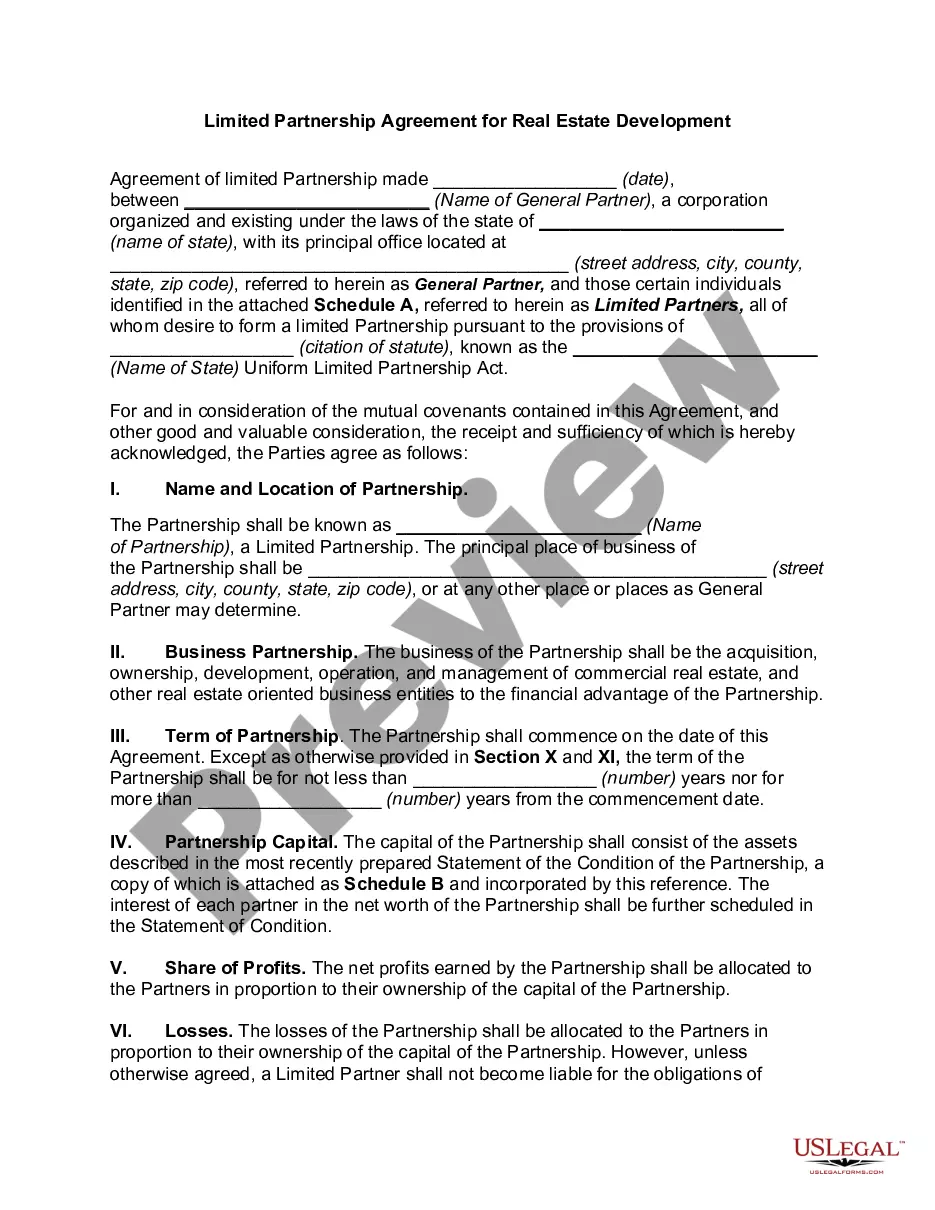
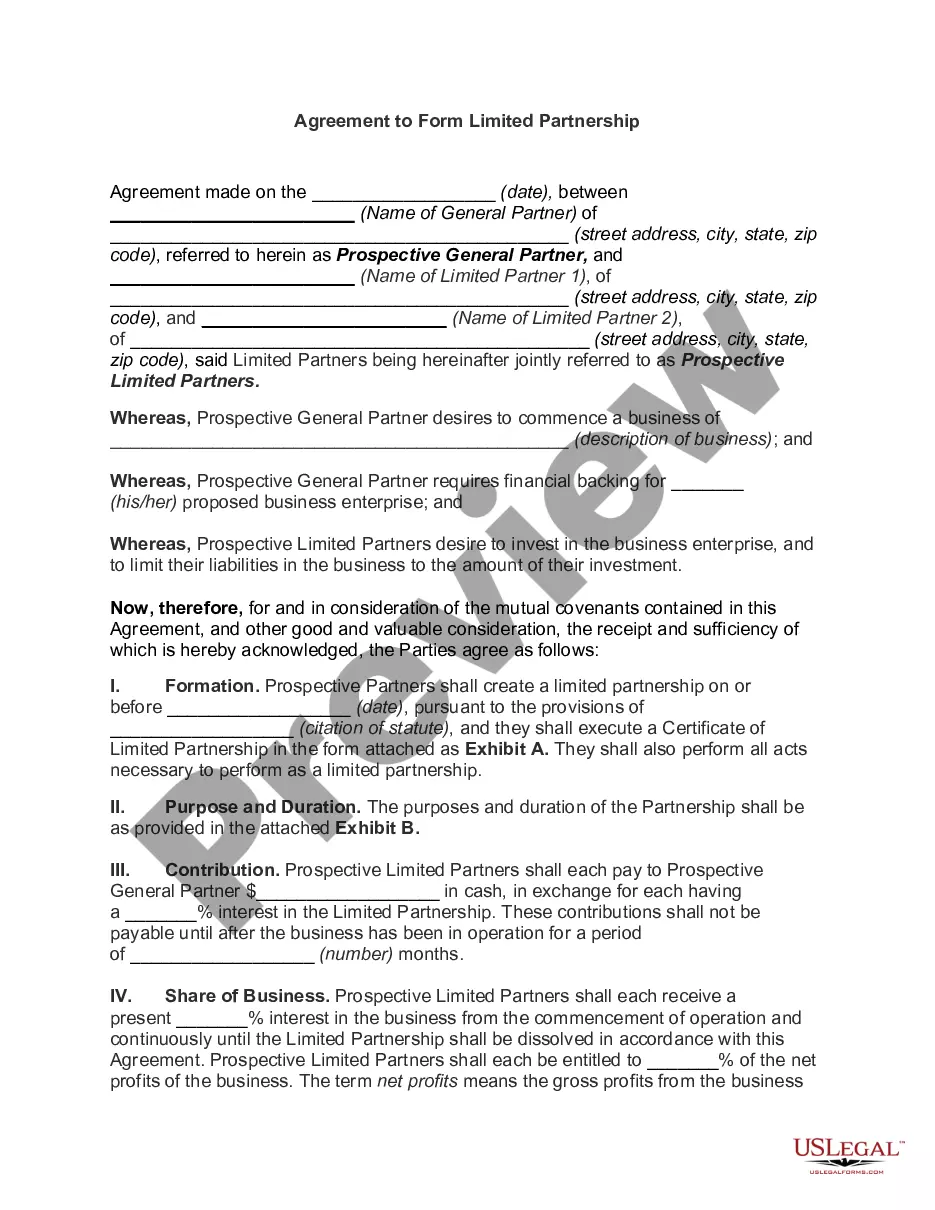
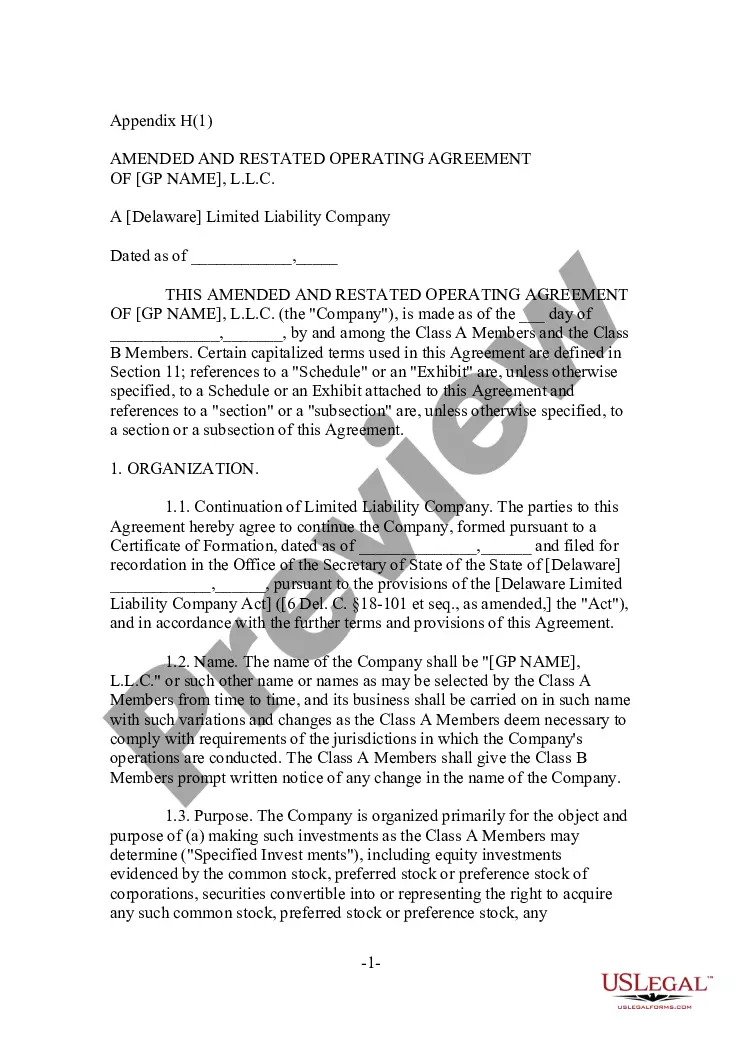
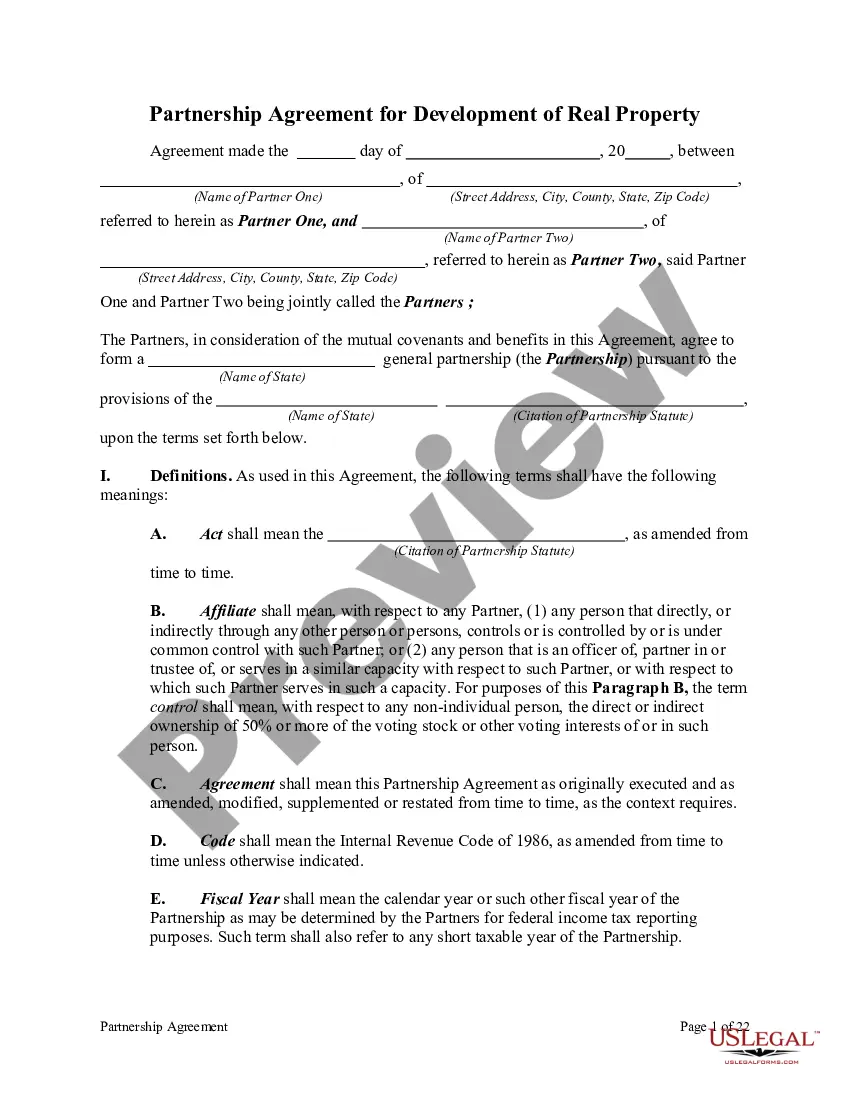

How to fill out Limited Partnership Agreement Between Limited Liability Company And Limited Partner?
How long does it generally take you to compose a legal document.
Since each state has its own laws and regulations governing every aspect of life, locating a Harris Limited Partnership Agreement Between Limited Liability Company and Limited Partner that meets all local criteria can be tiring, and hiring a professional attorney is frequently costly.
Many online services provide the most sought-after state-specific templates for download, but utilizing the US Legal Forms library is the most advantageous.
Select the subscription plan that fits you best. Create an account on the platform or Log In to advance to payment options. Pay via PayPal or with your credit card. Change the file format if needed. Click Download to save the Harris Limited Partnership Agreement Between Limited Liability Company and Limited Partner. Print the document or use any desired online editor to fill it out electronically. Regardless of how often you need to utilize the downloaded document, you can find all the files you've ever retrieved in your profile by selecting the My documents tab. Give it a shot!
- US Legal Forms stands as the most extensive online collection of templates, categorized by states and fields of use.
- In addition to the Harris Limited Partnership Agreement Between Limited Liability Company and Limited Partner, you can access any particular form to manage your business or personal matters while adhering to your local regulations.
- Experts verify all templates for their accuracy, ensuring that you can prepare your documents correctly.
- Engaging with the service is incredibly simple.
- If you already possess an account on the site and your subscription is active, you merely need to sign in, select the required sample, and download it.
- You can retrieve the document from your profile at any time later.
- However, if you are a newcomer to the platform, a few additional steps will be needed before you can acquire your Harris Limited Partnership Agreement Between Limited Liability Company and Limited Partner.
- Review the material on the page you’re currently visiting.
- Examine the description of the template or Preview it (if available).
- Search for an alternative form utilizing the related option in the header.
- Press Buy Now once you are confident in the chosen document.
Form popularity
FAQ
Key Takeaways. A limited partnership (LP) exists when two or more partners go into business together, but the limited partners are only liable up to the amount of their investment. An LP is defined as having limited partners and a general partner, which has unlimited liability.
A limited partner invests money in exchange for shares in the partnership but has restricted voting power on company business and no day-to-day involvement in the business. A limited partner may become personally liable only if they are proved to have assumed an active role in the business.
What Is the Difference Between an LP and LLP? An LP and LLP have a similar structure. However, LPs have general partners and limited partners, while LLPs have no general partners. All partners in an LLP have limited liability.
Unlimited liability for general partners only. In a limited partnership (LP), at least one partner has unlimited liabilitythe general partner(s). The other partners (limited partners) have limited liability, meaning their personal assets typically cannot be used to satisfy business debts and liabilities.
A key advantage of forming a limited liability company is the limited personal liability it grants to every single one of its owners. This is in contrast to limited partnerships wherein only the limited partner has their personal liability shielded by the limited partnership business structure.
A limited partnership is a type of partnership that consists of at least one general partner and at least one limited partner. A limited liability partnership does not have a general partner, since every partner in an LLP is given the ability to take part in the management of the company.
In a limited partnership (LP), at least one partner has unlimited liabilitythe general partner(s). The other partners (limited partners) have limited liability, meaning their personal assets typically cannot be used to satisfy business debts and liabilities.
A limited liability partnership (LLP) is not the same thing as an LP. LPs must have a general partner who has unlimited personal liability. But in an LLP, all partners have limited liability. This is like the limitation of liability that a limited liability company (LLC) offers.
The difference between a limited partnership and an LLLP is that the liability of the general partner in an LLLP is the same as the liability of the limited partner. That is, the liability of all partners is limited to the amount of their investments in the firm.
Yes, a corporation can be a partner in a limited partnership as well as in a general partnership.