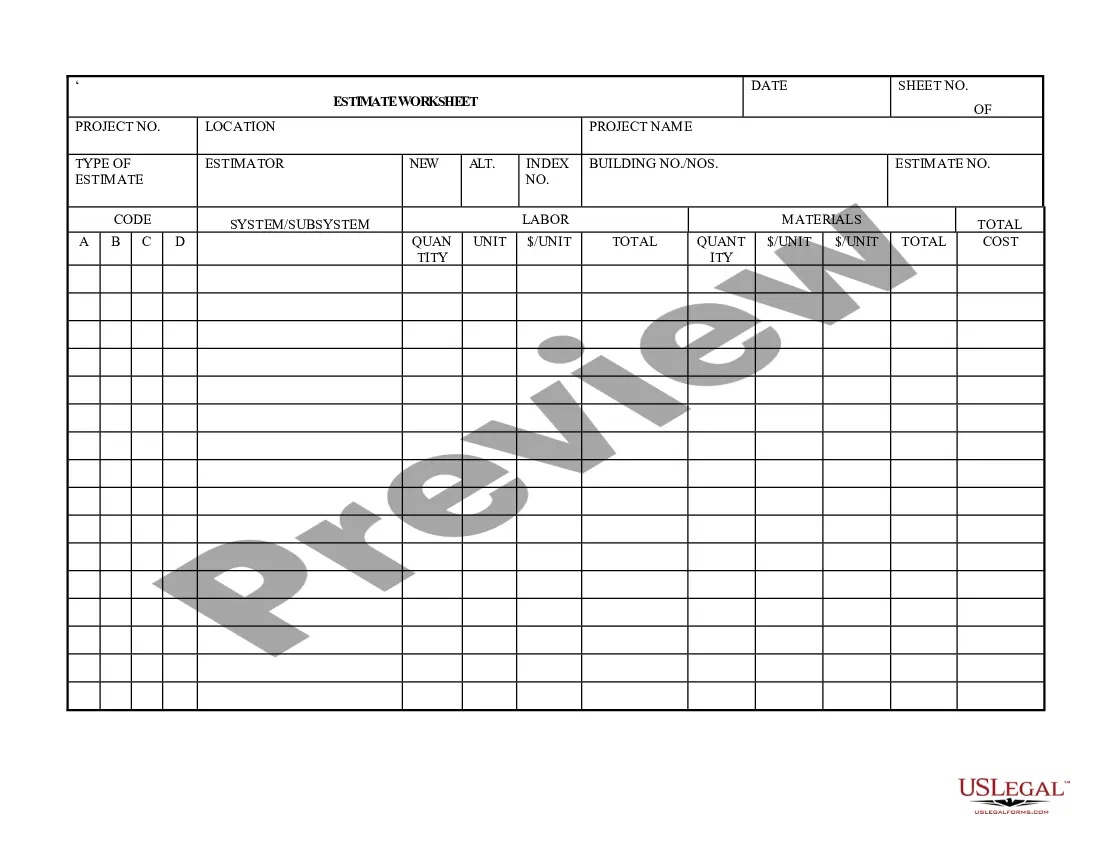
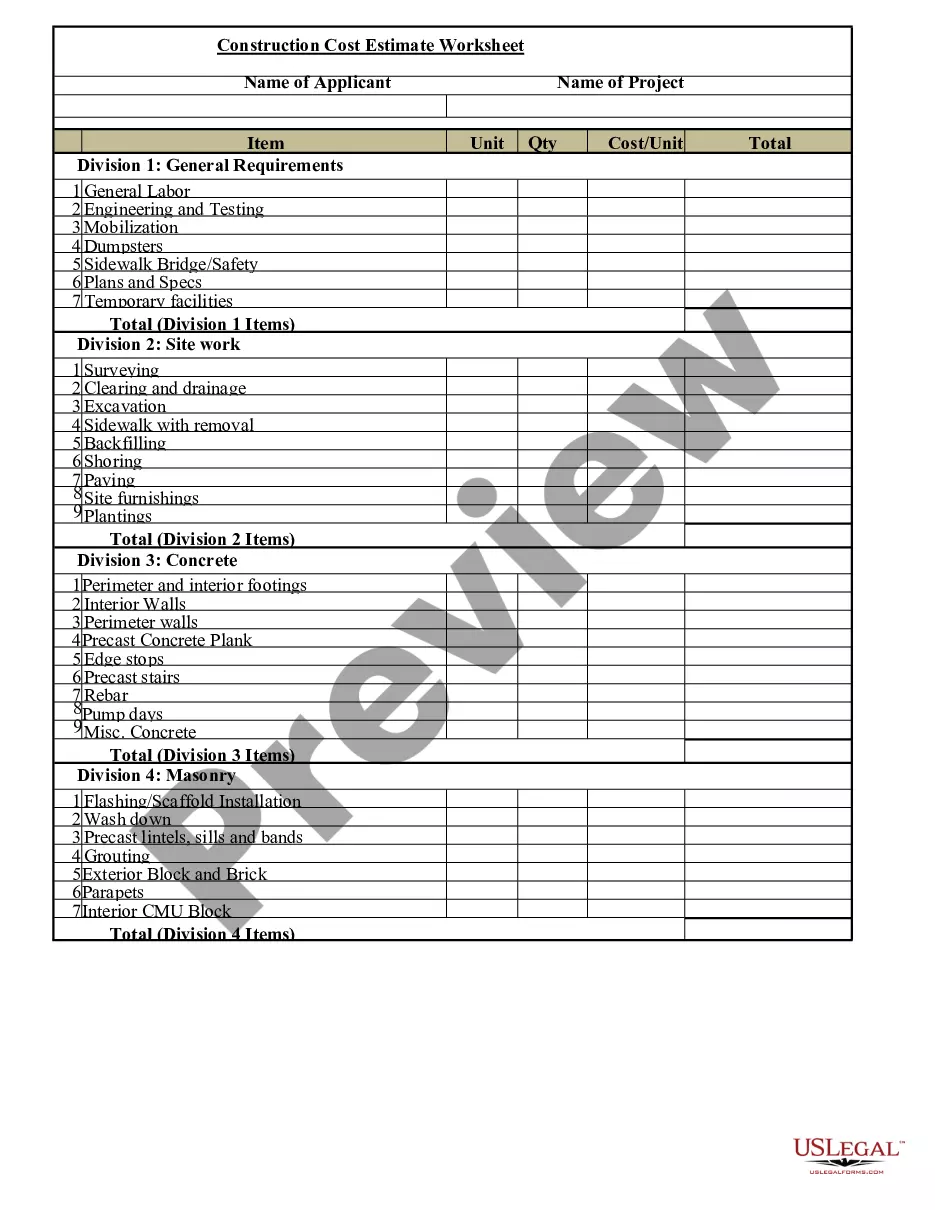
Columbus Ohio Fee Estimate Worksheet
Description







Form popularity
FAQ
Estimated payments for Ohio Pass-Through Entities (PTE) vary based on the entity's income. Generally, businesses should calculate their estimated tax liabilities using the current rates and guidelines outlined in the Columbus Ohio Fee Estimate Worksheet. This worksheet assists you in forecasting payments and ensuring compliance with state laws. Using our tools can simplify this process, offering clarity on what to expect.
Columbus, Ohio, is served by the Columbus City Auditor rather than the Regional Income Tax Agency (RITA) or the Central Collection Agency (CCA). This means your city taxes are directly managed by the city of Columbus. Using the Columbus Ohio Fee Estimate Worksheet can help you navigate local tax regulations effectively. Staying informed about the governing authorities helps you ensure compliance with local tax laws.
The city tax in Columbus, Ohio, is currently set at 2.5% of your taxable income. This tax applies to individuals working or living within the city limits. To understand how this affects your finances, using the Columbus Ohio Fee Estimate Worksheet can help you estimate your tax liabilities accurately. Familiarizing yourself with these rates ensures you are prepared when filing your taxes.
Yes, if you earn income in Columbus, Ohio, you must file city taxes. Columbus residents are subject to the city's income tax, which funds essential local services. You can streamline this process by using the Columbus Ohio Fee Estimate Worksheet, which assists in estimating your tax liability effectively. Filing on time ensures you stay compliant with local regulations and helps you avoid penalties.
The best way to make estimated tax payments in Ohio involves using the Electronic Funds Transfer (EFT) system or sending a payment by mail. Utilizing the Columbus Ohio Fee Estimate Worksheet can help you determine the precise payment amounts. This method ensures accuracy and helps you keep track of your financial obligations. It is also beneficial to mark your payment dates on your calendar to avoid missing deadlines.
In Ohio, the threshold for estimated taxes generally applies to individuals who expect to owe at least $500 in Ohio income tax for the year. If you plan to earn above this amount, using the Columbus Ohio Fee Estimate Worksheet can help you calculate your estimated taxes accurately. This ensures you remain compliant and avoid penalties. It’s important to review this threshold annually, as income levels can change and affect your tax obligations.
Ing to Ohio Instructions for Form IT 1040, ?Every Ohio resident and part year resident is subject to the Ohio Income tax.? Every full-year resident, part year resident and full year nonresident must file an Ohio tax return if they have income from Ohio sources.
Local income tax is usually based on where a taxpayer lives, but in some cases, taxpayers also owe local income tax based on where they perform work (for example, if they commute). You may have withholding obligations based on where your company does business or based on where your employees perform work.
Columbus residents pay a total of 2.5% in taxes on all income earned, regardless of whether it was earned in Columbus or another city.
In Ohio, you have an income tax obligation to both your employment city and your resident city. Your employer is required by law to withhold your work place city tax and if you have "fully withheld", you have no filing requirement with your work place city.