Collin Texas Shared Well Water Agreement
Description
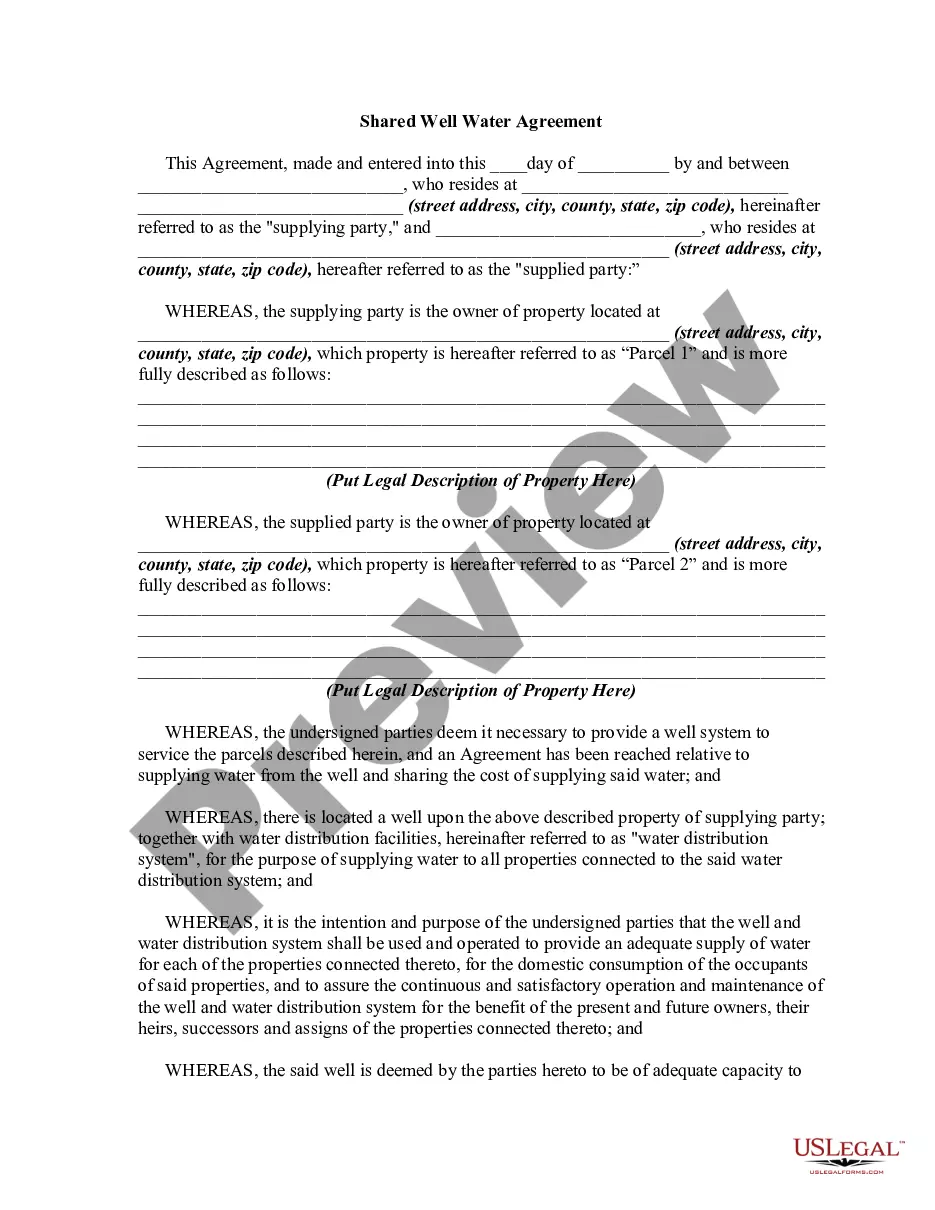
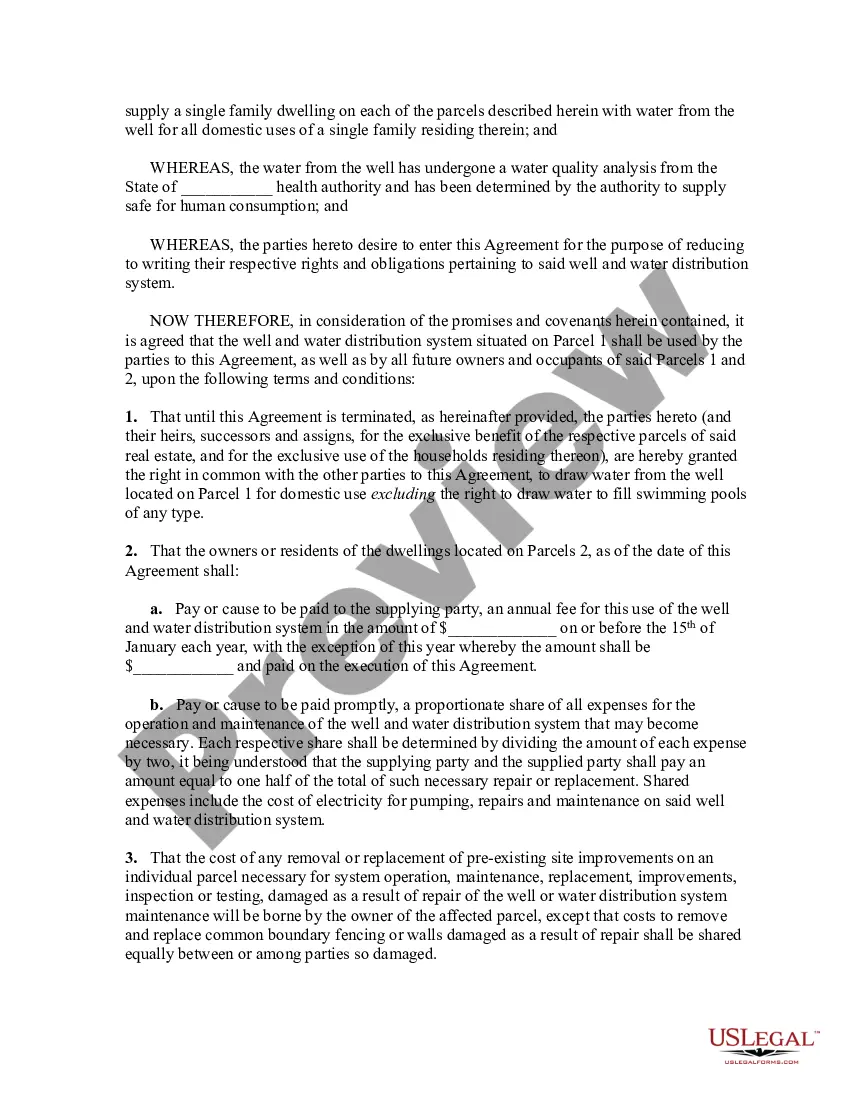
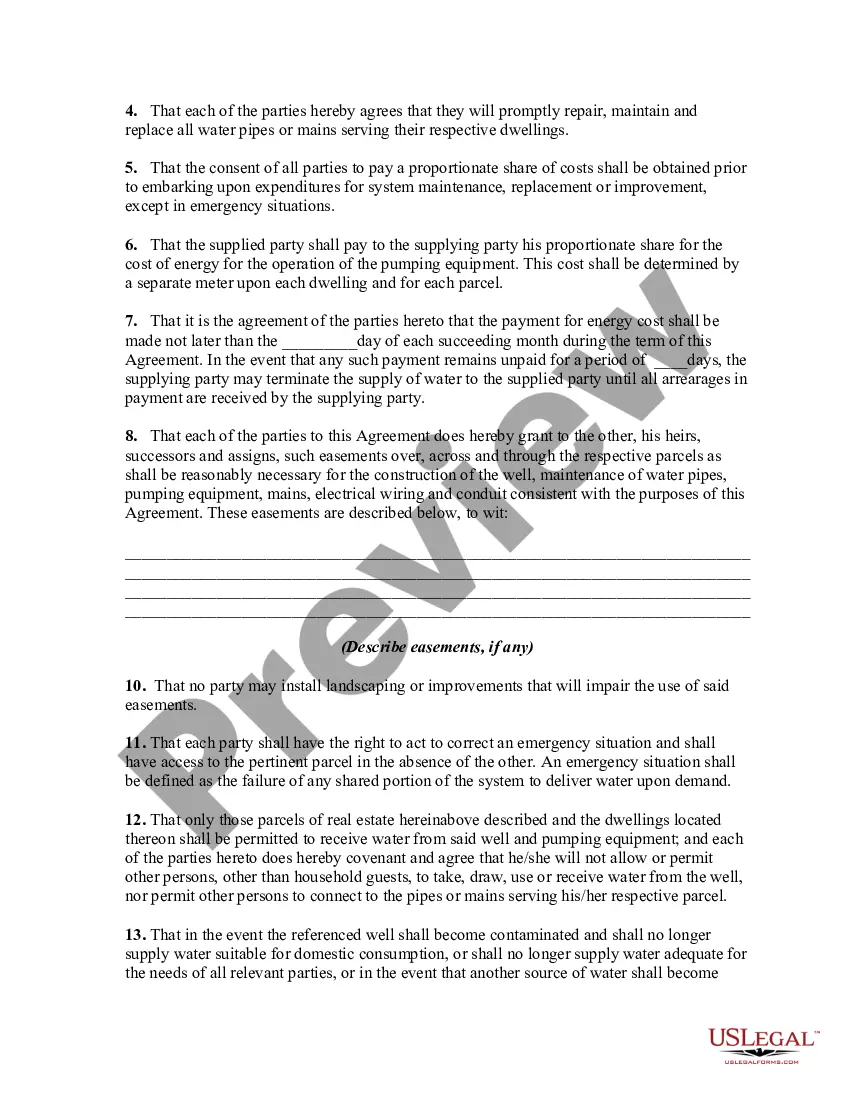
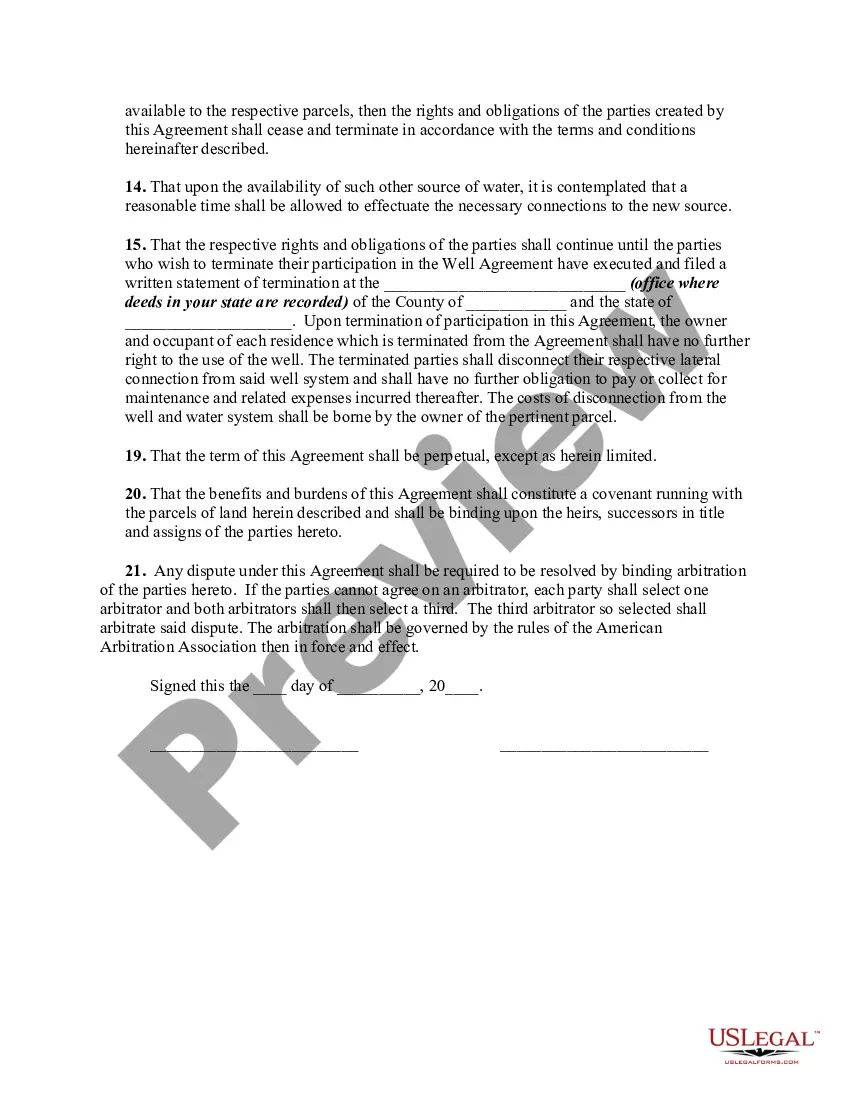
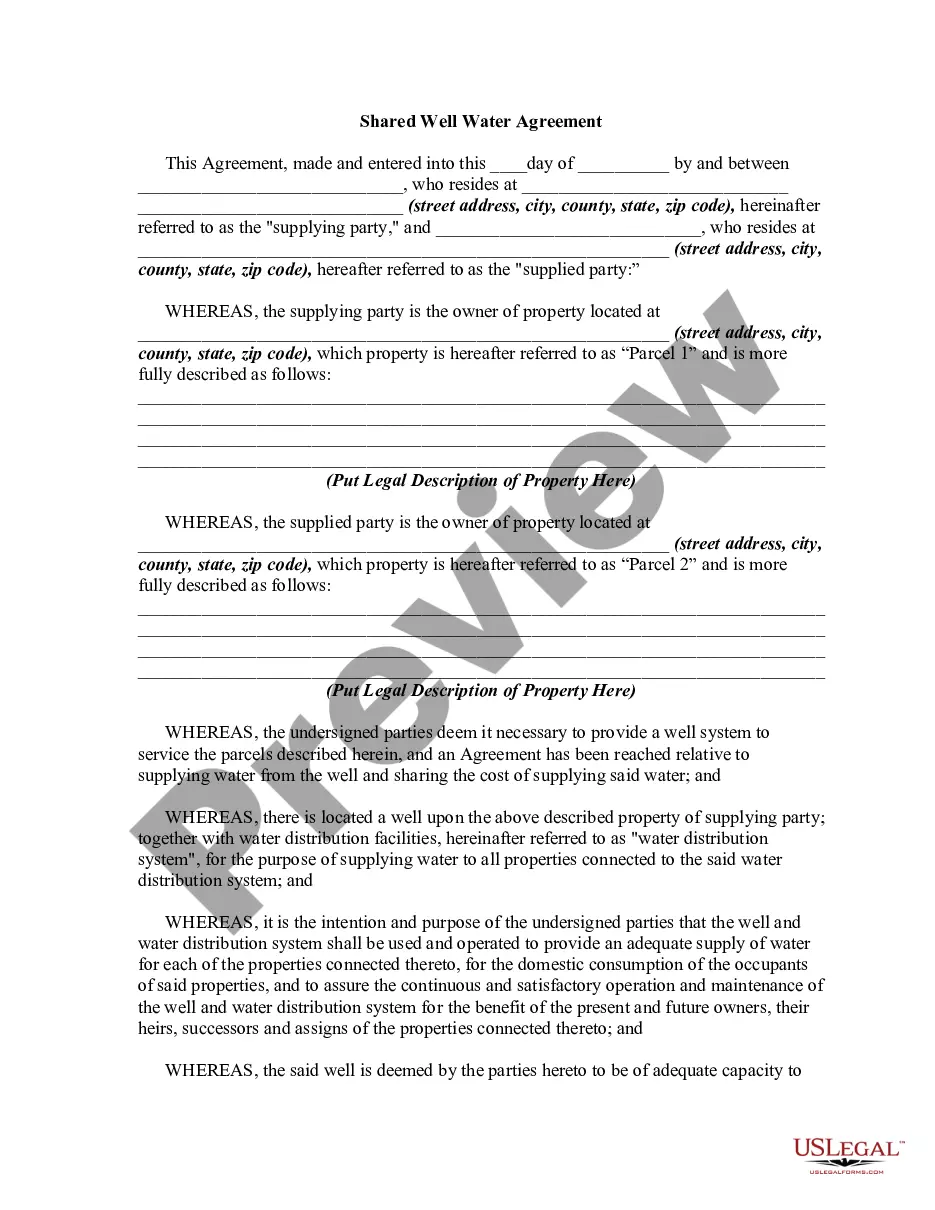

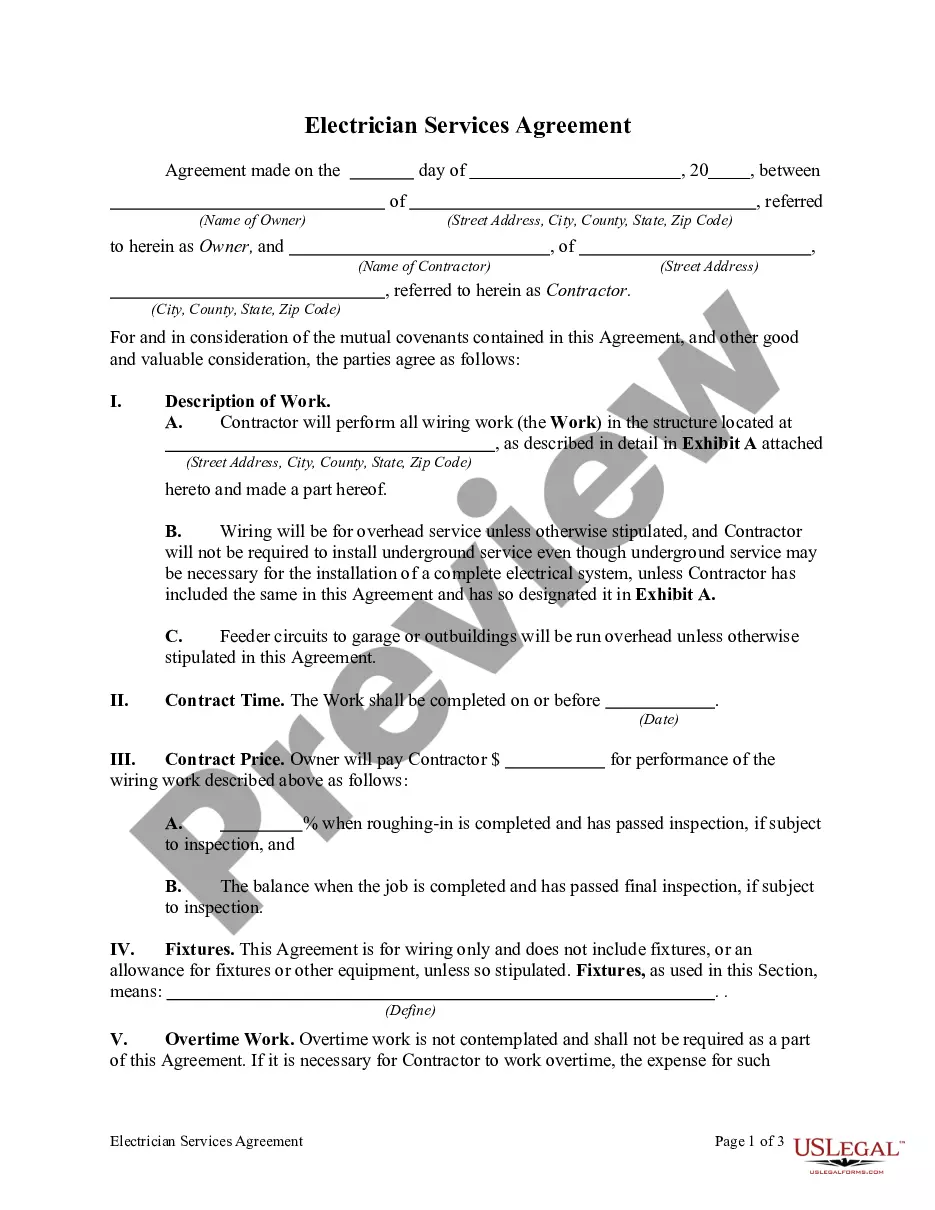


How to fill out Shared Well Water Agreement?
Handling legal documents is essential in today's society. Nevertheless, you do not always need to request expert assistance to create some of them from the beginning, such as the Collin Shared Well Water Agreement, with a service like US Legal Forms.
US Legal Forms offers over 85,000 templates to choose from in various categories, ranging from living wills to property agreements to divorce records. All forms are organized according to their respective state, making the search process less arduous.
You can also discover comprehensive resources and guides on the website to simplify any tasks related to document finalization.
If you are already subscribed to US Legal Forms, you can find the needed Collin Shared Well Water Agreement, Log In to your account, and download it. It is important to note that our platform cannot completely replace a lawyer. If you are facing an exceptionally complex issue, we recommend hiring a lawyer to review your form before completing and submitting it.
With over 25 years in the industry, US Legal Forms has established itself as a preferred source for various legal forms for millions of individuals. Join them today and acquire your state-compliant documentation effortlessly!
- View the document's preview and summary (if available) to gain a general understanding of what you will receive after obtaining the document.
- Make sure that the template you select is suitable for your state/county/region, as state regulations can affect the legality of certain documents.
- Examine related document templates or restart the search to locate the right document.
- Click Buy now and create your account. If you have an existing one, opt to Log In.
- Select the pricing {plan, then the needed payment method, and purchase Collin Shared Well Water Agreement.
- Opt to save the form template in any available format.
- Visit the My documents tab to re-download the document.
Form popularity
FAQ
Landowners have the right to capture any groundwater beneath their property based on a legal doctrine called the Rule of Capture. According to this doctrine, a landowner may extract or pump whatever groundwater water he or she can beneficially use or sell regardless of the impact on nearby property owners.
By definition, a shared well is a well that services more than one home whether its for residential or irrigation purposes. They can service up to two or more homes, and if there were more than four, then it would be classified as a community well.
The practical effect of Texas groundwater law is that one landowner can dry up an adjoining landowner's well and the landowner with the dry well is without a legal remedy. Texas courts have refused to adopt the American rule of "reasonable use" with respect to groundwater.
Any abandoned wells must be plugged to District and TDLR rules or specifications. For multiple water wells on the same tract of land over 5 acres there shall be a minimum of 5 acres per well to help ensure the wells will still be considered as exempt /registered wells.
Surface water in Texas is owned by the state and held in trust for the citizens of the state. The state grants the right to use this water to different people, such as farmers or ranchers, cities, industries, business, and other public and private interests.
Wellcare® information on Sharing a Well o must be capable of providing at least three gallons per minute for existing wells and five gallons per minute for new construction over a continuous four-hour period.
The Cons of A Shared Well Any time we share a resource we are limiting the Control of the resource. Additionally, each well has a maximum flow of water it can yield, and if the flow rate may not be high enough to meet all the parties' intended uses such as domestic water use as well as irrigation.
The court held that under Texas groundwater law, a person who owns the land may drill a well and use the water from that well, even if such uses cause his neighbor's well to go dry.
By definition, a shared well is a well that services more than one home whether its for residential or irrigation purposes. They can service up to two or more homes, and if there were more than four, then it would be classified as a community well.
When installed and maintained properly, wells can provide safe, affordable water for many years. If you are interested in buying a property with a shared well, there are some things you need to ask, consider, and make sure of before settling.