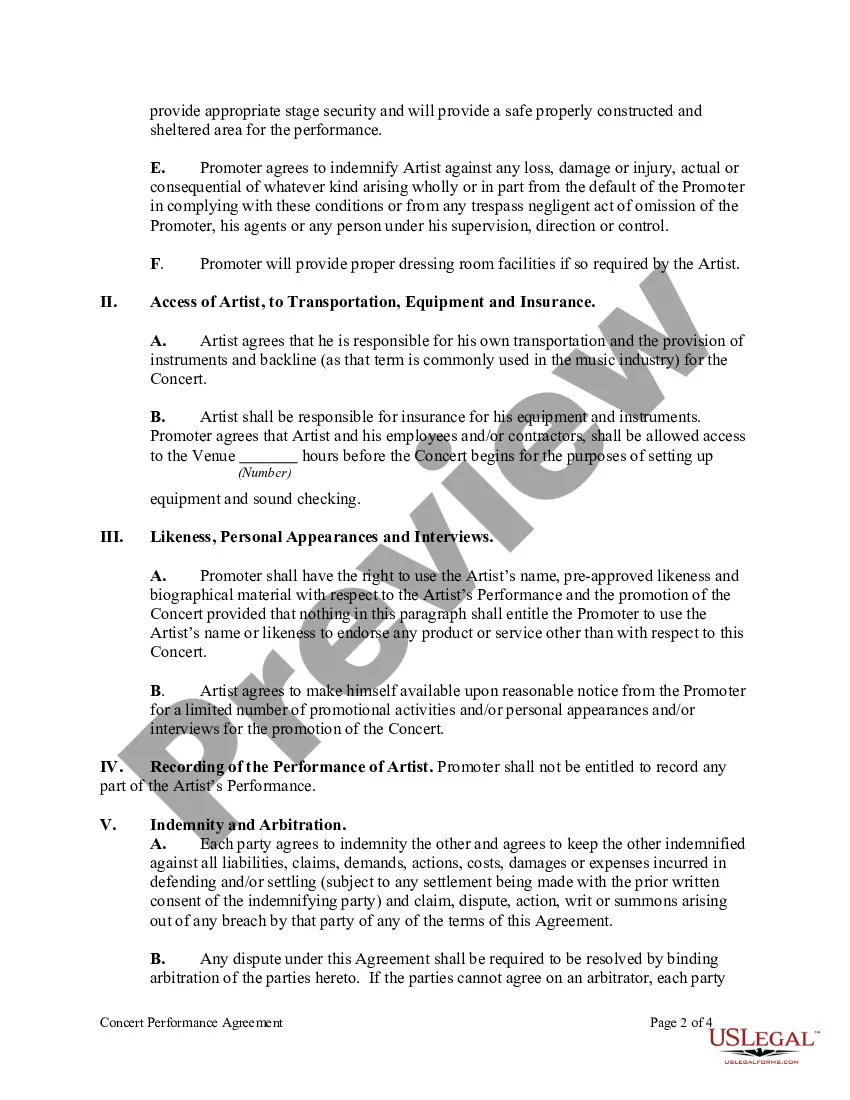
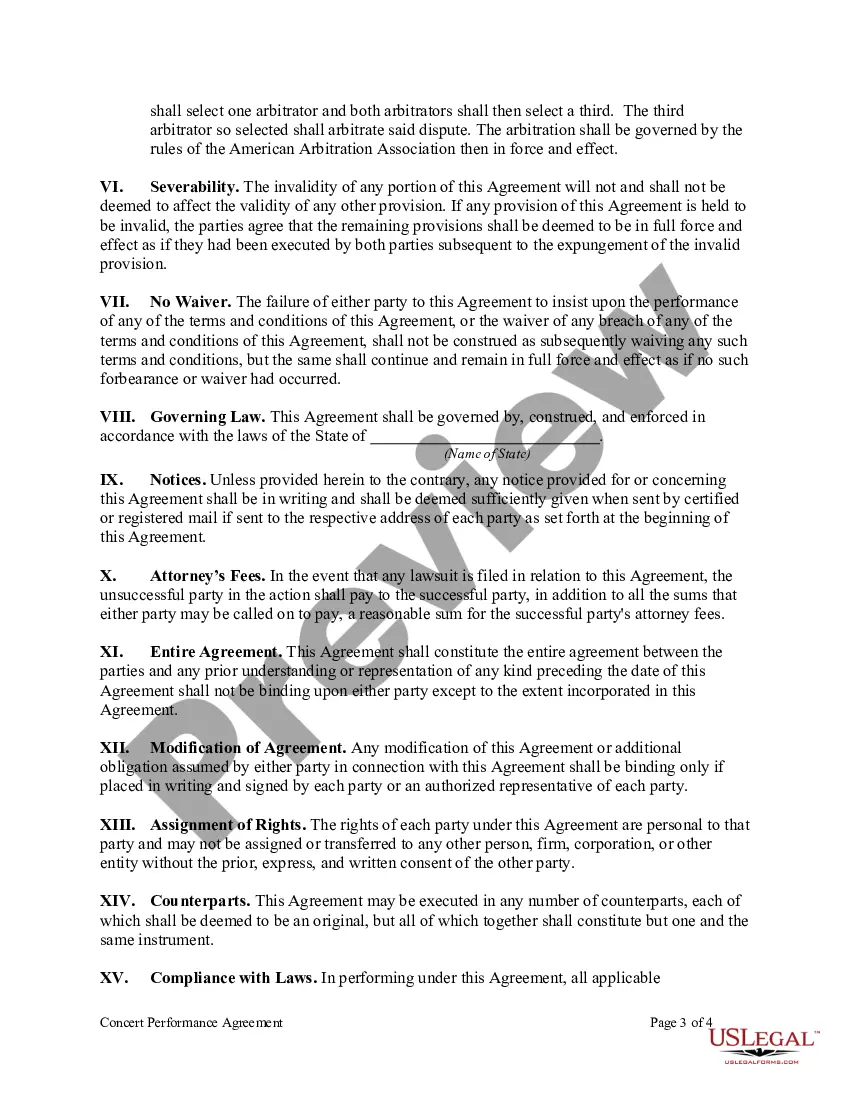
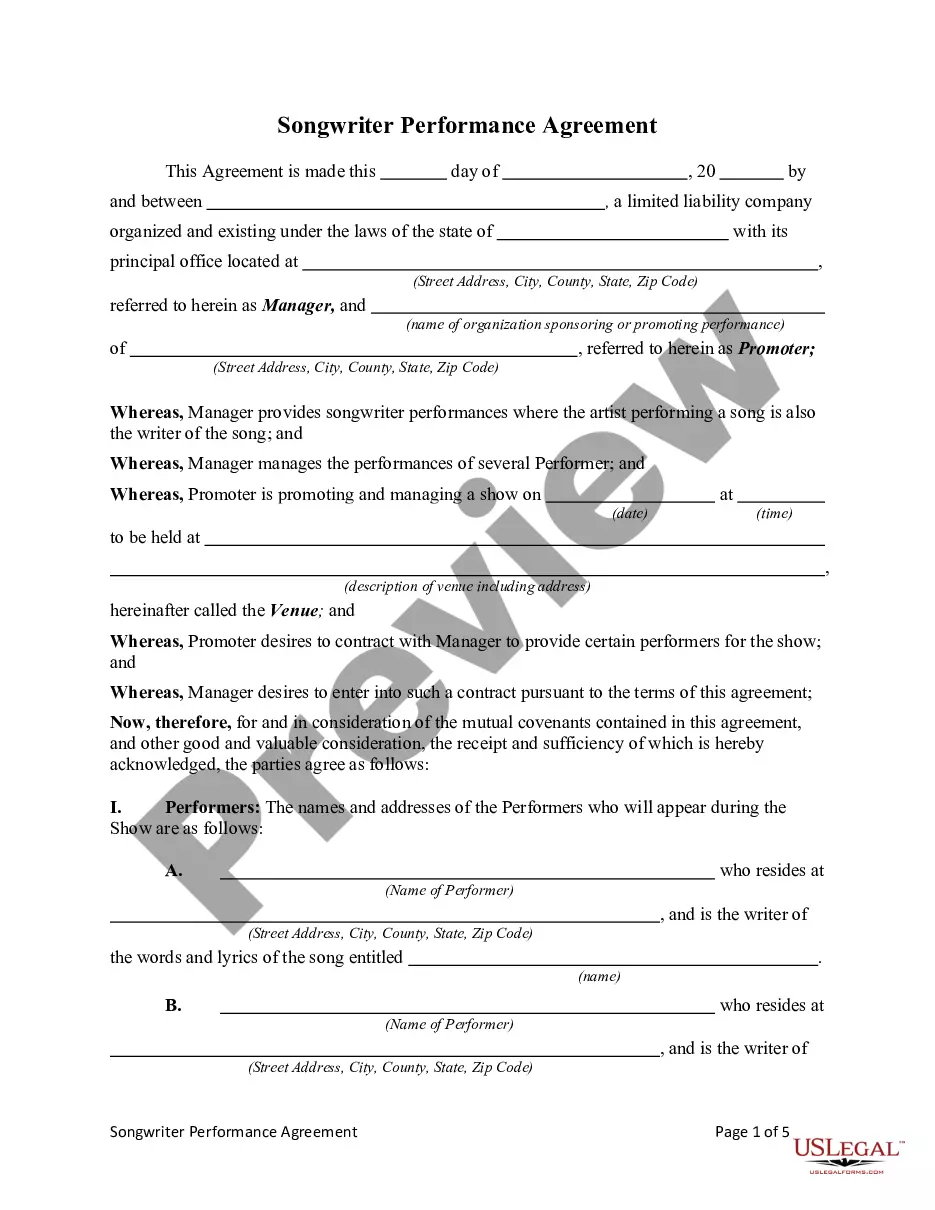
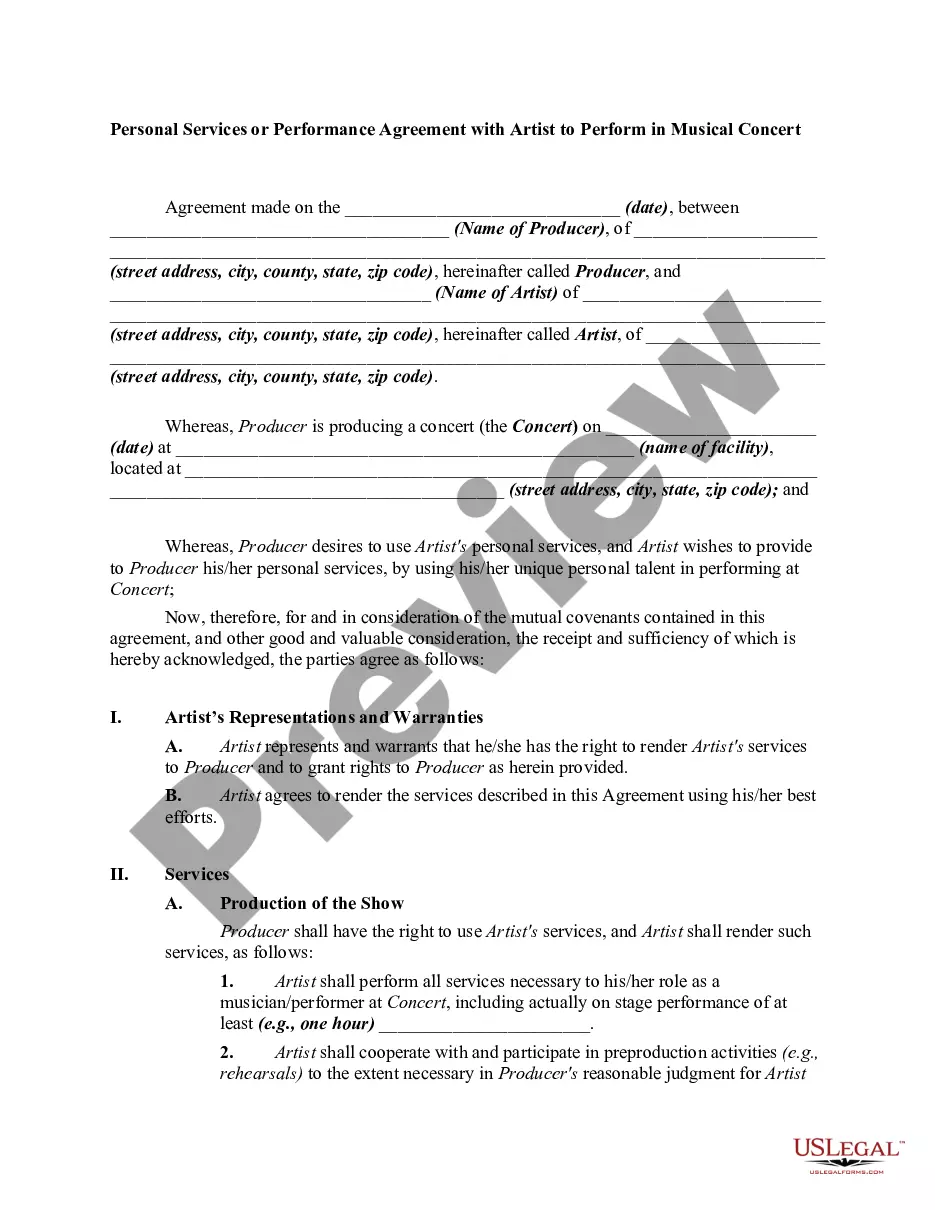
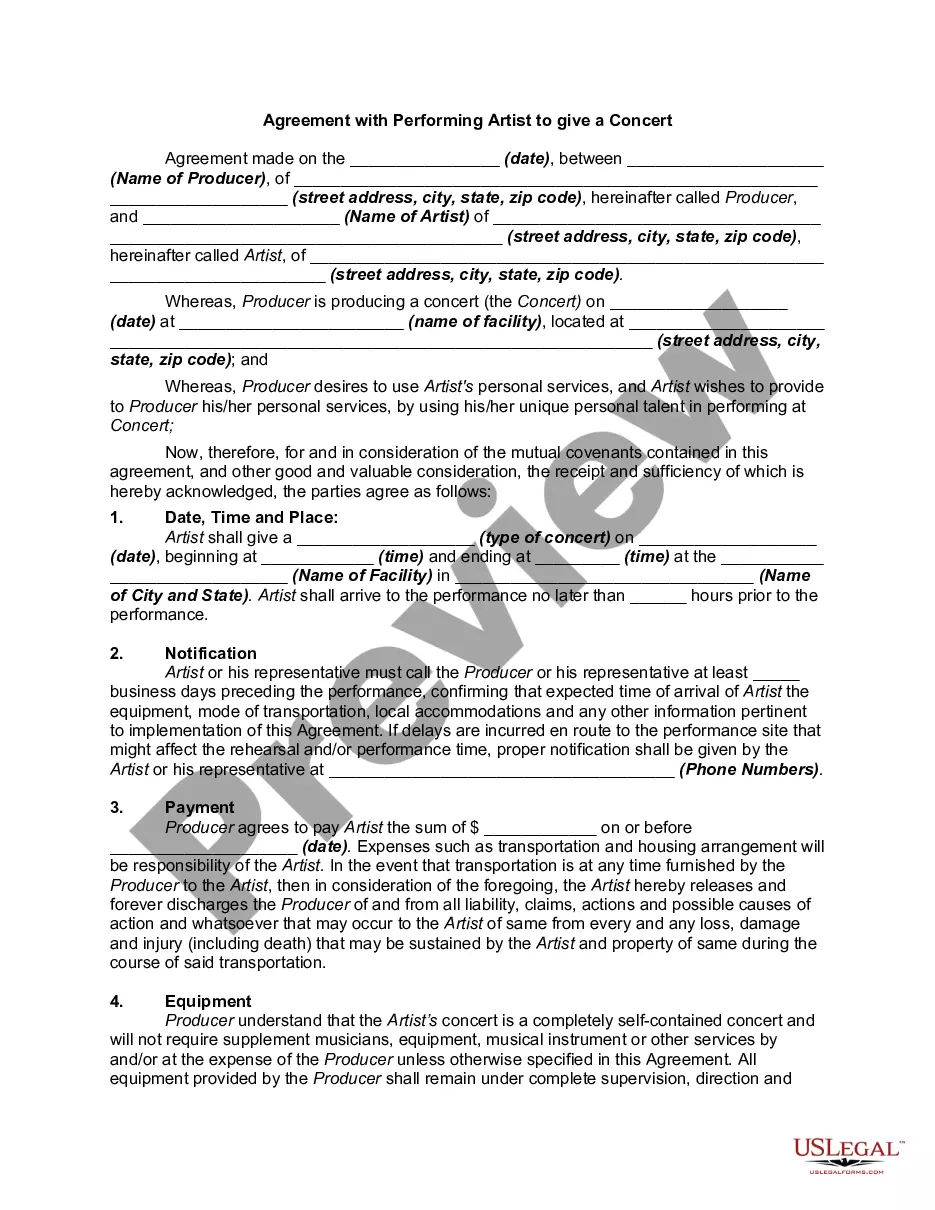
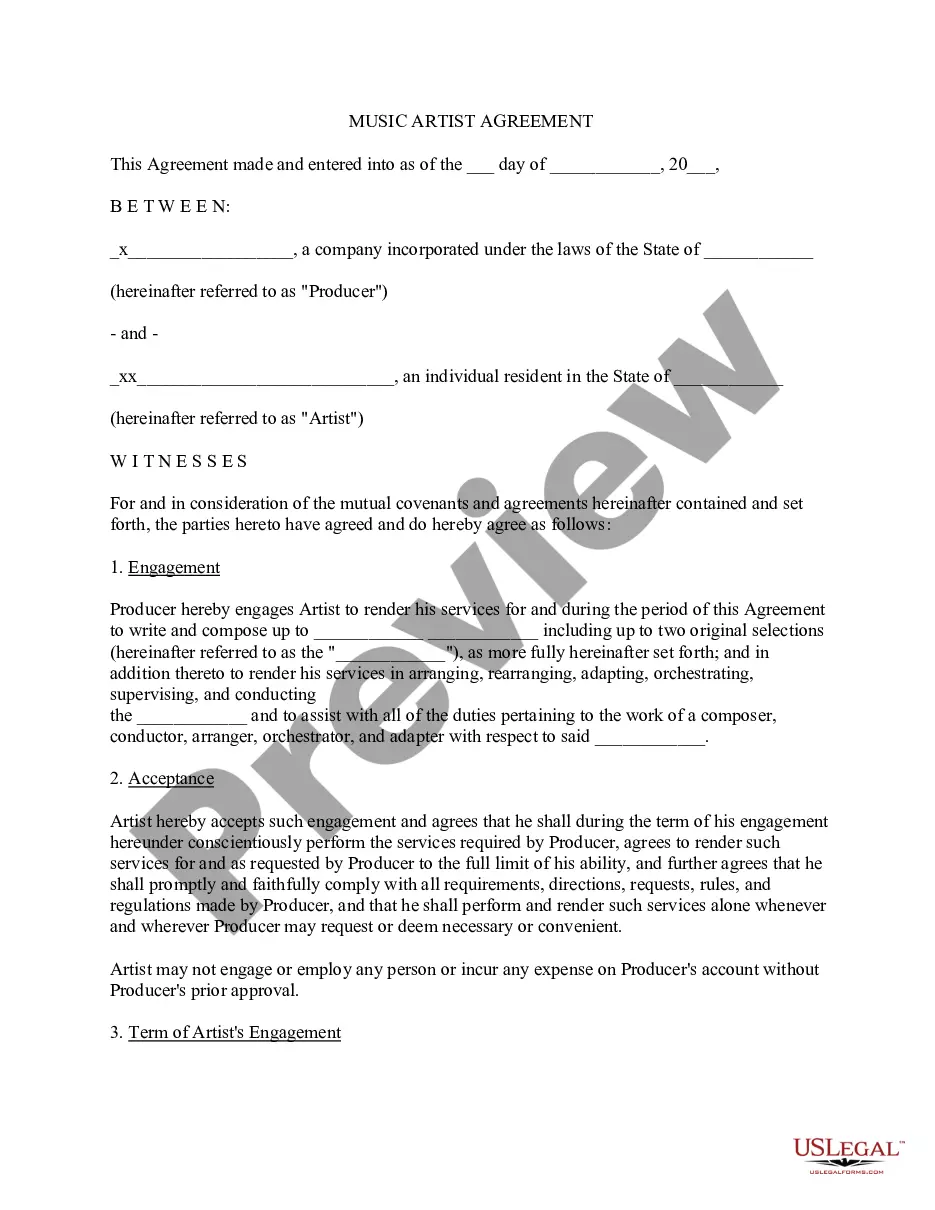
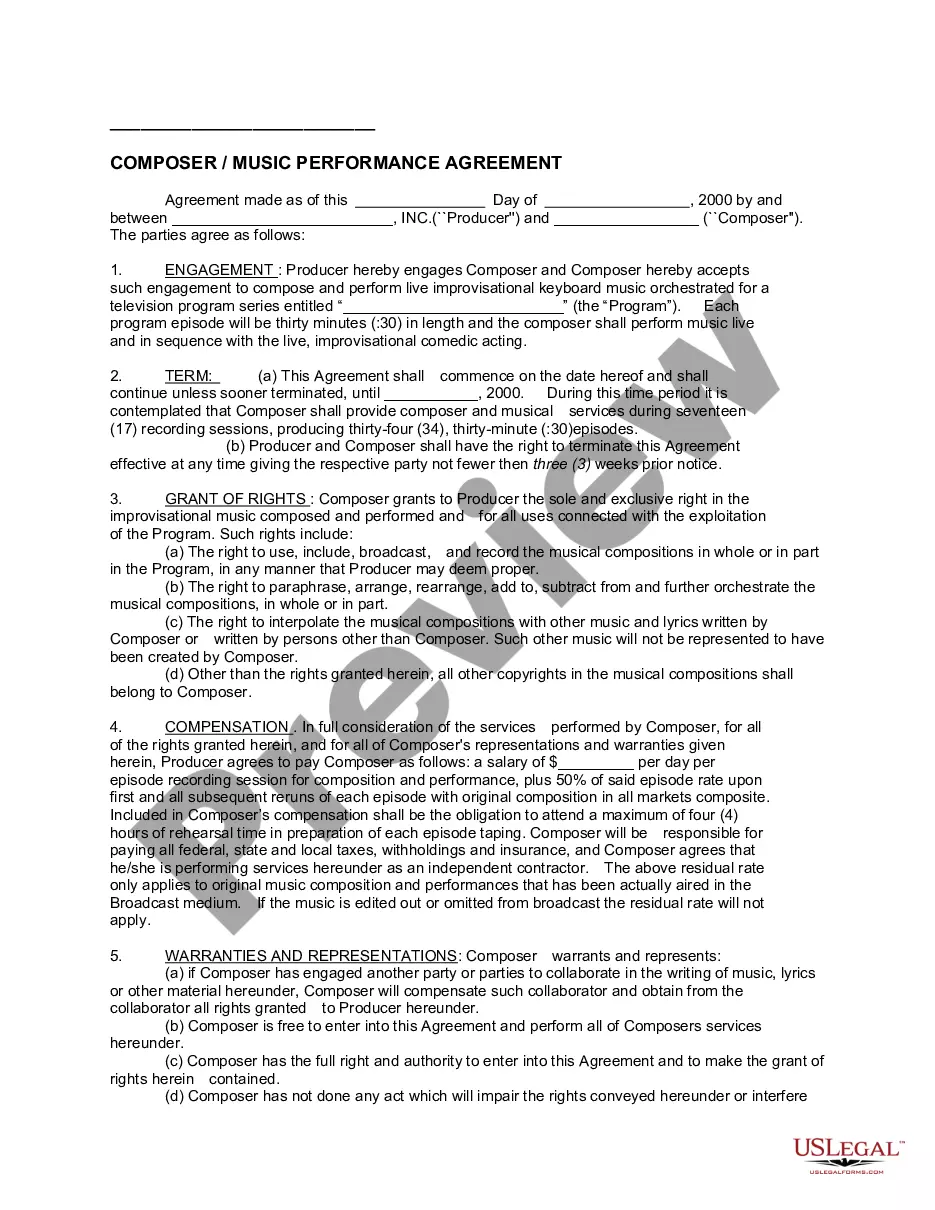
There are four main components in a Music Performance Agreement.
1. Scope of performance. Exactly what are the musicians being contracted to do? The agreement should clearly explain the pertinent details. For instance, how long will the performance last? What group is contracted to perform (including how many musicians)? Are there additional performance requirements
2. Day, time and place for the performance. The exact date, time and location for the performance must be clearly specified.
3. Compensation. What are the various payment arrangements and which are most common for this type performance?
4. Technical requirements. For example, who will provide the sound system, stage lights, and any crew that is needed?
Mesa Arizona Concert Performance Agreement
Category:
State:
Multi-State
City:
Mesa
Control #:
US-0027BG
Format:
Word;
Rich Text
Instant download
Description
Free preview