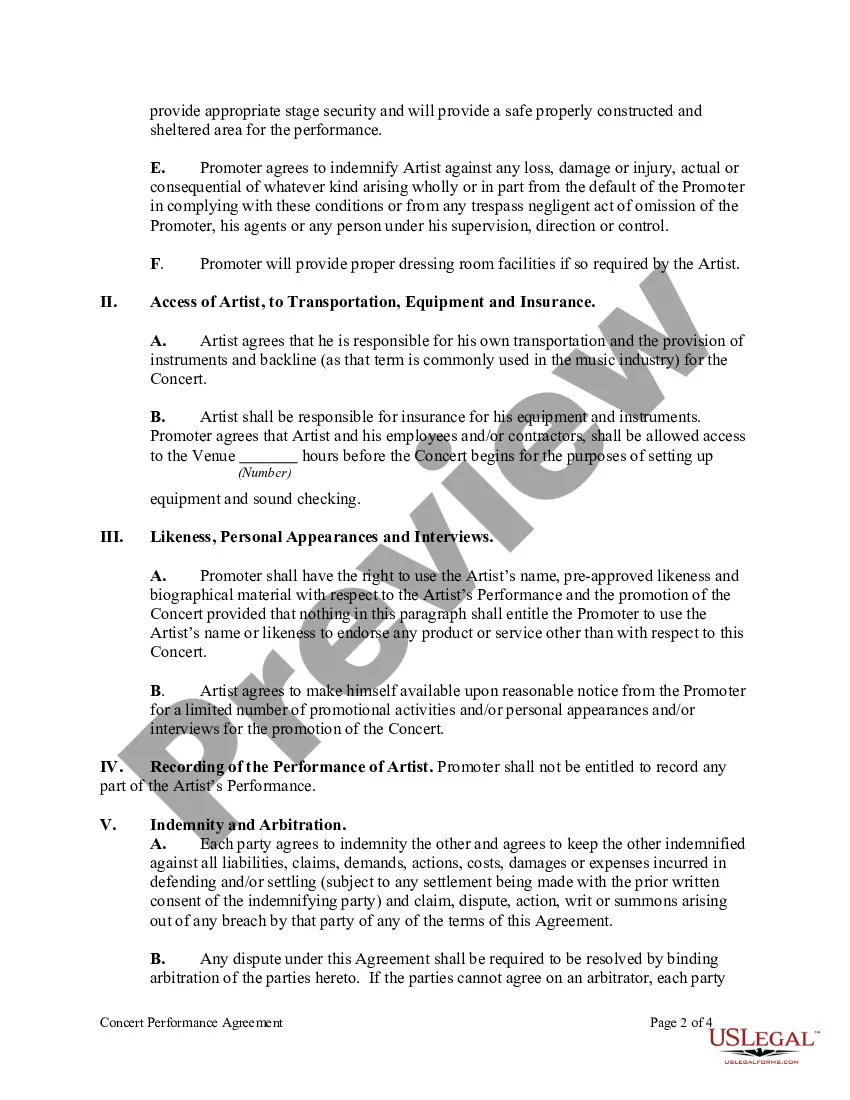
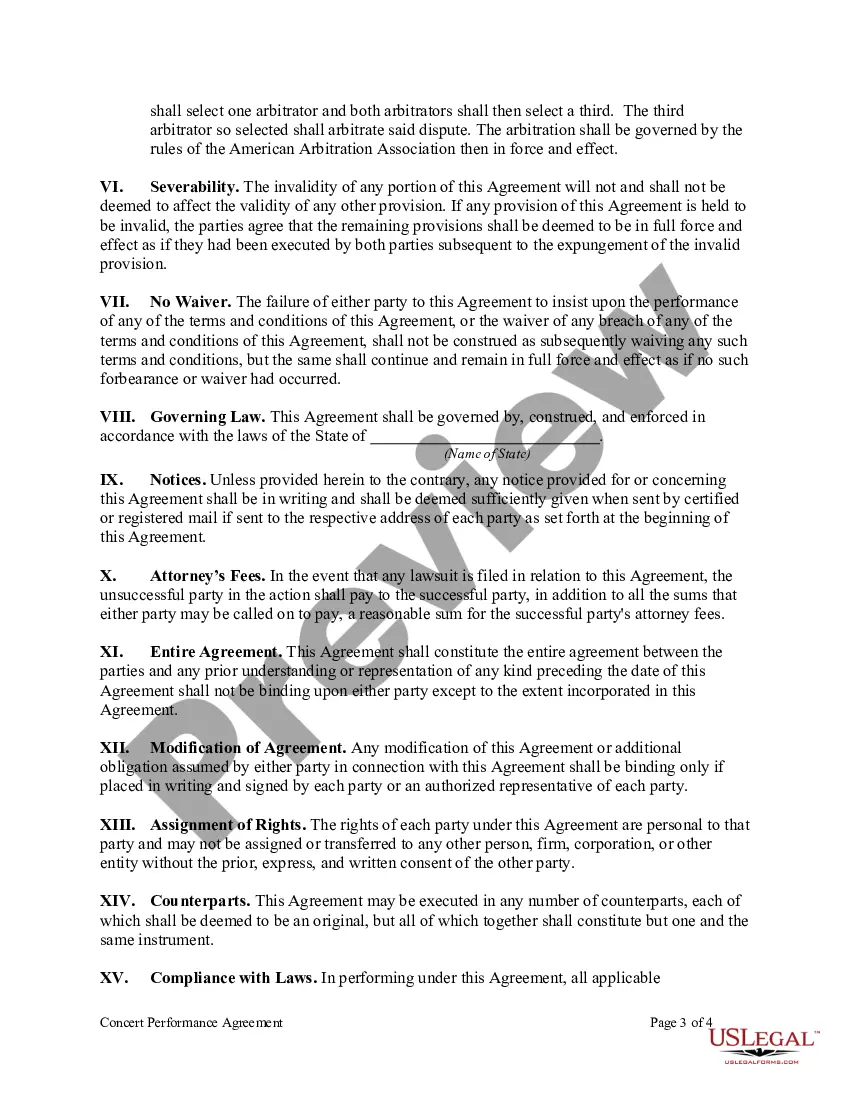
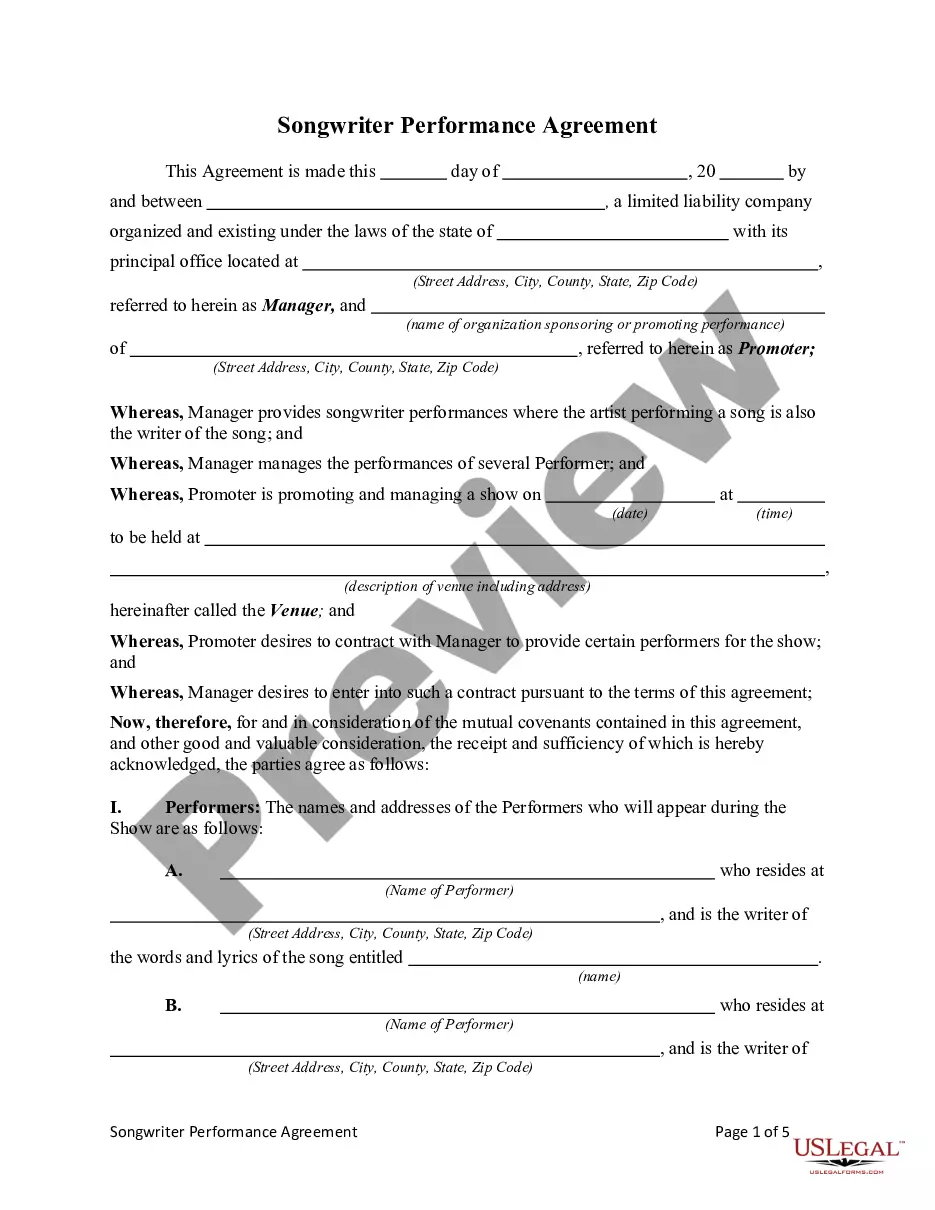
There are four main components in a Music Performance Agreement.
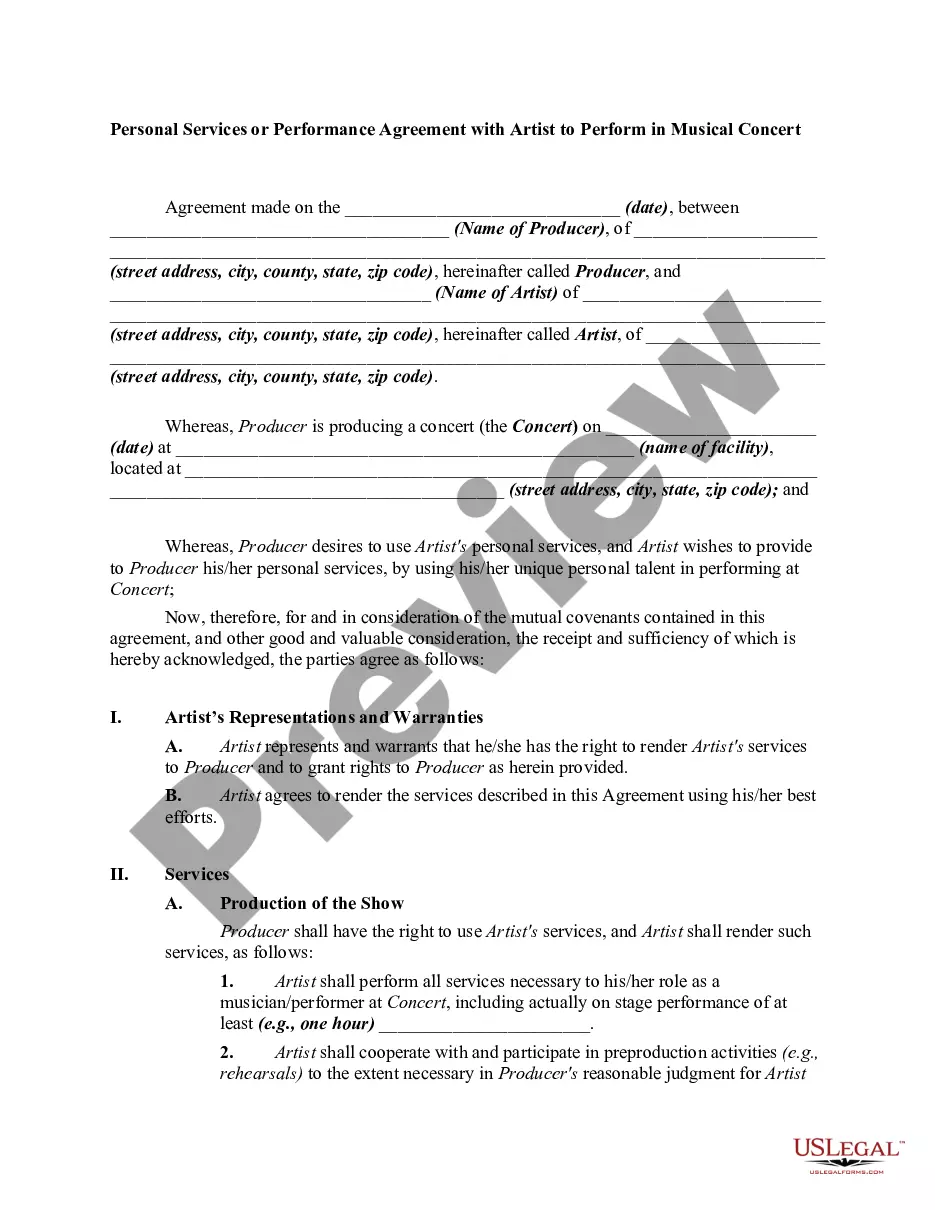
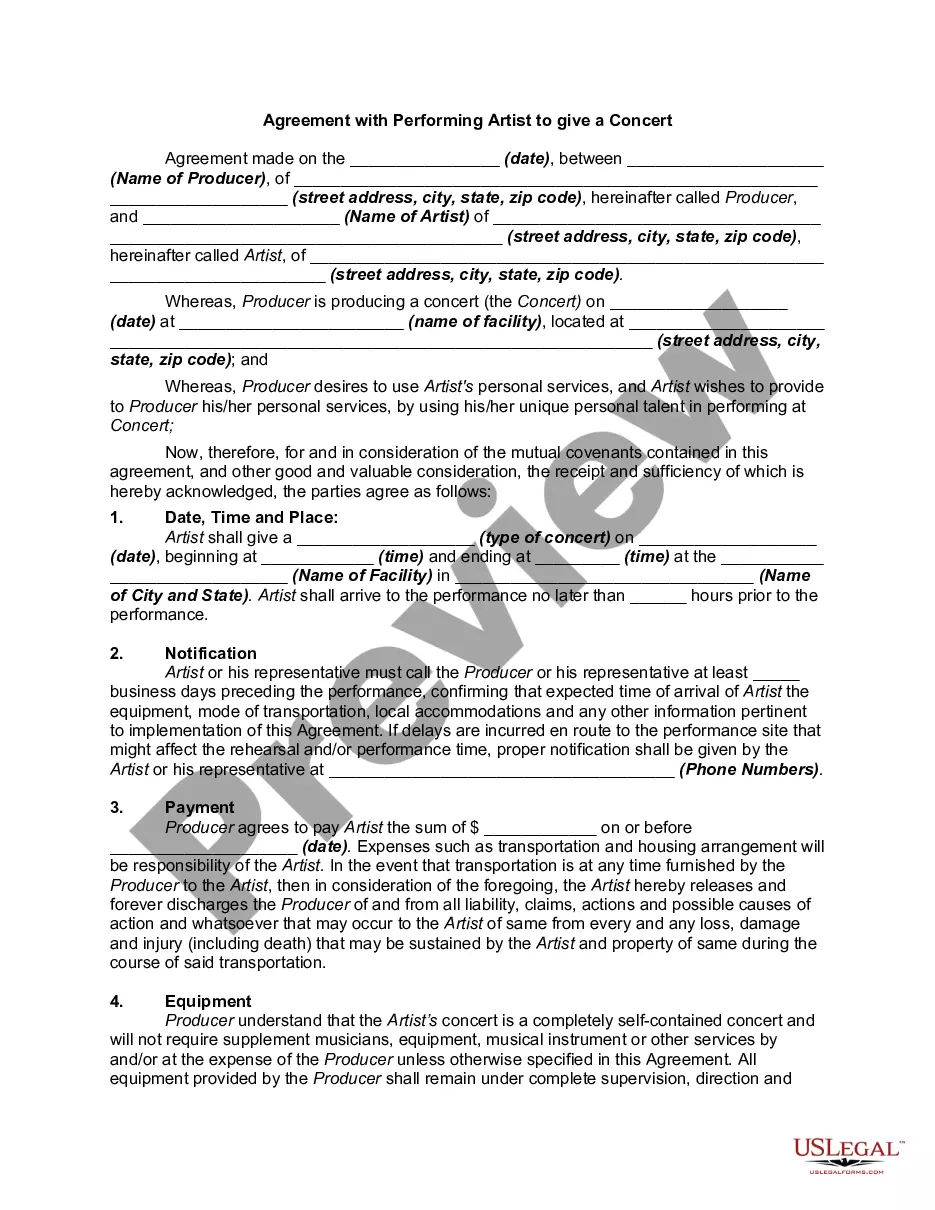
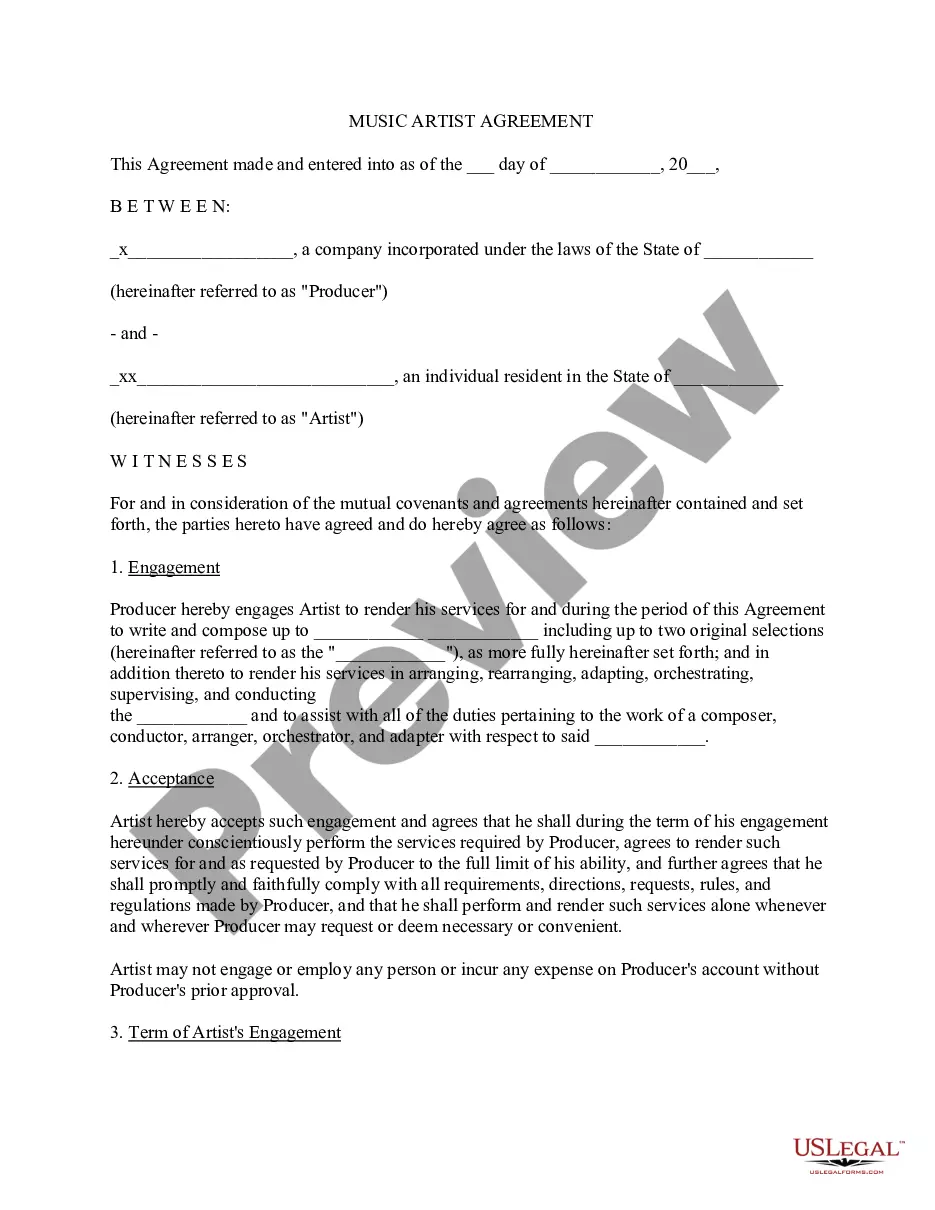
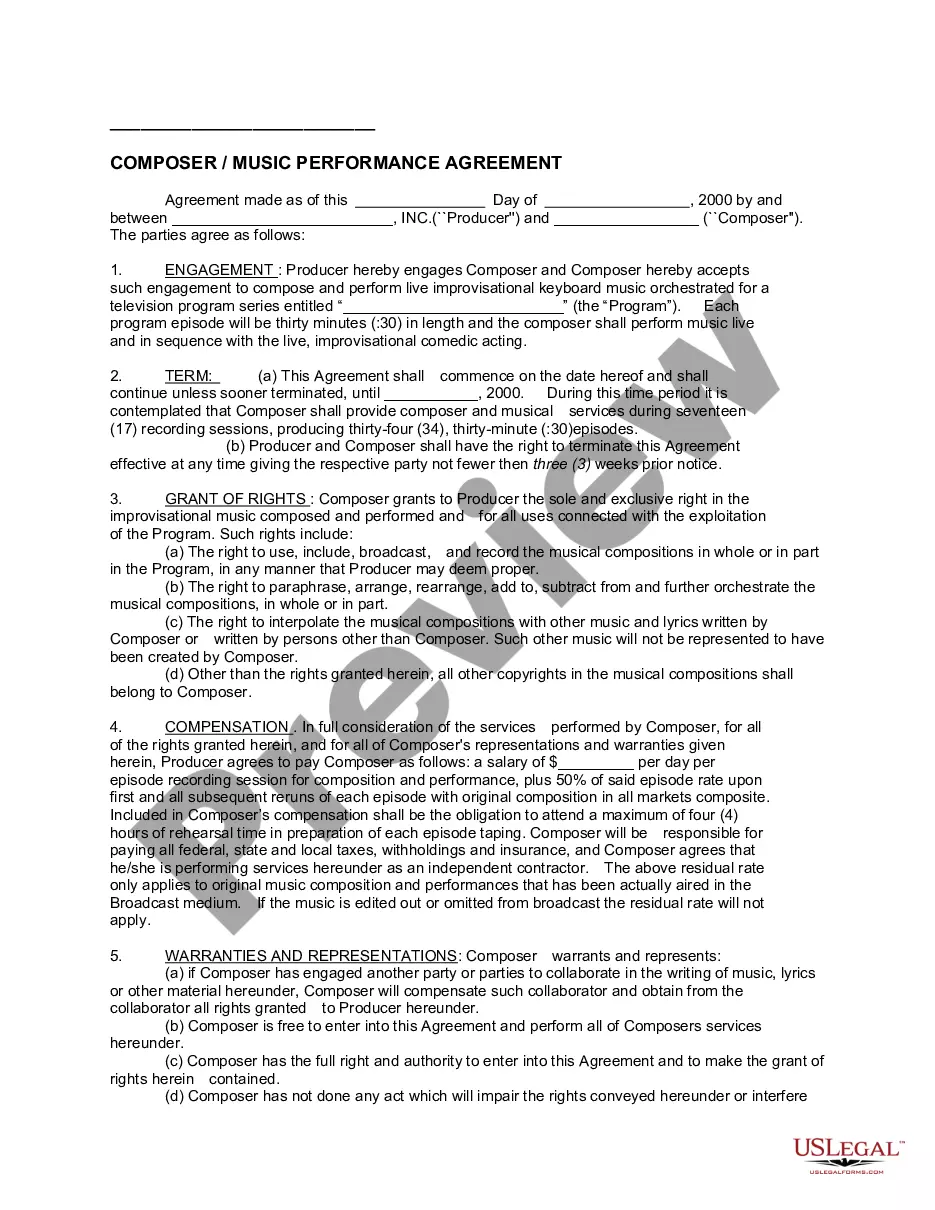
1. Scope of performance. Exactly what are the musicians being contracted to do? The agreement should clearly explain the pertinent details. For instance, how long will the performance last? What group is contracted to perform (including how many musicians)? Are there additional performance requirements
2. Day, time and place for the performance. The exact date, time and location for the performance must be clearly specified.
3. Compensation. What are the various payment arrangements and which are most common for this type performance?
4. Technical requirements. For example, who will provide the sound system, stage lights, and any crew that is needed?
If issues arise, try to resolve them amicably first. If that doesn't work, the agreement should outline steps to take, which might include mediation or legal action. It's best to have your ducks in a row for any bumps in the road.
Yes, local laws and regulations can impact concert agreements. It's wise to have a local legal expert review everything to keep you out of hot water.
If a cancellation occurs, the agreement should have clauses that explain what each party's rights and responsibilities are. It's always good to know the rules of the game.
Absolutely! Most agreements can be tweaked depending on everyone's needs. It's best to have an open conversation to make sure it's a win-win.
Make sure to check the date, time, venue, payment terms, and any specific requests or requirements from the artists. It's all about dotting the i's and crossing the t's.
Usually, the artist or band, the venue, and sometimes a promoter will all need to sign the agreement to make it official.
A Concert Performance Agreement is a contract that outlines the terms and conditions for a live music event in Anchorage, ensuring that everyone is on the same page.