Arlington Texas Public Improvement District Notice to Purchaser
Description
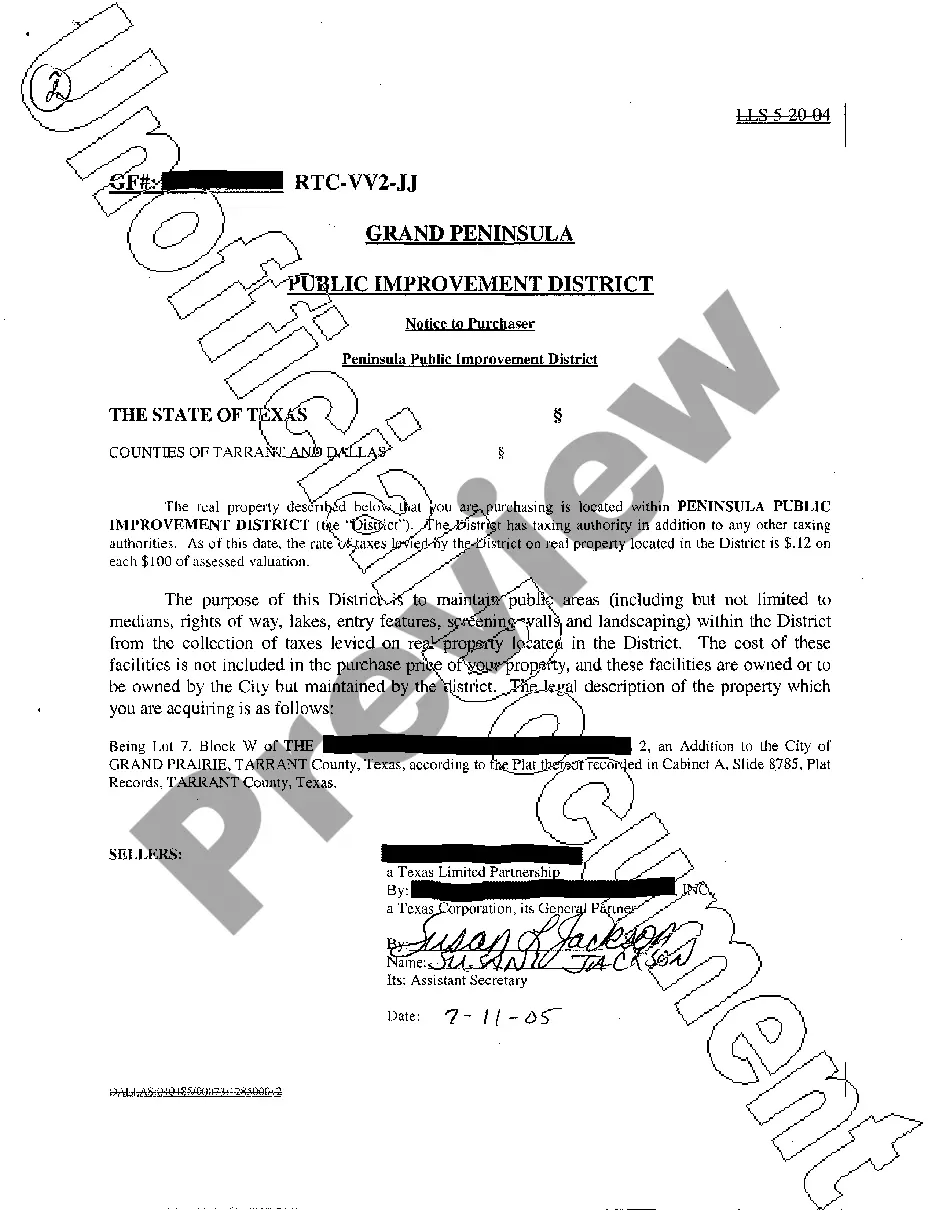

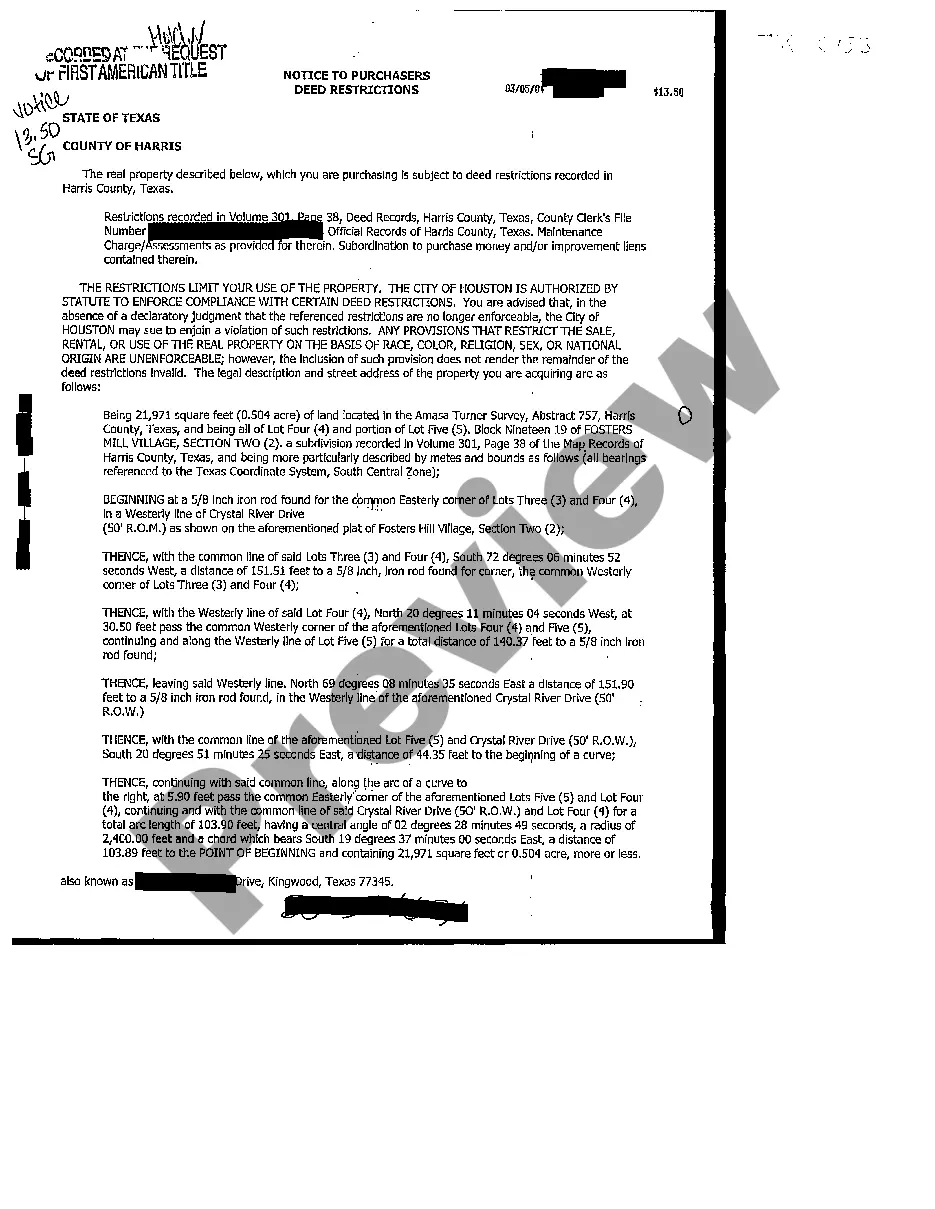
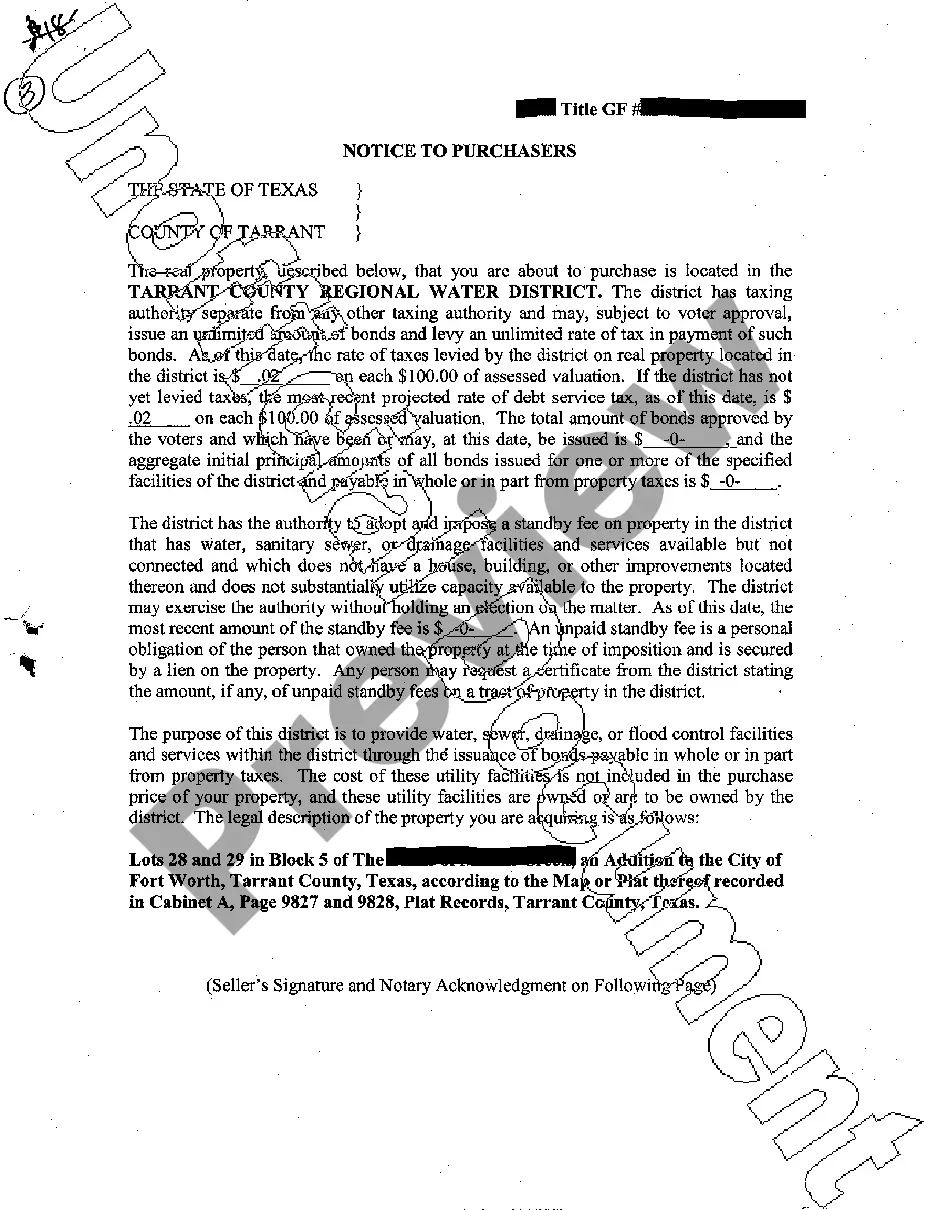
How to fill out Texas Public Improvement District Notice To Purchaser?
If you have previously made use of our service, sign in to your account and download the Arlington Texas Public Improvement District Notice to Purchaser onto your device by clicking the Download button. Ensure that your subscription is active. If not, renew it based on your payment plan.
If this is your initial experience with our service, follow these straightforward steps to obtain your document.
You have continuous access to every document you have purchased: you can find it in your profile within the My documents section whenever you need to use it again. Utilize the US Legal Forms service to quickly find and store any template for your personal or professional needs!
- Ensure you’ve located an appropriate file. Browse through the description and utilize the Preview option, if available, to see if it fulfills your needs. If it does not meet your expectations, use the Search tab above to find the correct one.
- Purchase the template. Click the Buy Now button and select either a monthly or yearly subscription plan.
- Create an account and process your payment. Use your credit card information or the PayPal option to finalize the purchase.
- Obtain your Arlington Texas Public Improvement District Notice to Purchaser. Choose the file format for your document and store it on your device.
- Complete your document. Print it out or use professional online editors to fill it out and sign it digitally.
Form popularity
FAQ
The MUD is a political entity that can levy taxes, but a PID is not a political entity and a PID uses assessments to pay off the bonds. A few recent North Texas master planned communities that are MUD neighborhoods include Trinity Falls (McKinney), Light Farms (Celina), Artesia ( Prosper).
Unlike a MUD, a PID is not a political entity. Some developments use a PID instead of a HOA since PID assessments are tax deductible. Unlike tax rates for MUDs, these assessments are fixed once the bonds are sold. PIDs are funded through bonds secured by liens against the property.
A PID is a Public Improvement District. This basically means an entity that has been created by the city or county to levy a special tax for specific improvements to a specific neighborhood. Examples might include roads, moving utilities underground, etc.
Public Improvement Districts (PIDs) are defined geographical areas established to provide specific types of improvements or maintenance, which are financed by assessments against the property owners within the area.
A Public Improvement District is a special district created by a City or County under the authority of Chapter 372 of the Texas Local Code. The statute allows for a city or county to levy a special assessment against properties within the District to pay for improvements to the properties within the District.
A Public Improvement District is a special district created by a City or County under the authority of Chapter 372 of the Texas Local Code. The statute allows for a city or county to levy a special assessment against properties within the District to pay for improvements to the properties within the District.
The first place to check is with the seller. However, since some PIDs may no longer charge assessments, the seller might not be aware the property is in a PID. The next place to look is the county tax records. PIDs, like MUDs, are listed as entities on a tax bill.
Public Improvement Districts (PIDs) are defined geographical areas established to provide specific types of improvements or maintenance, which are financed by assessments against the property owners within the area. PIDs provide the city with a development tool that allocates costs according to the benefits received.
A PID is a Public Improvement District. This basically means an entity that has been created by the city or county to levy a special tax for specific improvements to a specific neighborhood. Examples might include roads, moving utilities underground, etc.