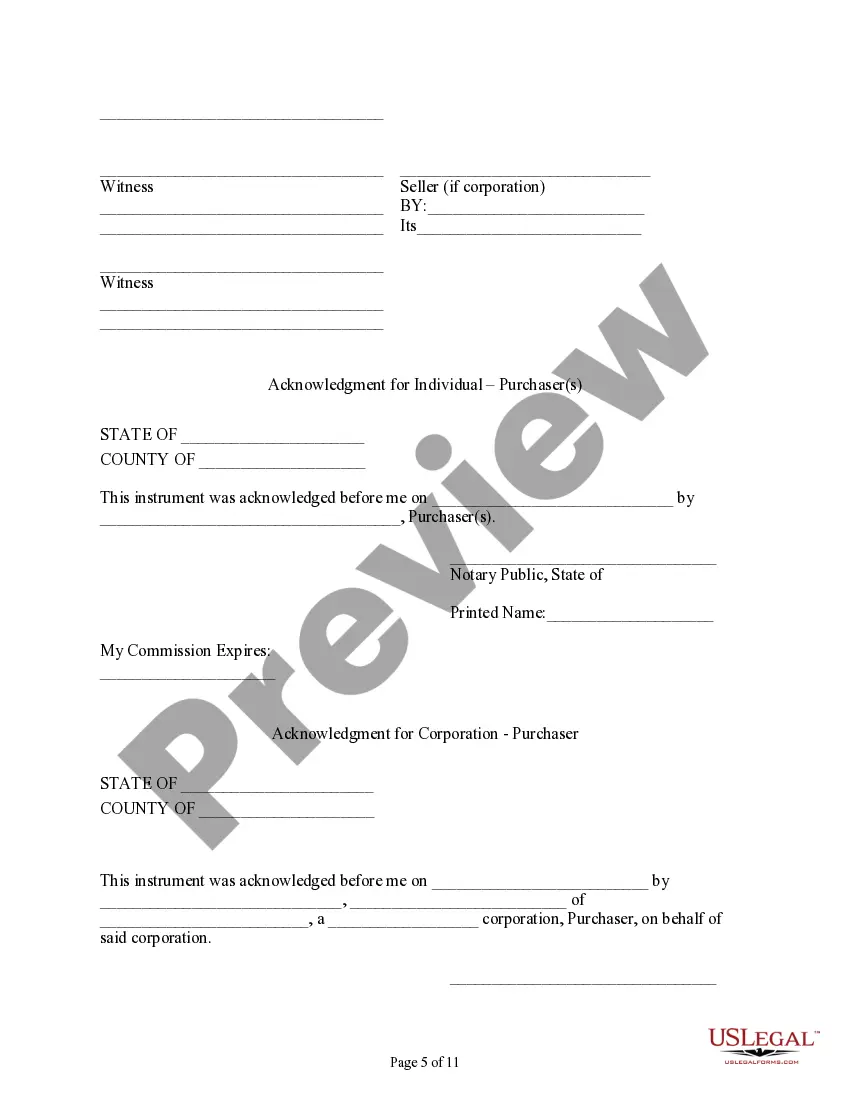
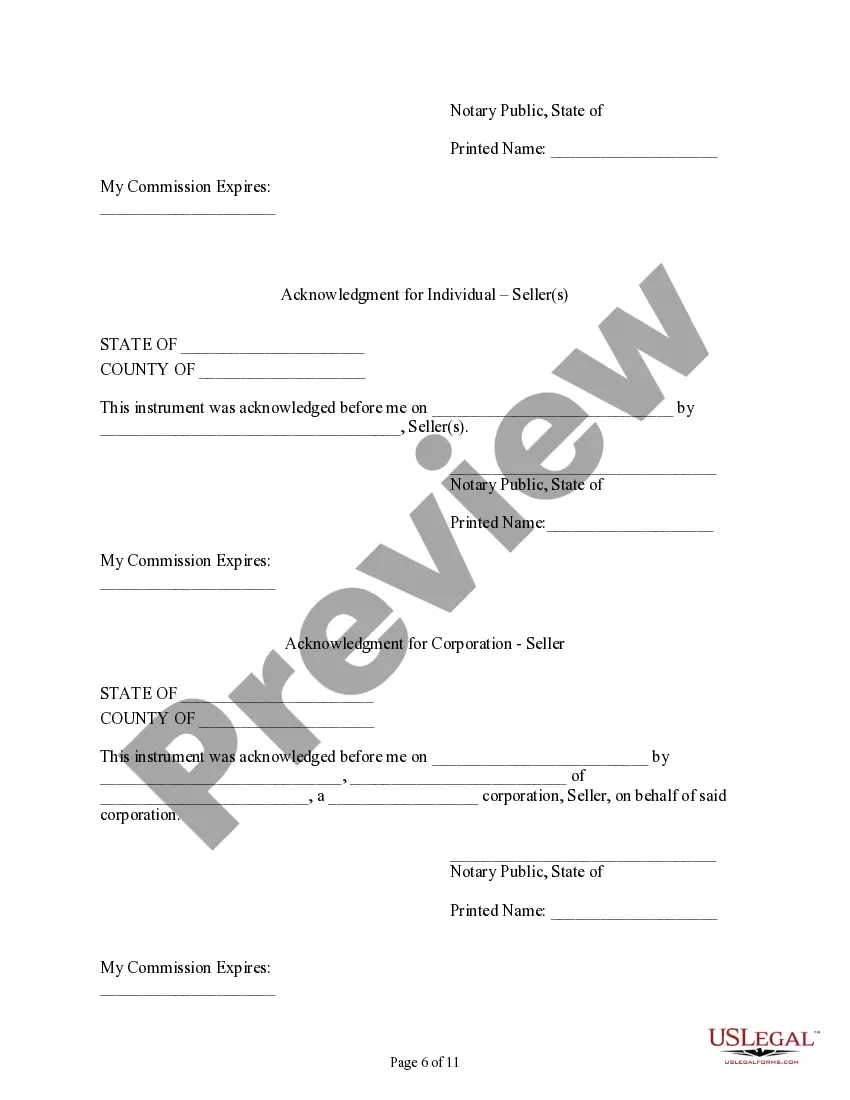
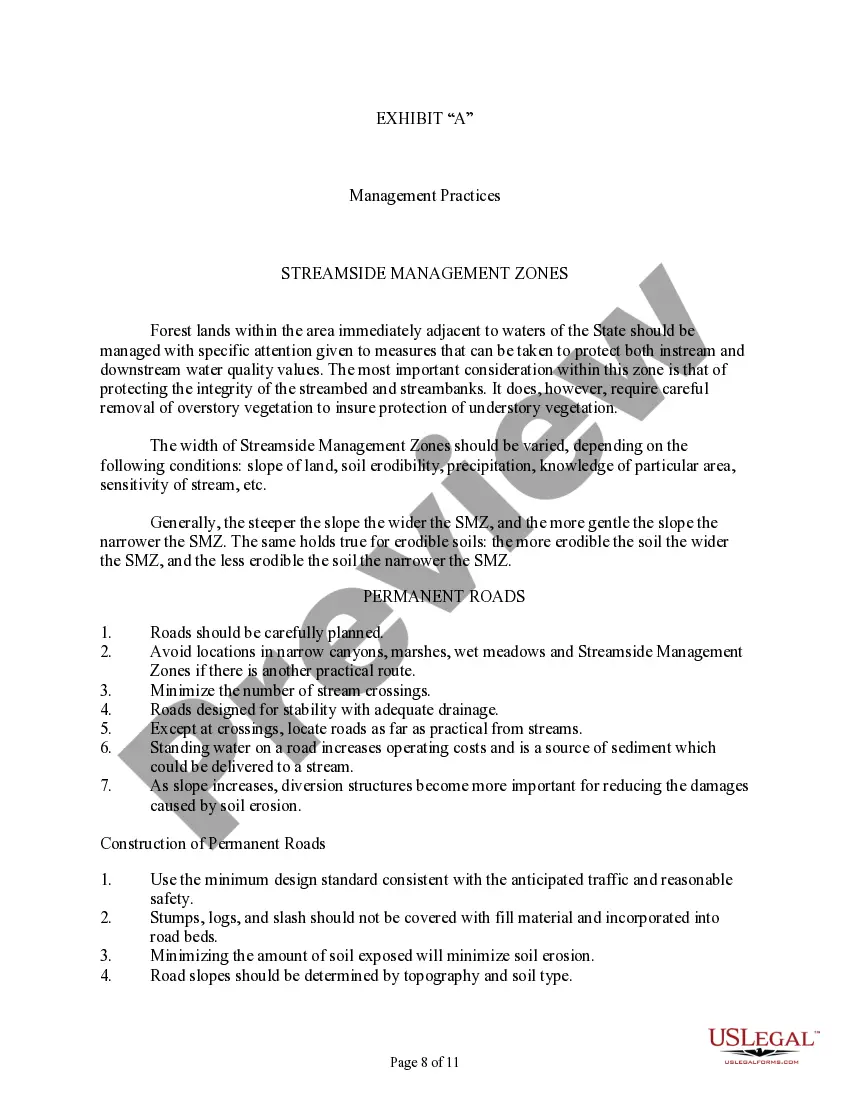
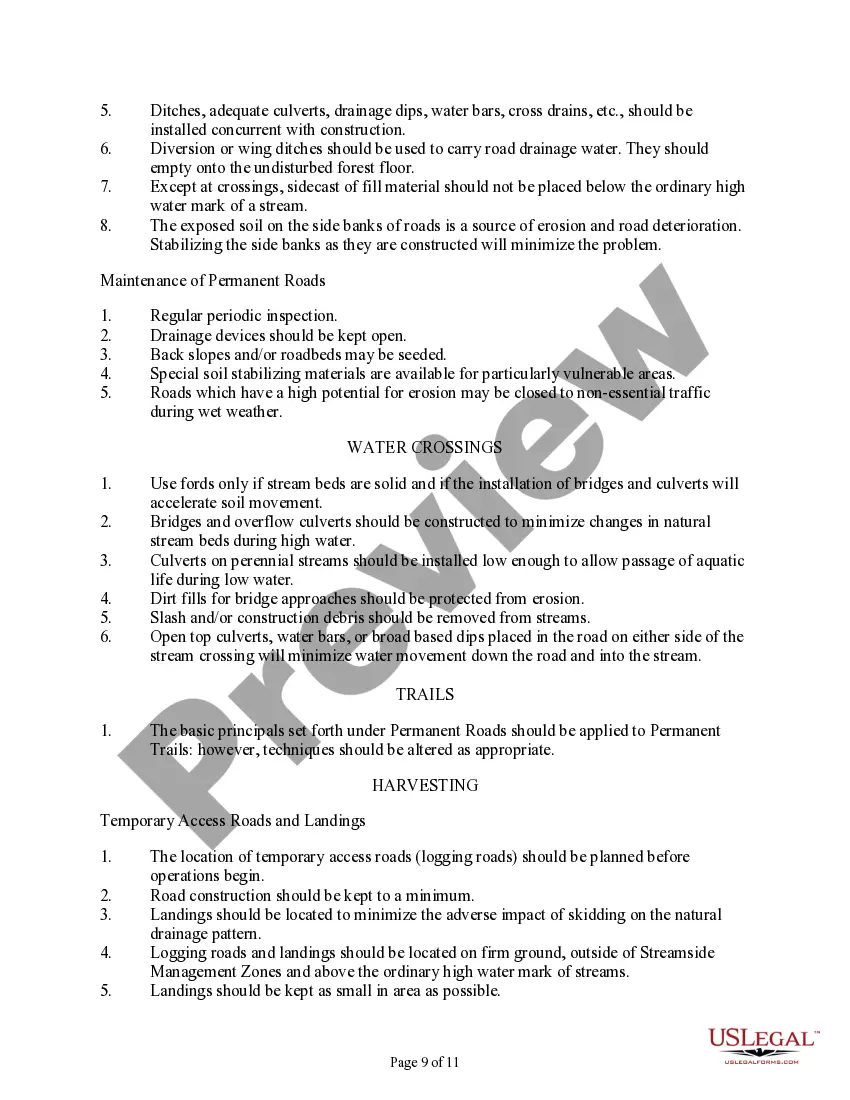
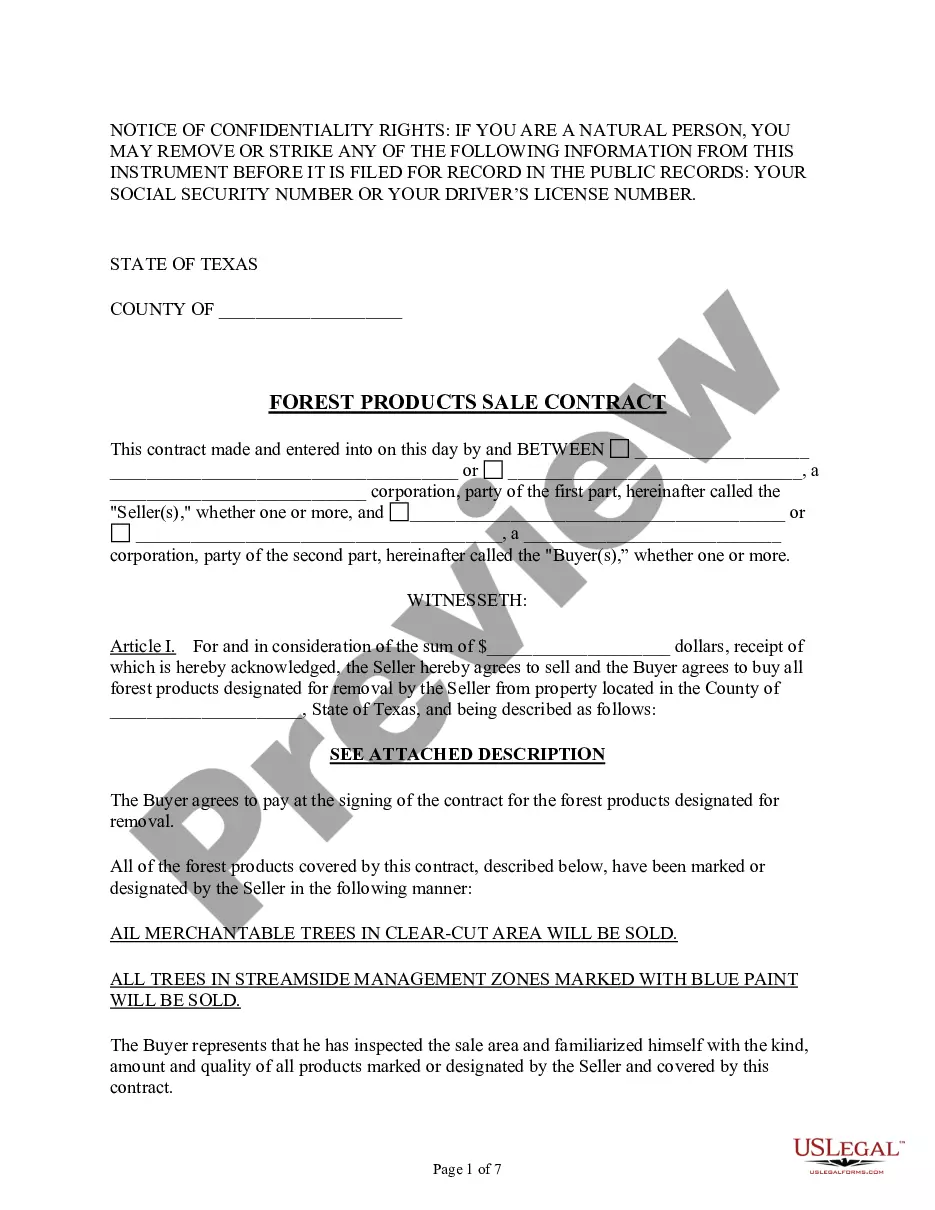
This is a contract whereby the buyer agrees to purchase all timber as designated for removal by the seller. Seller will also grant the buyer the right of ingress and egress to remove the timber from seller's land.
San Antonio Texas Timber Sale Contract
Category:
State:
Texas
City:
San Antonio
Control #:
TX-E4002
Format:
Word;
Rich Text
Instant download
Description
Free preview
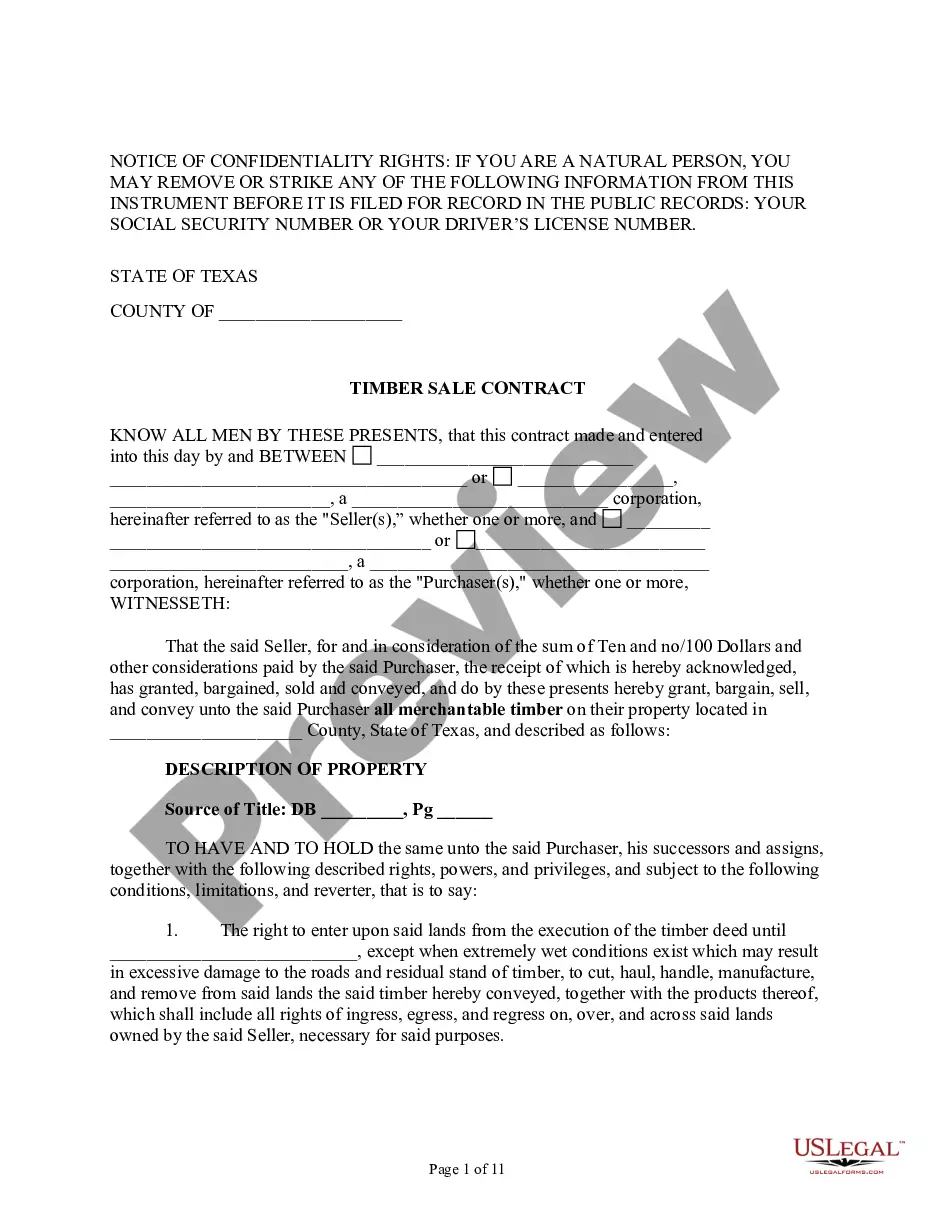
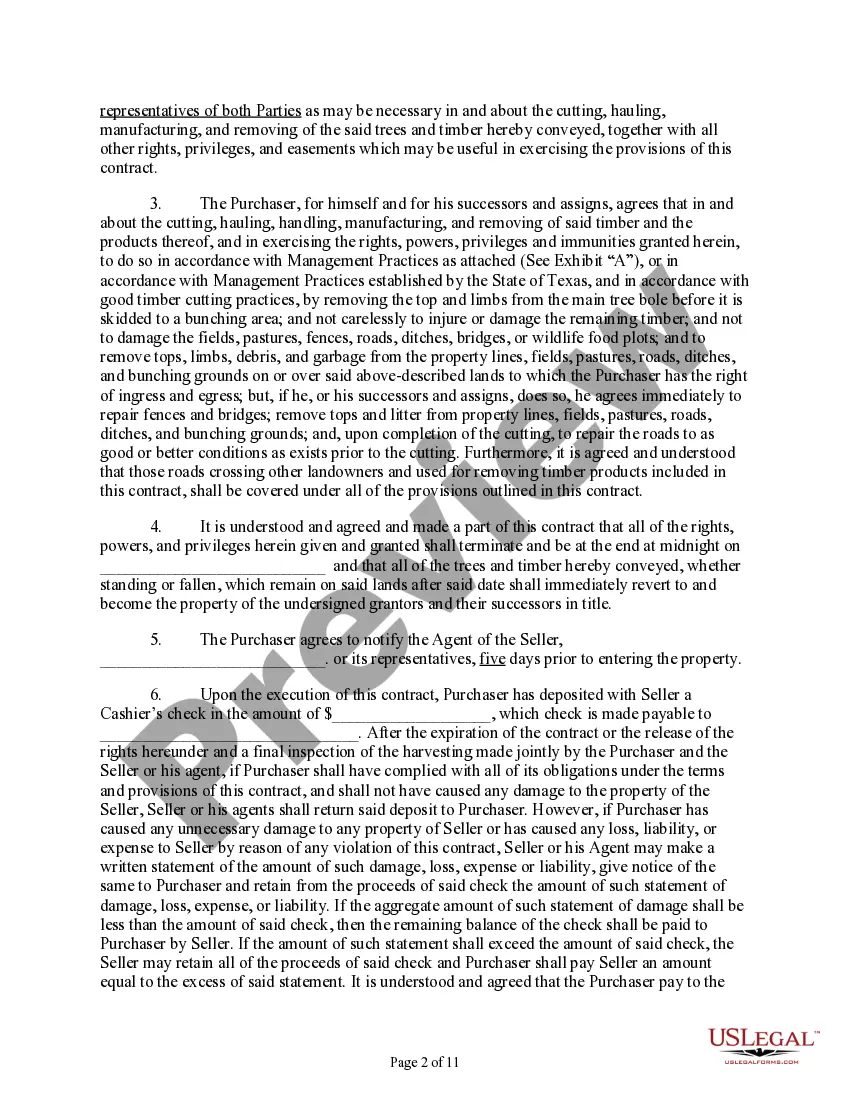
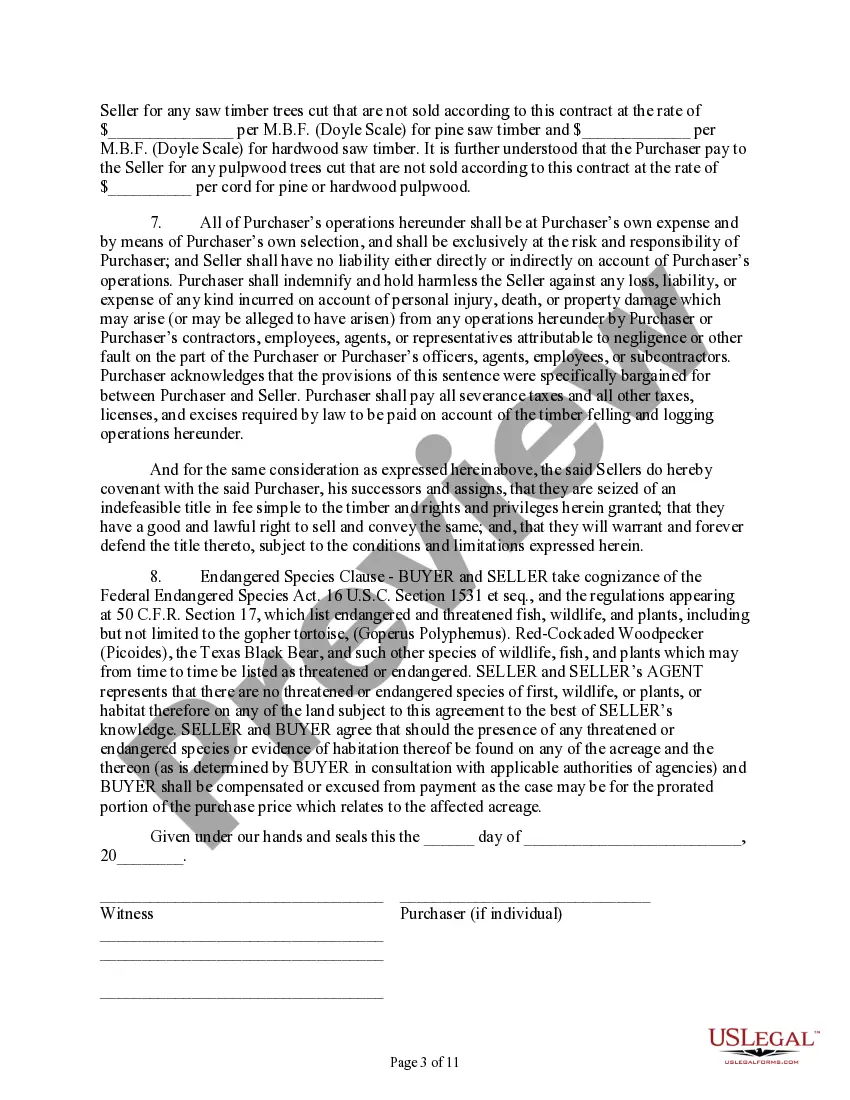
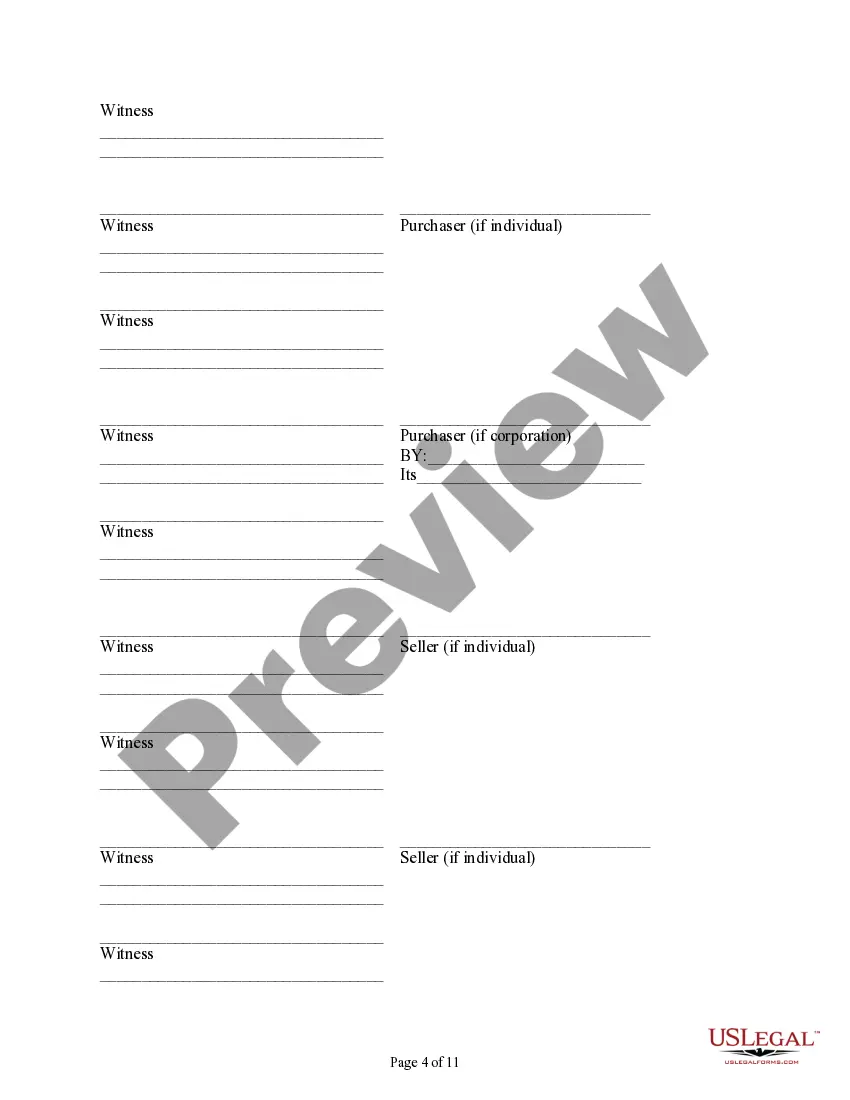

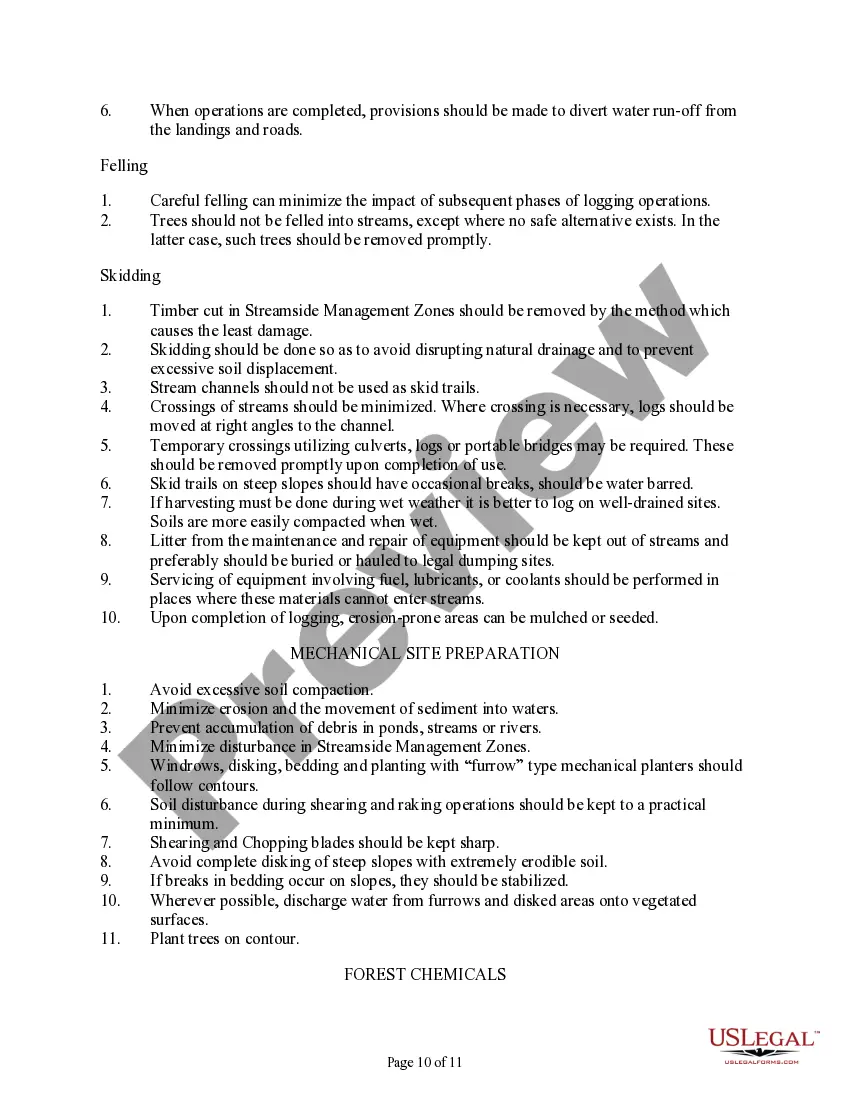

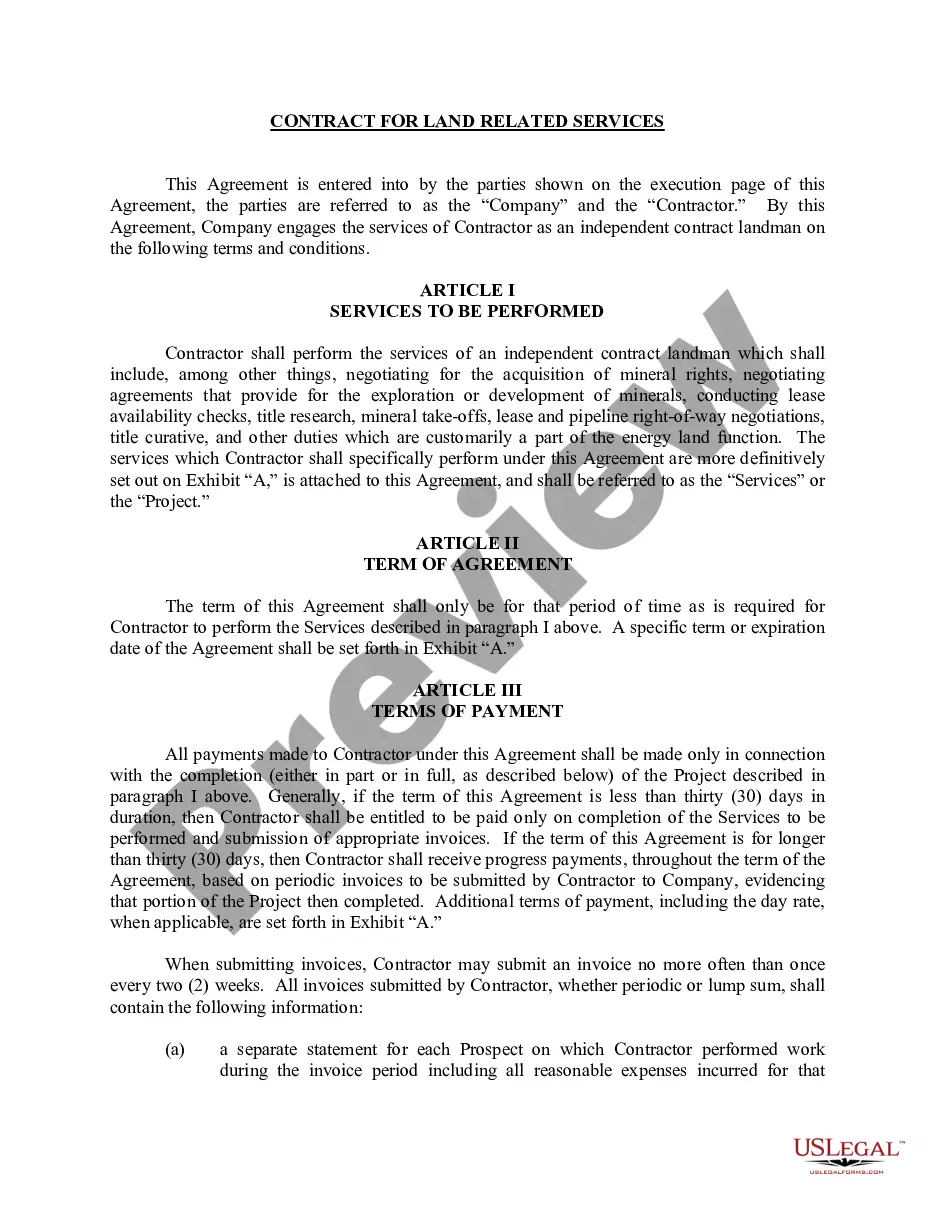
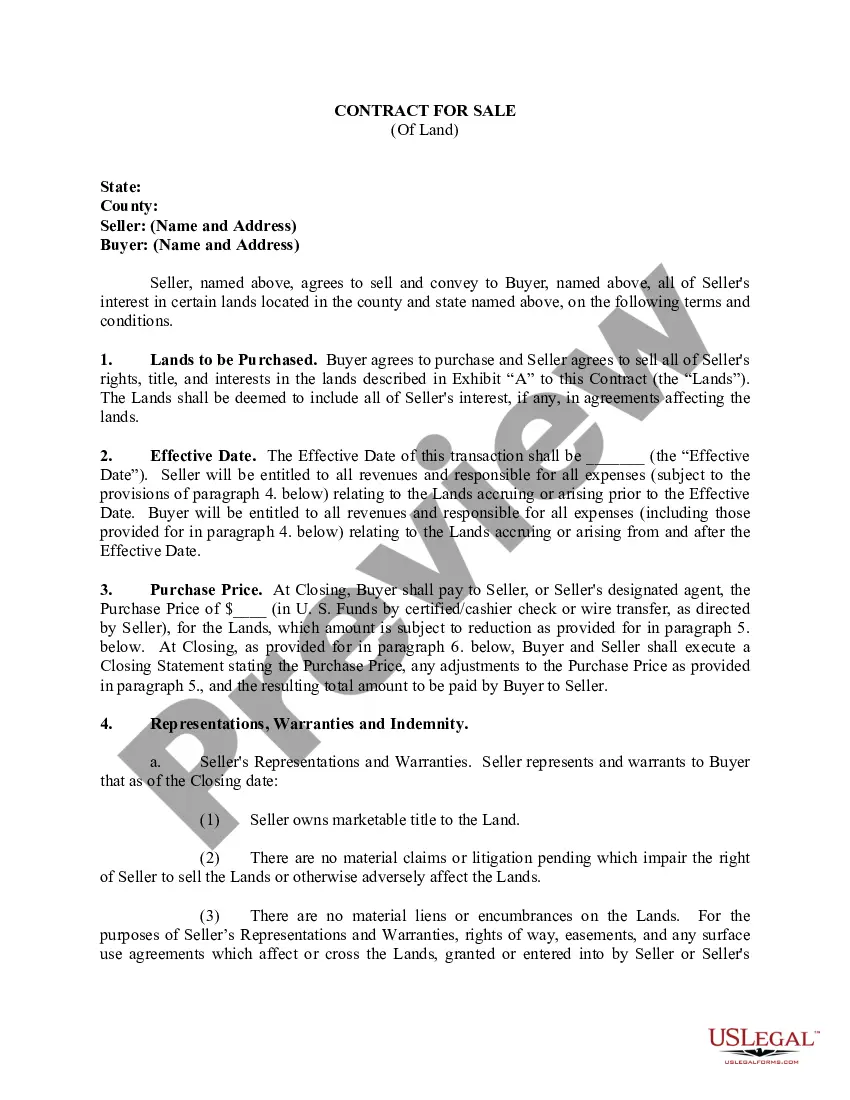





How to fill out Texas Timber Sale Contract?
Irrespective of social or occupational standing, completing law-related documents is a regrettable requirement in today’s society.
Frequently, it’s nearly unfeasible for an individual without legal training to create this type of documentation from the ground up, primarily due to the intricate vocabulary and legal intricacies they entail.
This is where US Legal Forms proves beneficial.
Make certain that the form you select is applicable for your region, as the regulations of one state or county may not apply to another state or county.
Examine the document and review a brief summary (if available) of situations the document can be utilized for. In case the one you selected doesn’t fulfill your criteria, you can begin anew and seek the needed form.
- Our platform offers a vast assortment of over 85,000 ready-to-use state-specific documents suitable for nearly any legal situation.
- US Legal Forms also acts as an invaluable resource for associates or legal advisors who wish to enhance their efficiency using our DIY forms.
- Whether you require the San Antonio Texas Timber Sale Contract or any other documentation that will be legitimate in your state or county, US Legal Forms has everything readily available.
- Here’s how to obtain the San Antonio Texas Timber Sale Contract in moments by using our reliable platform.
- If you are already a registered user, you can proceed to Log In to your account to access the required form.
- However, if you are new to our platform, ensure to adhere to these steps before acquiring the San Antonio Texas Timber Sale Contract.
Form popularity
FAQ
A written timber sale agreement or contract is generally the preferable and safest method of selling timber. A written contract is a legally binding document that protects both the buyer and the seller (the landowner) from misunderstandings that may develop in the absence of such an agreement.
A timber deed is a document that gives a timber company the right to cut the timber off of a specific piece of property. Usually they last anywhere from 1 to 3 years.
A successful timber sale involves the following steps: Step 1: Establish sale/property boundaries. Step 2: Determine and define access. Step 3: Identify trees to cut and appraise value. Step 4: Advertise the sale. Step 5: Execute a written contract. Step 6: Monitor active logging. Step 7: Close out the sale.
There are three major groups of timber harvest practices; clearcutting, shelterwood and selection systems.
To exercise the opportunity for mutual cancellation, the purchaser must submit a request in writing for each timber sale contract the purchaser seeks to cancel. The written request must be received by the BLM within 60 days of the purchaser's receipt of the BLM's letter.
With a stumpage sale, the buyer takes ownership of the timber from the landowner when the trees are harvested. Stumpage rates are proposed by the buyer (typically a logging contractor, forester, or mill) and stumpage paid to the landowner in exchange for the right to harvest their timber.
A typical timber sale contract usually contains the following: a description of the timber to be sold (estimated volume, number of trees and species), which timber will and will not be cut, the selling price (either lump sum or unit price), terms of payment, the location and boundaries of the sale, and time allowed to
Types of logs Electrode resistivity devices. Induction logging. Microresistivity logs. Spontaneous (SP) log.
Profit margins for the supplier average 3 to 5.5 percent. In general, a profit margin reflects the amount of value added to the product during processing and the amount of risk associated with the endeavor. While loggers do not technically add value to the timber they process and deliver, they do turn trees into logs.