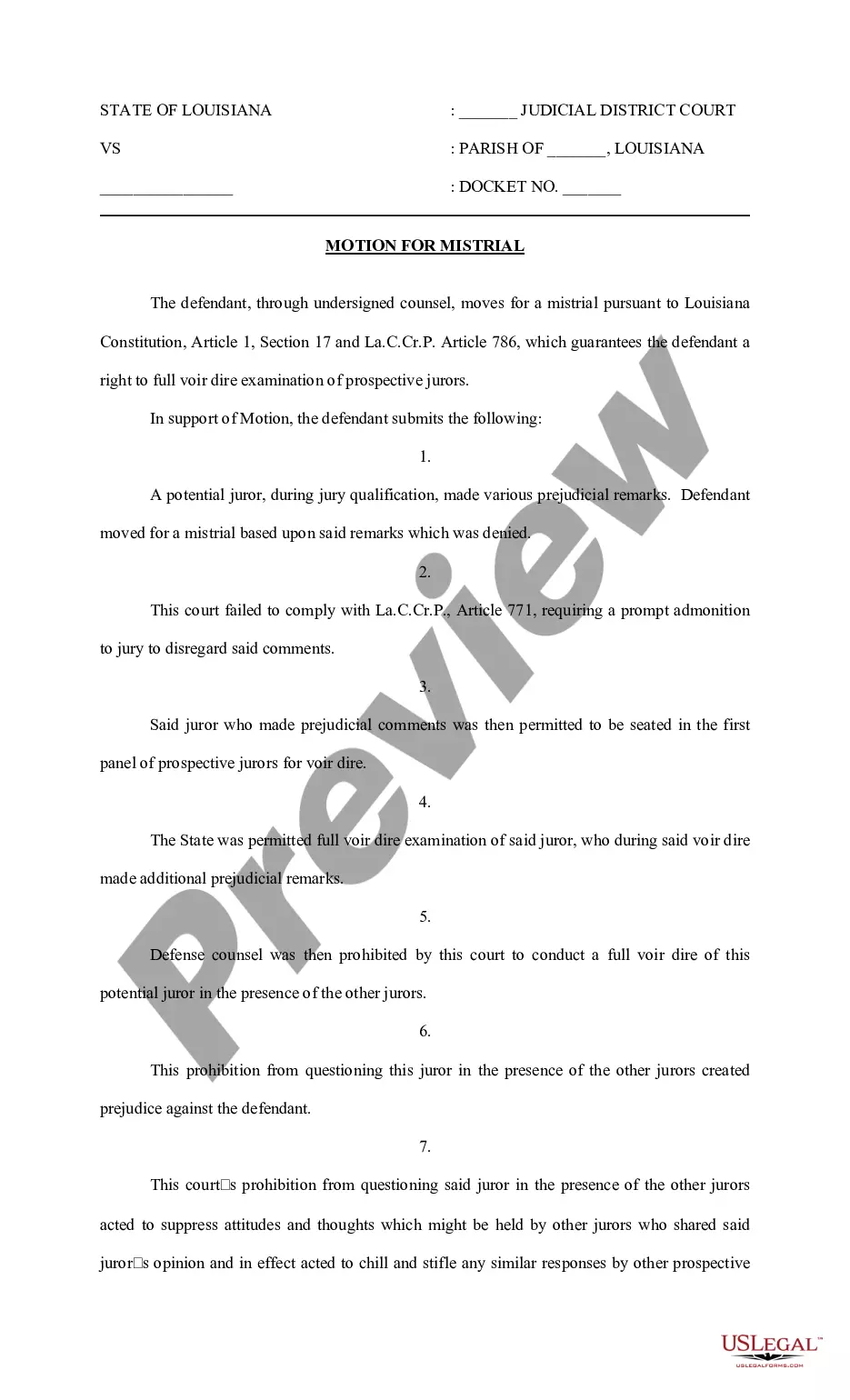
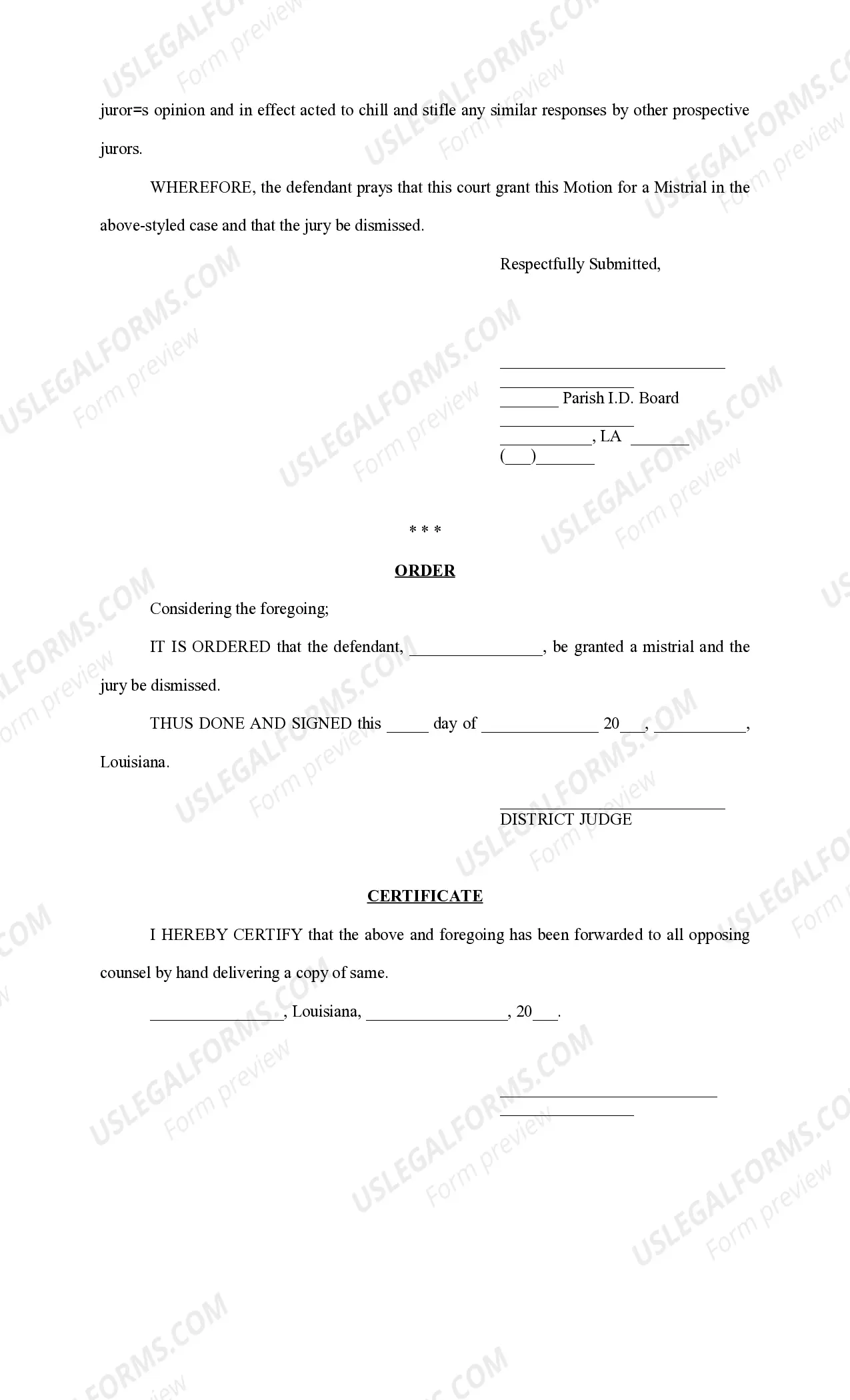
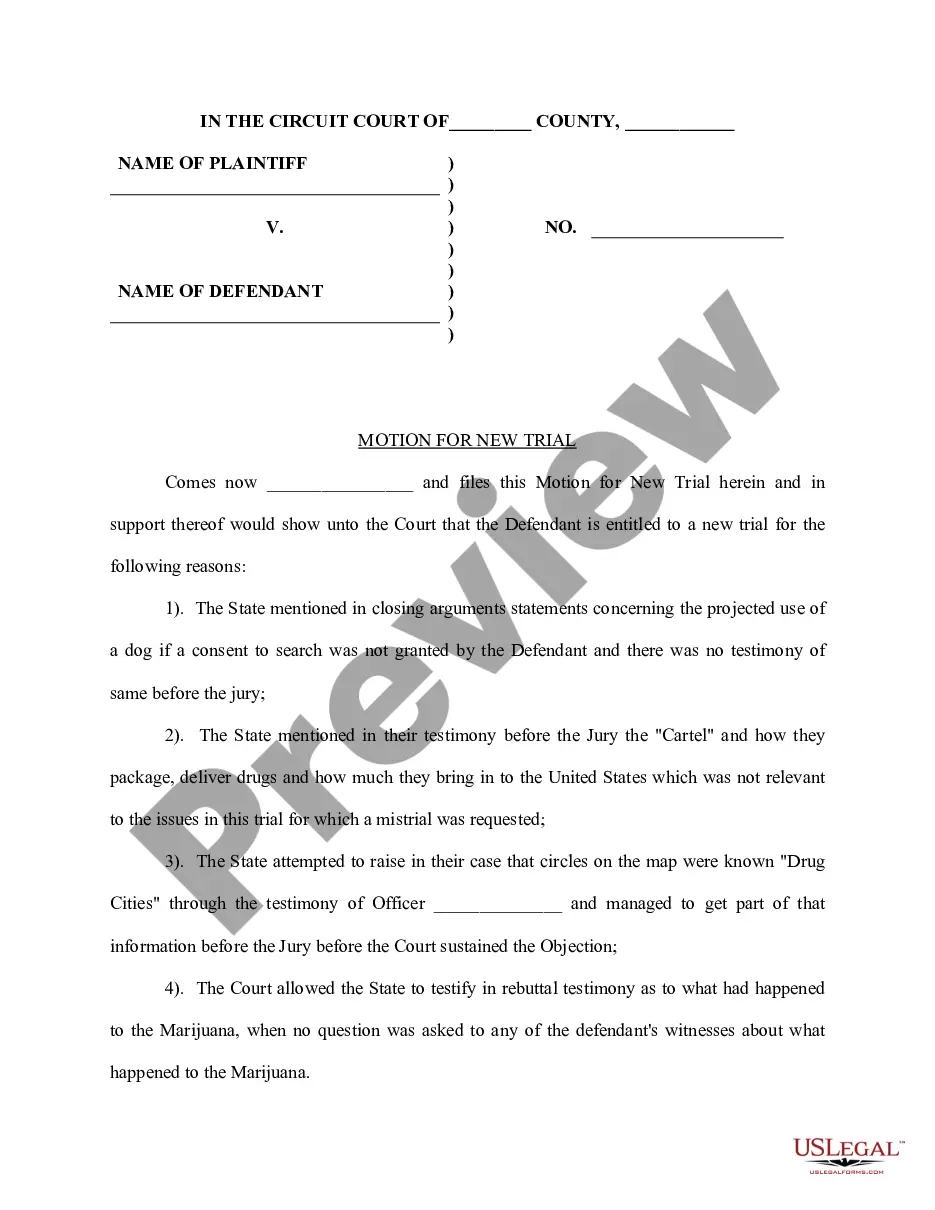
Baton Rouge Louisiana Motion for Mistrial
Description






How to fill out Louisiana Motion For Mistrial?
Regardless of the social or occupational standing, completing legal documents is a regrettable obligation in the current professional landscape.
Frequently, it is nearly impossible for someone without legal training to create this type of paperwork from the ground up, primarily due to the intricate terminology and legal nuances involved.
This is where US Legal Forms comes to assist.
Ensure the form you have selected is appropriate for your jurisdiction since the regulations of one state or region do not apply to another.
Examine the form and read a brief overview (if provided) of situations the document can be utilized for.
- Our service provides an extensive collection of over 85,000 ready-to-use state-specific documents that cater to nearly any legal situation.
- US Legal Forms also acts as a valuable tool for professionals or legal advisers who wish to enhance their efficiency using our DIY forms.
- Regardless of whether you require the Baton Rouge Louisiana Motion for Mistrial or any other document applicable in your region, with US Legal Forms, everything is available.
- Here’s how to acquire the Baton Rouge Louisiana Motion for Mistrial swiftly utilizing our dependable service.
- If you are already an existing user, you can simply Log In to your account to retrieve the necessary document.
- However, if you are new to our collection, be sure to follow these steps before downloading the Baton Rouge Louisiana Motion for Mistrial.
Form popularity
FAQ
A motion to quash in Louisiana seeks to invalidate certain legal processes, typically related to summons or subpoenas. This motion argues that the legal action lacks proper authority or was improperly issued. Utilizing this motion can be essential in your case, especially when considering a Baton Rouge Louisiana Motion for Mistrial.
A 701 motion in Louisiana requests the court to limit or exclude the testimony of lay witnesses based on the rules of evidence. This type of motion often aims to streamline proceedings by preventing irrelevant or misleading information from confusing the jury. It plays a role in ensuring a fair trial, and might be a part of a broader strategy that includes a Baton Rouge Louisiana Motion for Mistrial.
In Louisiana, the three types of exceptions include dilatory exceptions, peremptory exceptions, and incidental exceptions. Each type serves a specific purpose in legal proceedings, allowing for challenges to the sufficiency and legality of claims. Understanding these exceptions may help you address a Baton Rouge Louisiana Motion for Mistrial effectively.
Grounds for a mistrial in Louisiana can include juror misconduct, a hung jury, or prejudicial statements made in court. When a trial cannot proceed fairly, a motion for mistrial may be filed. If you believe these circumstances apply in your case, consulting with a legal expert can provide guidance on a Baton Rouge Louisiana Motion for Mistrial.
The 90-day rule in Louisiana states that a defendant must be brought to trial within 90 days of the arraignment for misdemeanor charges. For felony cases, this timeline extends to 120 days. If the state fails to meet these timelines, a Baton Rouge Louisiana Motion for Mistrial may be a viable option to explore.
Grounds to contest a will in Louisiana generally include lack of capacity, undue influence, or improper execution of the will. If someone believes a will does not reflect the true intentions of the deceased, they may have the basis to challenge it. This is particularly important in cases leading to a Baton Rouge Louisiana Motion for Mistrial, where undue influence or improper procedures may arise in disputes. Consulting with legal professionals can provide clarity in these complex matters.
The number one reason for a mistrial is typically a significant error that compromises a fair trial. This could be due to juror misconduct, procedural mistakes, or the introduction of improper evidence. Such issues can lead to a Baton Rouge Louisiana Motion for Mistrial being filed to protect the integrity of the legal process. Understanding these grounds can help you navigate your legal situation better.
Louisiana's 14-67 law pertains to theft. Specifically, it defines theft as taking someone else's property with the intent to permanently deprive the owner of it. Understanding this law is important, particularly in cases that may lead to a Baton Rouge Louisiana Motion for Mistrial, as it could influence the circumstances around a trial. Always consult with a legal expert to navigate these laws effectively.
In Louisiana, certain factors may disqualify someone from serving on a jury. These include being convicted of a felony, having a mental incapacity, or being a witness in the case at hand. If you believe you may be unfit to serve, it's crucial to contact the court directly. Keep in mind that jury duty is a vital civic responsibility that impacts all legal proceedings, including those pertaining to a Baton Rouge Louisiana Motion for Mistrial.
The 60-day rule in Louisiana refers to the requirement that certain post-trial motions must be filed within 60 days after the verdict. This includes motions for a new trial or a Baton Rouge Louisiana Motion for Mistrial. This deadline is crucial for maintaining your legal rights and ensuring your concerns are addressed promptly. Failing to meet this timeline can forfeit your ability to challenge a ruling.