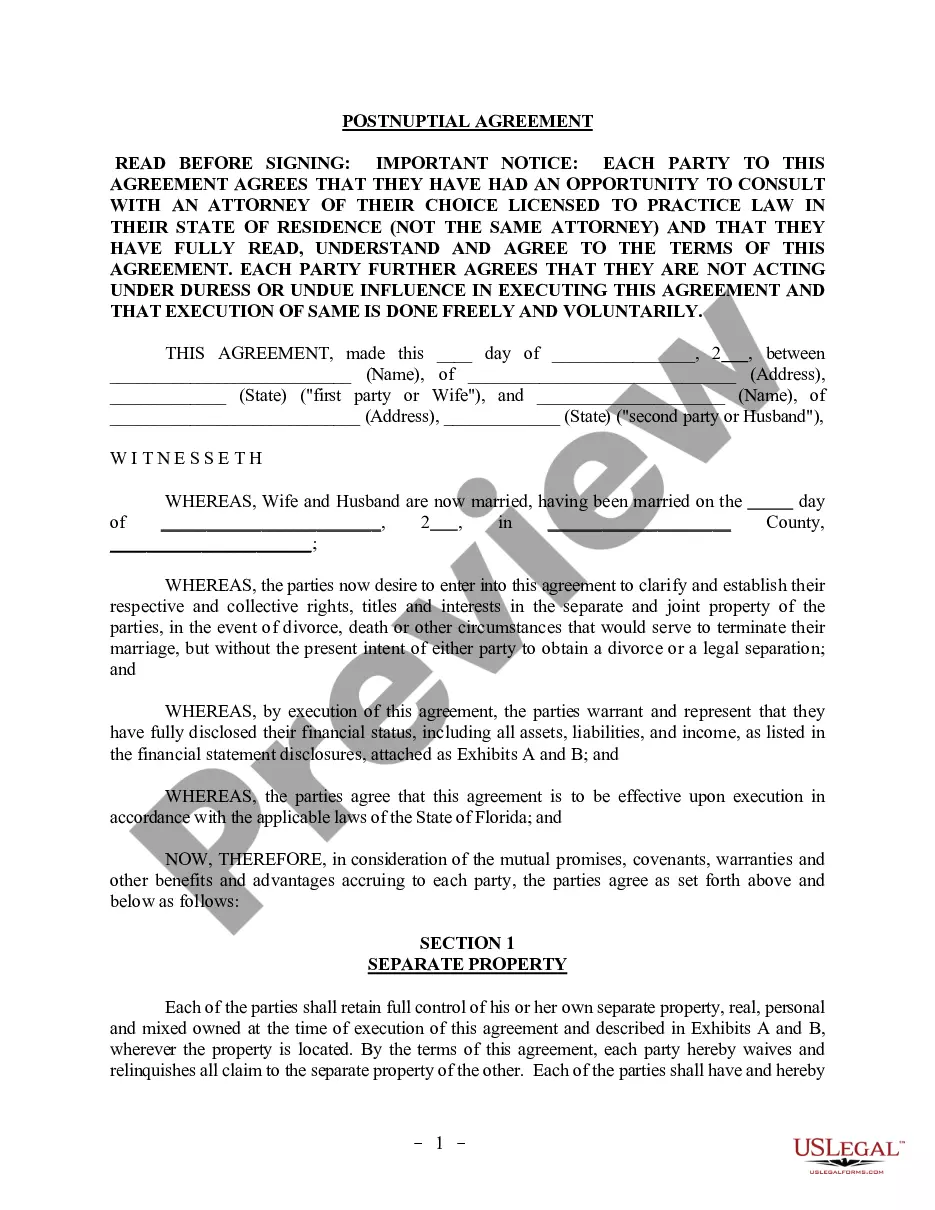
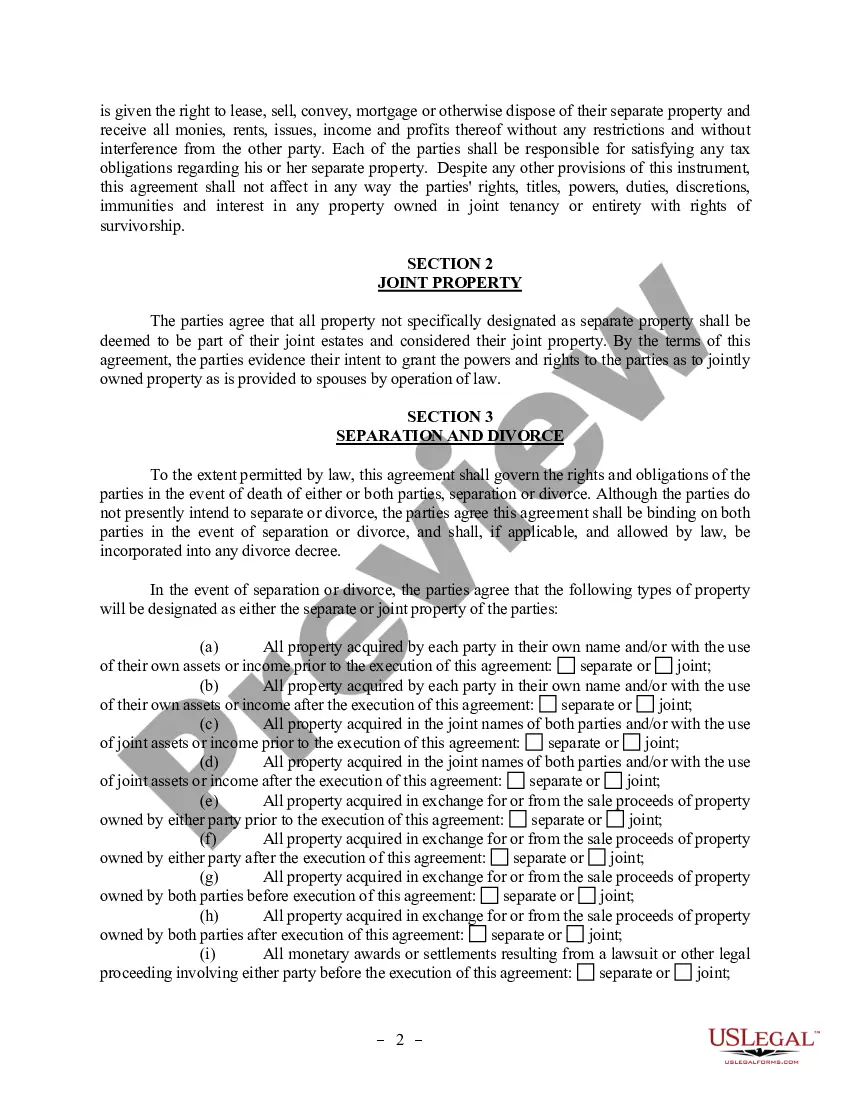
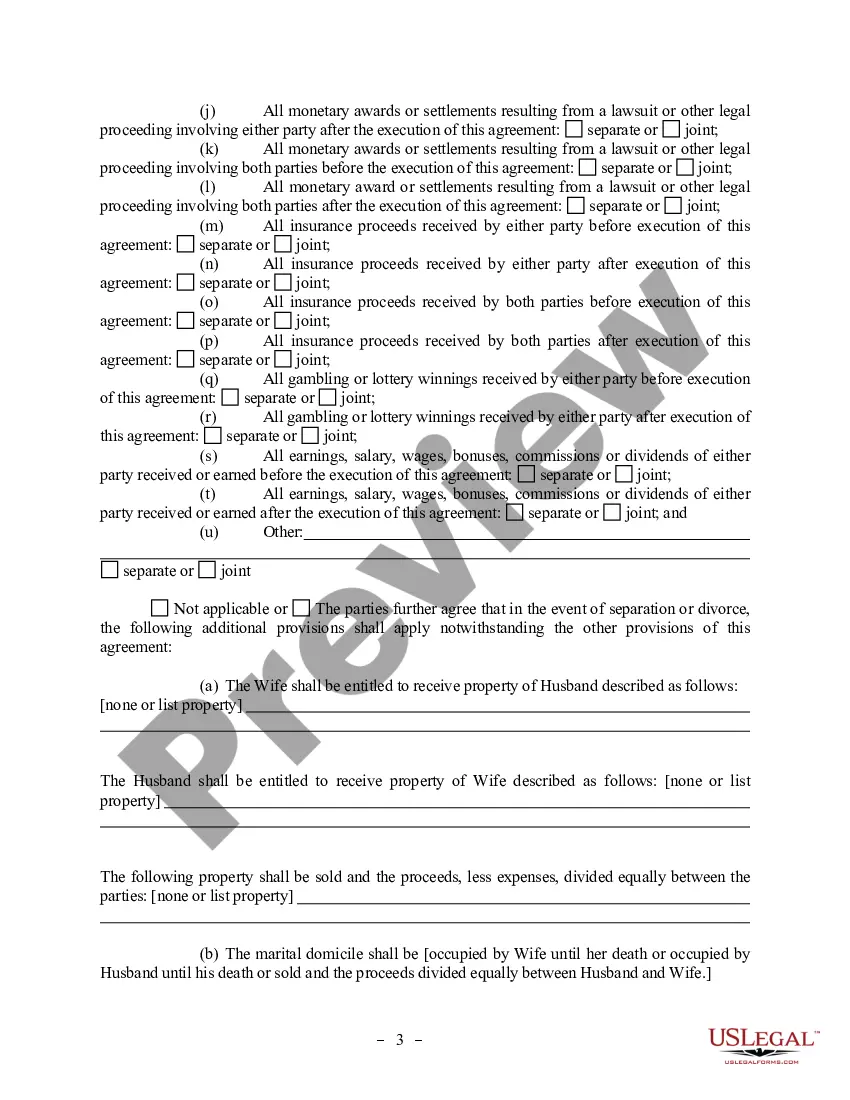
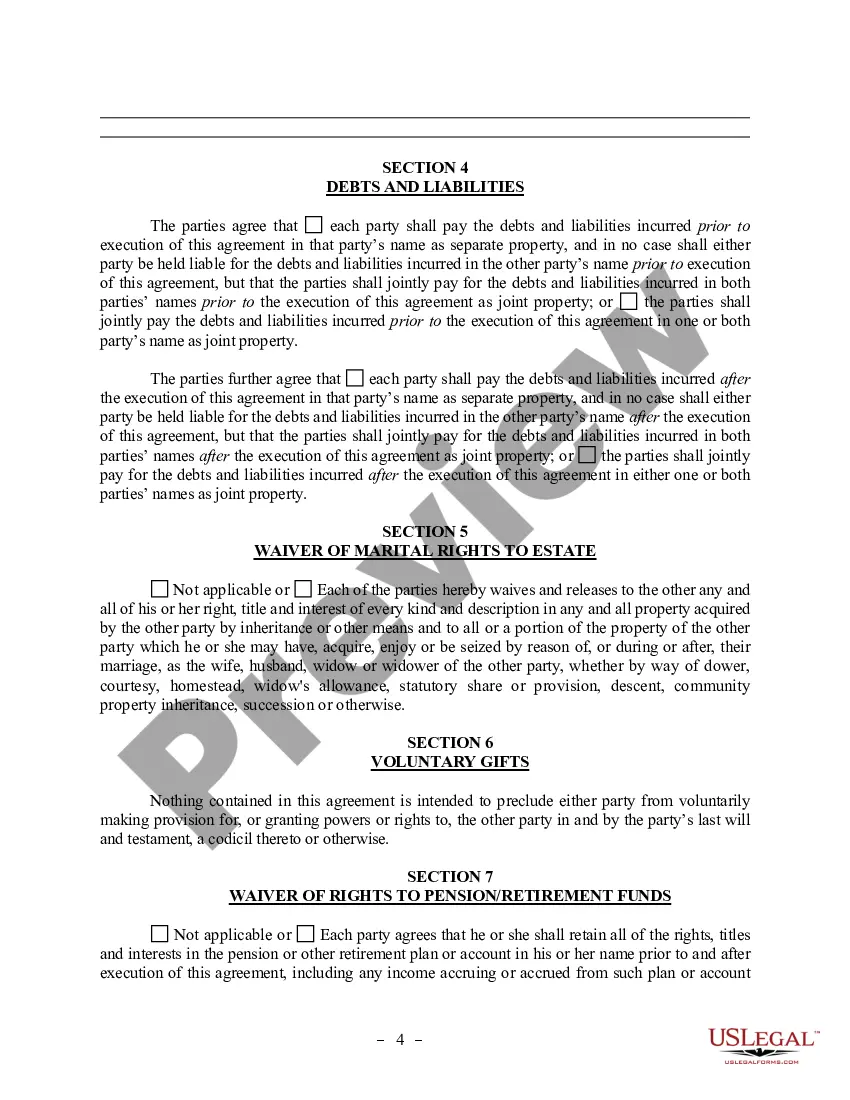
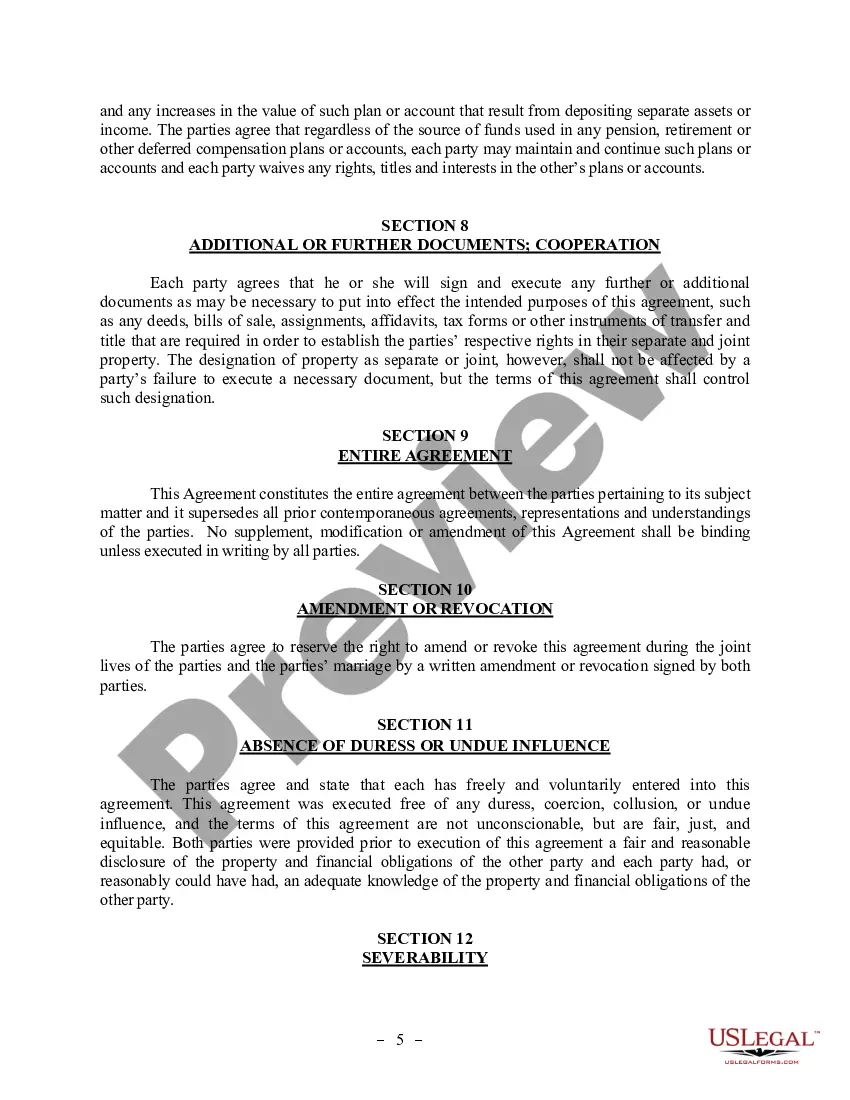
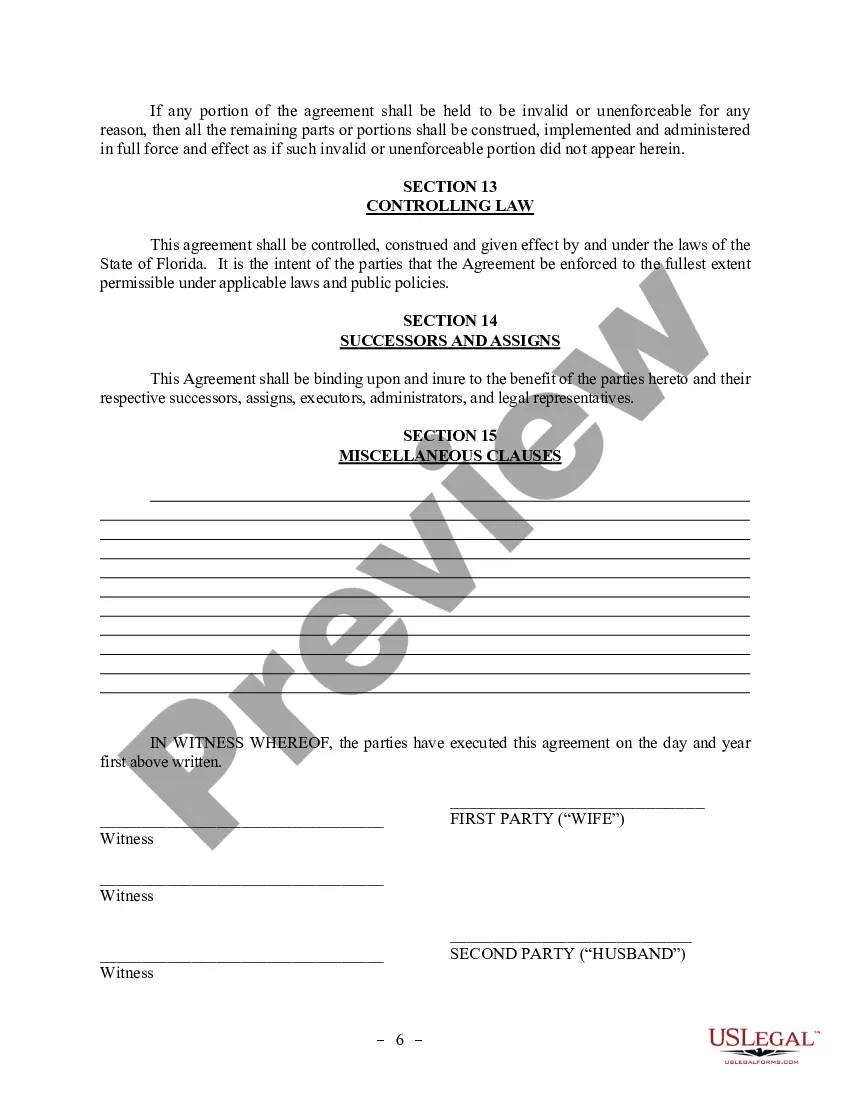
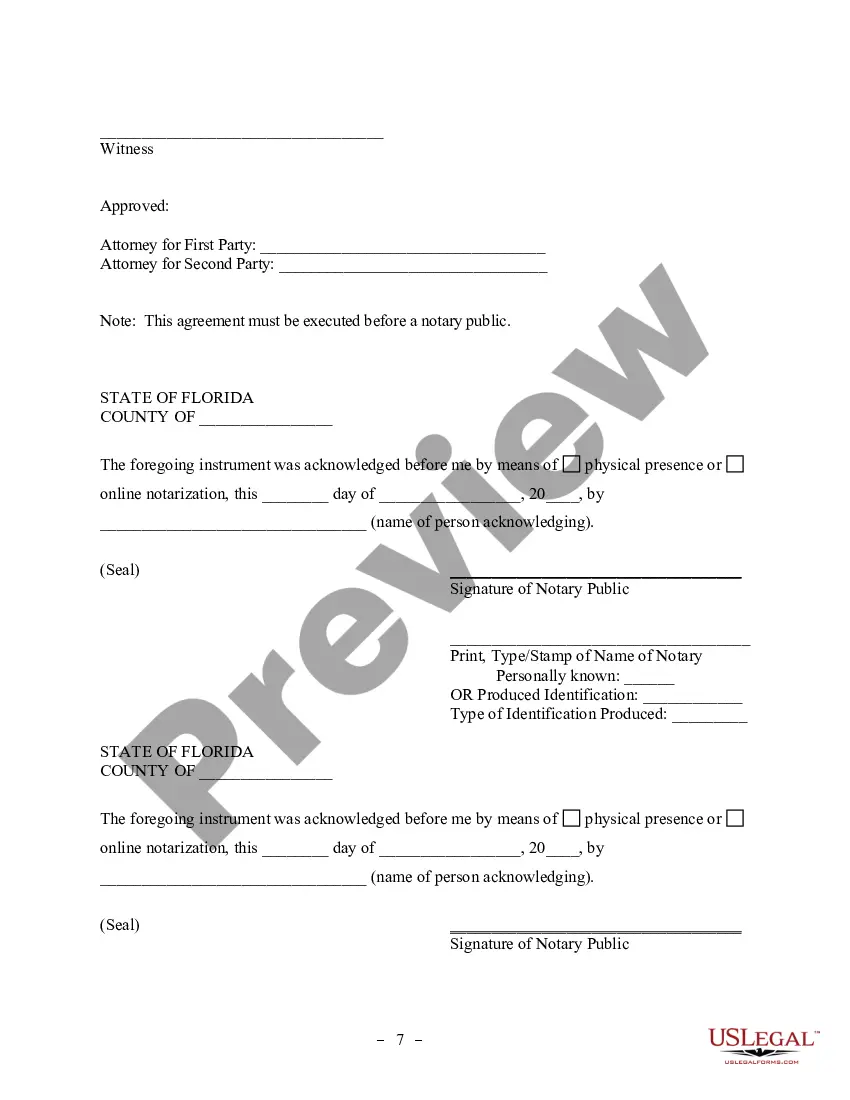
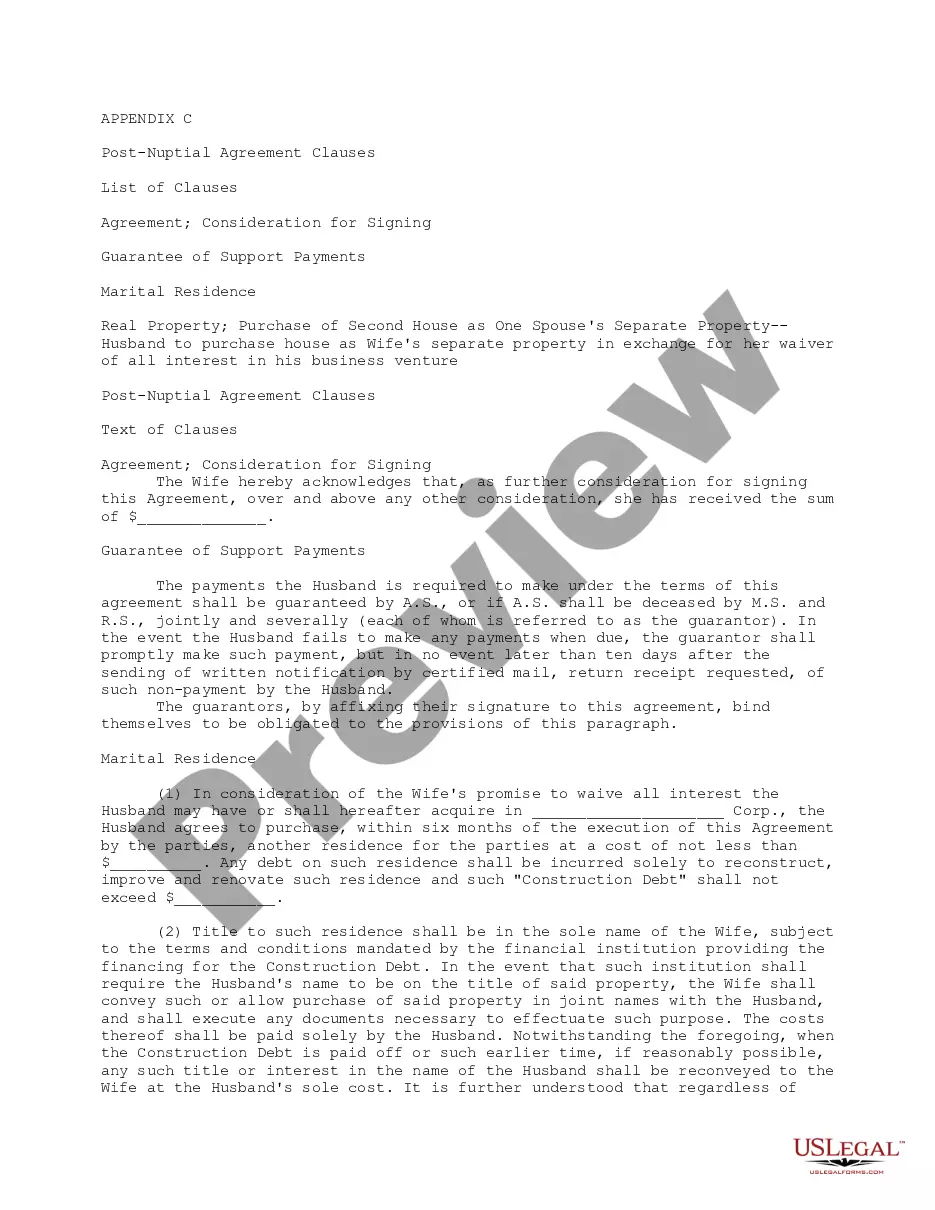
This Postnuptial Property Agreement is made with the intent to define and specify the respective and collective rights of the parties in the separate and joint property of the parties. The parties acknowledge that they were represented by counsel during the negotiations of the agreement and the legal consequences of the agreement have been fully explained. This agreement must be notarized and witnessed.
Lakeland Florida Postnuptial Property Agreement
State:
FloridaPlease select your state
Select state
City:
Lakeland
Control #:
FL-01713-AZ
Format:
Word;
Rich Text
199 downloads

Reviewed by
Description
Free preview
Get your form ready online
Our built-in tools help you complete, sign, share, and store your documents in one place.
Built-in online Word editor
Make edits, fill in missing information, and update formatting in US Legal Forms—just like you would in MS Word.
Export easily
Download a copy, print it, send it by email, or mail it via USPS—whatever works best for your next step.
E-sign your document
Sign and collect signatures with our SignNow integration. Send to multiple recipients, set reminders, and more. Go Premium to unlock E-Sign.
Notarize online 24/7
If this form requires notarization, complete it online through a secure video call—no need to meet a notary in person or wait for an appointment.
Store your document securely
We protect your documents and personal data by following strict security and privacy standards.

Make edits, fill in missing information, and update formatting in US Legal Forms—just like you would in MS Word.

Download a copy, print it, send it by email, or mail it via USPS—whatever works best for your next step.

Sign and collect signatures with our SignNow integration. Send to multiple recipients, set reminders, and more. Go Premium to unlock E-Sign.

If this form requires notarization, complete it online through a secure video call—no need to meet a notary in person or wait for an appointment.

We protect your documents and personal data by following strict security and privacy standards.
Looking for another form?
How to fill out Florida Postnuptial Property Agreement?
Regardless of social or professional standing, filling out legal documents is an unfortunate requirement in the current professional landscape.
Frequently, it’s nearly unfeasible for someone without legal experience to produce such documentation from scratch, mainly due to the intricate terminology and legal nuances they entail.
This is where US Legal Forms can come to the rescue.
Ensure the template you have found is tailored to your area since the laws of one state do not apply to another.
Examine the form and review a brief summary (if available) of scenarios the document can be utilized for.
- Our platform provides an extensive library with over 85,000 ready-to-use state-specific forms suitable for nearly any legal circumstance.
- US Legal Forms also acts as a valuable tool for associates or legal advisors who seek to enhance their efficiency using our DIY papers.
- Whether you need the Lakeland Postnuptial Property Agreement - Florida or any other documentation that is valid in your jurisdiction, with US Legal Forms, everything is easily accessible.
- Here’s how you can quickly obtain the Lakeland Postnuptial Property Agreement - Florida by utilizing our reliable service.
- If you are already a customer, you can proceed to Log In to your account to access the relevant form.
- However, if you are unfamiliar with our platform, be sure to follow these steps prior to acquiring the Lakeland Postnuptial Property Agreement - Florida.
Form popularity
FAQ
In Florida, a Lakeland Florida Postnuptial Property Agreement is recognized by law as a binding contract between spouses. The agreement outlines the division of assets and liabilities in the event of divorce or separation. Florida law stipulates that the agreement must be in writing, must be entered into voluntarily, and should be fair and just to both parties. To navigate these requirements effectively, consider using platforms like US Legal Forms that offer templates and guidance.
Yes, Lakeland Florida Postnuptial Property Agreements generally hold up in court when they meet certain legal requirements. To ensure validity, these agreements must be in writing, signed voluntarily, and include full financial disclosures from both parties. By following these guidelines, couples can create a solid foundation for their postnuptial agreement. It is wise to consult with a legal expert to enhance court enforceability.
Indeed, you can write your own postnuptial agreement in Florida. However, take care to ensure that it complies with legal requirements and reflects both parties' intentions accurately. Using platforms like US Legal Forms can simplify this process by providing templates and legal tips that help you draft a Lakeland Florida Postnuptial Property Agreement that stands strong against challenges.
Certain provisions cannot be included in a postnuptial agreement, such as child custody and child support arrangements. These topics are typically determined by the court based on the best interests of the child. Additionally, agreements must not include illegal provisions or those that violate public policy, ensuring that your Lakeland Florida Postnuptial Property Agreement remains valid and enforceable.
While it is not mandatory to hire two lawyers for a postnuptial agreement, it is highly recommended. Having independent legal representation ensures that both parties fully understand their rights and obligations under the Lakeland Florida Postnuptial Property Agreement. This practice can help prevent any claims of coercion and increase the likelihood of the agreement being upheld in court.
Yes, you can write your own postnuptial agreement in Florida. However, to ensure that the Lakeland Florida Postnuptial Property Agreement is valid and enforceable, it is crucial to follow state laws and guidelines. You may consider using resources like US Legal Forms to access templates and tools that can guide you through the process, helping you create a solid agreement tailored to your needs.
Yes, Lakeland Florida Postnuptial Property Agreements are generally enforceable in Florida, provided that they meet certain legal requirements. The agreement must be voluntarily signed by both parties and cannot be written under duress or coercion. To strengthen its enforceability, it is advisable to have the agreement drafted by a qualified attorney, ensuring it is clear and comprehensive. Courts typically uphold such agreements, especially when they reflect fairness and transparency.
To create a Lakeland Florida Postnuptial Property Agreement, you should start by consulting with a family law attorney who specializes in Florida law. Your attorney will help you understand the specific requirements and prepare the necessary documents tailored to your situation. Once you have the draft, both you and your spouse must review, agree on the terms, and sign the agreement in the presence of a notary. Finally, it’s crucial to keep a copy of the signed document in a safe place.
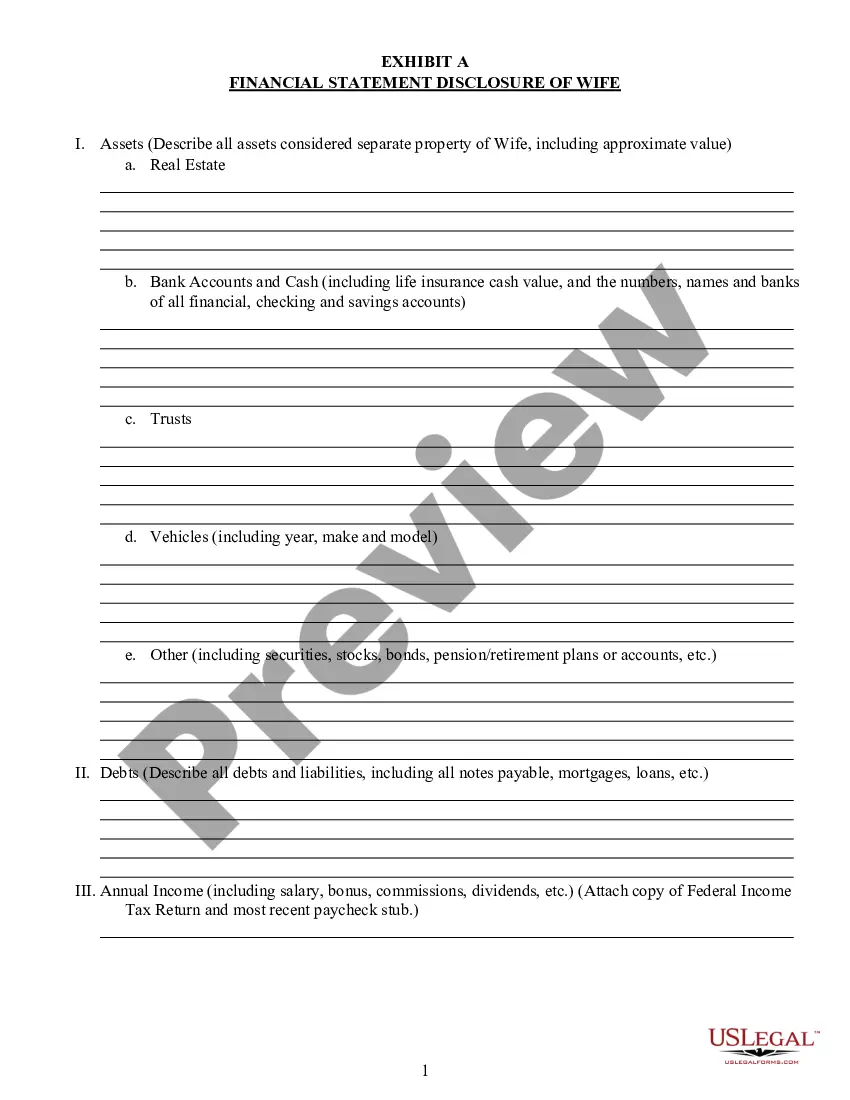
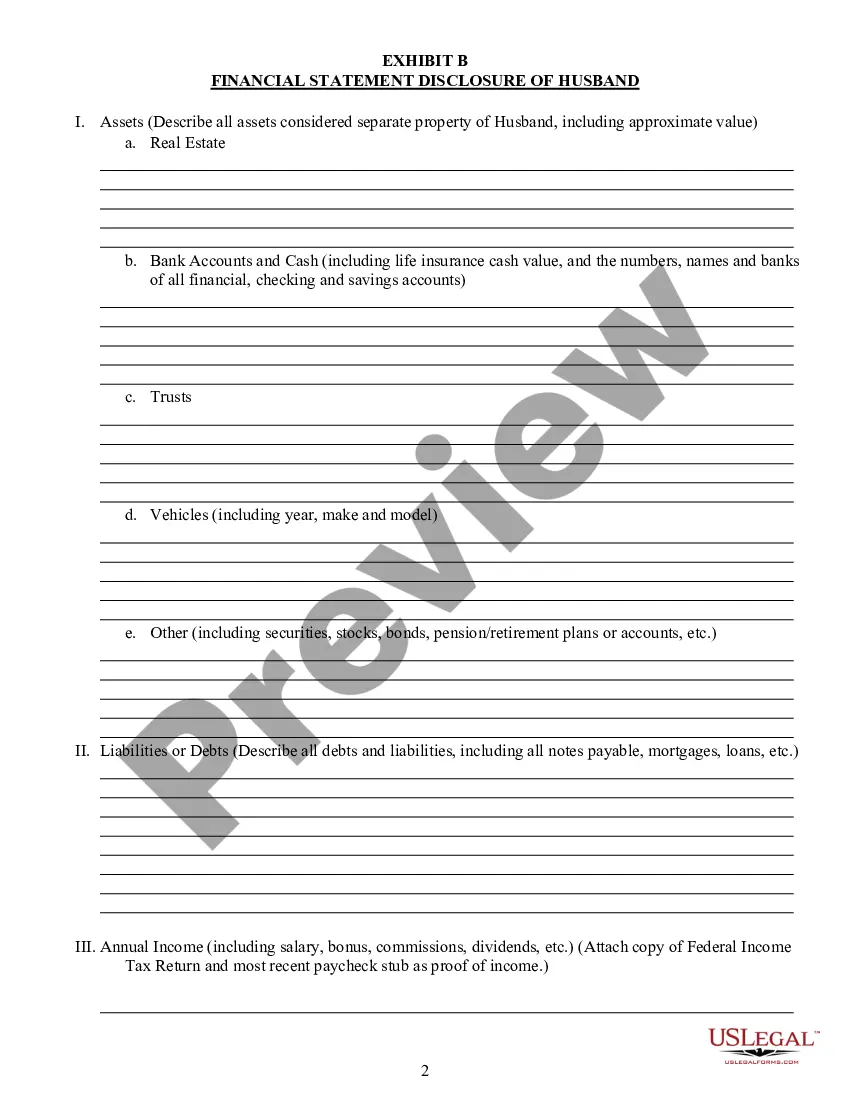
In Florida, a valid postnuptial property agreement should be in writing and signed by both parties. The agreement must be made voluntarily, without any coercion or undue influence. Additionally, it is beneficial for both parties to provide full financial disclosure, ensuring transparency for an equitable agreement. Using the US Legal Forms platform can help you draft a comprehensive Lakeland Florida postnuptial property agreement that meets all these requirements.
To file a postnuptial property agreement in Florida, you first need to create a written document that outlines the terms agreed upon by both parties. It is essential that each spouse fully understands the terms, so consulting with a legal professional is advisable. After drafting the agreement, both spouses should sign it, ideally in front of a notary public. Once completed, there is no formal filing requirement, but keeping the agreement in a safe place is crucial for future reference.