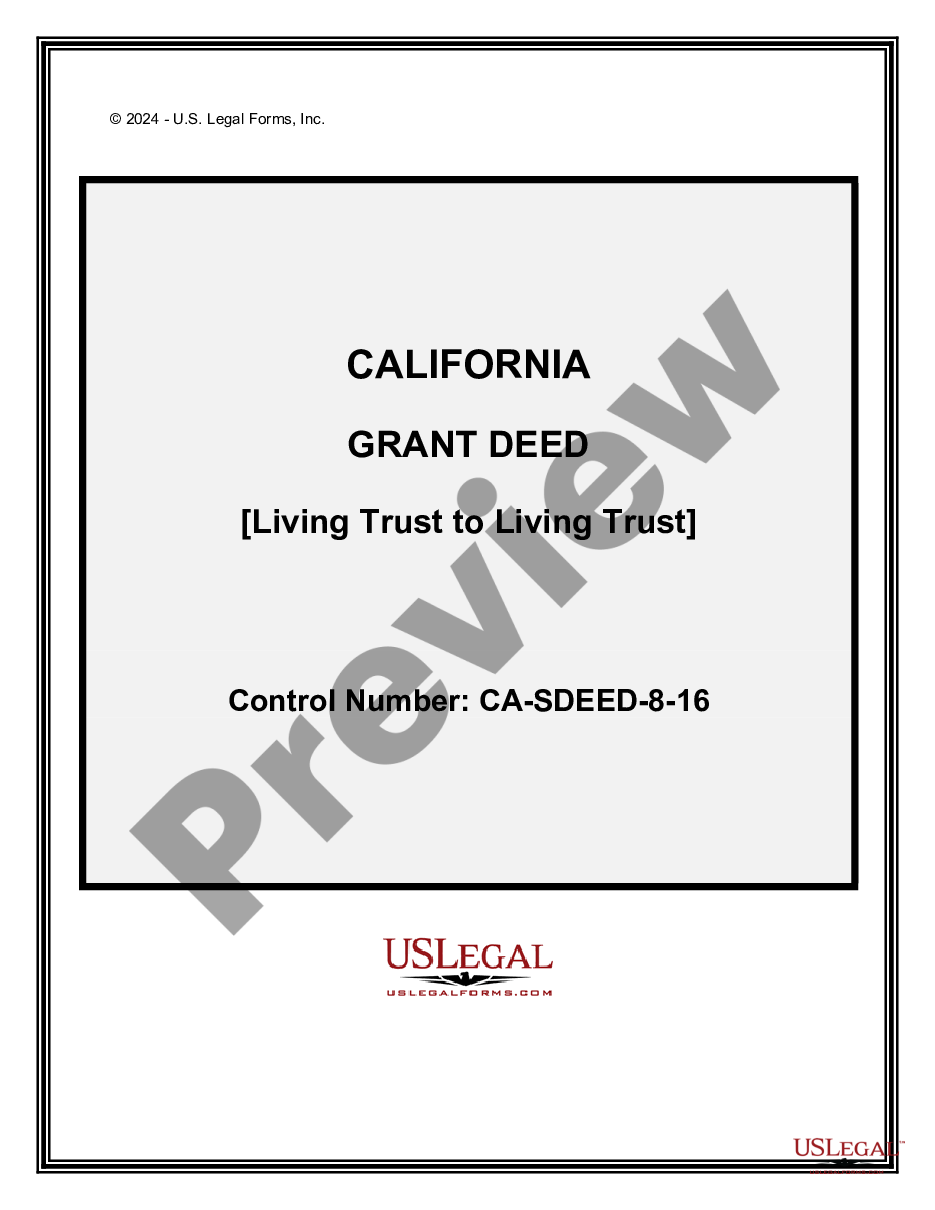
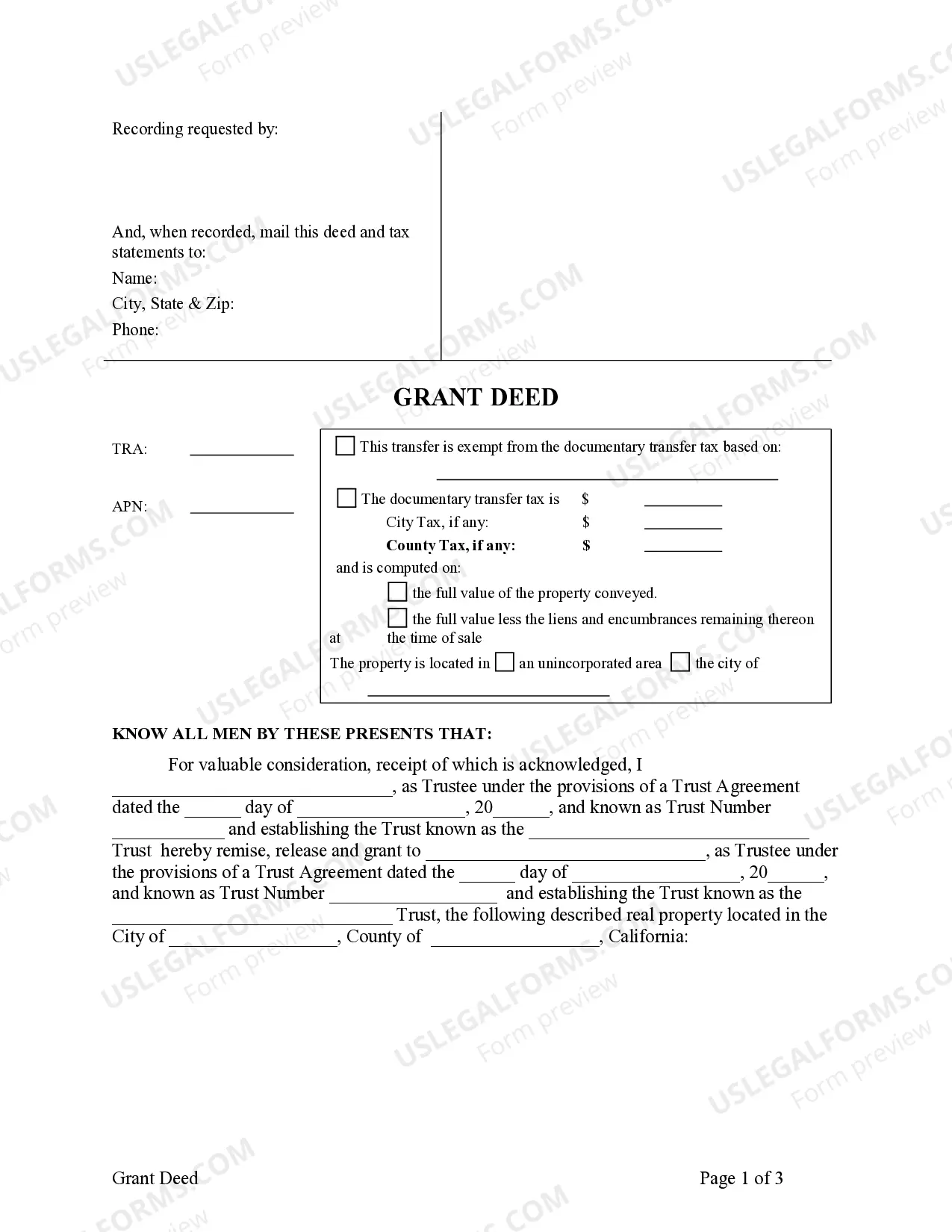
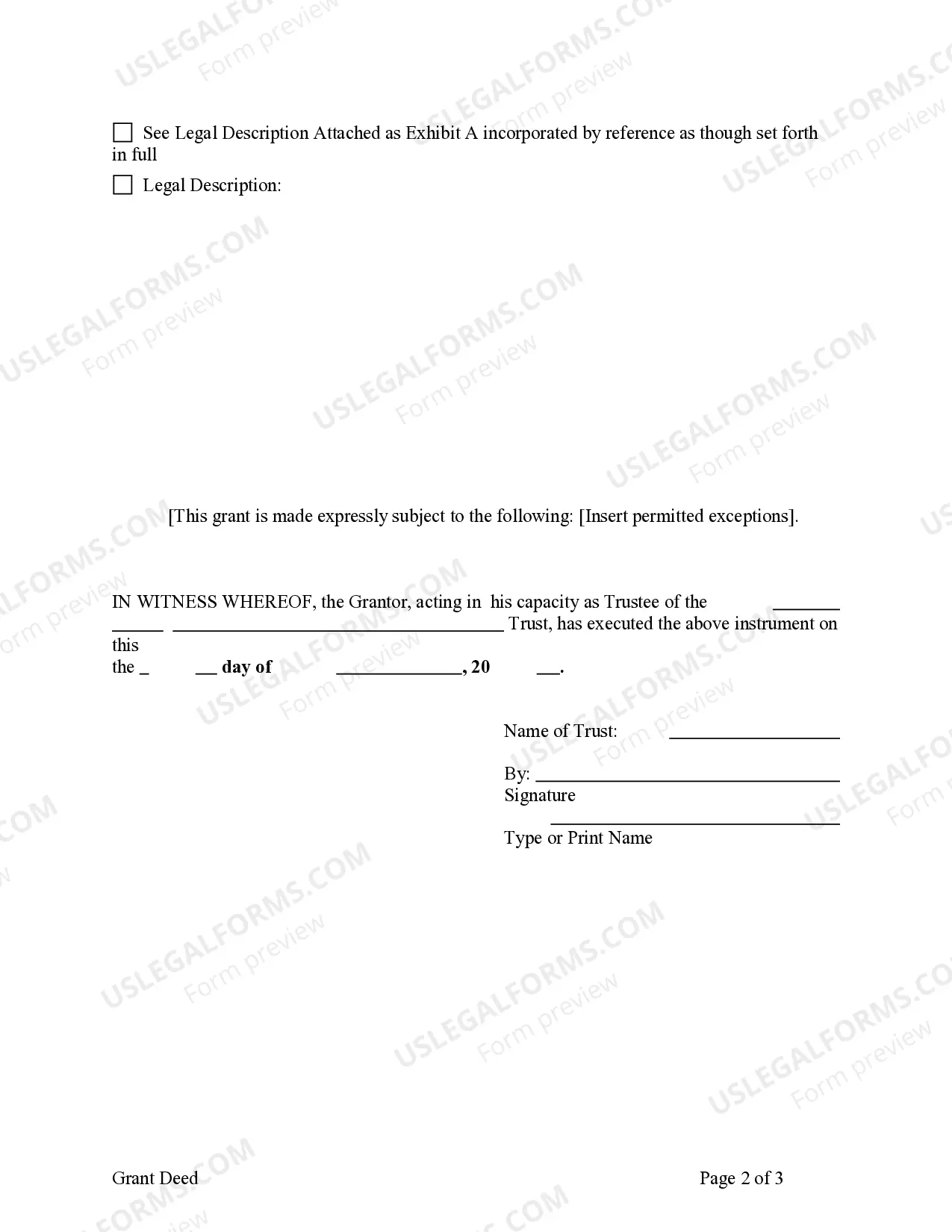
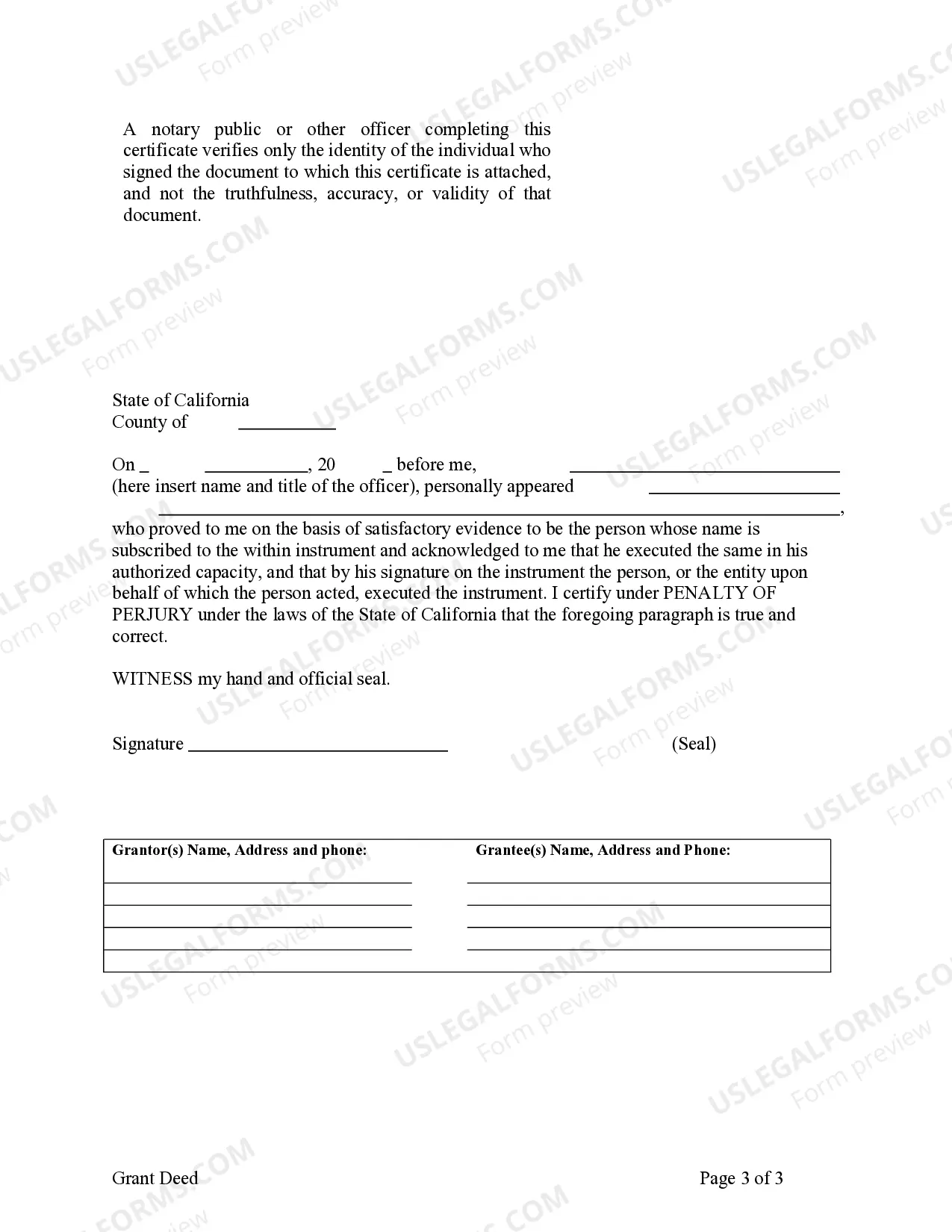
This form is a Grant Deed where the grantor is a living trust and the grantee is a living trust.
Orange California Grant Deed - Living Trust to Living Trust
State:
California
Category:
County:
Orange
Control #:
CA-SDEED-8-16
Format:
Word;
Rich Text
77 downloads
Description
Free preview

Get your form ready online
Our built-in tools help you complete, sign, share, and store your documents in one place.
Built-in online Word editor
Make edits, fill in missing information, and update formatting in US Legal Forms—just like you would in MS Word.
Export easily
Download a copy, print it, send it by email, or mail it via USPS—whatever works best for your next step.
E-sign your document
Sign and collect signatures with our SignNow integration. Send to multiple recipients, set reminders, and more. Go Premium to unlock E-Sign.
Notarize online 24/7
If this form requires notarization, complete it online through a secure video call—no need to meet a notary in person or wait for an appointment.
Store your document securely
We protect your documents and personal data by following strict security and privacy standards.

Make edits, fill in missing information, and update formatting in US Legal Forms—just like you would in MS Word.

Download a copy, print it, send it by email, or mail it via USPS—whatever works best for your next step.

Sign and collect signatures with our SignNow integration. Send to multiple recipients, set reminders, and more. Go Premium to unlock E-Sign.

If this form requires notarization, complete it online through a secure video call—no need to meet a notary in person or wait for an appointment.

We protect your documents and personal data by following strict security and privacy standards.
Looking for another form?
How to fill out California Grant Deed - Living Trust To Living Trust?
We consistently endeavor to lessen or avert legal harm when addressing intricate legal or financial issues.
To achieve this, we subscribe to legal services that are generally very expensive.
However, not all legal matters are this intricate. Many can be managed by ourselves.
US Legal Forms is an online repository of current DIY legal documents covering everything from wills and powers of attorney to incorporation articles and dissolution petitions.
Simply Log In to your account and click the Get button next to it. If you happen to misplace the document, you can always redownload it in the My documents section. The procedure is equally simple if you’re new to the website! You can create your account in just a few minutes. Ensure to confirm if the Orange California Grant Deed - Living Trust to Living Trust complies with the laws and regulations of your state and locality. Furthermore, it's crucial that you review the form’s outline (if accessible), and if you observe any inconsistencies with what you initially sought, look for another template. Once you’ve confirmed that the Orange California Grant Deed - Living Trust to Living Trust meets your needs, you can choose the subscription option and complete the payment. Then you can download the document in your preferred format. With over 24 years in operation, we’ve assisted millions by providing ready-to-customize and up-to-date legal forms. Make the most of US Legal Forms now to conserve time and resources!
- Our platform empowers you to handle your issues independently without requiring legal representation.
- We supply access to legal document templates that are not always readily available.
- Our templates are specific to states and regions, which greatly simplifies the search process.
- Utilize US Legal Forms whenever you need to acquire and download the Orange California Grant Deed - Living Trust to Living Trust or any other document effortlessly and securely.
Form popularity
FAQ
The disadvantages of putting your house in a trust in California include potential loss of control over the property. Once the house is in the trust, decisions regarding it may involve the trustee, not just you. Furthermore, maintaining the trust requires ongoing management, which can be cumbersome. Nevertheless, many find that the benefits of using an Orange California Grant Deed - Living Trust to Living Trust outweigh these challenges, especially for long-term estate planning.
While placing your house in a trust has several advantages, some drawbacks do exist. For instance, setting up a trust often requires legal guidance, which can incur costs. Additionally, you may need to transfer assets into the trust, which can be a time-consuming process. However, these negatives can often be outweighed by the benefits of using an Orange California Grant Deed - Living Trust to Living Trust for effective estate management.
A grant deed transfers property ownership from one party to another, solidifying the new owner’s entitlement. In contrast, a trust deed involves the property being held in trust, often for the benefit of someone else, which can incorporate an Orange California Grant Deed - Living Trust to Living Trust. Understanding these differences is crucial for property owners, as each deed serves distinct purposes in protecting ownership and facilitating transfers. If you have further questions, consider using platforms like uslegalforms for clarity and guidance.
Placing your house in a trust in California can provide significant benefits, especially related to estate planning. By using an Orange California Grant Deed - Living Trust to Living Trust, you can simplify the transfer of your property to beneficiaries upon your passing, avoiding probate. This process helps maintain privacy and may reduce delays in accessing assets. Ultimately, consult a legal expert to determine if a trust aligns with your personal goals.
To record a living trust in California, you need to complete a deed to transfer property into the trust. This process often involves using the Orange California Grant Deed - Living Trust to Living Trust. Ensure that you follow the necessary steps to meet state requirements for recording the deed. For assistance with this process, consider using platforms like uslegalforms to access reliable resources and templates.
In California, a trust generally does not need to be filed with the court unless it goes through the probate process. However, if the trust involves real estate, such as using an Orange California Grant Deed - Living Trust to Living Trust, proper documentation must be completed to ensure the property is correctly transferred. By consulting professionals, you can understand the requirements specific to your situation.
One common mistake parents make is failing to clearly define the terms of the trust. This can lead to confusion and conflict among beneficiaries. When creating a trust related to the Orange California Grant Deed - Living Trust to Living Trust, it's essential to outline your intentions and specify how the assets will be managed and distributed. Clear communication ensures that your wishes are honored.
The difference between a trust and a living trust mainly lies in their operation and flexibility. A trust can refer to any fiduciary arrangement, while a living trust specifically refers to a trust created during a person's lifetime. Living trusts generally allow the creator to retain control over assets during their lifetime and simplify the transfer process after death, avoiding probate. Understanding these distinctions is essential when considering the Orange California Grant Deed - Living Trust to Living Trust.
In California, you do not record a living trust document itself. However, to secure a property within that trust, you must record a grant deed that transfers the property title to the trust. Ensure the deed includes relevant details such as the property description and the names of the trust and trustee. For additional assistance, you can utilize UsLegalForms to appropriately draft and record your documents relating to the Orange California Grant Deed - Living Trust to Living Trust.
Transferring a deed to a living trust in California involves drafting a grant deed that changes the property's title. Specify the current owner and the trustee's name on the deed to indicate the property is held in trust. After signing the deed, have it notarized and file it with your local county recorder’s office to make the transfer effective. This step is vital for maintaining clarity in ownership under the Orange California Grant Deed - Living Trust to Living Trust.