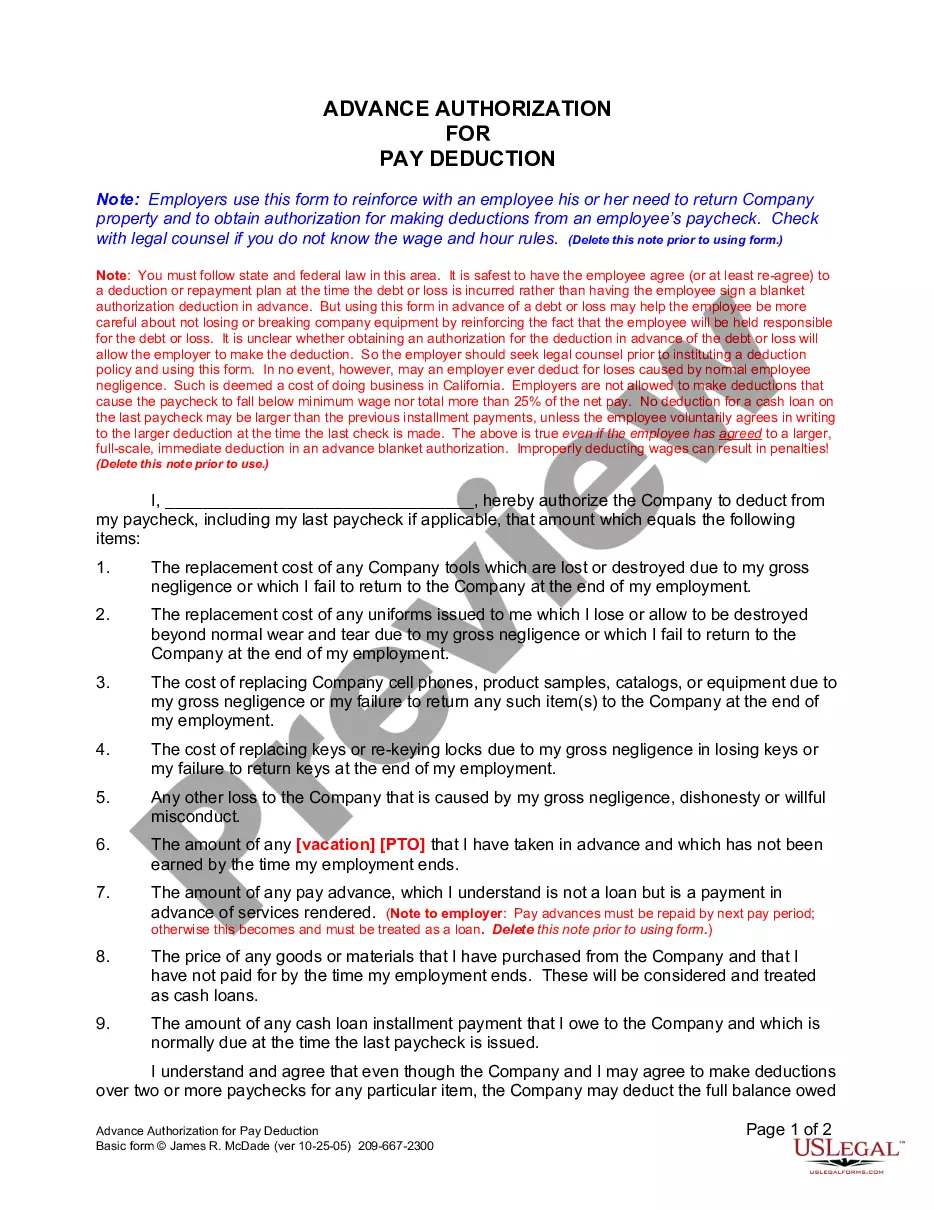
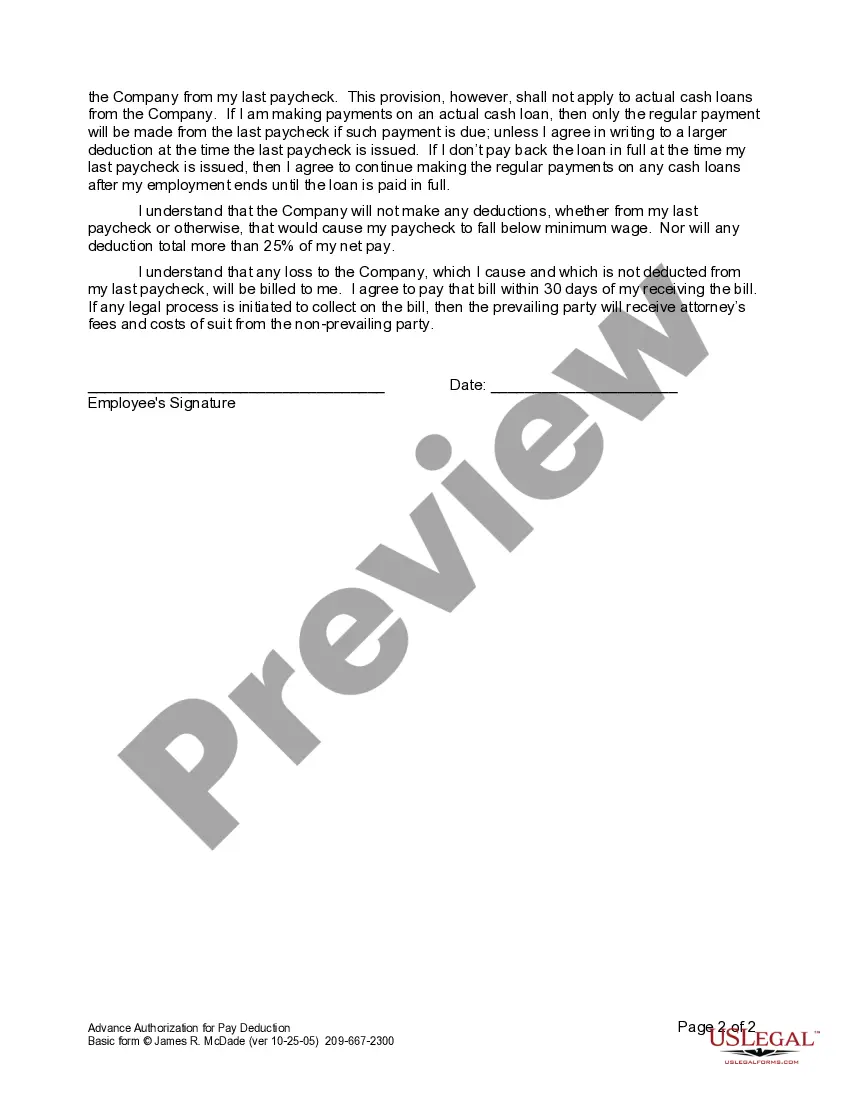
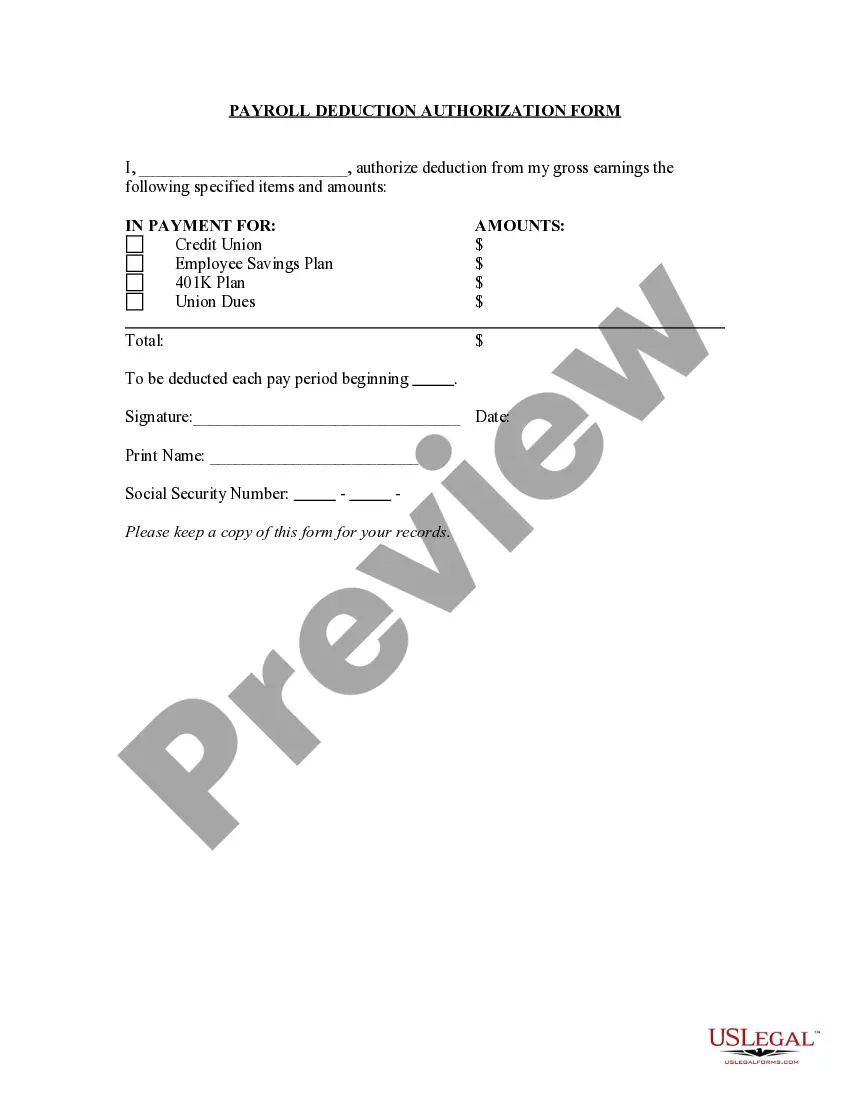
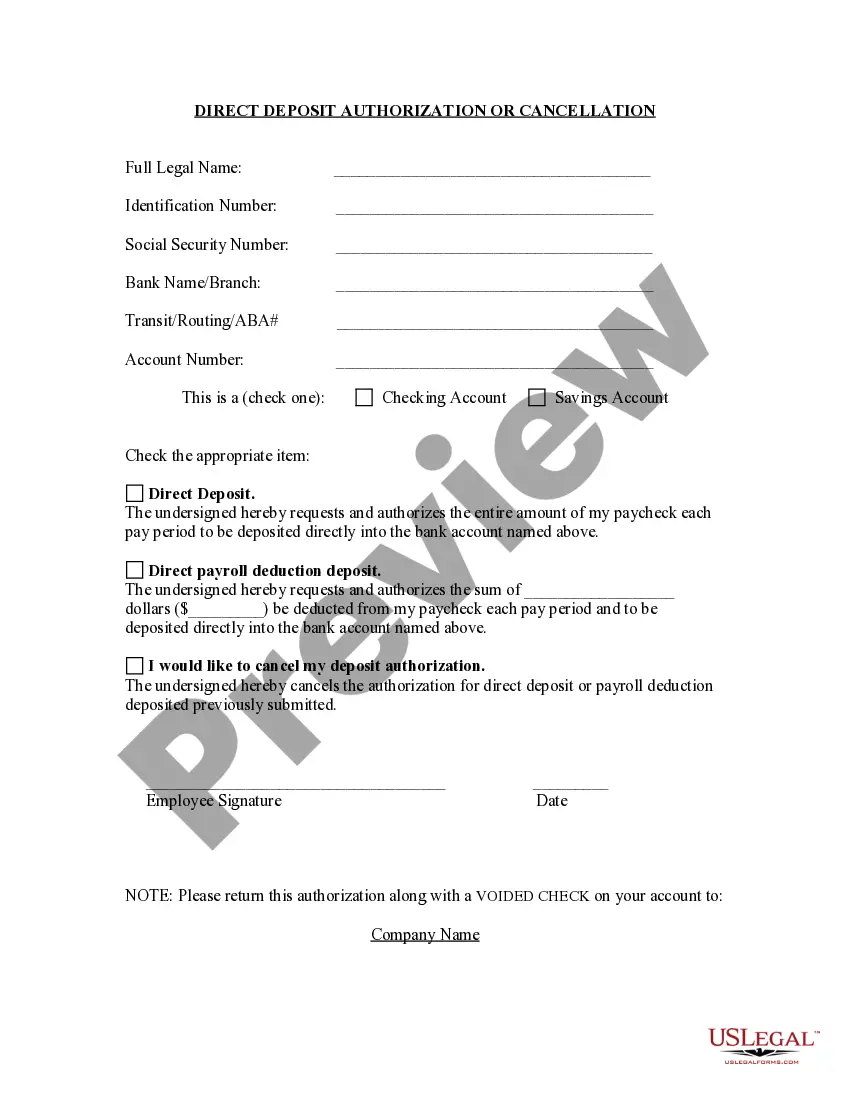
Employers use this form to reinforce with an employee his or her need to return Company property and to obtain authorization for making deductions from an employee's paycheck.
Vista California Advance Authorization for Pay Deduction
State:
California
City:
Vista
Control #:
CA-JM-0019
Format:
Word
37 downloads
Description
Free preview
Get your form ready online
Our built-in tools help you complete, sign, share, and store your documents in one place.
Built-in online Word editor
Make edits, fill in missing information, and update formatting in US Legal Forms—just like you would in MS Word.
Export easily
Download a copy, print it, send it by email, or mail it via USPS—whatever works best for your next step.
E-sign your document
Sign and collect signatures with our SignNow integration. Send to multiple recipients, set reminders, and more. Go Premium to unlock E-Sign.
Notarize online 24/7
If this form requires notarization, complete it online through a secure video call—no need to meet a notary in person or wait for an appointment.
Store your document securely
We protect your documents and personal data by following strict security and privacy standards.

Make edits, fill in missing information, and update formatting in US Legal Forms—just like you would in MS Word.

Download a copy, print it, send it by email, or mail it via USPS—whatever works best for your next step.

Sign and collect signatures with our SignNow integration. Send to multiple recipients, set reminders, and more. Go Premium to unlock E-Sign.

If this form requires notarization, complete it online through a secure video call—no need to meet a notary in person or wait for an appointment.

We protect your documents and personal data by following strict security and privacy standards.
Looking for another form?
How to fill out California Advance Authorization For Pay Deduction?
If you are looking for a pertinent form, it’s challenging to discover a more accessible service than the US Legal Forms website – likely the most extensive online collections.
With this collection, you can access a vast array of document templates for business and personal use by categories and regions, or keywords.
With the excellent search feature, obtaining the latest Vista California Advance Authorization for Pay Deduction is as simple as 1-2-3.
Complete the transaction. Use your credit card or PayPal account to finalize the account creation process.
Obtain the document. Choose your preferred format and save it to your device. Edit. Complete, adjust, print, and sign the acquired Vista California Advance Authorization for Pay Deduction.
- Moreover, the accuracy of each document is confirmed by a team of experienced attorneys who routinely review the templates on our site and refresh them in line with the most recent state and local regulations.
- If you are already familiar with our site and possess an account, all you need to do to obtain the Vista California Advance Authorization for Pay Deduction is to Log In to your account and click the Download button.
- If you are using US Legal Forms for the first time, simply adhere to the steps outlined below.
- Ensure you have selected the form you need. Review its details and use the Preview feature to verify its content. If it does not meet your requirements, utilize the Search function at the top of the page to find the correct document.
- Verify your choice. Hit the Buy now button. Next, choose your desired pricing plan and enter your information to create an account.
Form popularity
FAQ
Under federal law, you may deduct an advance from your employee's paycheck. However, you may not deduct so much that it reduces your employee's pay to less than the hourly minimum wage ($7.25, currently). For low-wage employees, this means you may need to spread the repayment period out over several paychecks.
What types of things cannot be deducted from employees' wages? Employers cannot charge interest or fees for cashing cheques or providing payroll advances. Employers cannot recover business expenses from the wages of employees.
The cash advance needs to be reported as a reduction in the company's Cash account and an increase in an asset account such as Advance to Employees or Other Receivables: Advances. (If the amount is expected to be repaid within one year, this account will be reported as a current asset.)
Rules for making deductions from your pay Your employer is not allowed to make a deduction from your pay or wages unless: it is required or allowed by law, for example National Insurance, income tax or student loan repayments. you agree in writing to a deduction. your contract of employment says they can.
Under California law, an employer may lawfully deduct the following from an employee's wages: Deductions that are required of the employer by federal or state law, such as income taxes or garnishments.
Advance deduction on payslip This is where an amount gets removed from an employee/worker's payslip to cover money previously advanced to them. This type of action is commonplace for retail clerks, loan officers, and sales jobs.
In California, an employer is not permitted to use ?self-help? remedies to recoup what an employee owes them. In other words, you cannot take advantage of your status as the employer and simply deduct what is owed from the employee's paycheck. Instead, you may have to sue the employee to get your money.
Payroll Deduction Authorization Form means the form or other document designated by the Company as the required evidence of an Employee's election to make voluntary cash contributions through an automatic payroll deduction mechanism.
Paycheck deductions permitted by law ? and without the expressed consent of the employee ? are limited to taxes, wage garnishments, and meals and lodging. Wage deductions for taxes are more commonly referred to as tax withholdings, and nearly everyone earning a paycheck is subject to them.