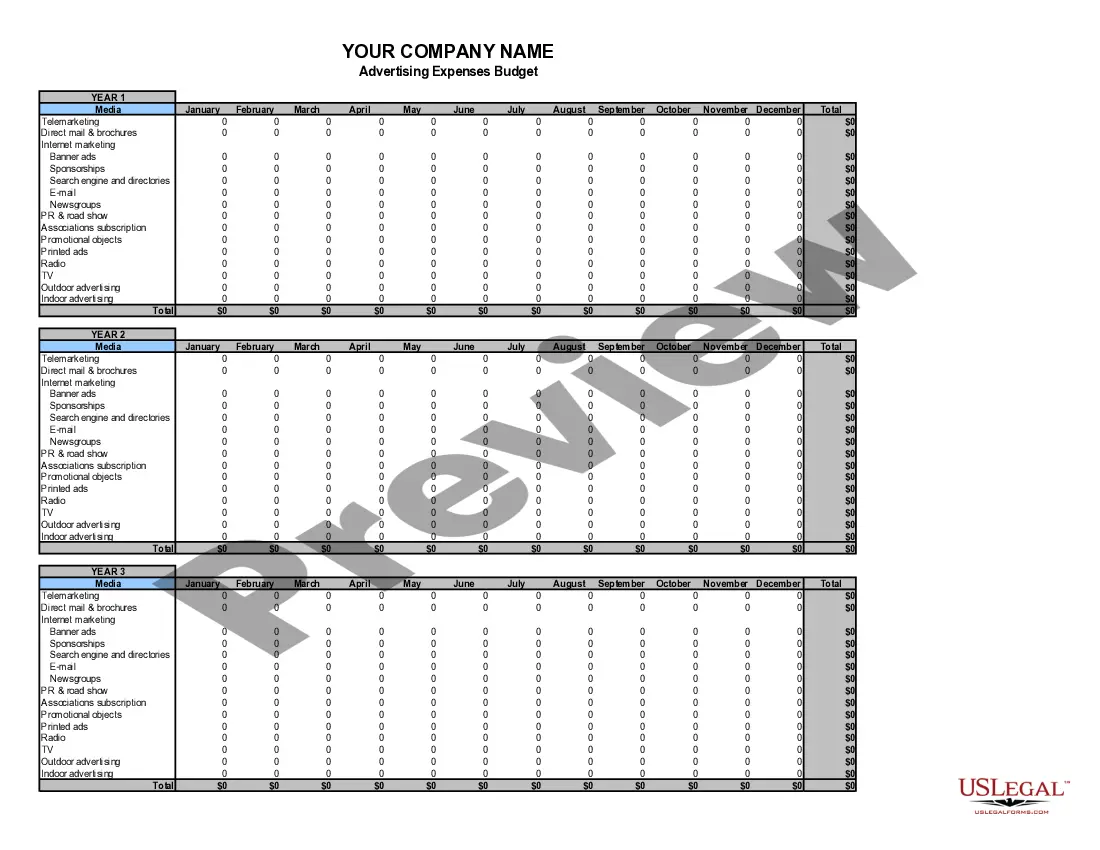
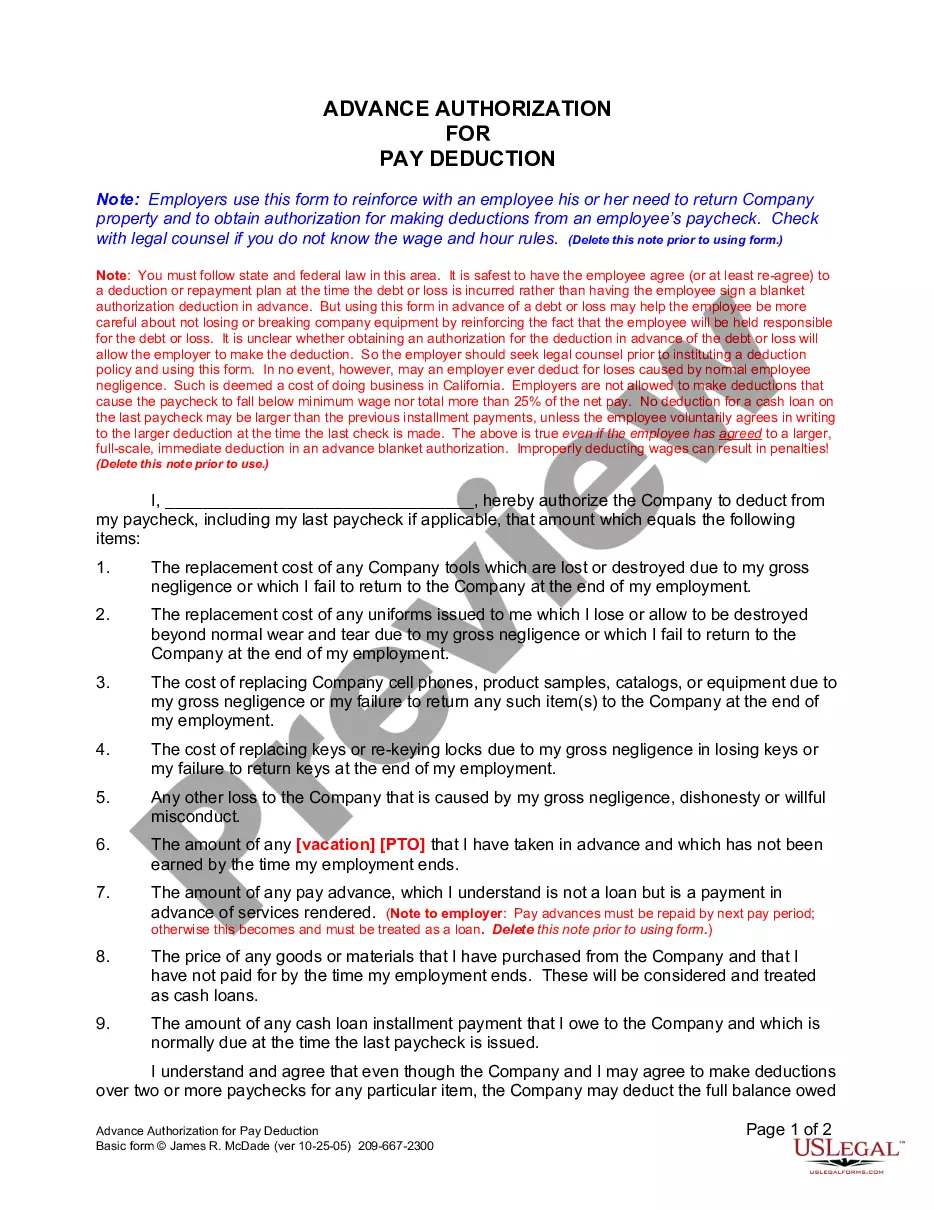
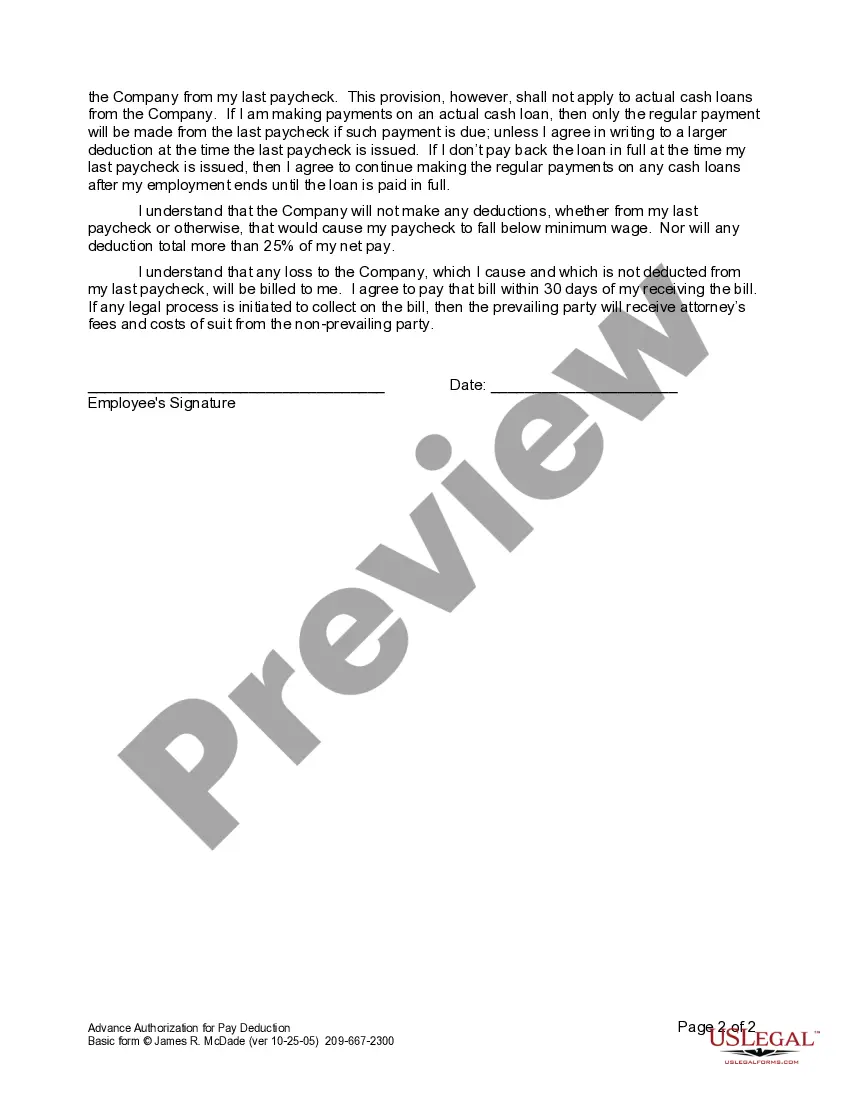
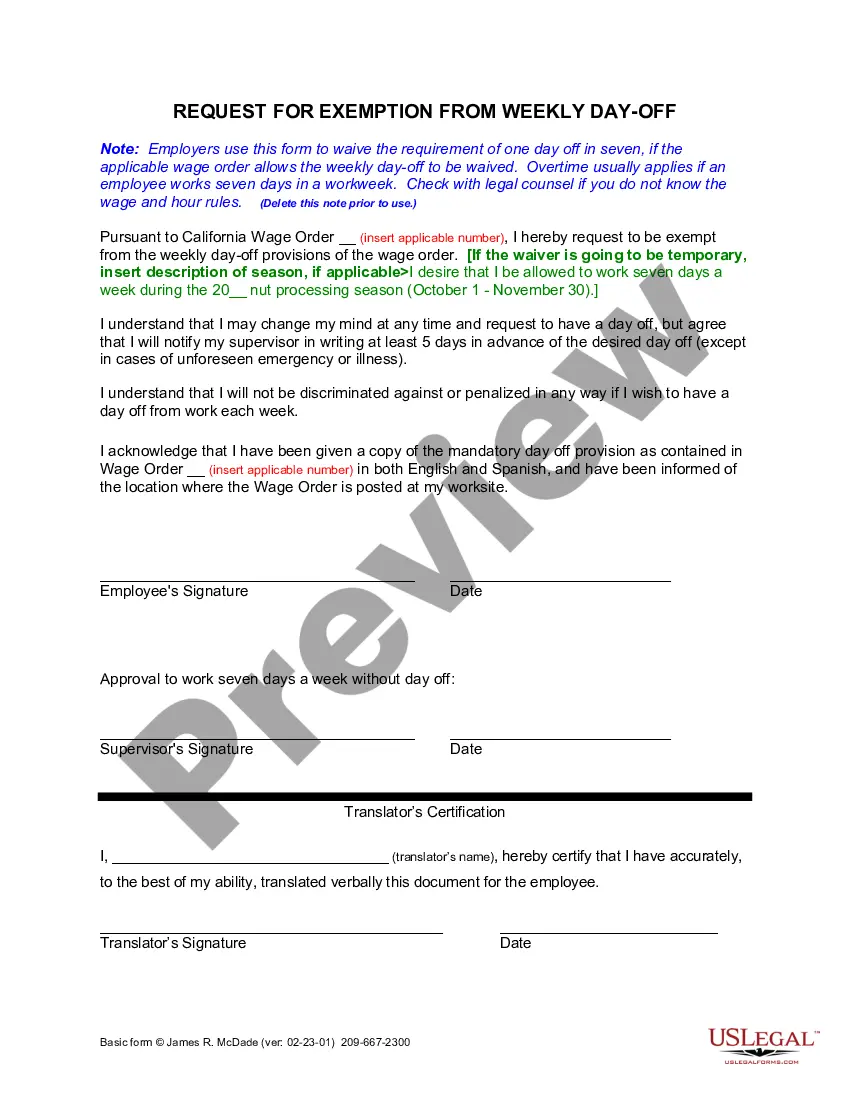
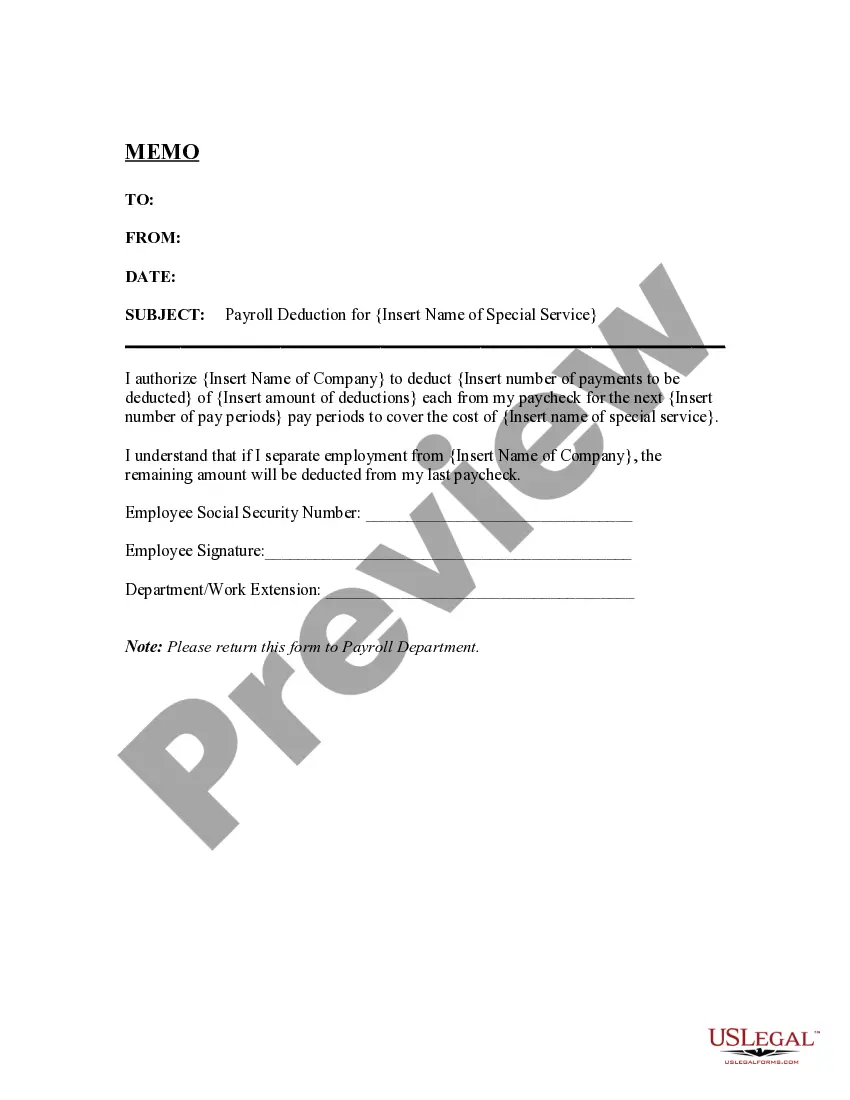
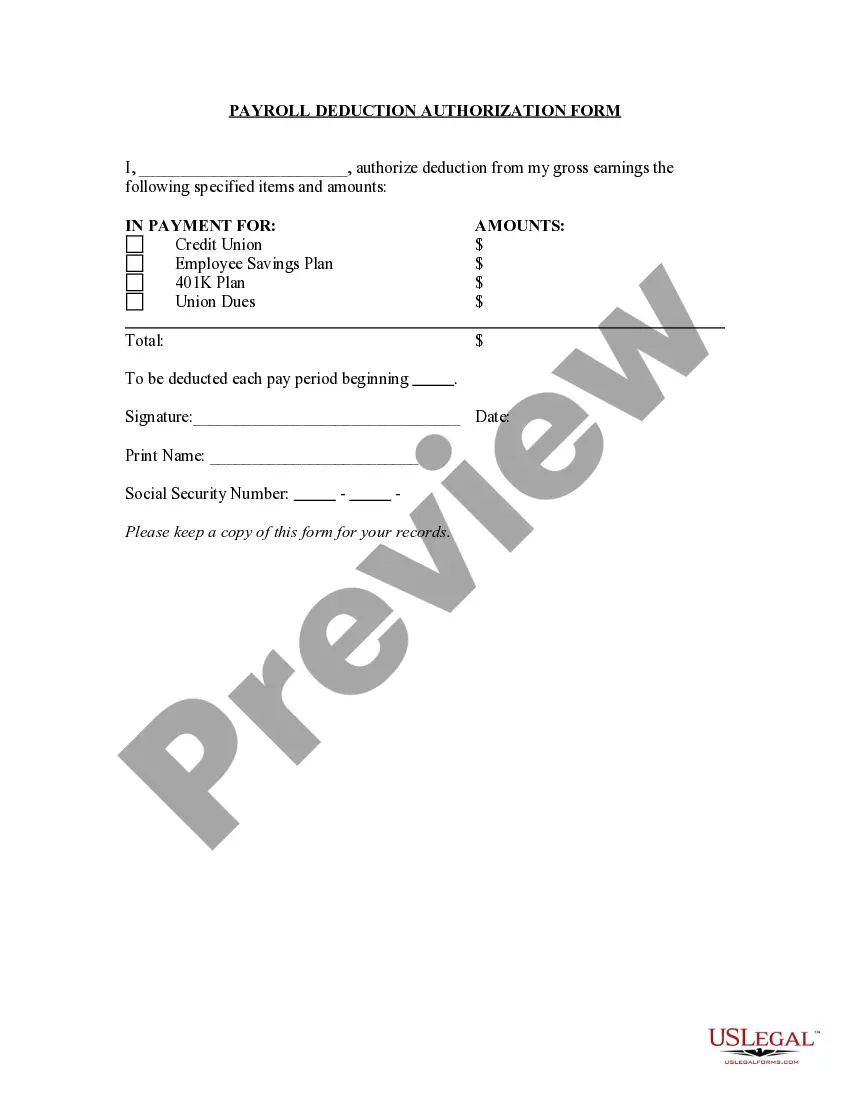
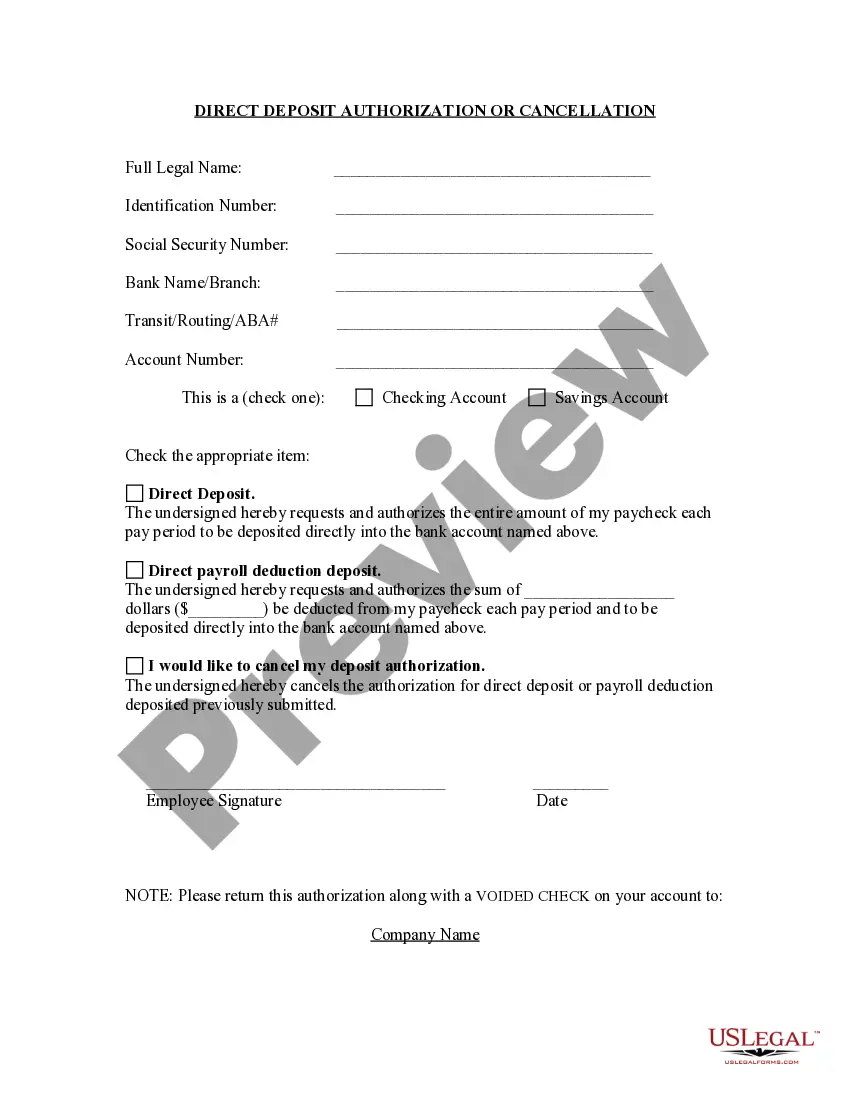
Employers use this form to reinforce with an employee his or her need to return Company property and to obtain authorization for making deductions from an employee's paycheck.
Pomona California Advance Authorization for Pay Deduction
State:
California
City:
Pomona
Control #:
CA-JM-0019
Format:
Word
Instant download
Description
Free preview





How to fill out California Advance Authorization For Pay Deduction?
Utilize the US Legal Forms and gain immediate access to any form you need.
Our beneficial platform with a vast number of document templates enables you to locate and acquire nearly any document sample you might require.
You can download, fill out, and verify the Pomona California Advance Authorization for Pay Deduction in just a few minutes rather than spending hours online searching for the correct template.
Employing our catalog is an excellent method to enhance the security of your document filing.
- Our experienced attorneys frequently review all records to guarantee that the templates are suitable for a specific state and adhere to new laws and regulations.
- How can you obtain the Pomona California Advance Authorization for Pay Deduction.
- If you already have an account, simply Log In to your profile. The Download option will be activated for all the documents you access. Additionally, you can find all previously saved documents in the My documents section.
Form popularity
FAQ
Mandatory deductions: Federal and state income tax, FICA taxes, and wage garnishments. Post-tax deductions: Garnishments, Roth IRA retirement plans and charitable donations. Voluntary deductions: Life insurance, job-related expenses and retirement plans.
Paycheck deductions permitted by law ? and without the expressed consent of the employee ? are limited to taxes, wage garnishments, and meals and lodging. Wage deductions for taxes are more commonly referred to as tax withholdings, and nearly everyone earning a paycheck is subject to them.
Rules for making deductions from your pay Your employer is not allowed to make a deduction from your pay or wages unless: it is required or allowed by law, for example National Insurance, income tax or student loan repayments. you agree in writing to a deduction. your contract of employment says they can.
Section 34 (1) of the Basic Conditions of Employment Act prohibits an employer from making deductions from an employee's remuneration without the employee's consent and if the deduction is required or permitted in terms of a law, collective agreement, court order or arbitration award.
Under federal law, you may deduct an advance from your employee's paycheck. However, you may not deduct so much that it reduces your employee's pay to less than the hourly minimum wage ($7.25, currently). For low-wage employees, this means you may need to spread the repayment period out over several paychecks.
Advance deduction on payslip This is where an amount gets removed from an employee/worker's payslip to cover money previously advanced to them. This type of action is commonplace for retail clerks, loan officers, and sales jobs.
As a general rule, employers may reduce your salary or wages for any lawful reason. There is no California labor law specifically prohibiting employers from reducing an employee's compensation. However, the reduced salary or wages must still comply with California's wage and hour laws.
In California, an employer is not permitted to use ?self-help? remedies to recoup what an employee owes them. In other words, you cannot take advantage of your status as the employer and simply deduct what is owed from the employee's paycheck. Instead, you may have to sue the employee to get your money.
Under California law, an employer may lawfully deduct the following from an employee's wages: Deductions that are required of the employer by federal or state law, such as income taxes or garnishments.