Alameda California Landlord Tenant Eviction / Unlawful Detainer Forms Package

State:
California Please select your state
Select state
County:
Alameda
Control #:
CA-EVIC-PKG
Format:
Word; 
Rich Text; 
PDF
144 downloads

Description

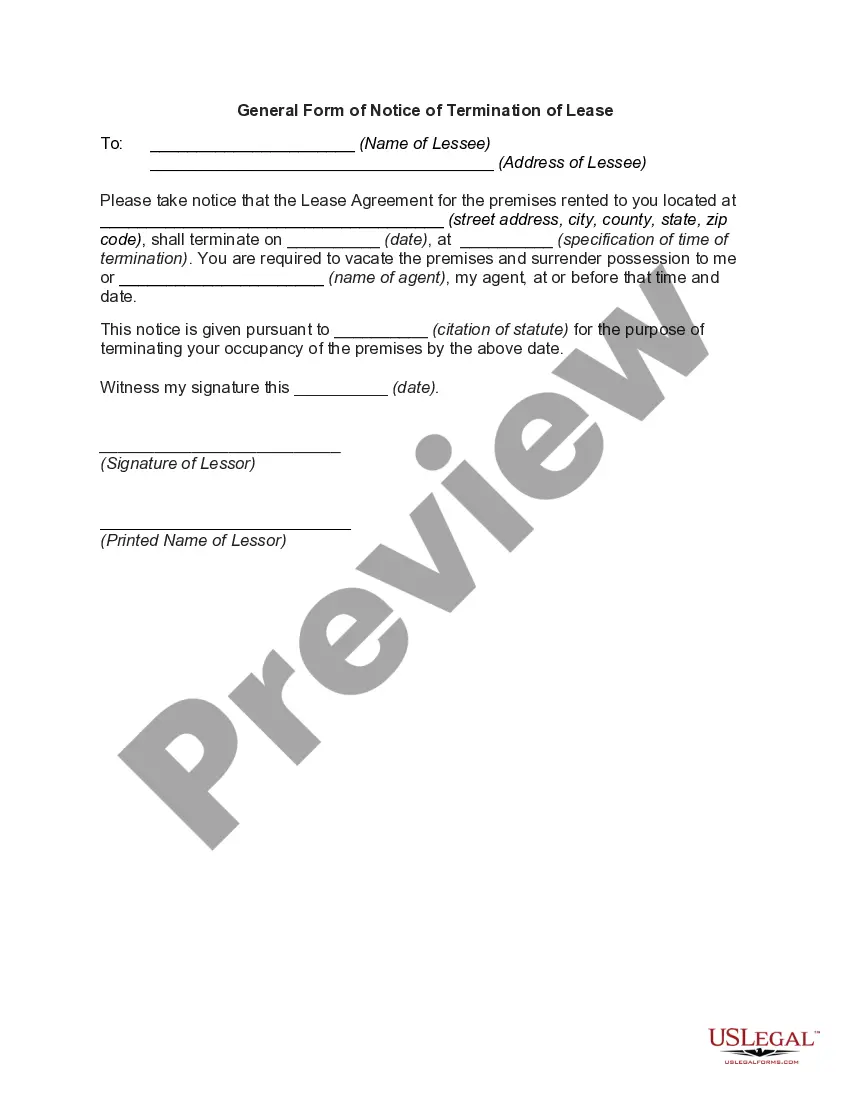
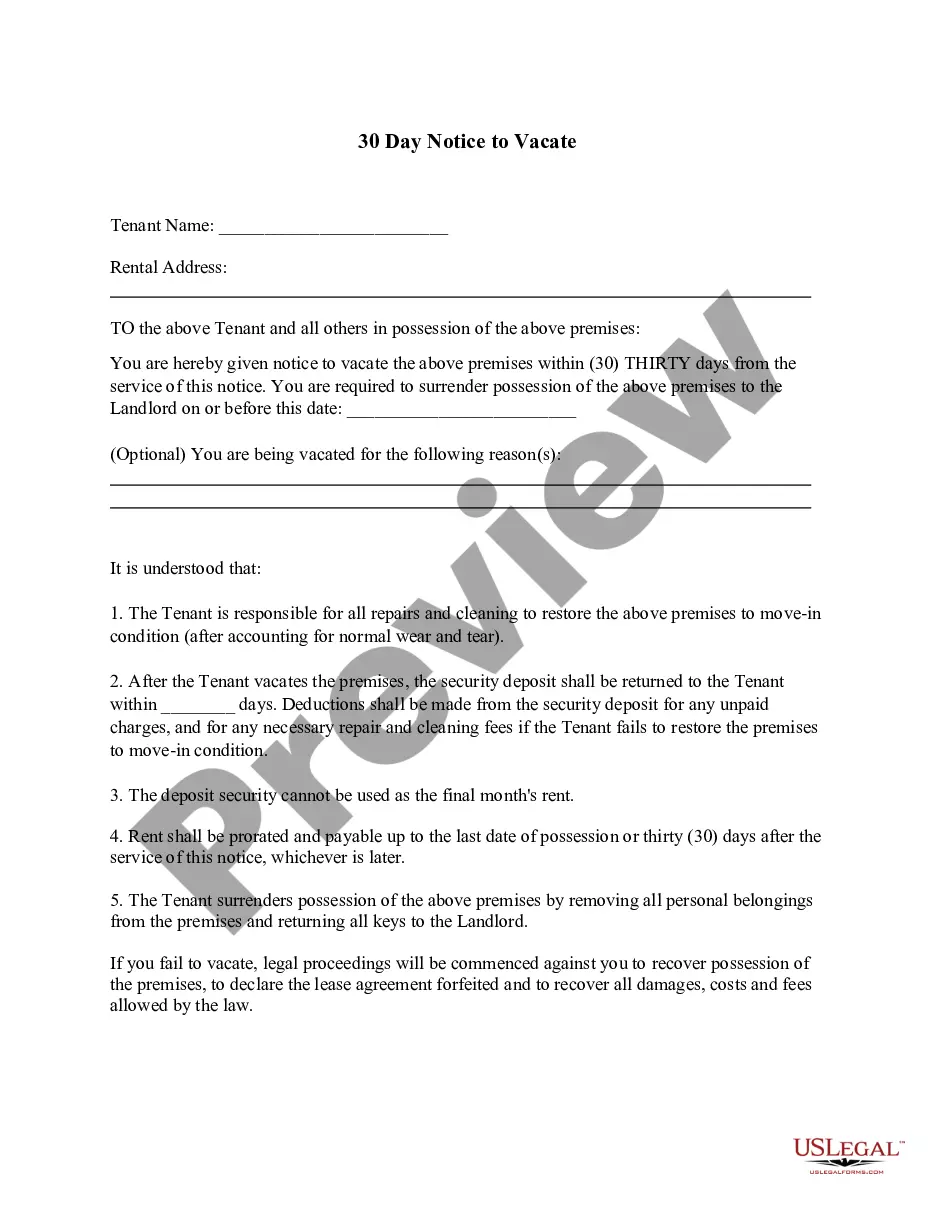
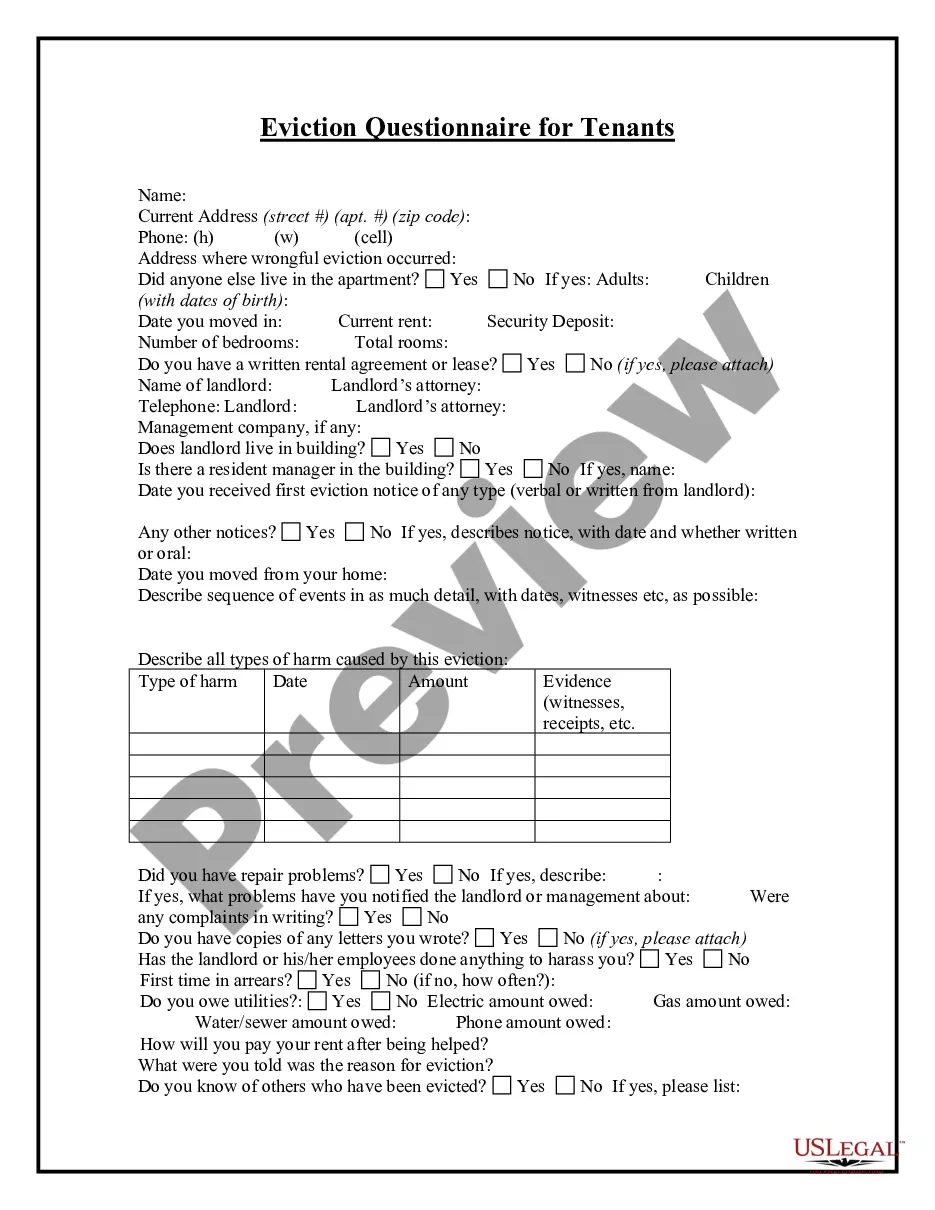
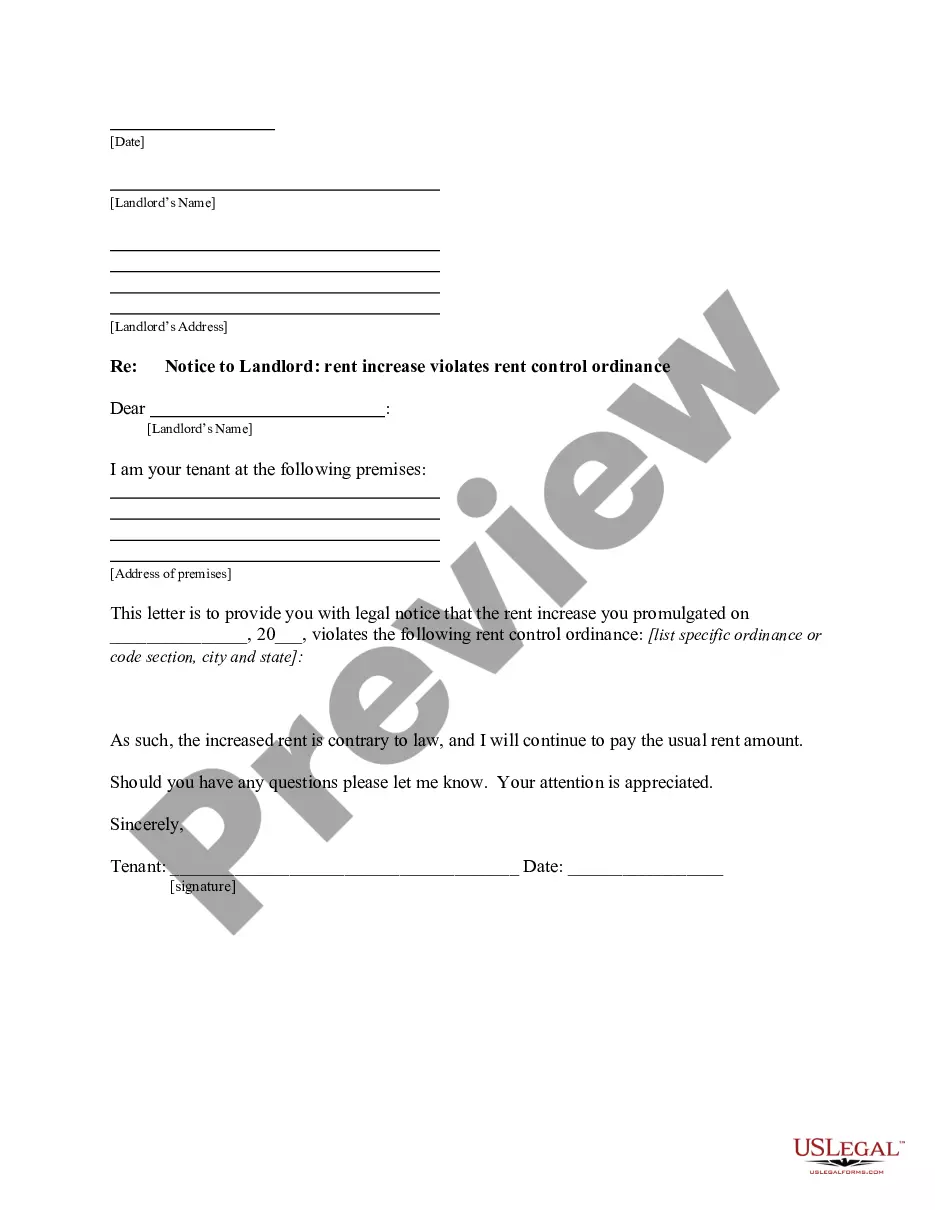
This package contains the essential state-specific forms a landlord needs to evict a tenant. If you need to get rid of an unwanted tenant, this money-saving package ensures that you follow the rules of your state. Included in this package are the following forms:


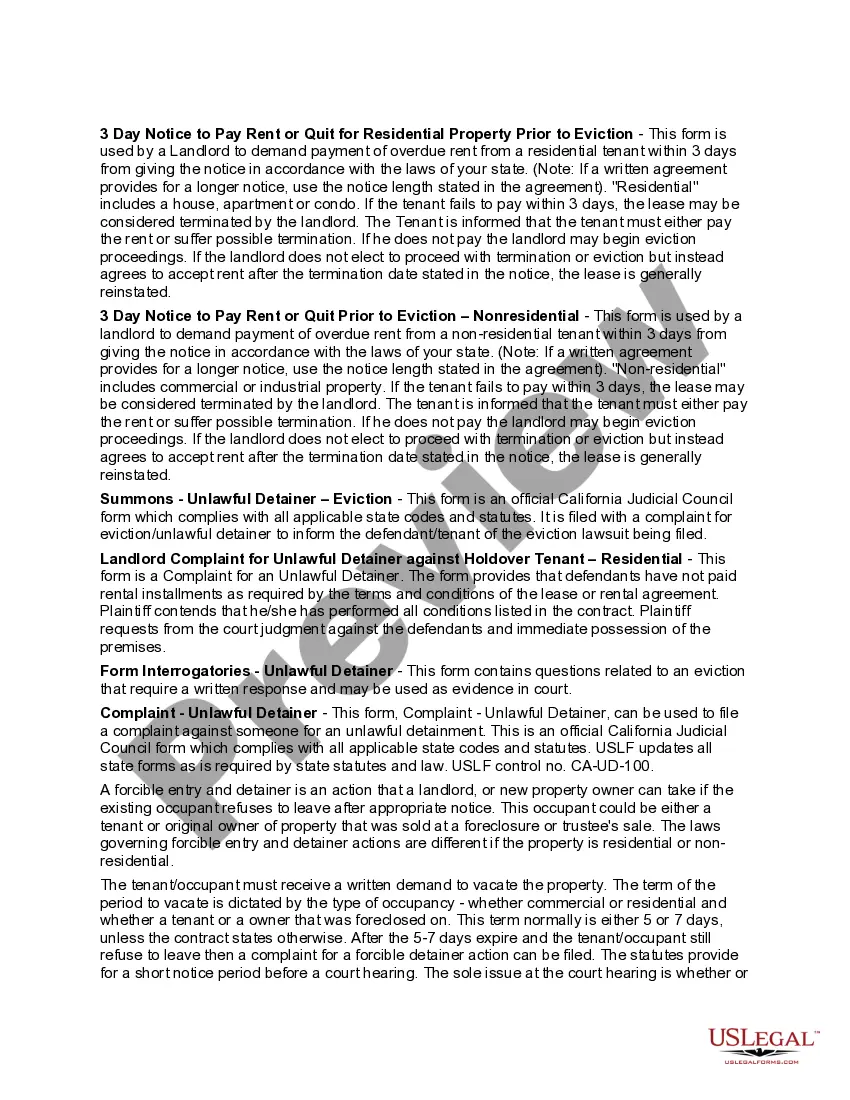
3 Day Notice to Pay Rent or Quit for Residential Property Prior to Eviction - This form is used by a Landlord to demand payment of overdue rent from a residential tenant within 3 days from giving the notice in accordance with the laws of your state. (Note: If a written agreement provides for a longer notice, use the notice length stated in the agreement). "Residential" includes a house, apartment or condo. If the tenant fails to pay within 3 days, the lease may be considered terminated by the landlord. The Tenant is informed that the tenant must either pay the rent or suffer possible termination. If he does not pay the landlord may begin eviction proceedings. If the landlord does not elect to proceed with termination or eviction but instead agrees to accept rent after the termination date stated in the notice, the lease is generally reinstated.


3 Day Notice to Pay Rent or Quit Prior to Eviction ?ˆ“ Nonresidential - This form is used by a landlord to demand payment of overdue rent from a non-residential tenant within 3 days from giving the notice in accordance with the laws of your state. (Note: If a written agreement provides for a longer notice, use the notice length stated in the agreement). "Non-residential" includes commercial or industrial property. If the tenant fails to pay within 3 days, the lease may be considered terminated by the landlord. The tenant is informed that the tenant must either pay the rent or suffer possible termination. If he does not pay the landlord may begin eviction proceedings. If the landlord does not elect to proceed with termination or eviction but instead agrees to accept rent after the termination date stated in the notice, the lease is generally reinstated.


Summons - Unlawful Detainer ?ˆ“ Eviction - This form is an official California Judicial Council form which complies with all applicable state codes and statutes.It is filed with a complaint for eviction/unlawful detainer to inform the defendant/tenant of the eviction lawsuit being filed.


Landlord Complaint for Unlawful Detainer against Holdover Tenant ?ˆ“ Residential - This form is a Complaint for an Unlawful Detainer. The form provides that defendants have not paid rental installments as required by the terms and conditions of the lease or rental agreement. Plaintiff contends that he/she has performed all conditions listed in the contract. Plaintiff requests from the court judgment against the defendants and immediate possession of the premises.


Form Interrogatories - Unlawful Detainer - This form contains questions related to an eviction that require a written response and may be used as evidence in court.


Complaint - Unlawful Detainer - This form, Complaint - Unlawful Detainer, can be used to file a complaint against someone for an unlawful detainment. This is an official California Judicial Council form which complies with all applicable state codes and statutes. USLF updates all state forms as is required by state statutes and law. USLF control no. CA-UD-100.


A forcible entry and detainer is an action that a landlord, or new property owner can take if the existing occupant refuses to leave after appropriate notice. This occupant could be either a tenant or original owner of property that was sold at a foreclosure or trustee's sale. The laws governing forcible entry and detainer actions are different if the property is residential or non-residential.


The tenant/occupant must receive a written demand to vacate the property. The term of the period to vacate is dictated by the type of occupancy - whether commercial or residential and whether a tenant or a owner that was foreclosed on. This term normally is either 5 or 7 days, unless the contract states otherwise. After the 5-7 days expire and the tenant/occupant still refuse to leave then a complaint for a forcible detainer action can be filed. The statutes provide for a short notice period before a court hearing. The sole issue at the court hearing is whether or not the tenant/occupant has the right to possession. If they do not then they will be found guilty of a forcible entry and detainer.


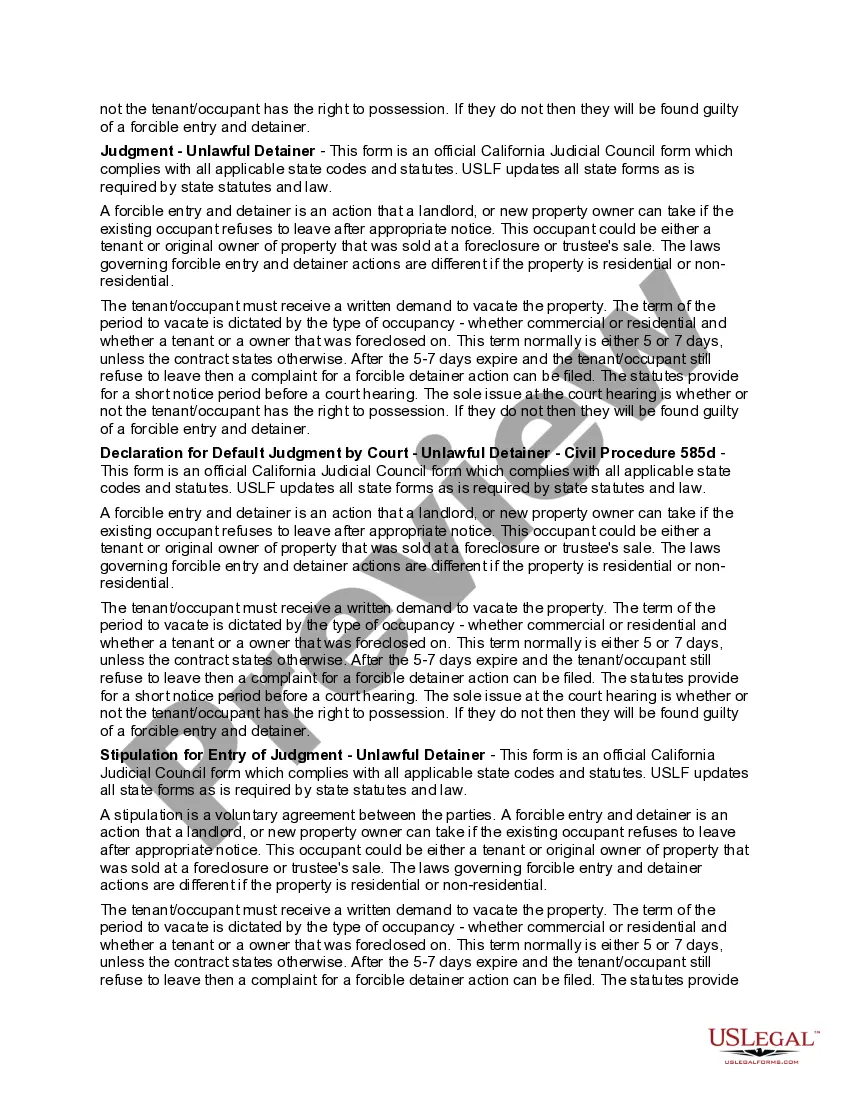
Judgment - Unlawful Detainer - This form is an official California Judicial Council form which complies with all applicable state codes and statutes. USLF updates all state forms as is required by state statutes and law.


A forcible entry and detainer is an action that a landlord or new property owner can take if the existing occupant refuses to leave after appropriate notice. The laws governing forcible entry and detainer actions are different if the property is residential or non-residential.


The tenant/occupant must receive a written demand to vacate the property. The term of the period to vacate is dictated by the type of occupancy - whether commercial or residential and whether a tenant or a owner that was foreclosed on. This term normally is either 5 or 7 days, unless the contract states otherwise. After the 5-7 days expire and the tenant/occupant still refuse to leave then a complaint for a forcible detainer action can be filed. The statutes provide for a short notice period before a court hearing. The sole issue at the court hearing is whether or not the tenant/occupant has the right to possession. If they do not then they will be found guilty of a forcible entry and detainer.


Declaration for Default Judgment by Court - Unlawful Detainer - Civil Procedure 585d - This form is an official California Judicial Council form which complies with all applicable state codes and statutes. USLF updates all state forms as is required by state statutes and law.


A forcible entry and detainer is an action that a landlord, or new property owner can take if the existing occupant refuses to leave after appropriate notice. The laws governing forcible entry and detainer actions are different if the property is residential or non-residential.


The tenant/occupant must receive a written demand to vacate the property. The term of the period to vacate is dictated by the type of occupancy - whether commercial or residential and whether a tenant or a owner that was foreclosed on. This term normally is either 5 or 7 days, unless the contract states otherwise. After the 5-7 days expire and the tenant/occupant still refuse to leave then a complaint for a forcible detainer action can be filed. The statutes provide for a short notice period before a court hearing. The sole issue at the court hearing is whether or not the tenant/occupant has the right to possession. If they do not then they will be found guilty of a forcible entry and detainer.


Stipulation for Entry of Judgment - Unlawful Detainer - This form is an official California Judicial Council form which complies with all applicable state codes and statutes. USLF updates all state forms as is required by state statutes and law.


A stipulation is a voluntary agreement between the parties. A forcible entry and detainer is an action that a landlord, or new property owner can take if the existing occupant refuses to leave after appropriate notice. This occupant could be either a tenant or original owner of property that was sold at a foreclosure or trustee's sale. The laws governing forcible entry and detainer actions are different if the property is residential or non-residential.


The tenant/occupant must receive a written demand to vacate the property. The term of the period to vacate is dictated by the type of occupancy - whether commercial or residential and whether a tenant or a owner that was foreclosed on. This term normally is either 5 or 7 days, unless the contract states otherwise. After the 5-7 days expire and the tenant/occupant still refuse to leave then a complaint for a forcible detainer action can be filed. The statutes provide for a short notice period before a court hearing. The sole issue at the court hearing is whether or not the tenant/occupant has the right to possession. If they do not then they will be found guilty of a forcible entry and detainer.


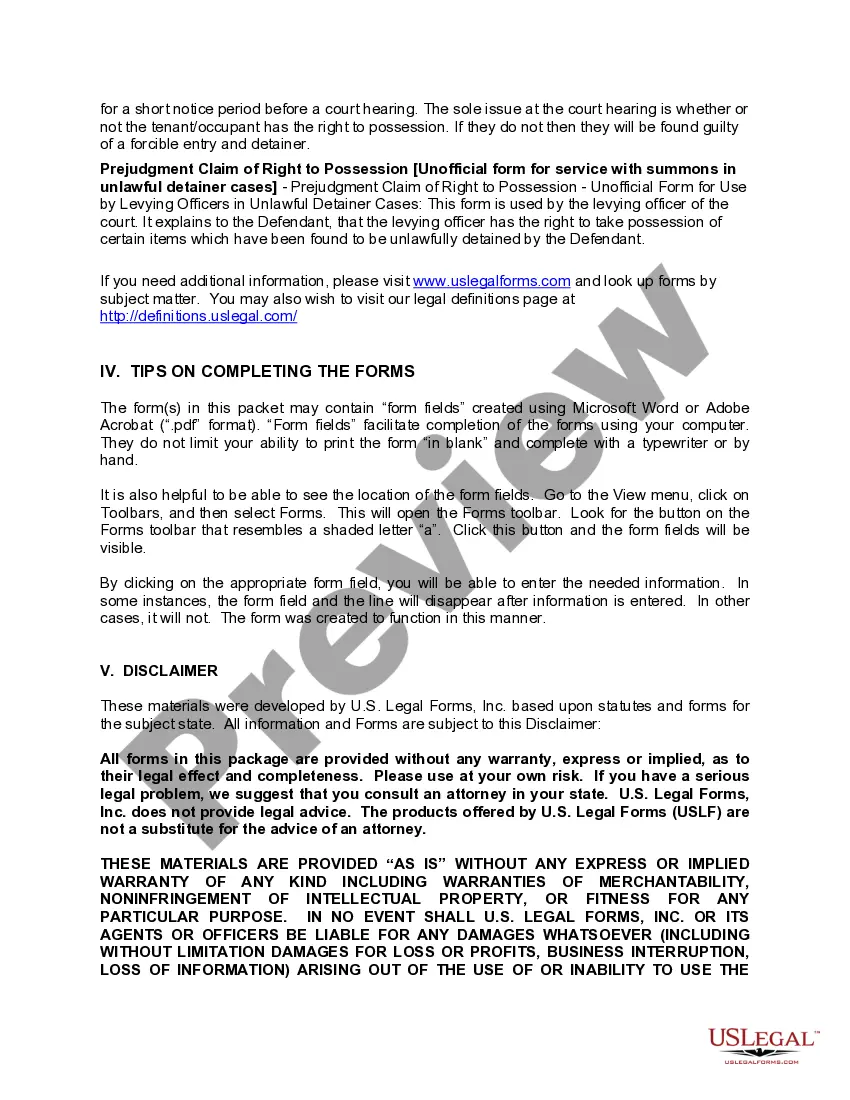
Prejudgment Claim of Right to Possession [Unofficial form for service with summons in unlawful detainer cases] - Prejudgment Claim of Right to Possession - Unofficial Form for Use by Levying Officers in Unlawful Detainer Cases: This form is used by the levying officer of the court. It explains to the defendant that the levying officer has the right to take possession of certain items which have been found to be unlawfully detained by the defendant.
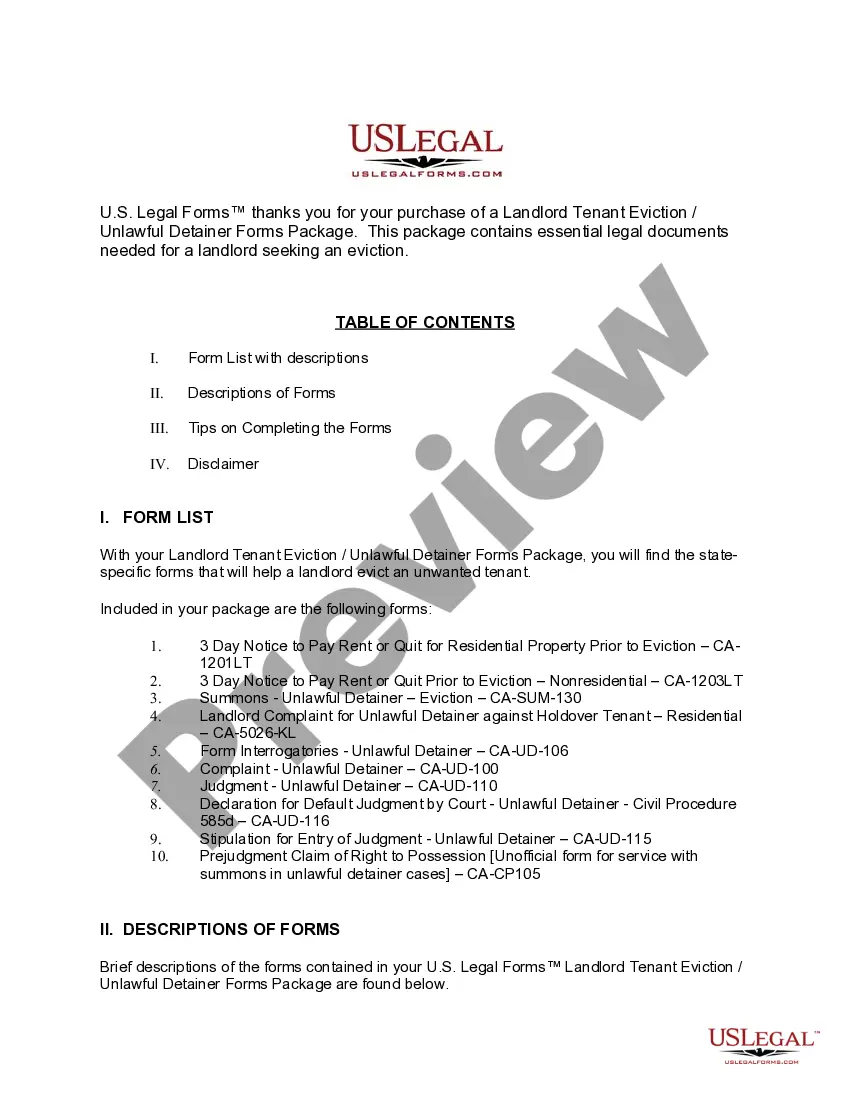
Free preview
  • Preview California Landlord Tenant Eviction / Unlawful Detainer Forms Package
  • Preview California Landlord Tenant Eviction / Unlawful Detainer Forms Package
  • Preview California Landlord Tenant Eviction / Unlawful Detainer Forms Package
  • Preview California Landlord Tenant Eviction / Unlawful Detainer Forms Package
  • Preview California Landlord Tenant Eviction / Unlawful Detainer Forms Package
  • Preview California Landlord Tenant Eviction / Unlawful Detainer Forms Package

Get your form ready online

Our built-in tools help you complete, sign, share, and store your documents in one place.

Built-in online Word editor

Make edits, fill in missing information, and update formatting in US Legal Forms—just like you would in MS Word.

Export easily

Download a copy, print it, send it by email, or mail it via USPS—whatever works best for your next step.

E-sign your document

Sign and collect signatures with our SignNow integration. Send to multiple recipients, set reminders, and more. Go Premium to unlock E-Sign.

Notarize online 24/7

If this form requires notarization, complete it online through a secure video call—no need to meet a notary in person or wait for an appointment.

Store your document securely

We protect your documents and personal data by following strict security and privacy standards.

Form selector

Make edits, fill in missing information, and update formatting in US Legal Forms—just like you would in MS Word.

Form selector

Download a copy, print it, send it by email, or mail it via USPS—whatever works best for your next step.

Form selector

Sign and collect signatures with our SignNow integration. Send to multiple recipients, set reminders, and more. Go Premium to unlock E-Sign.

Form selector

If this form requires notarization, complete it online through a secure video call—no need to meet a notary in person or wait for an appointment.

Form selector

We protect your documents and personal data by following strict security and privacy standards.

Looking for another form?

This field is required
Ohio
Select state

How to fill out California Landlord Tenant Eviction / Unlawful Detainer Forms Package?

We consistently aim to reduce or evade legal liabilities when addressing intricate legal or financial issues.

To achieve this, we seek attorney services that are often quite expensive.

However, not all legal issues possess the same level of intricacy.

Many of them can be managed independently.

Utilize US Legal Forms whenever you need to locate and obtain the Alameda California Landlord Tenant Eviction / Unlawful Detainer Forms Package or any other document quickly and securely. Just Log In to your account and click the Get button beside it. If you misplace the document, you can always retrieve it again in the My documents tab. The procedure is equally simple if you're new to the website! You can establish your account in a matter of minutes. Ensure that the Alameda California Landlord Tenant Eviction / Unlawful Detainer Forms Package adheres to your state's and area's laws and regulations. Additionally, it's vital that you review the form's outline (if available), and if you find any inconsistencies with your original requirements, look for an alternative form. Once you confirm that the Alameda California Landlord Tenant Eviction / Unlawful Detainer Forms Package is appropriate for your situation, you can choose a subscription plan and proceed with payment. Then, you can download the document in any available format. For over 24 years, we have assisted millions by providing ready-to-edit and current legal forms. Take full advantage of US Legal Forms now to conserve time and resources!

  1. US Legal Forms is an online repository of current DIY legal documents encompassing everything from wills and powers of attorney to incorporation articles and dissolution petitions.
  2. Our platform empowers you to take control of your affairs without needing to consult a lawyer.
  3. We offer access to legal document models that aren't consistently available to the public.
  4. Our templates are tailored to specific states and regions, greatly streamlining the search process.

Form popularity

FAQ

Yes, in California, an unlawful detainer is essentially the legal term for eviction. When a landlord seeks to evict a tenant, they file an unlawful detainer action in court. This process involves specific procedures and requires the proper forms, like the Alameda California Landlord Tenant Eviction / Unlawful Detainer Forms Package, to ensure compliance with local laws. Understanding this distinction helps both landlords and tenants navigate the eviction process more effectively.

To start the eviction process in California, you need to provide a notice to your tenant. This notice states the reason for the eviction and gives the tenant time to rectify the issue or move out. It's crucial to use the correct forms, such as the ones in the Alameda California Landlord Tenant Eviction / Unlawful Detainer Forms Package, to ensure compliance with state laws. Consultation with a legal professional can also guide you through any specific regulations.

An unlawful detainer process in California involves several steps, beginning with the landlord serving a notice to the tenant. If the tenant does not comply, the landlord files a lawsuit in court. The court then sets a hearing date, where both parties can present their arguments. Using the Alameda California Landlord Tenant Eviction / Unlawful Detainer Forms Package simplifies this process by providing the necessary forms for your case.

The duration of eviction proceedings in Alameda County varies based on several factors, including the court's schedule and the complexity of the case. On average, an eviction can take several weeks to a few months to resolve. Properly completing the necessary paperwork, like the Alameda California Landlord Tenant Eviction / Unlawful Detainer Forms Package, can help expedite the process.

In California, a landlord must obtain a court order to evict a tenant. If a landlord attempts to evict you without going through the legal channels, it may be considered unlawful. Tenants have the right to defend themselves against such actions. In challenging situations, the Alameda California Landlord Tenant Eviction / Unlawful Detainer Forms Package may assist in guiding both landlords and tenants through the legal process.

California has passed new laws regarding eviction processes, focusing on tenant protections and extending eviction bans in certain situations. It's crucial for both landlords and tenants to stay informed about these changes to avoid legal pitfalls. Utilizing the Alameda California Landlord Tenant Eviction / Unlawful Detainer Forms Package can provide the necessary documentation to comply with these updated laws.

Answering an unlawful detainer in California involves submitting your response to the court within the specified timeframe, usually five days. Your response should include your defense against the eviction claims and any supporting evidence. Utilizing the Alameda California Landlord Tenant Eviction / Unlawful Detainer Forms Package can streamline this process and help you to formulate a comprehensive response.

Filing an unlawful detainer lawsuit in California requires you to prepare specific documents and file them with your local court. Begin by gathering evidence supporting your case, then complete the necessary forms, which you can find in the Alameda California Landlord Tenant Eviction / Unlawful Detainer Forms Package. Following the proper procedures ensures your filing is accurate and timely.

Summary eviction is a legal process allowing landlords to reclaim their property quickly due to tenant violations. This method is faster than traditional eviction because a court hears the case without unnecessary delays. Understanding the nuances of summary eviction is essential, and our Alameda California Landlord Tenant Eviction / Unlawful Detainer Forms Package offers valuable insights.

When explaining an eviction on your application, be honest but concise. State the circumstances without dwelling on negativity, and focus on what you have learned since then. Highlight your commitment to being a responsible tenant, using resources like the Alameda California Landlord Tenant Eviction / Unlawful Detainer Forms Package to guide you in presenting your case positively.

Trusted and secure by over 3 million people of the world’s leading companies

Alameda California Landlord Tenant Eviction / Unlawful Detainer Forms Package