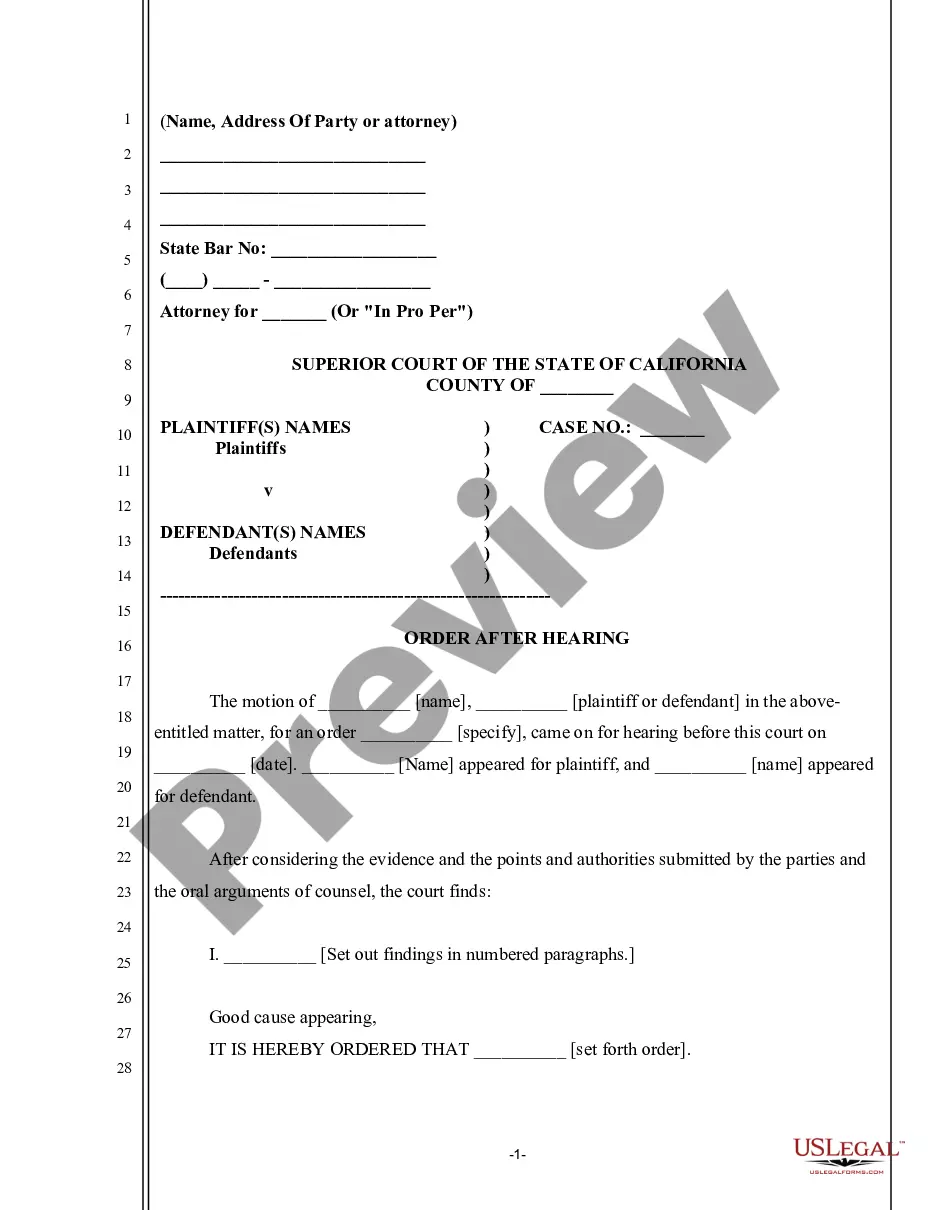
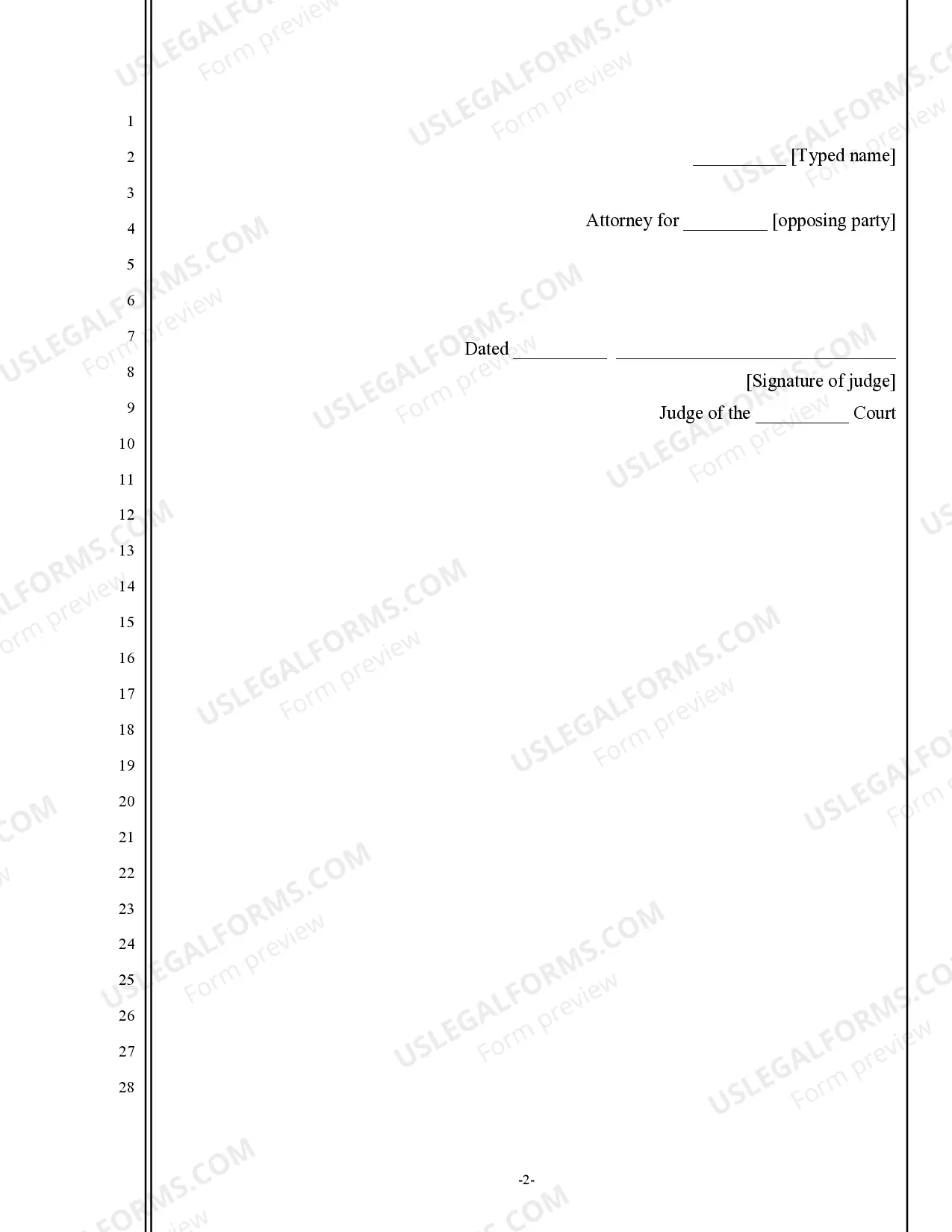
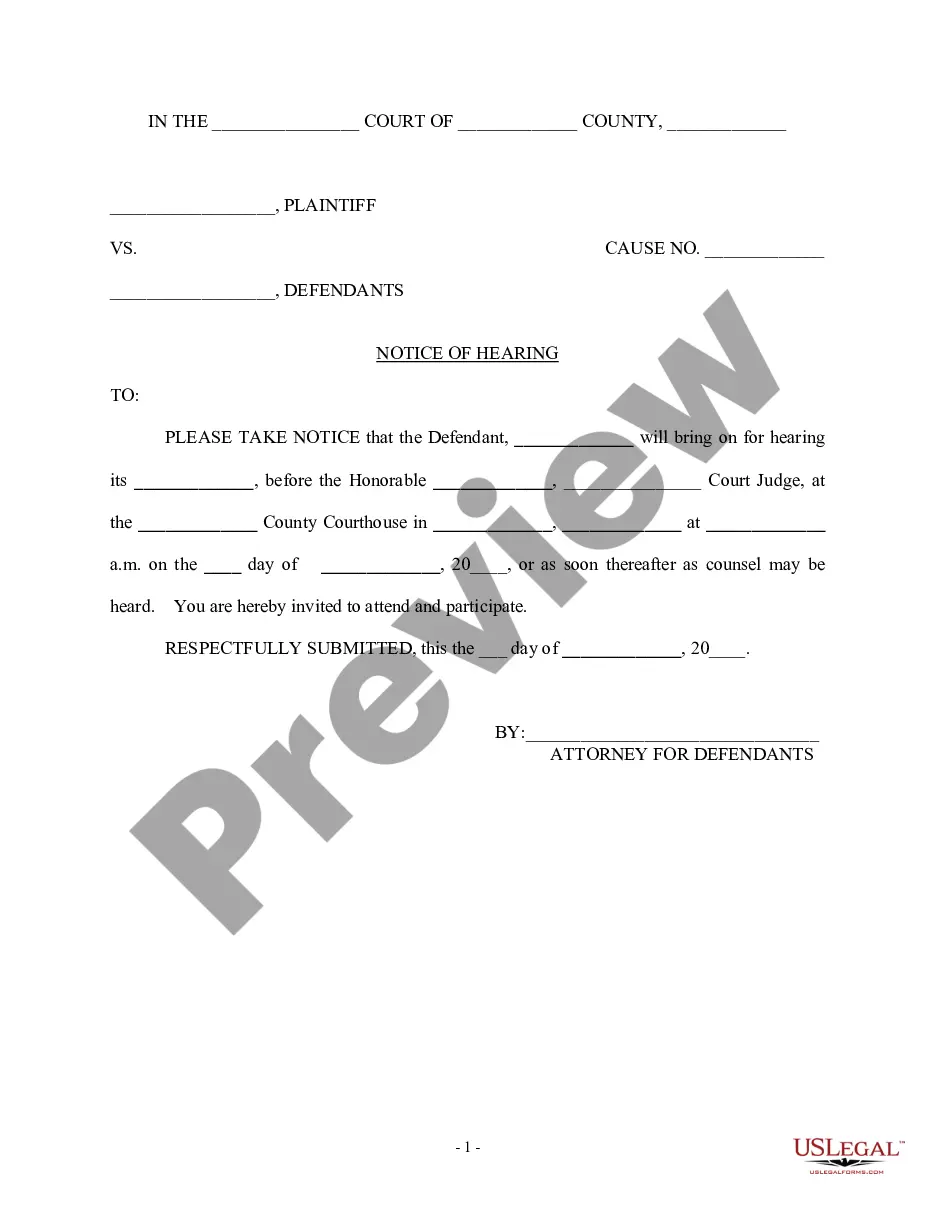
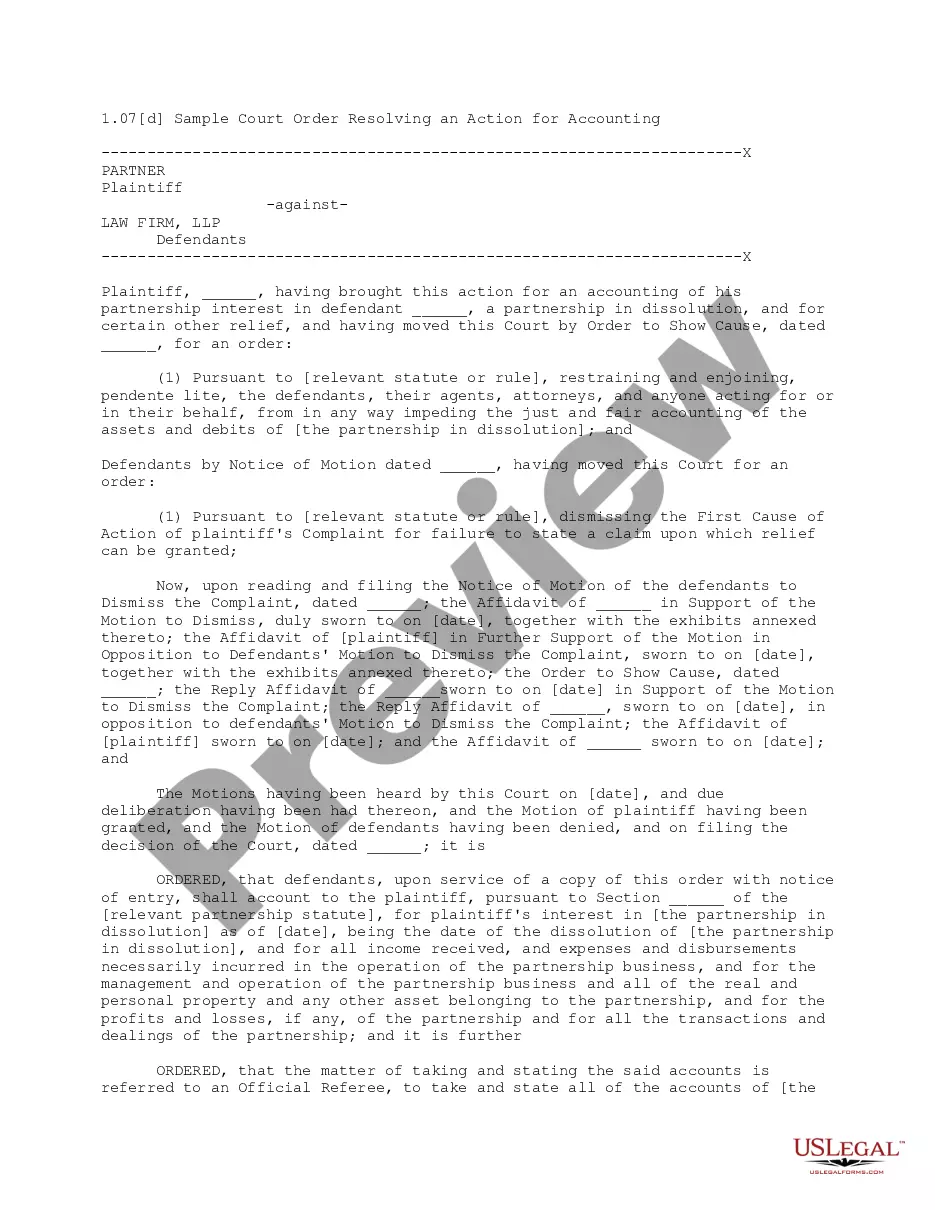
This form is an Order After a Hearing. The form must be signed by the attorney for the opposing party and by the judge issuing the order.
Los Angeles California Order After Hearing - General
Category:
State:
California
County:
Los Angeles
Control #:
CA-5052-KL
Format:
Word;
Rich Text
Instant download
Description
Free preview



How to fill out California Order After Hearing - General?
If you are looking for a legitimate form, it’s challenging to discover a superior platform than the US Legal Forms website – one of the largest collections on the web.
Here you can find a vast array of templates for business and personal uses by categories and regions, or search terms.
Utilizing our advanced search feature, locating the most current Los Angeles California Order After Hearing - General is as straightforward as 1-2-3.
Complete the payment process. Utilize your credit card or PayPal account to finish the registration procedure.
Obtain the template. Select the file format and save it on your device.
- Moreover, the relevancy of each document is verified by a team of expert attorneys who consistently assess the templates on our site and refresh them according to the latest state and county requirements.
- If you are already familiar with our platform and possess a registered account, all you need to do to obtain the Los Angeles California Order After Hearing - General is to Log In to your account and click the Download button.
- If this is your first time using US Legal Forms, simply follow the instructions provided below.
- Ensure you have located the form you require. Review its details and use the Preview function (if available) to examine its contents. If it does not satisfy your needs, employ the Search option near the top of the page to find the appropriate document.
- Confirm your choice. Click the Buy now button. Then, select your desired pricing plan and provide information to register for an account.
Form popularity
FAQ
In California, the rule of court regarding a proposed order after a hearing typically requires that the proposed order be submitted within a specified time frame, often within 10 days following the hearing. The judge may request specific formatting or additional information as needed. Understanding these requirements can help you stay compliant and expedite your case. For clarity on rules and proper formatting, USLegalForms offers resources that can guide you effectively.
The time it takes to receive a court order in Los Angeles depends on various factors, including the type of order and the complexity of your case. Typically, after your hearing, you can expect to receive the order within a few days to a few weeks. However, delays can occur if further information or documentation is required. To ensure a smoother process, consider using a service like USLegalForms, which can help you with necessary filings.
A finding and order after a hearing is the court’s written decision that outlines the findings made during your court appearance. This document specifies the court’s ruling on issues such as custody, support, or other family law matters discussed. Familiarizing yourself with the implications of the findings can help you understand how they relate to the Los Angeles California Order After Hearing - General.
A request for order is a formal document submitted to the court, asking for specific legal relief or changes to a previous order. This could range from adjustments in child custody arrangements to modifications in support payments. Understanding the purpose and process of a request for order is vital for effectively navigating the Los Angeles California Order After Hearing - General.
Serving a request for order in California involves delivering copies of your filed documents to the other party involved in the case. You can use a process server, a sheriff, or someone over 18 who is not involved in the case to ensure proper service. Completing this step accurately is crucial for moving forward with the Los Angeles California Order After Hearing - General.
To request an order for child custody in California, you should fill out the FL-300 form, specifying your child custody request. Include details that support your case, such as any existing orders or evidence of your child’s best interests. It’s important to follow the proper filing procedures to maintain compliance with the Los Angeles California Order After Hearing - General.
The FL-300 form is a Request for Order form used in California family law cases. This form allows individuals to ask the court for temporary orders regarding various issues, including custody, visitation, child support, and spousal support. Understanding how to correctly fill out and file the FL-300 is essential for any requests related to Los Angeles California Order After Hearing - General.
Filing a Request for an Order in California involves completing the appropriate forms, such as the FL-300. You will need to provide detailed information about the order you are requesting, alongside any supporting documents. Once completed, submit your forms to the court and ensure that you comply with the notice requirements as outlined for the Los Angeles California Order After Hearing - General.
To enforce a court order in California, you must first ensure that the order is clear and specific. You can use the help of the local law enforcement if necessary, as they can assist with enforcement. If the other party does not comply, you may need to file additional requests with the court, potentially leading to a hearing regarding the Los Angeles California Order After Hearing - General.
The process of a court order in Los Angeles, California, begins with filing the required documents and requesting a hearing. After the hearing, where both parties present their cases, the judge deliberates and issues an order. This order is then recorded and sent to the relevant parties. Utilizing resources like uslegalforms can assist you in navigating the paperwork and ensuring compliance with your court order as you move forward with the Los Angeles California Order After Hearing - General.