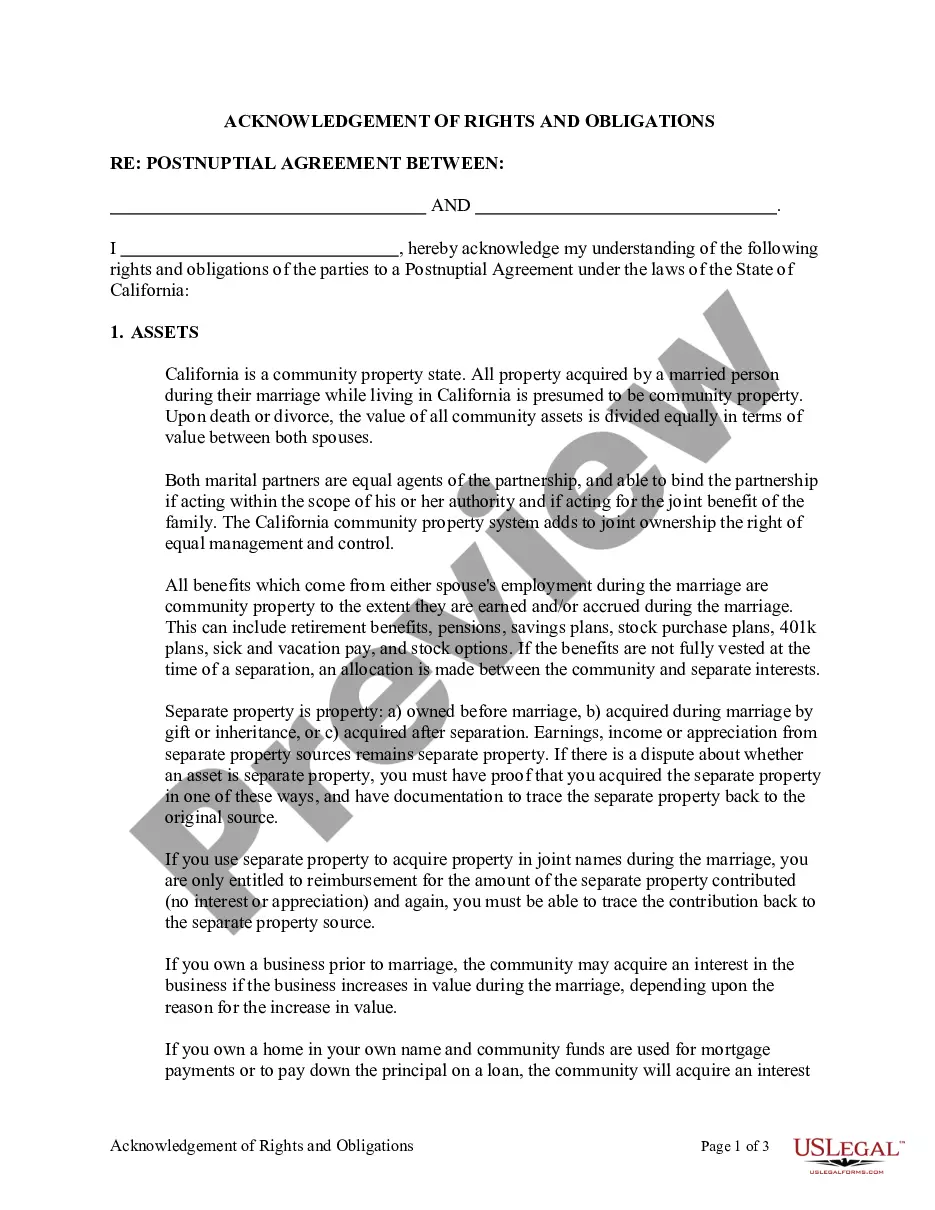
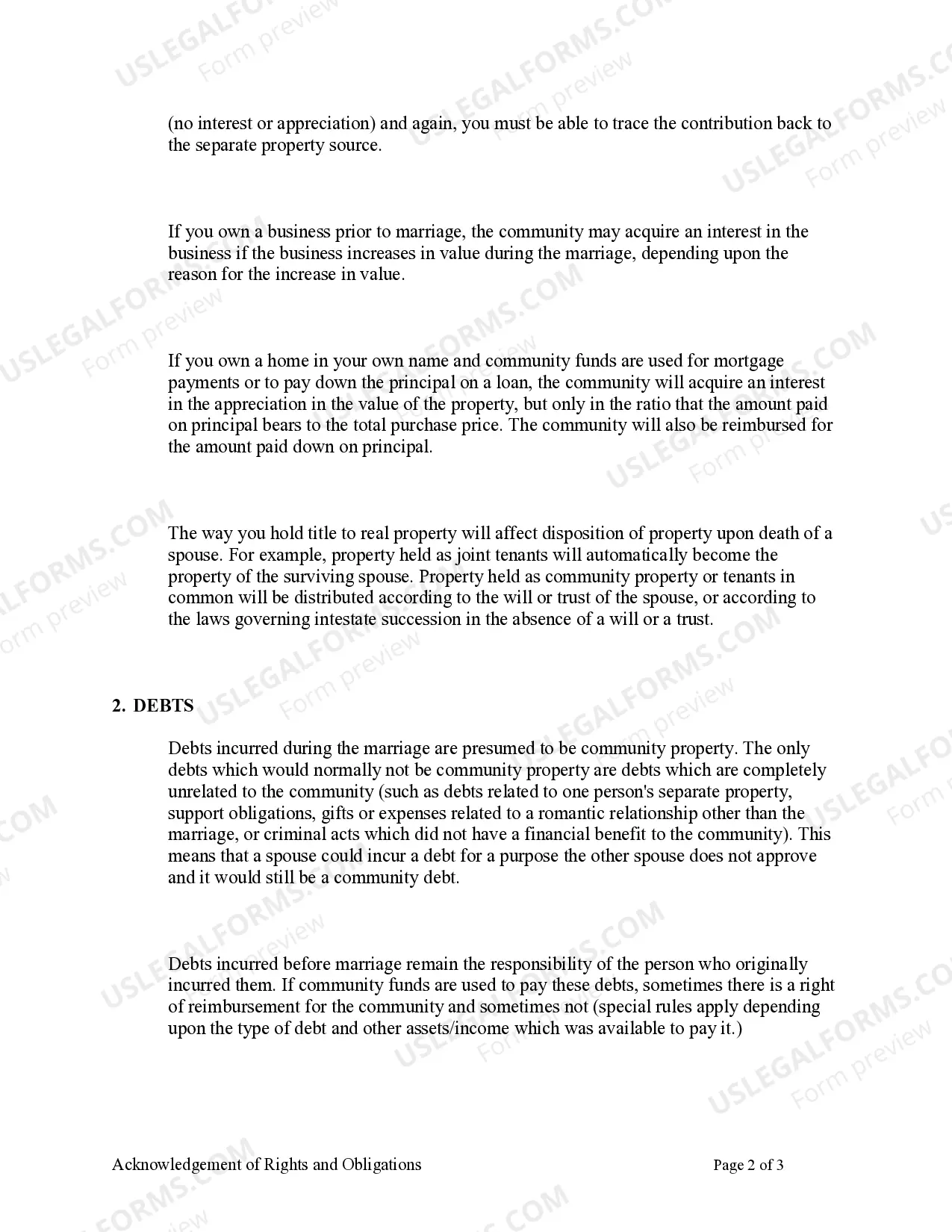
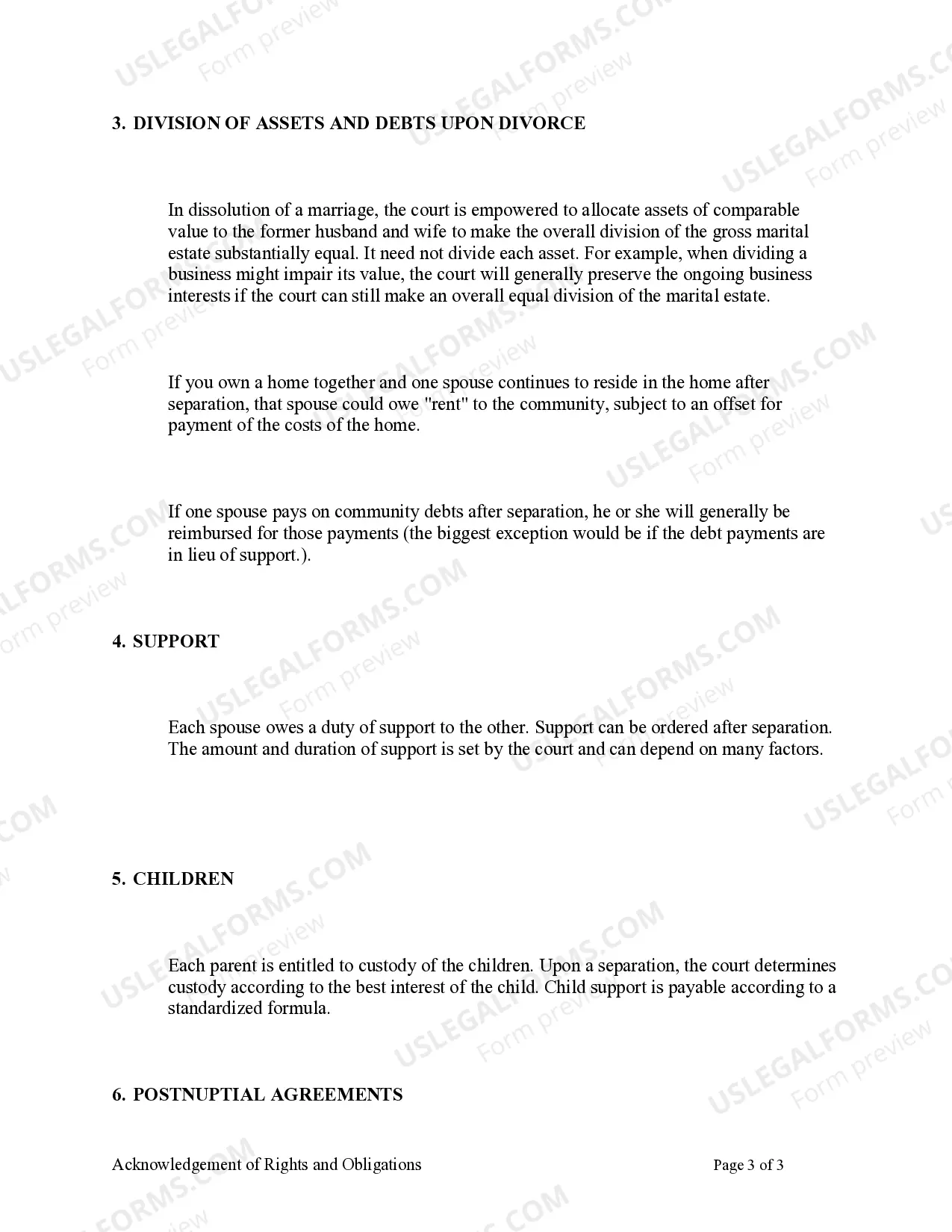
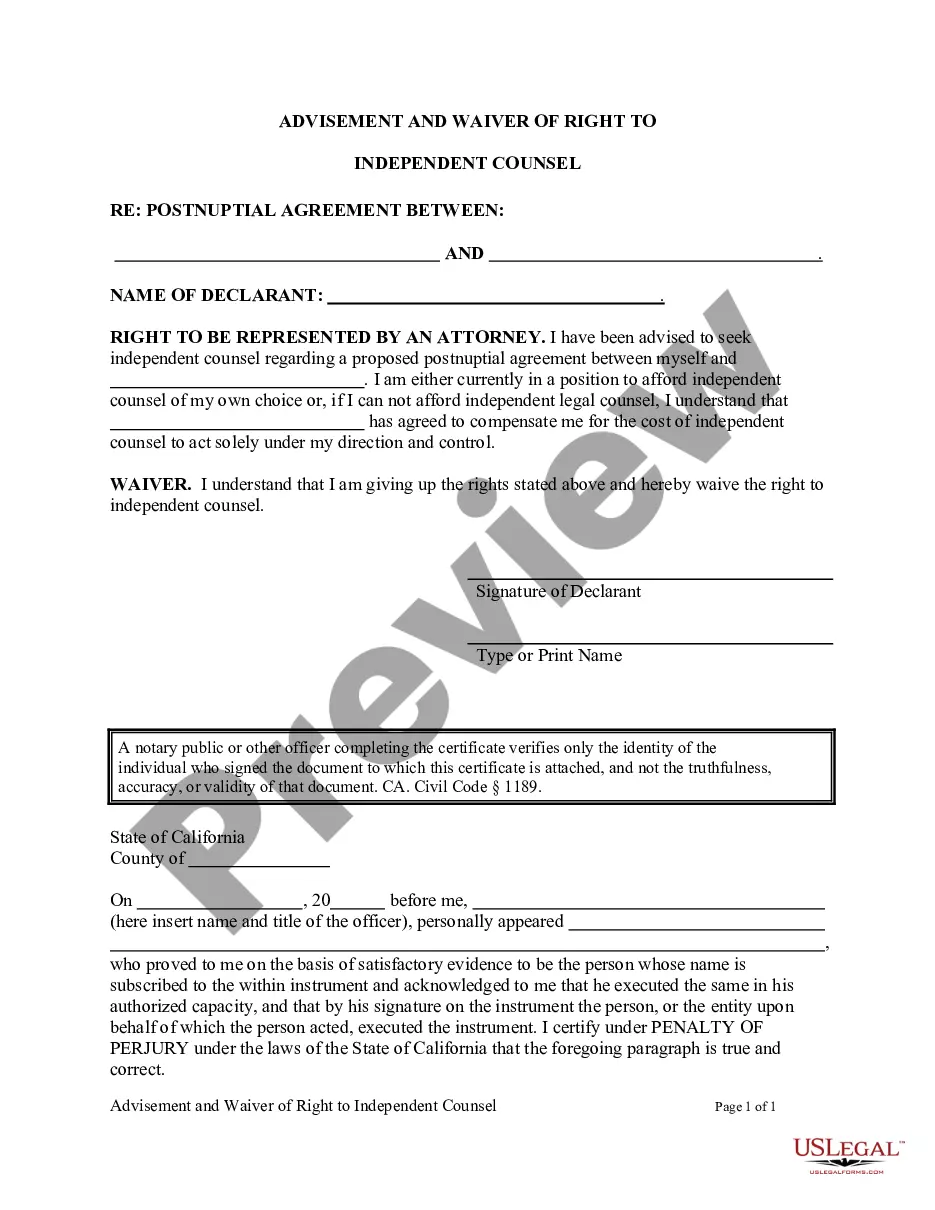
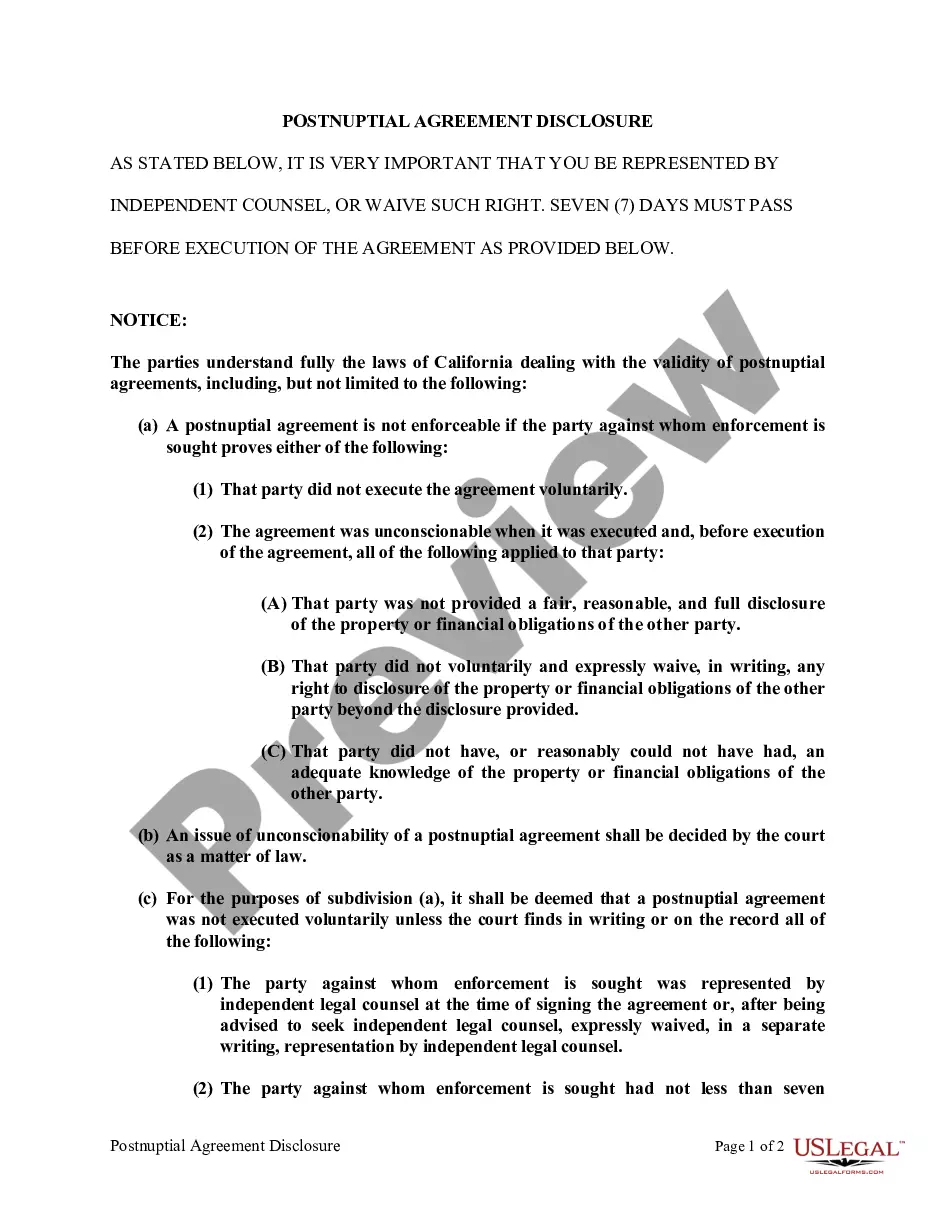
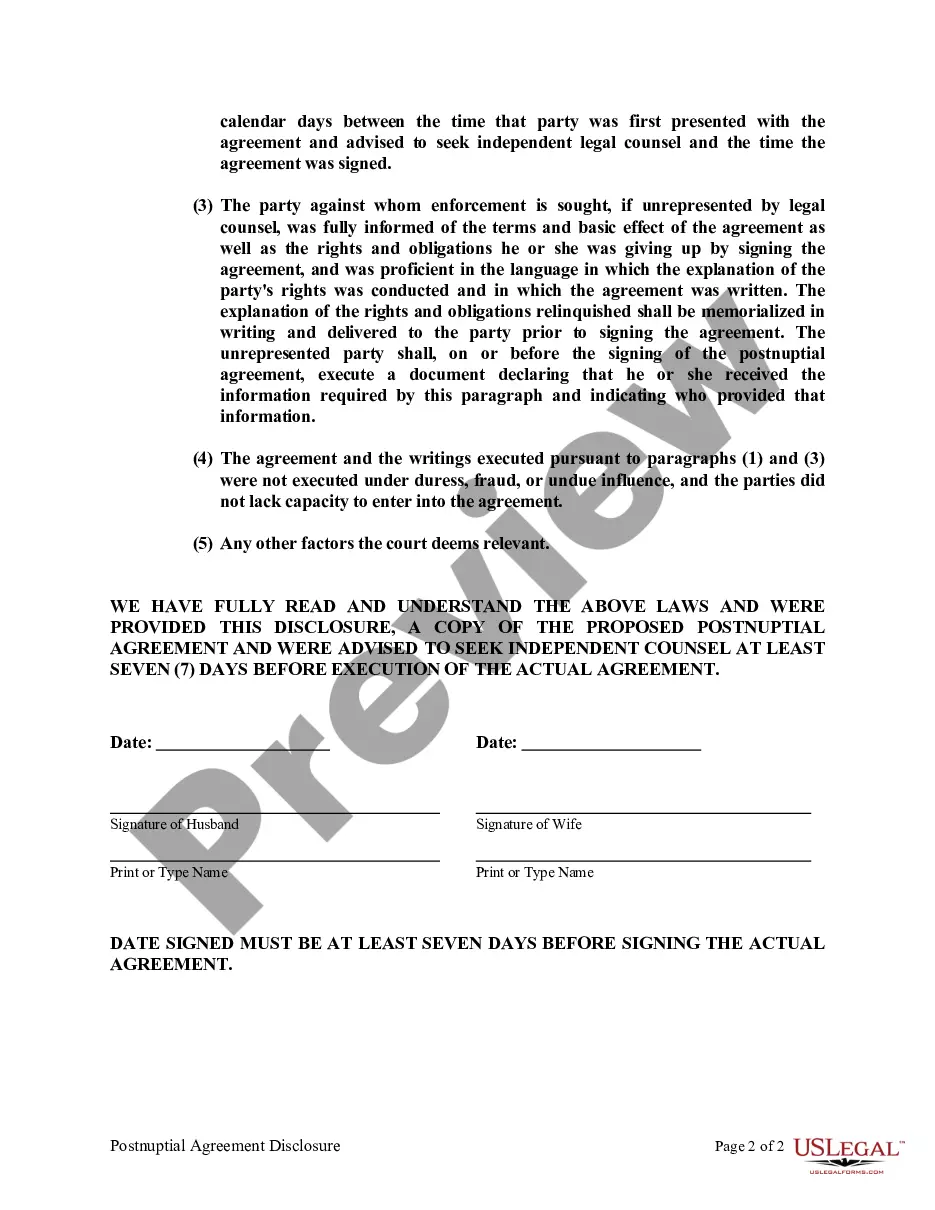
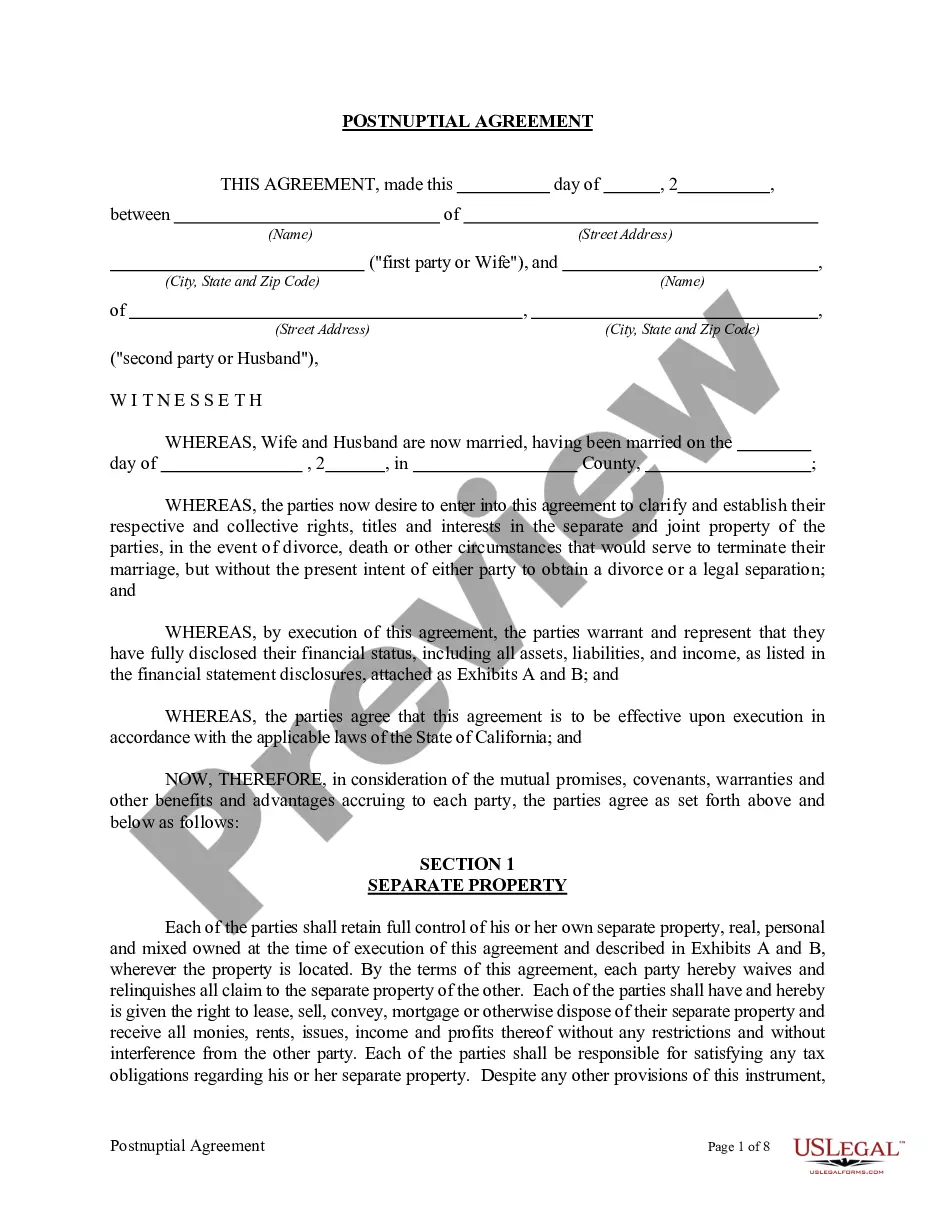
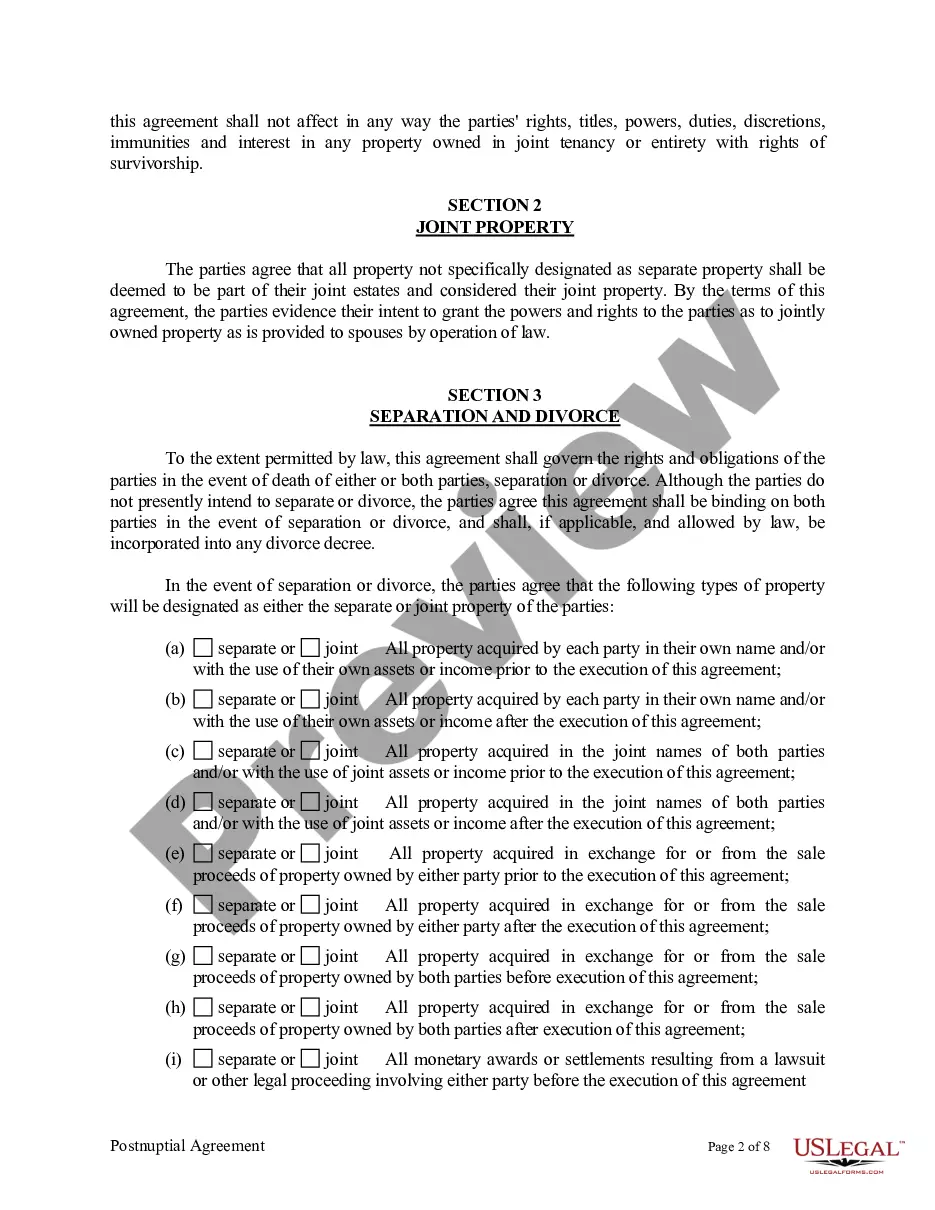
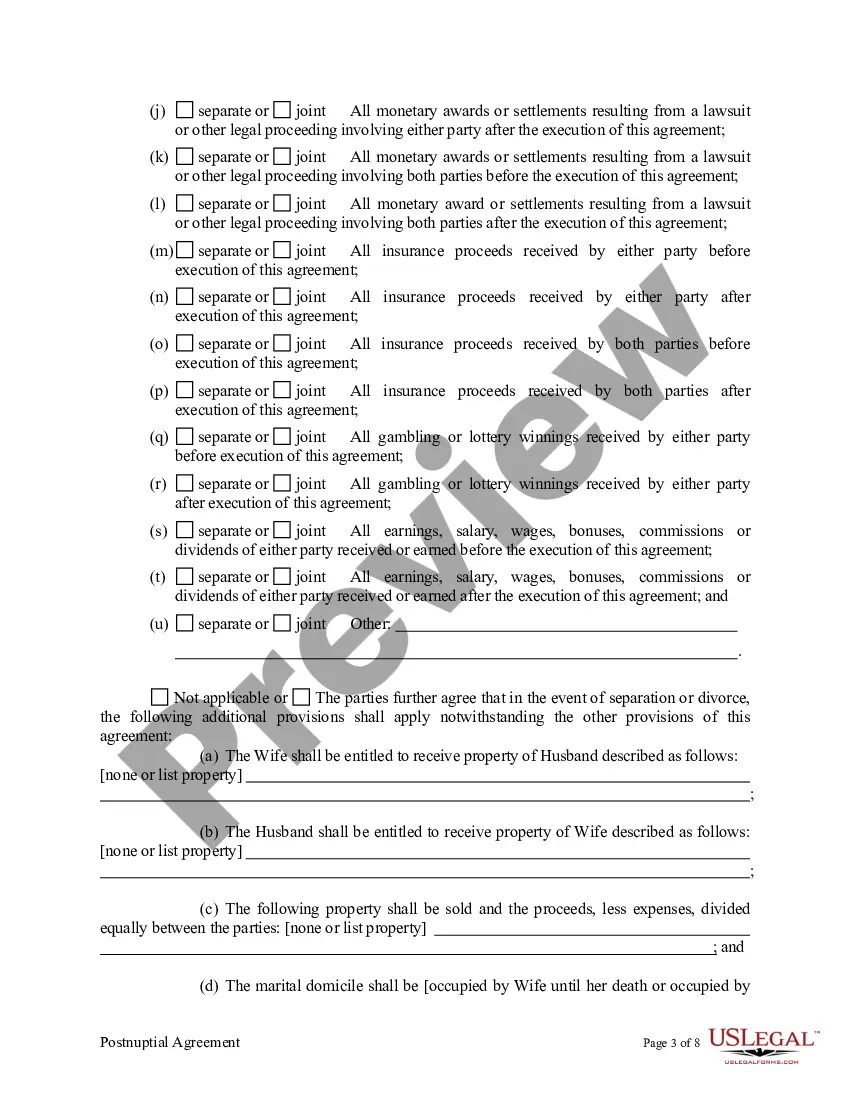
This Postnuptial Property Agreement is made with the intent to define and specify the respective and collective rights of the parties in the separate and joint property of the parties. The parties acknowledge that they were given the opportunity to consult with an attorney of their choice licensed to practice law in their state (not the same attorney) during the negotiations of the agreement and that they understand the legal consequences of the agreement.
Long Beach California Postnuptial Property Agreement
State:
California
City:
Long Beach
Control #:
CA-01713-AZ
Format:
Word;
Rich Text
Instant download
Description
Free preview

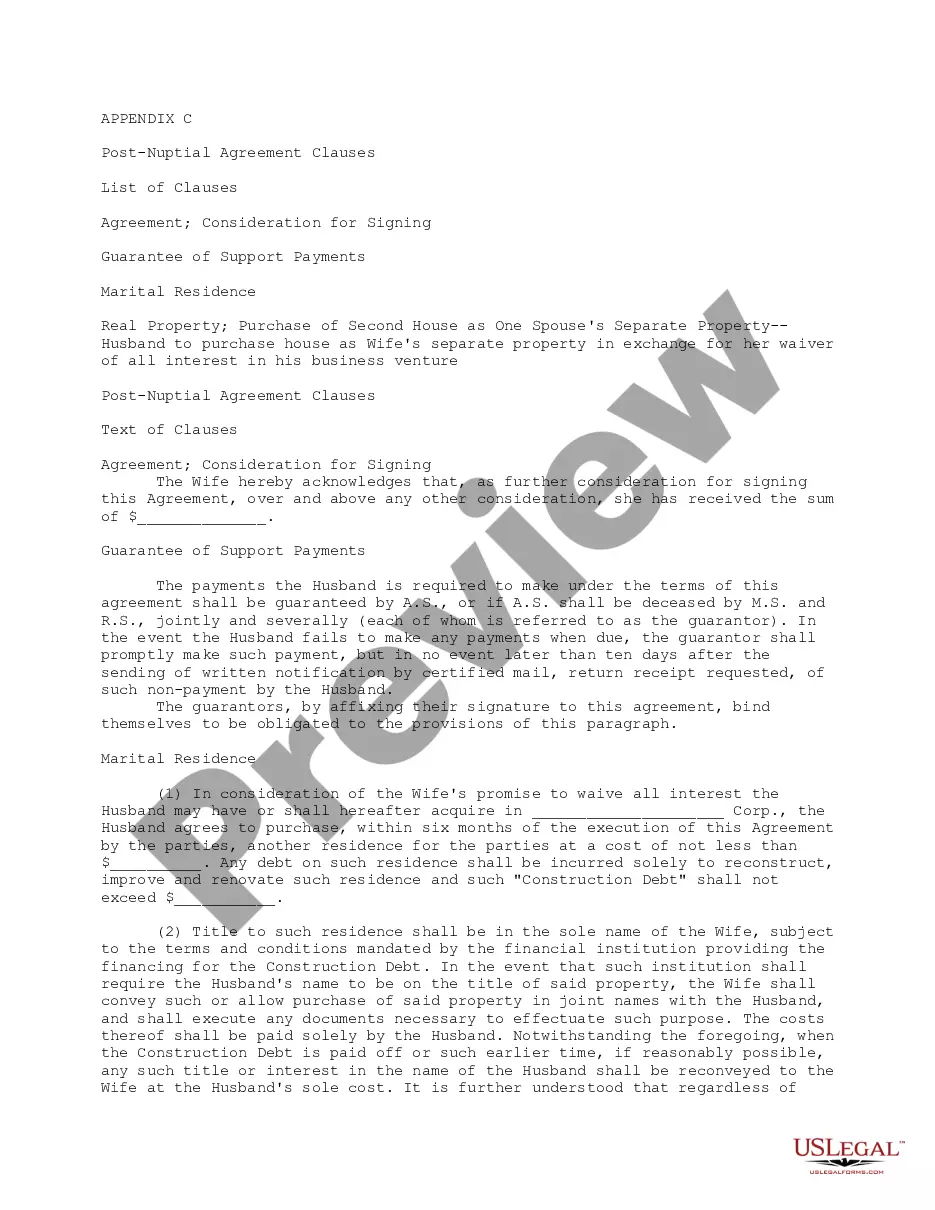
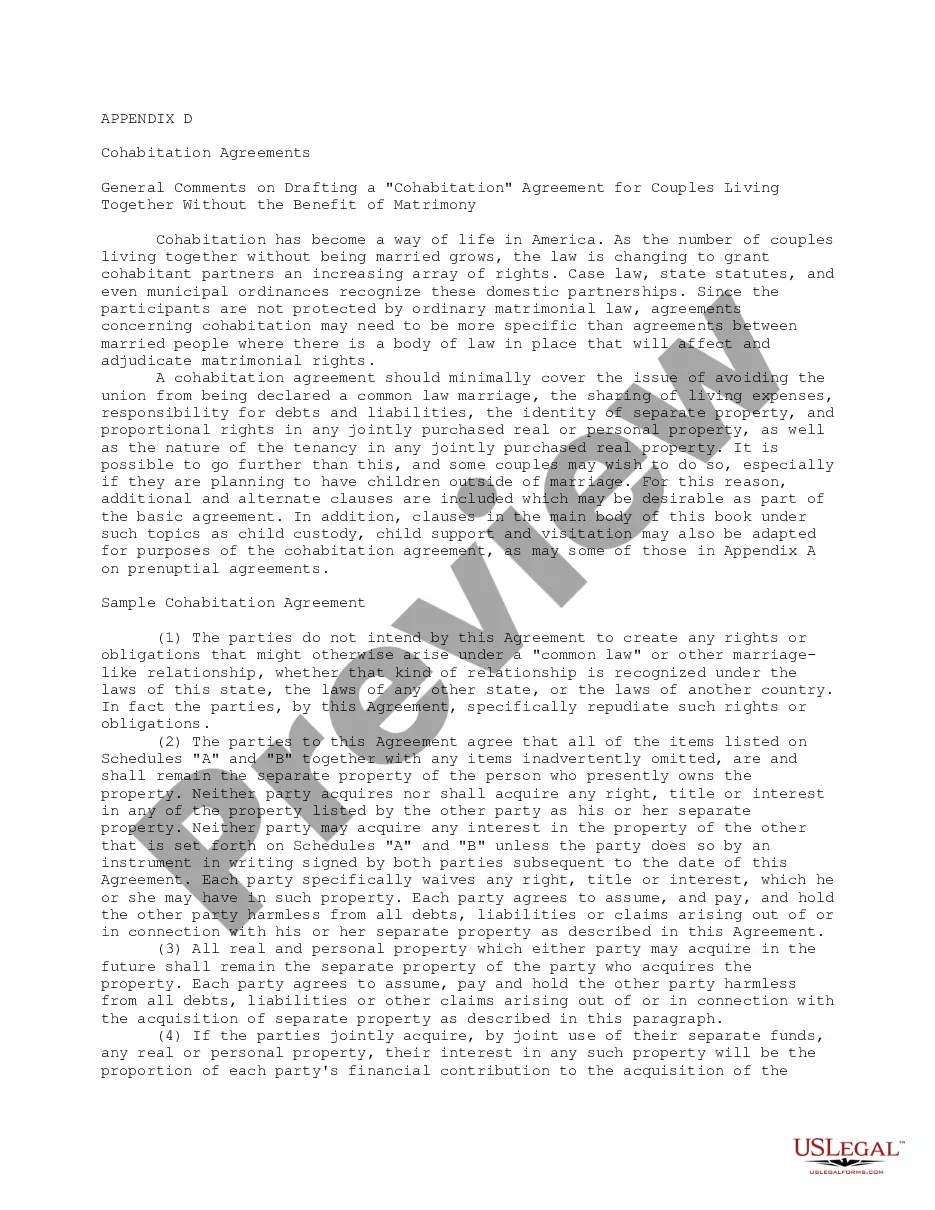
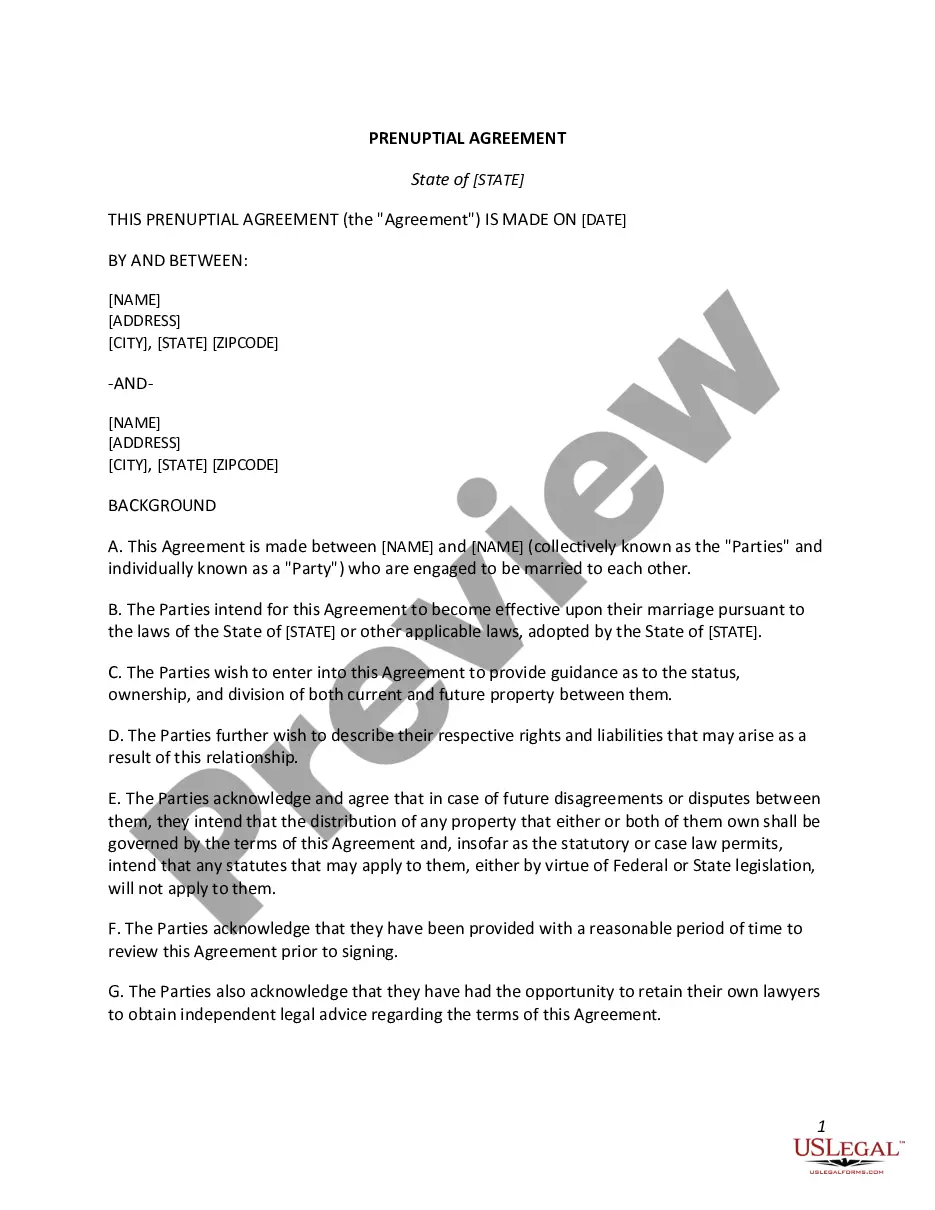






How to fill out California Postnuptial Property Agreement?
Regardless of social or professional position, completing legal documents is an unfortunate requirement in today's work setting.
Frequently, it's nearly impossible for someone without a legal background to create such documents from the ground up, primarily due to the intricate terminology and legal nuances they entail.
This is where US Legal Forms proves to be beneficial.
Make sure the form you have located is appropriate for your region since the regulations of one state or county do not apply to another.
Preview the form and read a brief overview (if available) of scenarios the document can be utilized for.
- Our service provides a vast collection with over 85,000 ready-to-use state-specific documents that cater to nearly every legal situation.
- US Legal Forms is also an excellent resource for associates or legal advisors who wish to enhance their time efficiency by utilizing our DYI templates.
- Regardless of whether you require the Long Beach Postnuptial Property Agreement - California or any other document that fits your state or county, US Legal Forms makes everything accessible.
- Here’s how to obtain the Long Beach Postnuptial Property Agreement - California quickly using our reliable service.
- In the event you are currently an existing customer, go ahead and Log In to your account to download the relevant form.
- However, if you are new to our library, make sure to follow these steps before acquiring the Long Beach Postnuptial Property Agreement - California.
Form popularity
FAQ
Do Prenups Need to be Notarized? There is no law in California that requires this (except if the agreement transfer real property). However, notarizing establishes the identity of the signer. Most people will not sign a document and then later claim to NOT have signed it.
Postnups are not strictly legally binding, but they can be more likely to be upheld than prenuptial agreements because there is no looming wedding date putting pressure on the couple to sign up.
To establish the validity of a postnuptial agreement, the agreement must: Be in writing. It must be signed and notarized by both spouses.
A postnuptial agreement cannot provide enforceable terms for child support or custody. However, it can include provisions for alimony since that is considered separately from a spouse's duties as a parent.
Generally speaking, to make a postnuptial agreement valid, both parties' signatures need to be notarized. Some state laws may impose additional requirements, such as a requirement that the parties' signatures be witnessed.
The terms cannot be changed if a couple is separated or in the process of divorce. Changes can only be made before a wedding or during the marriage.
As long as your agreement fulfills California's legal requirements, the courts will consider it valid no matter how long you have been married. In fact, postnuptial agreements are most common among couples who have been married for years, as they understand better how much each party has to gain or lose.
In general, the California courts assume a prenuptial agreement is valid upon the date it is signed. The courts will assume a postnuptial agreement is invalid, however, until they decide otherwise. You and your spouse will need the courts to approve your postnuptial agreement for it to become valid.
As long as your agreement fulfills California's legal requirements, the courts will consider it valid no matter how long you have been married. In fact, postnuptial agreements are most common among couples who have been married for years, as they understand better how much each party has to gain or lose.
Postnuptial agreements are generally enforceable if the parties of the document adhere to all state laws regarding inheritance, child custody, visitation and monetary support if a divorce does occur. Property division is one of the primary concerns with a postnuptial agreement.