Louisiana Revocation of Statutory Living Will
About this form
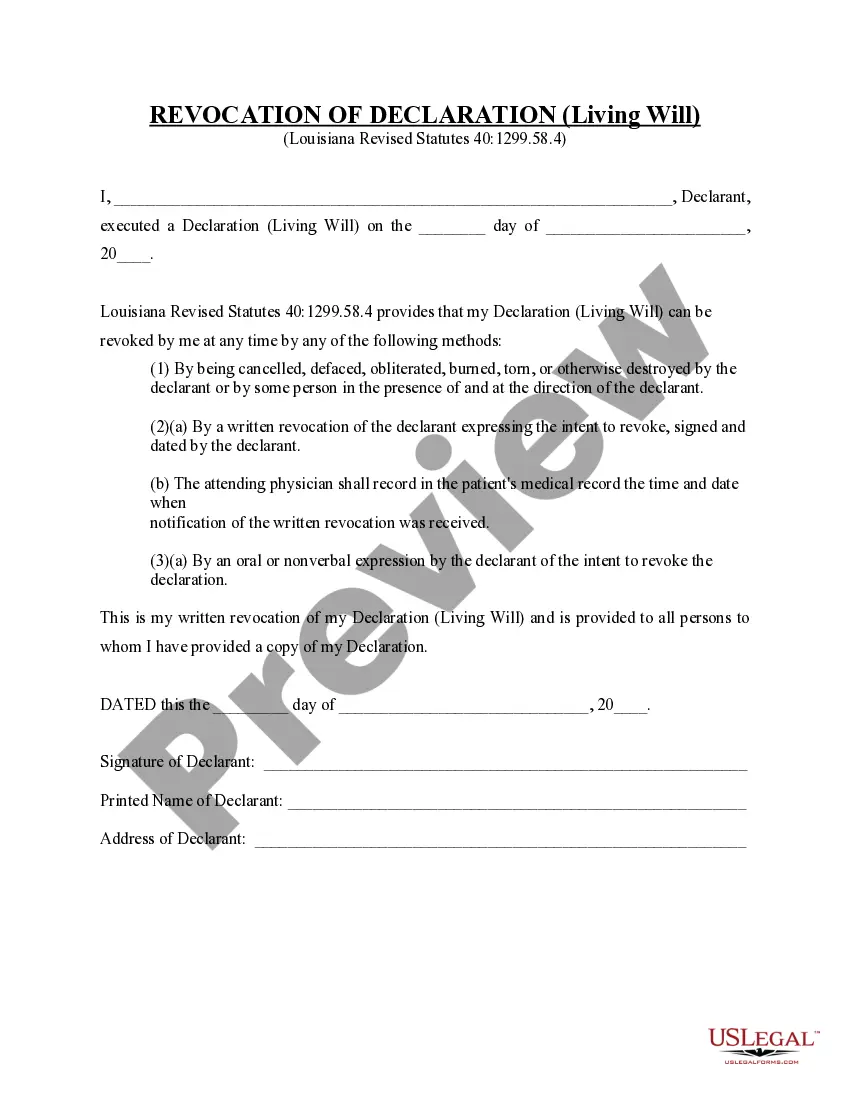
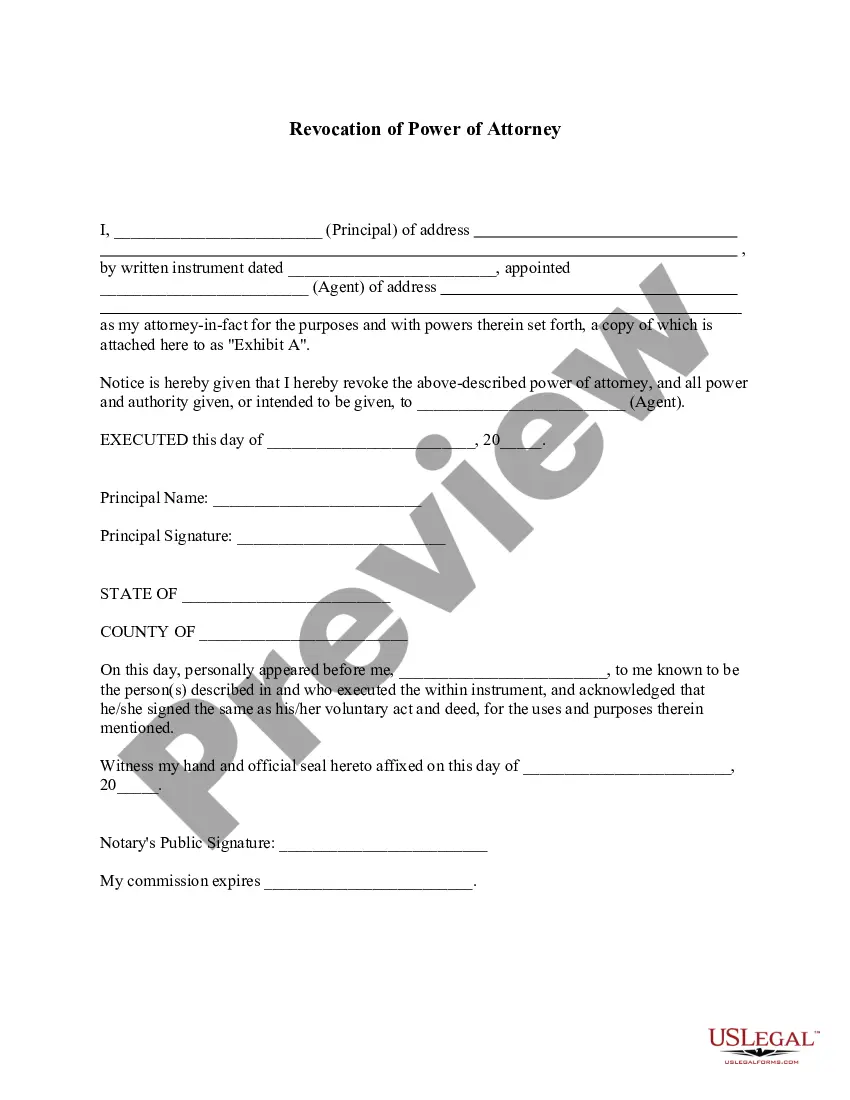
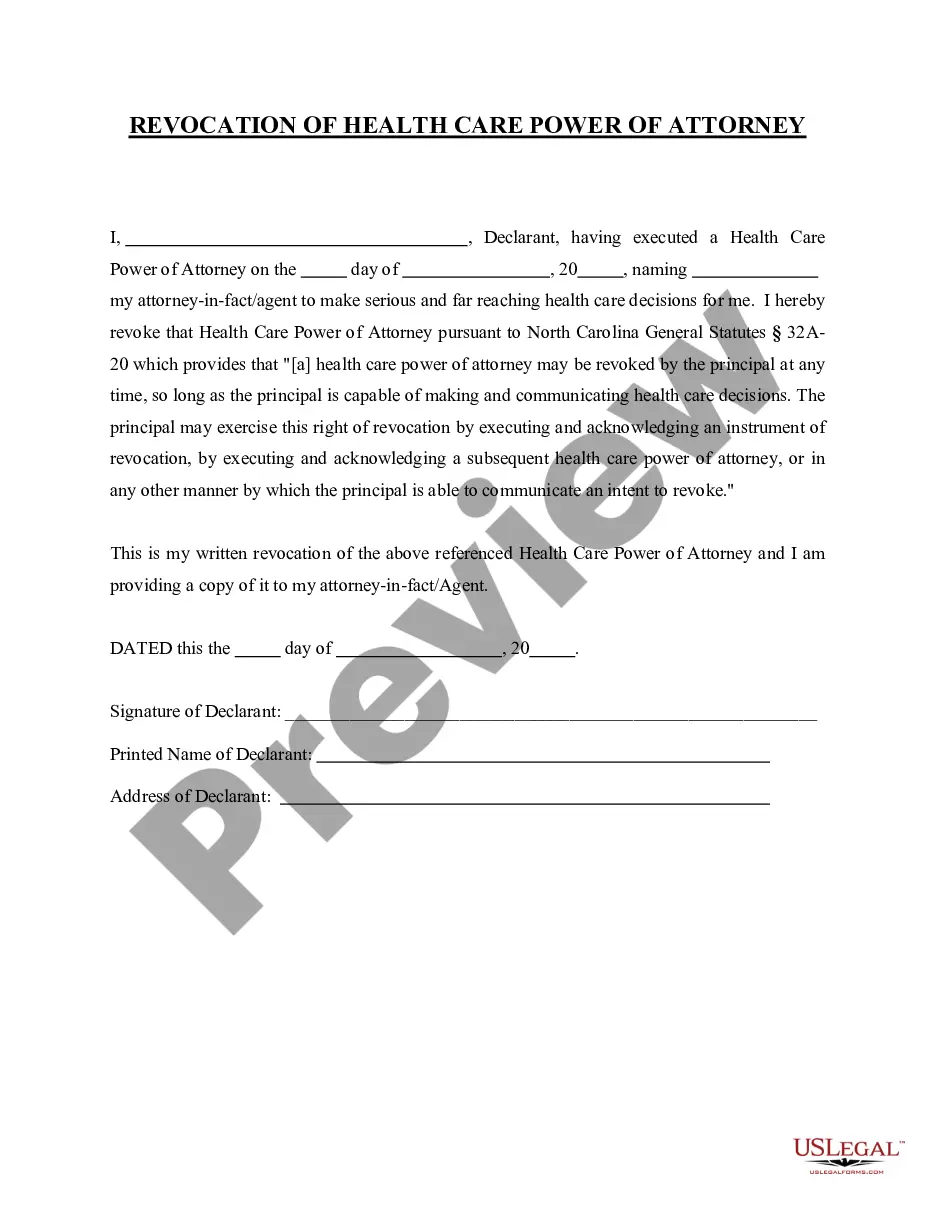
The Revocation of Statutory Living Will is a legal document that allows an individual to withdraw their previously stated wishes regarding the use of life-sustaining procedures as expressed in a Statutory Living Will. This form is essential for ensuring that your desires are current and accurately reflect any changes in your preferences regarding medical treatment in the event of a terminal condition. Unlike a Statutory Living Will, which communicates your healthcare wishes, this revocation specifically cancels those instructions, granting you control over your end-of-life decisions.
What’s included in this form
- Declarant's name and address: Identifies the individual revoking their living will.
- Date of the original living will: Specifies when the initial Declaration was executed.
- Methods of revocation: Outlines how the living will can be revoked by the declarant or a designated person.
- Signature: Requires the declarantâs signature to validate the revocation.
- Date of revocation: Indicates the date when the revocation takes effect.
When to use this document
You should use the Revocation of Statutory Living Will if you have previously completed a Statutory Living Will and wish to change your end-of-life medical preferences. This form is particularly relevant if your health status has changed, you have made new decisions about your healthcare, or if you simply want to ensure that your current wishes are accurately reflected.
Who can use this document
- Individuals who have previously executed a Statutory Living Will.
- Anyone who has experienced a change in health status that affects their medical care preferences.
- Individuals wishing to ensure their current desires regarding life-sustaining treatment are respected.
- Persons seeking to revoke an outdated living will to prevent any conflict regarding their end-of-life wishes.
How to complete this form
- Enter your full name and address at the top of the form.
- Insert the date when your original Statutory Living Will was executed.
- Clearly indicate your intent to revoke by signing and dating the document.
- Distribute copies of the signed revocation to all parties who have a copy of your original living will.
- Confirm with your attending physician that they have recorded the revocation in your medical records.
Does this document require notarization?
This form does not typically require notarization unless specified by local law. However, it is important to check with a legal professional to confirm the requirements in your specific jurisdiction.
Get your form ready online
Our built-in tools help you complete, sign, share, and store your documents in one place.
Make edits, fill in missing information, and update formatting in US Legal Forms—just like you would in MS Word.
Download a copy, print it, send it by email, or mail it via USPS—whatever works best for your next step.
Sign and collect signatures with our SignNow integration. Send to multiple recipients, set reminders, and more. Go Premium to unlock E-Sign.
If this form requires notarization, complete it online through a secure video call—no need to meet a notary in person or wait for an appointment.
We protect your documents and personal data by following strict security and privacy standards.

Make edits, fill in missing information, and update formatting in US Legal Forms—just like you would in MS Word.

Download a copy, print it, send it by email, or mail it via USPS—whatever works best for your next step.

Sign and collect signatures with our SignNow integration. Send to multiple recipients, set reminders, and more. Go Premium to unlock E-Sign.

If this form requires notarization, complete it online through a secure video call—no need to meet a notary in person or wait for an appointment.

We protect your documents and personal data by following strict security and privacy standards.
Mistakes to watch out for
- Failing to provide the date of the original living will.
- Not signing and dating the form, which can render it invalid.
- Neglecting to notify your healthcare provider and relevant parties about the revocation.
Why use this form online
- Convenient access: Download and fill out the form at your convenience.
- Editability: Easily make changes to the form to ensure it reflects your current wishes.
- Reliability: Ensure compliance with legal standards applicable to your state through professionally drafted content.
Legal use & context
- The form serves to formally communicate the revocation of prior health directives.
- It ensures that healthcare providers are aware of your current wishes in a clear and legally recognized format.
- State laws govern the execution and effectiveness of living wills and revocations, thus adherence to legal requirements is crucial for enforceability.
Key takeaways
- The Revocation of Statutory Living Will legally cancels previously made healthcare directives.
- It is crucial to properly complete and distribute copies of this revocation to relevant parties.
- This form is specific to Louisiana, following state laws governing living wills.
Looking for another form?

Form popularity
FAQ
A living will is only valid if you are unable to communicate your wishes. A health care power of attorney gives someone else (the proxy) the ability to make decisions for you regarding your health care. Unlike a living will, it applies to both end-of-life treatment as well as other areas of medical care.
LOUISIANA'S LIVING WILL.A living will can be executed by a person and simply witnessed by two people who will not inherit anything from the person when they decease. It does NOT need to be notarized.
A living will is a vital part of the estate plan. You can alter it as your preferences and needs change over time.But your family cannot override your living will. They cannot take away your authority to make your own treatment and care plans.
As in all states, you cannot contest a will in Louisiana until the testator has actually passed. Confirm jurisdiction. To contest a will in Louisiana, the person who made the will must have resided there. The estate will go through probate in the district court for the parish where the testator lived.
Yes. A living will may be revoked at any time by the declarant. The living will may be revoked by destroying the original document or by preparing a written revocation expressing the wish to revoke the living will.
With what is known as a durable power of attorney for health care, you can designate an agent that will make decisions that weren't covered by your living will. It is important to note that your health care agent can't overrule any of the provisions of your living will.
Advance directives are legally binding, so doctors have to follow them. False. Advance directives are legally recognized documents and doctors must respect your known wishes, but doctors can always refuse to comply with your wishes if they have an objection of conscience or consider your wishes medically inappropriate.
Even though they are not required to follow your wishes, most will do so.In an emergency, a physician's choices could override your living will for another reason; if proper care dictates you to be treated in a certain way or there is an ethical obligation, that could override your wishes.
First, you can revoke the previous living will. A living will can be canceled or revoked at any time. You can cancel your living will by indicating, in writing, that it has been cancelled. Destroying your original living will may cancel the will, but revoking the will in writing is more formal.