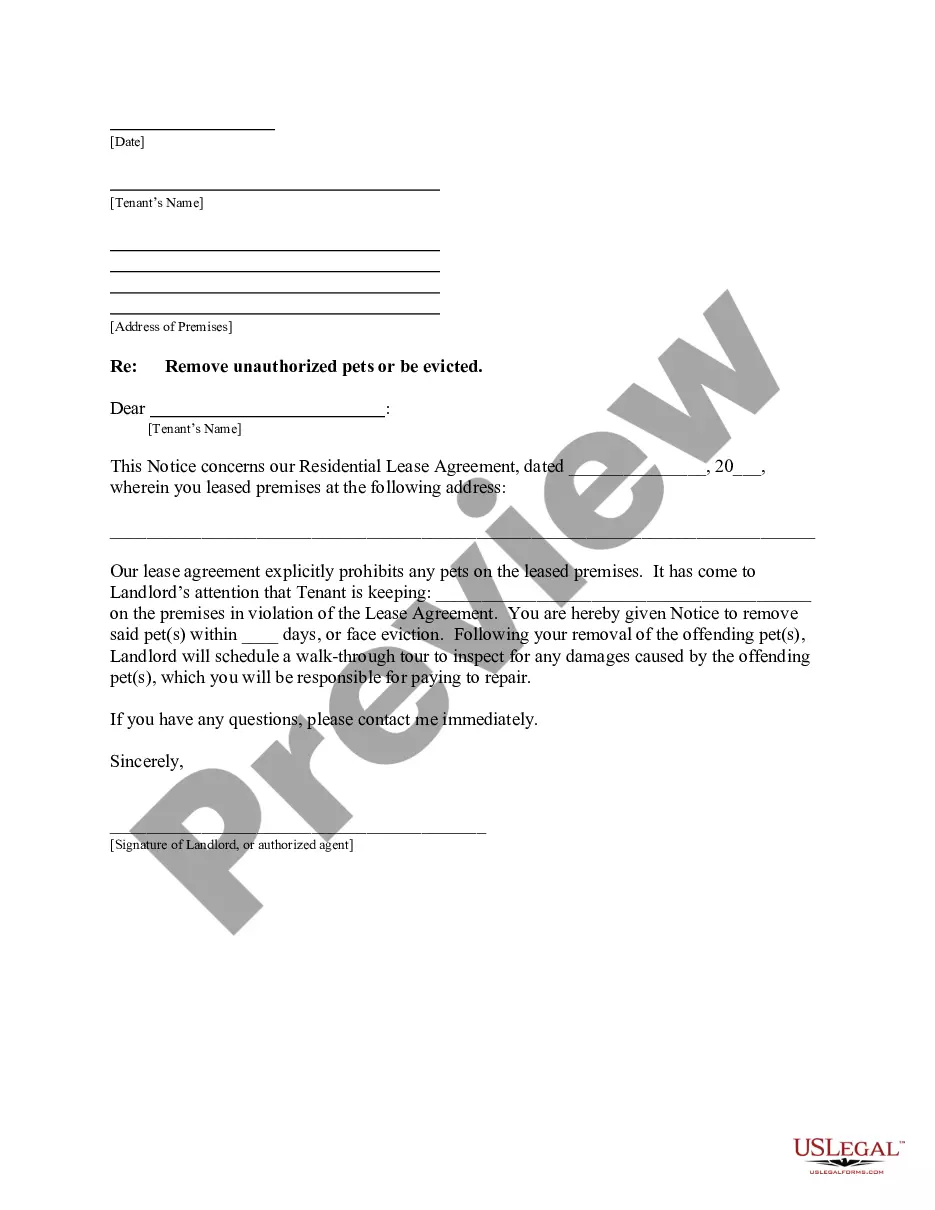
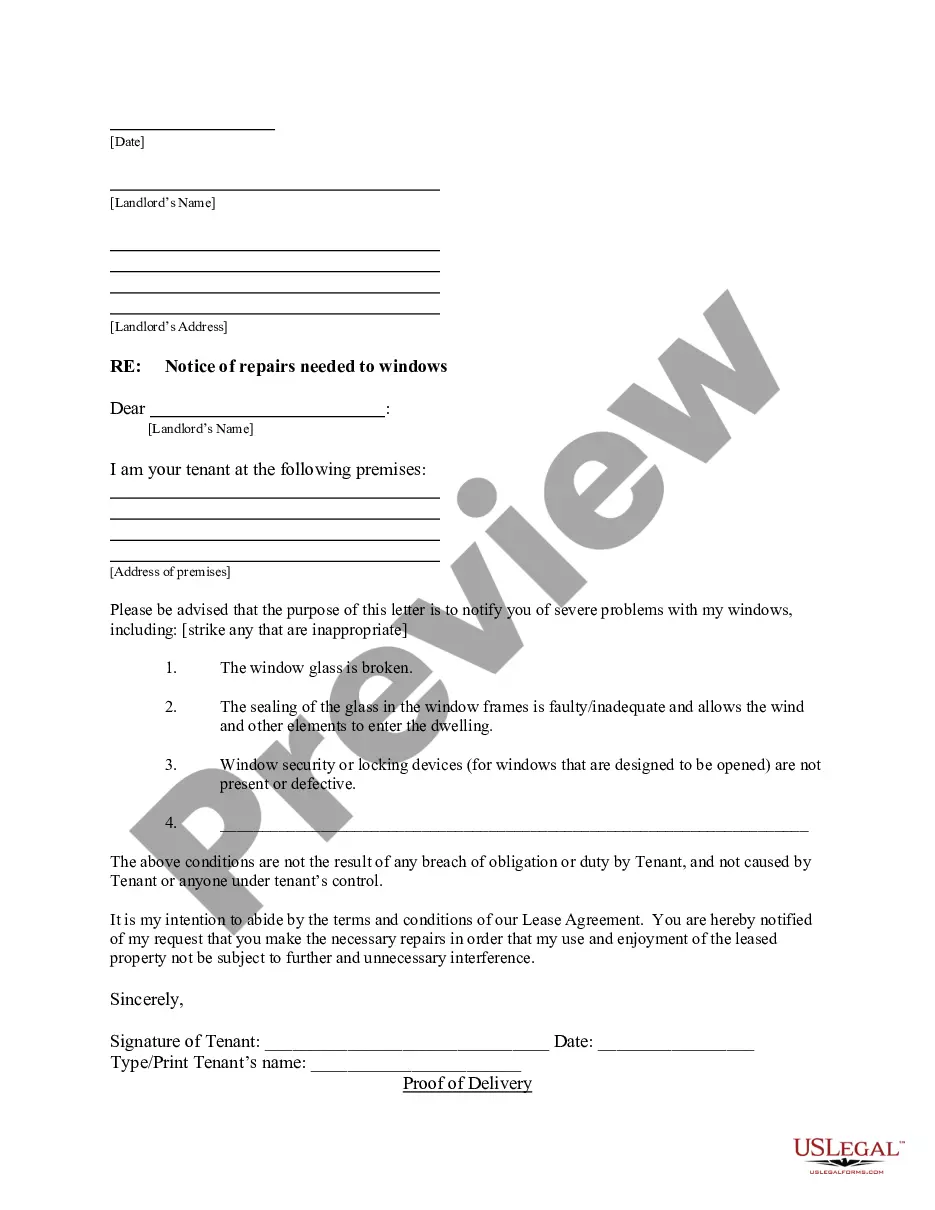
Louisiana Letter from Tenant to Landlord containing Request for permission to sublease
Understanding this form
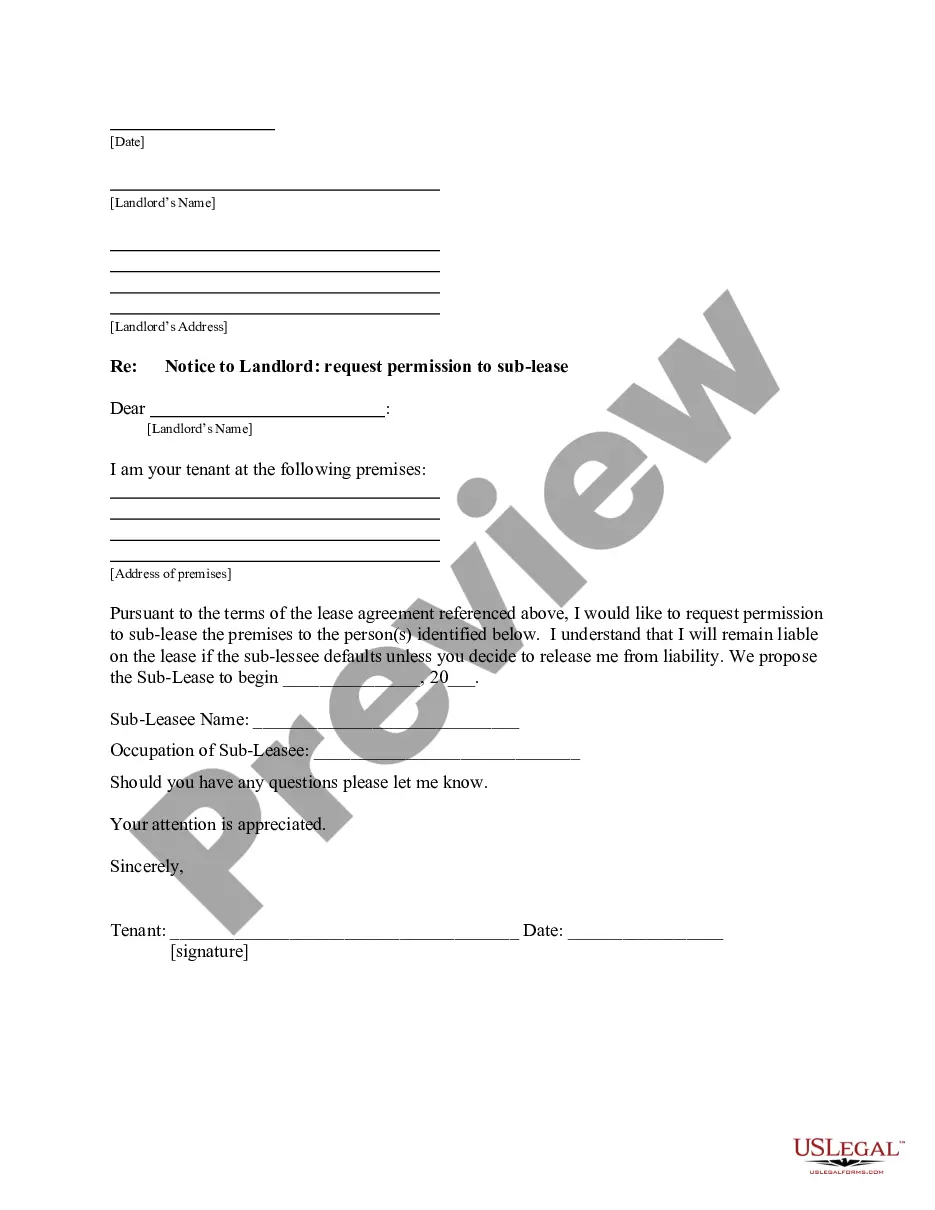
This Letter from Tenant to Landlord containing Request for permission to sublease is a formal communication from a tenant to their landlord. This letter serves to request consent for subleasing the rental property to another individual. It clarifies the tenant's continued responsibility for the lease, even if a subtenant is involved. This form is essential for tenants who wish to maintain clear communication with their landlords regarding any changes in occupancy and is particularly different from informal agreements or verbal requests for subleasing.
What’s included in this form
- Name of the sub-leasee
- Occupation of the sub-leasee
- Tenantâs acknowledgment of ongoing lease liability
- Request for landlord's consent to sublease
- Signature of the tenant with date
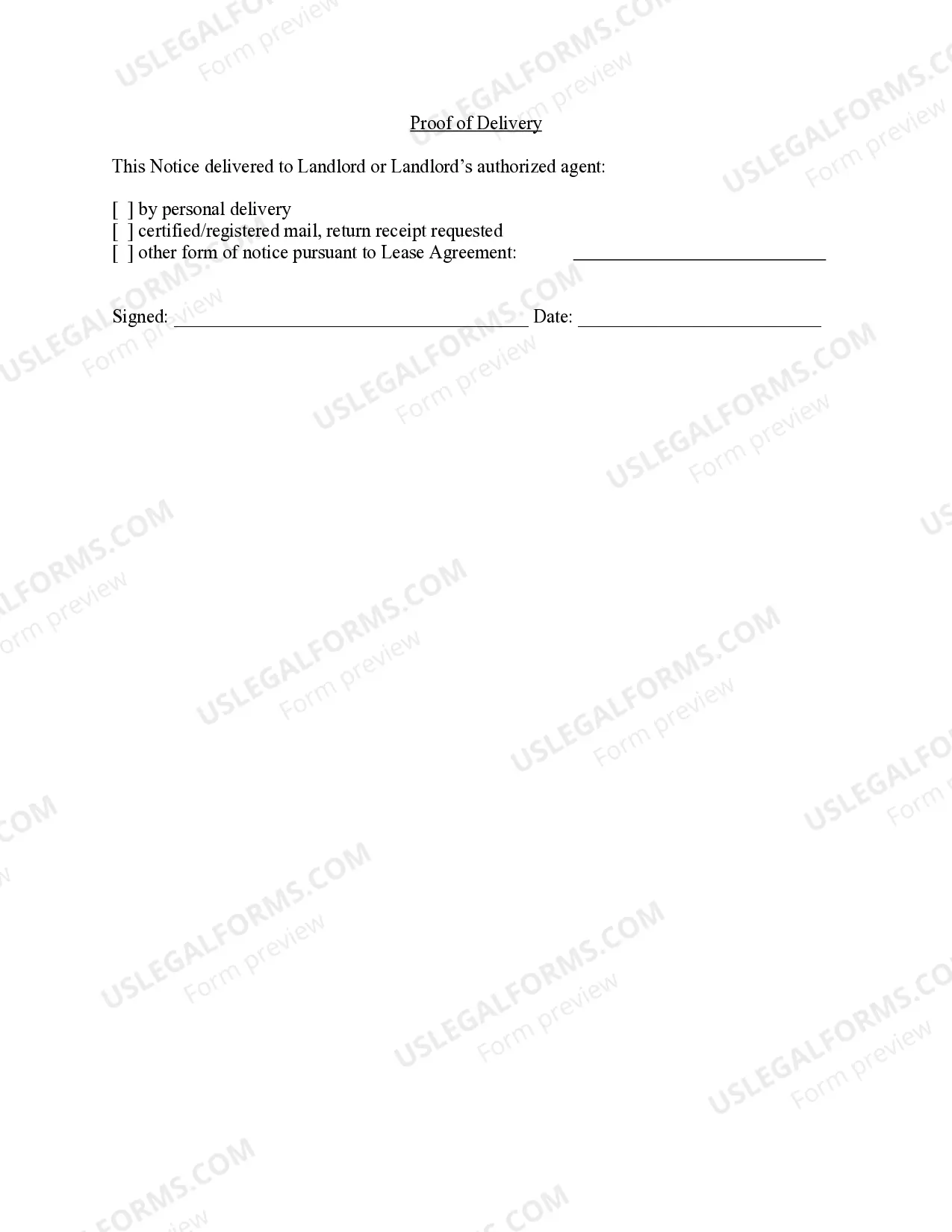
- Proof of delivery section for how the notice was delivered
Situations where this form applies
This form should be used when a tenant wants to sublease their rental property and needs to formally notify their landlord. It is especially necessary if the lease agreement stipulates that subleasing requires landlord approval. This letter should be sent prior to any subleasing activity to ensure compliance with the lease terms and local laws.
Who can use this document
- Current tenants planning to sublease their rental property
- Tenants who are required to obtain landlord permission before subleasing
- Individuals who want to ensure clear communication with their landlord
Completing this form step by step
- Identify the sub-leasee by entering their full name.
- Include the occupation of the sub-leasee next to their name.
- Clearly state your request for permission to sublease.
- Sign and date the letter to validate your request.
- Choose a delivery method to send this letter to your landlord.
Does this document require notarization?
This form does not typically require notarization unless specified by local law. It is recommended to check local regulations to confirm if notarization is necessary for your specific situation.
Get your form ready online
Our built-in tools help you complete, sign, share, and store your documents in one place.
Make edits, fill in missing information, and update formatting in US Legal Forms—just like you would in MS Word.
Download a copy, print it, send it by email, or mail it via USPS—whatever works best for your next step.
Sign and collect signatures with our SignNow integration. Send to multiple recipients, set reminders, and more. Go Premium to unlock E-Sign.
If this form requires notarization, complete it online through a secure video call—no need to meet a notary in person or wait for an appointment.
We protect your documents and personal data by following strict security and privacy standards.

Make edits, fill in missing information, and update formatting in US Legal Forms—just like you would in MS Word.

Download a copy, print it, send it by email, or mail it via USPS—whatever works best for your next step.

Sign and collect signatures with our SignNow integration. Send to multiple recipients, set reminders, and more. Go Premium to unlock E-Sign.

If this form requires notarization, complete it online through a secure video call—no need to meet a notary in person or wait for an appointment.

We protect your documents and personal data by following strict security and privacy standards.
Common mistakes to avoid
- Failing to include the sub-leasee's complete information.
- Not confirming whether landlord approval is necessary according to the lease.
- Sending the letter without a signature or date.
Benefits of completing this form online
- Easy access to professionally crafted templates.
- Convenient download options for timely communications.
- Editable fields allow you to customize the document to your specific situation.
- Reliable format ensures compliance with legal standards.
What to keep in mind
- This form is crucial for tenants wishing to sublease with landlord approval.
- It maintains clarity in tenant responsibilities and liabilities.
- Using this form can prevent misunderstandings between tenants and landlords.
Looking for another form?

Form popularity
FAQ
On your sublease agreement, include a list of various areas of the property (including the subtenant's room, hardwood floors, walls, exterior, etc.) and note its condition. And since you and your subtenant will need to abide by the original lease that you signed, it's important to include this with your sublease.
Addresses: Write down the necessary addresses. Salutation: Here you offer some form of respectful greeting. Title: It should be centered, brief and informative. Body: This should be a maximum of 4 paragraphs. Sign out: Here you mention your name and offer your signature for authentication.
Subleasing occurs when the tenant transfers a part of their legal tenancy to a third-party as a new tenant.That means that if a new subtenant does not pay rent for three months, the original tenant that subleased the property is liable to the landlord for the overdue rent amount and any late fees.
Get your logistics together. Don't give your landlord much extra work (if any at all). Let your landlord know you're going to thoroughly screen applicants. Communicate with your landlord about how things are going with the subtenant.
Writing Your Sublease. State the name of the parties and the date of the contract. Identify the full names of each party and what their role is in the contract. The original leaseholder of the property is the Tenant and the person subletting the property is the Subtenant.
Name the parties. A simple rental agreement form needs to name the parties signing the lease and where they live. Describe the premises. Define the term of the lease. Set how much rent is owed. Assign a security deposit amount. Finalize the lease.
Record a liability calculated as the present value of the remaining minimum lease payments due under the original (head) lease, reduced by the present value of any estimated sublease income, Write off the deferred rent from the original lease, and. Record a loss on the income statement for the difference.
#1 Put the date at the top of the letter: #2 Provide the tenancy information: #3 Share whether or not the tenant paid rent on time: #4 Reveal the care and condition of the property : #5 Give information about the tenant's behavior:
Include the date, the tenant's full name and address at the top of the letter. Identify yourself as the landlord of the property and that you grant permission for the requested action. Add any additional conditions or provisions that must take place.