Louisiana Letter from Tenant to Landlord containing Notice of termination for landlord's noncompliance with possibility to cure
About this form
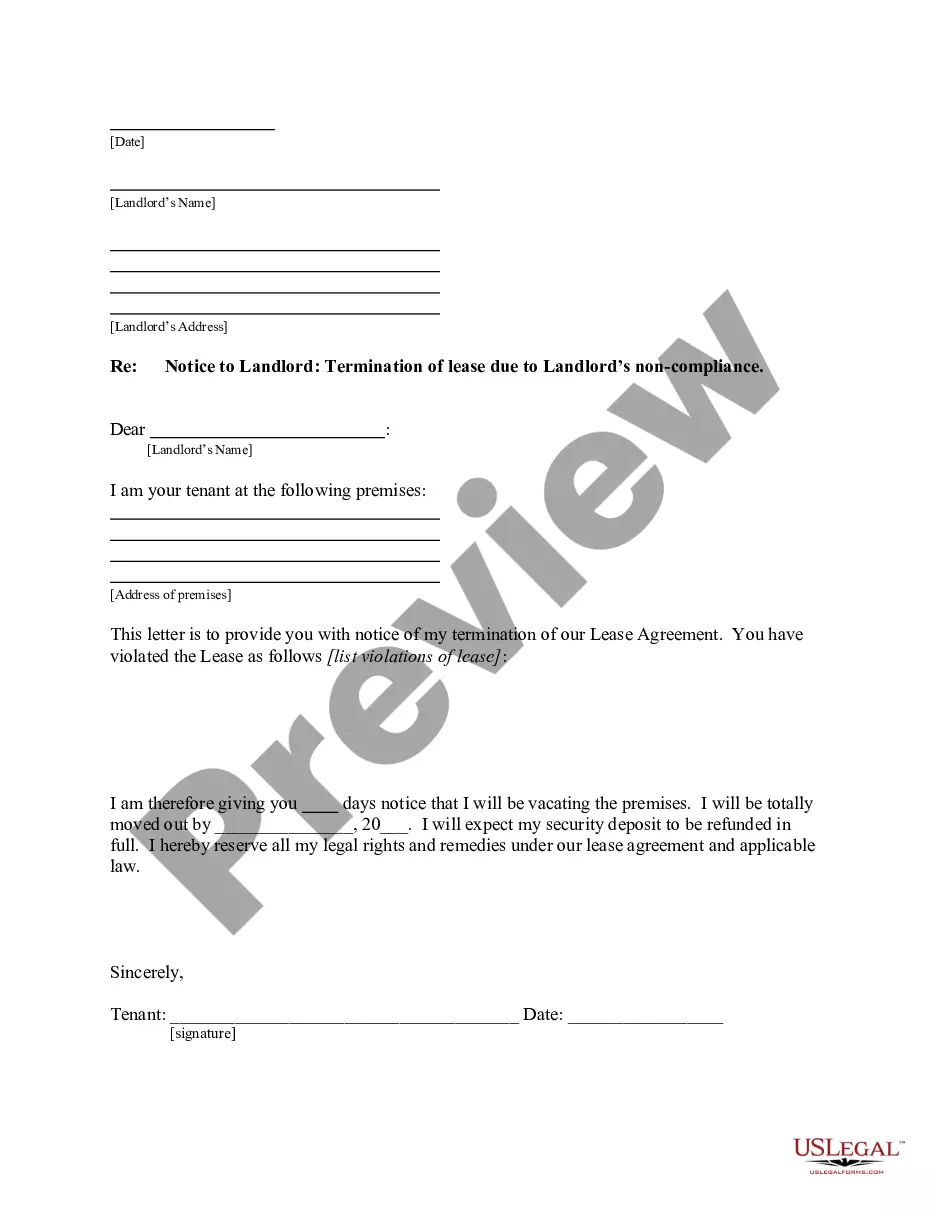
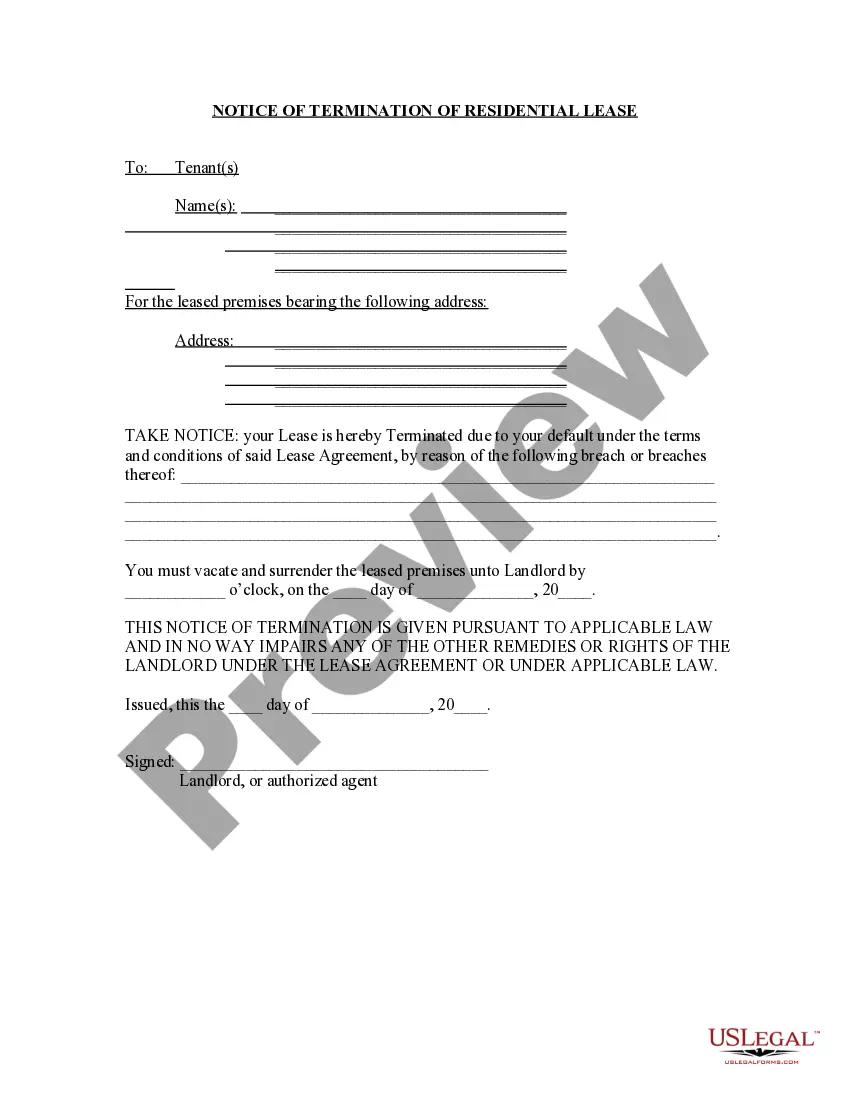
This letter from tenant to landlord serves as a notice of termination due to the landlord's noncompliance with the lease agreement. The form informs the landlord that the tenant is vacating the premises because the landlord has failed to meet their obligations. This form is essential to formally communicate the tenant's intention and provide a chance for the landlord to remedy the situation before the tenant departs. It is different from standard lease termination forms, as it specifically addresses the landlord's breaches and allows for potential cure.
Main sections of this form
- Heading: Title specifying it is a notice from tenant to landlord.
- Tenant's name and signature: Provides identification of the tenant issuing the notice.
- Date: Indicates when the notice is delivered.
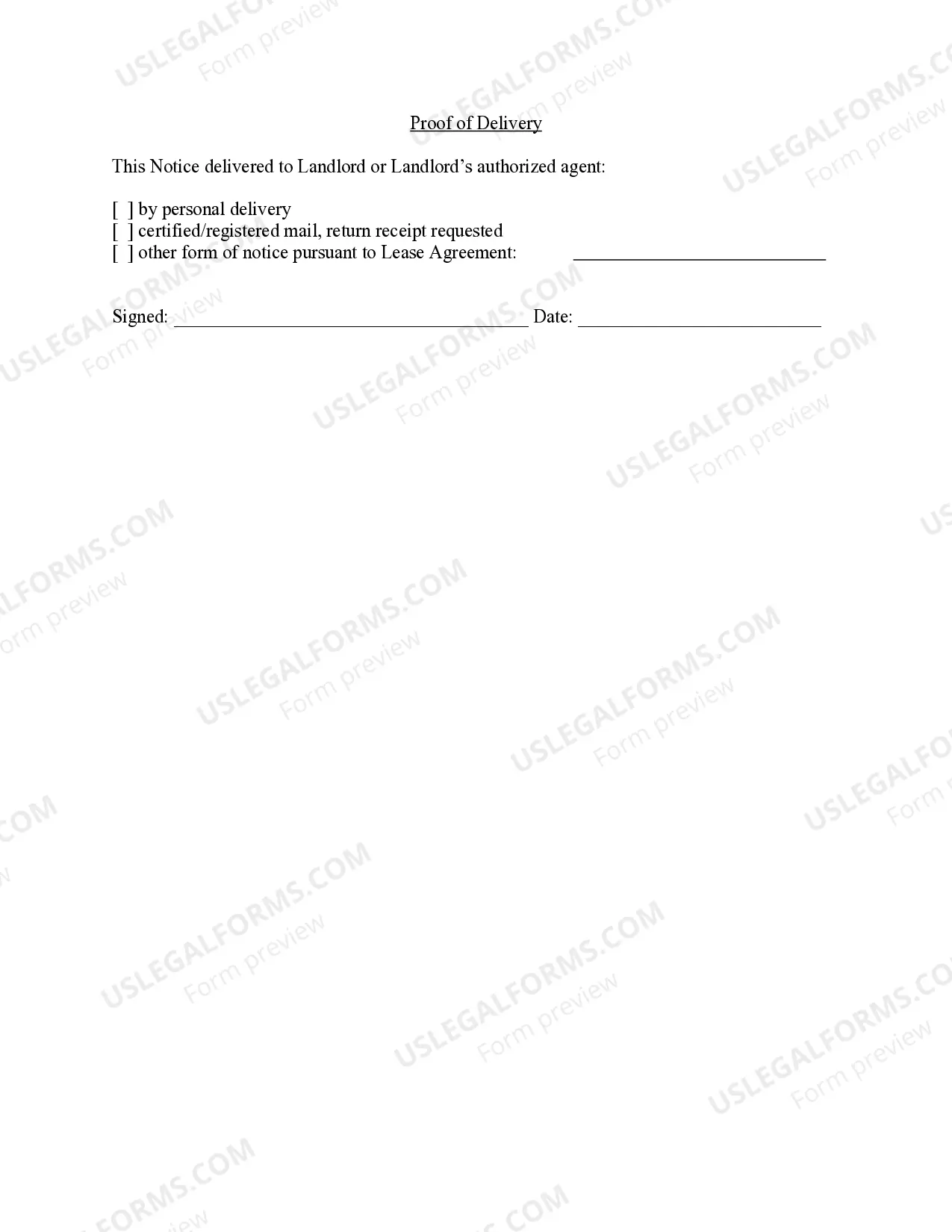
- Proof of delivery options: Lists methods for delivering the notice to the landlord.



Common use cases
This form should be used when a tenant intends to terminate their lease due to the landlord's failure to comply with specific terms of the lease agreement. It is typically utilized in situations where the landlord has neglected essential repairs, failed to provide services, or otherwise not fulfilled their contractual obligations as outlined in the lease. Using this notice gives the landlord an opportunity to rectify the issues before the tenant officially vacates the property.
Who this form is for
This form is appropriate for:
- Tenants experiencing landlord noncompliance.
- Individuals vacating a rental property due to unresolved issues.
- Renters who prefer to formally document their notice of termination.
Instructions for completing this form
- Identify the parties: Fill in the tenant's name and details.
- Specify the property: Include the address of the rented premises.
- Enter dates and signature: Write the date you are delivering the notice and sign the document.
- Choose a delivery method: Select between personal delivery or certified/registered mail.
Notarization requirements for this form
This form does not typically require notarization unless specified by local law. Always check state regulations to ensure compliance with any additional requirements.
Get your form ready online
Our built-in tools help you complete, sign, share, and store your documents in one place.
Make edits, fill in missing information, and update formatting in US Legal Forms—just like you would in MS Word.
Download a copy, print it, send it by email, or mail it via USPS—whatever works best for your next step.
Sign and collect signatures with our SignNow integration. Send to multiple recipients, set reminders, and more. Go Premium to unlock E-Sign.
If this form requires notarization, complete it online through a secure video call—no need to meet a notary in person or wait for an appointment.
We protect your documents and personal data by following strict security and privacy standards.

Make edits, fill in missing information, and update formatting in US Legal Forms—just like you would in MS Word.

Download a copy, print it, send it by email, or mail it via USPS—whatever works best for your next step.

Sign and collect signatures with our SignNow integration. Send to multiple recipients, set reminders, and more. Go Premium to unlock E-Sign.

If this form requires notarization, complete it online through a secure video call—no need to meet a notary in person or wait for an appointment.

We protect your documents and personal data by following strict security and privacy standards.
Typical mistakes to avoid
- Failing to sign the notice before delivery.
- Not providing adequate notice as required by law.
- Choosing an inappropriate delivery method that does not provide proof.
Why complete this form online
- Convenience: Downloadable and ready to use immediately.
- Editability: Customize the form to fit your specific situation.
- Reliability: Forms drafted by licensed attorneys to ensure legal compliance.
Legal use & context
- This form serves as a formal notice and is crucial for protecting your rights as a tenant.
- It provides evidence of the notice provided to the landlord, which may be important in future legal proceedings.
- Failure to use this form correctly may impact the tenant's rights concerning lease termination and potential disputes.
Summary of main points
- This Letter from Tenant to Landlord is essential for tenants facing noncompliance issues.
- Using this form properly can ensure a legitimate process for terminating a lease.
- Always document your communications with your landlord for future reference.
- Familiarize yourself with your rights and local laws regarding landlord-tenant agreements.
Looking for another form?
Form popularity
FAQ
Leaving without giving notice Your tenancy won't have ended and you'll still have to pay your rent until you end your tenancy in the right way. You might also have to pay other bills - for example, council tax. Your landlord can get a court order to make you pay the rent you owe.
If the landlord/agent wants to end your agreement at the end of the fixed term, they must give you at least 30 days notice that includes the last day of the term. If the landlord/agent applies for a termination order, the Tribunal must terminate the agreement.
If you don't move out by the day in the notice, the landlord can ask the NSW Civil and Administrative Tribunal (NCAT) for a termination order. A termination order means the rental agreement is ended. The order will state the day when you must give vacant possession that is, you move out and return the keys.
File for eviction with your local courthouse. Gather evidence. Come to the court hearing to prove your case. Win a writ of possession and have the tenant removed by the sheriff.
Pay any delinquent rent that is due to the landlord within the allotted time of the notice. Move out of the premises within the allotted time of the notice. File an answer with the judicial court. File a motion to stay with the court.
Approach The Court Of Law You will have to send a legal notice to your tenant asking him/her to pay the arrears of rent or else to vacate within a month. The tenant has to pay rent in the court once it is assessed by the court and in case he/she fails, it invites immediate eviction.
Using County Court bailiffs (or sometimes High Court Sheriffs) acting under a court order for possession is the ONLY legal way you can physically evict tenants from a property if they refuse to go voluntarily.Sometimes tenants will try to get you to delay and they can be very persuasive.
Tell Them The Problem & Consequences. Explain the reason that you want the tenant to go. Offer Them a Way Out. Let the tenant know that you are willing to give them a lump sum of cash in agreement for leaving the property. The Release.
Dear Name of Apartment Manager, 200bI am writing you to let you know that I will be vacating the premises that I'm currently occupying at Current Address. My lease expires on Date, but it's necessary that I vacate earlier due to job relocation. I intend to vacate my apartment by Date.