Louisiana Letter from Landlord to Tenant as Notice to remove Wild Animals in Premises
Understanding this form
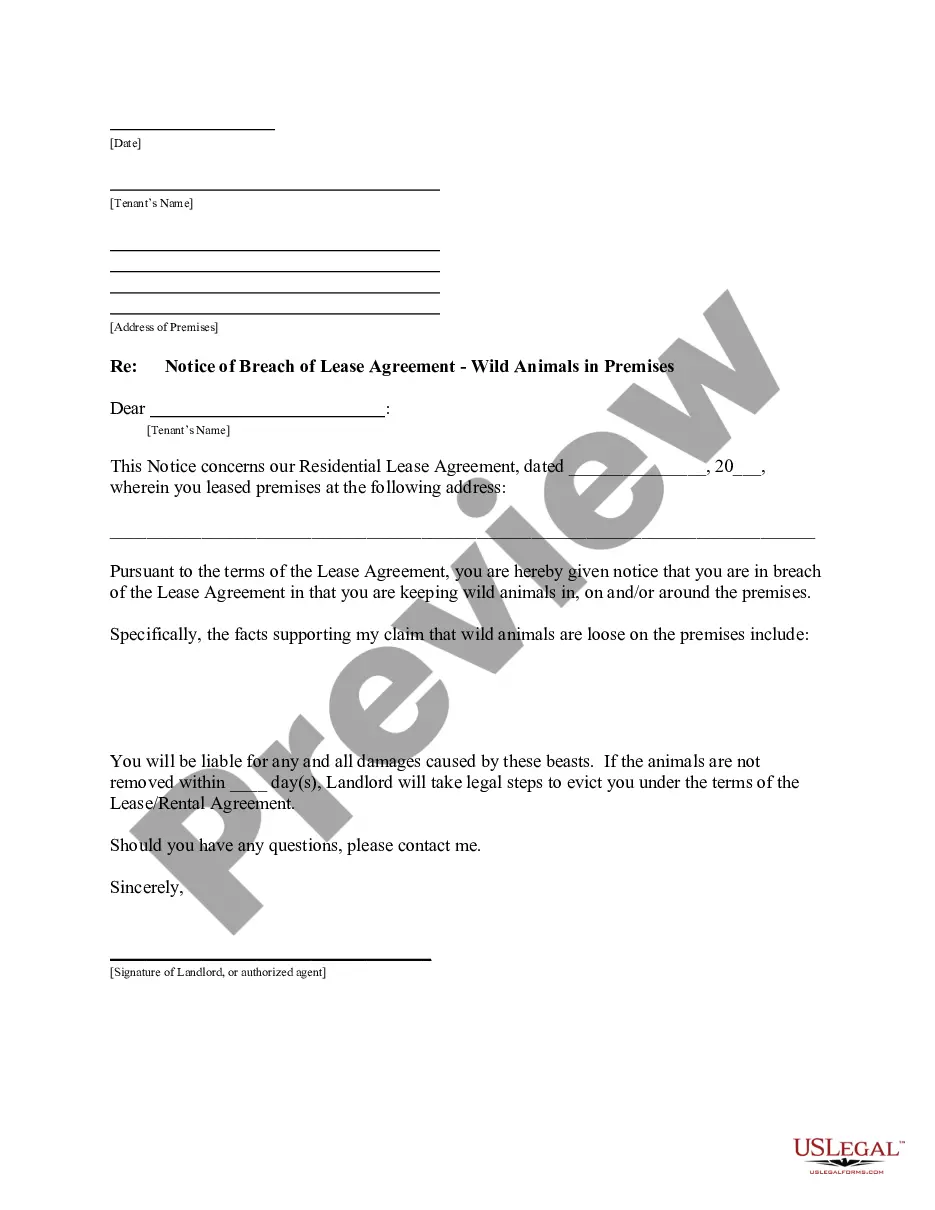
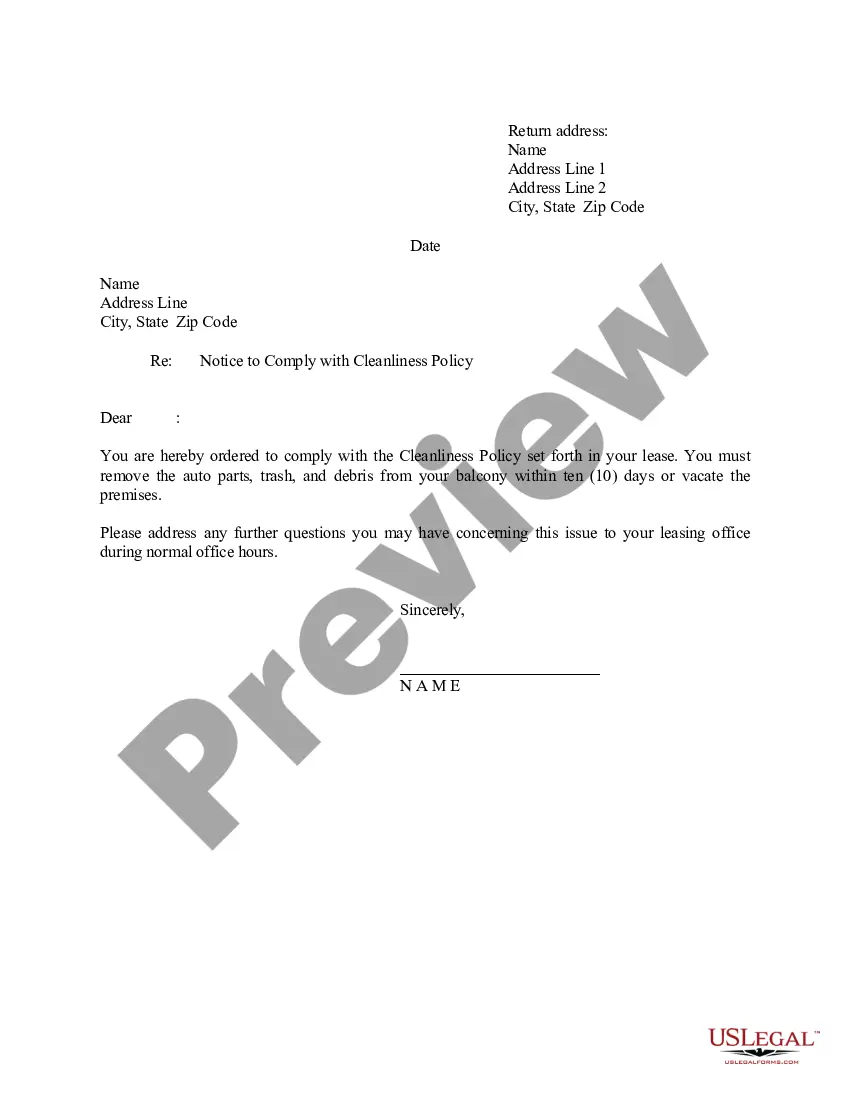
This form is a notice from a landlord to a tenant regarding a breach of lease terms due to the presence of wild animals on the premises. It specifically highlights the violation and outlines the relevant facts as observed by the landlord. This notice serves as an important communication tool to ensure compliance with the lease agreement and protect the property from potential issues caused by wild animals.
Form components explained
- Identification of the tenant and landlord.
- Reference to the specific lease agreement terms violated.
- Statement of the breach concerning wild animals.
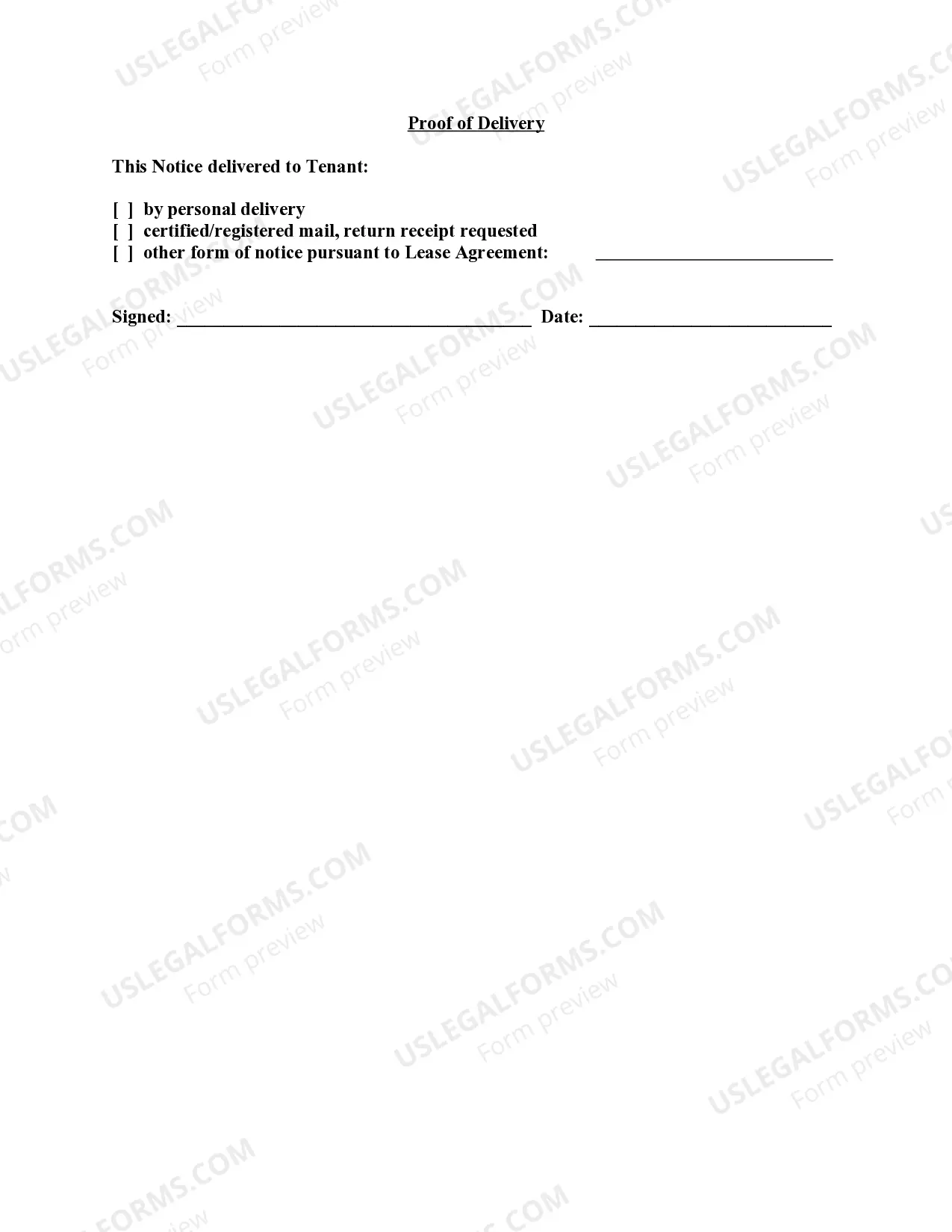
- Instructions for delivering the notice.
- Signature line for the landlord or authorized agent.

When to use this form
This notice should be used when a landlord discovers that a tenant is keeping wild animals in, on, or around the rental property, which constitutes a breach of the lease agreement. It is essential to formally communicate this breach to the tenant to initiate corrective actions or further legal proceedings if necessary.
Intended users of this form
This form is intended for:
- Landlords who suspect violations of lease terms related to wild animals.
- Property managers acting on behalf of landlords in enforcing lease agreements.
- Real estate professionals seeking to address tenant breaches in a clear and formal manner.
Completing this form step by step
- Identify the parties involved: include names of the landlord and tenant.
- Refer to the specific terms of the lease agreement that have been violated.
- Clearly state the nature of the breach regarding wild animals.
- Sign the notice, including the landlord's or authorized agent's signature.
- Deliver the notice to the tenant using approved methods (personal delivery or certified/registered mail).
Notarization guidance
This form does not typically require notarization unless specified by local law. However, it is advisable to keep a record of the delivery method used.
Get your form ready online
Our built-in tools help you complete, sign, share, and store your documents in one place.
Make edits, fill in missing information, and update formatting in US Legal Forms—just like you would in MS Word.
Download a copy, print it, send it by email, or mail it via USPS—whatever works best for your next step.
Sign and collect signatures with our SignNow integration. Send to multiple recipients, set reminders, and more. Go Premium to unlock E-Sign.
If this form requires notarization, complete it online through a secure video call—no need to meet a notary in person or wait for an appointment.
We protect your documents and personal data by following strict security and privacy standards.

Make edits, fill in missing information, and update formatting in US Legal Forms—just like you would in MS Word.

Download a copy, print it, send it by email, or mail it via USPS—whatever works best for your next step.

Sign and collect signatures with our SignNow integration. Send to multiple recipients, set reminders, and more. Go Premium to unlock E-Sign.

If this form requires notarization, complete it online through a secure video call—no need to meet a notary in person or wait for an appointment.

We protect your documents and personal data by following strict security and privacy standards.
Common mistakes to avoid
- Failing to specify which terms of the lease have been violated.
- Not providing adequate delivery proof of the notice to the tenant.
- Using informal language instead of clear, formal notice.
Why complete this form online
- Convenient access to a professionally drafted document.
- Editable fields that allow customization to specific situations.
- Immediate download to expedite the notification process.
Legal use & context
- It is recognized as a valid means of officially notifying tenants about lease violations.
- Ensures compliance with local landlord-tenant laws, which may vary by jurisdiction.
- Helps mitigate potential disputes between landlords and tenants regarding lease enforcement.
Main things to remember
- This form is essential for landlords addressing breaches related to wild animals.
- Proper completion and delivery can help maintain clarity and legal protection.
- Always customize the notice to reflect the specific details of the lease agreement.
Looking for another form?
Form popularity
FAQ
Under this relationship, tenants have the right to a habitable dwelling and the right to due process before eviction, among others. Louisiana landlords also have certain rights, such as the right to receive rental payments and the right to pursue evictions following the violation of a lease agreement.
A landlord cannot evict a tenant without an adequately obtained eviction notice and sufficient time. A landlord cannot retaliate against a tenant for a complaint. A landlord cannot forego completing necessary repairs or force a tenant to do their own repairs.A landlord cannot remove a tenant's personal belongings.
Indiana. Indiana laws allow landlords to hold on to security deposits for 45 days to give them time to determine any damages caused by tenants. Colorado. Colorado is one of few states that allow landlords to access the rental property without an advance notice requirement. Georgia.
A landlord cannot generally enter your apartment without advance notice or your consent. The same limits apply to third parties entering on behalf of the landlord. This is part of your right to peaceful possession of your home under Louisiana law.
Evictions in Louisiana typically follow a 5 to 10 day timeline mandated by its Code of Civil Procedure. Most evictions are handled in Justice of the Peace Courts. Otherwise, a landlord must file suit in the county or parish where the property is located.
Landlord Friendly StatesStates like Arkansas, Virginia, Louisiana and Florida have laws that often side in favor of the landlord with issues such as eviction, rent control and tenant rights.This can leave tenants with a minimum of 10 days to vacate the property before they risk facing criminal charges.
Under Louisiana law, you generally cannot withhold your rent or sue to compel repairs.