Louisiana Quitclaim Deed from Corporation to Corporation
About this form
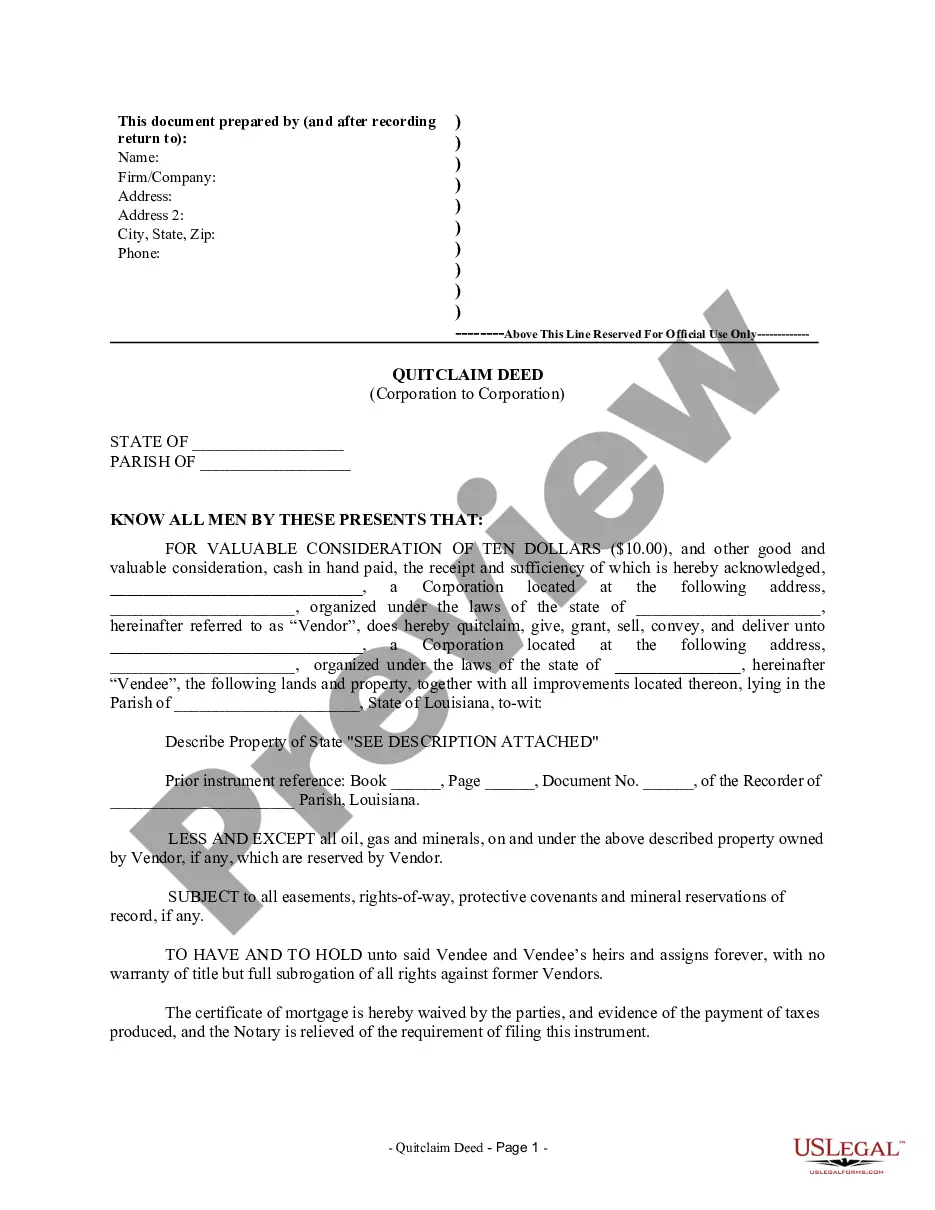
The Quitclaim Deed from Corporation to Corporation is a legal document used to transfer property ownership from one corporation to another. Unlike warranty deeds, quitclaim deeds do not guarantee that the property title is clear or free of liens; they simply transfer whatever interest the grantor has in the property. This form is specifically tailored for use between corporations, ensuring compliance with state laws regarding corporate property transfers.
Key components of this form
- Identification of the Grantor and Grantee, both as corporations
- Details about the property being conveyed, including a description and reference to prior instruments
- Language indicating the transfer is âless and exceptâ certain rights, such as oil, gas, and minerals
- Statement of no warranty of title and description of rights against former vendors
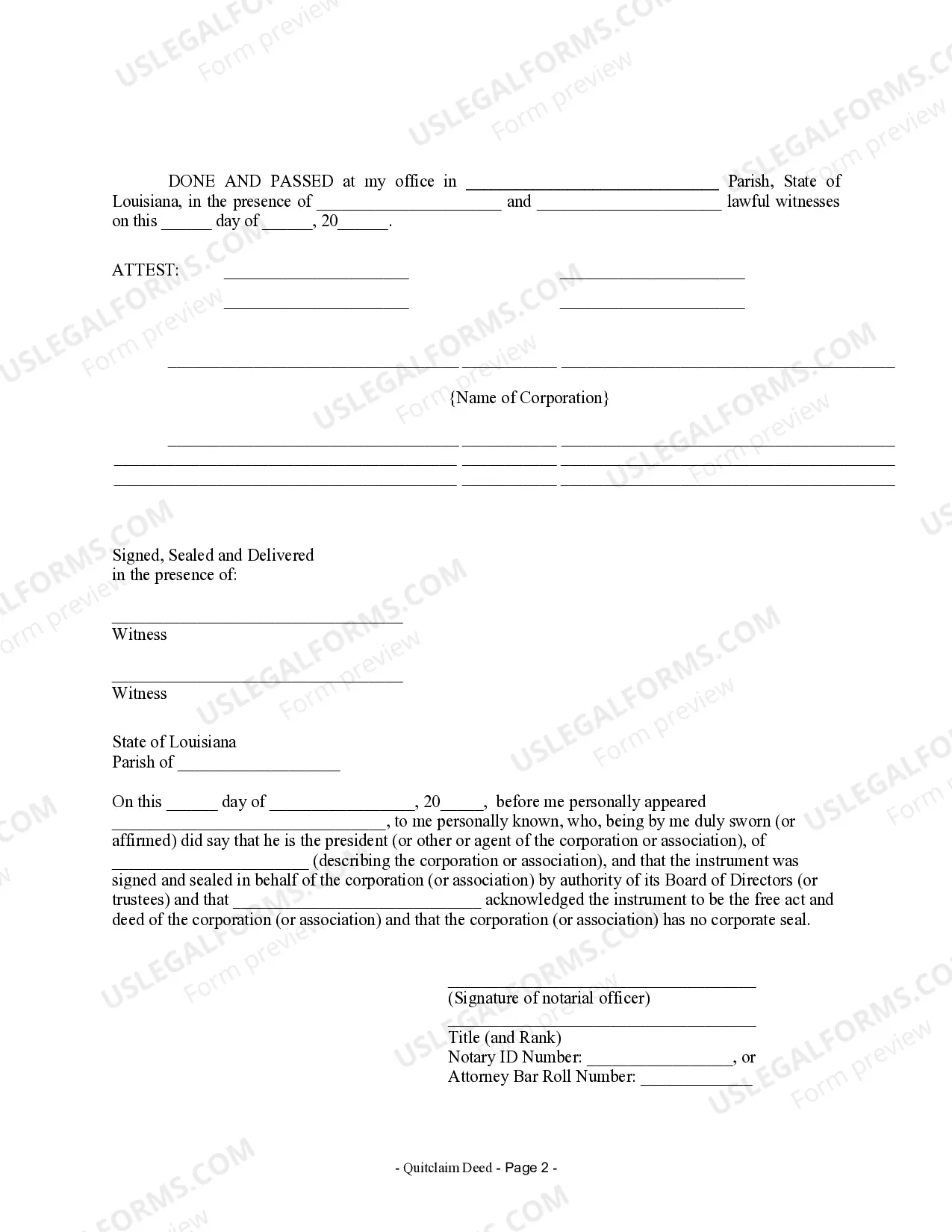
- Space for notarization and identification of witnesses



When to use this document
This form is typically used when a corporation wishes to transfer property ownership to another corporation without giving any warranties about the title. Common scenarios include corporate mergers, asset transfers during reorganizations, or when selling property as part of a business divestiture.
Intended users of this form
This form is ideal for:
- Corporations involved in property transactions
- Business owners managing corporate assets
- Legal representatives handling corporate real estate matters
- Those seeking a straightforward method of property transfer without extensive title assurance
Steps to complete this form
- Identify the corporations involved, including names and addresses.
- Clearly describe the property being transferred, ensuring to refer to previous instruments if applicable.
- Specify the reserved rights, such as oil, gas, or mineral interests, if any.
- Include the date of the transaction and signatures from authorized officers of both corporations.
- Ensure the document is notarized and witnessed to meet legal formalities in Louisiana.
Notarization requirements for this form
Yes, this form must be notarized to be legally valid. Notarization confirms the identities of the signers and their understanding of the document. US Legal Forms offers integrated online notarization services that are available 24/7, allowing you to complete the process securely without the need for in-person visits.
Get your form ready online
Our built-in tools help you complete, sign, share, and store your documents in one place.
Make edits, fill in missing information, and update formatting in US Legal Forms—just like you would in MS Word.
Download a copy, print it, send it by email, or mail it via USPS—whatever works best for your next step.
Sign and collect signatures with our SignNow integration. Send to multiple recipients, set reminders, and more. Go Premium to unlock E-Sign.
If this form requires notarization, complete it online through a secure video call—no need to meet a notary in person or wait for an appointment.
We protect your documents and personal data by following strict security and privacy standards.

Make edits, fill in missing information, and update formatting in US Legal Forms—just like you would in MS Word.

Download a copy, print it, send it by email, or mail it via USPS—whatever works best for your next step.

Sign and collect signatures with our SignNow integration. Send to multiple recipients, set reminders, and more. Go Premium to unlock E-Sign.

If this form requires notarization, complete it online through a secure video call—no need to meet a notary in person or wait for an appointment.

We protect your documents and personal data by following strict security and privacy standards.
Mistakes to watch out for
- Failing to include a complete and accurate property description.
- Not obtaining signatures from authorized officers of both corporations.
- Overlooking the requirement for notarization and witness acknowledgment.
- Providing incorrect information regarding the reserved rights on the property.
Benefits of using this form online
- Convenience of instant download and completion.
- Editable templates that allow customization to fit specific needs.
- Access to legally accurate forms drafted by licensed attorneys.
- Time-saving compared to preparing documents from scratch.
Key takeaways
- The Quitclaim Deed from Corporation to Corporation is essential for corporate property transfers without title warranties.
- It is crucial to accurately fill out the property details and gather necessary signatures.
- Notarization and witness signatures are essential for the deed to be enforceable in Louisiana.
- This form provides a streamlined approach to facilitate corporate real estate transactions.
Looking for another form?



Form popularity
FAQ
They are commonly used to add/remove someone to/from real estate title or deed (divorce, name changes, family and trust transfers). The quitclaim deed is a legal document (deed) used to transfer interest in real estate from one person or entity (grantor) to another (grantee).
How to Quitclaim Deed to LLC. A quitclaim deed to LLC is actually a very simple process. You will need a deed form and a copy of the existing deed to make sure you identify titles properly and get the legal description of the property.
Laws CC 1839. Recording Must be submitted to the Clerk of Court's Office in the parish where the property is located along with the required filing fee (varied by office). Signing A quitclaim deed must be authorized with the Grantor(s) (the Sellers) in front of two (2) witnesses and a notary public.
It's usually a very straightforward transaction, but it's possible for a quitclaim deed to be challenged. If a quitclaim deed is challenged in court, the issue becomes whether the property was legally transferred and if the grantor had the legal right to transfer the property.
The Quit Claim Deed form uses the terms of Grantor (Seller or Owner of said property) and Grantee (Buyer of said property) for the two parties involved. First, the parties must fill in the date. Then, write in the name of the county and state in which the property is located.
To use a Quitclaim Deed to add someone to a property deed or title, you would need to create a Quitclaim Deed and list all of the current owners in the grantor section. In the grantee section, you would list all of the current owners as well as the person you would like to add.
But you might be wondering if an owner can transfer a deed to another person without a real estate lawyer. The answer is yes. Parties to a transaction are always free to prepare their own deeds.A quitclaim deed, for example, is far simpler than a warranty deed.