Kentucky Last Will and Testament for Married Person with Adult and Minor Children
Overview of this form
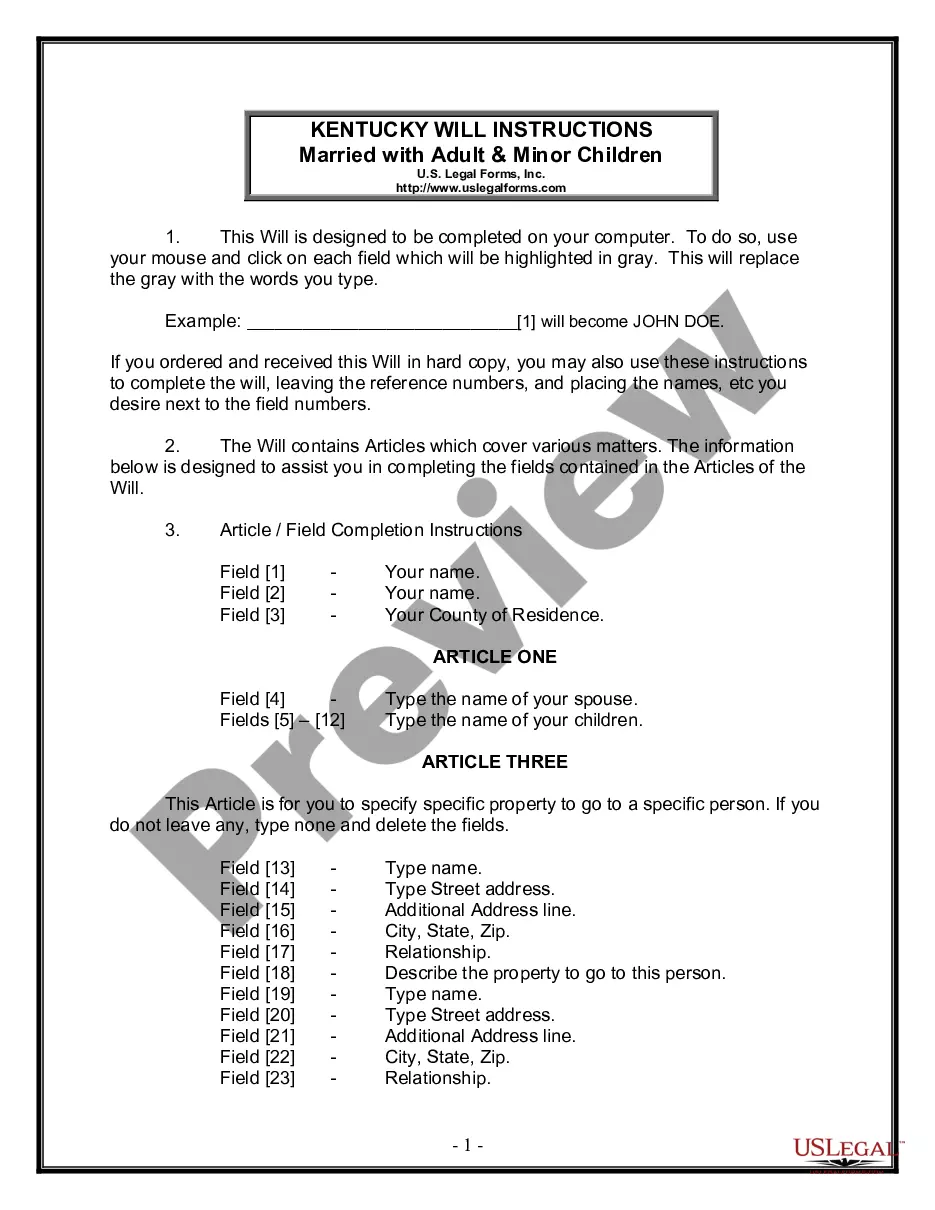
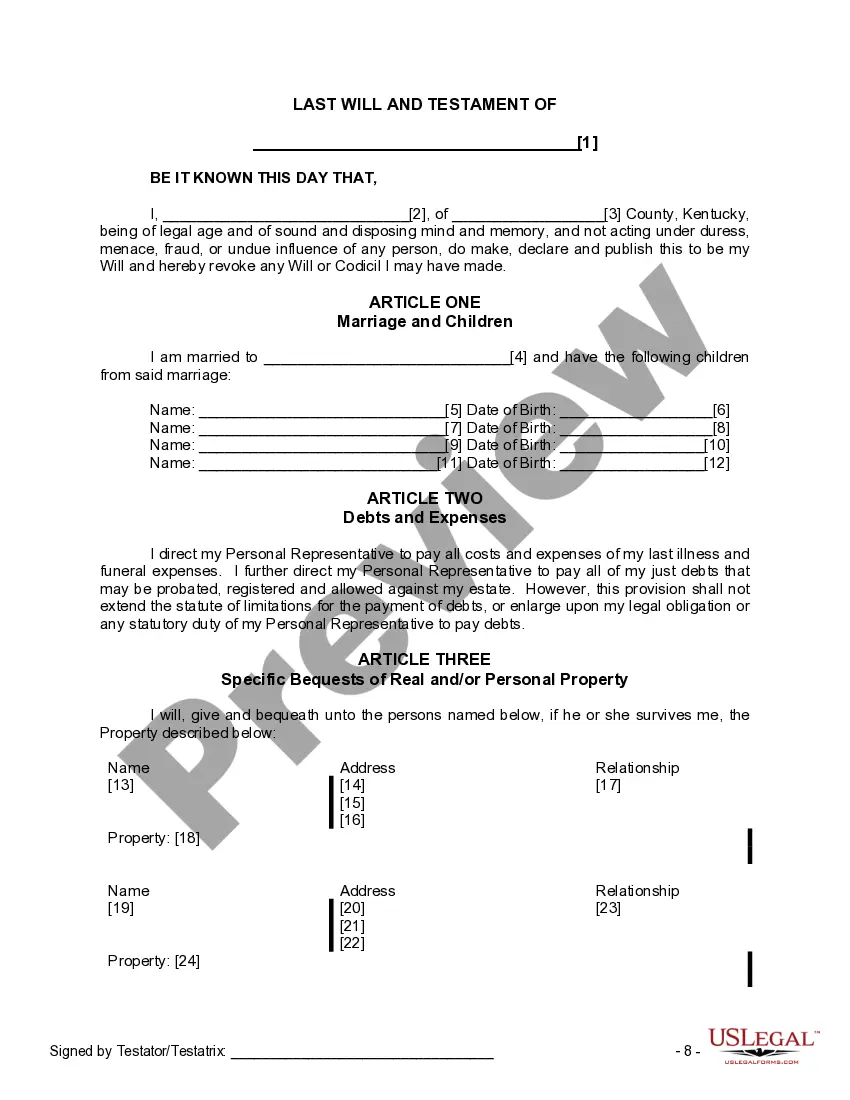
This Last Will and Testament for a Married Person with Adult and Minor Children is a legal document that specifies how you want your assets distributed upon your death. It is particularly designed for individuals who have a spouse and children, allowing for the appointment of a personal representative or executor, the designation of beneficiaries, and provisions for creating a trust for minor children. This form differs from other wills by addressing the unique needs of married individuals with dependents, ensuring that both adult and minor children's interests are protected.
Form components explained
- Personal information fields for the testator (your name and residence).
- Appointment of an executor to manage your estate after your death.
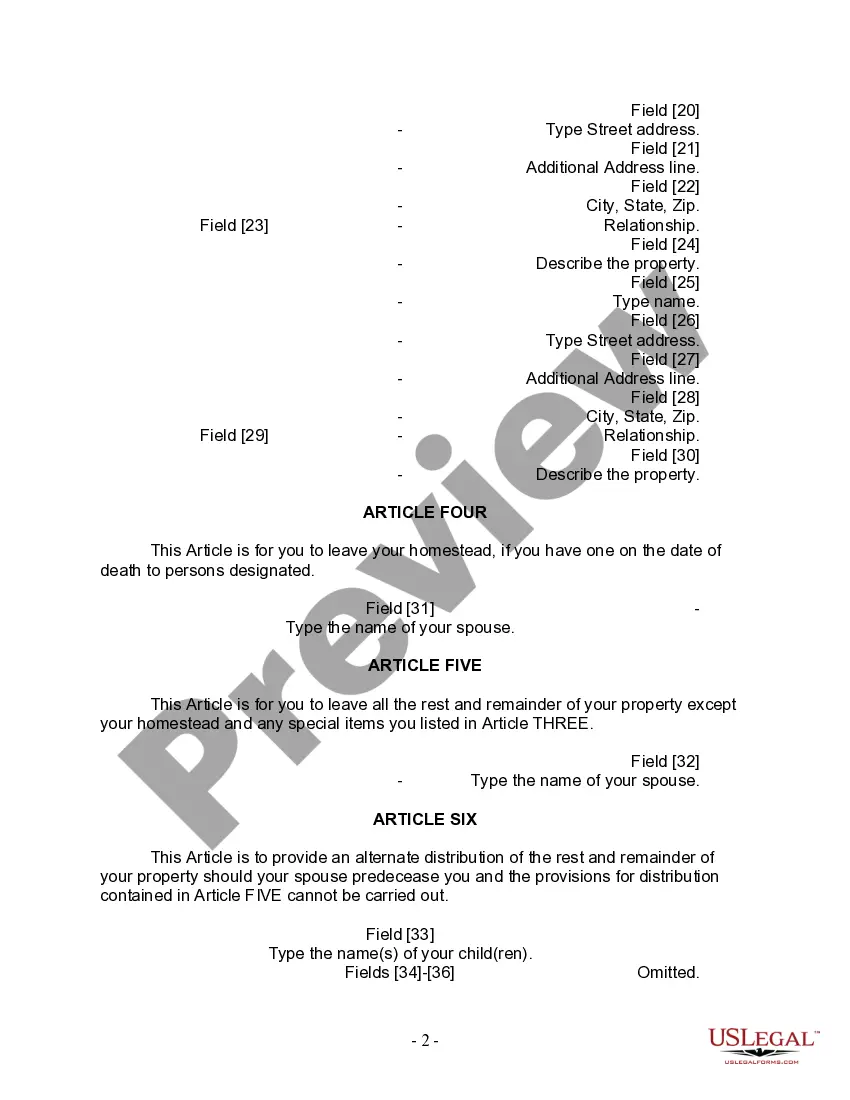
- Specific bequests for particular assets.
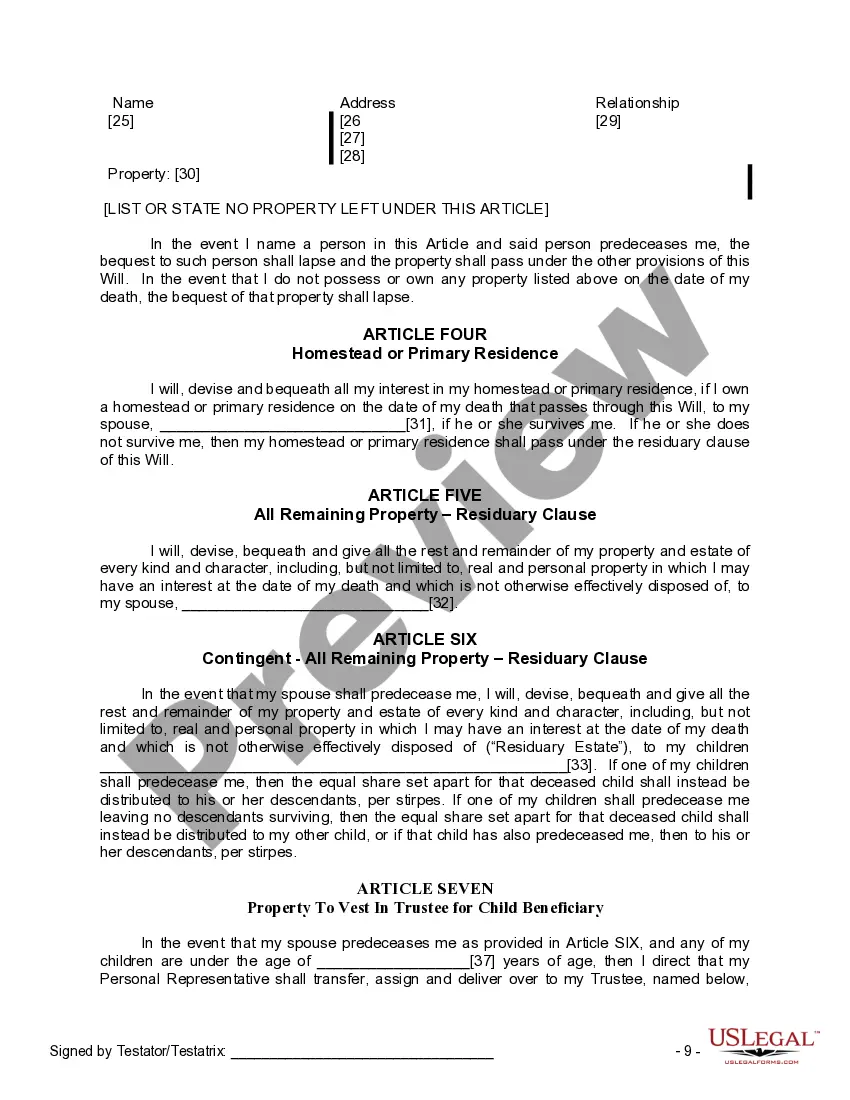
- Residuary clause for any remaining property not specifically mentioned.
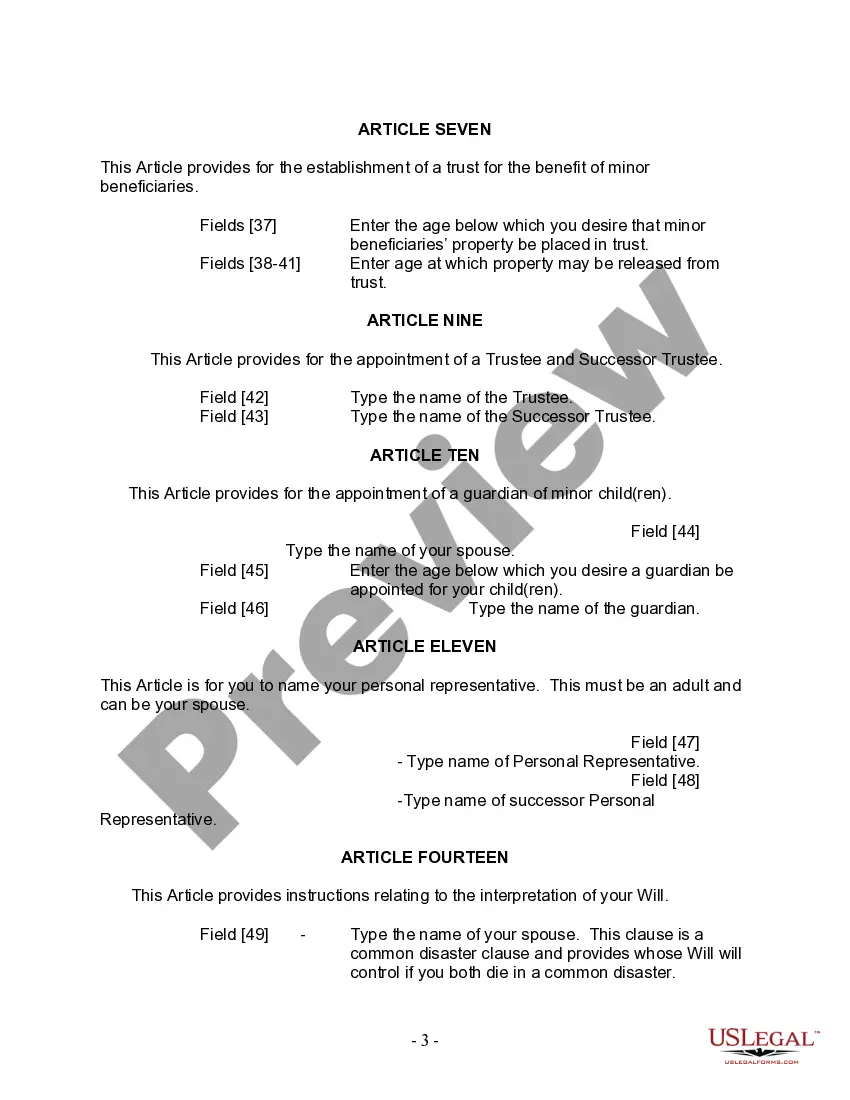
- Provisions for guardianship of minor children and the establishment of a trust for them.
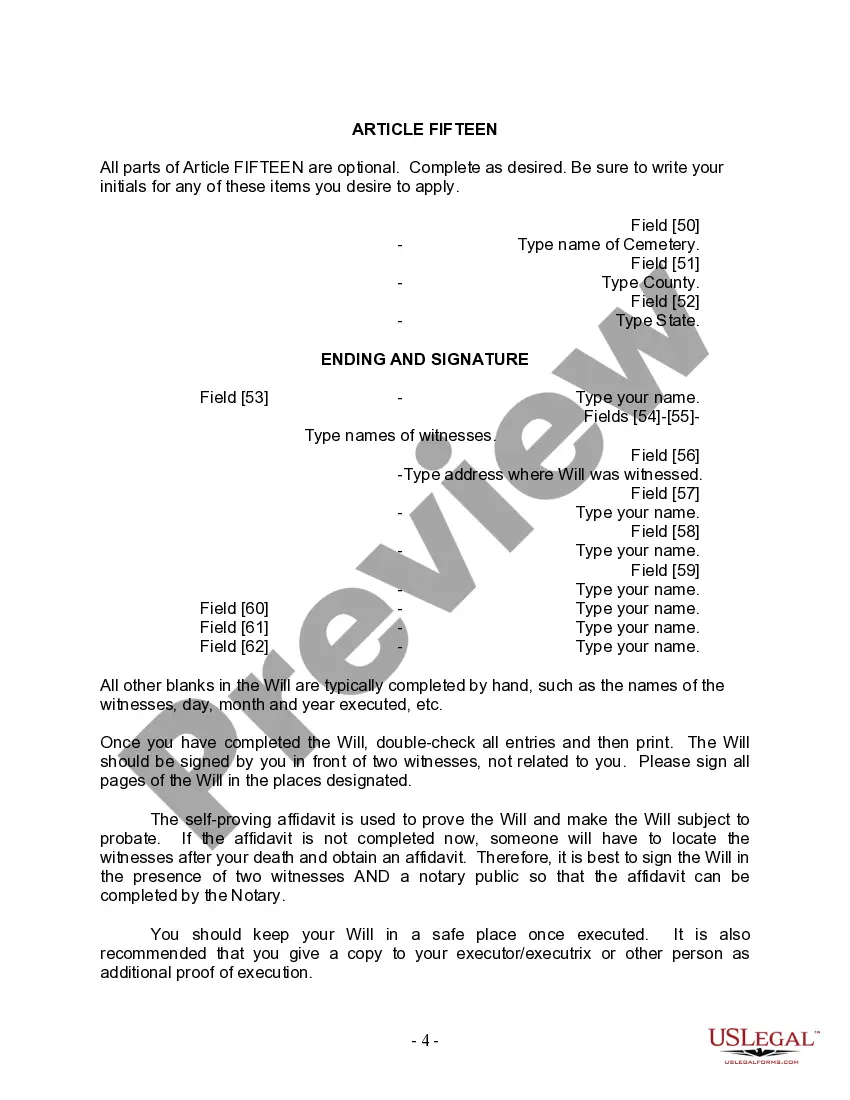
- Instructions regarding the signing and witnessing of the document.



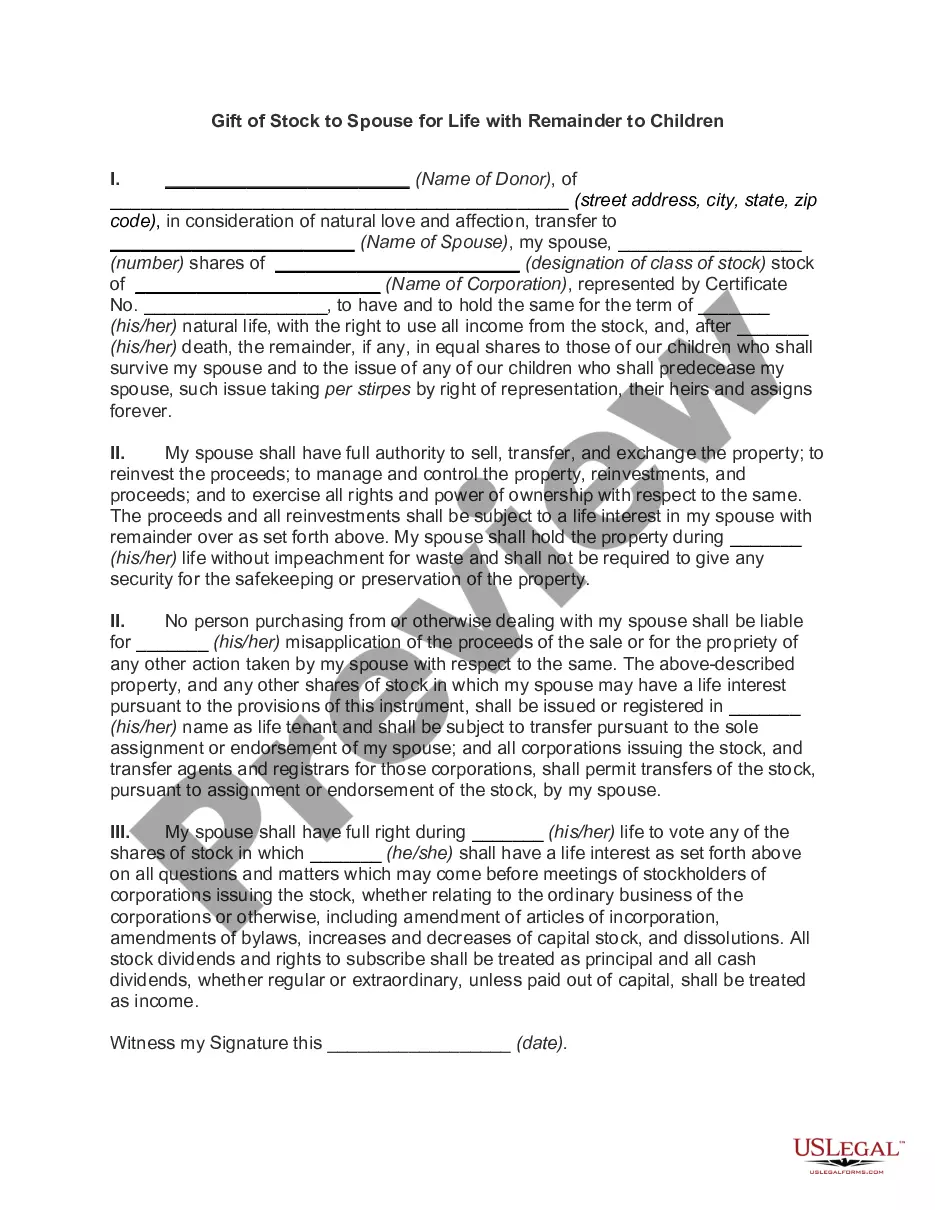
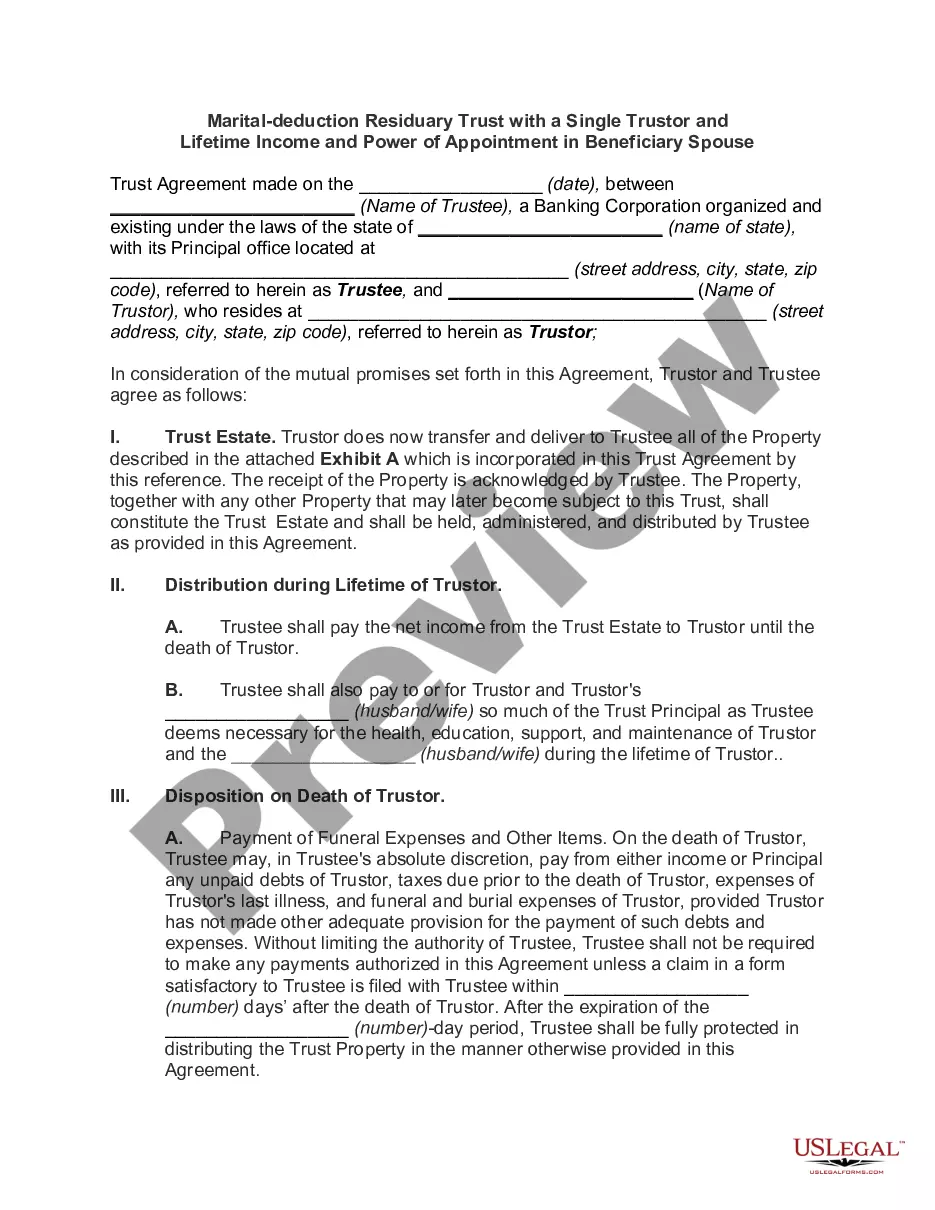



When this form is needed
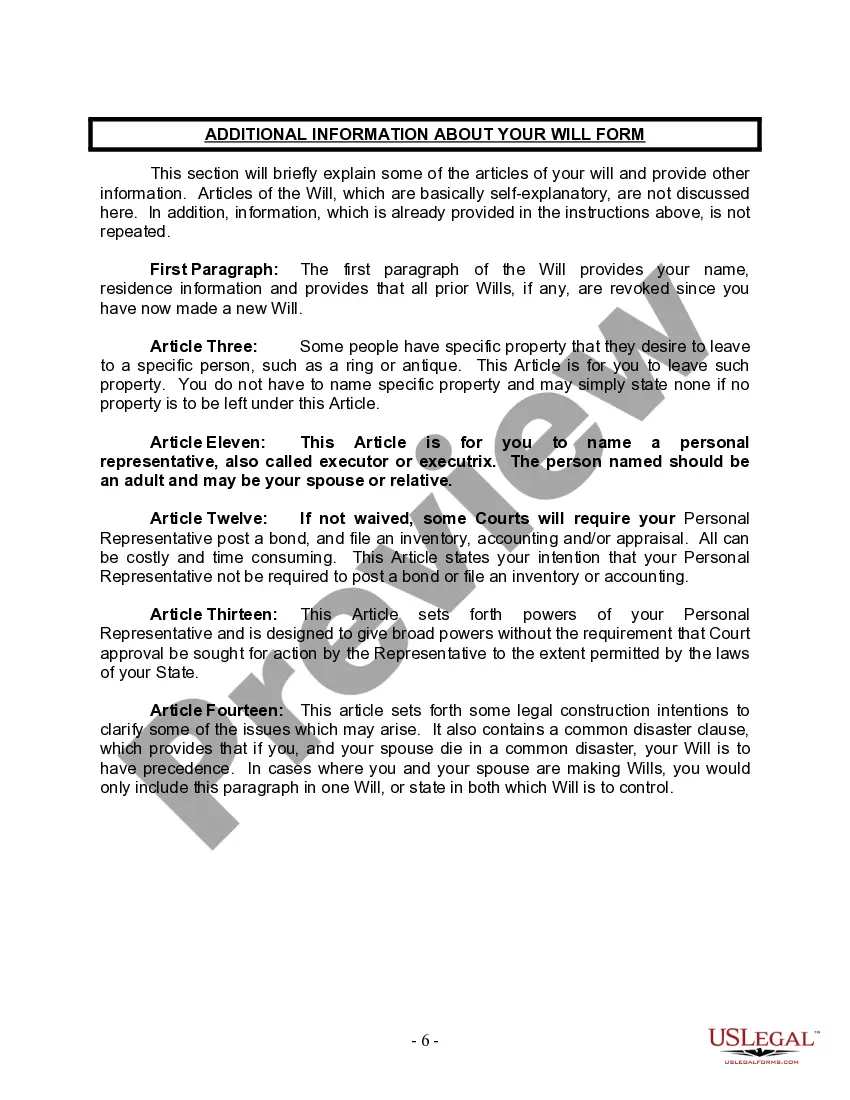
You should use this form if you are a married individual with either adult or minor children and wish to ensure that your property is distributed according to your wishes after your death. This will is particularly important if you want to appoint someone to manage your estate, specify how your assets should be divided, or arrange for the care of minor children in case of your passing.
Who should use this form
This form is intended for:
- Married individuals with children (both adults and minors).
- Those seeking to outline specific wishes for their estate.
- People who want to appoint guardians for their minor children.
- Individuals who wish to avoid intestacy laws by clearly stating their property distribution intentions.
How to prepare this document
Steps to complete this form:
- Enter your personal information, including your name and county of residence.
- Specify your spouseâs name and list your childrenâs names.
- Detail any specific assets you wish to bequeath to individuals.
- Indicate your choice of guardian for your minor children and any trustees for their share of the estate.
- Sign the document in the presence of two witnesses, ensuring they are not named in the will.
- Complete any necessary affidavit with a notary public, if required by your state's laws.
Does this document require notarization?
Yes, this form must be notarized to be legally valid. It includes a self-proving affidavit that ensures the will can be admitted to probate without requiring witnesses to testify. US Legal Forms provides integrated online notarization, allowing you to complete this step securely and conveniently.
Get your form ready online
Our built-in tools help you complete, sign, share, and store your documents in one place.
Make edits, fill in missing information, and update formatting in US Legal Forms—just like you would in MS Word.
Download a copy, print it, send it by email, or mail it via USPS—whatever works best for your next step.
Sign and collect signatures with our SignNow integration. Send to multiple recipients, set reminders, and more. Go Premium to unlock E-Sign.
If this form requires notarization, complete it online through a secure video call—no need to meet a notary in person or wait for an appointment.
We protect your documents and personal data by following strict security and privacy standards.

Make edits, fill in missing information, and update formatting in US Legal Forms—just like you would in MS Word.

Download a copy, print it, send it by email, or mail it via USPS—whatever works best for your next step.

Sign and collect signatures with our SignNow integration. Send to multiple recipients, set reminders, and more. Go Premium to unlock E-Sign.

If this form requires notarization, complete it online through a secure video call—no need to meet a notary in person or wait for an appointment.

We protect your documents and personal data by following strict security and privacy standards.
Common mistakes to avoid
Common mistakes to avoid:
- Failing to have the will properly witnessed and notarized, if required.
- Not updating the will after significant life events, such as divorce or the birth of children.
- Neglecting to clearly specify trusts or guardians for minor children.
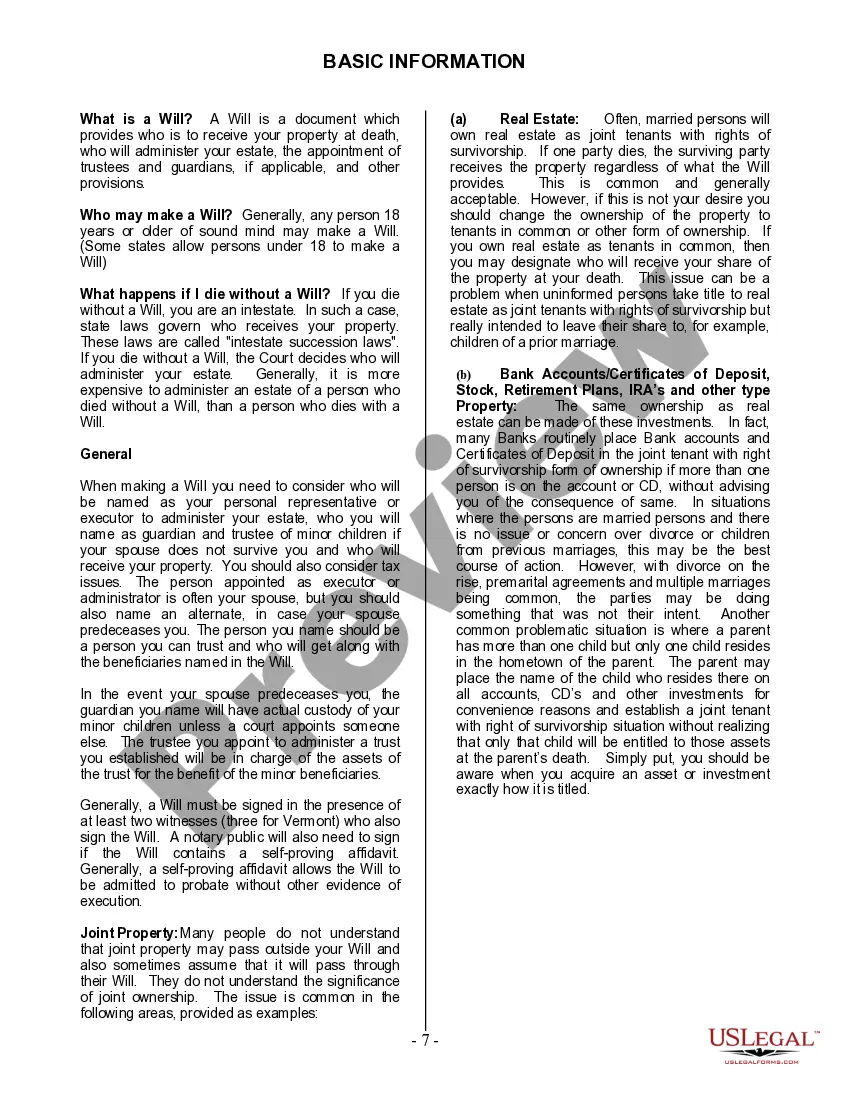
- Overlooking the assets that may pass outside of the will due to joint ownership.
Benefits of using this form online
Benefits of using this form online:
- Convenient access that allows customization to fit your personal circumstances.
- Editable format that simplifies the process of including specific details.
- Secure and reliable, providing peace of mind regarding legal compliance.
Quick recap
- The Last Will and Testament for Married Person with Adult and Minor Children is a crucial document for ensuring your estate is managed according to your wishes.
- It is especially beneficial for those with minor children, allowing you to make provisions for their care and inheritance.
- Proper completion and notarization of the form are essential to ensure its validity.
- Updating your will regularly is important to reflect any changes in your family situation.
Looking for another form?
Form popularity
FAQ
Unless the Will is written completely by the Testator by hand, the signature of the Testator must be either made or acknowledged in the presence of at least 2 credible witnesses. Those witnesses must sign the Will in the Testator's presence and in each other's presence.
No, in Kentucky, you do not need to notarize your will to make it legal. However, Kentucky allows you to make your will "self-proving" and you'll need to go to a notary if you want to do that. A self-proving will speeds up probate because the court can accept the will without contacting the witnesses who signed it.
You can make your own will in Kentucky, using Nolo's Quicken WillMaker & Trust. However, you may want to consult a lawyer in some situations. For example, if you think that your will might be contested or if you want to disinherit your spouse, you should talk with an attorney.
In Kentucky you can write a will in your own handwriting.If you prepare your own will and type it, it must be signed by at least two witnesses.
For example, California requires that all sections of the will necessary to make the will valid must be written entirely by hand and that the person writing the will must sign it. If these state rules aren't followed, the holographic will won't be valid.
Self-written wills are typically valid, even when handwritten, as long as they're properly witnessed and notarized, or proven in court. A handwritten will that is not witnessed or notarized is considered a holographic will. Not all states accept holographic wills .
The first step is to locate the deceased person's original will. The second step is to file a petition, using form AOC-805, which asks the District Court judge to admit the will to probate and to appoint an execu- tor to administer and settle the decedent's estate. KRS ?394.140, 394.145.