Kentucky Mutual Wills package with Last Wills and Testaments for Married Couple with No Children
What this document covers
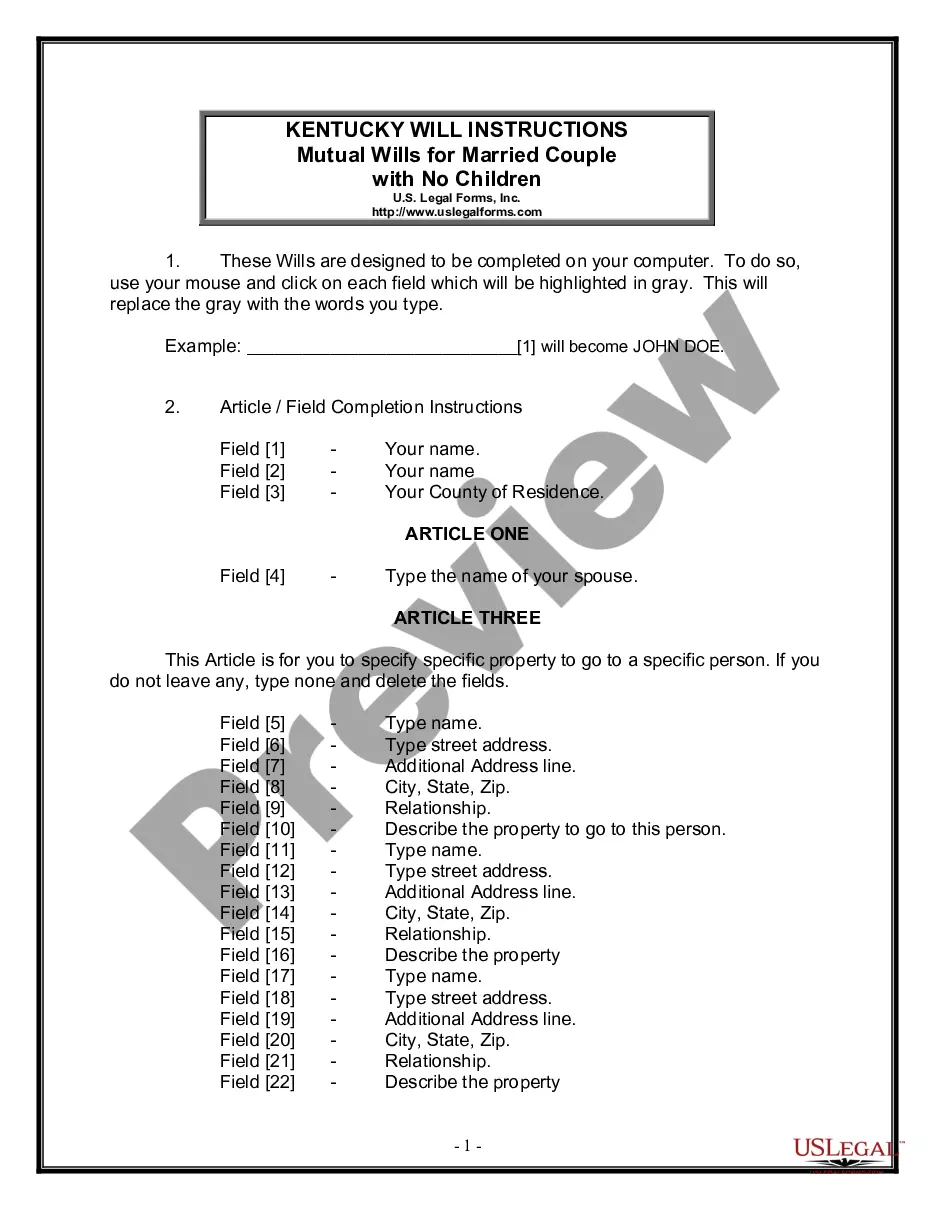
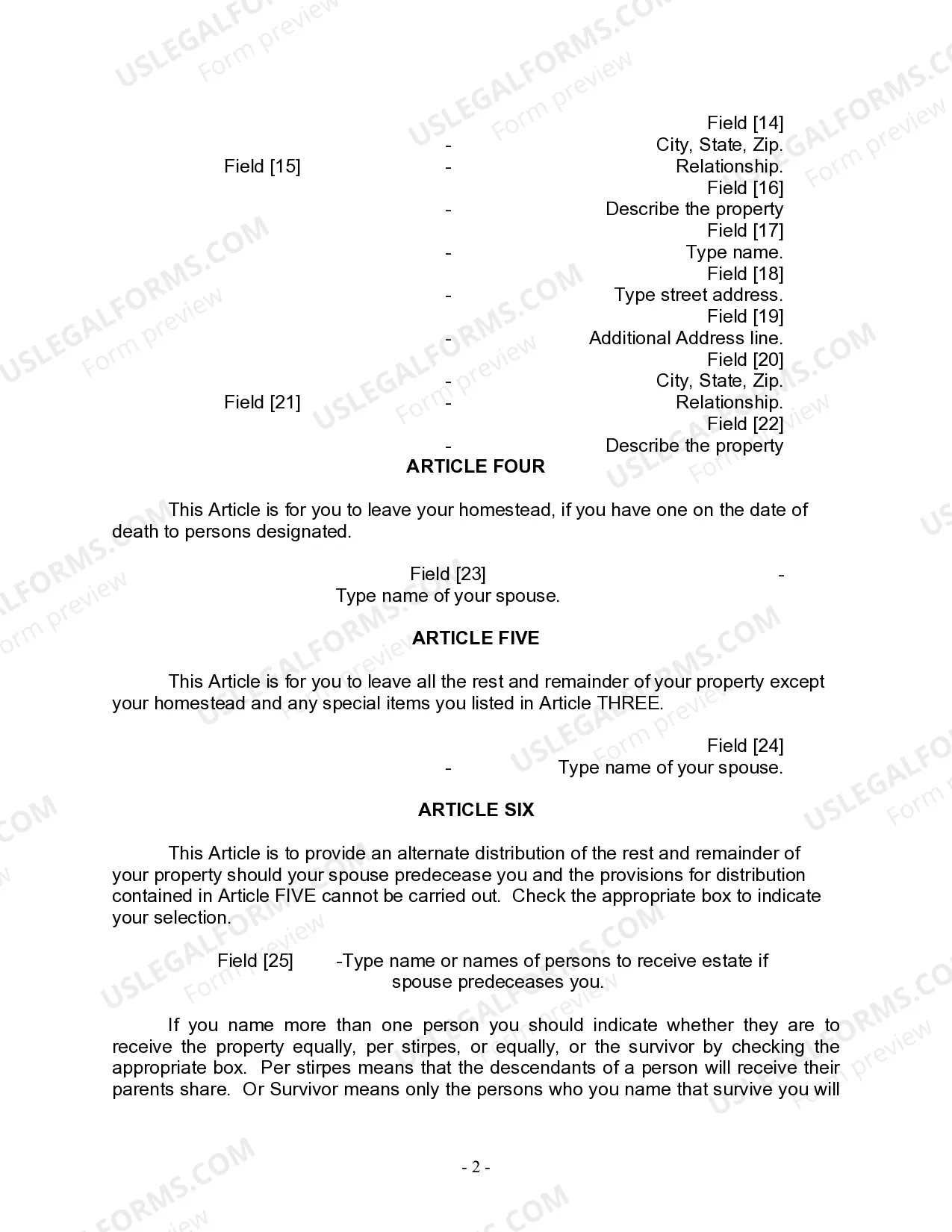
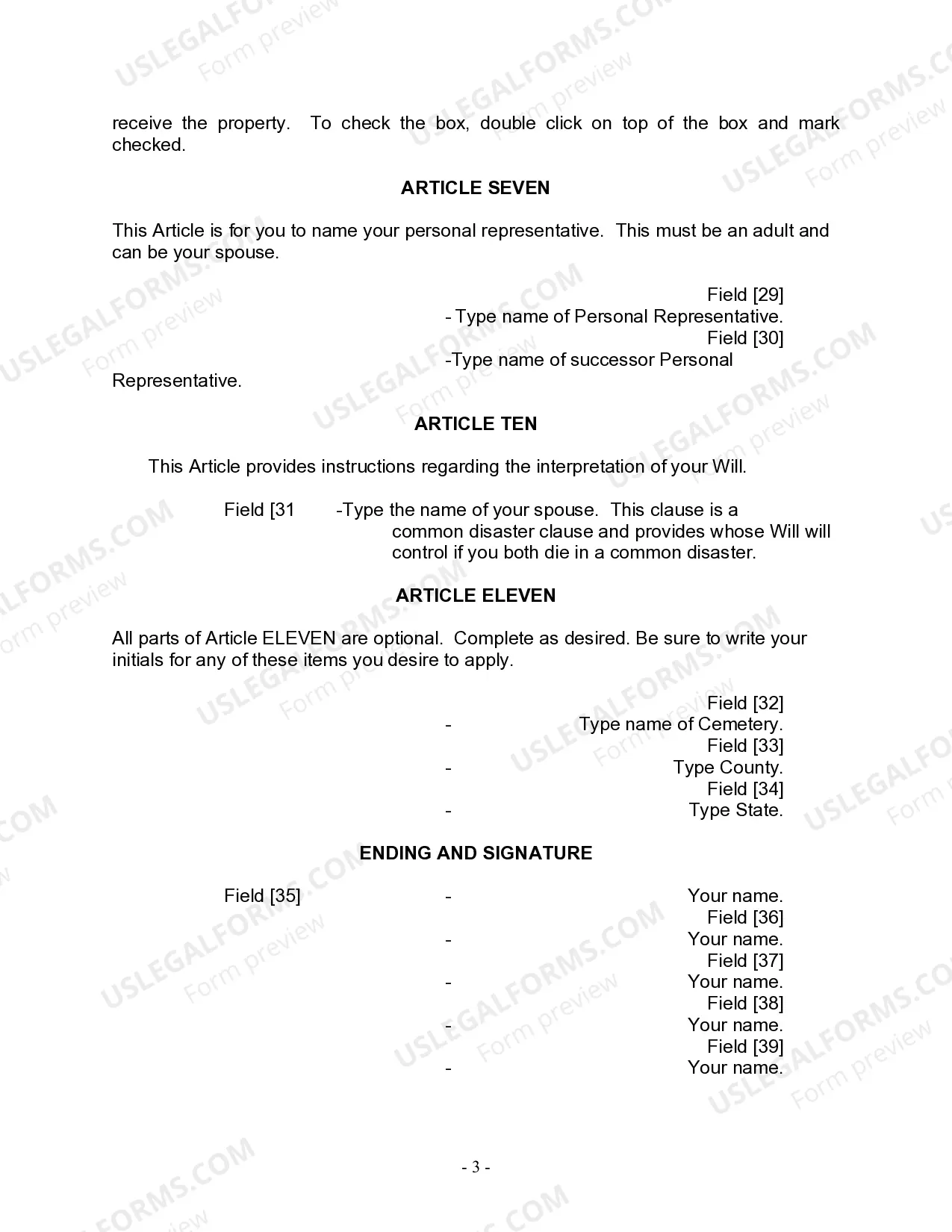
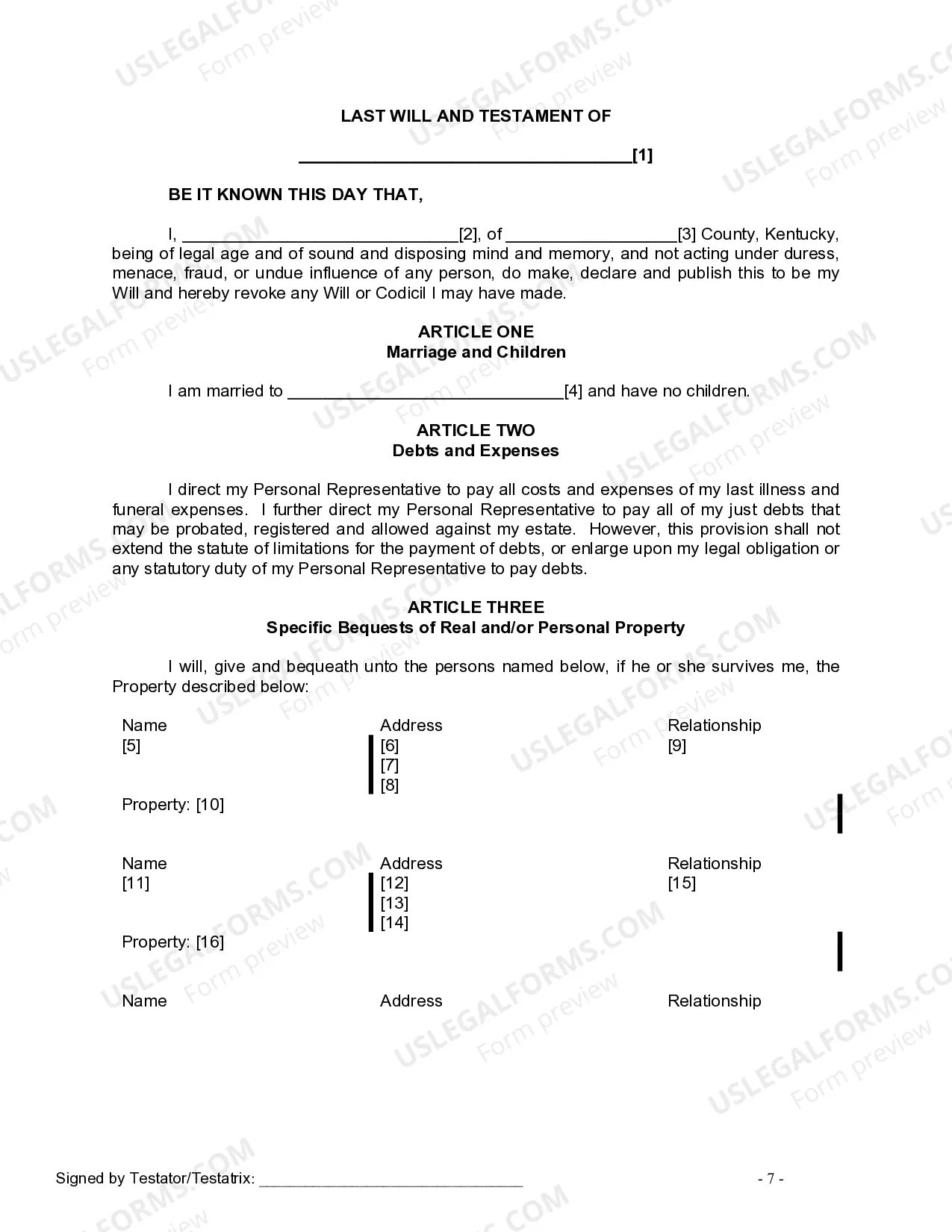
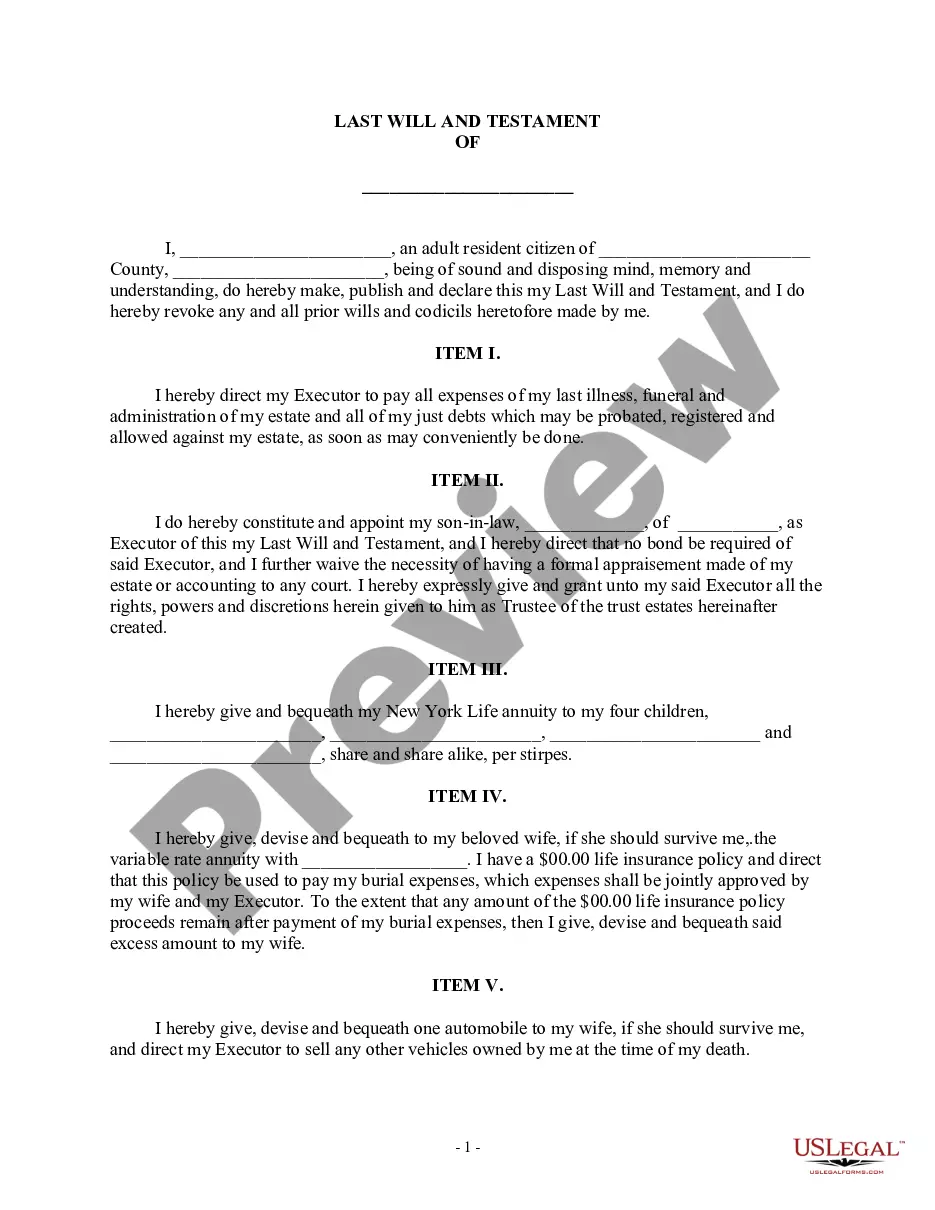
The Mutual Wills package with Last Wills and Testaments is a legal document designed specifically for married couples without children. This package allows each spouse to designate how their estate will be managed and distributed after their passing. It includes two separate willsâone for each spouseâas well as instructions for their completion. Unlike individual wills, mutual wills offer a way for couples to coordinate their estate plans, ensuring that both spouses' wishes are honored in a synchronized manner.
Key components of this form
- Personal details of both spouses, including names and county of residence.
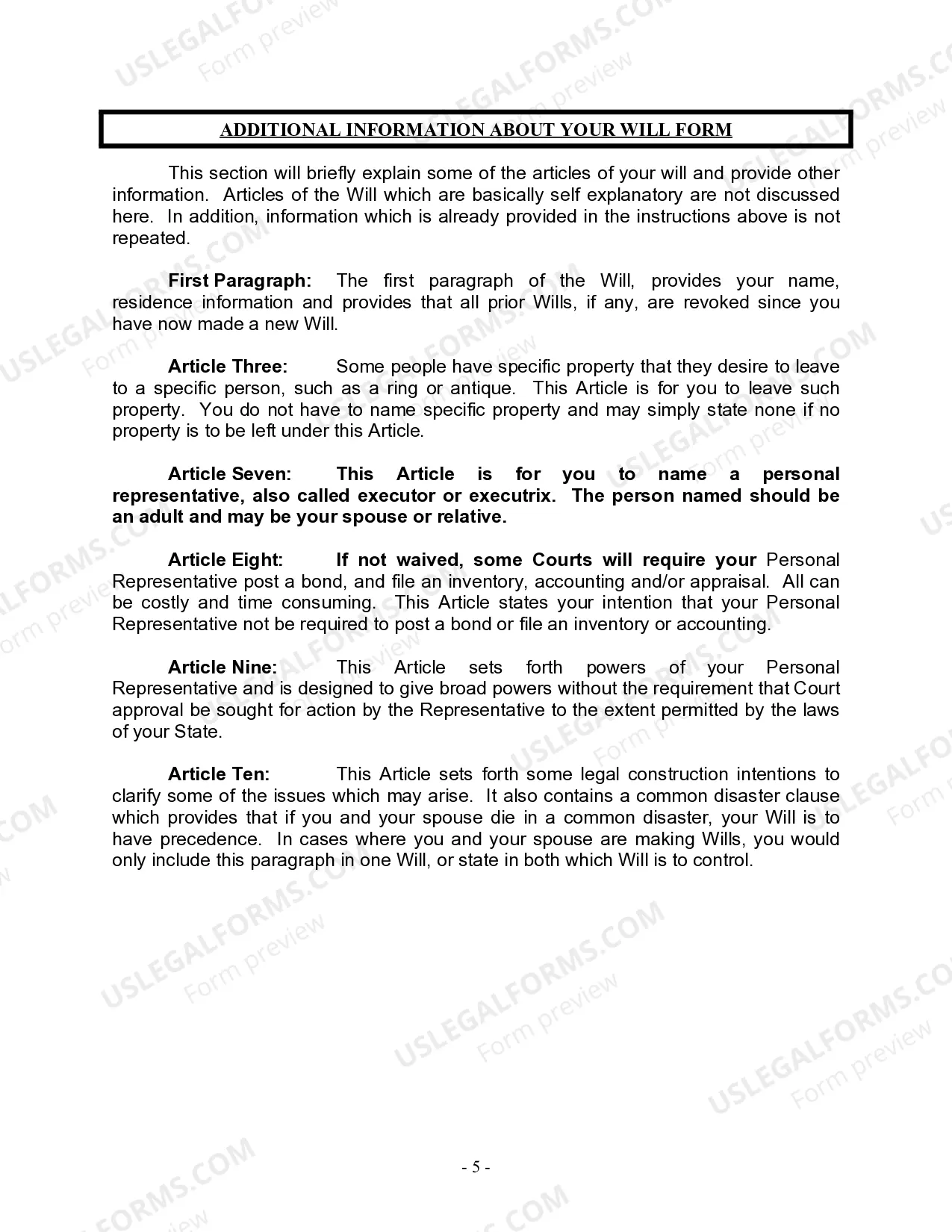
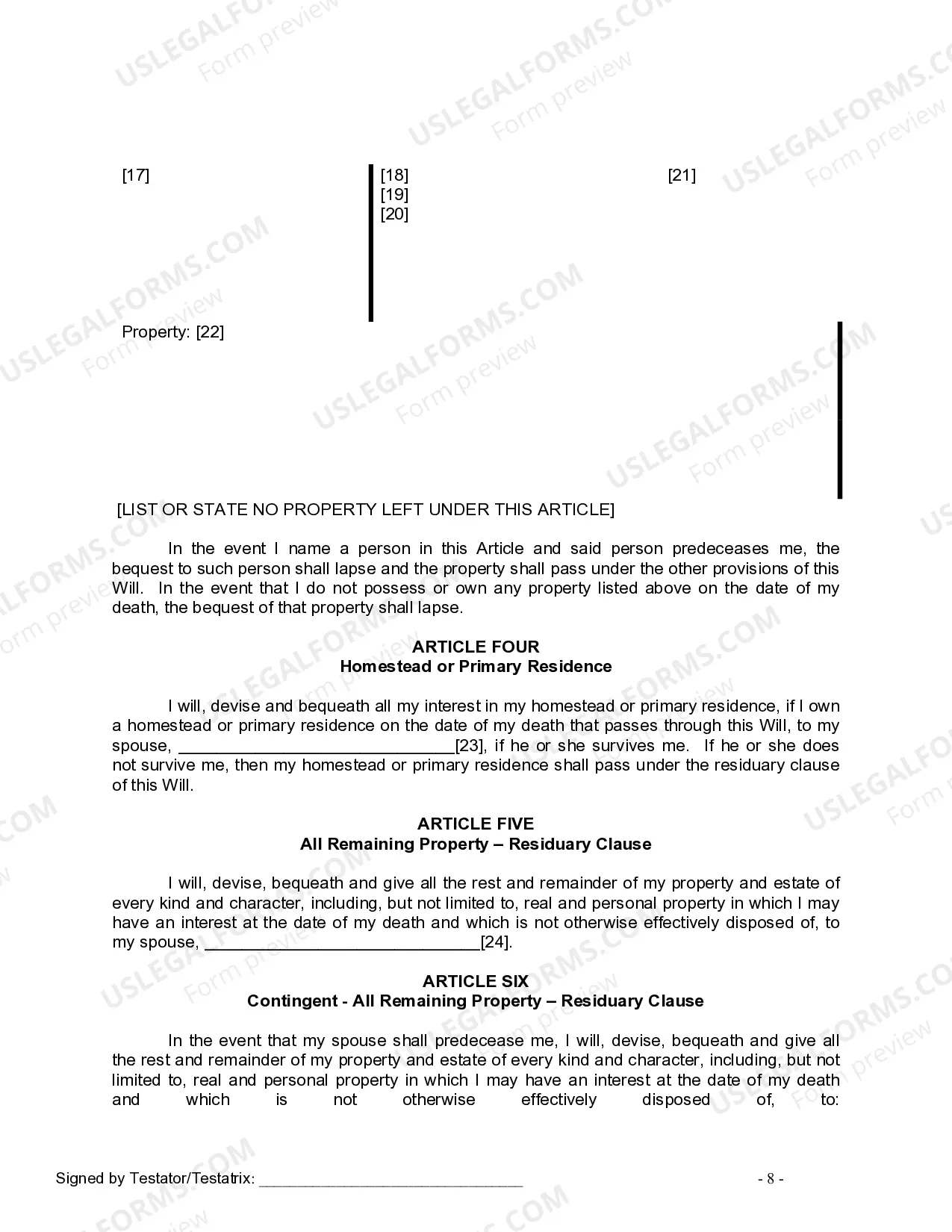
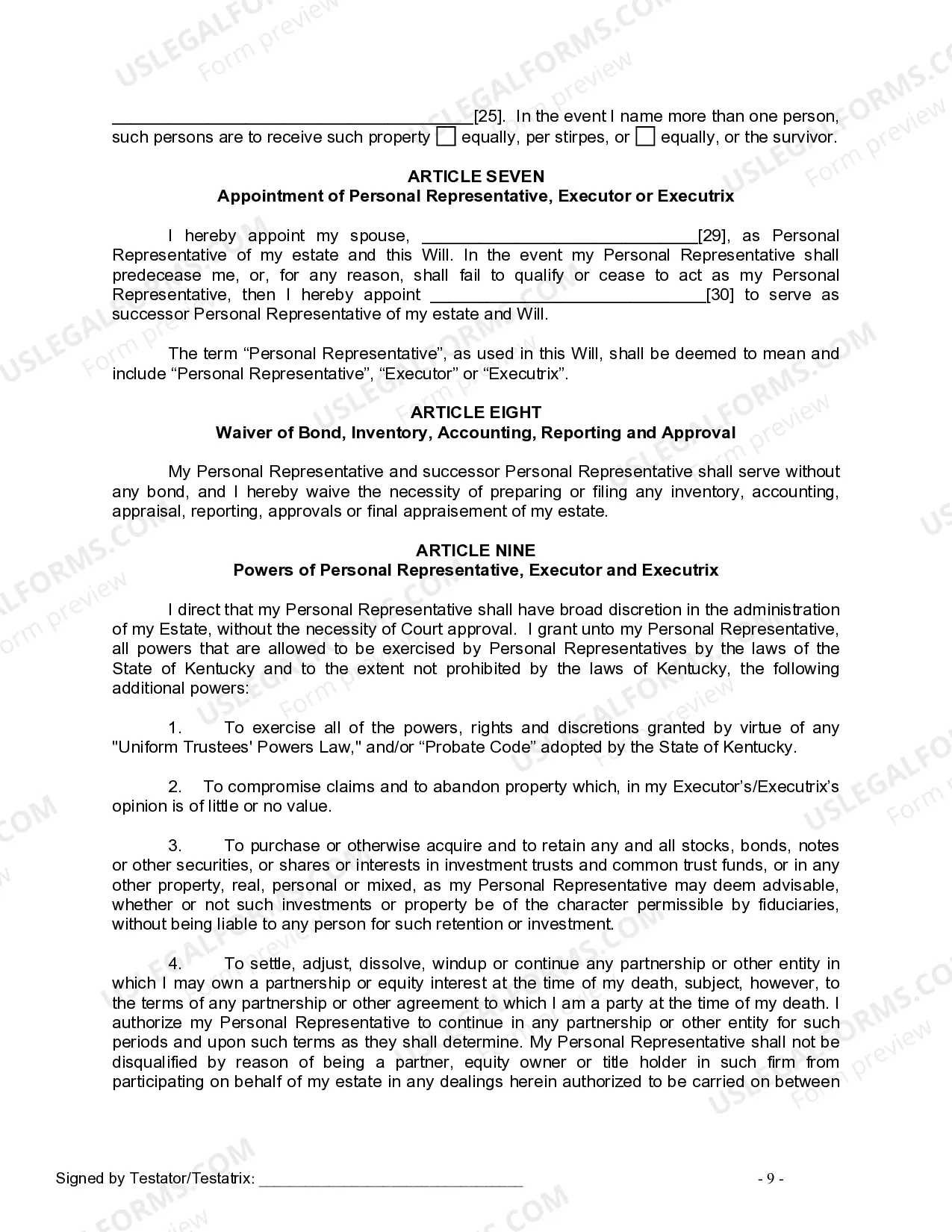
- Appointment of a personal representative or executor to handle the estate.
- Specification of specific bequests for property distribution.
- Residue clauses outlining how remaining assets should be distributed.
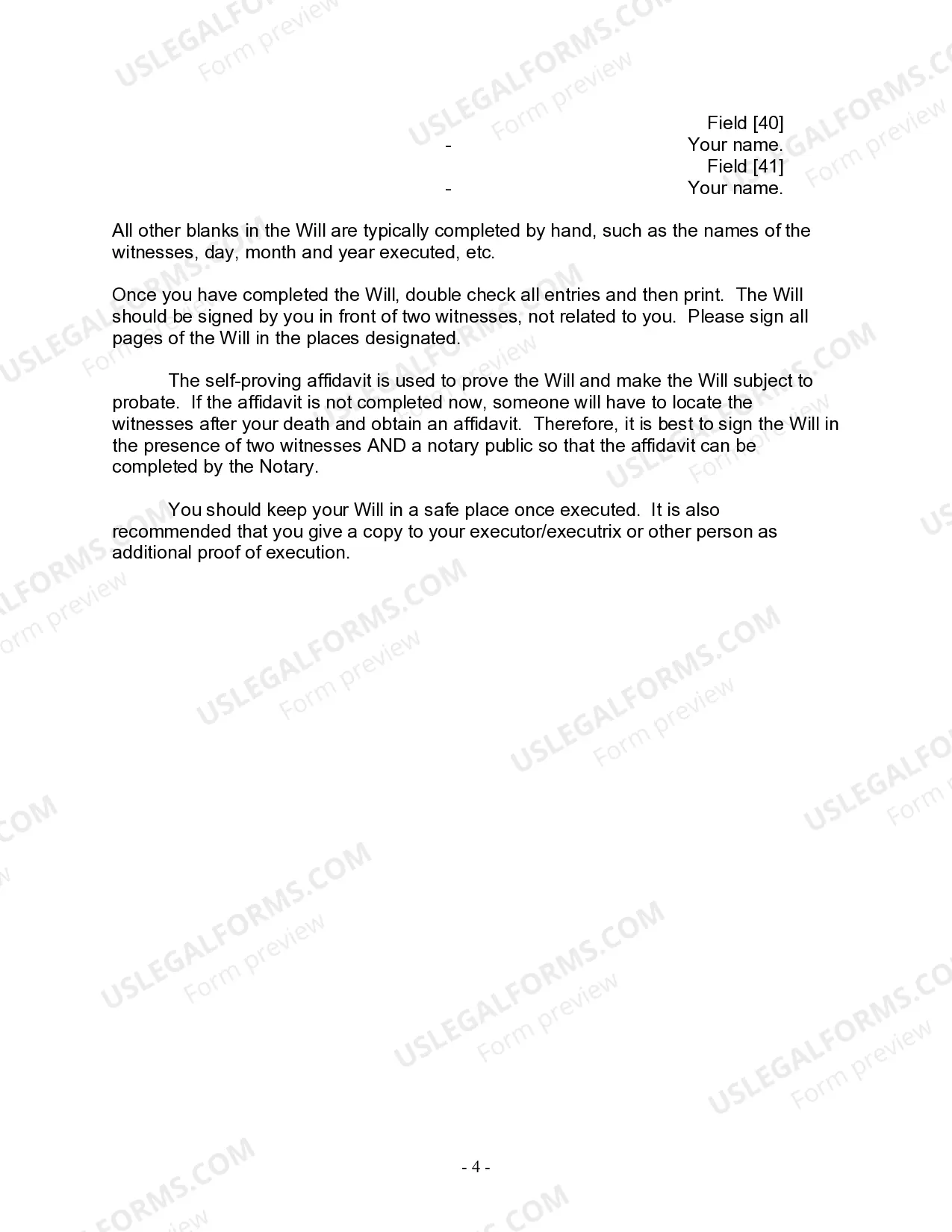
- Instructions for signing the wills in front of witnesses.
- Options for including a self-proving affidavit for ease of probate.




When this form is needed
This form is ideal for married couples who wish to create a comprehensive estate plan without the complexities often involved in planning for children. It is especially useful for couples looking to ensure their assets are passed directly to one another or designated beneficiaries after one spouse's death. This mutual approach avoids potential disputes in the distribution of assets and simplifies the probate process.
Intended users of this form
- Married couples with no children.
- Individuals who want to ensure their spouse is the primary beneficiary of their estate.
- Couples seeking an organized approach to estate planning.
- Spouses wanting to specify their personal representative for handling the estate.
Instructions for completing this form
- Identify and enter the names of both spouses and their county of residence.
- Appoint a personal representative who will manage the estate.
- Specify any special property or assets to be distributed to designated individuals.
- Complete the residue clause to determine how remaining assets will be allocated.
- Sign the wills in the presence of two witnesses, ensuring they are not related or named in the wills.
- If applicable, have a notary public complete the self-proving affidavit to streamline probate.
Notarization guidance
Yes, this form must be notarized to be legally valid. Notarization ensures the authenticity of signatures, which can simplify the probate process. US Legal Forms offers integrated online notarization services, providing 24/7 availability and secure video calls, making it easy to complete the notarization process without the need for travel.
Get your form ready online
Our built-in tools help you complete, sign, share, and store your documents in one place.
Make edits, fill in missing information, and update formatting in US Legal Forms—just like you would in MS Word.
Download a copy, print it, send it by email, or mail it via USPS—whatever works best for your next step.
Sign and collect signatures with our SignNow integration. Send to multiple recipients, set reminders, and more. Go Premium to unlock E-Sign.
If this form requires notarization, complete it online through a secure video call—no need to meet a notary in person or wait for an appointment.
We protect your documents and personal data by following strict security and privacy standards.

Make edits, fill in missing information, and update formatting in US Legal Forms—just like you would in MS Word.

Download a copy, print it, send it by email, or mail it via USPS—whatever works best for your next step.

Sign and collect signatures with our SignNow integration. Send to multiple recipients, set reminders, and more. Go Premium to unlock E-Sign.

If this form requires notarization, complete it online through a secure video call—no need to meet a notary in person or wait for an appointment.

We protect your documents and personal data by following strict security and privacy standards.
Avoid these common issues
- Failing to have the wills signed in front of required witnesses.
- Not specifying alternate beneficiaries in case of a deceased spouse.
- Overlooking state-specific requirements for notarization or registration.
Benefits of using this form online
- Convenient access to professionally drafted legal documents.
- Editable templates allow for easy customization to individual needs.
- Instant download and secure storage options for completed forms.
Summary of main points
- This Mutual Wills package is designed for married couples to ensure their mutual wishes are honored in the event of death.
- Completing the forms correctly is crucial for their validity and effectiveness.
- Considering notarization can streamline the probate process for your heirs.
Looking for another form?
Form popularity
FAQ
It is a customary estate planning practice for each spouse to have his or her own will. While some practitioners may draft a joint will for a married couple, it is not recommended.
Millennials are the only age group to see a reduction in both divorce and marriage rates. According to a 2018 report by the Fertility and Family Statistics branch of the Census Board, in 2013: 26% of adults ages 18 to 32 were married in 2018 (i.e., Millennials)
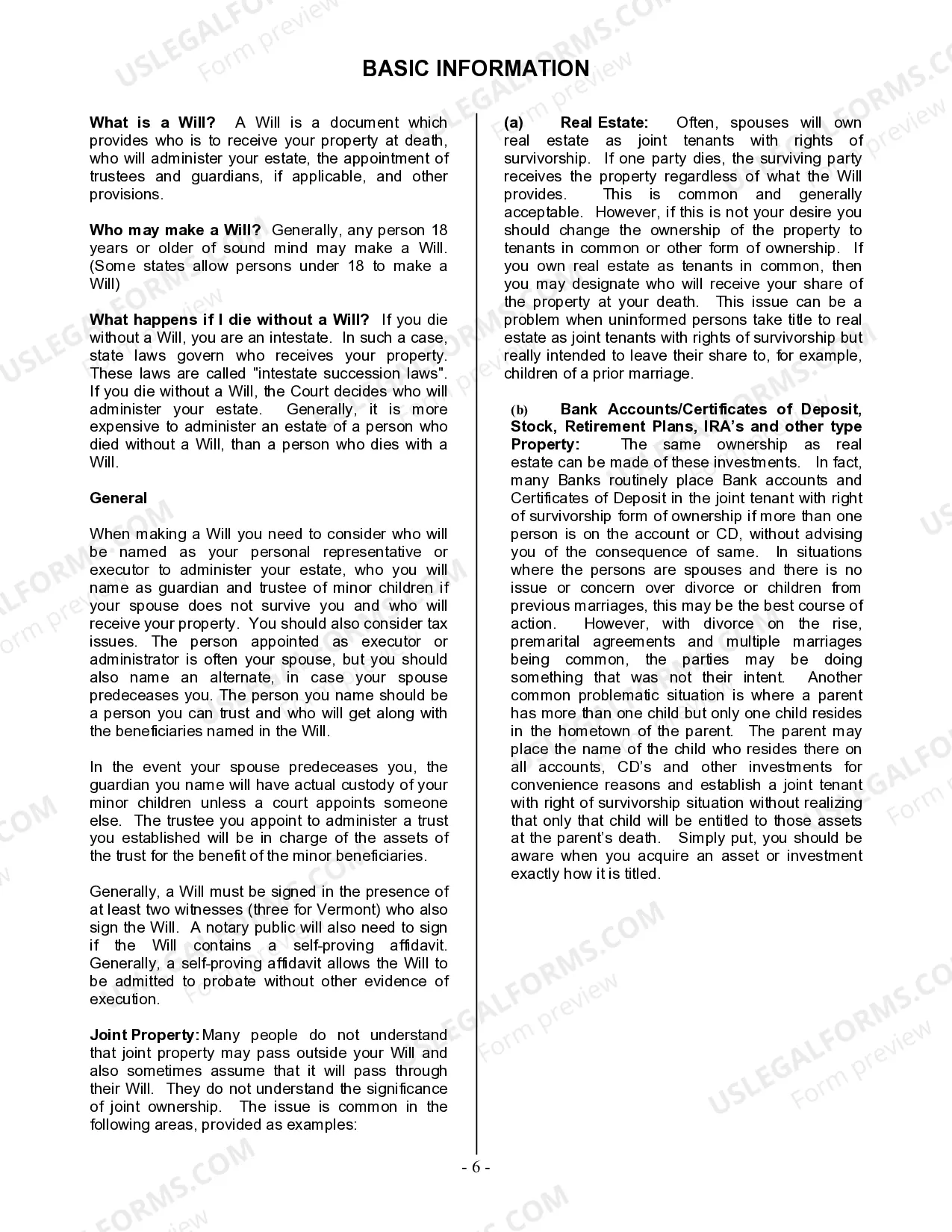
Many married couples own most of their assets jointly with the right of survivorship. When one spouse dies, the surviving spouse automatically receives complete ownership of the property.Since one never knows which spouse will survive the other, it is important that both have a Will.
An adult can make a valid will without notifying their wife or husband. Not telling a spouse would be unusual, but not illegal.
A subsequent study which analyzed 2002 NSFG data found that although interracial marriages overall are more vulnerable to divorce, this reflects the experience of some but not all couples. It found that after 10 years of marriage, interracial marriages that are most vulnerable to divorce involve white females and non
The most commonly reported major contributors to divorce were lack of commitment, infidelity, and conflict/arguing. The most common final straw reasons were infidelity, domestic violence, and substance use. More participants blamed their partners than blamed themselves for the divorce.
Among working-class and poor men and women who have ever married, more than 40 percent have ever been divorced. High rates of nonmarital childbearing and divorce among working-class and poor adults translate into more family instability and single parenthood for children in working-class and poor communities.
Childless couples had an increasingly higher divorce risk than couples with children over our observation period. In the 2000s, the divorce risk of childless couples in both urban and rural areas was approximately five times that of one-child parents.
Tip 1: You absolutely need a will It's important for couples without kids to have wills because they don't have natural heirs to inherit their wealth. Generally speaking, if you die without a will, your assets will go to your spouse.Then your spouse's will would determine who gets what.