Kentucky Last Will and Testament for Single Person with Adult and Minor Children
Overview of this form
The Last Will and Testament for Single Person with Adult and Minor Children is a legal document that allows an individual to designate how their property and assets will be distributed upon their death. This form specifically caters to individuals who are single and have both adult and minor children, ensuring that all beneficiaries are named and that their needs are considered. This form differs from other wills by including provisions for guardianship of minor children and trusts for their benefits.
Form components explained
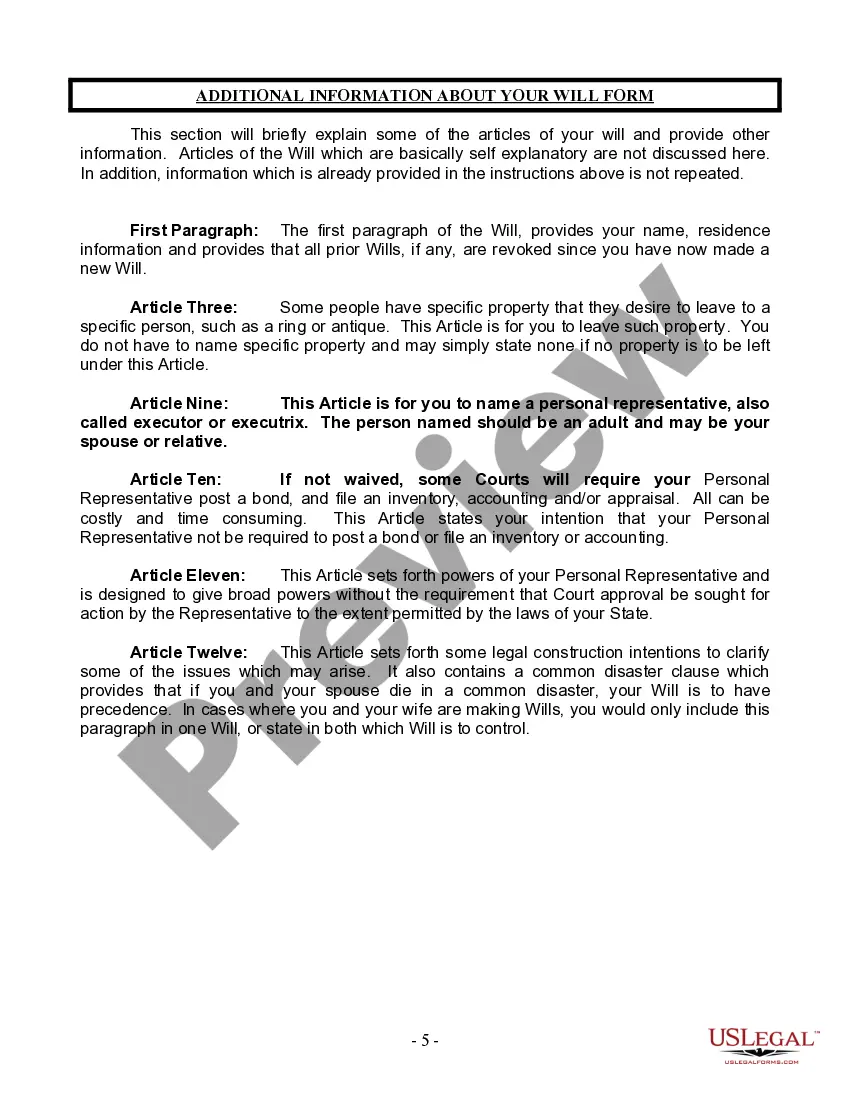
- Designates a personal representative or executor to manage the estate.
- Lists specific bequests of property to individuals.
- Provides for equal distribution of assets among children.
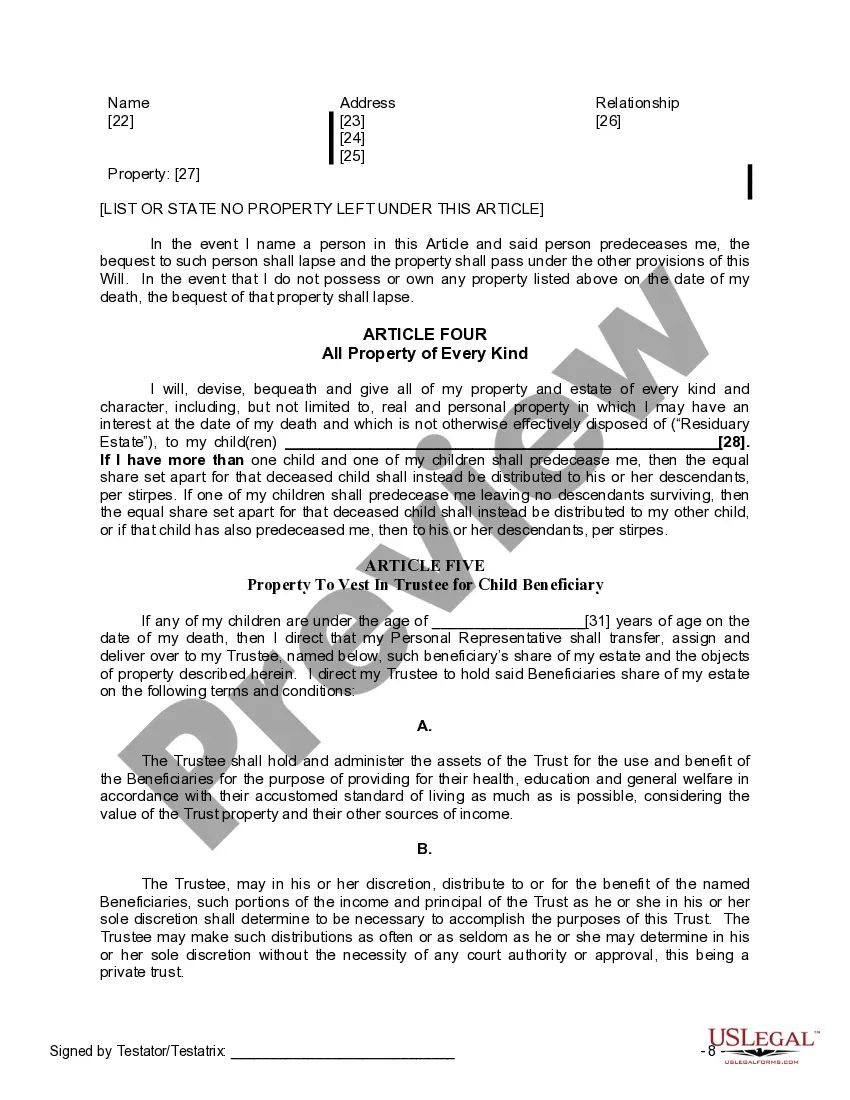
- Includes provisions for establishing a trust for minor beneficiaries.
- Appoints guardians for minor children.
- Offers optional clauses regarding cemetery and burial wishes.






Situations where this form applies
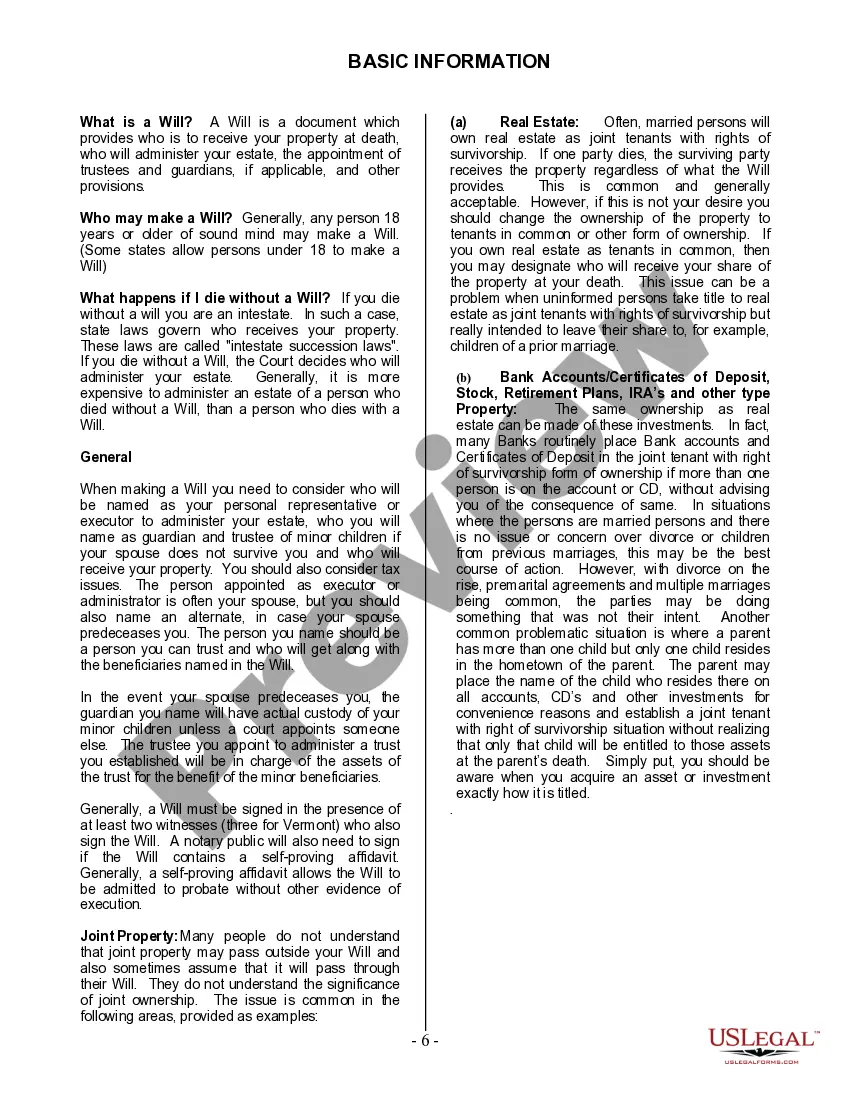
You should use this Last Will and Testament when you are a single parent with children, both adult and minor, and you want to ensure that your assets are distributed according to your wishes after your death. This form is essential if you want to name a guardian for your minor children and set up trusts for their financial security. It is also used to prevent disputes among heirs and ensure that your children are cared for in a manner you select.
Who can use this document
- Single individuals with children, both adult and minor.
- Those seeking to provide for their children's future after their death.
- Anyone who wants to specify how their assets should be handled and distributed.
- Individuals looking to appoint a guardian for minor children.
Completing this form step by step
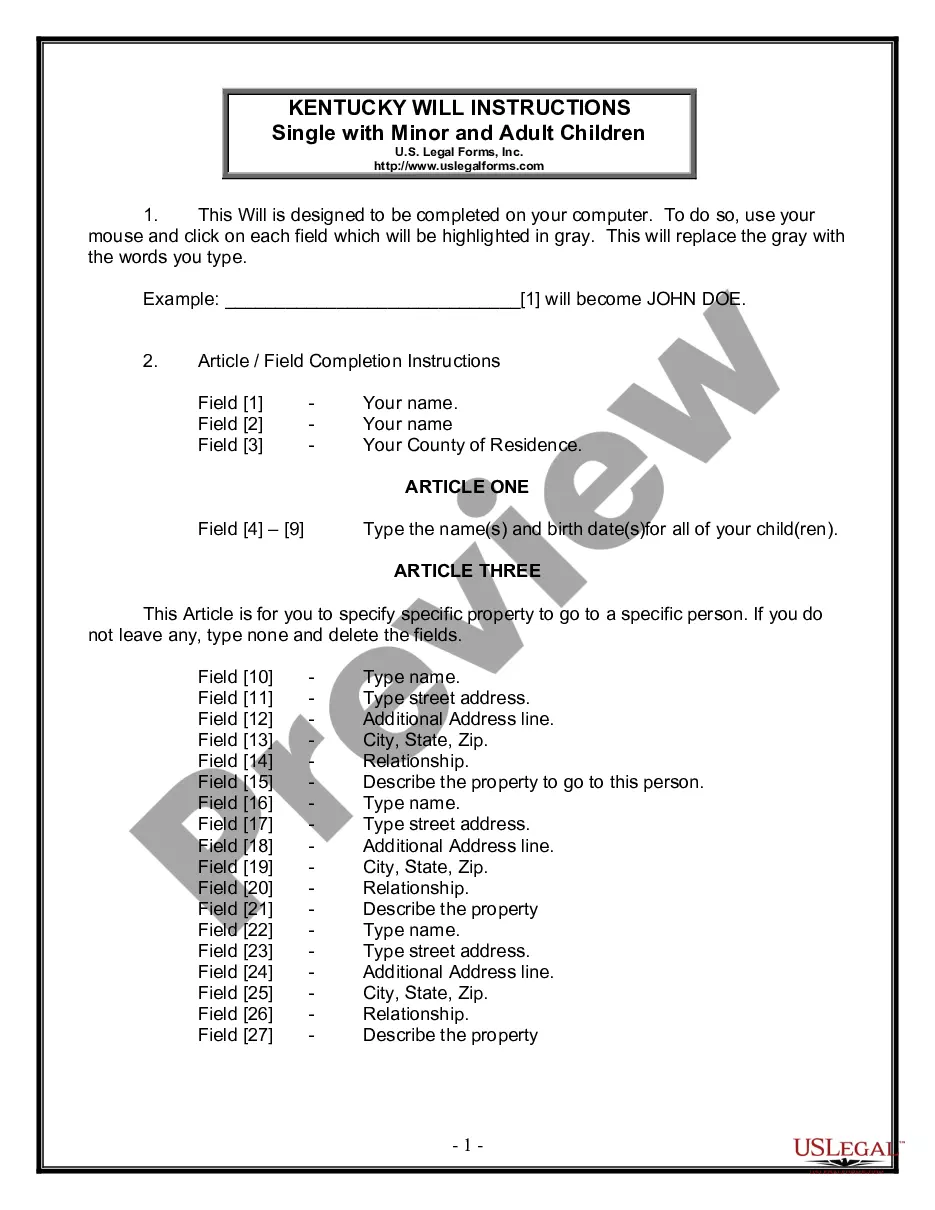
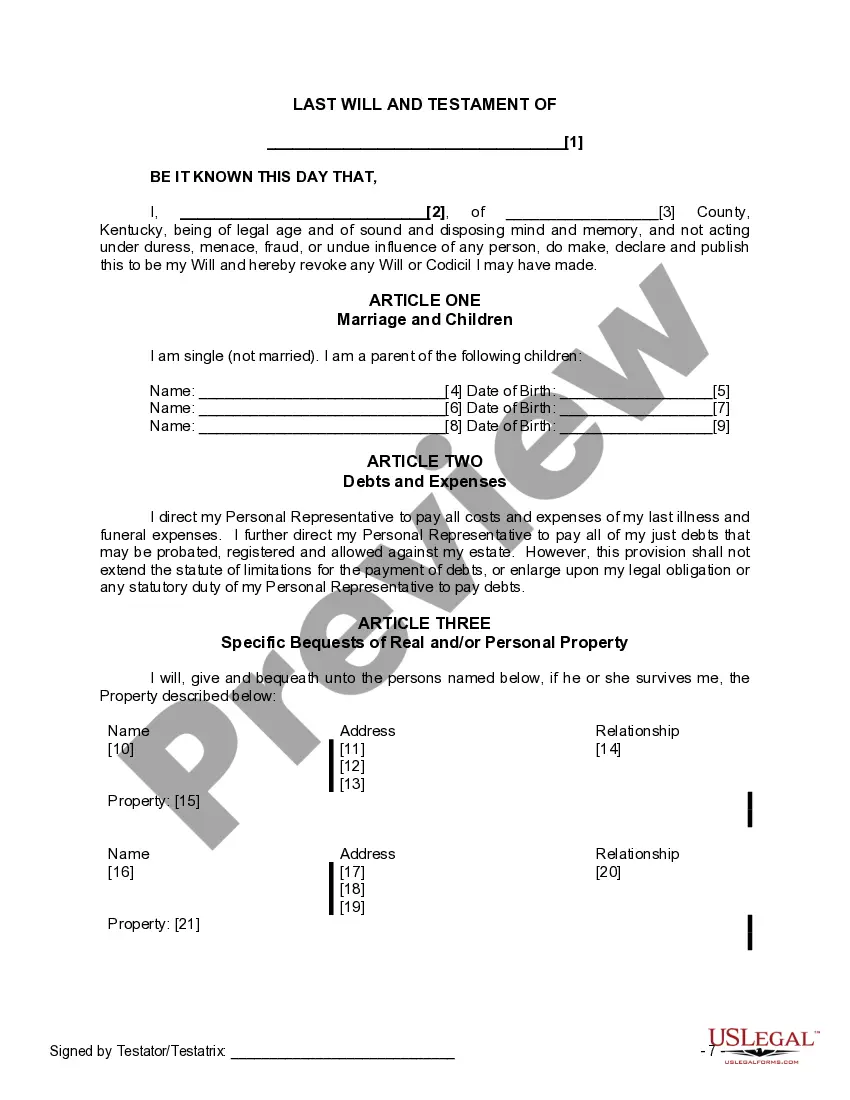
- Enter your full name and county of residence at the beginning of the document.
- List the names and birthdates of all of your children in the designated areas.
- Designate specific bequests by entering the names and addresses of individuals who will receive specific properties.
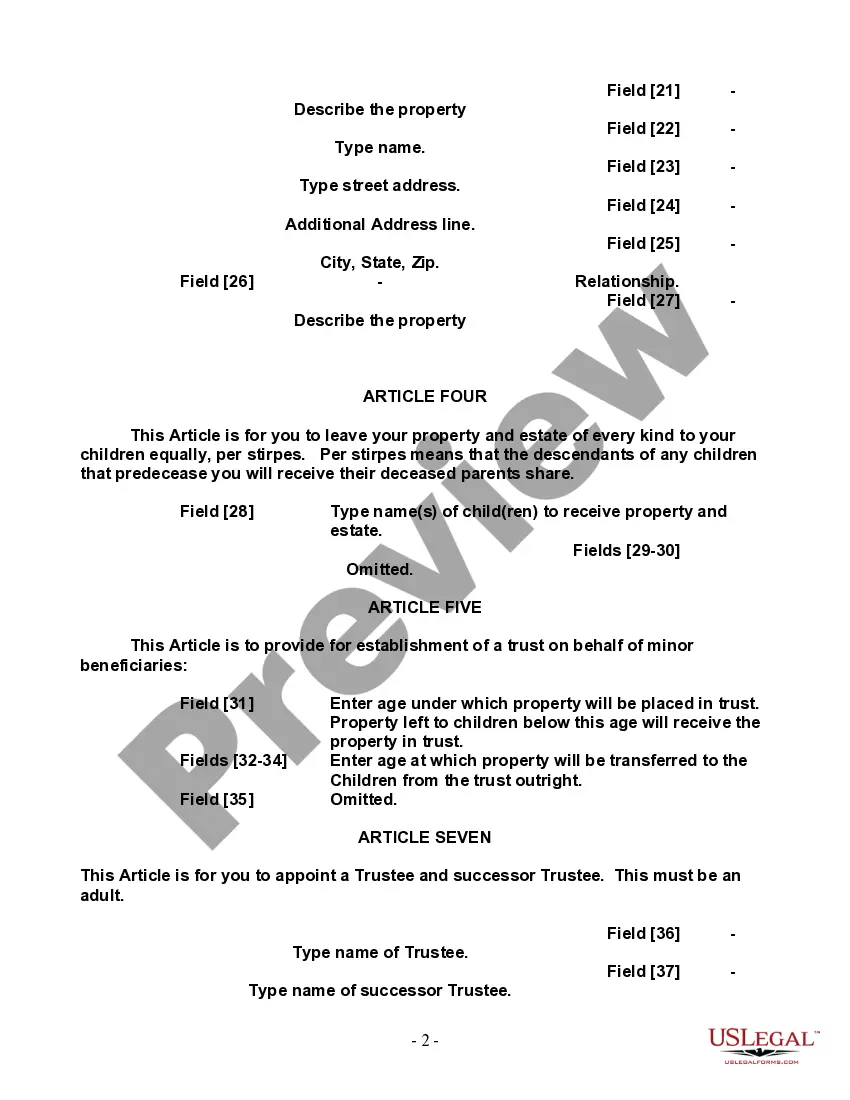
- Outline the distribution of your estate to your children, ensuring clarity for equal shares.
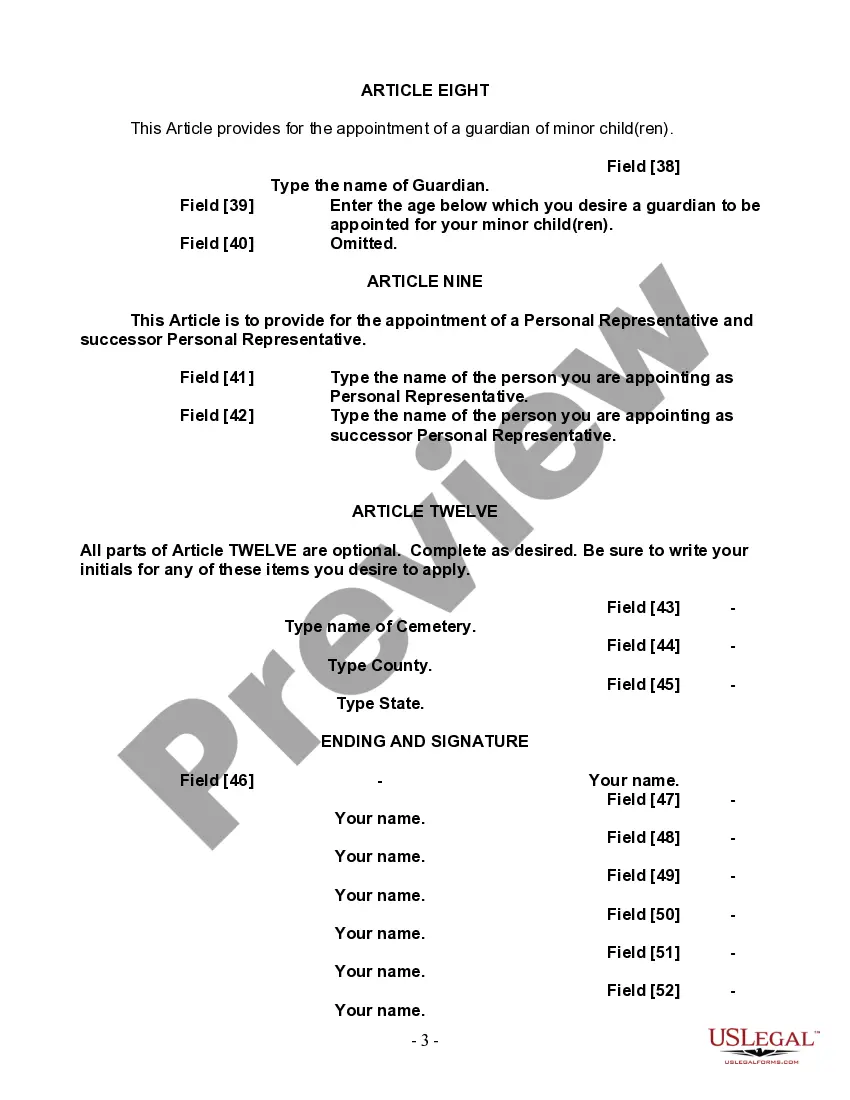
- Appoint a guardian for minor children and a trustee for their trust, including their names and any necessary details.
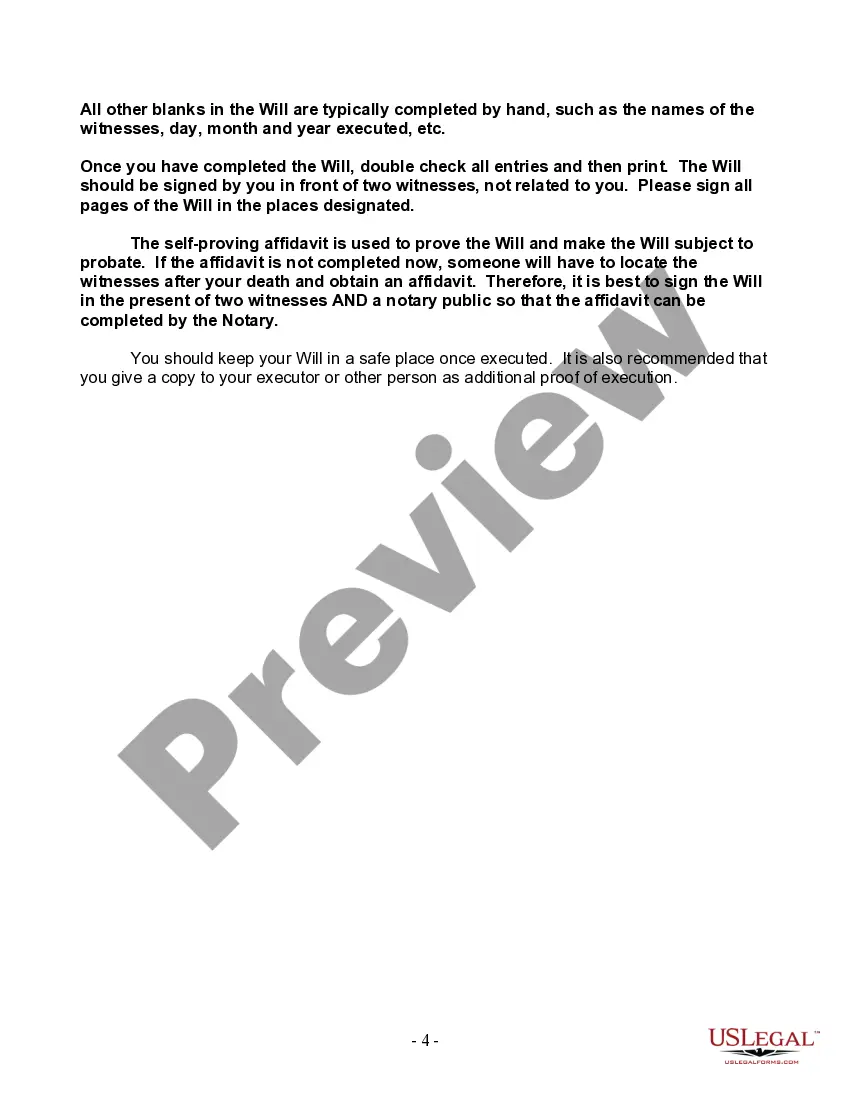
- After completing the form, sign it in the presence of two witnesses and a notary to ensure its validity.
Notarization requirements for this form
Yes, this form must be notarized to be legally valid. It is recommended that you sign the will in front of a notary public, especially if you are including a self-proving affidavit. US Legal Forms offers integrated online notarization services, ensuring a secure and convenient way to finalize your document at any time.
Get your form ready online
Our built-in tools help you complete, sign, share, and store your documents in one place.
Make edits, fill in missing information, and update formatting in US Legal Forms—just like you would in MS Word.
Download a copy, print it, send it by email, or mail it via USPS—whatever works best for your next step.
Sign and collect signatures with our SignNow integration. Send to multiple recipients, set reminders, and more. Go Premium to unlock E-Sign.
If this form requires notarization, complete it online through a secure video call—no need to meet a notary in person or wait for an appointment.
We protect your documents and personal data by following strict security and privacy standards.

Make edits, fill in missing information, and update formatting in US Legal Forms—just like you would in MS Word.

Download a copy, print it, send it by email, or mail it via USPS—whatever works best for your next step.

Sign and collect signatures with our SignNow integration. Send to multiple recipients, set reminders, and more. Go Premium to unlock E-Sign.

If this form requires notarization, complete it online through a secure video call—no need to meet a notary in person or wait for an appointment.

We protect your documents and personal data by following strict security and privacy standards.
Avoid these common issues
- Failing to sign the will in front of the required witnesses.
- Not specifying all beneficiaries, especially minor children.
- Leaving out critical details about specific bequests.
- Neglecting to include a self-proving affidavit when applicable.
- Not keeping a copy of the signed will in a safe place, or failing to inform the executor of its location.
Why complete this form online
- Convenience of completing the form from your own computer.
- Editability allows you to make changes easily before finalizing.
- Access to licensed attorneysâ expertise in drafting the template.
- Immediate availability for download and printing for signing.
Quick recap
- The Last Will and Testament for a Single Person with Adult and Minor Children is essential for clear asset distribution and guardian designation.
- It's necessary to follow legal signing requirements to ensure the will remains valid.
- Using a digital form facilitates ease of editing and access to legal advice.
- Be careful to avoid common mistakes when filling out the form to ensure its effectiveness.
Looking for another form?
Form popularity
FAQ
Bank accounts. Brokerage or investment accounts. Retirement accounts and pension plans. A life insurance policy.
If you've got a life partner but no marriage (or civil union or domestic partnership) certificate, estate planning is a must. Without it, neither of you will inherit from each otherand neither of you will have a say in the other's end-of-life medical care.
You can make your own will in Kentucky, using Nolo's Quicken WillMaker & Trust. However, you may want to consult a lawyer in some situations. For example, if you think that your will might be contested or if you want to disinherit your spouse, you should talk with an attorney.
Most single people should have a will. A will can help you determine who will get your property (including your home, business, pets, and digital assets), name guardians for your children, and name an executor. A will also puts your wishes in writing so there's no confusion about your intentions.
Contrary to popular belief, you do not need to have an attorney draft a will for you. Anyone can write this document on their own, and as long as it meets all of the legal requirements of the state, courts will recognize one you wrote yourself.
Drafting the will yourself is less costly and may put you out about $150 or less. Depending on your situation, expect to pay anywhere between $300 and $1,000 to hire a lawyer for your will. While do-it-yourself will kits may save you time and money, writing your will with a lawyer ensures it will be error-free.
Include personal identifying information. Include a statement about your age and mental status. Designate an executor. Decide who will take care of your children. Choose your beneficiaries. List your funeral details. Sign and date your Last Will and Testament.
Step 1 - Names of Testator: Step 2 - Add Relatives: Step 3 - Add Children: Step 4 - Burial and Funeral Arrangements: Step 5 - Debts and Expenses: Step 6 - Outline Your Property: Step 7 - Pet Care: Step 8 - Appointment Of Executor or Trustee:
Contrary to popular belief, you do not need to have an attorney draft a will for you. Anyone can write this document on their own, and as long as it meets all of the legal requirements of the state, courts will recognize one you wrote yourself.