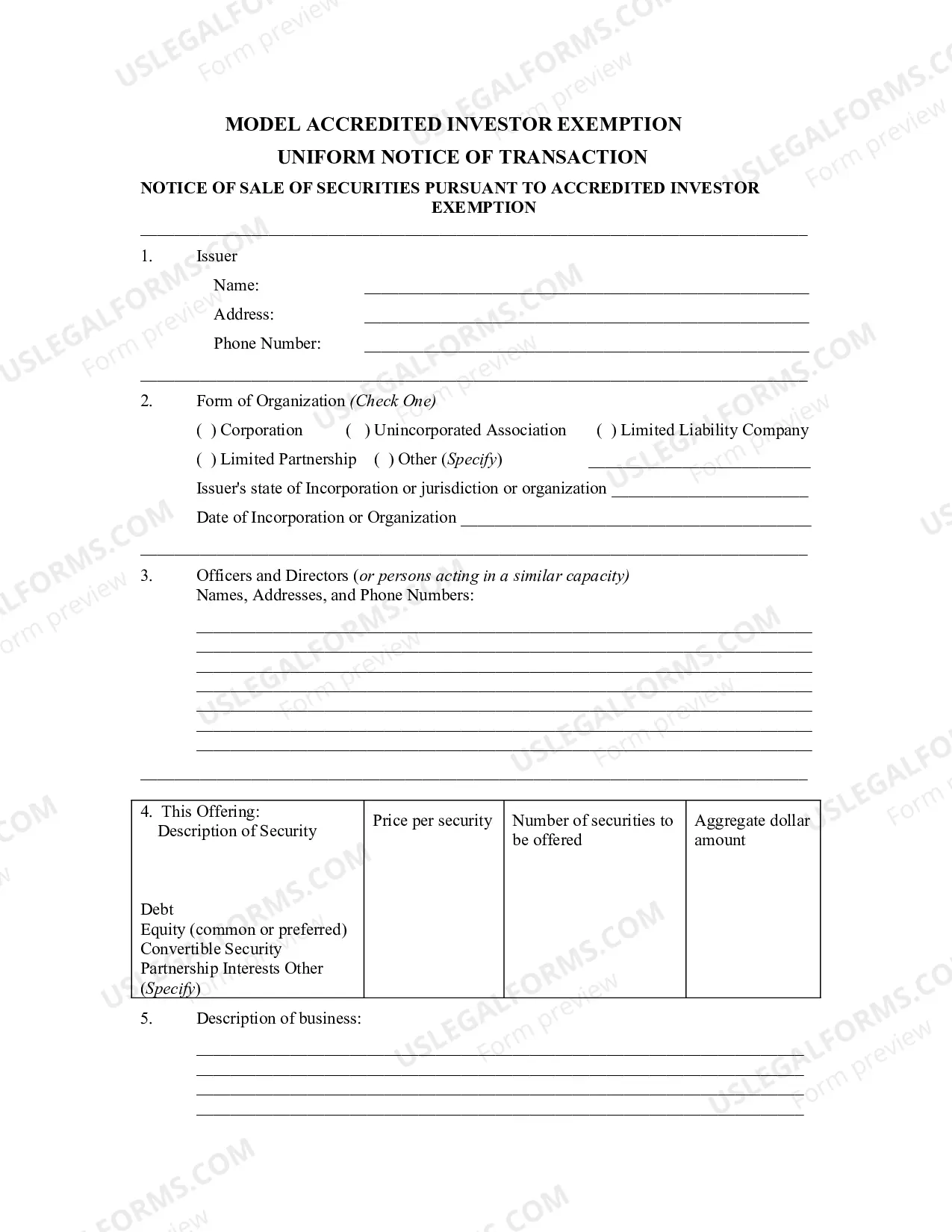
Kentucky Notice to Owner - Corporatation or LLC
Overview of this form
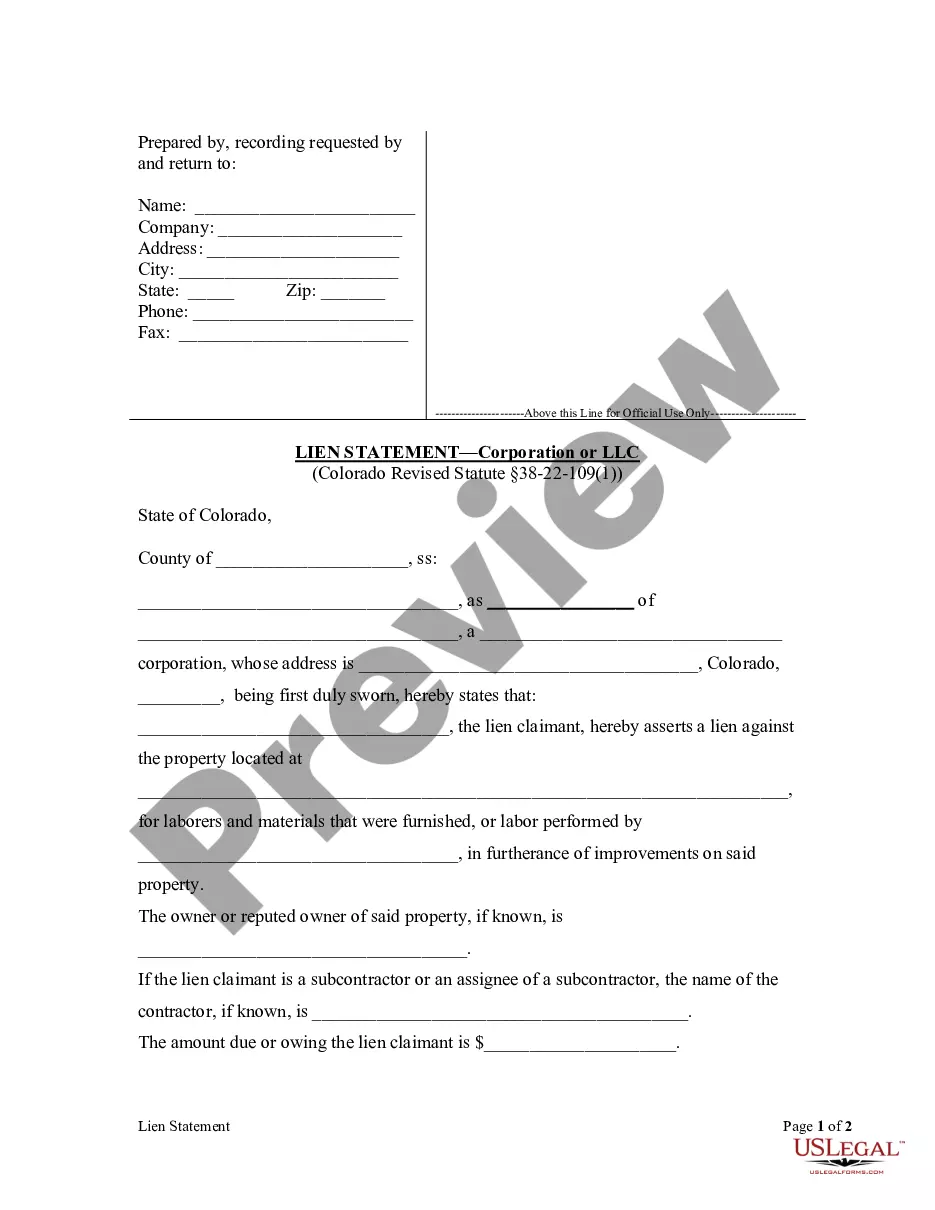
The Notice to Owner - Corporation or LLC is a legal document designed to inform a property owner about a lien claim made by a corporation or limited liability company (LLC). This notice is essential for lien claimants who have not contracted directly with the property owner, allowing them to protect their rights to a lien on the property. Unlike other notices, this form specifically addresses the requirements for corporate or LLC claimants under Kentucky law.
Key components of this form
- Identification of the lien claimant and their representative
- Property description where labor or materials were provided
- Statement of the total value of the work performed or materials supplied
- Confirmation that the claimant did not contract directly with the property owner
- Date of last labor or materials provided
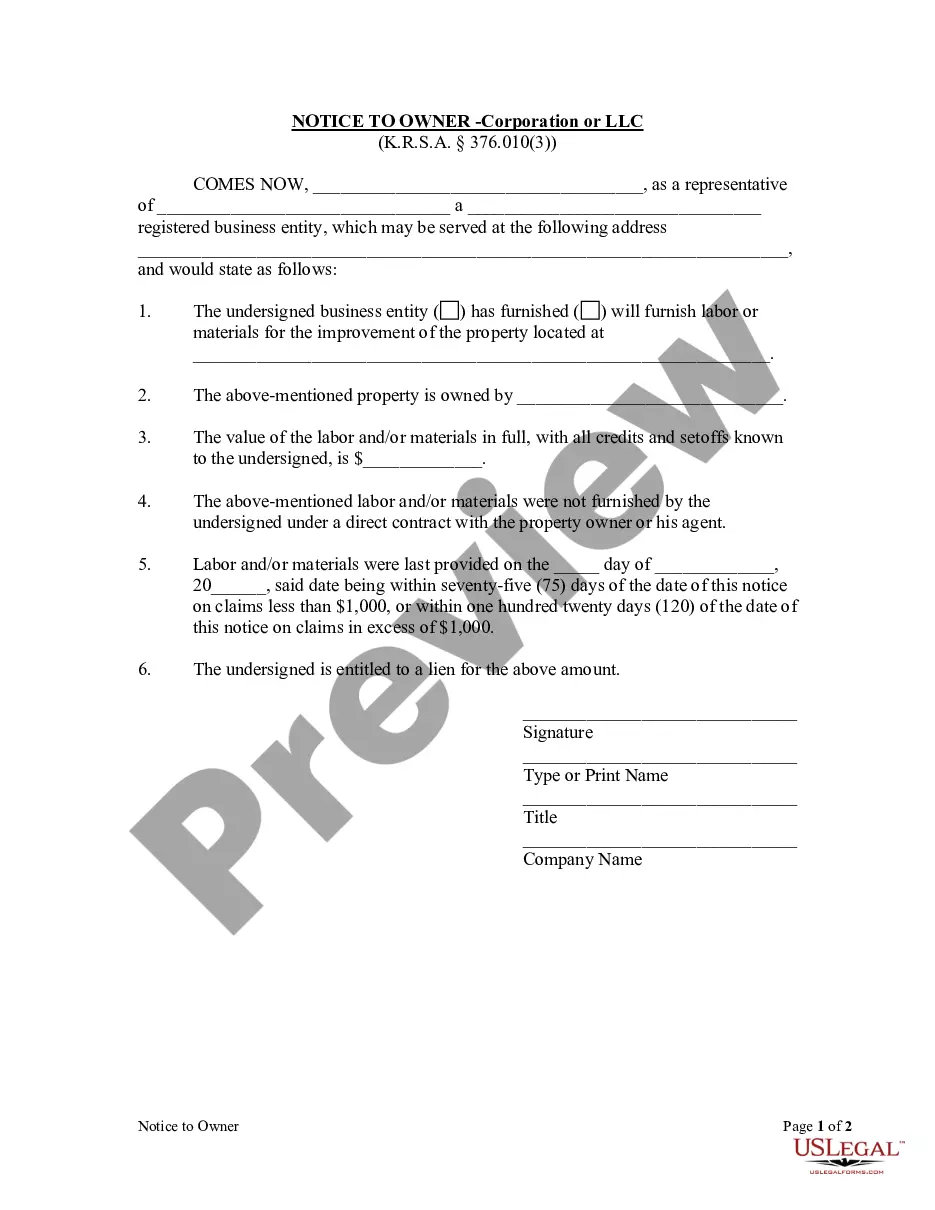
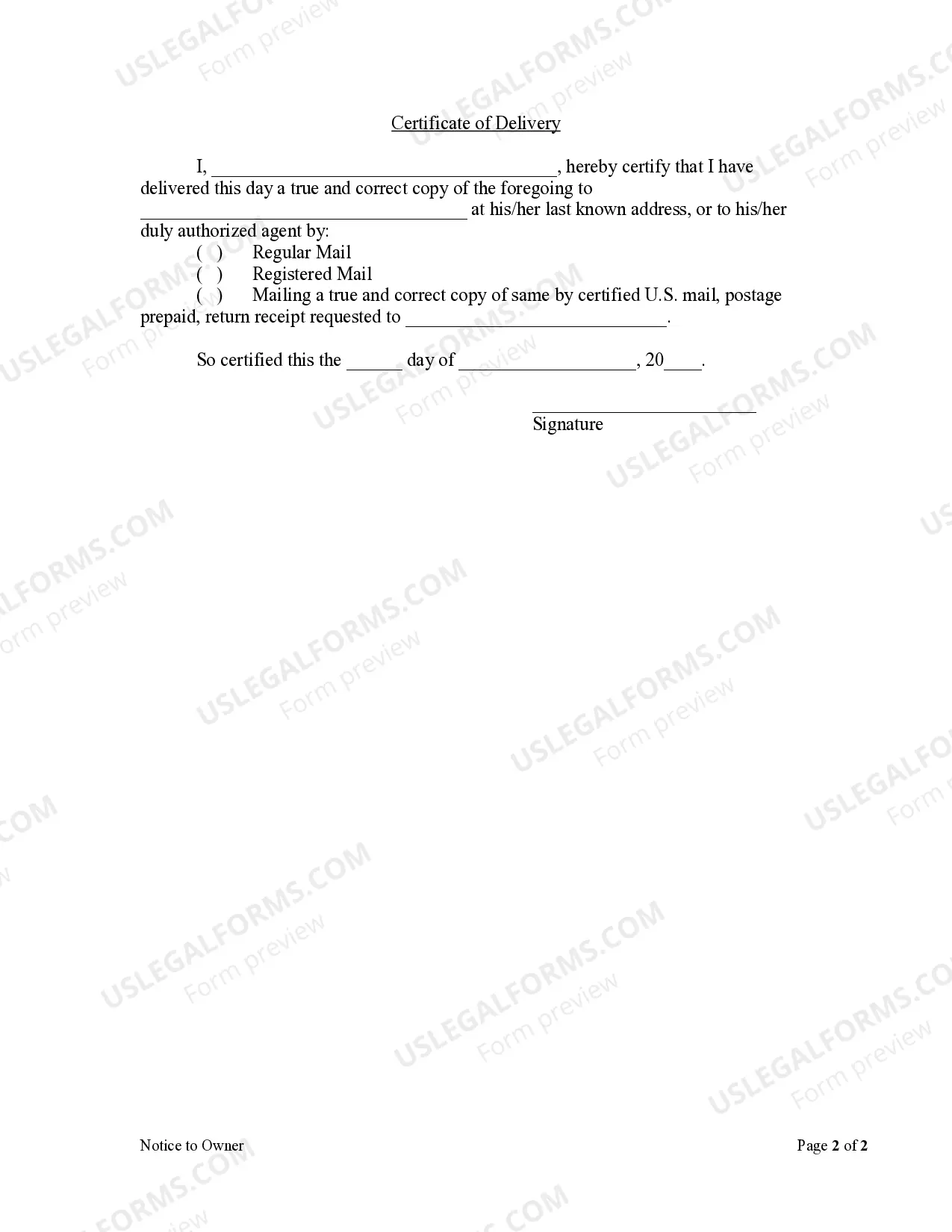
- Signature of the claimant and delivery certification
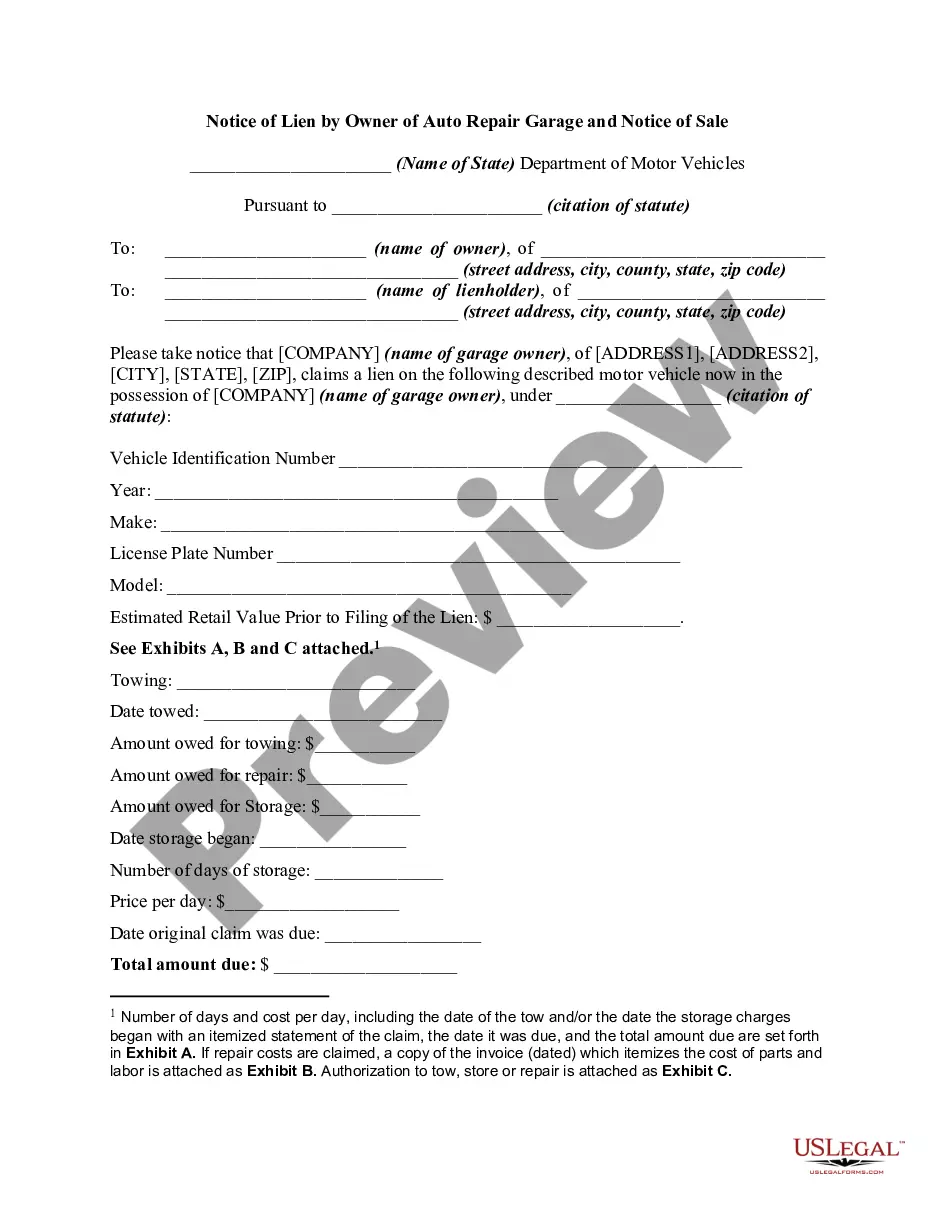
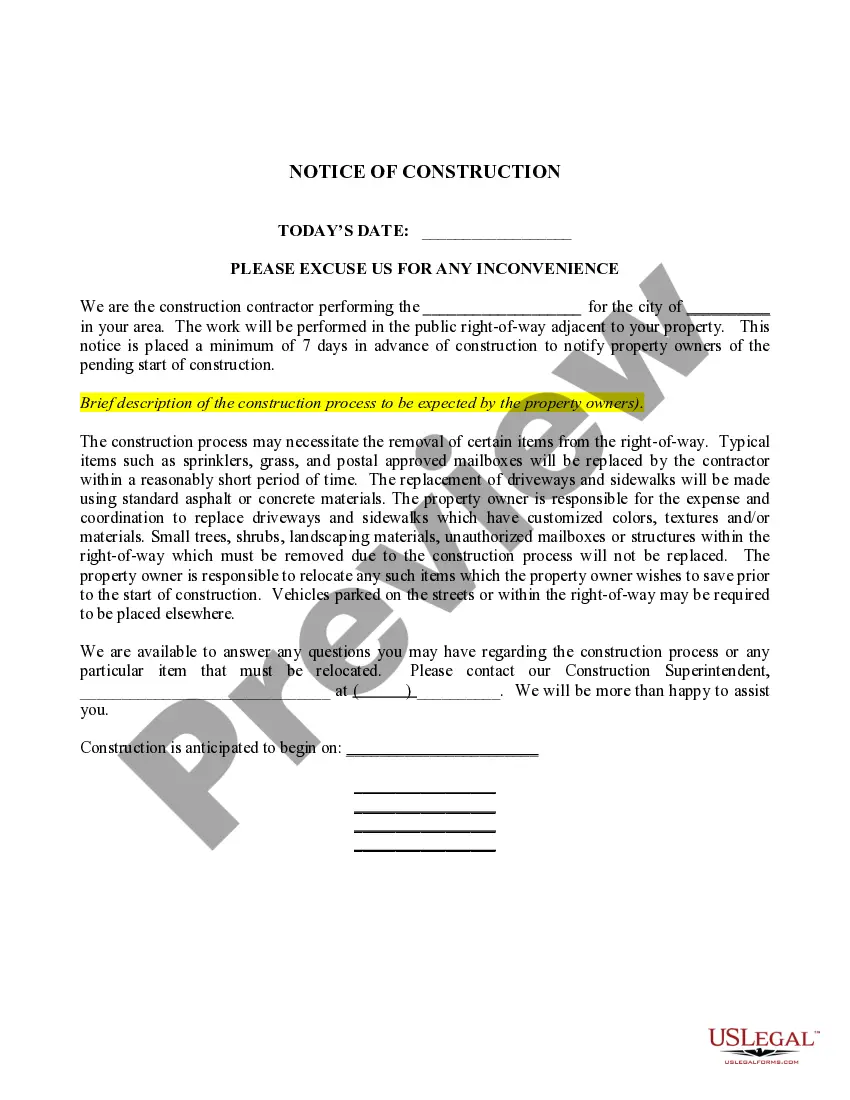
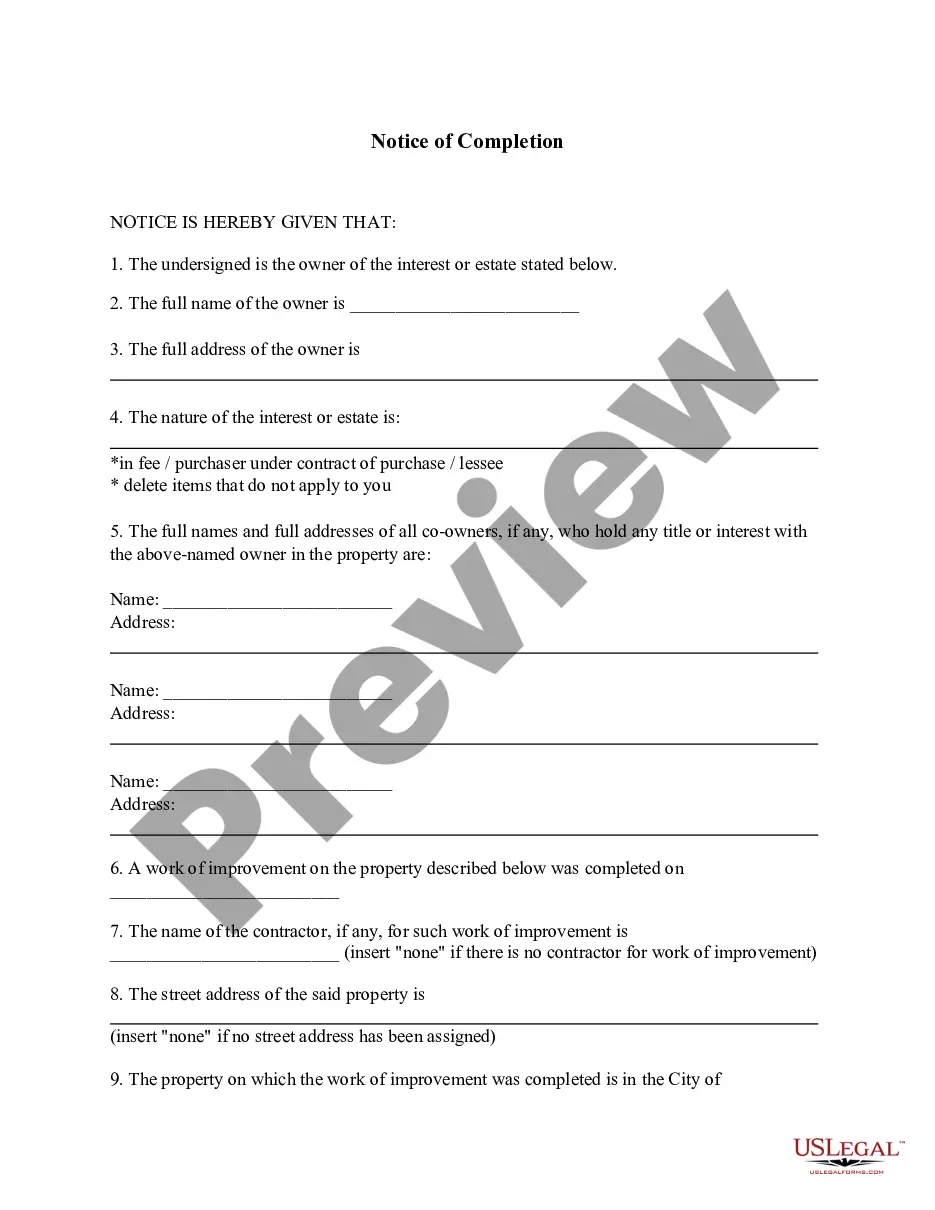
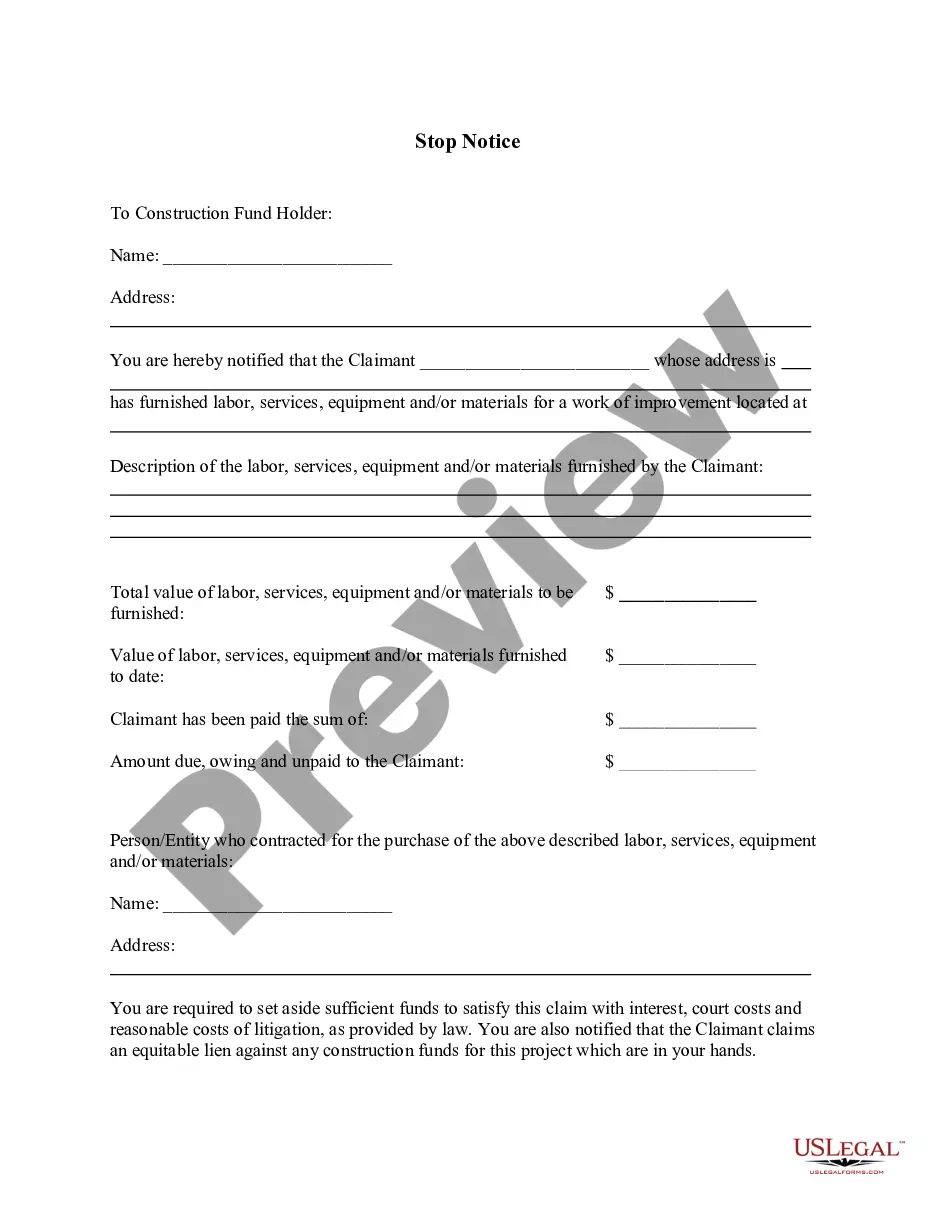
When to use this form
This form is needed when a corporation or LLC has supplied labor or materials for property improvement but did not have a direct contract with the property owner. It should be used before pursuing a lien against the property to ensure that the property owner is notified within the specified time frames based on the claim amount.
Intended users of this form
This form is intended for:
- Corporations and LLCs providing labor or materials to property owners
- Construction companies working on projects without a direct agreement
- Suppliers of materials who may need to file a lien for unpaid services
Completing this form step by step
- Identify the lien claimant and enter their details, including the corporation name and representative.
- Provide a detailed description of the property where the labor or materials were provided.
- Enter the total value of the labor and/or materials supplied.
- State the last date when the labor or materials were provided.
- Include appropriate signatures and ensure the notice is delivered to the property owner or their authorized agent.
Notarization guidance
In most cases, this form does not require notarization. However, some jurisdictions or signing circumstances might. US Legal Forms offers online notarization powered by Notarize, accessible 24/7 for a quick, remote process.
Get your form ready online
Our built-in tools help you complete, sign, share, and store your documents in one place.
Make edits, fill in missing information, and update formatting in US Legal Forms—just like you would in MS Word.
Download a copy, print it, send it by email, or mail it via USPS—whatever works best for your next step.
Sign and collect signatures with our SignNow integration. Send to multiple recipients, set reminders, and more. Go Premium to unlock E-Sign.
If this form requires notarization, complete it online through a secure video call—no need to meet a notary in person or wait for an appointment.
We protect your documents and personal data by following strict security and privacy standards.

Make edits, fill in missing information, and update formatting in US Legal Forms—just like you would in MS Word.

Download a copy, print it, send it by email, or mail it via USPS—whatever works best for your next step.

Sign and collect signatures with our SignNow integration. Send to multiple recipients, set reminders, and more. Go Premium to unlock E-Sign.

If this form requires notarization, complete it online through a secure video call—no need to meet a notary in person or wait for an appointment.

We protect your documents and personal data by following strict security and privacy standards.
Common mistakes
- Failing to send the notice within the specified timeframes (75 days for claims under $1,000 and 120 days for claims over $1,000).
- Incorrectly identifying the property or providing insufficient details.
- Not signing the document or missing the signature of an appropriate representative.
Benefits of using this form online
- Convenient access to downloadable templates that can be completed at your own pace.
- Editability allows for customization to fit specific situations and needs.
- Reliable forms drafted by licensed attorneys ensure that you meet legal requirements.
Summary of main points
- The Notice to Owner - Corporation or LLC is crucial for protecting lien rights.
- Timely notification to property owners is essential for valid claims.
- Ensure all information provided on the form is accurate and complete.
Looking for another form?
Form popularity
FAQ
The LLET is a tax on the Kentucky gross receipts or gross profits (i.e., gross receipts less cost of goods sold, as that term is statutorily defined) from the sale of tangible property of each non-exempt corporation and limited liability tax pass-through entity (LLPTE), such as a limited liability company (LLC),
Name Your Kentucky LLC. Choose a Registered Agent. File the Articles of Organization. Create an Operating Agreement. Get an EIN.
Kentucky does not have a statewide business license that applies to all businesses, but certain types of businesses are required to have a special license or permit to legally operate their business. In some cases, more than one license may be required.
In general, a company can do business in a state if it engages in one or more of these types of business activities: Having a bank account in the state. Selling in the state through a distributor, an agent, or a manufacturer's representative.Transacting business or holding meetings in the state.
According to KRS 141.010(25), doing business in Kentucky includes but is not limited to: Being organized under the laws of Kentucky. Having a commercial domicile in Kentucky. Owning or leasing property in Kentucky.
Choose a corporate structure. Incorporating means starting a corporation. Check Name Availability. Appoint a Registered Agent. File Kentucky Articles of Incorporation. Establish Bylaws & Corporate Records. Appoint Initial Directors. Hold Organizational Meeting. Issue Stock Certificates.
Can I get a Kentucky account number for a client? 200bThe best way to access company account numbers is via Kentucky One Stop Business Portal. Another way would be if the interested party is listed on form 20A100 (Power of Attorney/Declaration of Representative) on file with the Department of Revenue.
The tax is based on a business's annual gross receipts. For businesses with gross receipts less than $3 million, there is a minimum LLET of $175. For businesses with $3 million or more in gross receipts, the LLET is the lesser of 9.5 ¢ per $100 of gross receipts or 75 A¢ per $100 of gross receipts.