Kansas Letter from Tenant to Landlord containing Notice of termination for landlord's noncompliance with possibility to cure
What this document covers
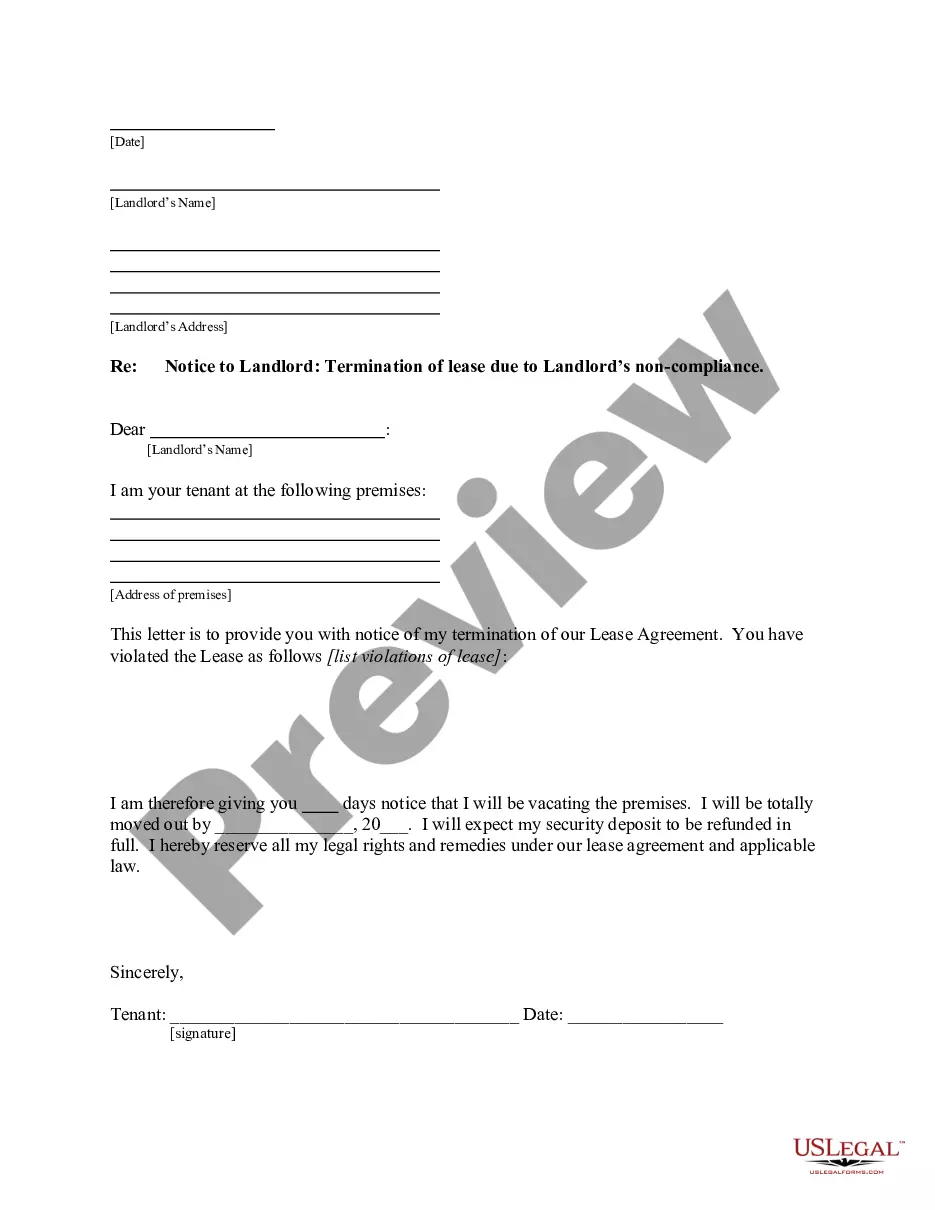
This Letter from Tenant to Landlord containing Notice of Termination for Landlord's Noncompliance with Possibility to Cure is a legal document that enables a tenant to formally notify their landlord of lease violations. This form informs the landlord that they are ending the lease due to their failure to comply with the lease terms, while offering the landlord an opportunity to rectify the situation. It is essential for tenants wishing to protect their rights when a landlord fails to uphold their responsibilities.
Main sections of this form
- Contact information for both the tenant and landlord.
- Clear statement of the lease violations committed by the landlord.
- Notice of the tenant's intention to vacate the premises.
- Opportunity for the landlord to cure the violation, if possible.
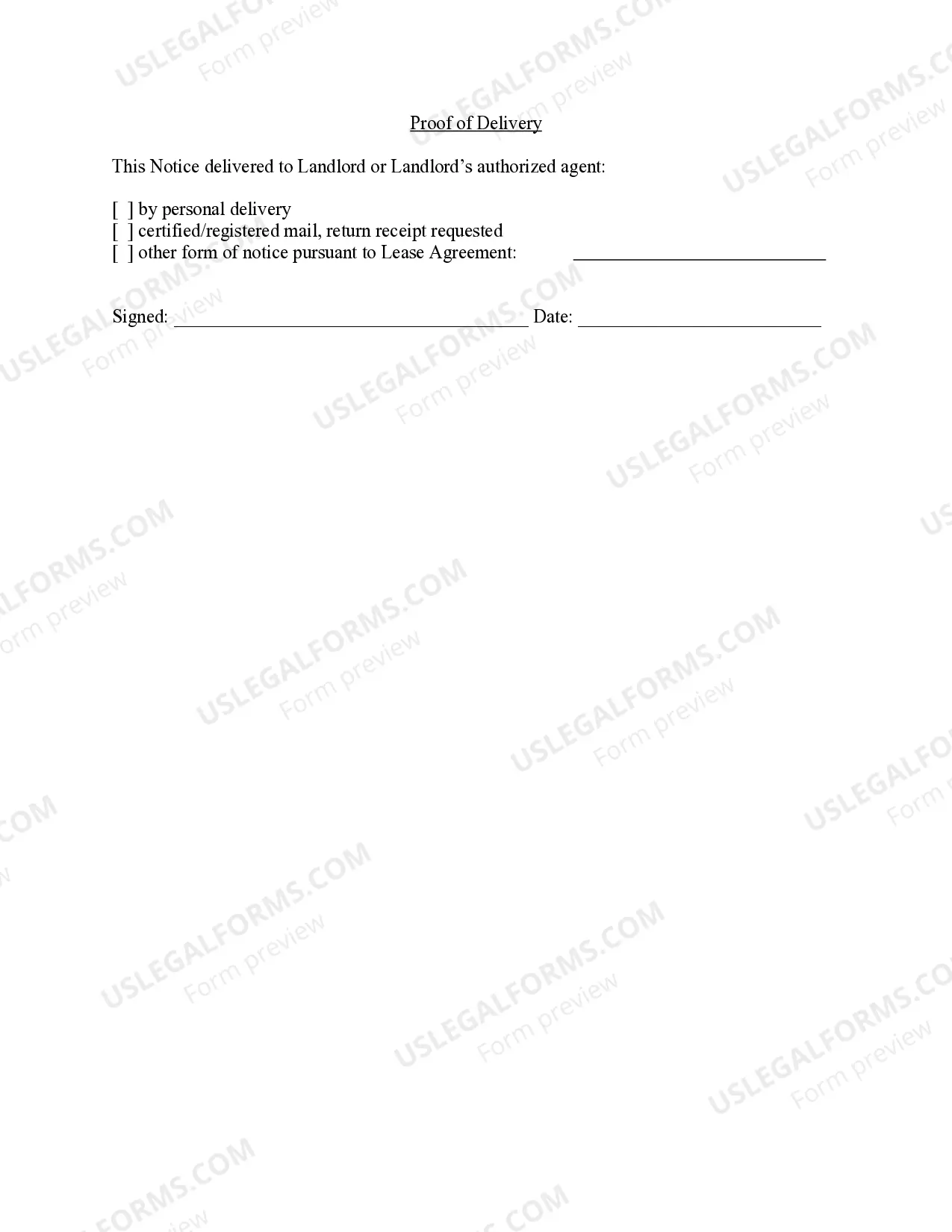
- Signature line for the tenant and date for delivery proof.



When to use this document
This form should be used when a tenant identifies specific breaches of the lease agreement by their landlord, such as failure to provide necessary repairs or maintain safe living conditions. It is an important step for tenants who wish to vacate the property while ensuring their legal rights are maintained, especially in scenarios where the landlord has not adhered to the terms promise in the lease.
Intended users of this form
- Tenants experiencing issues with their landlord regarding lease compliance.
- Individuals who wish to formally document notice to their landlord of their intent to terminate the lease.
- Anyone seeking to protect their legal rights when facing lease violations by a landlord.
How to complete this form
- Identify the parties involved by providing the full names and addresses of both the tenant and landlord.
- Clearly state the specific lease violations committed by the landlord.
- Indicate the date of the notice and your official signature as the tenant.
- Specify the final date of occupancy and indicate any next steps.
- Deliver the notice to the landlord or their authorized agent using a method that provides proof of delivery.
Does this form need to be notarized?
This form does not typically require notarization unless specified by local law. It is essential to check the regulations specific to your state to ensure compliance with any additional requirements.
Get your form ready online
Our built-in tools help you complete, sign, share, and store your documents in one place.
Make edits, fill in missing information, and update formatting in US Legal Forms—just like you would in MS Word.
Download a copy, print it, send it by email, or mail it via USPS—whatever works best for your next step.
Sign and collect signatures with our SignNow integration. Send to multiple recipients, set reminders, and more. Go Premium to unlock E-Sign.
If this form requires notarization, complete it online through a secure video call—no need to meet a notary in person or wait for an appointment.
We protect your documents and personal data by following strict security and privacy standards.

Make edits, fill in missing information, and update formatting in US Legal Forms—just like you would in MS Word.

Download a copy, print it, send it by email, or mail it via USPS—whatever works best for your next step.

Sign and collect signatures with our SignNow integration. Send to multiple recipients, set reminders, and more. Go Premium to unlock E-Sign.

If this form requires notarization, complete it online through a secure video call—no need to meet a notary in person or wait for an appointment.

We protect your documents and personal data by following strict security and privacy standards.
Common mistakes to avoid
- Failing to specify the lease violations clearly.
- Not providing adequate notice period required by state law.
- Delivering the notice without proof of delivery documentation.
Why complete this form online
- Convenience of instant access to the form at any time.
- Editability allows for customization based on individual circumstances.
- Reliability from professionally drafted legal templates by licensed attorneys.
Legal use & context
- This notice legally informs the landlord of their noncompliance and the tenant's intent to terminate the lease.
- It plays a critical role in preserving the tenantâs legal rights should disputes arise later.
- Proper delivery and completion of this form is essential for its enforceability in court.
Key takeaways
- This form is crucial for tenants wanting to legally inform a landlord of a lease breach.
- A timely notice gives landlords a chance to remedy the situation.
- Ensure compliance with state-specific rules when completing the form.
Looking for another form?
Form popularity
FAQ
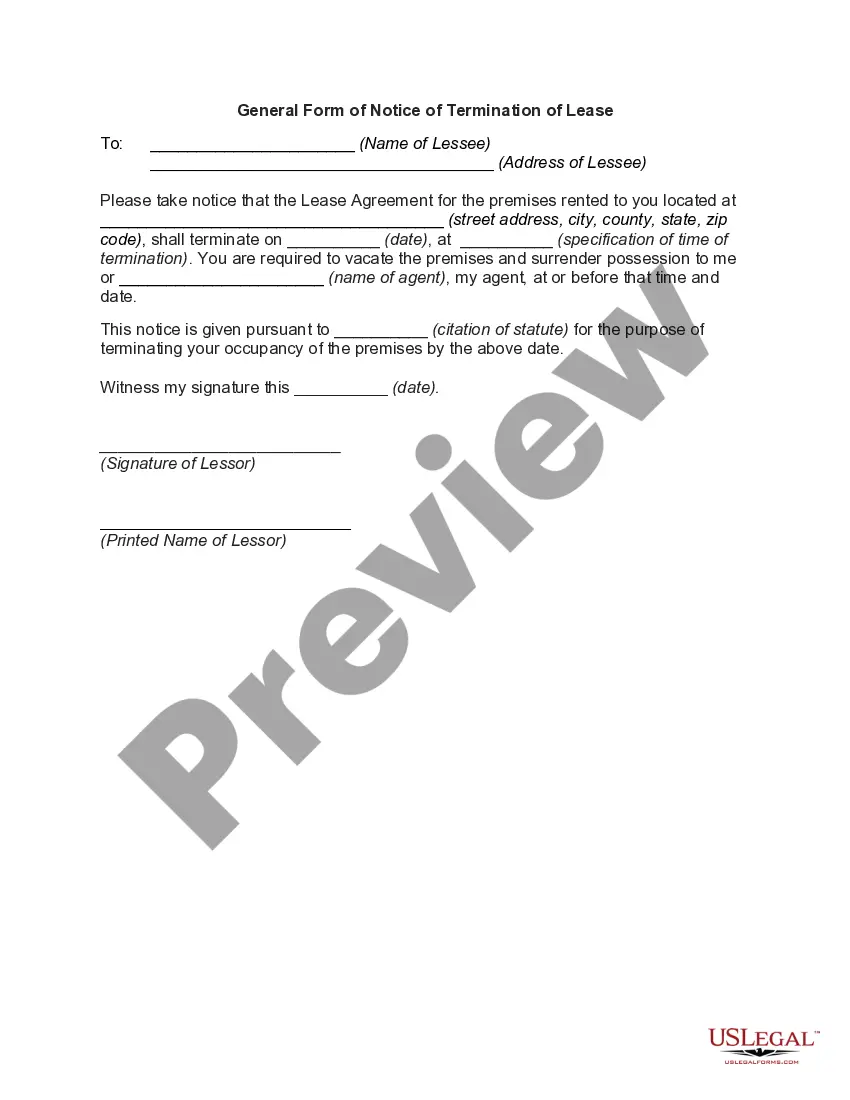
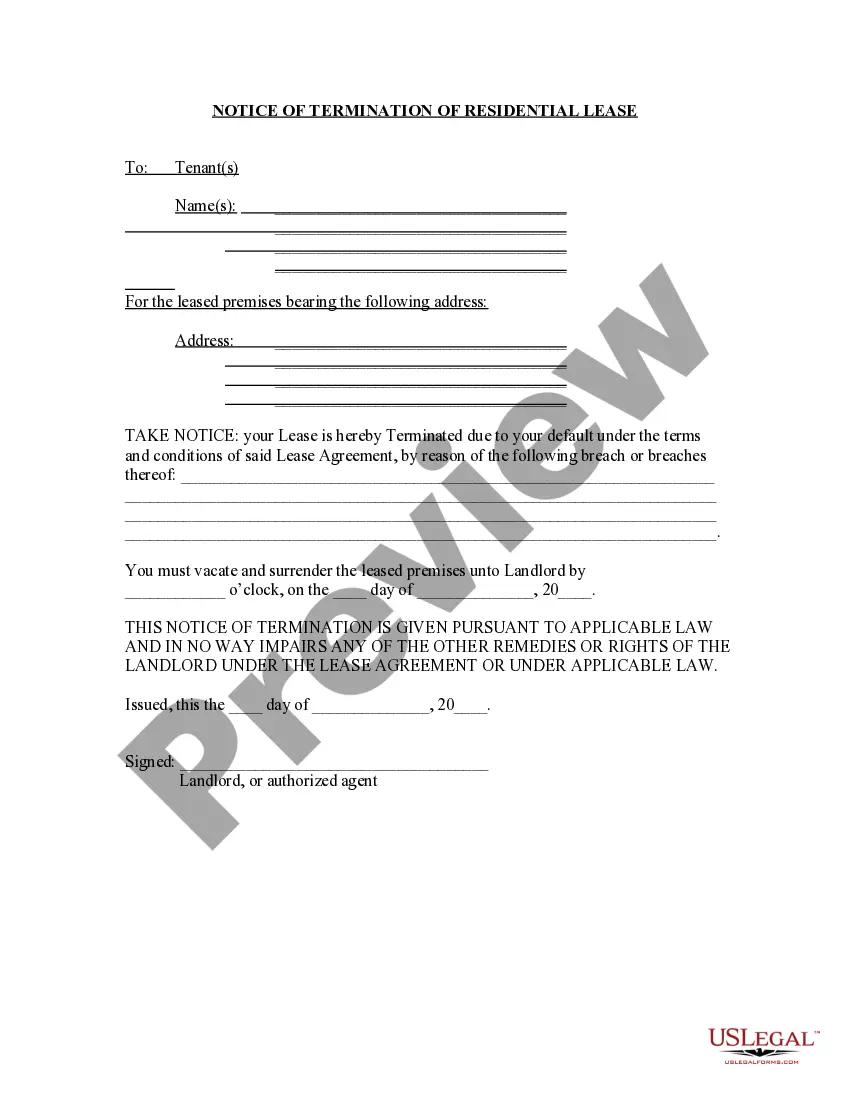
Addresses. Date. Tenant names. Status and date of the lease. Why the eviction notice is served (clear and concise explanation) Date tenant must vacate the property. Proof of service or delivery of notice.
Tell Them The Problem & Consequences. Explain the reason that you want the tenant to go. Offer Them a Way Out. Let the tenant know that you are willing to give them a lump sum of cash in agreement for leaving the property. The Release.
The date that the tenant warning letter was written. The name and the basic personal information of the tenant. The name of the landlord or the owner of the property. The reason why a tenant warning letter has been written.
Begin the letter with the date on which you mail or deliver the letter in person. Include your name, address and phone number, followed by the tenant's name and address. You can also insert a subject line that summarizes the reason for the letter to vacate. Start with a salutation, followed by your tenant's name.
A non compliance letter is basically a simple way of letting the client or the provider know that current level of service is unsatisfactory. There's really not one single person that can be blamed because it's usually the fault of both parties.
Addresses. Date. Tenant names. Status and date of the lease. Why the eviction notice is served (clear and concise explanation) Date tenant must vacate the property. Proof of service or delivery of notice.
Begin the letter with the date on which you mail or deliver the letter in person. Include your name, address and phone number, followed by the tenant's name and address. You can also insert a subject line that summarizes the reason for the letter to vacate. Start with a salutation, followed by your tenant's name.
File for eviction with your local courthouse. Gather evidence. Come to the court hearing to prove your case. Win a writ of possession and have the tenant removed by the sheriff.