Kansas Letter from Landlord to Tenant as Notice to remove unauthorized pets from premises
Understanding this form
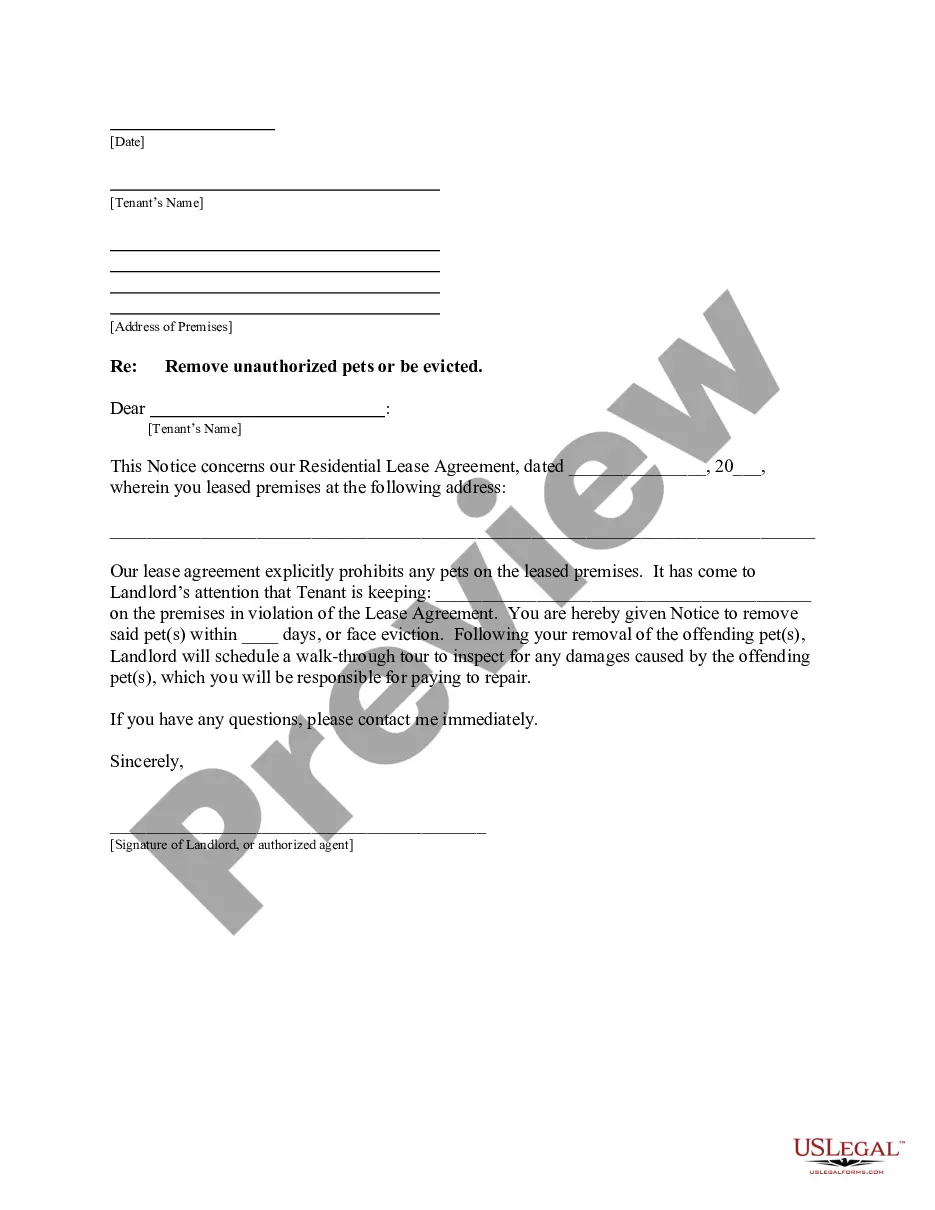
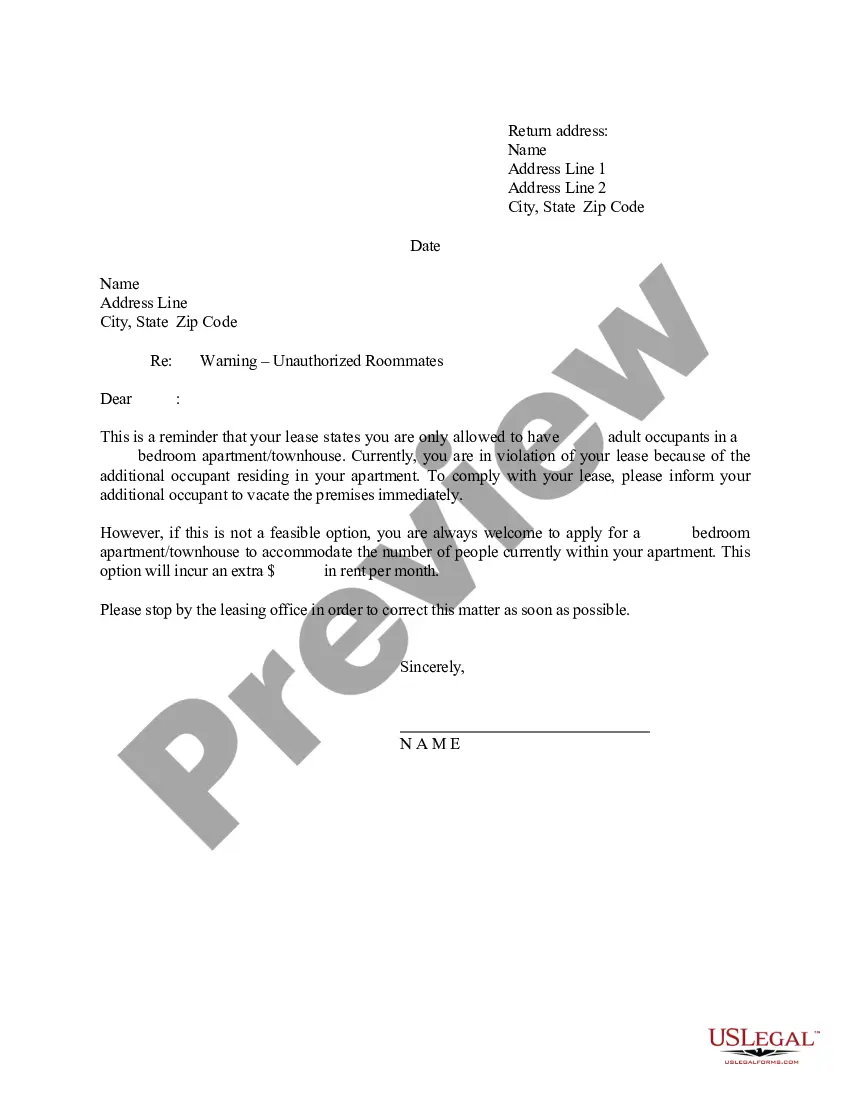
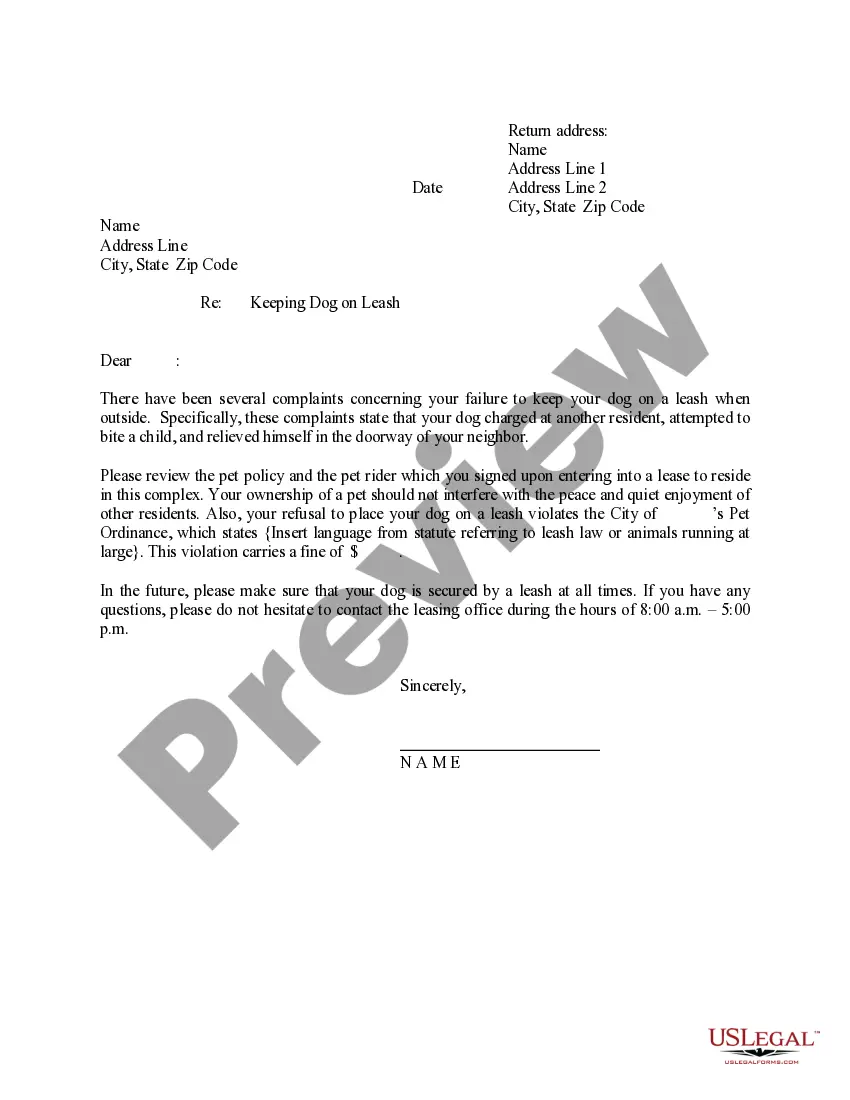
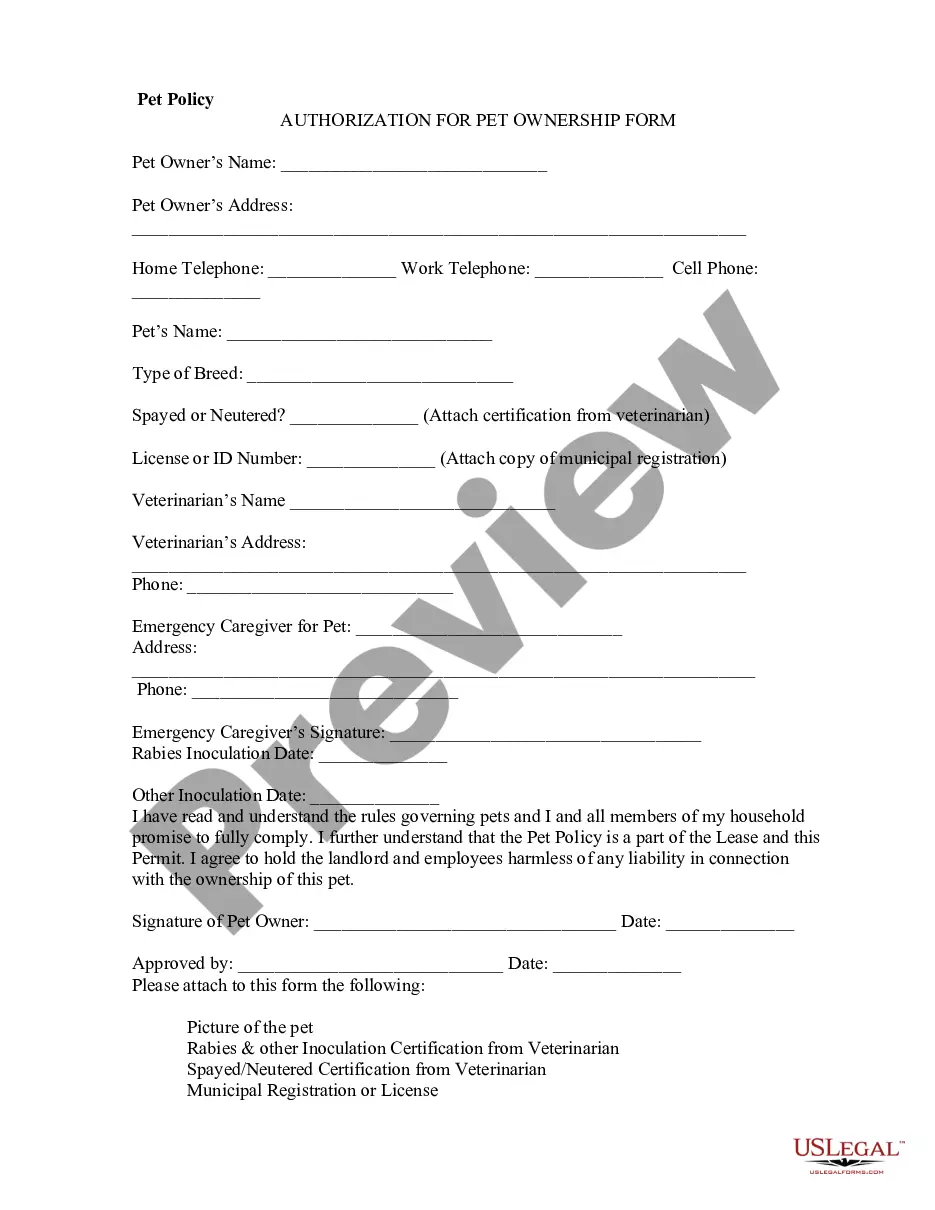
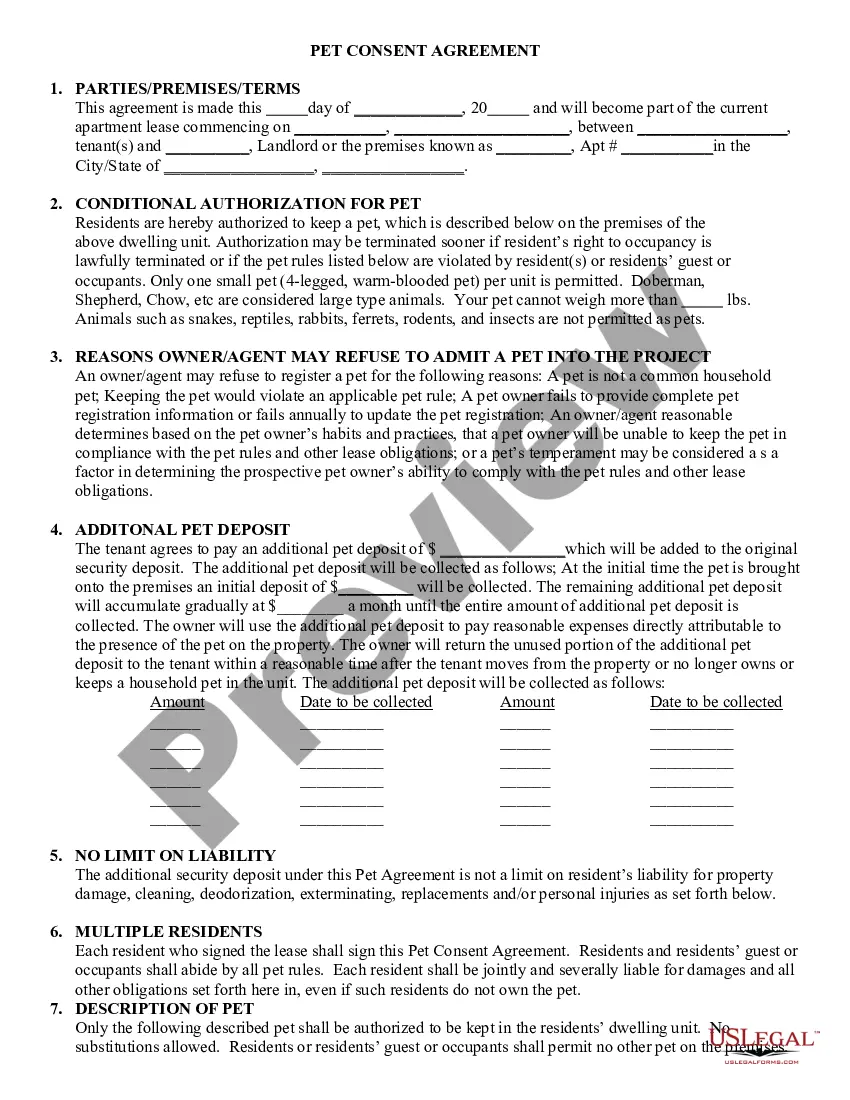
This form is a formal notice from a landlord to a tenant requiring the removal of unauthorized pets from the leased premises. It serves as a written communication detailing how the tenant has breached the Residential Lease Agreement by keeping pets when such actions are prohibited. This letter is crucial for landlords to maintain compliance with the lease terms and may serve as a basis for eviction or legal action if the tenant fails to comply.
Main sections of this form
- Date of the original lease agreement
- Tenant's name and address of the leased premises
- Specific mention of the unauthorized pets being kept
- Deadline for pet removal
- Possible consequences for non-compliance, including eviction
- Landlord's contact information for inquiries
When to use this form
This notice should be used when a landlord discovers that a tenant is keeping pets on the premises in violation of the lease agreement. It is necessary to formally inform the tenant of their breach and to request the removal of the unauthorized pets within a specified timeframe. This form helps protect the landlord's interests and provides a record of communication regarding the lease violation.
Who needs this form
- Landlords who have included a no-pets clause in their lease agreements
- Property management companies acting on behalf of landlords
- Residential property owners needing to address unauthorized pets
- Real estate professionals assisting landlords with lease enforcement
Steps to complete this form
- Enter the date and details of the original lease agreement.
- Fill in the tenant's name and the address of the leased premises.
- Specify the unauthorized pet(s) being kept in violation of the agreement.
- Indicate the number of days the tenant has to remove the pets.
- Sign the letter as the landlord or authorized agent.
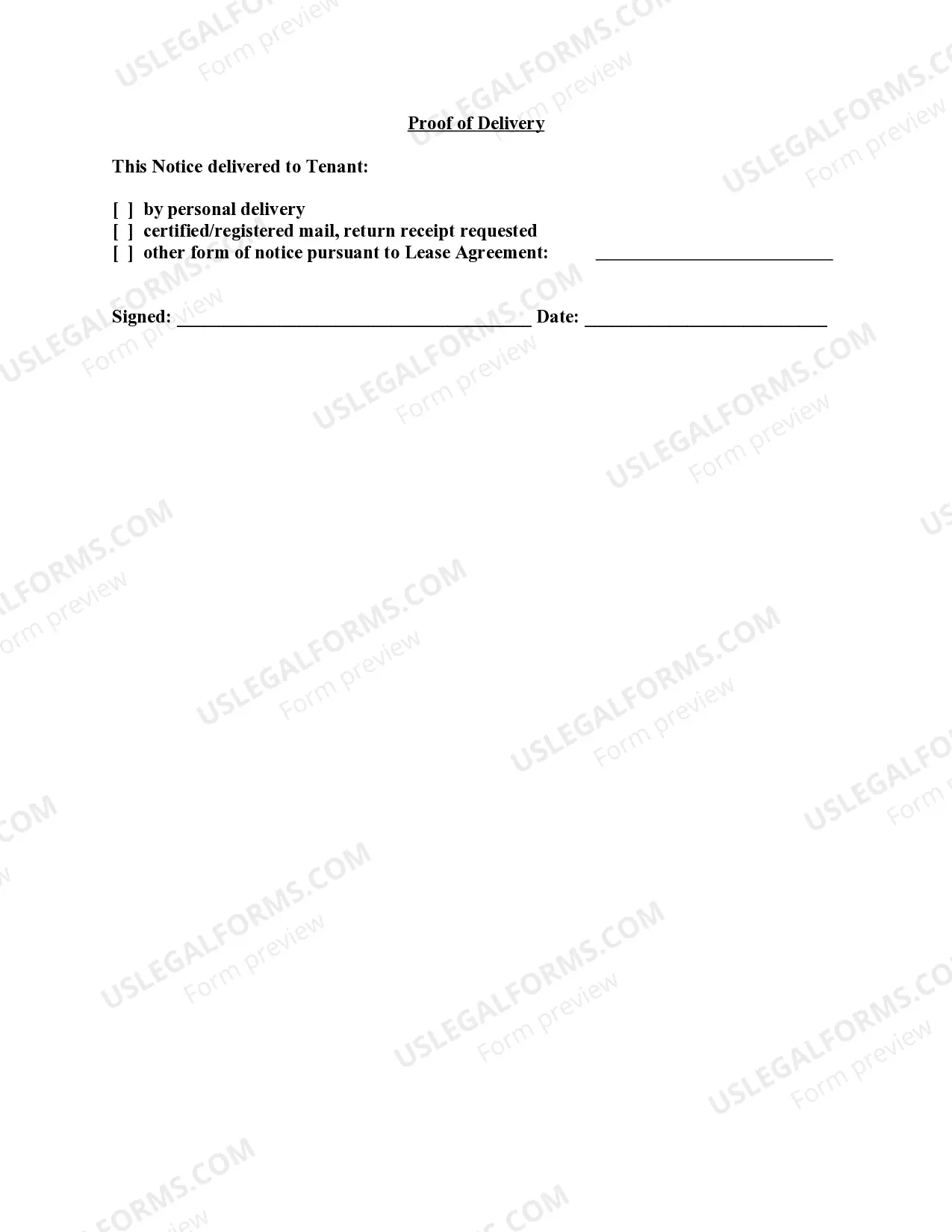
- Keep a copy for your records and consider providing proof of delivery.
Notarization requirements for this form
This form does not typically require notarization unless specified by local law. Always verify your state regulations to ensure compliance.
Get your form ready online
Our built-in tools help you complete, sign, share, and store your documents in one place.
Make edits, fill in missing information, and update formatting in US Legal Forms—just like you would in MS Word.
Download a copy, print it, send it by email, or mail it via USPS—whatever works best for your next step.
Sign and collect signatures with our SignNow integration. Send to multiple recipients, set reminders, and more. Go Premium to unlock E-Sign.
If this form requires notarization, complete it online through a secure video call—no need to meet a notary in person or wait for an appointment.
We protect your documents and personal data by following strict security and privacy standards.

Make edits, fill in missing information, and update formatting in US Legal Forms—just like you would in MS Word.

Download a copy, print it, send it by email, or mail it via USPS—whatever works best for your next step.

Sign and collect signatures with our SignNow integration. Send to multiple recipients, set reminders, and more. Go Premium to unlock E-Sign.

If this form requires notarization, complete it online through a secure video call—no need to meet a notary in person or wait for an appointment.

We protect your documents and personal data by following strict security and privacy standards.
Typical mistakes to avoid
- Failing to specify the type of pet(s) in the notice.
- Not providing a clear deadline for compliance.
- Omitting the landlord's contact information for questions.
- Not keeping a copy of the notice for records.
Advantages of online completion
- Immediate access to professionally drafted documents created by licensed attorneys.
- Convenient download and customization options.
- Time-saving process that eliminates the need for in-person legal consultations.
- Ability to make updates and modifications as needed easily.
Legal use & context
- This letter serves as a formal record of notification regarding lease violations.
- Ensures compliance with the lease agreement and provides grounds for eviction if necessary.
- Helps protect the landlord from potential legal disputes related to unauthorized pets.
Quick recap
- This form is essential for landlords to address unauthorized pets on their property.
- It outlines the consequences of non-compliance and the expectations for the tenant.
- Completing the form correctly can prevent future legal issues regarding the lease agreement.
Looking for another form?





Form popularity
FAQ
Step 1: Understand your state's eviction laws. Step 2: Have a valid reason for eviction. Step 3: Talk to your tenants. Step 4: Give a formal notice of eviction. Step 5: File your eviction with the courts. Step 6: Prepare for and attend the court hearing. Step 7: Evict the tenant. Step 8: Collect past-due rent.
A landlord cannot legally evict you without a court order, whether or not you have a lease.) How long does it take for a landlord to evict a tenant? A landlord can evict a tenant only by going through a formal eviction proceeding, which can take a few weeks from start to finish.
In the event that a tenant refuses to leave the premises after receiving written notice, a landlord may file an unlawful detainer. An unlawful detainer is a legal action that is used to quickly determine whether a tenant must vacate the premises.A court may also order the tenant to pay for a landlord's legal fees.