Kansas Warning to Residential Owner by Corporation or LLC
What is this form?
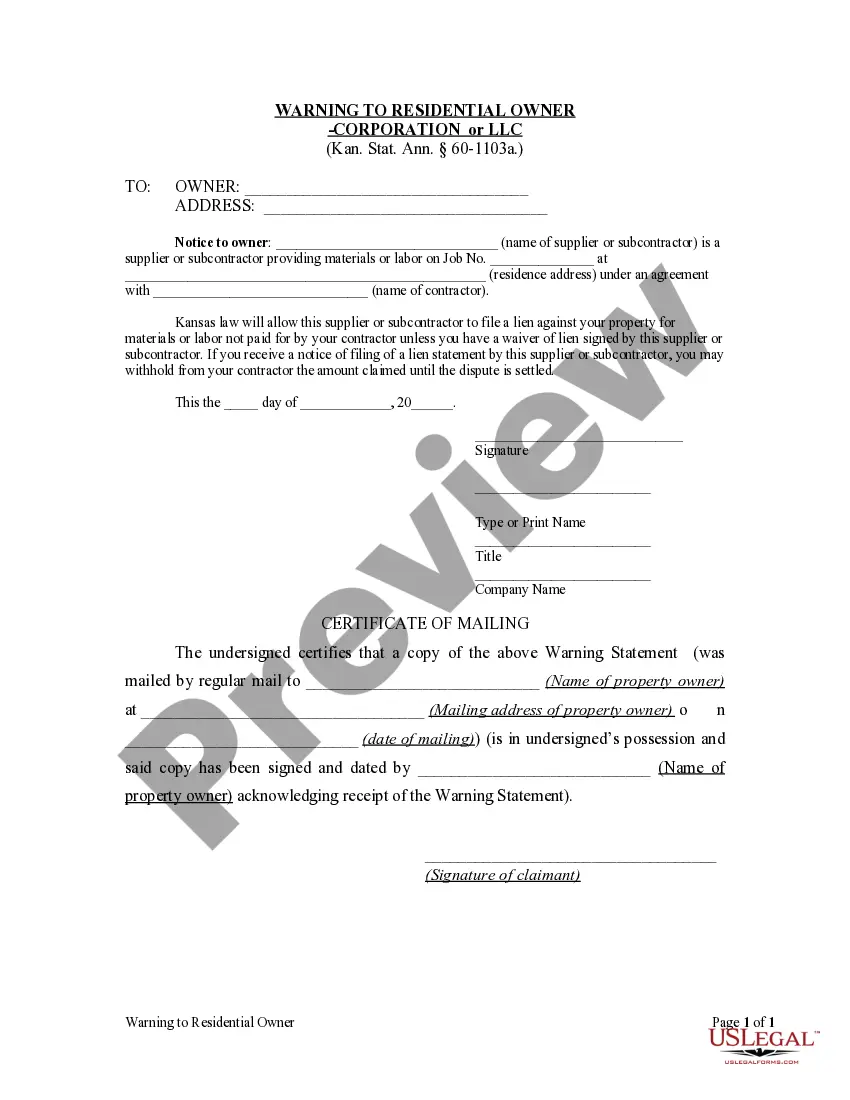
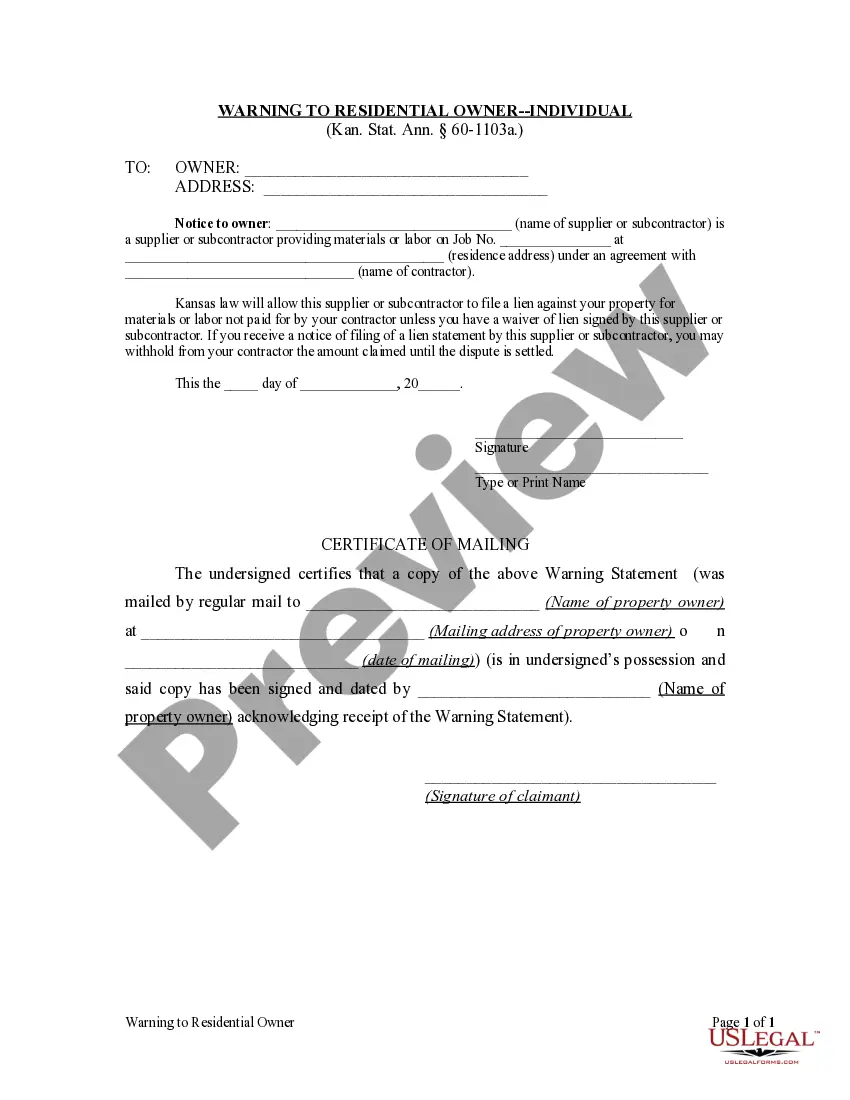
The Warning to Residential Owner by Corporation or LLC is a legal document required by Kansas law. This form notifies the residential property owner that a subcontractor or supplier has provided labor or materials for a specific job on their property. Its primary purpose is to inform the owner of their potential liability for unpaid services that could lead to a lien against their property, thereby protecting the rights of subcontractors and suppliers involved in home improvement projects.
Key parts of this document
- Owner's name and address: Identifies the residential property owner.
- Supplier or subcontractor name: States who is providing the materials or labor.
- Job number: Reference for the specific project being undertaken.
- Residence address: Location where the work is being performed.
- Contractor's name: Indicates the primary contractor overseeing the job.
- Signature and title: Required for legal acknowledgment of the warning.
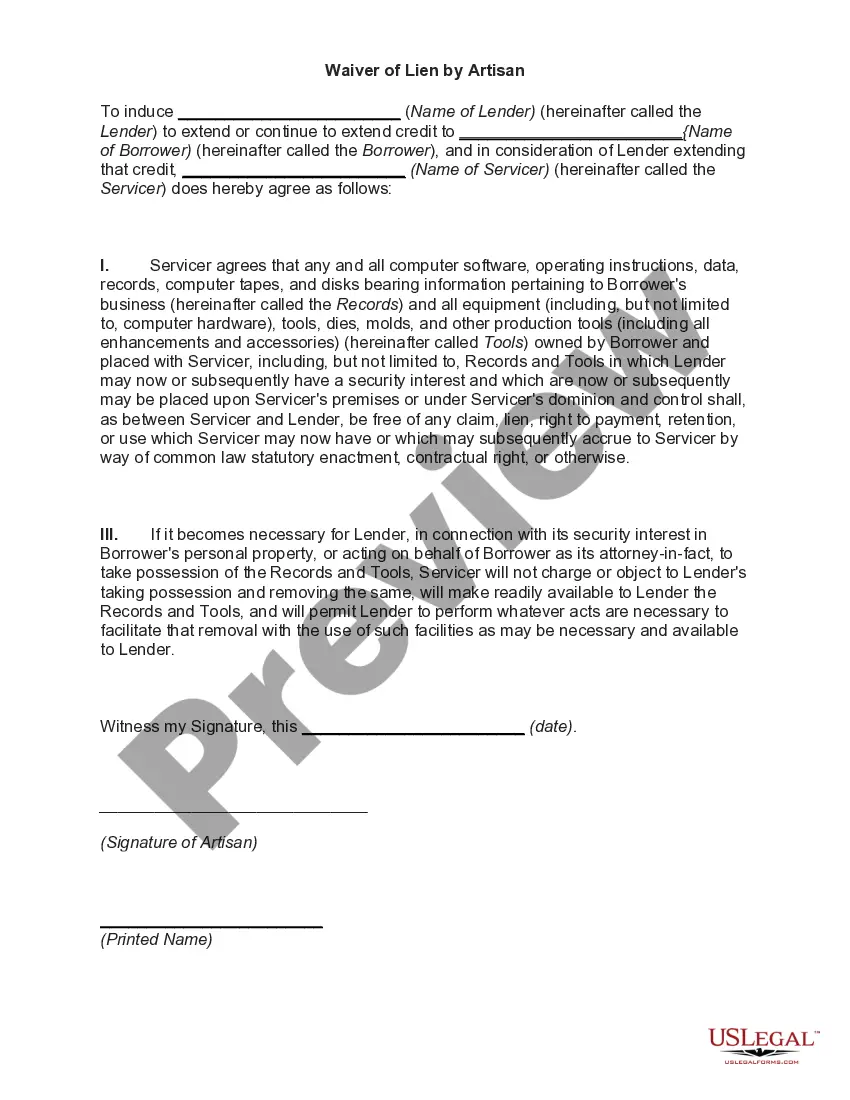
Common use cases
This form should be used whenever a subcontractor or supplier is working on a residential property in Kansas. If such a party is providing materials or labor and expects payment, this warning serves to inform the property owner about the implications of non-payment and the possibility of a lien placement against their property if they do not receive a lien waiver from the subcontractor.
Who needs this form
- Subcontractors and suppliers providing materials or labor on residential properties.
- Property owners who need to understand their potential liability regarding home improvement projects.
- Contractors managing projects that include multiple subcontractors.
Completing this form step by step
- Identify the property owner by filling in their name and address at the top of the form.
- Enter the name of the subcontractor or supplier providing labor or materials.
- Specify the job number corresponding to the project in question.
- Fill in the address of the residence where the work is being conducted.
- Provide the name of the main contractor associated with the project.
- Sign and date the form, including your title for record-keeping.
Does this document require notarization?
This form does not typically require notarization unless specified by local law. However, ensuring all parties retain a signed copy is advisable for documentation purposes.
Get your form ready online
Our built-in tools help you complete, sign, share, and store your documents in one place.
Make edits, fill in missing information, and update formatting in US Legal Forms—just like you would in MS Word.
Download a copy, print it, send it by email, or mail it via USPS—whatever works best for your next step.
Sign and collect signatures with our SignNow integration. Send to multiple recipients, set reminders, and more. Go Premium to unlock E-Sign.
If this form requires notarization, complete it online through a secure video call—no need to meet a notary in person or wait for an appointment.
We protect your documents and personal data by following strict security and privacy standards.

Make edits, fill in missing information, and update formatting in US Legal Forms—just like you would in MS Word.

Download a copy, print it, send it by email, or mail it via USPS—whatever works best for your next step.

Sign and collect signatures with our SignNow integration. Send to multiple recipients, set reminders, and more. Go Premium to unlock E-Sign.

If this form requires notarization, complete it online through a secure video call—no need to meet a notary in person or wait for an appointment.

We protect your documents and personal data by following strict security and privacy standards.
Common mistakes to avoid
- Failing to include the full name and address of the owner may lead to legal issues.
- Omitting the job number can create confusion regarding the specific project.
- Not providing a signature or title can invalidate the form.
Benefits of using this form online
- Convenience of downloading the form instantly, allowing for quick use.
- Editable format ensures users can fill in specific details accurately.
- Reliable content drafted by licensed attorneys ensures compliance with legal standards.
Legal use & context
- The form serves as a legal notice and is crucial for the enforcement of lien rights.
- Ensures that property owners are informed about potential financial liabilities.
- Helps establish a record of communication between the subcontractor/supplier and the property owner.
Quick recap
- The Warning to Residential Owner is essential for protecting the rights of subcontractors in Kansas.
- Property owners must understand potential lien implications from unpaid contractors.
- This form ensures that all parties are clearly notified of any financial responsibilities associated with construction work.
Looking for another form?









Form popularity
FAQ
To remove someone from an LLC in Kansas, you need to follow the procedures outlined in your operating agreement. If your LLC lacks a clear operating agreement, you may need a formal vote from members. Remember, a 'Kansas Warning to Residential Owner by Corporation or LLC' may be necessary to inform the member of their removal.
As a member of an LLC, either a single member or one of the multiple members in the business, you are a business owner, not an employee of your company. When you form an LLC, each owner puts in something of value, usually money, so each member has ownership in the business.
The owners of a limited liability company (LLC) are called members. Each member is an owner of the company; there are no owner shares, as in a corporation. An LLC is formed in a state by filing Articles of Organization or similar document in some states.
Limited liability companies shield their owners from personal debts and obligations. If the debt is personal -- such as a personal loan made to you as an individual rather than as an agent of your LLC -- the LLC account cannot be garnished, unless an exception applies.
The main LLC protection deals with any liabilities or debts that the business incurs. In most situations, you are safe from having your personal assets seized in order to pay any debts that your business takes out and cannot repay, unless you have put up a personal guarantee when you took out the loan.
Personal Liability for Actions by LLC Co-Owners and Employees. In all states, having an LLC will protect owners from personal liability for any wrongdoing committed by the co-owners or employees of an LLC during the course of business.
By default, LLCs with more than one member are treated as partnerships and taxed under Subchapter K of the Internal Revenue Code. However, an LLC can elect to be treated as an association taxable as a corporation by filing Form 8832, Entity Classification Election.
Forming an LLC or a corporation will allow you to take advantage of limited personal liability for business obligations. LLCs are favored by small, owner-managed businesses that want flexibility without a lot of corporate formality. Corporations are a good choice for a business that plans to seek outside investment.
If someone sues your LLC, a judgment against the LLC could bankrupt your business or deprive it of its assets. Likewise, as discussed above, if the lawsuit was based on something you didsuch as negligently injuring a customerthe plaintiff could go after you personally if the insurance doesn't cover their damages.
If you set up an LLC for yourself and conduct all your business through it, the LLC will be liable in a lawsuit but you won't.Conducting your personal business through an LLC provides no protection against a tort verdict, the type of liability that most people are worried about.