What Is a Scheduling Order and Its Importance in Legal Cases?
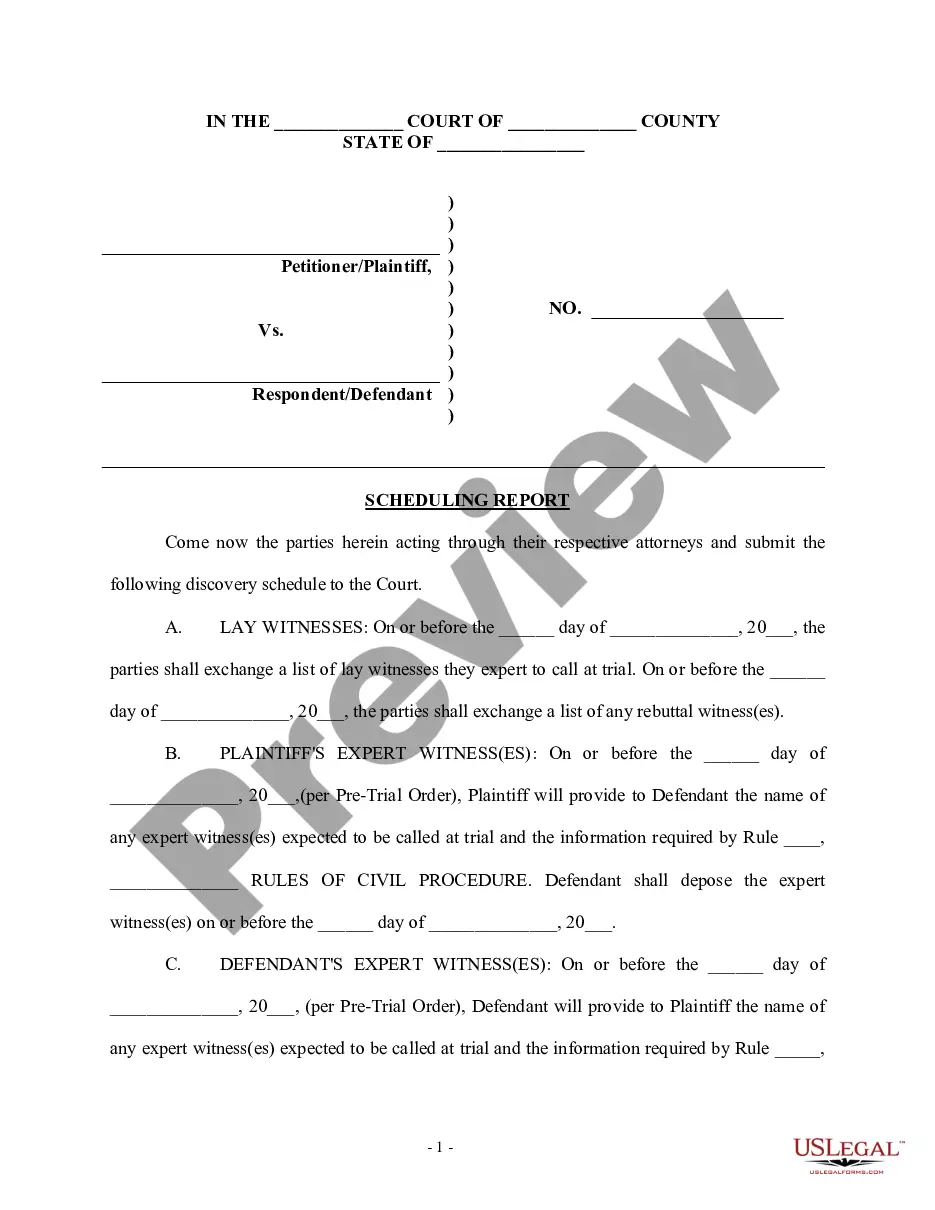
A scheduling order is a formal document issued by a court that outlines the timeline of various proceedings in a legal case. This document serves to manage the case's progression by establishing deadlines for critical events such as the submission of motions, discovery, and trial dates. It is essential for ensuring that both parties are aware of the expectations and timelines necessary to prepare their cases.
Who should use this form
The scheduling order is typically utilized by individuals or entities involved in legal proceedings within a courtroom setting. This includes:
- Plaintiffs who are initiating a lawsuit.
- Defendants who are responding to a lawsuit.
- Attorneys representing either party.
All parties must familiarize themselves with the scheduling order to effectively navigate the legal process and meet all deadlines.
Key components of the form
A scheduling order typically includes several critical components, such as:
- Deadlines for filing motions to amend pleadings or join additional parties.
- Timeline for designating and providing expert witness information.
- Dates for completing discovery and pre-trial motions.
- Date set for the trial to commence.
Each component ensures that the case progresses efficiently and that all parties understand their responsibilities.
Common mistakes to avoid when using this form
When completing a scheduling order, it's crucial to avoid common pitfalls, such as:
- Missing deadlines set within the order.
- Failing to provide required disclosures for expert witnesses.
- Not sufficiently preparing for discovery obligations.
- Ignoring the need for timely submission of pre-trial motions.
By avoiding these mistakes, parties can ensure that their cases proceed smoothly and efficiently.
What documents you may need alongside this one
When dealing with a scheduling order, several related documents may be necessary, including:
- Initial complaint or petition.
- Answer or responsive pleadings from the opposing party.
- Discovery requests and responses.
- Expert witness disclosures.
Gathering these documents in advance can help streamline the legal process and ensure all necessary information is readily available.
Key takeaways
In summary, a scheduling order is a vital part of managing legal proceedings, providing clear expectations for all parties involved. Key takeaways include:
- Understanding the deadlines outlined in the order is crucial.
- Preparing the necessary documentation in advance can facilitate a smoother process.
- Avoiding common mistakes will help keep the case on track.
Utilizing a well-structured scheduling order ultimately contributes to the effective administration of justice.