• US Legal Forms

What Is a Motion to Compel Arbitration and How Does It Work?

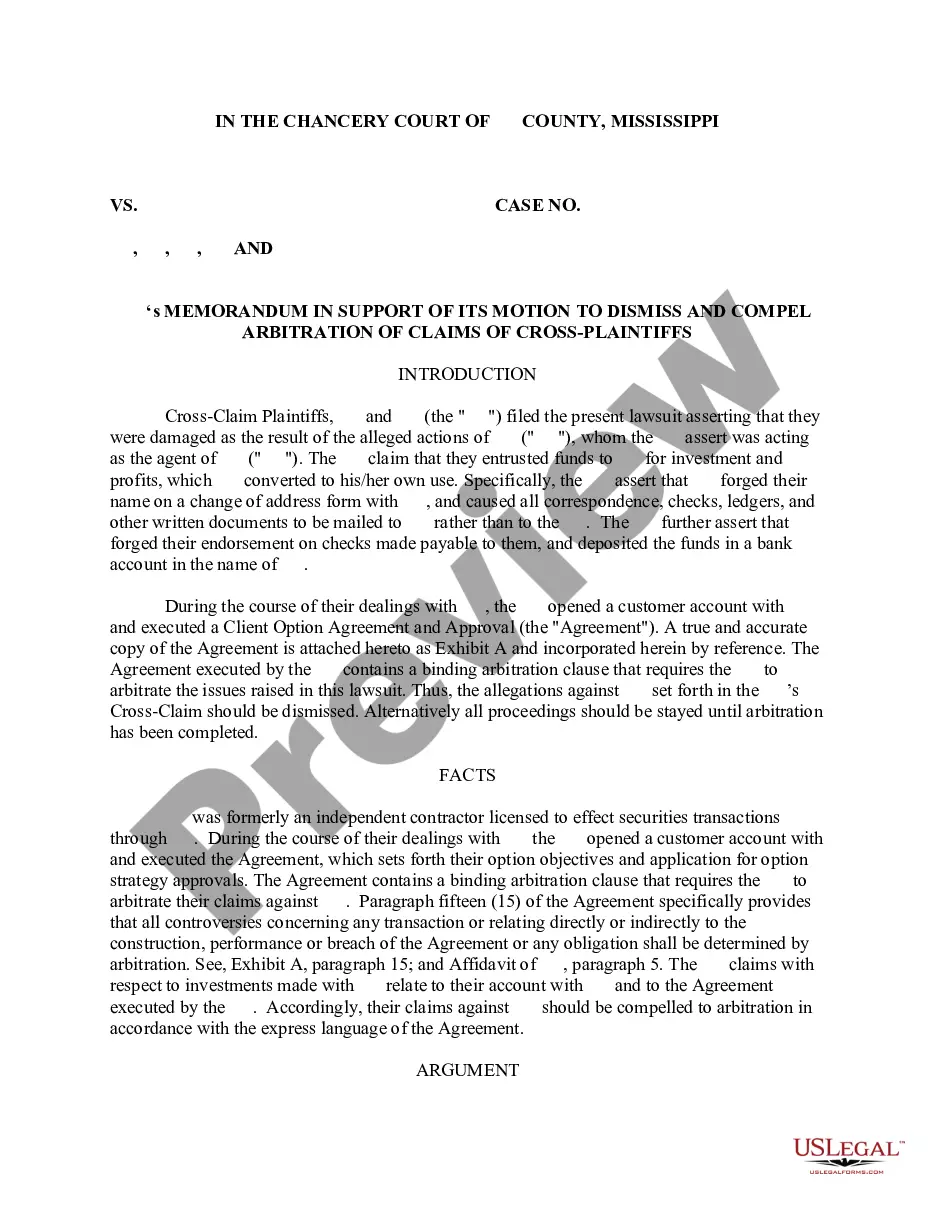
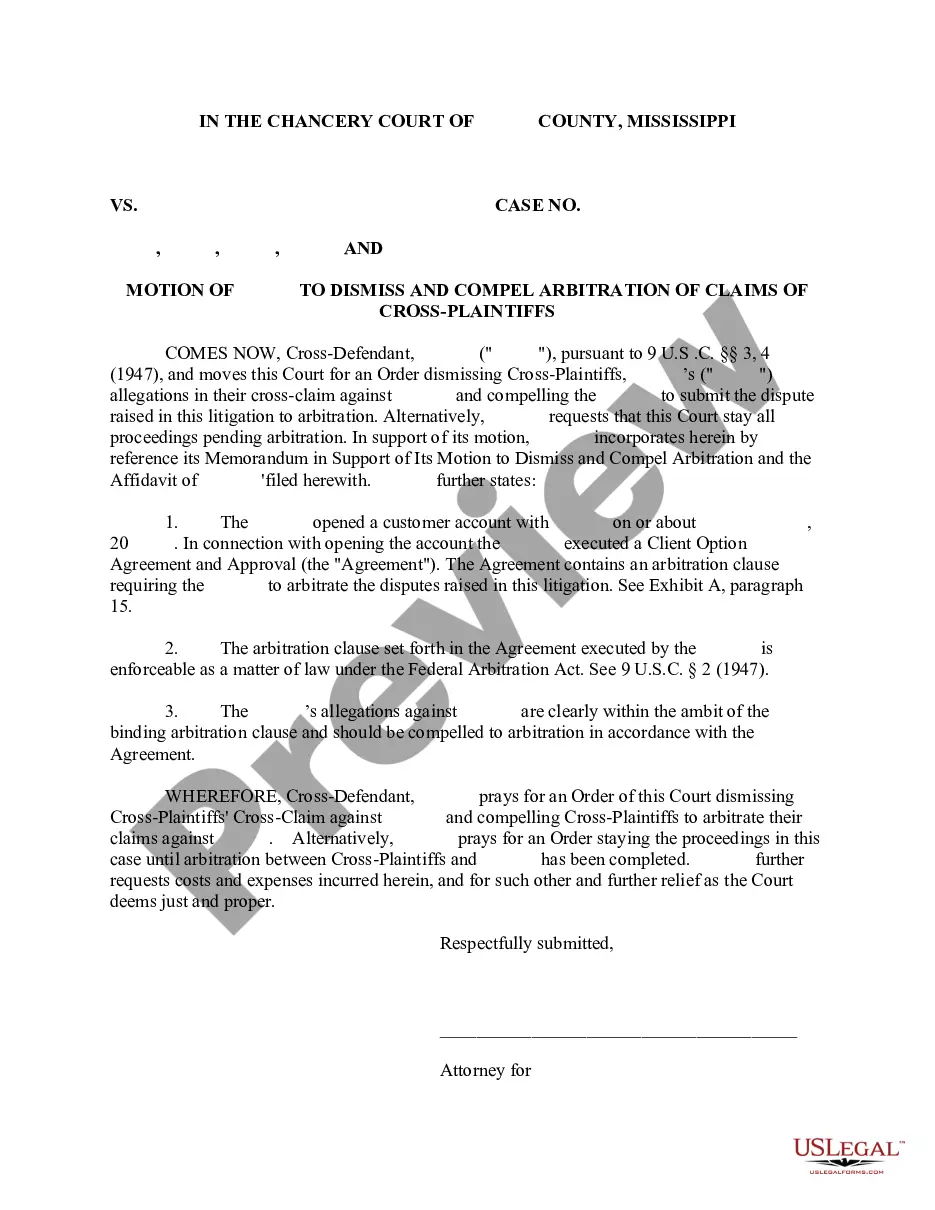
A motion to compel arbitration is a formal legal request made to a court, seeking an order to enforce a contractual agreement that requires the parties involved to resolve their disputes through arbitration rather than through litigation. This type of motion is typically filed when one party believes that another party is refusing to comply with the arbitration agreement outlined in their contract.

The purpose of a motion to compel arbitration is to ensure that the parties adhere to their agreed-upon method of dispute resolution, which is often specified in contracts for services, employment, and other agreements. By compelling arbitration, the court aims to uphold the integrity of contractual obligations while promoting efficiency in resolving disputes.
Who should use this form

This form should be used by parties involved in a dispute who have a prior arbitration agreement in place and wish to enforce its terms. Typical users may include:

  • Individuals or businesses engaged in contractual relationships that include mandatory arbitration clauses.
  • Partners or associates in business ventures with disputes regarding terms of their agreements.
  • Employees seeking to compel arbitration under employment contracts that specify arbitration for workplace disputes.

Utilizing a motion to compel arbitration is particularly relevant when one party is unwilling to participate in arbitration, potentially leading to unnecessary litigation.

Common mistakes to avoid when using this form

When filing a motion to compel arbitration, it is essential to avoid certain common mistakes that can undermine its effectiveness. Some errors to watch out for include:

  • Failing to include evidence of the arbitration agreement, which can weaken the case.
  • Not properly identifying all parties involved, leading to confusion or delays in court.
  • Using vague language or insufficient detail about the nature of the dispute, making it hard for the court to understand the context.
  • Neglecting to specify the relief sought clearly, which can result in incomplete orders from the court.

Avoiding these mistakes can improve the chances of a successful outcome for the motion.