What is an affidavit of death, domicile and heirship?
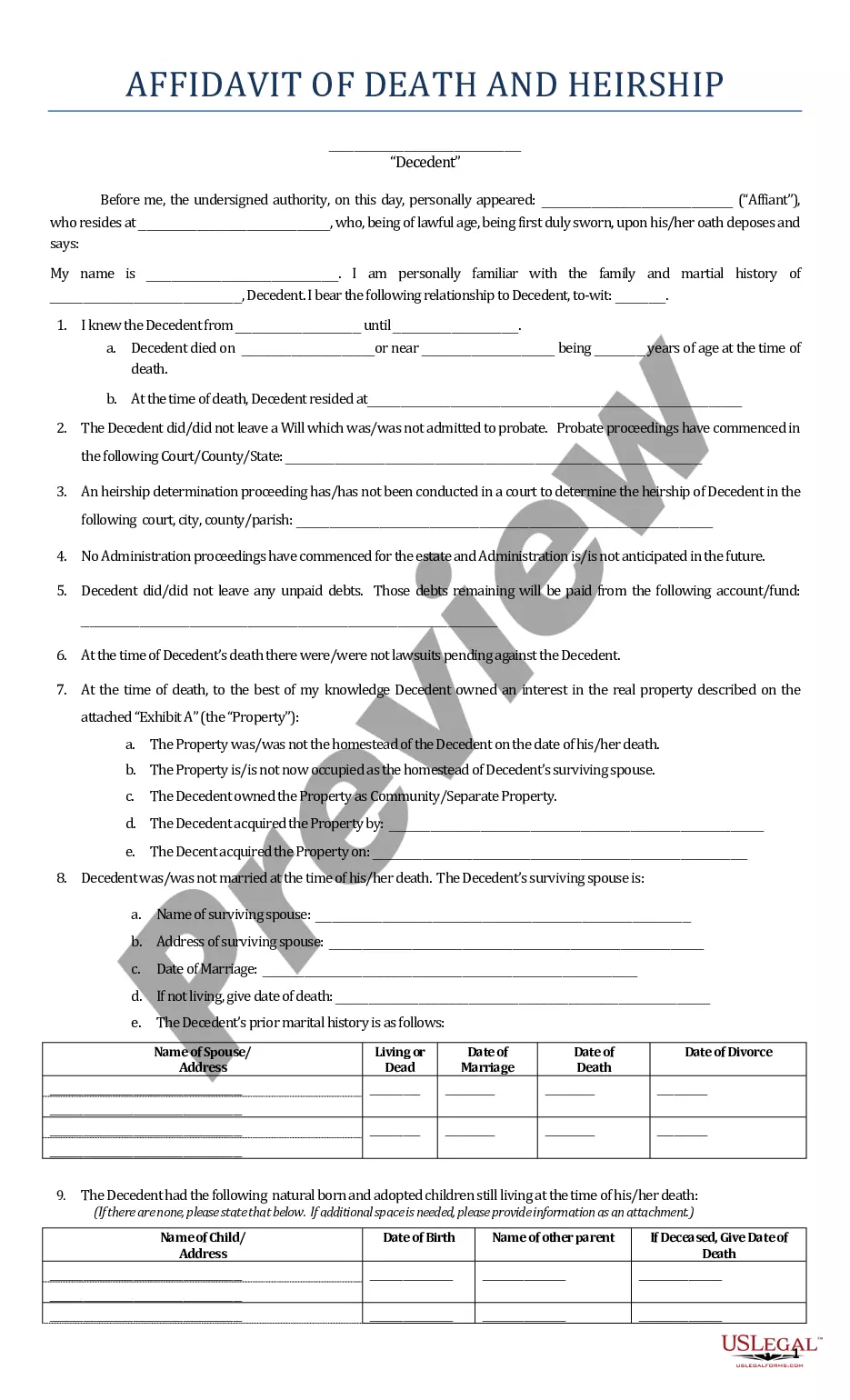
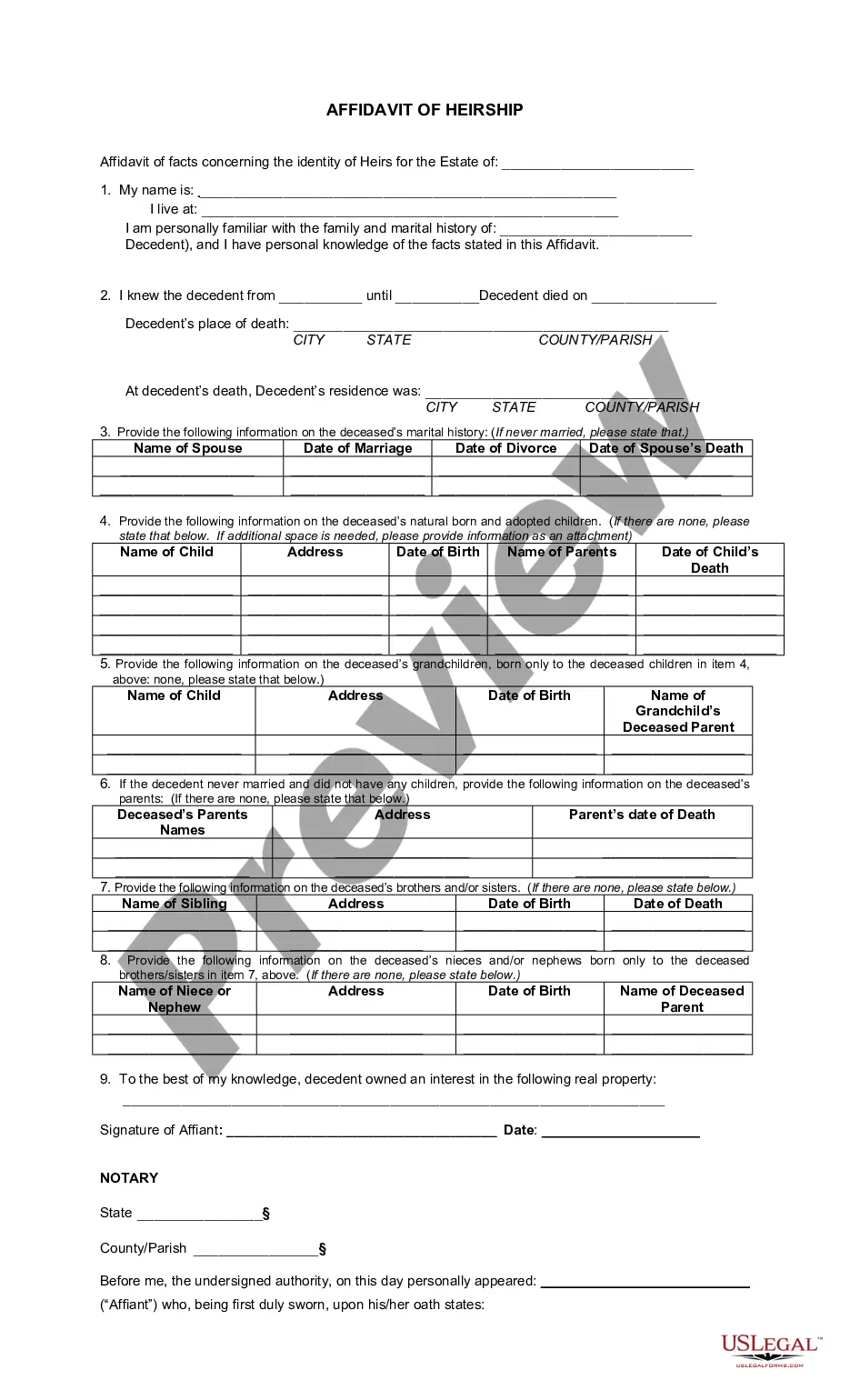
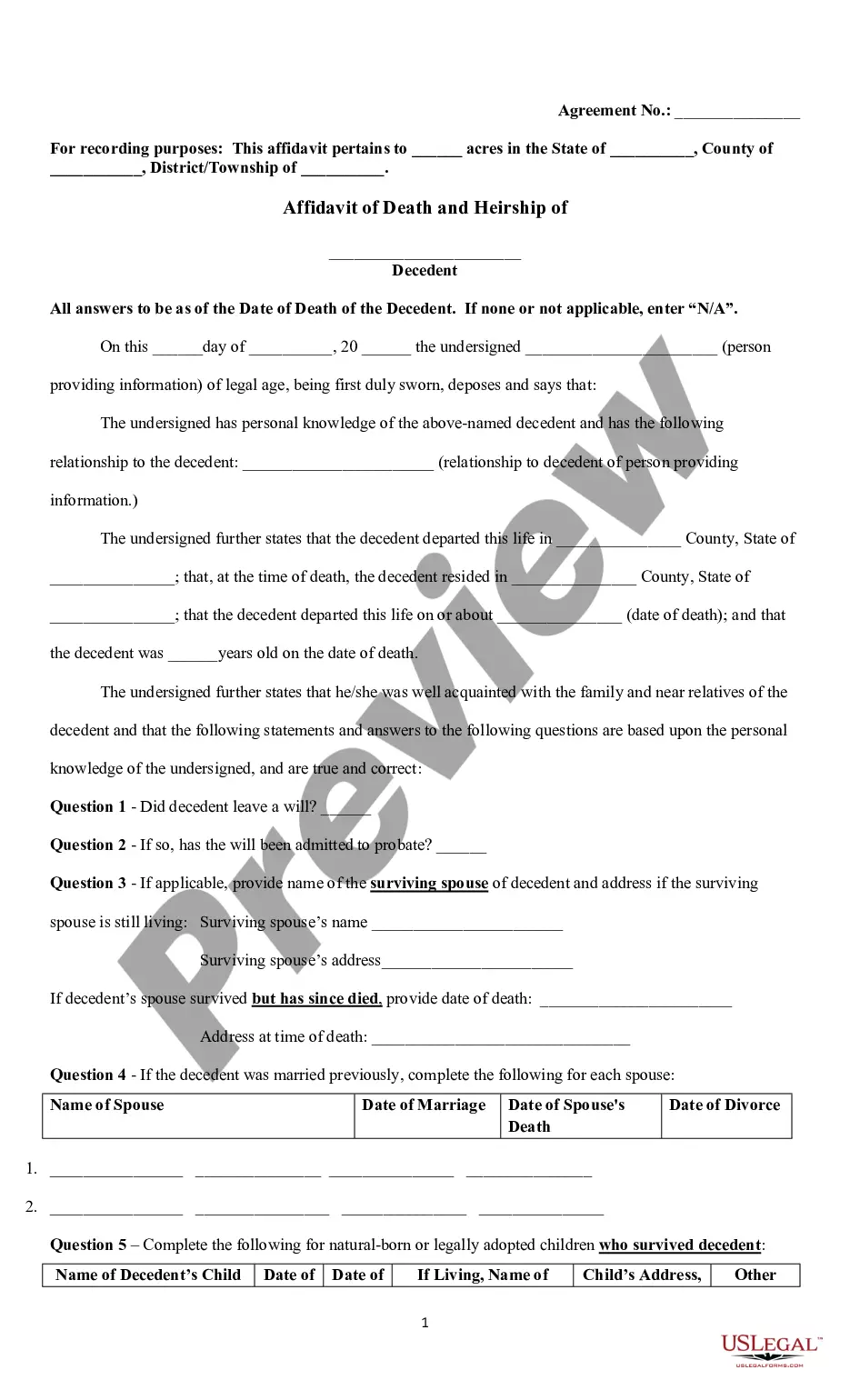
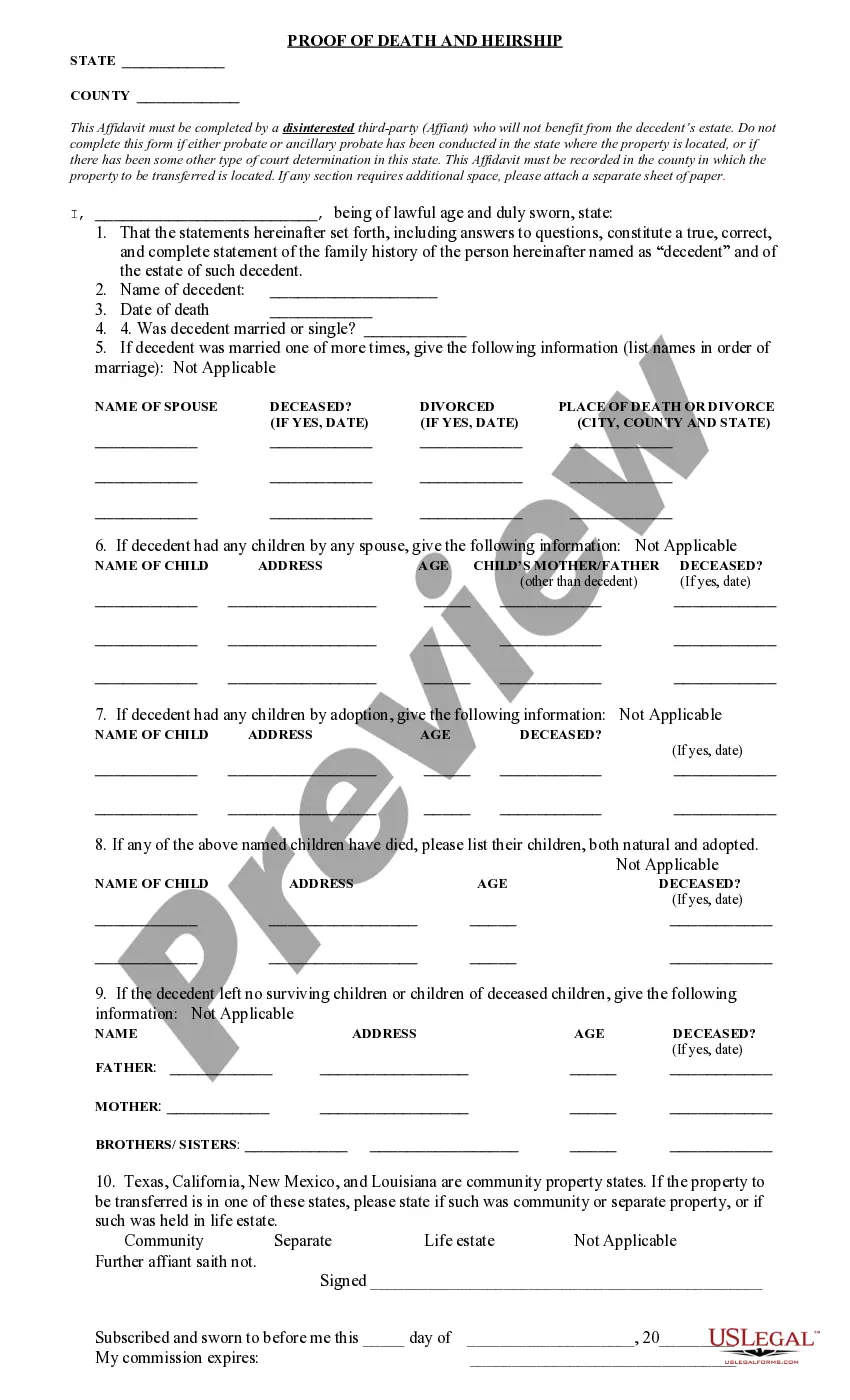
An affidavit of death, domicile and heirship is a legal document used to prove the death of an individual, their residency at the time of death, and the identity of their heirs. It is typically executed by individuals who were close to the deceased and can attest to the facts surrounding their death and familial relationships. This document is crucial for settling estates, particularly in cases where the deceased did not leave a will.
Who should use this form
This form is useful for individuals involved in the estate settlement of a deceased person who died intestate (without a will). It is particularly relevant for family members, heirs, or close friends who can provide accurate testimony about the deceased's domicile, family relationships, and circumstances surrounding their death.
Legal use and context
The affidavit of death, domicile and heirship serves as an important legal tool in probate and estate proceedings. It helps establish the heirs of the deceased and is often required by courts or financial institutions to process the transfer of assets, settle debts, and distribute property according to state laws. It is particularly important for individuals without a will, as it aids in clarifying heirship issues and aiding the probate process.
Key components of the form
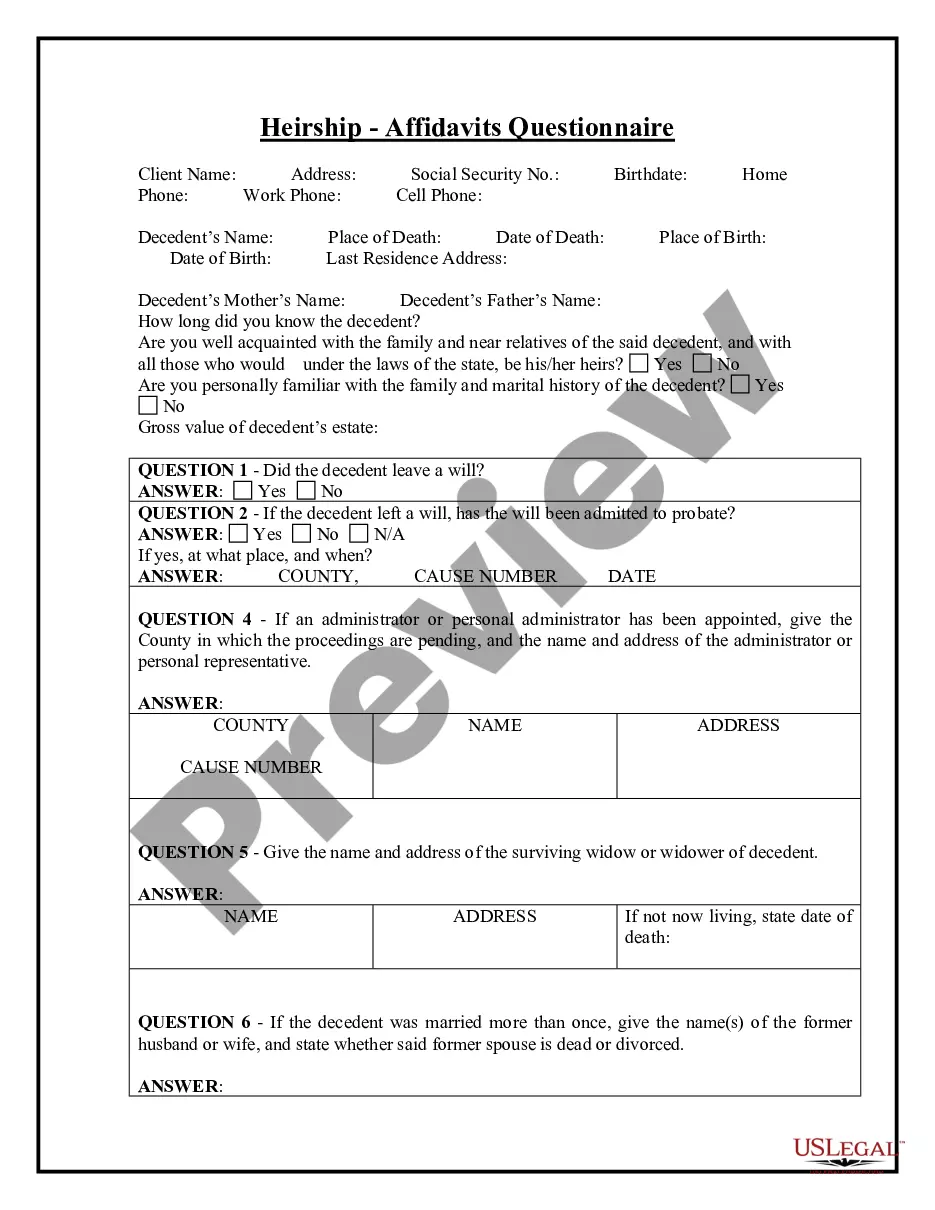
The affidavit generally includes the following key components:
- Name of the deceased
- Date and place of death
- Information on the deceased's domicile
- Details about the heirs, including their relationship to the deceased
- Statement concerning whether the deceased had a will or was adopted
- Notary public information
These elements work together to establish the necessary facts about the deceased for legal purposes.
Common mistakes to avoid when using this form
When completing the affidavit, users should be mindful of the following common mistakes:
- Failing to provide accurate information about the deceased's date and place of death.
- Omitting information about the deceased's domicile.
- Incorrectly naming the heirs, which may cause disputes later.
- Not having the document properly notarized.
Ensuring accuracy and completeness will facilitate a smoother legal process.
Key takeaways
In summary, an affidavit of death, domicile and heirship is a vital legal document that establishes the facts surrounding a deceased individual's death and their heirs. It is essential for those involved in settling the estate, particularly when there is no will. Proper completion and notarization of the form are crucial to avoid potential legal complications.