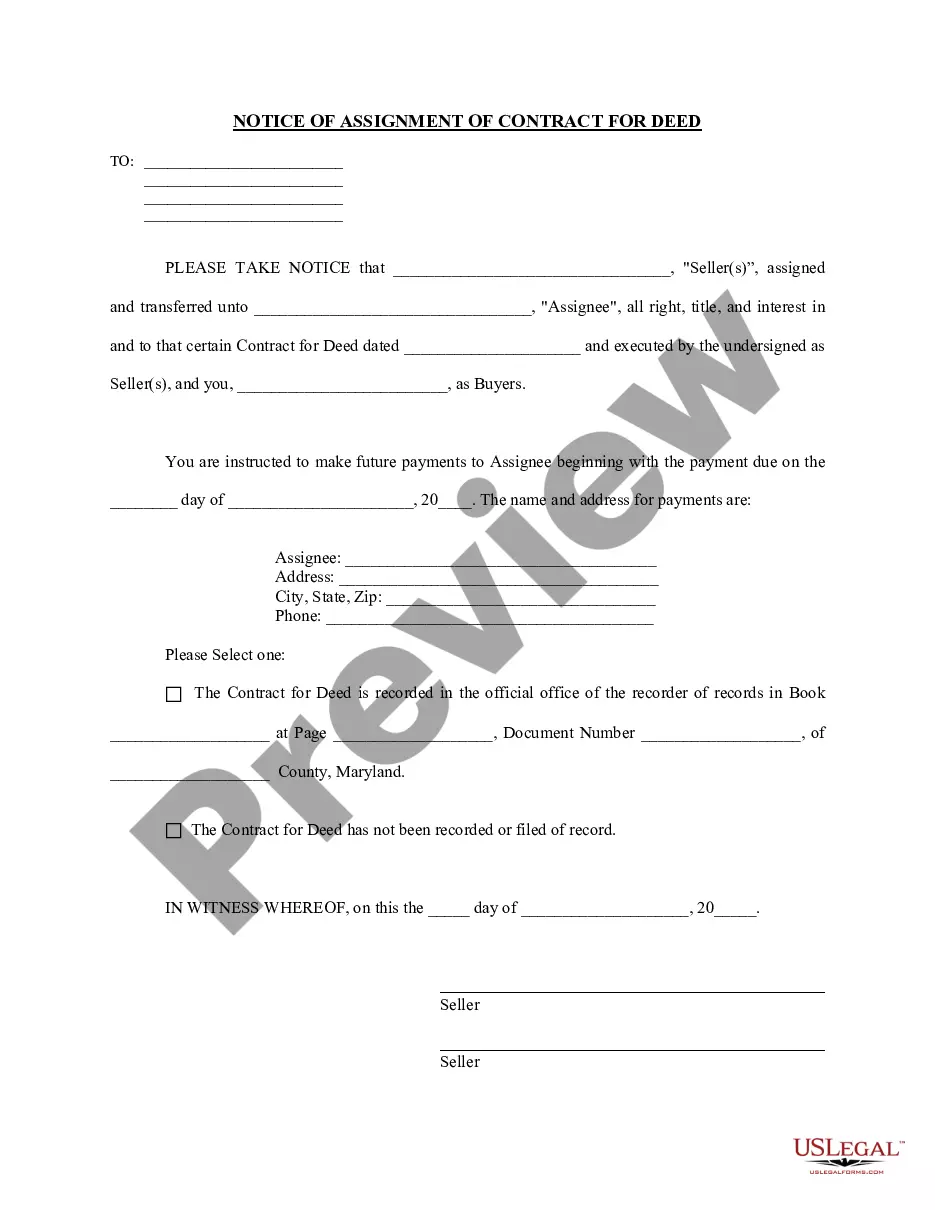
Indiana Last Will and Testament for Divorced person not Remarried with Minor Children
What is this form?
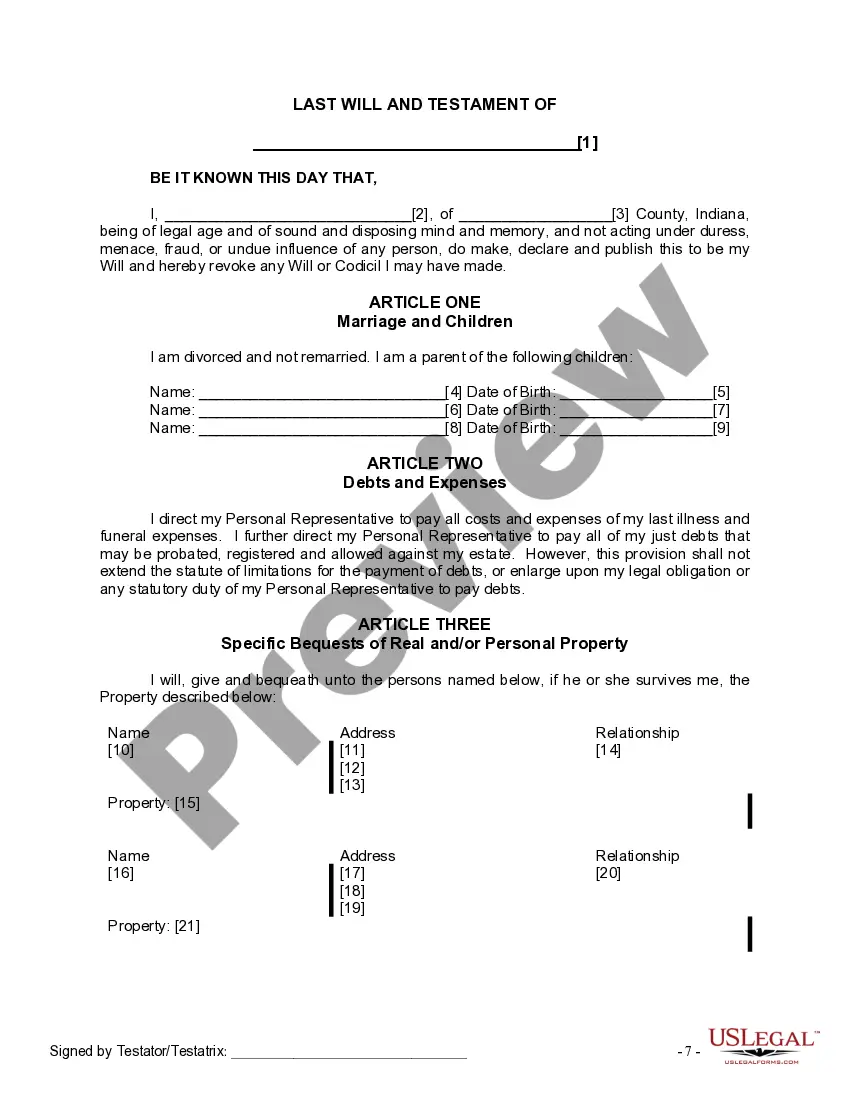
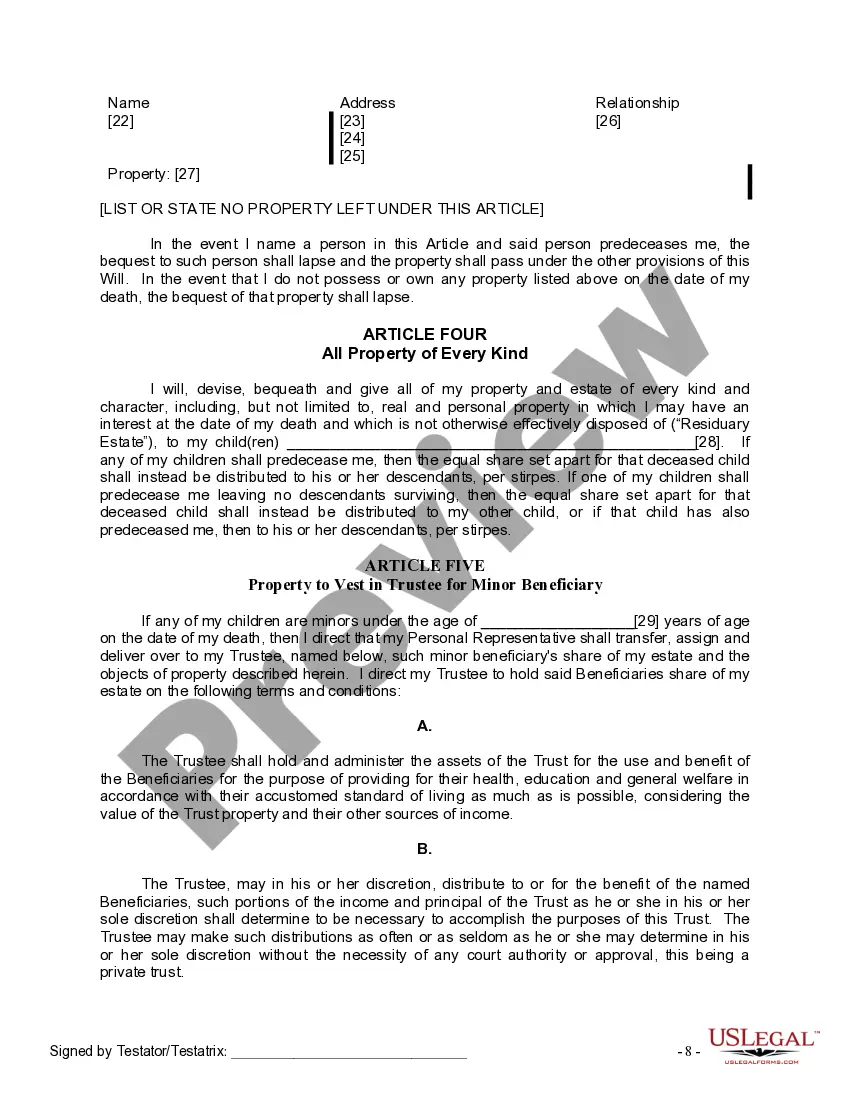
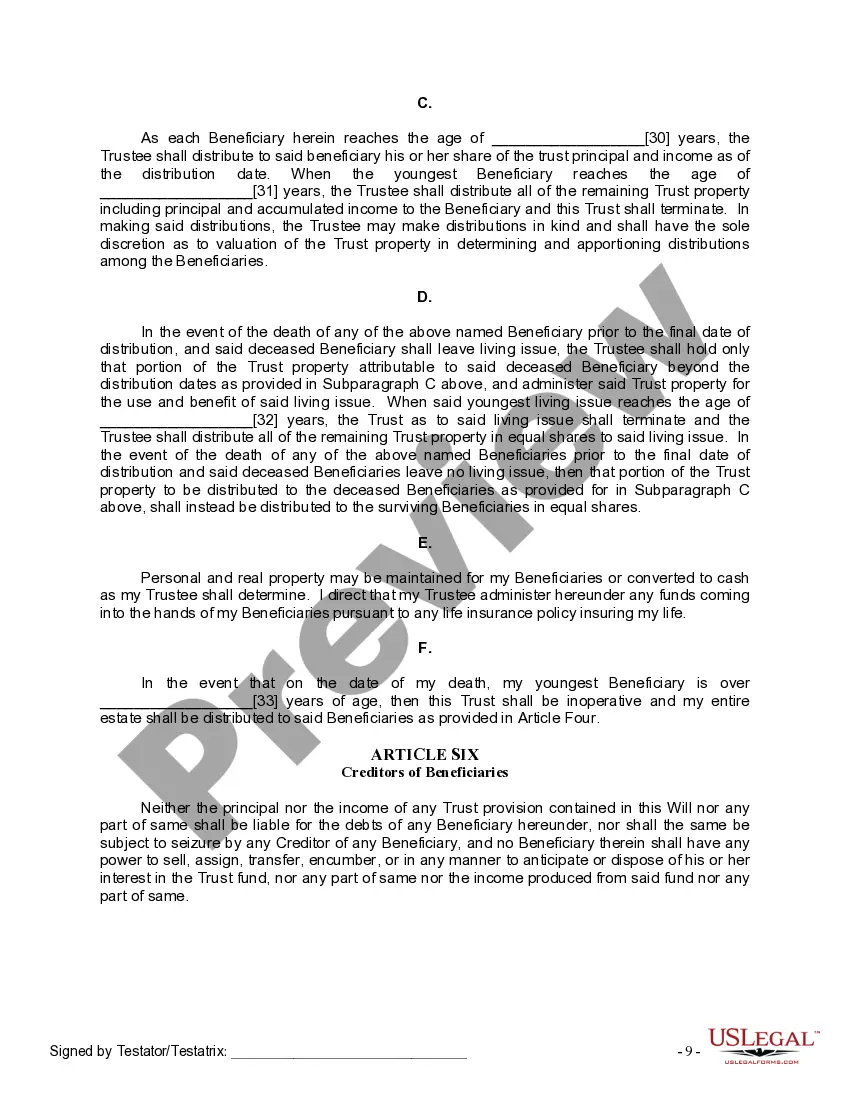
This Last Will and Testament is for a divorced person who has not remarried and has minor children. It outlines how your assets will be distributed, names a personal representative, and can designate guardians for your children. This form is tailored to your unique family situation, making it essential for ensuring that your wishes are followed after your death.
Key components of this form
- Personal representative or executor appointment
- Designation of beneficiaries, including minor children
- Specification of properties and assets to be bequeathed
- Establishment of trusts for minor beneficiaries
- Appointment of a guardian for minor children
- Provisions for debts and expenses





When to use this form
This form should be used when a divorced individual with minor children wants to create a legally binding document that specifies how their property will be distributed upon death. It is particularly important if you wish to ensure that your children are cared for according to your wishes and that your estate is handled in a manner you prefer.
Who this form is for
- Divorced individuals with minor children
- Parents who have specific assets to be left to beneficiaries
- Individuals wanting to name a guardian for their children
- People looking to designate a personal representative for their estate
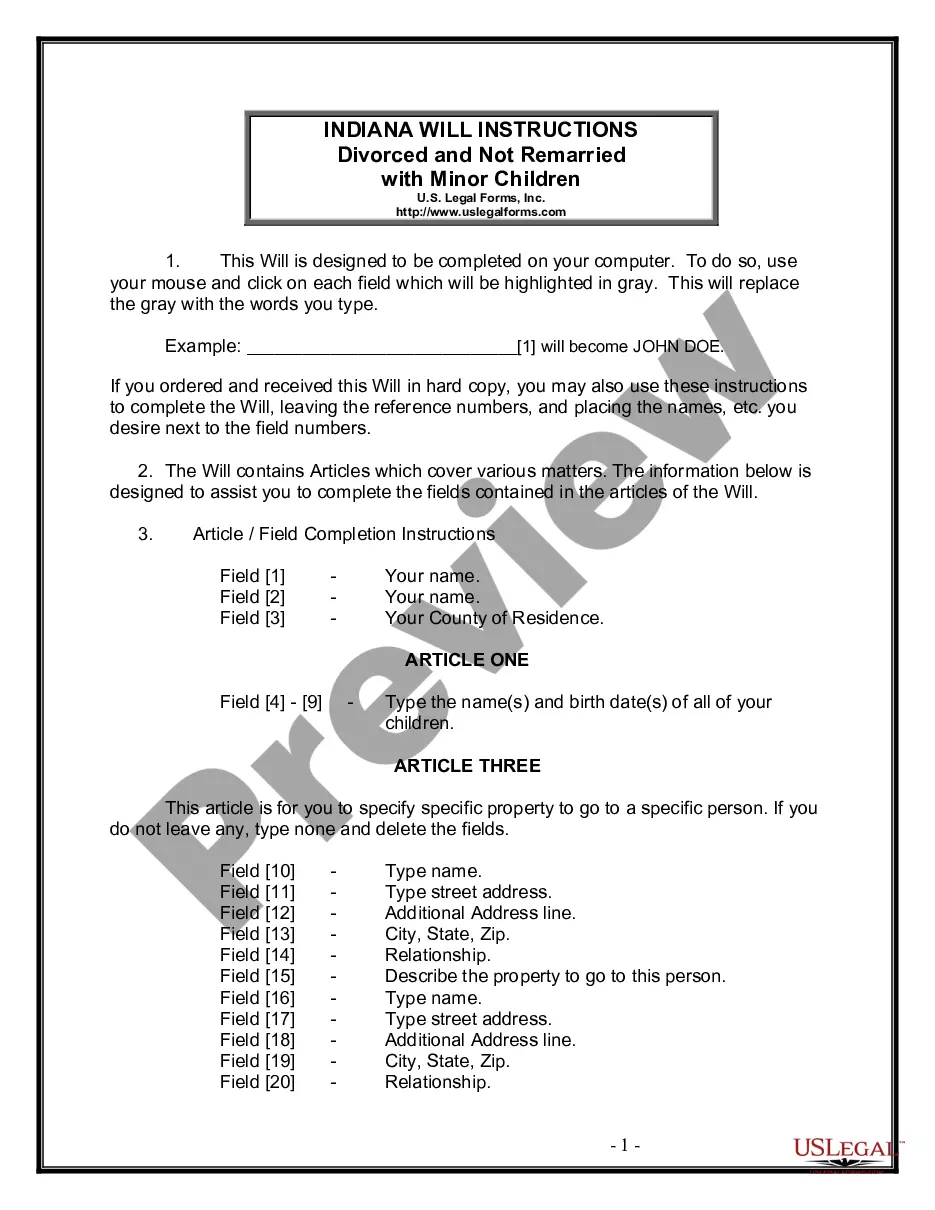
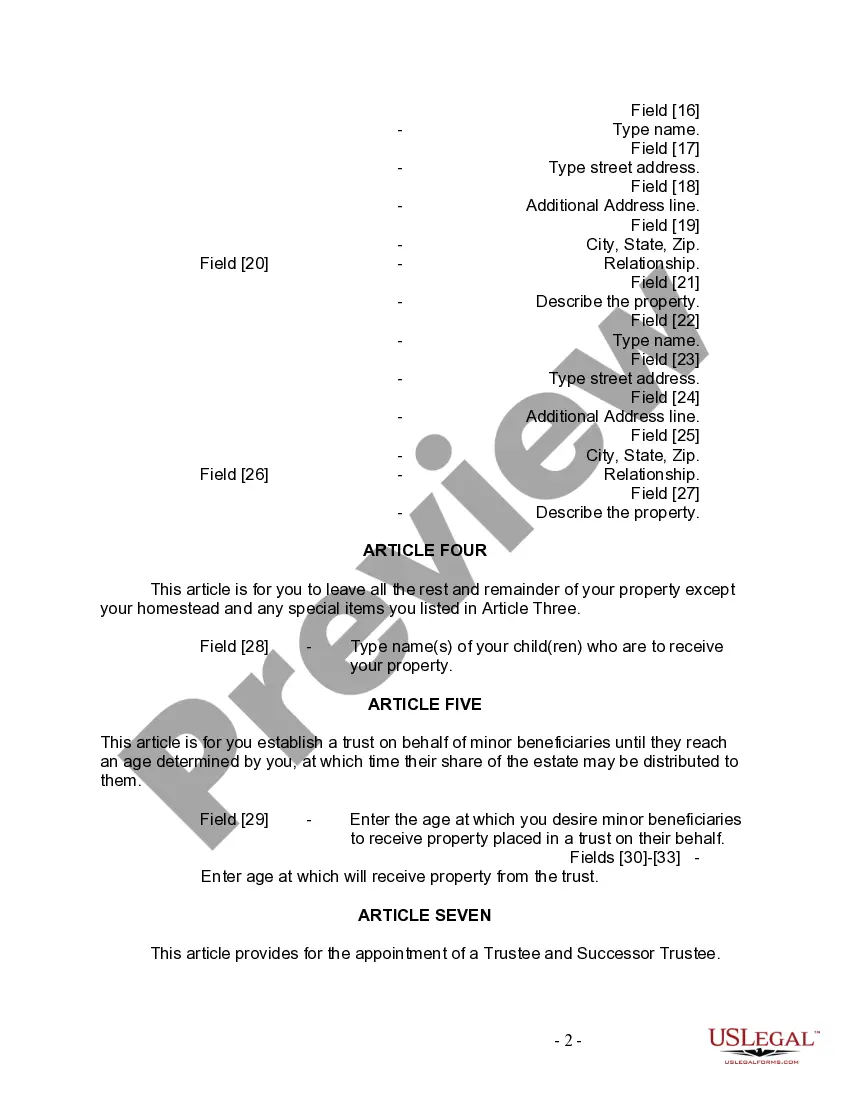
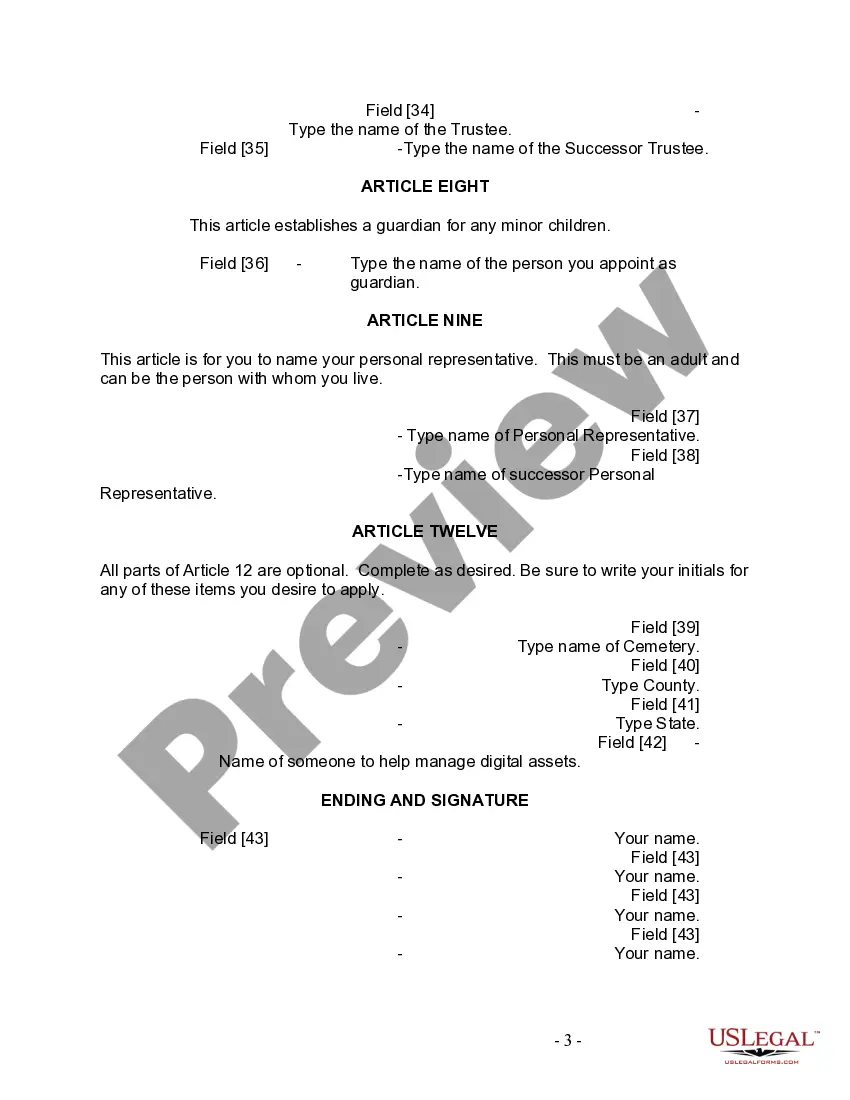
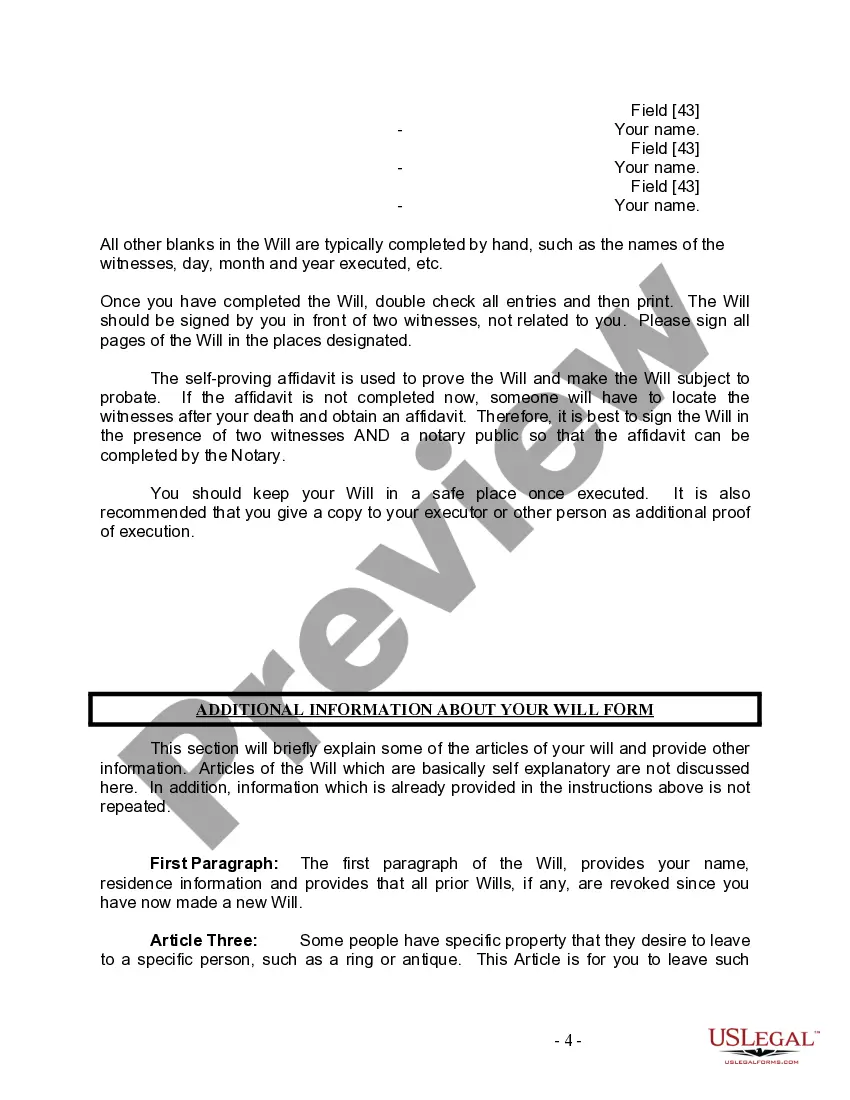
Completing this form step by step
- Enter your full name and county of residence.
- List the names and birthdates of all your minor children.
- Specify any specific bequests of property, if applicable.
- Designate a personal representative and a guardian for your minor children.
- Sign the document in front of two witnesses who are not beneficiaries.
Notarization requirements for this form
Yes, this form must be notarized to be legally valid, especially if it includes a self-proving affidavit. This process helps to ensure the document is accepted in probate court without further evidence of execution.
Get your form ready online
Our built-in tools help you complete, sign, share, and store your documents in one place.
Make edits, fill in missing information, and update formatting in US Legal Forms—just like you would in MS Word.
Download a copy, print it, send it by email, or mail it via USPS—whatever works best for your next step.
Sign and collect signatures with our SignNow integration. Send to multiple recipients, set reminders, and more. Go Premium to unlock E-Sign.
If this form requires notarization, complete it online through a secure video call—no need to meet a notary in person or wait for an appointment.
We protect your documents and personal data by following strict security and privacy standards.

Make edits, fill in missing information, and update formatting in US Legal Forms—just like you would in MS Word.

Download a copy, print it, send it by email, or mail it via USPS—whatever works best for your next step.

Sign and collect signatures with our SignNow integration. Send to multiple recipients, set reminders, and more. Go Premium to unlock E-Sign.

If this form requires notarization, complete it online through a secure video call—no need to meet a notary in person or wait for an appointment.

We protect your documents and personal data by following strict security and privacy standards.
Mistakes to watch out for
- Forgetting to name a guardian for minor children.
- Not having the document witnessed properly.
- Leaving out instructions for debts and expenses, which can lead to complications.
- Failing to specify how you want your property to be divided.
Benefits of completing this form online
- Convenience of completing the form from home.
- Editable fields allow you to customize the document easily.
- Access to state-specific provisions to ensure compliance with local laws.
Quick recap
- This form allows divorced individuals to create a legally binding will that addresses their unique family structure.
- Designating guardianship and a personal representative are critical components of this will.
- Proper completion and notarization ensure that your wishes regarding your estate are respected.
- Regularly reviewing and updating your will is essential as life circumstances change.
Looking for another form?



Form popularity
FAQ
Is it always best to stay together for the kids? The short-term answer is usually yes. Children thrive in predictable, secure families with two parents who love them and love each other.Try your best to make your marriage work, but don't stay in an unhappy relationship only for the sake of your children.
In fact, age 8 is so tough that the majority of the 2,000 parents who responded to the survey agreed that it was the hardest year, while age 6 was better than expected and age 7 produced the most intense tantrums.
If you find that you're in an unhappy marriage, you may wonder if it's better to stay together for the sake of your children or to get a "good" divorce and set positive role models for them.It's generally accepted that children learn both good and dysfunctional patterns and behaviors from their parents.
Emotional and behavioural problems in children are more common when their parents are fighting or separating. Children can become very insecure. Insecurity can cause children to behave like they are much younger and therefore bed wetting, 'clinginess', nightmares, worries or disobedience can all occur.
The will of a person, after divorce, remains valid as to any person named as a beneficiary, except the former divorced spouse, whose beneficiary status if any, has been rendered invalid or nonexistent by statute.
Academically, kids going through divorce may earn lower grades and even face a higher dropout rate compared to their peers. These effects may be seen as early as age 6 but may be more noticeable as kids reach the ages of 13 to 18 years old.
According to Terry, who was 3 when her parents separated, ''The worst age for divorce is between 6 and 10; the best is between 1 and 2. '' The younger children do not feel responsible for their parents' divorce and are consciously aware of the advantage of being younger when it happened, Dr.
No. Divorce does not always damage children. In many cases, mainly where there have been high levels of conflict between spouses, both adults and children are better off after the split, especially in the immediate aftermath.There are two main reasons why the break-up of parents can affect kids negatively.
Here's some information that might make the choice a tiny bit easier: Research shows that, in the long run, divorce may be better for children than growing up in a family in which there is chronic discord.