Indiana Notice of Default in Payment of Rent as Warning Prior to Demand to Pay or Terminate for Nonresidential or Commercial Property
What is this form?
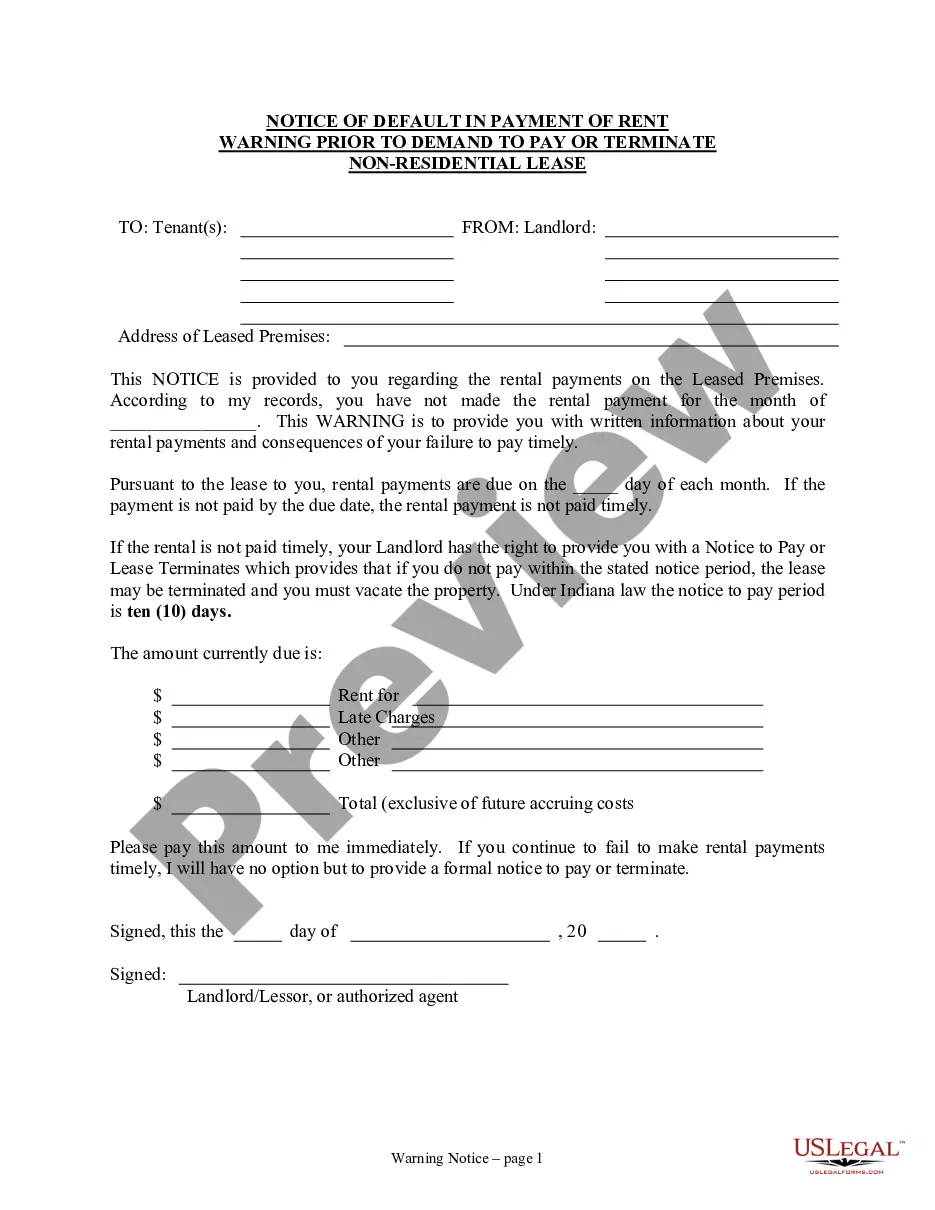
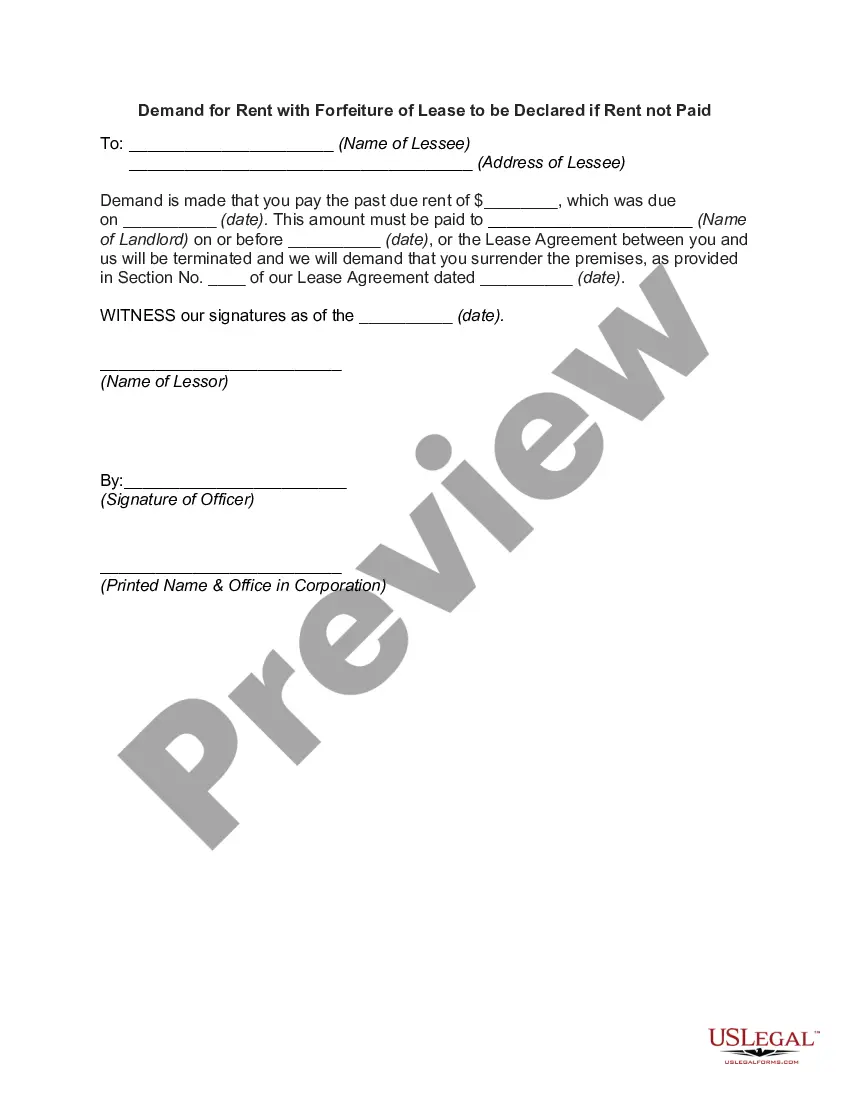
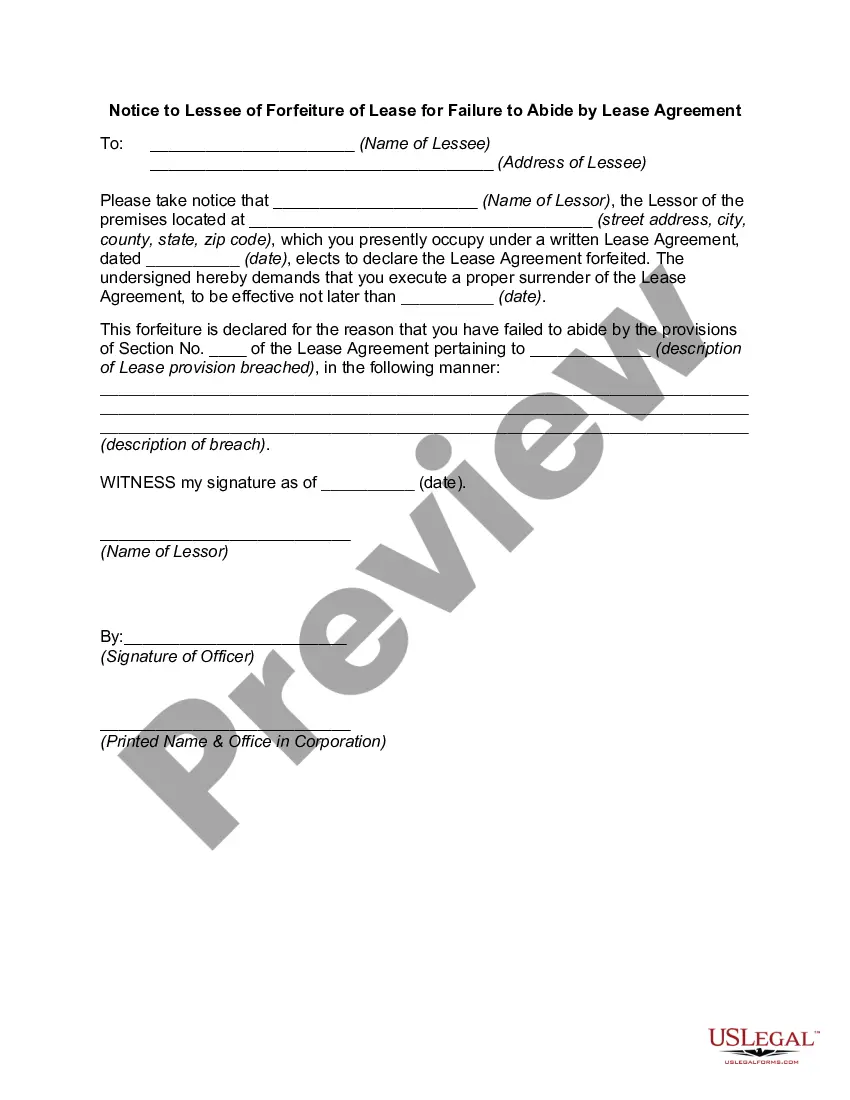
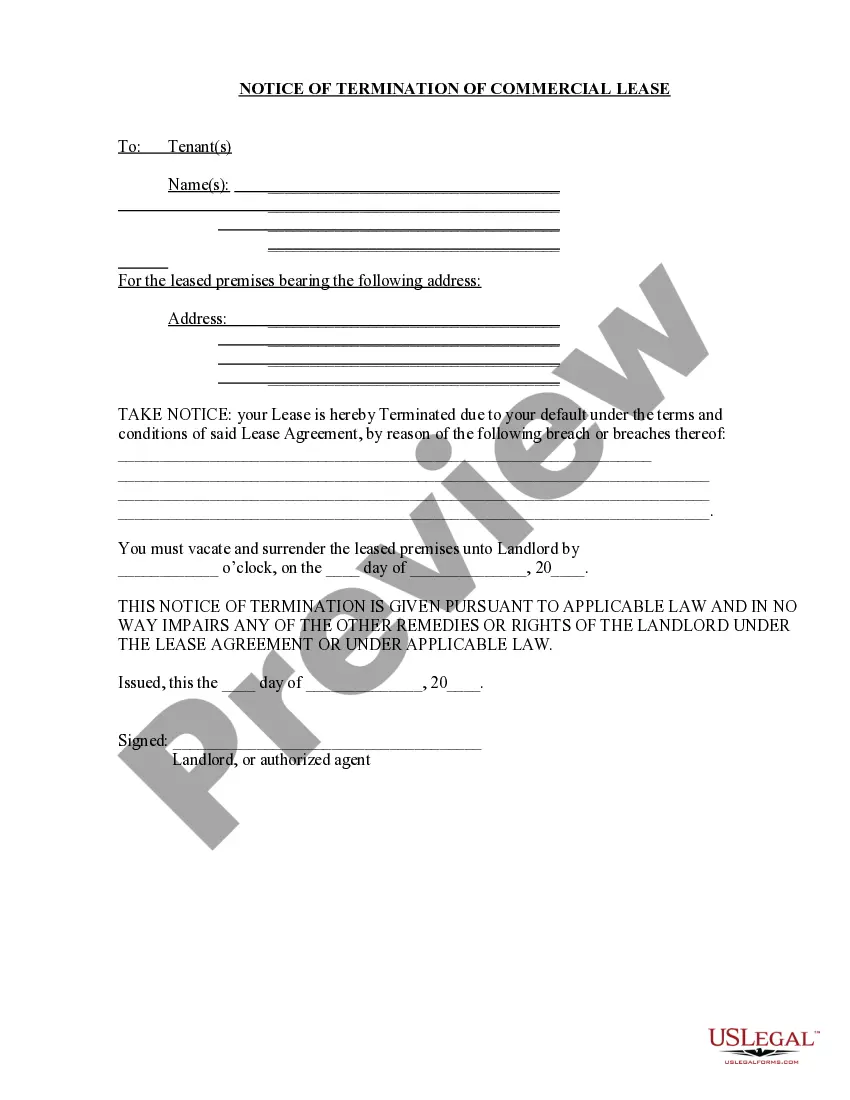
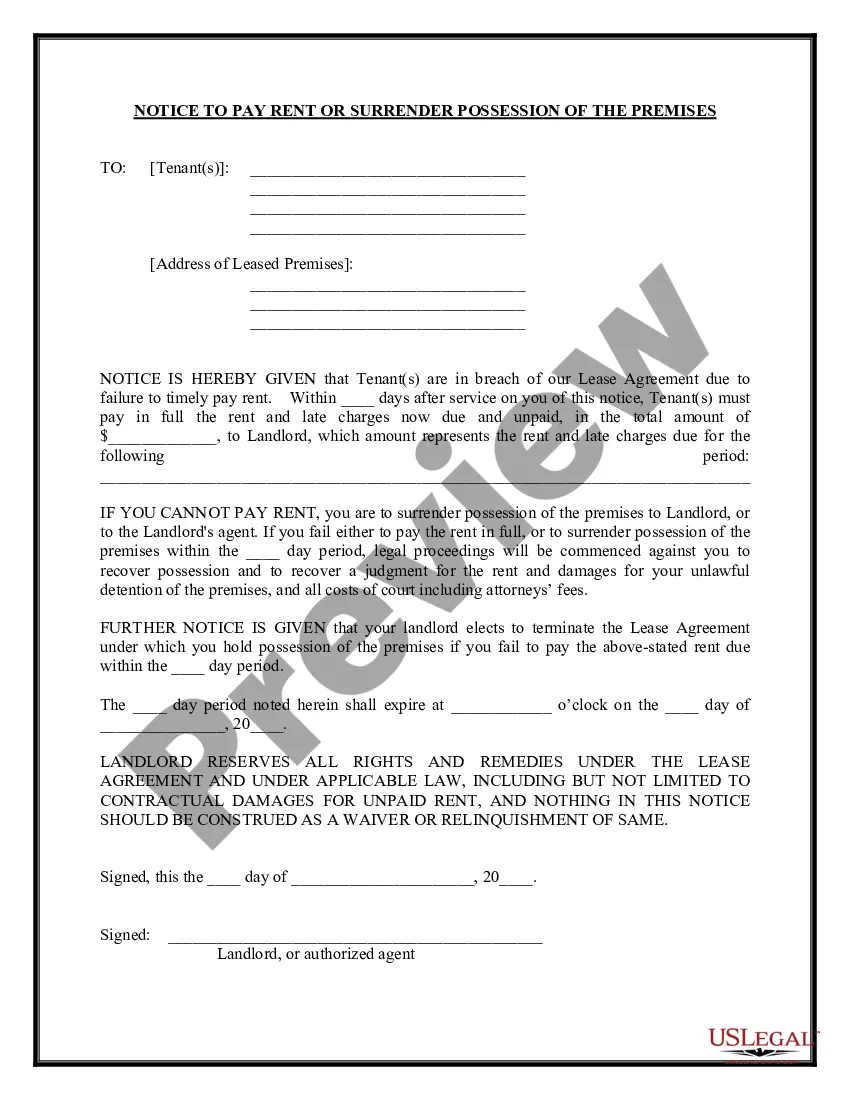
The Notice of Default in Payment of Rent is a formal letter from a landlord to a tenant, specifically used in nonresidential or commercial property contexts. This document serves as a warning that the tenant has failed to meet rental obligations. Unlike other landlord-tenant forms, this notice explicitly outlines the consequences of non-payment and the urgency for the tenant to rectify the situation to avoid further legal action.
Key components of this form
- Identification of the landlord and tenant with their addresses.
- Details of the leased premises.
- Statement of overdue rent and total amount due.
- Specific due date for rental payments.
- Consequences of failing to pay rent in a timely manner.
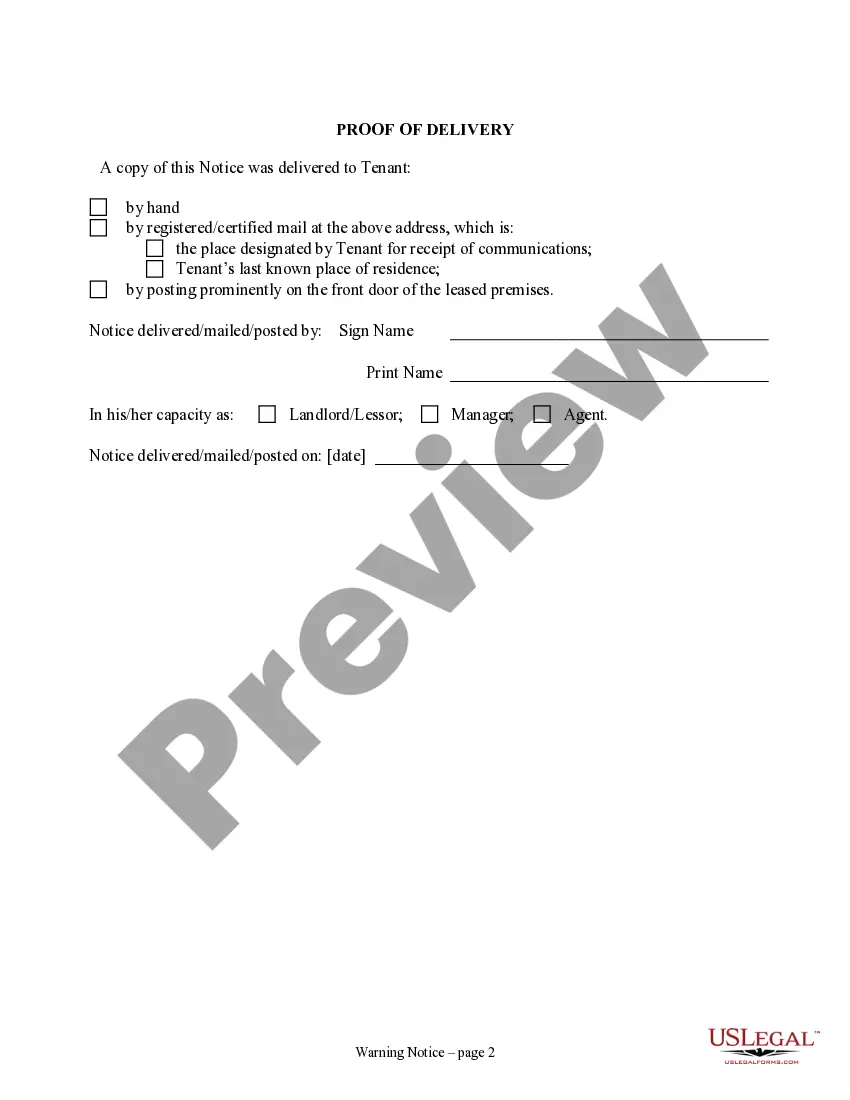
- Proof of delivery options for the notice.
When this form is needed
This form should be used when a tenant of a nonresidential or commercial property has not made a rental payment as stipulated in the lease agreement. It serves as an official warning prior to any demand for payment or potential termination of the lease. Landlords should issue this notice as soon as they recognize that a payment has been missed to initiate communication regarding the resolution of the issue.
Who should use this form
- Commercial landlords who rent nonresidential spaces.
- Property managers overseeing lease agreements for commercial properties.
- Landlords seeking to inform tenants of late payments before taking further action.
How to prepare this document
- Identify the landlord and tenant by filling in the respective names and addresses.
- Specify the address of the leased premises where the tenant is currently residing.
- Enter the month for which the rent payment is overdue.
- Detail the total amount due, including any late fees, clearly listing each component.
- Provide the date and sign the notice to validate the document.
- Choose the method of delivery (hand, mail, or posting) and document it accordingly.
Notarization guidance
This form does not typically require notarization unless specified by local law. Ensure you follow your stateâs requirements to avoid complications.
Get your form ready online
Our built-in tools help you complete, sign, share, and store your documents in one place.
Make edits, fill in missing information, and update formatting in US Legal Forms—just like you would in MS Word.
Download a copy, print it, send it by email, or mail it via USPS—whatever works best for your next step.
Sign and collect signatures with our SignNow integration. Send to multiple recipients, set reminders, and more. Go Premium to unlock E-Sign.
If this form requires notarization, complete it online through a secure video call—no need to meet a notary in person or wait for an appointment.
We protect your documents and personal data by following strict security and privacy standards.

Make edits, fill in missing information, and update formatting in US Legal Forms—just like you would in MS Word.

Download a copy, print it, send it by email, or mail it via USPS—whatever works best for your next step.

Sign and collect signatures with our SignNow integration. Send to multiple recipients, set reminders, and more. Go Premium to unlock E-Sign.

If this form requires notarization, complete it online through a secure video call—no need to meet a notary in person or wait for an appointment.

We protect your documents and personal data by following strict security and privacy standards.
Common mistakes to avoid
- Failing to include the correct amount of overdue rent and relevant charges.
- Not providing proof of delivery, which is essential for legal purposes.
- Neglecting to specify the lease termination consequences if payments are not made.
- Using incorrect dates or names, which can lead to confusion and disputes.
Advantages of online completion
- Convenience: Downloadable forms save time and effort.
- Editability: Easily customize fields to fit specific needs before printing.
- Reliability: Legal forms are drafted by licensed attorneys for accuracy.
Legal use & context
- This notice is an integral part of the lease enforcement process.
- Failure to provide this warning may limit the landlord's ability to terminate the lease.
- The notice must be delivered in accordance with state laws to ensure validity.
What to keep in mind
- The Notice of Default serves as a warning to tenants regarding unpaid rent.
- This form allows tenants an opportunity to rectify payment issues before lease termination.
- Careful completion and delivery of this form are essential for legal enforceability.
Looking for another form?




Form popularity
FAQ
In all states, a landlord can enter the property in an emergency without notice or permission.Even if your landlord gives you notice, he or she must have a good reason to enter the property. In most cases, your landlord can enter your home: In an emergency.
If the landlord serves a section 21 notice on the tenant, rent arrears will not be recovered as part of the possession claim. However, the landlord can bring a separate claim in the County Court to recover the outstanding sum. There is a court fee payable, which can vary depending on the value of the claim.
ENTRY WITHOUT NOTICE The landlord may enter the residential premises without permission and without giving the tenant any notice for two reasons: If the landlord believes there is an emergency; 2022 If the landlord believes the tenant has abandoned the residential premises.
If you accept the full or even partial late rent payment, your eviction process must be dismissed by the courts. Landlords are waiving their rights to the eviction process as originally filed. If you want to evict again, you must start over from the beginning, which is serving a new pay or quit notice.
The big take-away is that in most circumstances a landlord cannot enter a property without agreement from the tenant. And If the landlord ignores the law and enters the property without permission, the tenant may be able to claim damages or gain an injunction to prevent the landlord doing it again.
Unlike some states, Indiana does not have a law that lets tenants withhold rent or make repairs and deduct it from the rent. Generally, if you do not pay rent, you could be evicted. There may be very limited cases where you can repair and deduct, but you should talk to a lawyer first.
Ignore It. If the amount owed is very small, you may simply choose not to pursue it after sending the Disposition of Deposit, and just move on. Bill Repeatedly. Negotiate With Them. Send It to Collections. Take Them to Small Claims Court.
0 A landlord has the right to enter the rental unit, although he cannot enter any time he wishes. The landlord first gives reasonable notice to visit at reasonable hours. Neither instance of reasonable is defined in the Indiana code, but most landlords give 24-hour notice and enter during normal business hours.
You can start by using the tenant's security deposit (if any) to cover the unpaid rent. If the deposit doesn't cover the two month's rent, you can sue your former tenant in small claims court (or a similar civil court) for the back rent.