Indiana Letter from Tenant to Landlord containing Notice to landlord to cease retaliatory threats to evict or retaliatory eviction
About this form
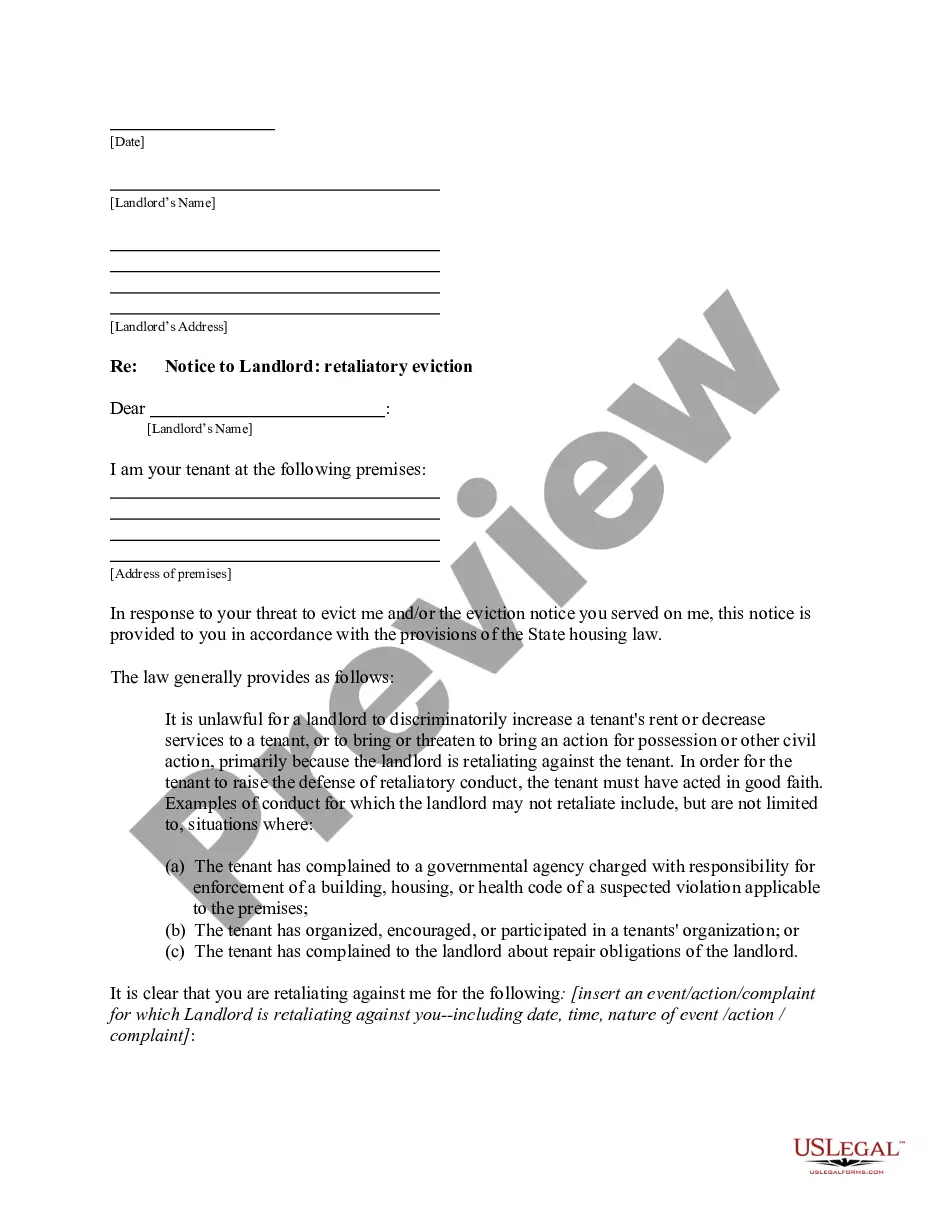
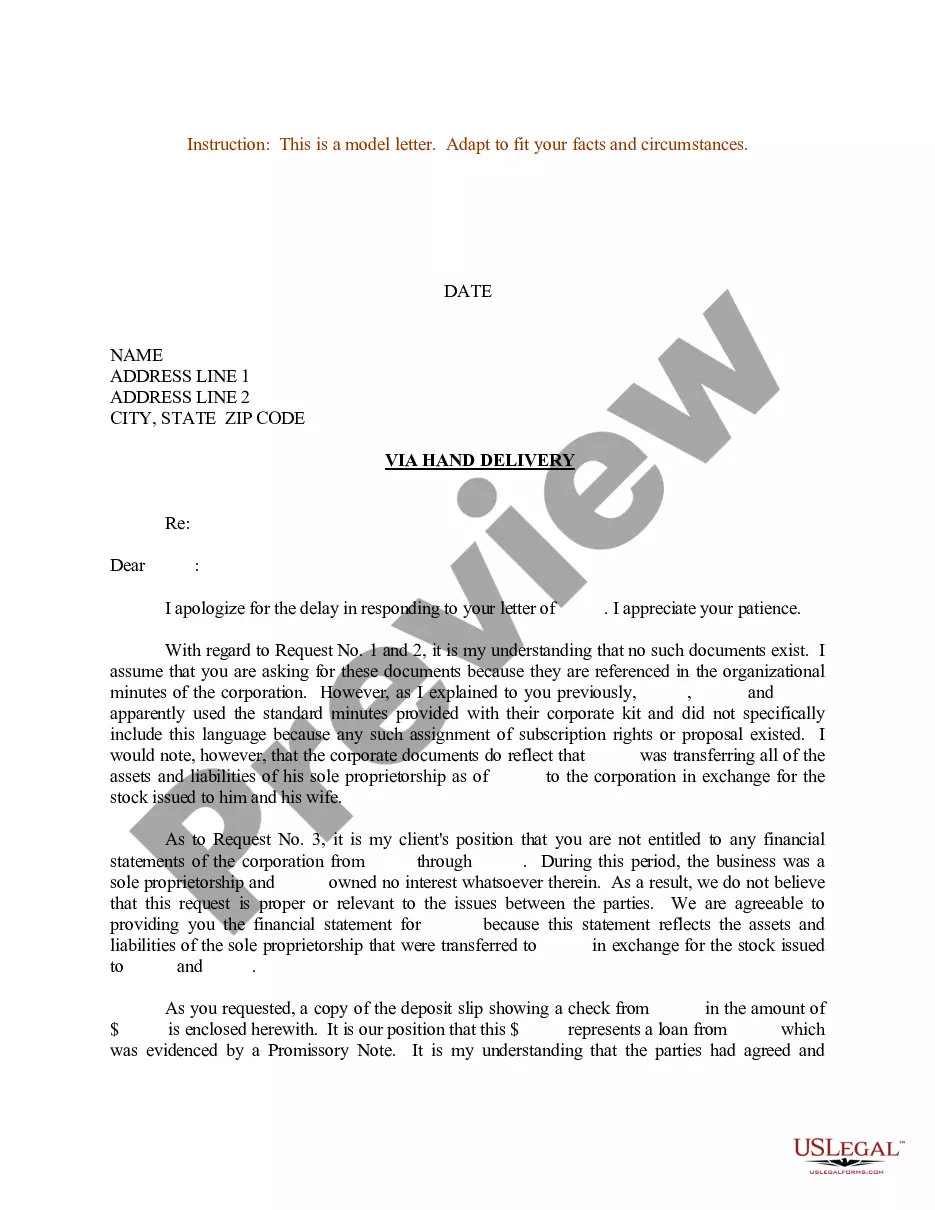
This Letter from Tenant to Landlord serves as official notice for landlords to cease retaliatory threats to evict. This form is essential for tenants to assert their rights when facing potential eviction due to retaliation from landlords, differentiating it from other tenant notification letters by specifically addressing retaliatory actions, which can often violate tenant protection laws.
Key parts of this document
- Tenant's Information: Name and contact details of the tenant sending the notice.
- Landlord's Information: Name and address of the landlord or their authorized agent.
- Date: The date the notice is completed and delivered.
- Notice Content: A statement that the landlord must cease retaliatory eviction threats and possible legal consequences if not complied with.
- Signature: The tenant's signature confirming the notice.
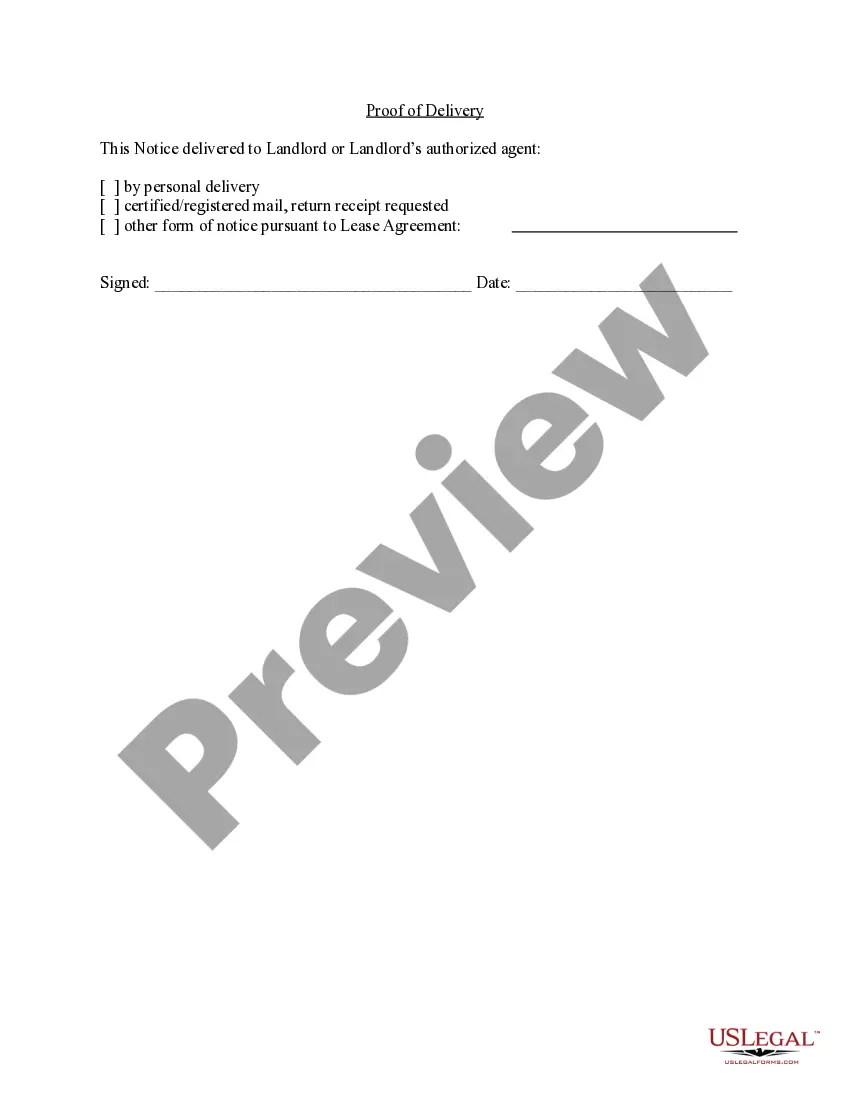
- Proof of Delivery: Method of delivery to the landlord is documented for record keeping.




When this form is needed
This form should be used when a tenant receives retaliatory eviction threats after reporting maintenance issues, participating in tenant organizations, or exercising their legal rights. It is crucial for tenants to document their grievances and assert their protection under local landlord-tenant law. Use this form to formally alert the landlord to cease such behaviors and to protect yourself from illegal eviction.
Who should use this form
- Tenants who have faced threats of eviction due to their complaints or actions.
- Individuals residing in rental properties governed by landlord-tenant laws.
- People seeking to assert their rights in housing disputes with landlords.
How to prepare this document
- Identify the parties: Fill in your name and contact information as the tenant, and the landlord's name and address.
- Enter the date: Write the date you are completing the notice.
- Detail the notice: Clearly state the retaliatory actions taken by the landlord and demand that they cease these actions.
- Sign the notice: Provide your signature to validate the notice.
- Proof of delivery: Document how you deliver the notice to the landlord, whether by mail, in person, or through another method.
Notarization guidance
This form does not typically require notarization unless specified by local law. It's advisable to confirm local regulations regarding formal notices to landlords.
Get your form ready online
Our built-in tools help you complete, sign, share, and store your documents in one place.
Make edits, fill in missing information, and update formatting in US Legal Forms—just like you would in MS Word.
Download a copy, print it, send it by email, or mail it via USPS—whatever works best for your next step.
Sign and collect signatures with our SignNow integration. Send to multiple recipients, set reminders, and more. Go Premium to unlock E-Sign.
If this form requires notarization, complete it online through a secure video call—no need to meet a notary in person or wait for an appointment.
We protect your documents and personal data by following strict security and privacy standards.

Make edits, fill in missing information, and update formatting in US Legal Forms—just like you would in MS Word.

Download a copy, print it, send it by email, or mail it via USPS—whatever works best for your next step.

Sign and collect signatures with our SignNow integration. Send to multiple recipients, set reminders, and more. Go Premium to unlock E-Sign.

If this form requires notarization, complete it online through a secure video call—no need to meet a notary in person or wait for an appointment.

We protect your documents and personal data by following strict security and privacy standards.
Common mistakes to avoid
- Failing to provide accurate landlord contact information.
- Not including the date on the notice.
- Omitting details of the retaliatory behavior for clarity.
- Neglecting to keep a copy of the delivered notice for personal records.
Benefits of using this form online
- Convenience: Download and complete instantly from any location.
- Editability: Customize the form to fit your specific situation effortlessly.
- Reliability: Access attorney-drafted forms you can trust for legal accuracy.
- The legal definition of retaliation may vary by jurisdiction, so tenants should be aware of local laws.
- This letter serves as an essential first step in asserting tenant rights and preventing unfair eviction.
- Retaliatory eviction claims can be difficult to prove; thus, maintaining detailed records is critical.
Quick recap
- This letter is a formal notice to the landlord to cease retaliatory eviction threats.
- It highlights the tenant's rights under the law and serves to protect against unlawful eviction.
- Properly completing and delivering this letter can deter a landlord from pursuing retaliatory actions.
- Retaliatory eviction: An eviction action taken by a landlord in response to a tenant exercising their legal rights.
- Tenant rights: Legal protections established for individuals renting a property, preventing unfair treatment by landlords.
- Proof of delivery: Documentation showing the method and date of delivery of legal correspondence.
Looking for another form?
Form popularity
FAQ
A revenge or retaliatory eviction is when a landlord tries to evict a tenant because they ask for repairs or complain about poor conditions. You're at risk if you are an assured shorthold tenant.If you have these types of tenancy, your landlord must prove to the court that there's a legal reason to evict you.
If you're seeking damages for emotional distress caused by a landlord's discrimination, or punitive damages for especially blatant and intentional discrimination, a lawsuit may well be your best bet. Understand what's involved in suing your landlord. You may file a lawsuit in either federal or state court.
Review Your Lease Before You Sign. Research Local Laws. Keep Records. Pay Your Rent. Maintain Respectful Communication. Seek an Agreeable Solution. Request Repairs in Writing. What Do You Think?
A landlord cannot legally evict you without a court order, whether or not you have a lease.) How long does it take for a landlord to evict a tenant? A landlord can evict a tenant only by going through a formal eviction proceeding, which can take a few weeks from start to finish.
Sue the landlord and whoever for up to $10,000 in small claims court for trespassing, breach of contract, invasion of privacy, and breach of quiet enjoyment; if you are two or more tenants, each can separately sue them for up to $10,000, and a joint action is not required.
Write a letter to your landlord stating that you are aware of your rights as a tenant, that s/he is in clear violation of the law, and that you want the situation remedied with no further harassment. Keep a copy of the letter; it will be good evidence if you have to take the landlord to court later.
Harassment and illegal evictions. It's a crime for your landlord to harass you or try to force you out of a property without using proper procedures. If this happens, you may have a right to claim damages through the court.
Addresses. Date. Tenant names. Status and date of the lease. Why the eviction notice is served (clear and concise explanation) Date tenant must vacate the property. Proof of service or delivery of notice.