Indiana Letter from Landlord to Tenant about Tenant engaging in illegal activity in premises as documented by law enforcement and if repeated, lease terminates
Understanding this form
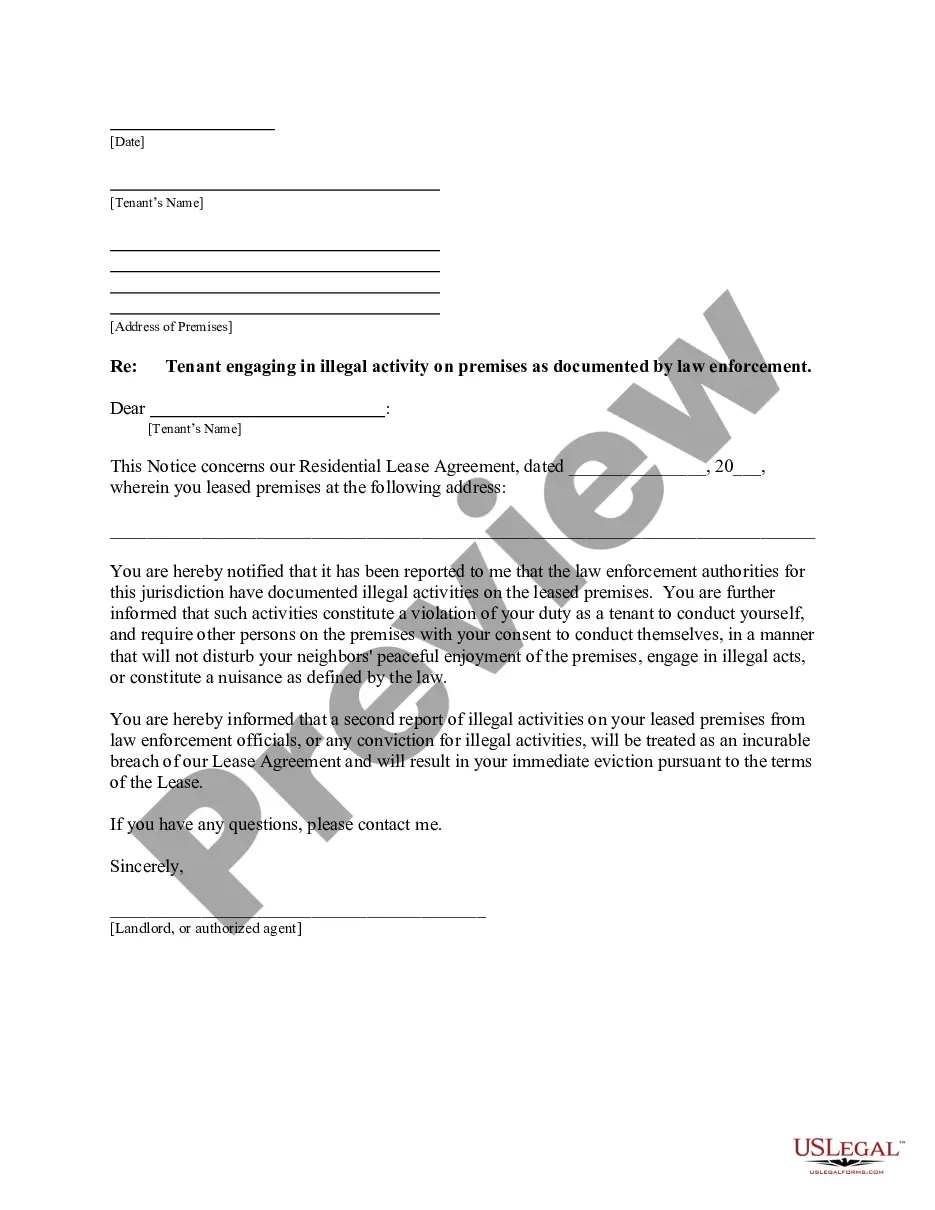
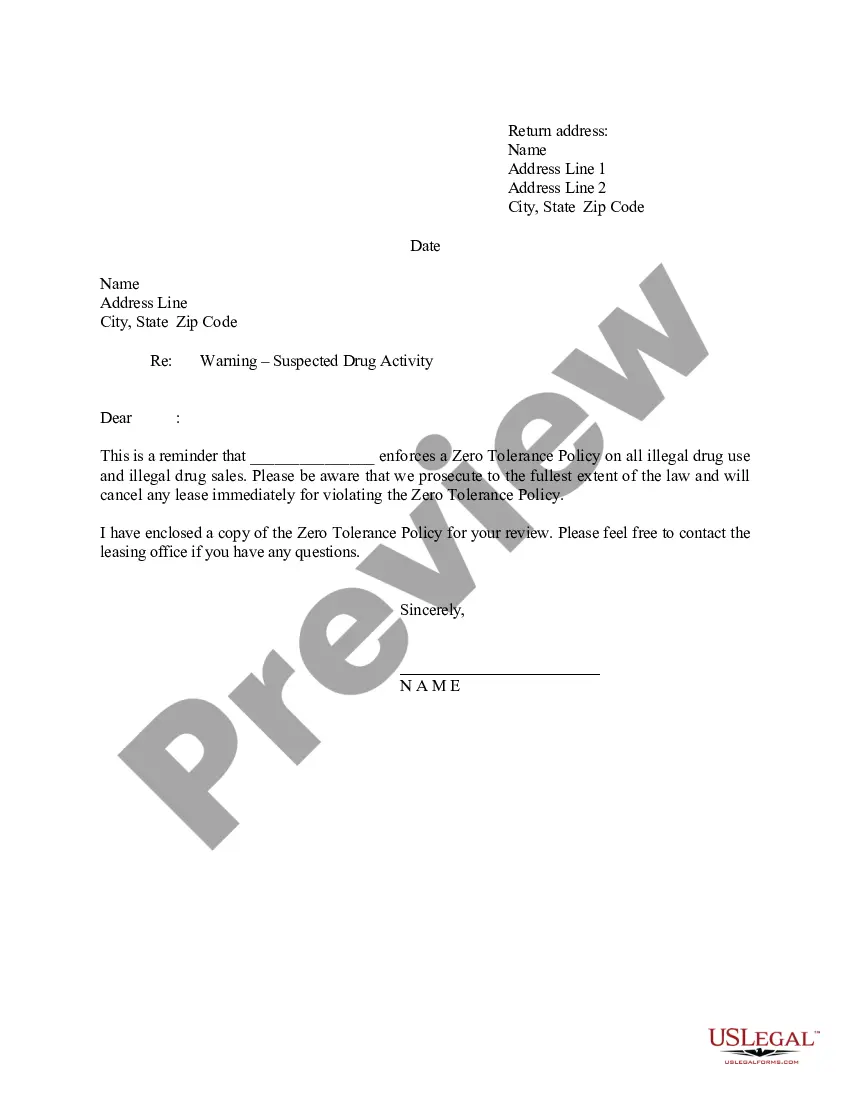
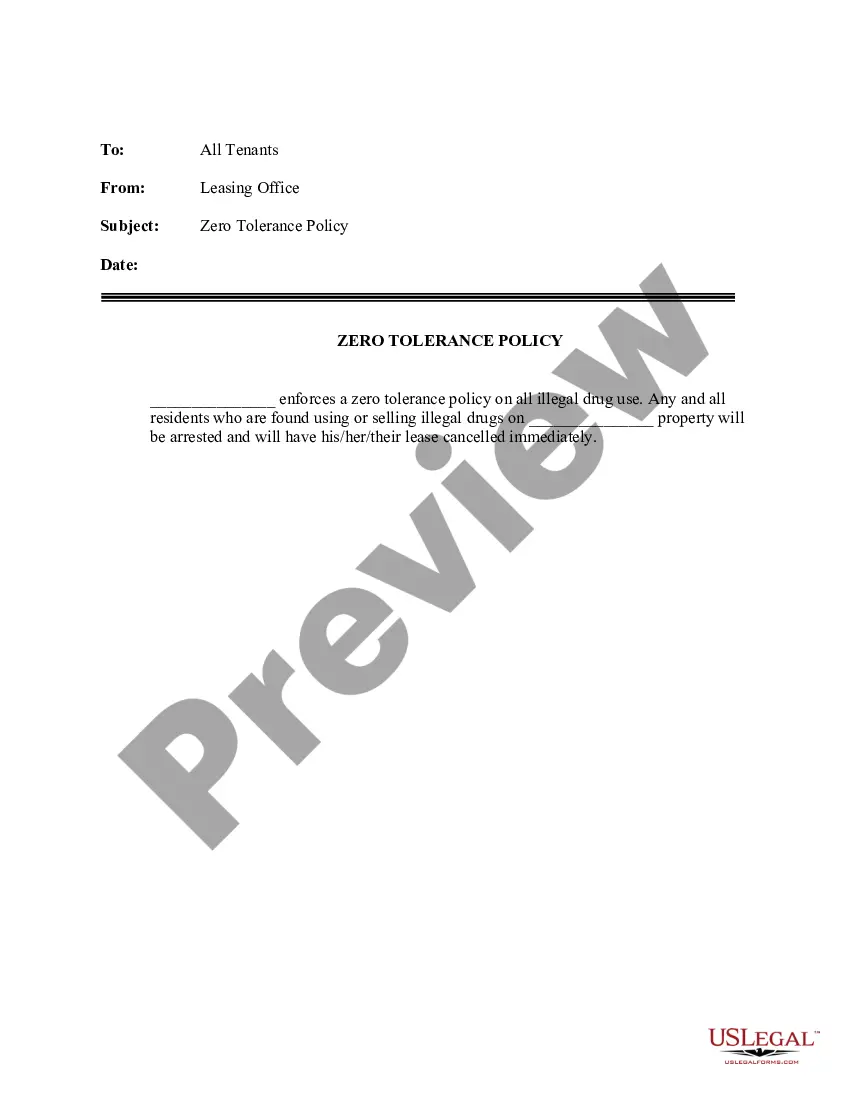
This form is a letter from a landlord to a tenant, notifying them of documented illegal activities occurring on the leased premises. The letter serves to inform the tenant that their actions violate the rental agreement and outlines the consequences of failing to rectify the situation. If illegal activities are reported again, the letter indicates that the lease may be terminated. This form is essential for landlords to maintain the legality and safety of their rental properties, differentiating it from typical eviction notices by focusing specifically on illegal conduct on the premises.
What’s included in this form
- Notification of illegal activities reported by law enforcement.
- Explanation of the tenant's obligations under the lease agreement.
- Consequences of a second report or a conviction for illegal activities.
- Contact information for further questions.
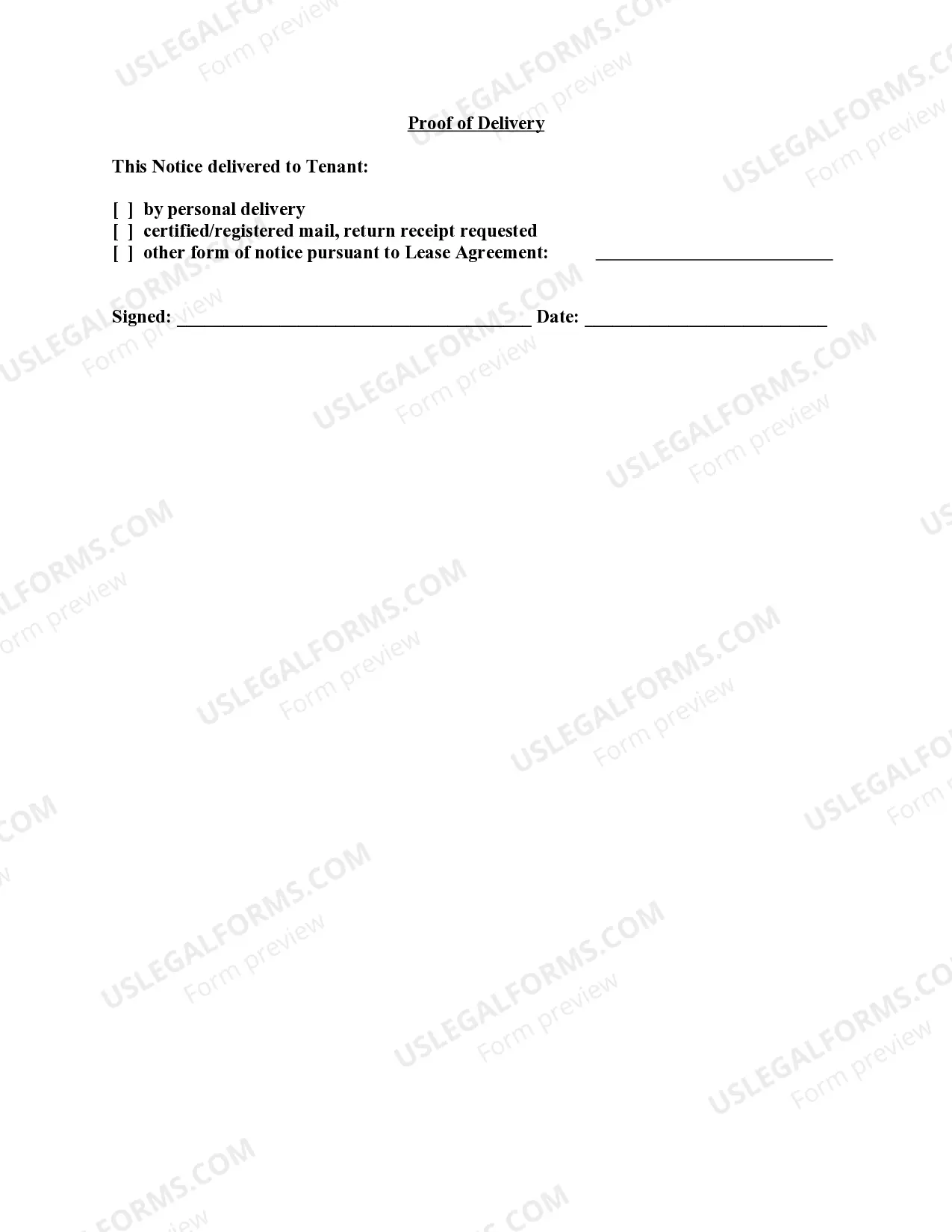

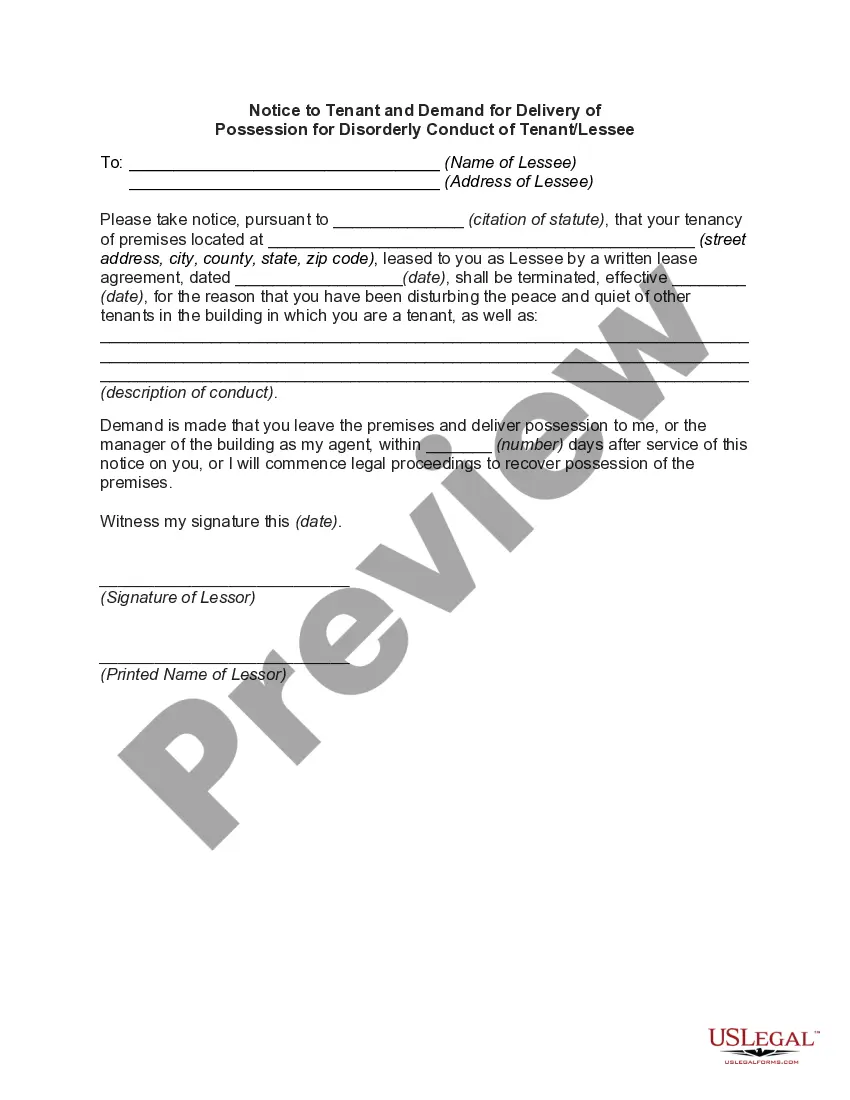
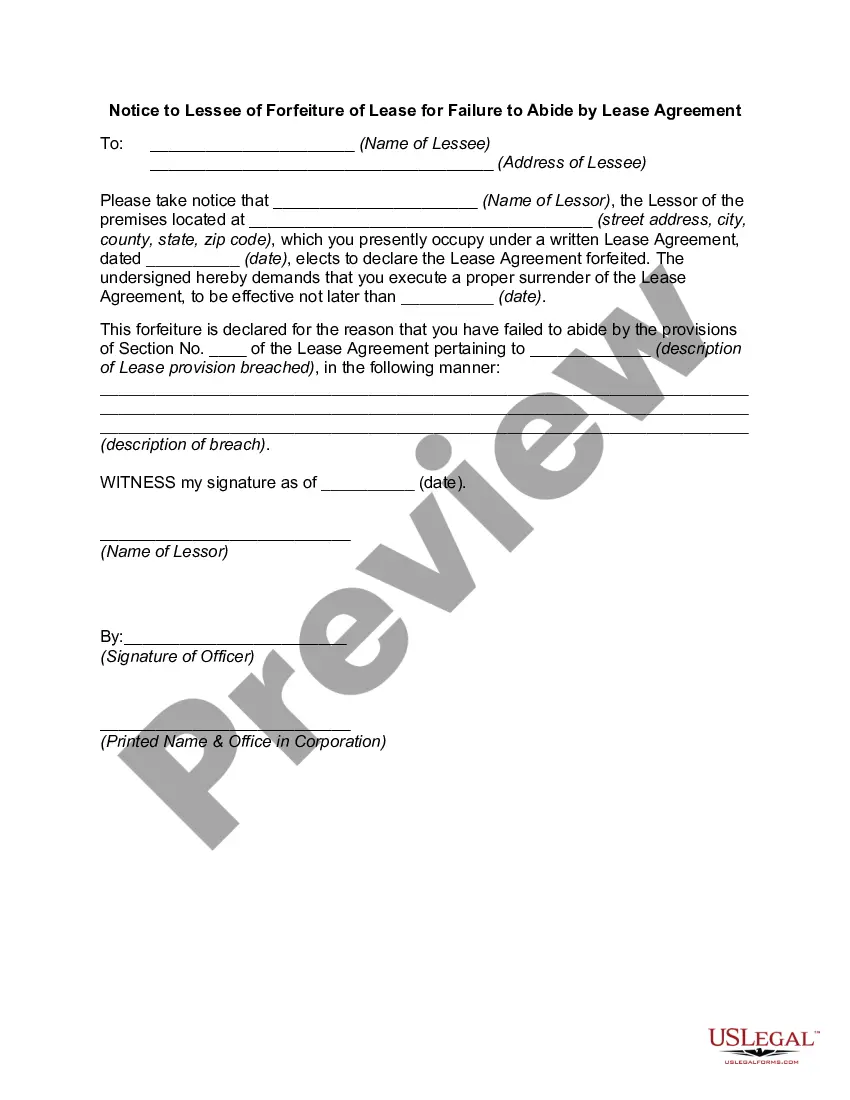
When this form is needed
This form should be used when a landlord receives credible reports from law enforcement regarding illegal activities being conducted on the leased property. It is necessary to address these concerns formally to the tenant, especially if the activity poses risks to neighbors or violates the lease terms. Using this letter ensures that the tenant is made aware of the seriousness of the situation and the potential consequences if repeated violations occur.
Who should use this form
- Landlords who have documented illegal activities reported by law enforcement.
- Property management companies managing rental units.
- Landlords wishing to formally communicate lease violations to tenants.
Steps to complete this form
- Identify the landlord and tenant by entering their full names and contact information.
- Document the specific illegal activities reported by law enforcement.
- State the obligation of the tenant to comply with the lease terms.
- Indicate the consequences of further violations.
- Sign and date the letter to officially notify the tenant.
Notarization requirements for this form
This form does not typically require notarization unless specified by local law. It is recommended to retain a copy for your records and consider sending the letter via certified mail for official documentation of delivery.
Get your form ready online
Our built-in tools help you complete, sign, share, and store your documents in one place.
Make edits, fill in missing information, and update formatting in US Legal Forms—just like you would in MS Word.
Download a copy, print it, send it by email, or mail it via USPS—whatever works best for your next step.
Sign and collect signatures with our SignNow integration. Send to multiple recipients, set reminders, and more. Go Premium to unlock E-Sign.
If this form requires notarization, complete it online through a secure video call—no need to meet a notary in person or wait for an appointment.
We protect your documents and personal data by following strict security and privacy standards.

Make edits, fill in missing information, and update formatting in US Legal Forms—just like you would in MS Word.

Download a copy, print it, send it by email, or mail it via USPS—whatever works best for your next step.

Sign and collect signatures with our SignNow integration. Send to multiple recipients, set reminders, and more. Go Premium to unlock E-Sign.

If this form requires notarization, complete it online through a secure video call—no need to meet a notary in person or wait for an appointment.

We protect your documents and personal data by following strict security and privacy standards.
Common mistakes to avoid
- Failing to accurately document specific illegal activities.
- Not sending the letter through a method that confirms receipt by the tenant.
- Using vague language that does not clearly outline the consequences of continued illegal activity.
Why use this form online
- Convenience of downloading and customizing the form quickly.
- Editability to meet specific needs and legal requirements.
- Reliability of having a legally compliant template drafted by attorneys.
- The letter serves as a formal warning and documentation of the tenantâs illegal activity.
- It clearly outlines the potential for eviction based on continued violations, which can be essential in legal proceedings.
Quick recap
- This form is an essential tool for landlords dealing with tenant violations related to illegal activities.
- It serves as a documented warning before proceeding with eviction.
- Landlords should ensure the letter is clear, concise, and compliant with local laws.
Looking for another form?




Form popularity
FAQ
In Indiana, a landlord must return any remaining security deposit to a tenant within 45 days of lease termination. This timeline is crucial for maintaining a lawful rental agreement. If conditions related to illegal activities occur, the landlord may issue an Indiana Letter from Landlord to Tenant about Tenant engaging in illegal activity in premises as documented by law enforcement and if repeated, lease terminates.
Your name, and the landlord's name and address. The date you're writing the letter. Informing the landlord you're breaking your lease early. The reason why you're breaking your lease. The building and apartment you're vacating. The date by which you're vacating.
Tell Them The Problem & Consequences. Explain the reason that you want the tenant to go. Offer Them a Way Out. Let the tenant know that you are willing to give them a lump sum of cash in agreement for leaving the property. The Release.
Be in writing. be signed and dated by you as the property manager, or by your client. be properly addressed to the tenant. give the day on which the residential tenancy agreement is terminated and by which the tenant is required to vacate. where appropriate, give the grounds or reason for the notice.
A lease is automatically void when it is against the law, such as a lease for an illegal purpose. In other circumstances, like fraud or duress, a lease can be declared void at the request of one party but not the other.
A landlord cannot legally evict you without a court order, whether or not you have a lease.) How long does it take for a landlord to evict a tenant? A landlord can evict a tenant only by going through a formal eviction proceeding, which can take a few weeks from start to finish.
The rental property address, including unit number (if applicable) The names of all tenants on the lease agreement. The date the lease violation notice was written. The specific reason for the notice. The time and date the violation occurred (if applicable)
When a crime occurs at a rental property, the tenant is responsible for insuring his or her possessions, while the landlord is responsible for the premises and any damage incurred. The only exception would be in the highly unlikely event that the landlord could prove that you were somehow responsible for the damage.
Send a 3-day notice to fix or quit. If the tenant doesn't follow through with a fix, visit your local courthouse and begin a filing for eviction. In some states, you can file to only evict the unauthorized tenant. In others, you'll have the option to evict your tenant as well as the unauthorized occupant.
If you're seeking damages for emotional distress caused by a landlord's discrimination, or punitive damages for especially blatant and intentional discrimination, a lawsuit may well be your best bet. Understand what's involved in suing your landlord. You may file a lawsuit in either federal or state court.