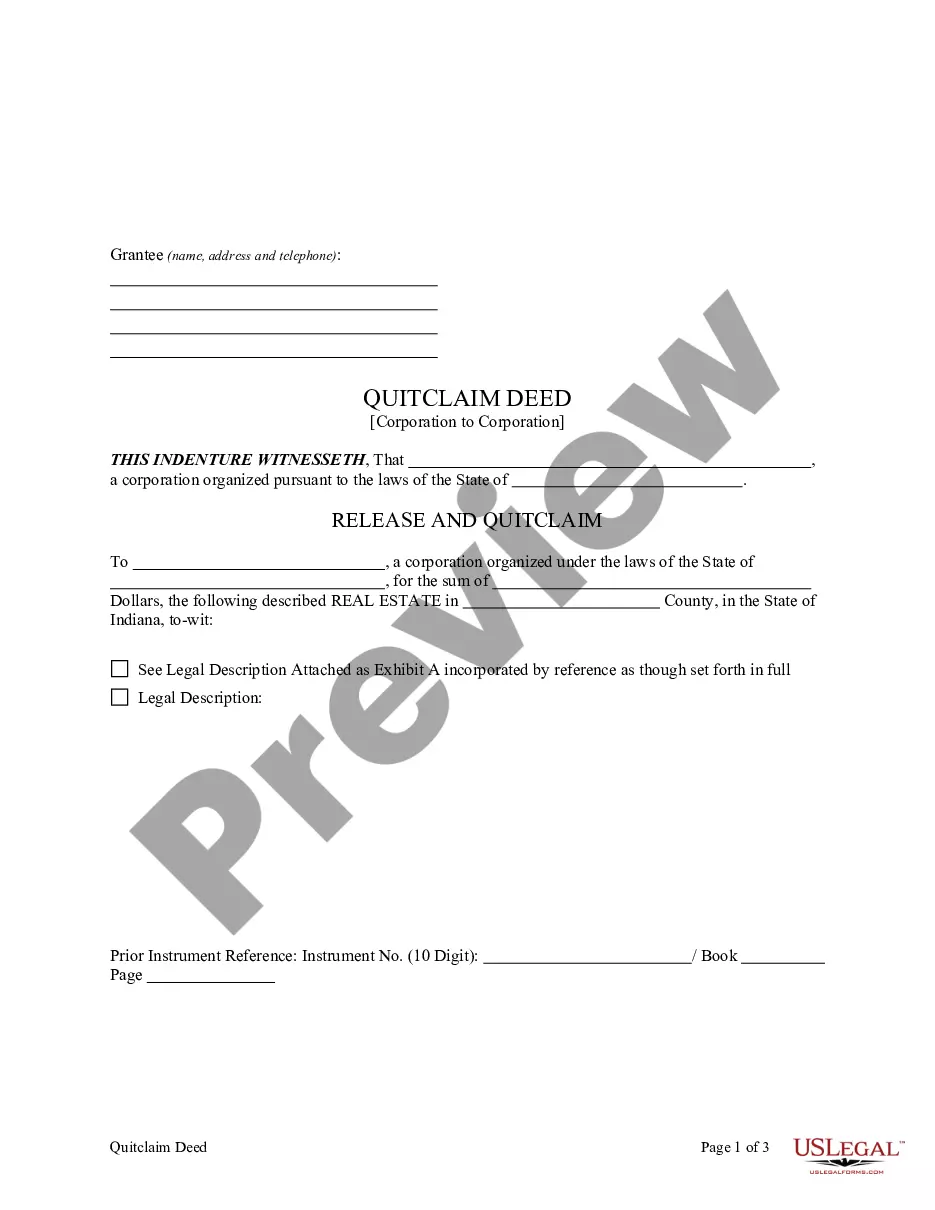
Indiana Quitclaim Deed from Husband to Himself and Wife
About this form
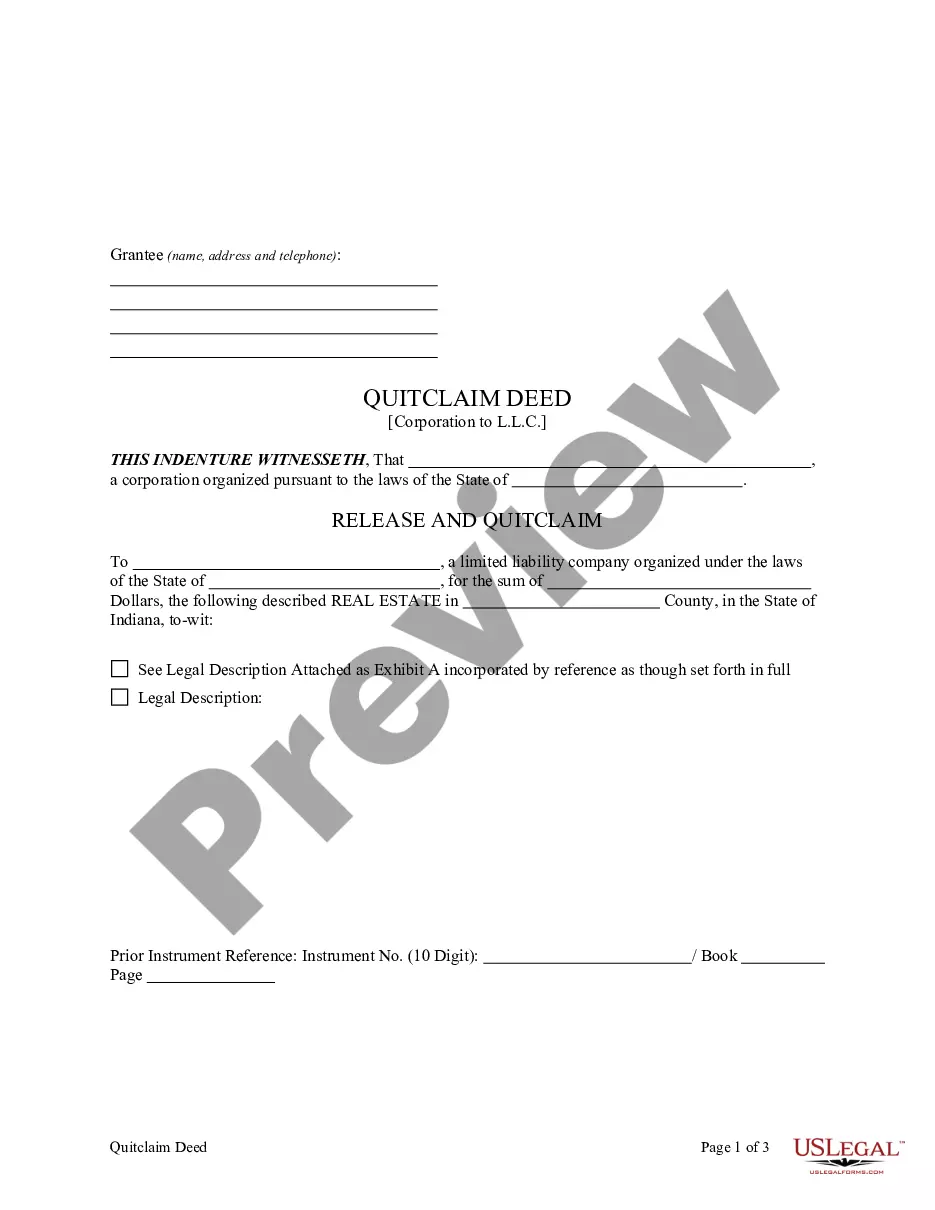
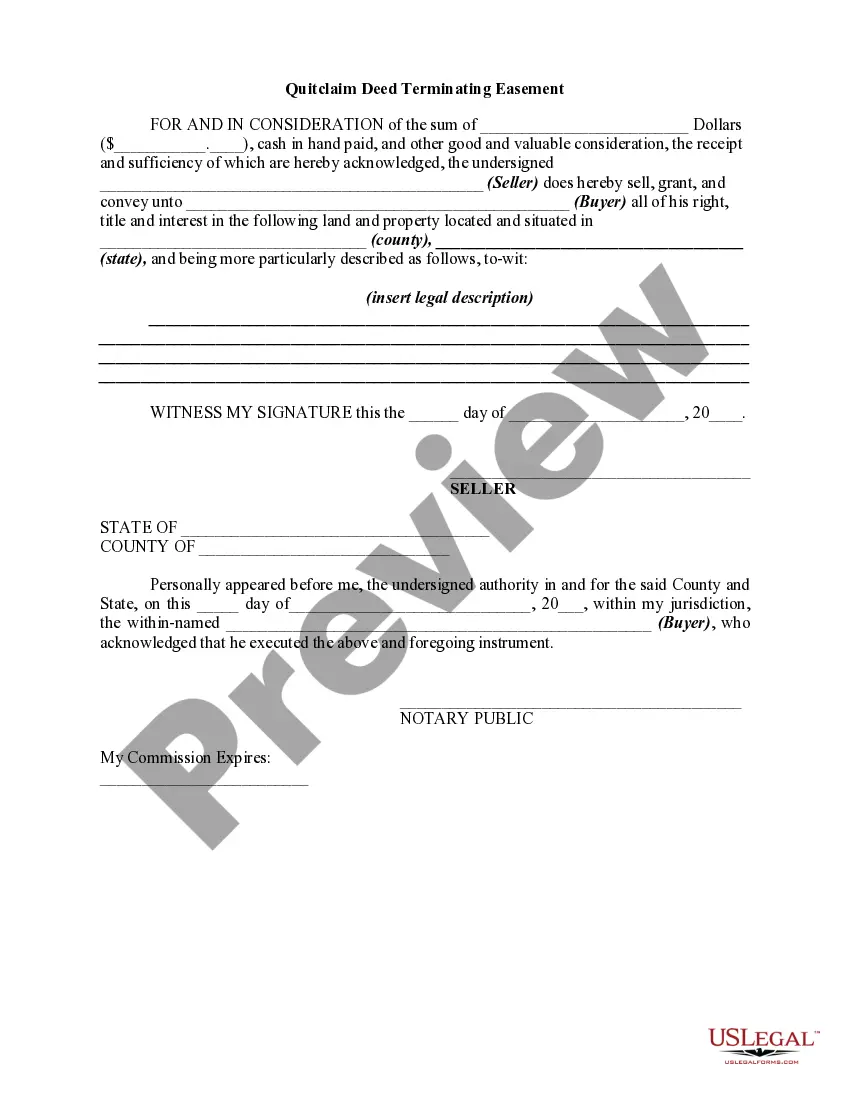
The Quitclaim Deed from Husband to Himself and Wife is a legal document that allows a husband to transfer property ownership to himself and his wife without any warranties concerning the property title. This form is distinct from warranty deeds, which guarantee the grantor's right to sell the property and defend against claims. It is primarily used by couples looking to clarify ownership or add a spouse to the title of a property.
Form components explained
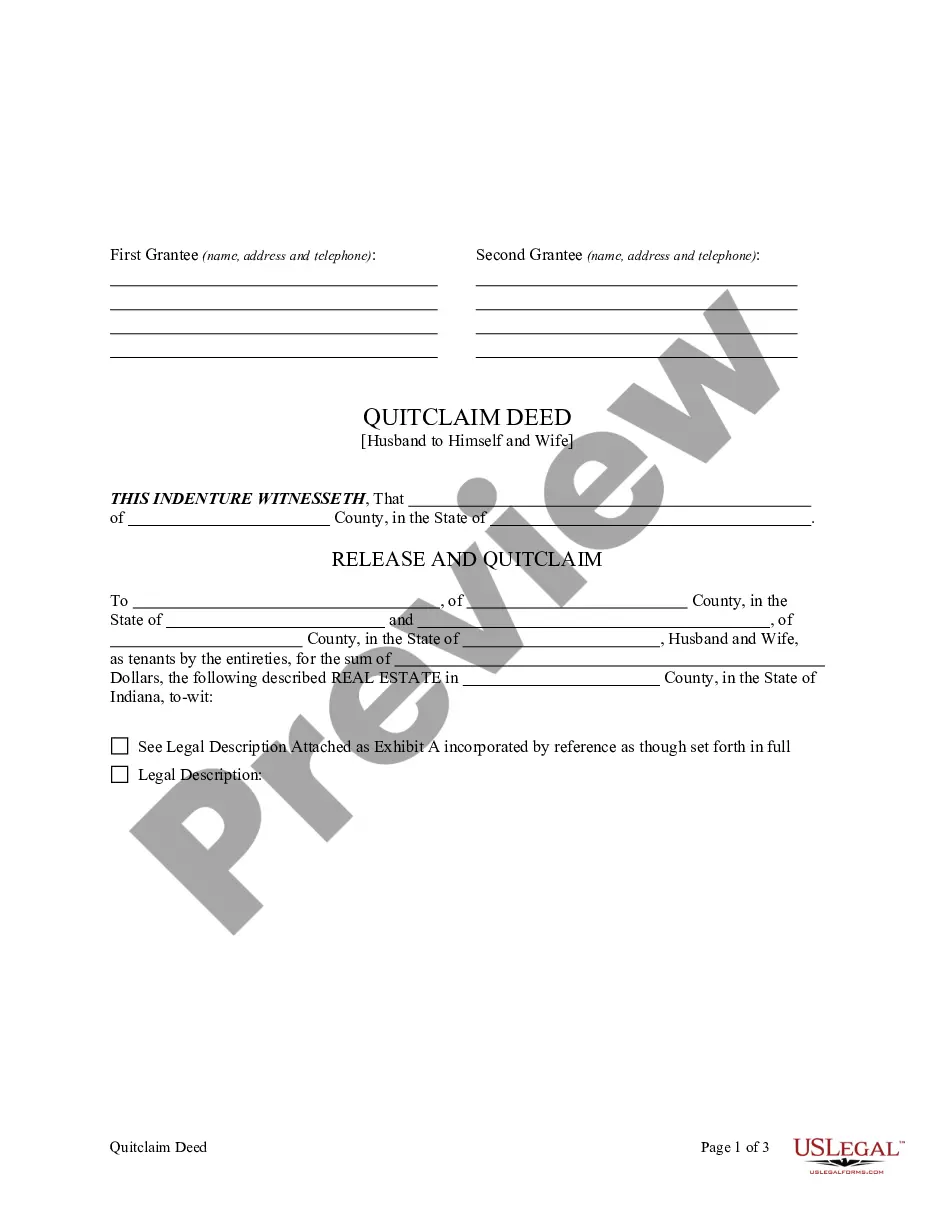
- The names and addresses of the grantor (husband) and grantees (husband and wife).
- A legal description of the property being transferred.
- The statement of conveyance that indicates the nature of the transfer.
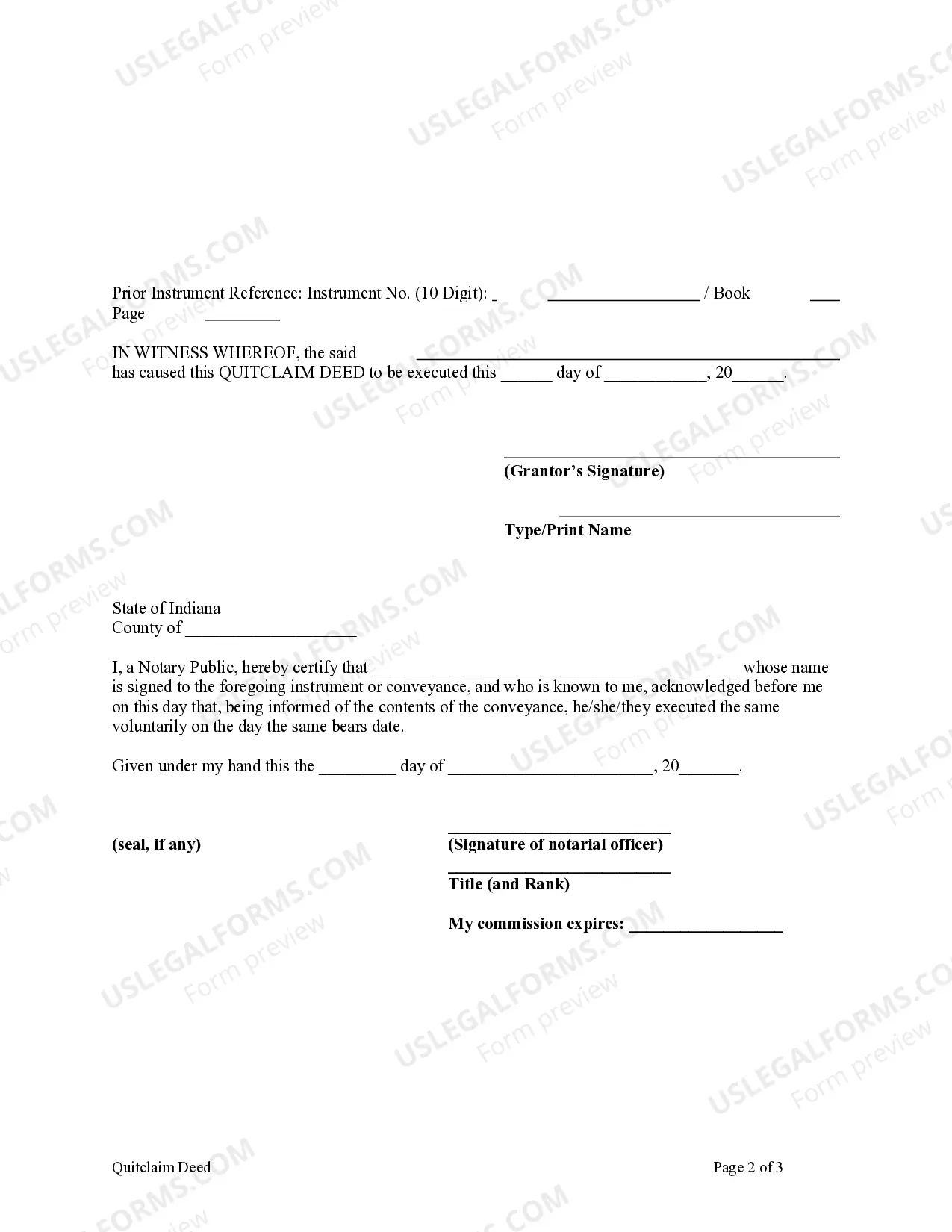
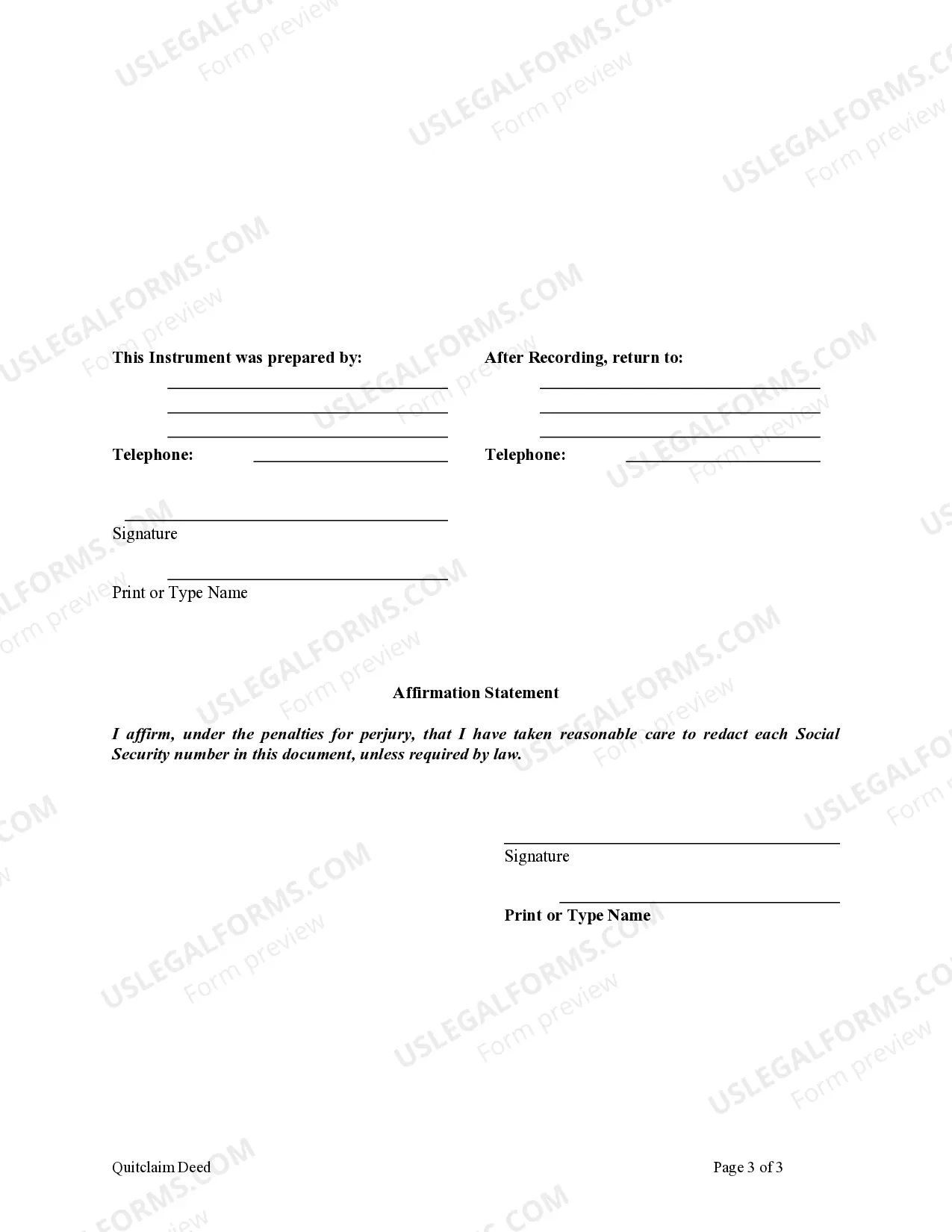
- The signature of the grantor to authenticate the transaction.
- The date of the transaction.





When this form is needed
This form is useful when a husband wishes to grant property rights to himself and his wife. Common scenarios include situations such as marriage, adding a spouse to the title, or estate planning when couples want to ensure joint ownership of their property. It can also be used to clear any title issues by explicitly stating ownership after a marriage or any change in marital status.
Who this form is for
- Married couples wanting to modify property ownership.
- Spouses looking to add each other to the property title for legal or estate planning purposes.
- Individuals seeking to simplify their property title after changes in marital status.
Completing this form step by step
- Identify the parties involved: the grantor (husband) and the grantees (husband and wife).
- Specify the property being transferred by providing the legal description.
- Complete the statement of conveyance clearly indicating the ownership transfer.
- Have the grantor sign the form to validate the transaction.
- Enter the date of the transfer at the bottom of the document.
Notarization requirements for this form
This form does not typically require notarization unless specified by local law. Always check your state regulations to ensure compliance with legal requirements.
Get your form ready online
Our built-in tools help you complete, sign, share, and store your documents in one place.
Make edits, fill in missing information, and update formatting in US Legal Forms—just like you would in MS Word.
Download a copy, print it, send it by email, or mail it via USPS—whatever works best for your next step.
Sign and collect signatures with our SignNow integration. Send to multiple recipients, set reminders, and more. Go Premium to unlock E-Sign.
If this form requires notarization, complete it online through a secure video call—no need to meet a notary in person or wait for an appointment.
We protect your documents and personal data by following strict security and privacy standards.

Make edits, fill in missing information, and update formatting in US Legal Forms—just like you would in MS Word.

Download a copy, print it, send it by email, or mail it via USPS—whatever works best for your next step.

Sign and collect signatures with our SignNow integration. Send to multiple recipients, set reminders, and more. Go Premium to unlock E-Sign.

If this form requires notarization, complete it online through a secure video call—no need to meet a notary in person or wait for an appointment.

We protect your documents and personal data by following strict security and privacy standards.
Common mistakes to avoid
- Not including a complete legal description of the property.
- Failing to properly sign the document, which can invalidate the deed.
- Using outdated forms that do not comply with current state laws.
Benefits of using this form online
- Immediate access to downloadable templates tailored by licensed attorneys.
- Convenient editing options to customize the form for your specific needs.
- Reliable and secure process for completing legal documentation at your own pace.
Legal use & context
- The quitclaim deed effectively transfers any interests the husband has in the property to both himself and his wife.
- It is vital to ensure there are no existing liens on the property, as the quitclaim deed does not guarantee clear title.
- This form may not be used to sell or transfer property interests to parties other than the stated individuals.
What to keep in mind
- The Quitclaim Deed allows a husband to transfer property interest to himself and his wife.
- Understanding the implications of this form is crucial, as it does not guarantee clear title.
- Ensure compliance with state-specific requirements for valid execution and recording.
Looking for another form?
Form popularity
FAQ
Adding someone to your house deed requires the filing of a legal form known as a quitclaim deed. When executed and notarized, the quitclaim deed legally overrides the current deed to your home. By filing the quitclaim deed, you can add someone to the title of your home, in effect transferring a share of ownership.
Write the Deed Fill out the quit claim deed form, which can be obtained online, or write your own using the form as a guide. The person giving up the interest in the property is the grantor, and the person receiving the interest is the grantee.
But you might be wondering if an owner can transfer a deed to another person without a real estate lawyer. The answer is yes. Parties to a transaction are always free to prepare their own deeds.A quitclaim deed, for example, is far simpler than a warranty deed.
A person who signs a quitclaim deed to transfer property they do not own results in no title at all being transferred since there is no actual ownership interest. The quitclaim deed only transfers the type of title you own.
Step 1: Find your IN quitclaim deed form. Step 2: Gather the information you need. Step 3: Enter the information about the parties. Step 4: Enter the legal description of the property. Step 5: Have the grantor sign the document in the presence of a Notary Public.
Documents must be notarized. Documents executed or acknowledged in Indiana must include a statement that includes: The names of all those signing or serving as a witness on the document must be identical throughout the document and must be printed or typewritten under each signature.
The Quit Claim Deed form uses the terms of Grantor (Seller or Owner of said property) and Grantee (Buyer of said property) for the two parties involved. First, the parties must fill in the date. Then, write in the name of the county and state in which the property is located.