Indiana Warranty Deed from Individual to Husband and Wife
What this document covers
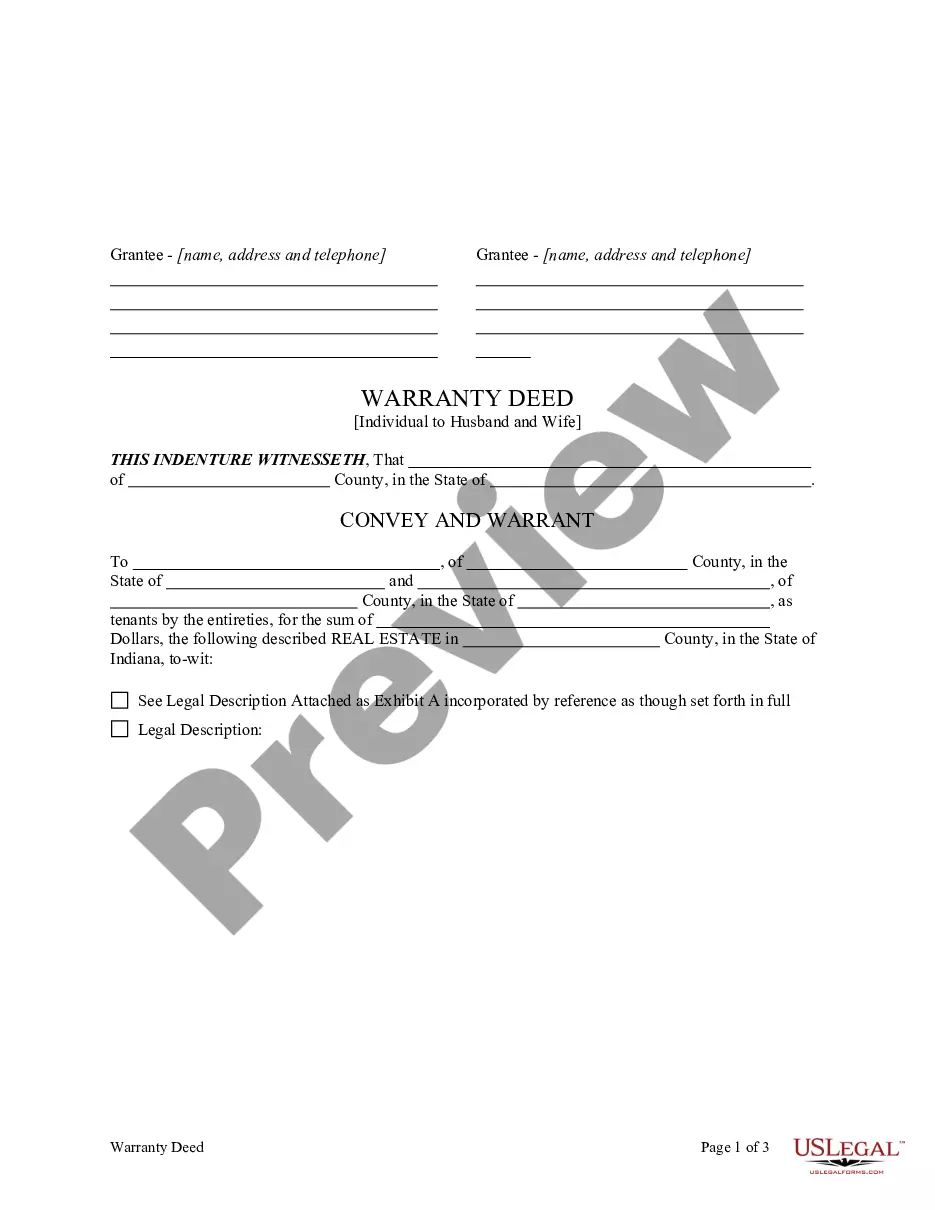
A warranty deed from an individual to a husband and wife is a legal document that transfers ownership of real estate from one individual (the grantor) to a couple (the grantees). This form ensures that the property is being transferred free of any claims or liens, providing a guarantee of clear title. Unlike quitclaim deeds, which offer no warranties regarding the property title, warranty deeds provide a level of protection to the grantees, making this form essential for secure real estate transactions between individuals and couples.
Main sections of this form
- Identification of the grantor (individual transferring the property).
- Details of the grantees (husband and wife receiving the property).
- Legal description of the property being transferred.
- Statement of warranty, ensuring the title is clear and free from defects.
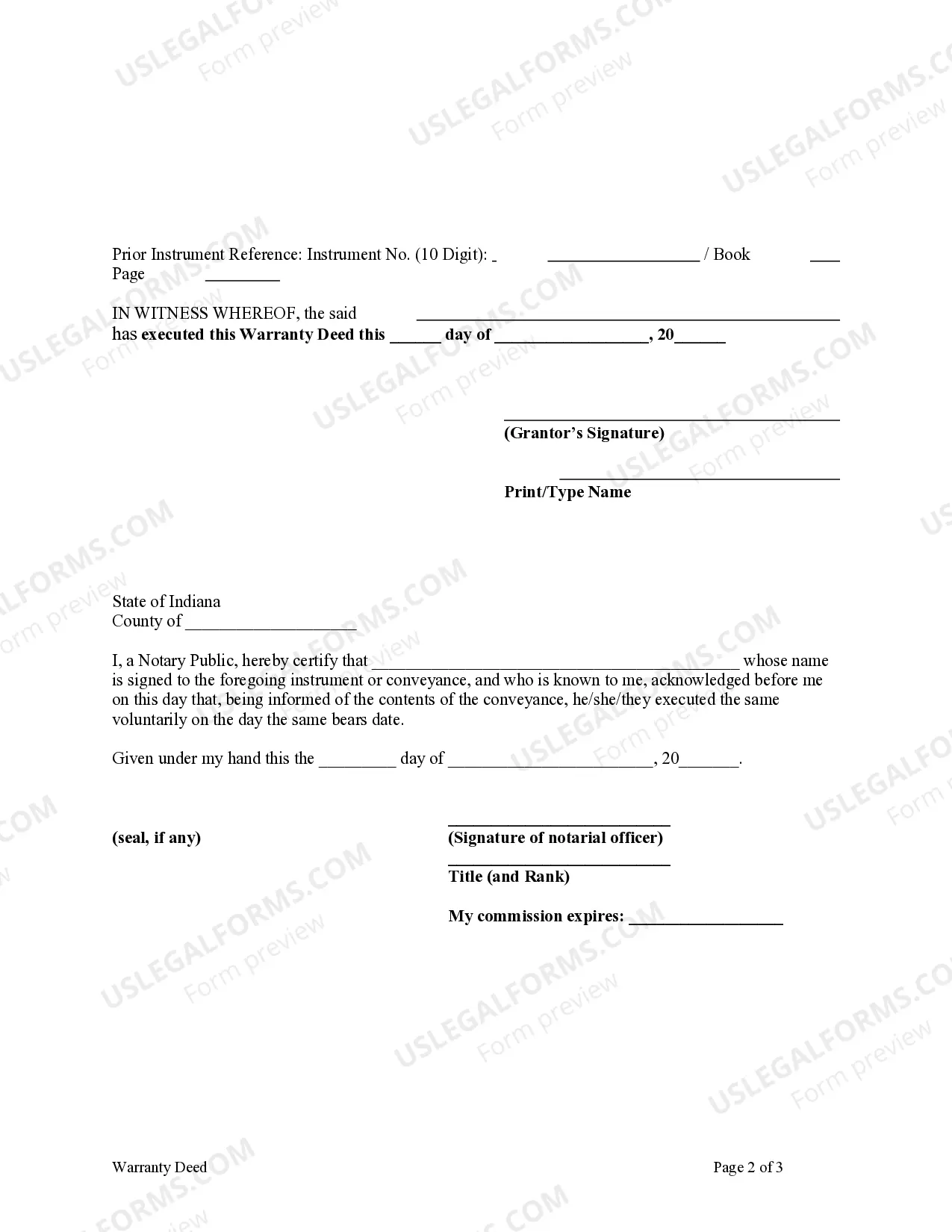
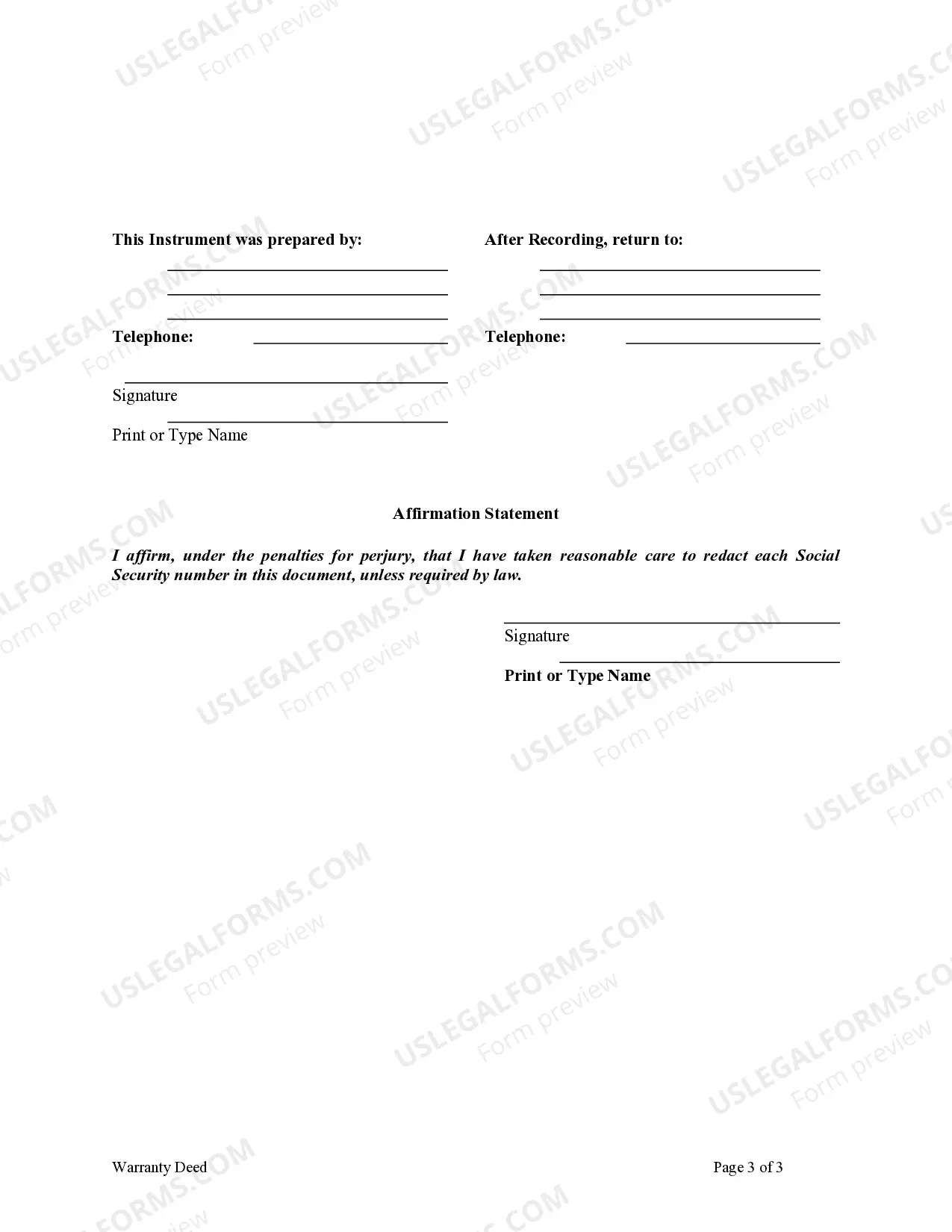
- Signatures of the grantor and, if required, a witness.





Situations where this form applies
This form is useful when an individual wants to transfer real estate ownership to a married couple. Common situations include gifting property, restructuring ownership, or when purchasing a home directly from a seller who is an individual. It is an ideal choice when the grantor wants to ensure the couple has full legal rights over the property without any future disputes regarding ownership.
Intended users of this form
- Individuals transferring property to a husband and wife.
- Couples looking to obtain property ownership securely.
- Real estate agents or attorneys facilitating property transfers.
How to prepare this document
- Identify the grantor's full name and address.
- Specify the names and addresses of the husband and wife as grantees.
- Include the legal description of the property being transferred.
- Write the warranty clause, confirming the grantor's responsibility for the title.
- Sign the document in the presence of a witness or notary, if required.
Does this form need to be notarized?
This form does not typically require notarization unless specified by local law. It is always a good practice to have the document notarized to prevent any future disputes over authenticity and to enhance its legal standing.
Get your form ready online
Our built-in tools help you complete, sign, share, and store your documents in one place.
Make edits, fill in missing information, and update formatting in US Legal Forms—just like you would in MS Word.
Download a copy, print it, send it by email, or mail it via USPS—whatever works best for your next step.
Sign and collect signatures with our SignNow integration. Send to multiple recipients, set reminders, and more. Go Premium to unlock E-Sign.
If this form requires notarization, complete it online through a secure video call—no need to meet a notary in person or wait for an appointment.
We protect your documents and personal data by following strict security and privacy standards.

Make edits, fill in missing information, and update formatting in US Legal Forms—just like you would in MS Word.

Download a copy, print it, send it by email, or mail it via USPS—whatever works best for your next step.

Sign and collect signatures with our SignNow integration. Send to multiple recipients, set reminders, and more. Go Premium to unlock E-Sign.

If this form requires notarization, complete it online through a secure video call—no need to meet a notary in person or wait for an appointment.

We protect your documents and personal data by following strict security and privacy standards.
Mistakes to watch out for
- Failing to provide a complete legal description of the property.
- Not signing the document properly, including missing witnesses or notary signatures.
- Not ensuring that all parties' legal names are correctly spelled and up to date.
- Neglecting to check state-specific requirements for the warranty deed.
Why use this form online
- Convenience: Download and complete your Warranty Deed from the comfort of your home.
- Editability: Easily customize the form to fit your unique needs.
- Reliability: Access forms drafted by licensed attorneys, ensuring legal validity and compliance.
What to keep in mind
- A warranty deed is essential for transferring property to a married couple, providing title security.
- Ensure all parties are accurately named and that the legal description of the property is complete.
- Consult local laws to understand any notarization or witnessing requirements.
Looking for another form?





Form popularity
FAQ
To transfer a property title to a family member in Indiana, you will often use an Indiana Warranty Deed from Individual to Husband and Wife, or a similar deed type. This document needs to be signed, notarized, and recorded with the county recorder’s office. Utilizing US Legal Forms provides access to effective templates that help make this transfer straightforward.
The easiest way to grant your spouse title to your home is via a quitclaim deed (Californians generally use an interspousal grant deed). With a quitclaim deed, you can name your spouse as the property's joint owner. The quitclaim deed must include the property's description, including its boundary lines.
To add a spouse to a deed, all you have to do is literally fill out, sign and record a new deed in your county recorder's office.
If you live in a common-law state, you can keep your spouse's name off the title the document that says who owns the property.You can put your spouse on the title without putting them on the mortgage; this would mean that they share ownership of the home but aren't legally responsible for making mortgage payments.
The general way to convey real property in Indiana is through a warranty deed. In certain cases, you may also use a quitclaim deed, a deed of trust or a grant deed. Most deeds require the name of the grantor who is the current owner; the grantee (the new owner) as well as the legal property description.
Yes you can. This is called a transfer of equity but you will need the permission of your lender. If you are not married or in a civil partnership you may wish to consider creating a deed of trust and a living together agreement which we can explain to you.
Locate the prior deed to the property. Create the new deed. Sign the new deed. Record the original deed.
Grantor's name. Grantee's name and address. Description of grantee (ex: unmarried man, husband and wife, joint tenants) Person who requested grant deed. Address of real estate that is being transferred. Legal description of property (lot number) Original title order number for property.
Adding someone to your house deed requires the filing of a legal form known as a quitclaim deed. When executed and notarized, the quitclaim deed legally overrides the current deed to your home. By filing the quitclaim deed, you can add someone to the title of your home, in effect transferring a share of ownership.
A deed, of course, is a legal document representing property ownership. But you might be wondering if an owner can transfer a deed to another person without a real estate lawyer. The answer is yes. Parties to a transaction are always free to prepare their own deeds.