Illinois Mutual Wills Package with Last Wills and Testaments for Married Couple with Minor Children

What this document covers
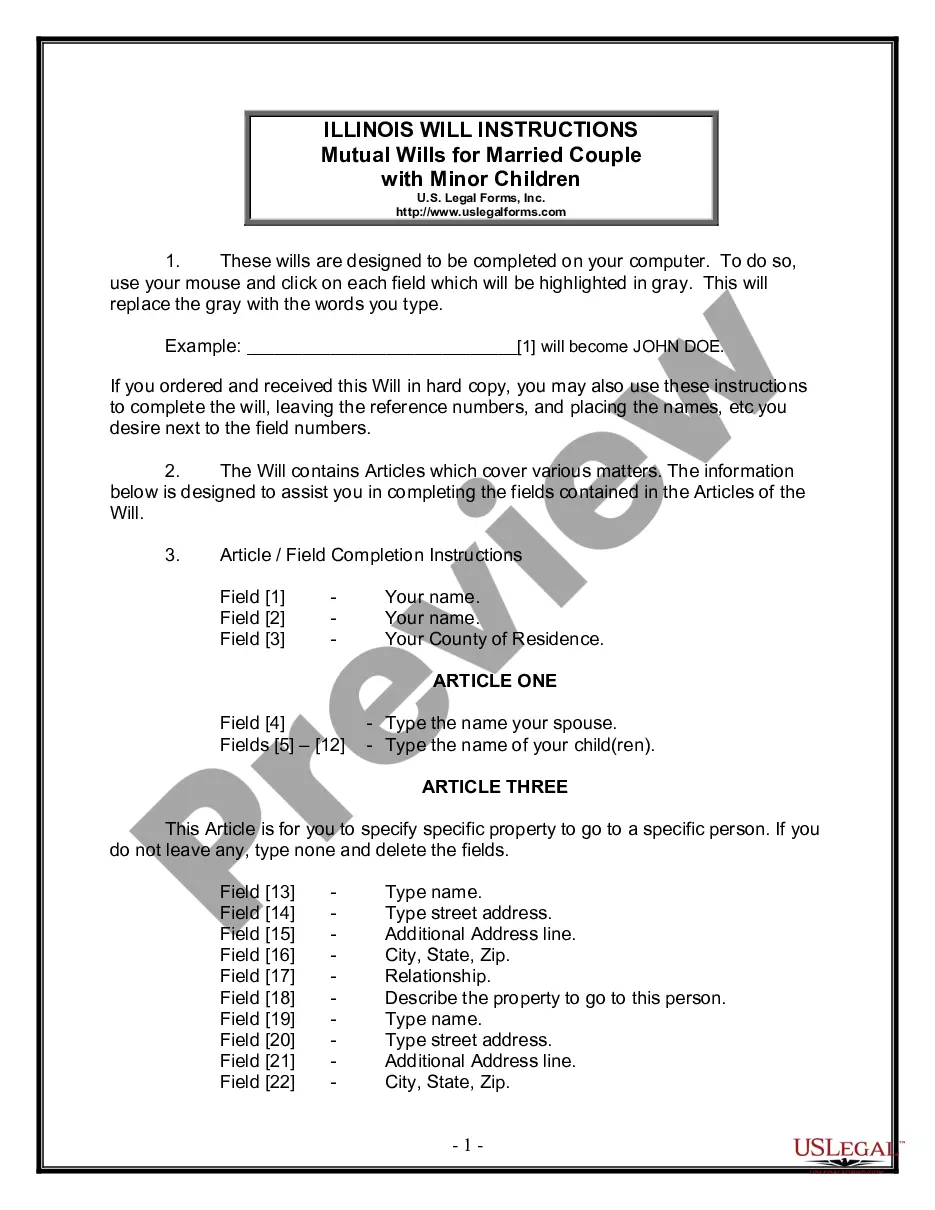
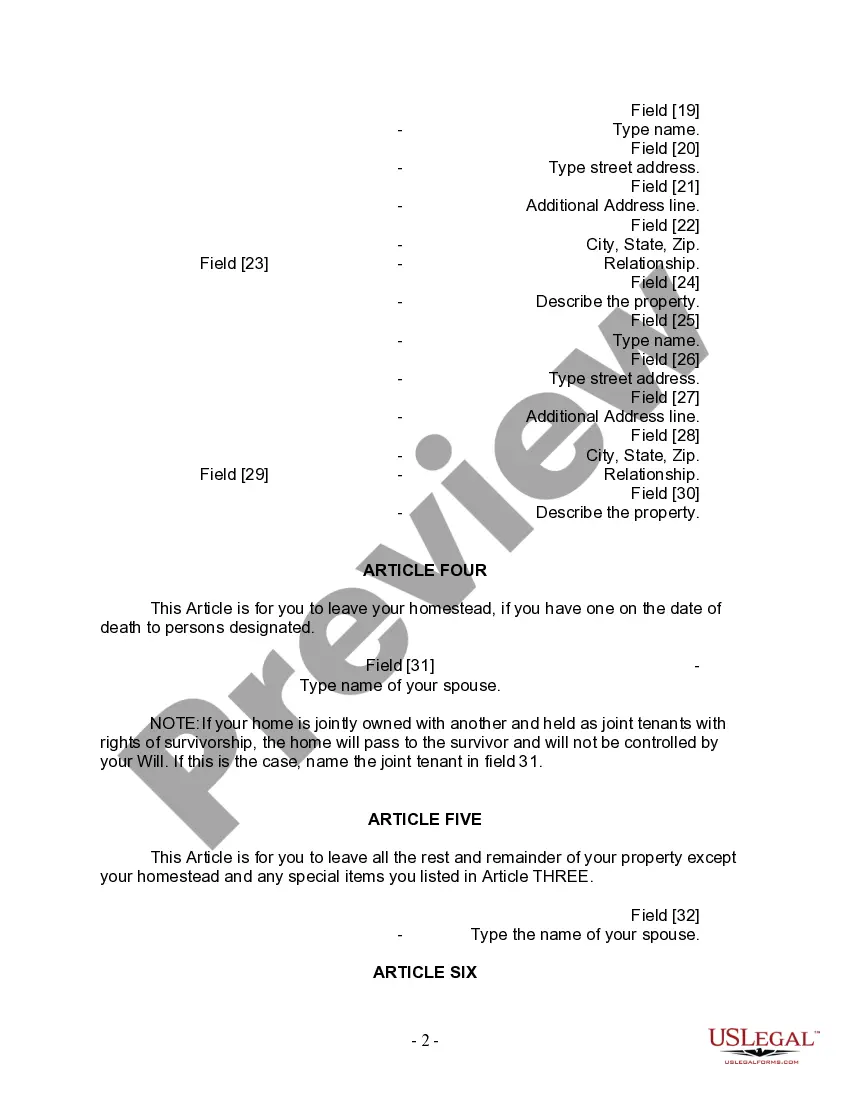
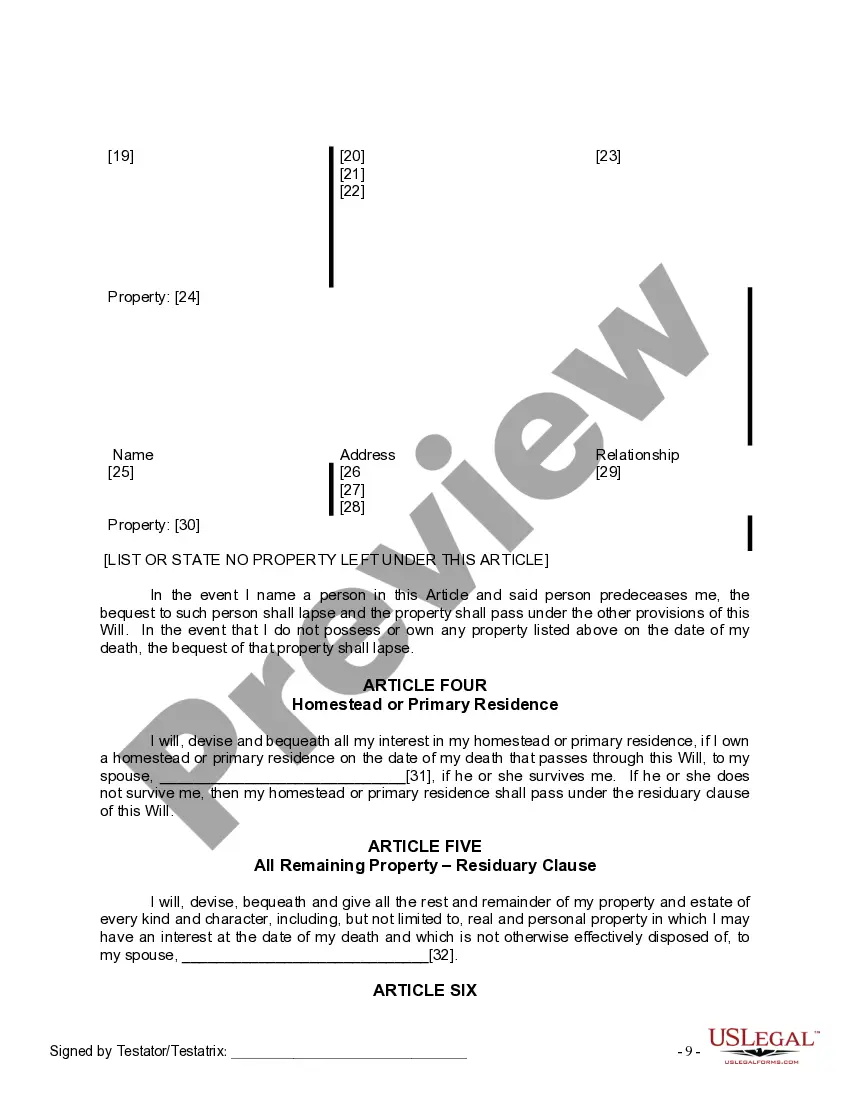
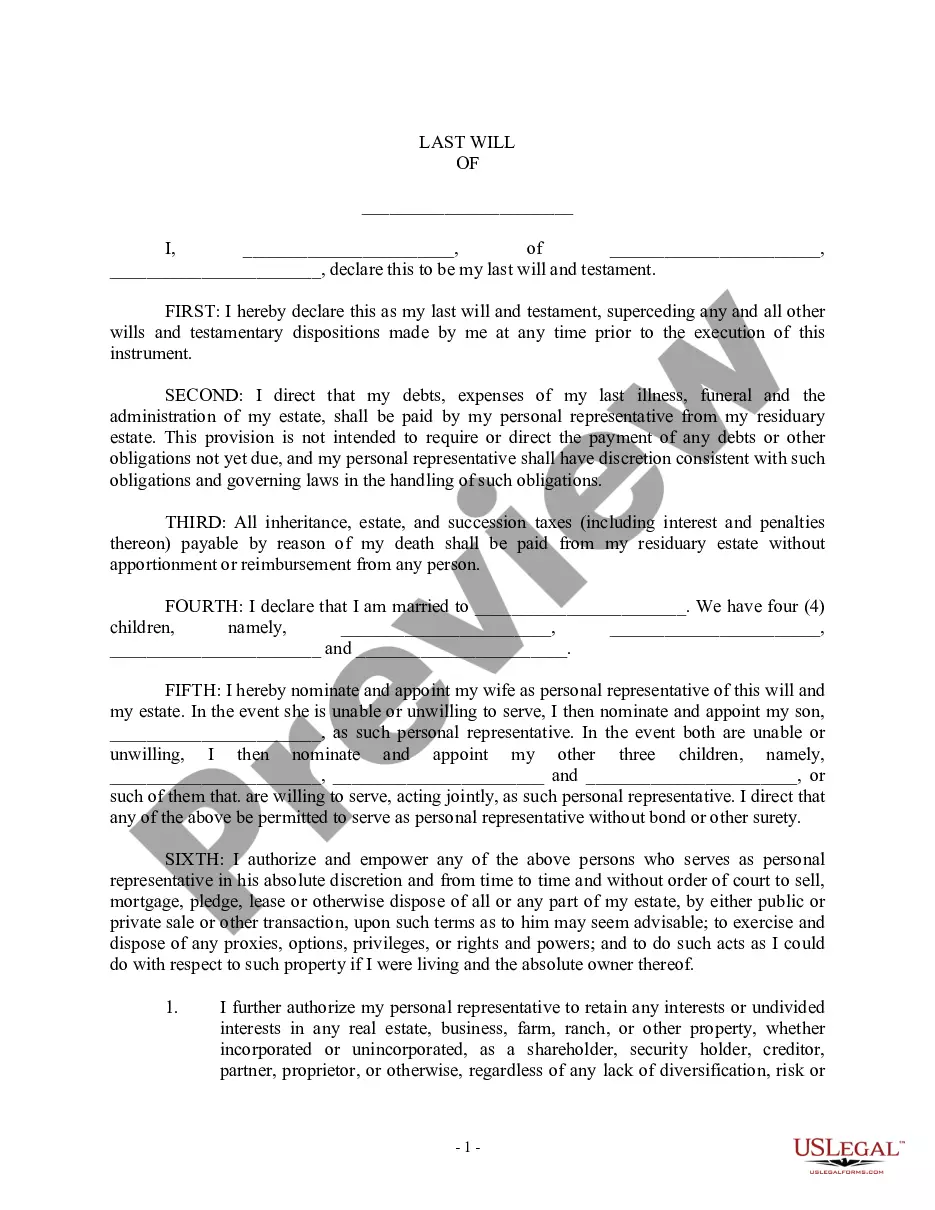
The Mutual Wills Package with Last Wills and Testaments for Married Couple with Minor Children is a legal tool designed for married couples who wish to outline how their assets and responsibilities will be managed after their passing, particularly concerning their minor children. This package includes two mutual wills that ensure both spouses' wishes are honored, and offers specific instructions for appointing personal representatives, designating beneficiaries, and establishing trusts for minor children. Unlike standard wills, the mutual format binds each spouse to the agreed terms, providing additional peace of mind.
Form components explained
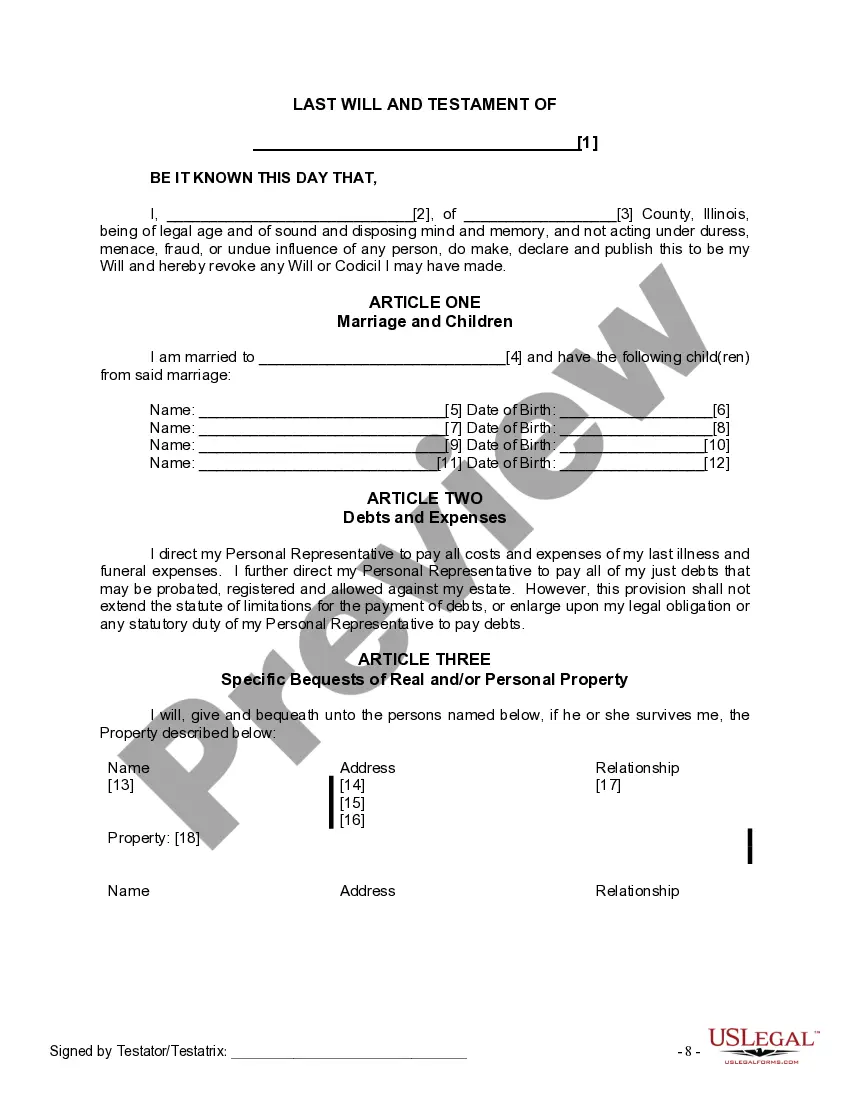
- Appointment of personal representatives or executors for each spouse
- Designation of property distribution to spouses, children, or other beneficiaries
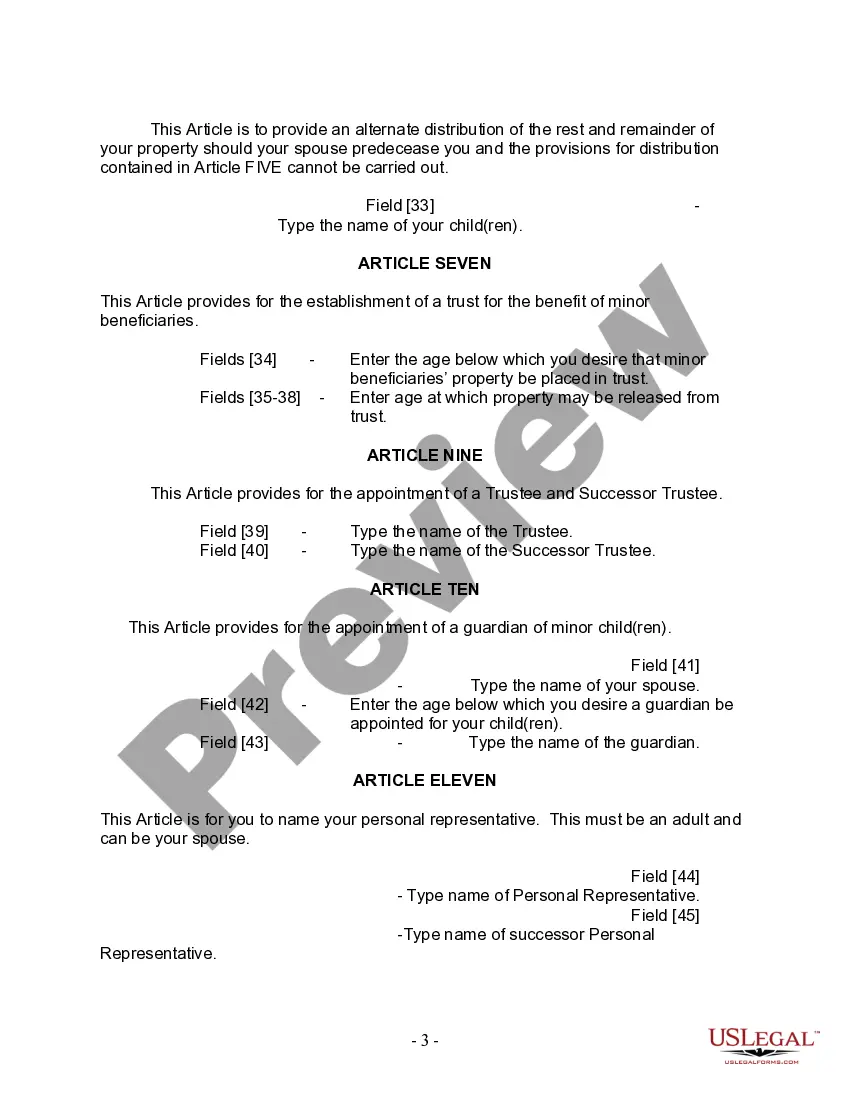
- Establishment of a trust for minor children, including a trustee appointment
- Provisions for the guardianship of minor children in the event both parents pass away
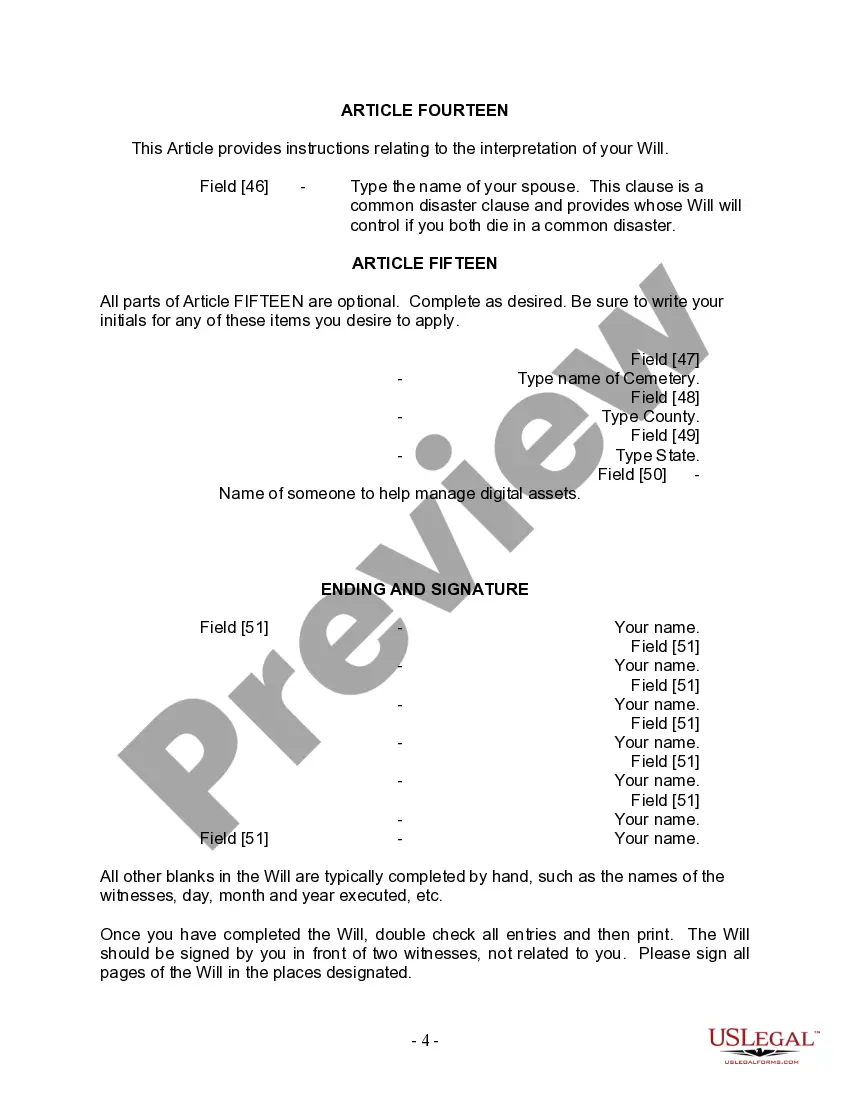
- Instructions for signing and witnessing the wills to ensure legality




When to use this document
This form should be utilized when a married couple with minor children wishes to clearly outline their estate plans. It is especially important in situations where there are specific wishes regarding the custody of minor children, distribution of assets, and the management of those assets through trusts. This form can also be helpful in cases where one or both spouses have previous children from prior relationships and want to ensure equitable distribution among all children involved.
Intended users of this form
- Married couples with minor children
- Couples wanting to establish clear instructions for asset distribution
- Those looking to appoint guardians for their children in the event both parents are deceased
- Couples interested in setting up trusts for the financial security of their minor children
Steps to complete this form
- Identify each spouse by entering their full names and county of residence.
- Appoint personal representatives for each spouse and designate guardians for minor children.
- Specify any assets and decide on beneficiaries for inheritance.
- Establish terms for any trusts to benefit minor children.
- Sign the wills in the presence of two unrelated witnesses and, if applicable, have them notarized.
Is notarization required?
Yes, this form must be notarized to be legally valid. The wills should be signed in the presence of two witnesses, and having a notary public attests to the document adds an extra layer of legitimacy, which can help avoid disputes in the future.
Get your form ready online
Our built-in tools help you complete, sign, share, and store your documents in one place.
Make edits, fill in missing information, and update formatting in US Legal Forms—just like you would in MS Word.
Download a copy, print it, send it by email, or mail it via USPS—whatever works best for your next step.
Sign and collect signatures with our SignNow integration. Send to multiple recipients, set reminders, and more. Go Premium to unlock E-Sign.
If this form requires notarization, complete it online through a secure video call—no need to meet a notary in person or wait for an appointment.
We protect your documents and personal data by following strict security and privacy standards.

Make edits, fill in missing information, and update formatting in US Legal Forms—just like you would in MS Word.

Download a copy, print it, send it by email, or mail it via USPS—whatever works best for your next step.

Sign and collect signatures with our SignNow integration. Send to multiple recipients, set reminders, and more. Go Premium to unlock E-Sign.

If this form requires notarization, complete it online through a secure video call—no need to meet a notary in person or wait for an appointment.

We protect your documents and personal data by following strict security and privacy standards.
Mistakes to watch out for
- Neglecting to sign the wills in the presence of witnesses.
- Failing to clearly name alternate beneficiaries, which can lead to confusion.
- Not reviewing or updating the wills after significant life changes.
- Overlooking the legal age for guardianship selections or trust distributions.
Advantages of online completion
- Convenience of completing the form at home without the need for an attorney appointment.
- Editability allows users to fill out necessary fields easily and make adjustments as needed.
- Access to legal advice and support materials to guide the completion process.
- Reliability of using attorney-drafted forms, ensuring legal compliance and thoroughness.
Looking for another form?
Form popularity
FAQ
In Illinois, to have a valid will it is required that two or more credible witnesses validate or attest the will. This means each witness must watch the testator (person making his or her will) sign or acknowledge the will, determine the testator is of sound mind, and sign the will in front of the testator.
As mutual wills are binding, the key purpose of such wills is to ensure that property flows to intended, agreed, beneficiaries. They are generally used to ensure that a testator's property can be enjoyed by another during his or her lifetime, but then passes to a third party, the 'ultimate beneficiary.
The court recognises that all Wills can be revoked but in the case of mutual Wills, equity will protect and enforce the interests created by the agreement for the benefit of the beneficiaries.
Handwritten Wills in Illinois In the state of Illinois, holographic wills are not considered to be valid. Illinois does recognize, however, handwritten wills that are signed by two witnesses and satisfy all other requirements for wills as stated in the law.
Create a high quality document online now!In Illinois, wills must be signed by two (2) witnesses who acknowledged the testator sign the document. A testator also has the option to notarize the document for an additional layer of legal protection.
The short answer is yes, online wills are legitimate as long as you ensure they comply with federal and state laws. Online will companies hire licensed attorneys and legal professionals to carefully word their estate planning documents so that each is legally binding.
Write an Introduction. Select an Executor. Identify Your Heirs and Beneficiaries. Nominate a Guardian for Your Minor or Dependent Children. Assess and Divide Your Property. State Your Funeral Wishes (If You Have Any) Sign and Notarize the Document.
The reason is that making it impossible for the surviving spouse to change the terms of the will can turn out to be a very bad result. The survivorwho may live years or decades after the first spouse's deathcannot react to changed life circumstances, and the family may suffer as a result.
Illinois law requires that upon the death of a Testator his/her Will must be filed with the local Clerk of Court within 30 days of the date of the Testator's death.Once the Executor is able to locate the original Will, he/she can then properly file it with the Clerk of Court of the proper county.