Illinois Last Will and Testament for Single Person with Adult and Minor Children
What is this form?
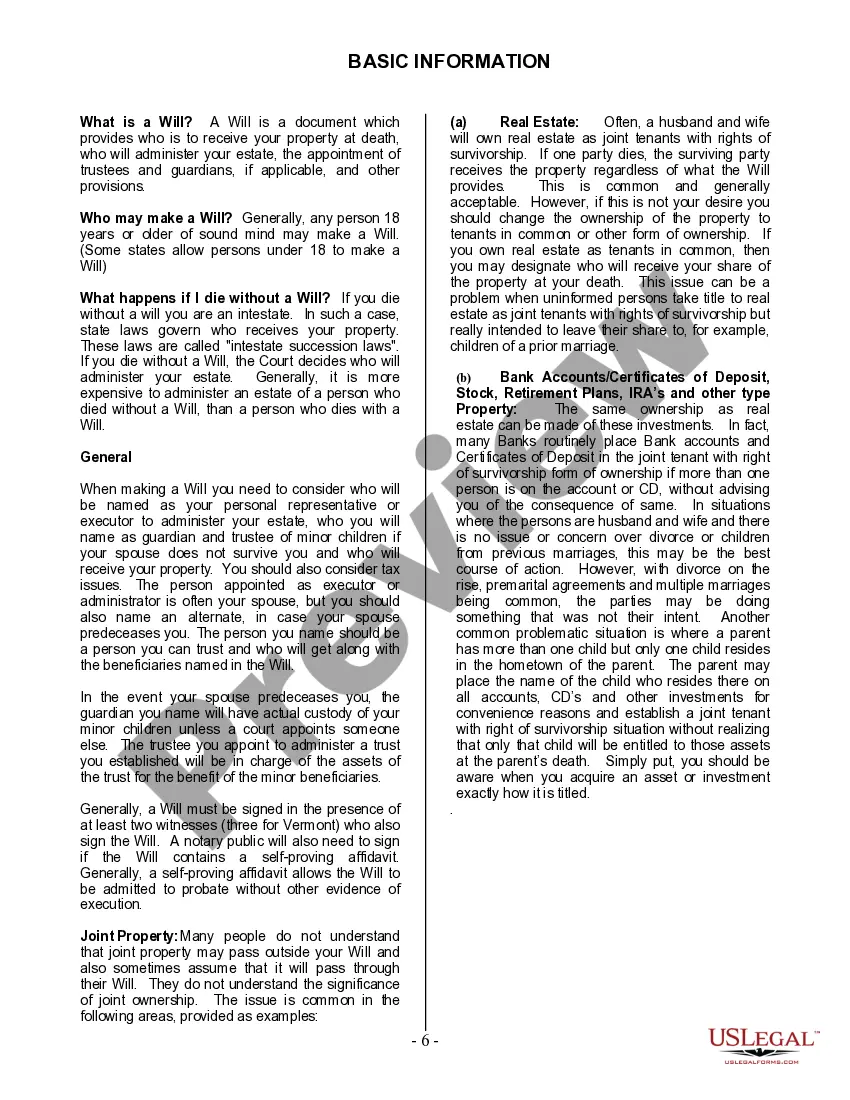
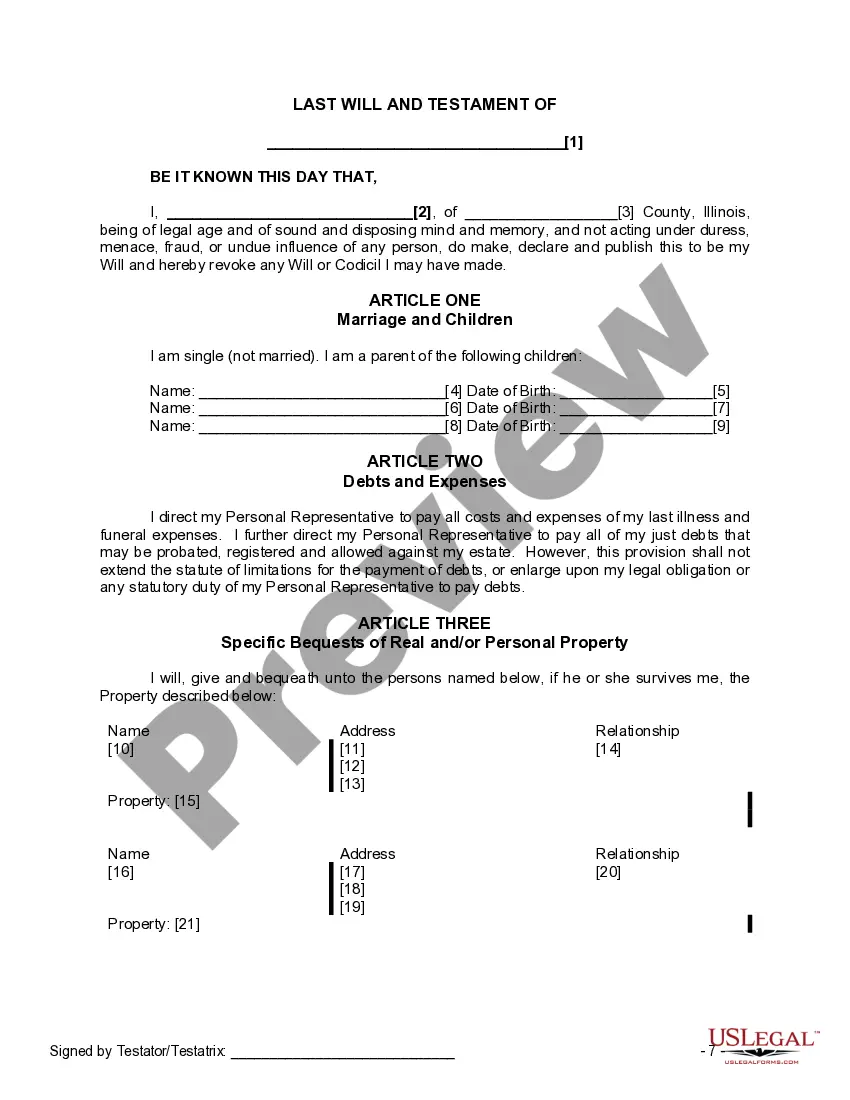
The Last Will and Testament for Single Person with Adult and Minor Children is a legal document that outlines how a single individualâs assets will be distributed upon their death. This form specifically caters to those with both adult and minor children, allowing the testator to specify their wishes regarding property distribution, appoint a personal representative, and establish guardianship for minor children. Unlike other forms of a last will, this version takes into account the specific needs of families with children of varying ages.
Key parts of this document
- Appointment of a personal representative or executor to manage the estate.
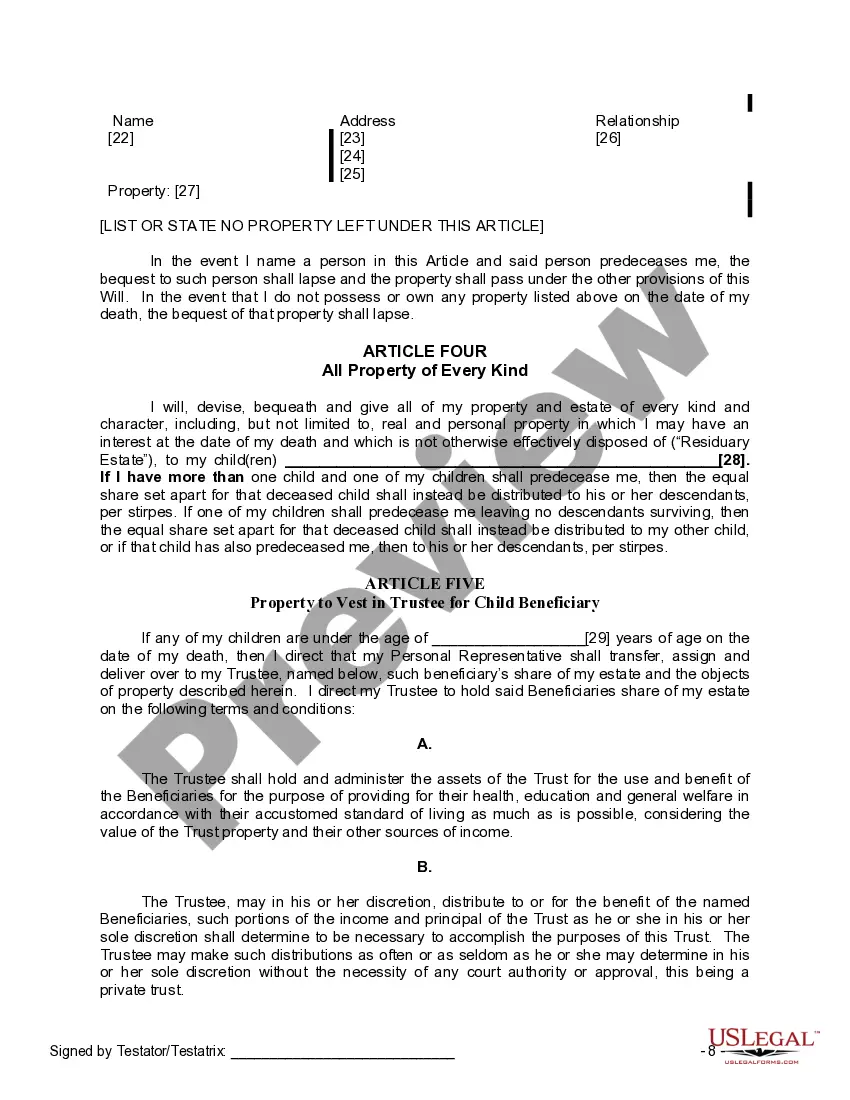
- Designation of who will inherit the property, including specific bequests.
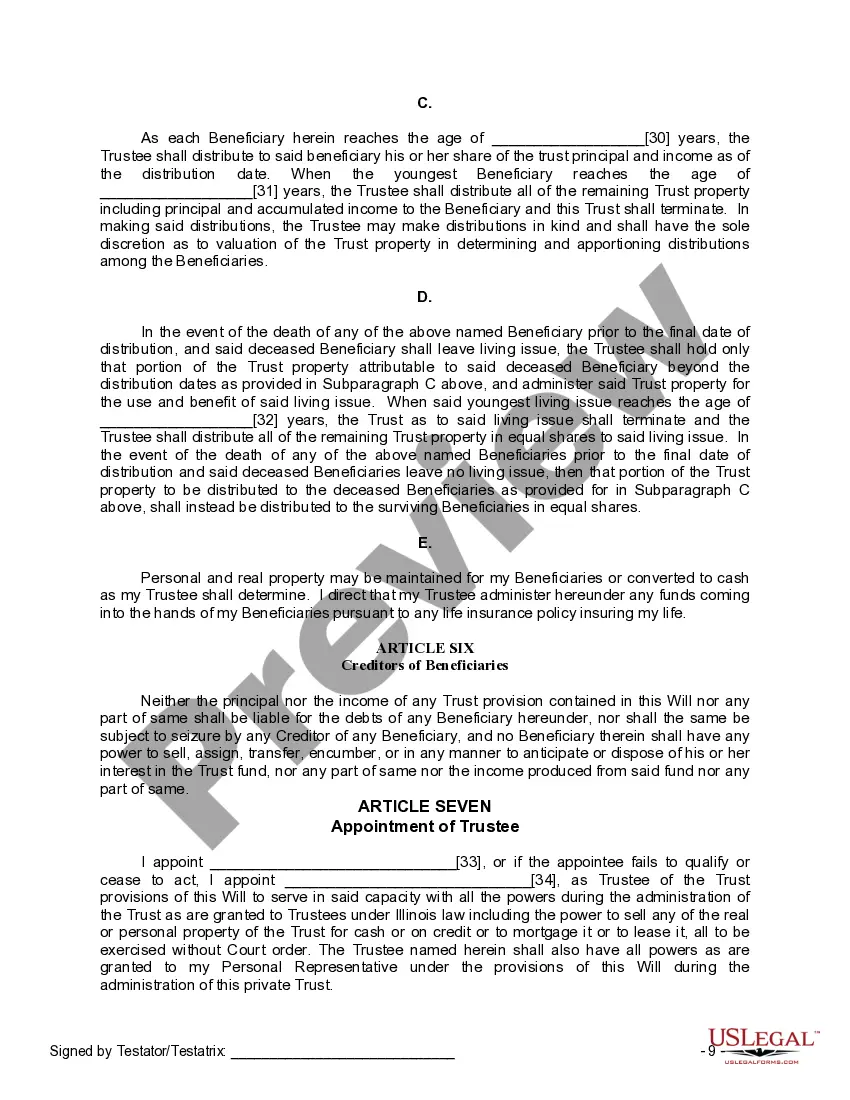
- Establishment of a trust for minor beneficiaries until they reach a specified age.
- Provision for the appointment of a guardian for minor children.
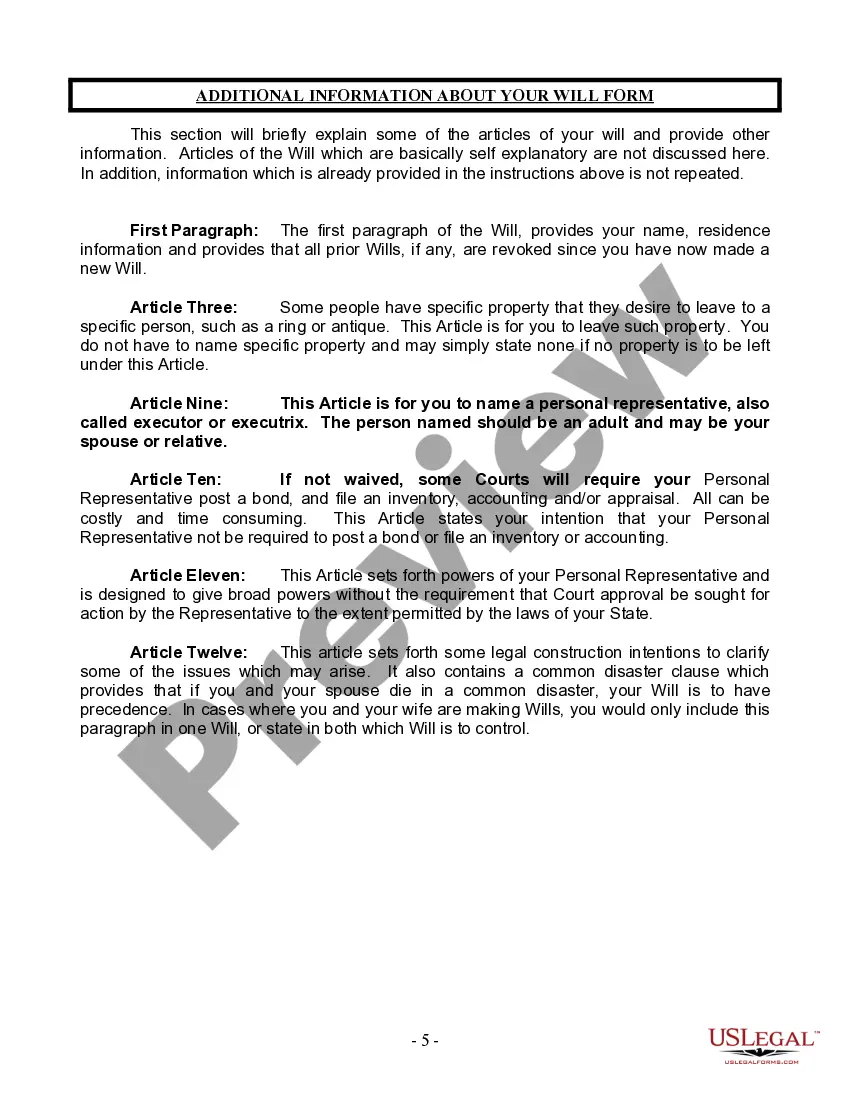
- Wide-ranging powers granted to the personal representative to facilitate estate management.






When to use this document
This form is essential when a single parent wishes to ensure their property and assets are managed according to their wishes after death. It is particularly important if you have both adult and minor children and want to designate how each will receive their inheritance, and who will take care of minor children in your absence.
Who should use this form
- Single parents with dependent minor children.
- Individuals who want to ensure their adult children and minor children are treated fairly in inheritance matters.
- Those seeking to appoint a trusted executor and guardian in their will.
- Anyone who wishes to establish a trust for their minor childrenâs inheritance.
Completing this form step by step
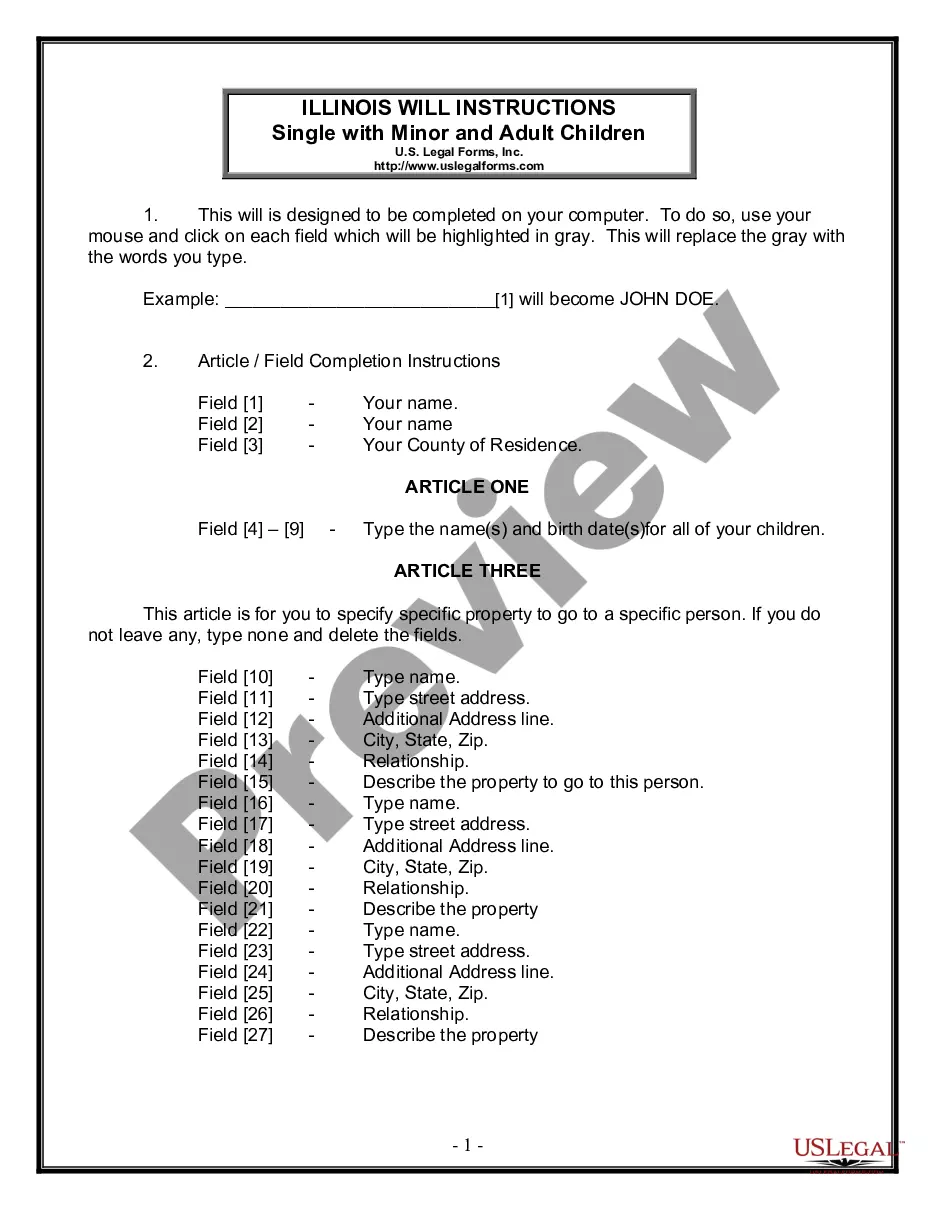
- Fill in your name and county of residence at the beginning of the will.
- List the names and birthdates of all your children in the designated area.
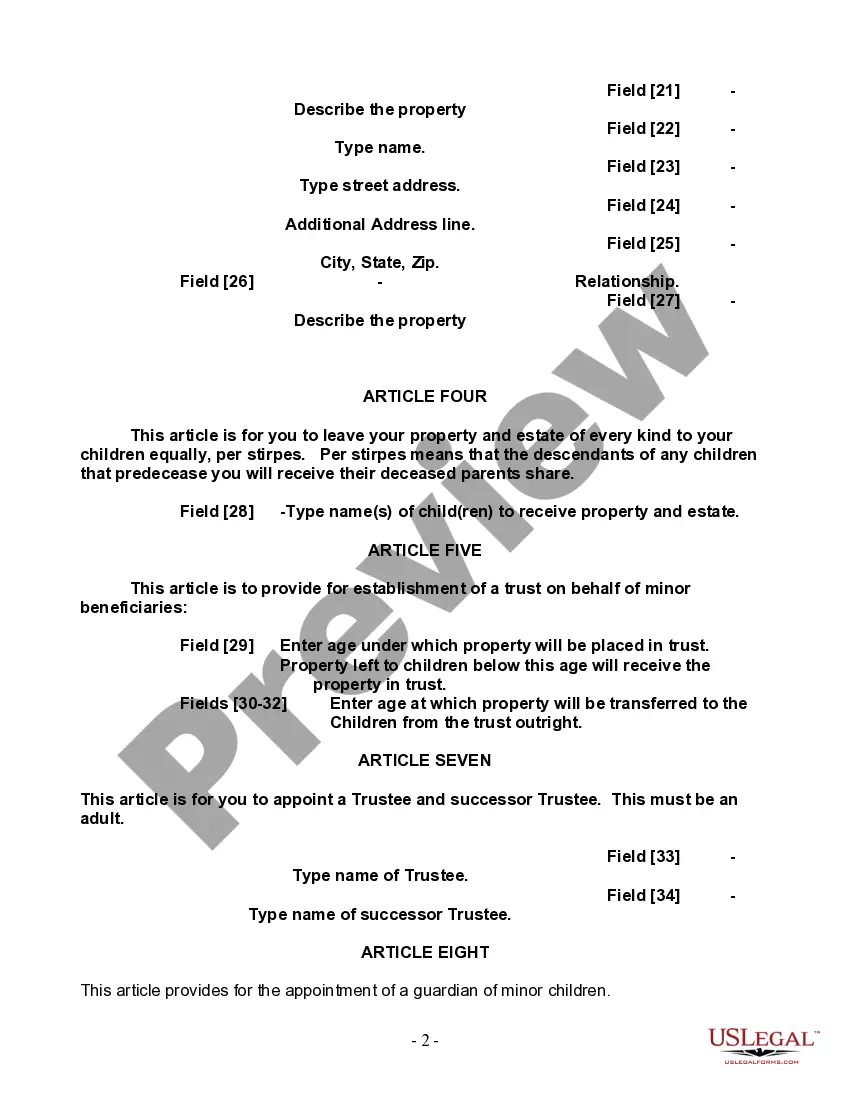
- Specify any particular bequests of property to individuals, if applicable, and indicate if there are none.
- Detail how your property and estate will be shared among your children equally, per stirpes.
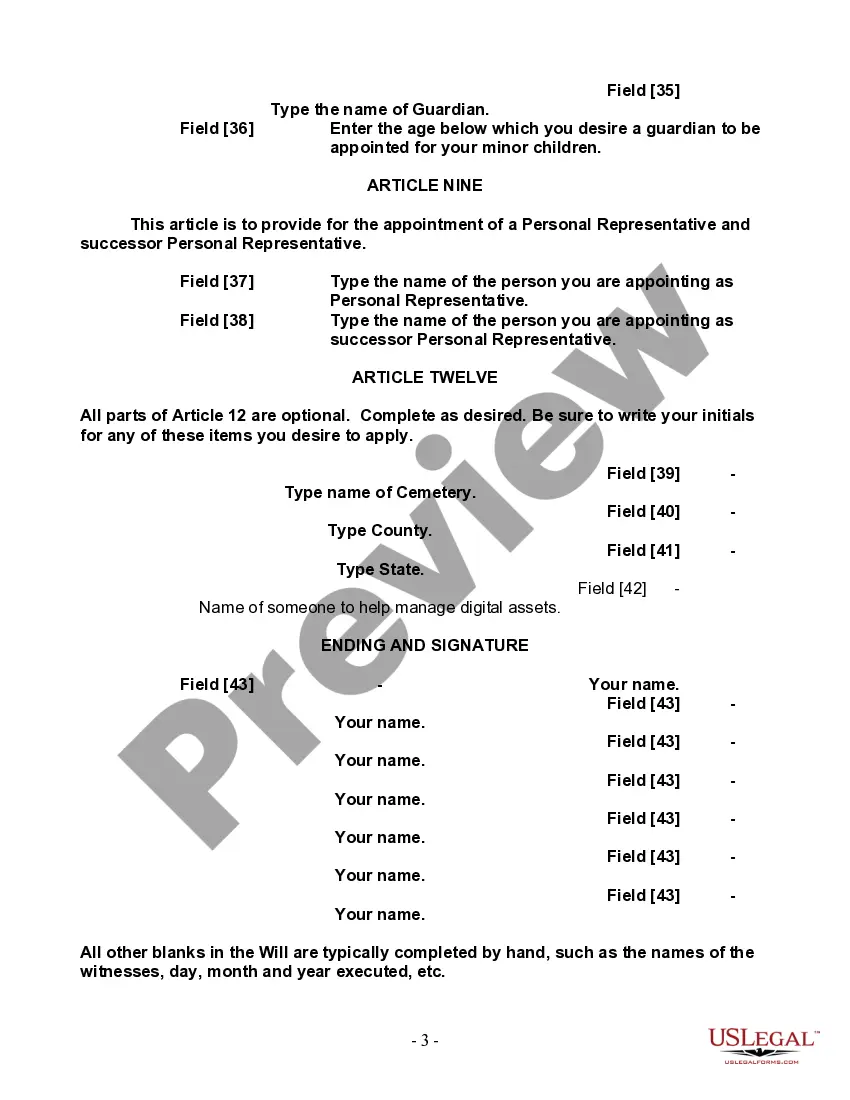
- Appoint a trustee for any property held in trust for minor beneficiaries.
- Ensure all fields are complete, then print, sign in front of two witnesses, and have a notary if a self-proving affidavit is included.
Does this document require notarization?
Notarization is required for this form to take effect. Our online notarization service, powered by Notarize, lets you verify and sign documents remotely through an encrypted video session, available 24/7.
Get your form ready online
Our built-in tools help you complete, sign, share, and store your documents in one place.
Make edits, fill in missing information, and update formatting in US Legal Forms—just like you would in MS Word.
Download a copy, print it, send it by email, or mail it via USPS—whatever works best for your next step.
Sign and collect signatures with our SignNow integration. Send to multiple recipients, set reminders, and more. Go Premium to unlock E-Sign.
If this form requires notarization, complete it online through a secure video call—no need to meet a notary in person or wait for an appointment.
We protect your documents and personal data by following strict security and privacy standards.

Make edits, fill in missing information, and update formatting in US Legal Forms—just like you would in MS Word.

Download a copy, print it, send it by email, or mail it via USPS—whatever works best for your next step.

Sign and collect signatures with our SignNow integration. Send to multiple recipients, set reminders, and more. Go Premium to unlock E-Sign.

If this form requires notarization, complete it online through a secure video call—no need to meet a notary in person or wait for an appointment.

We protect your documents and personal data by following strict security and privacy standards.
Avoid these common issues
- Failing to have the wil signed in front of the required number of witnesses.
- Not specifying a guardian for minor children, leaving their care undetermined.
- Neglecting to detail specific bequests, which can lead to disputes among heirs.
- Not updating the will after significant life changes, such as a new child or change in assets.
Why complete this form online
- Convenience of filling out the form on your computer at your own pace.
- Access to expert-drafted legal content, ensuring compliance with legal standards.
- Editability allows for easy updates whenever necessary without the need for a complete redo.
- Immediate access to your completed will for printing and signature.
Looking for another form?

Form popularity
FAQ
Illinois law states that the will must become public record upon the death of the person. As such, it must be filed with their local county clerk within 30 days of discovery.For instance, your will generally appoints a legal representative, called an executor, to carry out your wishes and oversee the probate process.
A notarized will does not need to be probated.When a person dies leaving behind a will that is not notarized, the law requires that its validity be ascertained by a notary or by a court. Similarly, any non-notarized modification made to a will must be probated, whether the will is notarized or not.
Write an Introduction. Select an Executor. Identify Your Heirs and Beneficiaries. Nominate a Guardian for Your Minor or Dependent Children. Assess and Divide Your Property. State Your Funeral Wishes (If You Have Any) Sign and Notarize the Document.
Signature: The will must be signed by the testator or by someone else in the testator's name in the testator's presence, by the testator's direction. Witnesses: An Illinois will must be signed by at least two credible witnesses, who should not also be beneficiaries in the will.
Do I Need to Have My Will Notarized? No, in Illinois, you do not need to notarize your will to make it legal.However, Illinois allows your will to be self-proved without a self-proving affidavit, as long as you sign and witness it correctly.
No, all Wills do not automatically go through the Probate Court system in Illinois after the death of the Testator (the maker of the Will). To the contrary, a majority of estates in Illinois never need a Probate proceeding to be properly administered.
Handwritten Wills in Illinois In the state of Illinois, holographic wills are not considered to be valid. Illinois does recognize, however, handwritten wills that are signed by two witnesses and satisfy all other requirements for wills as stated in the law.
In Illinois, to have a valid will it is required that two or more credible witnesses validate or attest the will. This means each witness must watch the testator (person making his or her will) sign or acknowledge the will, determine the testator is of sound mind, and sign the will in front of the testator.