Illinois Last Will and Testament for a Single Person with Minor Children
What is this form?
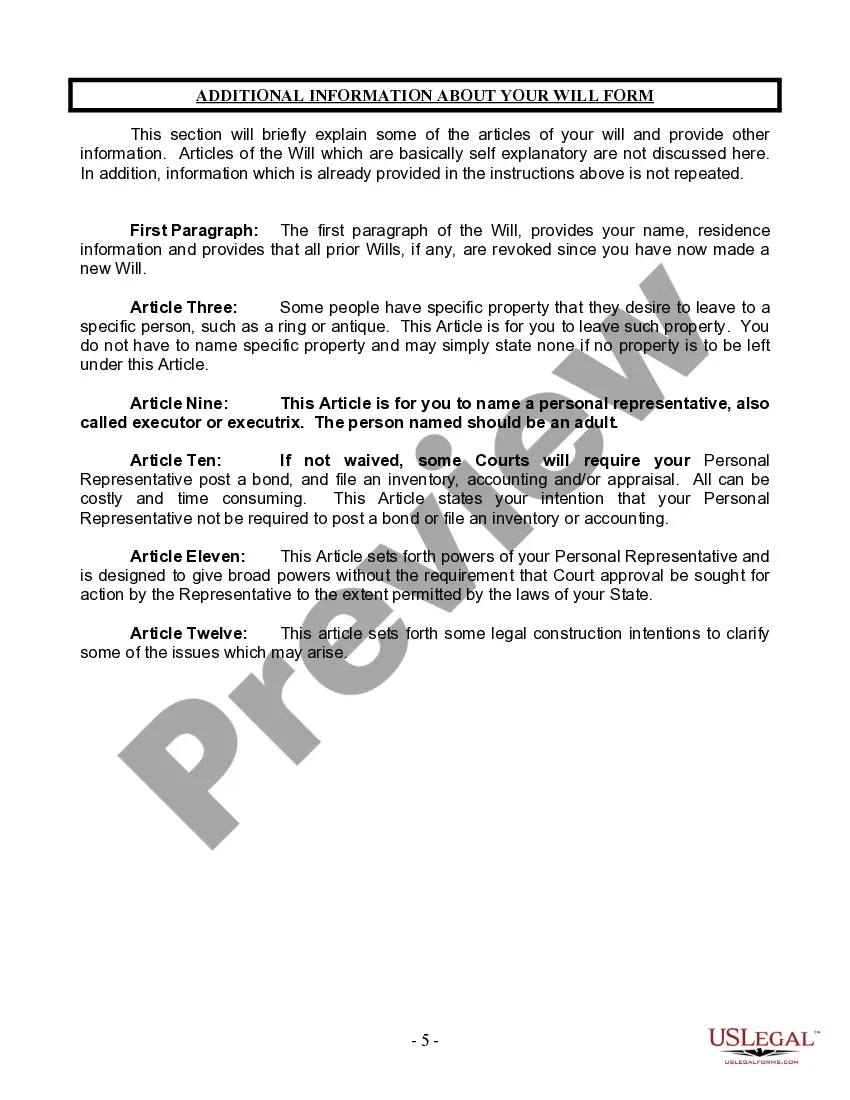
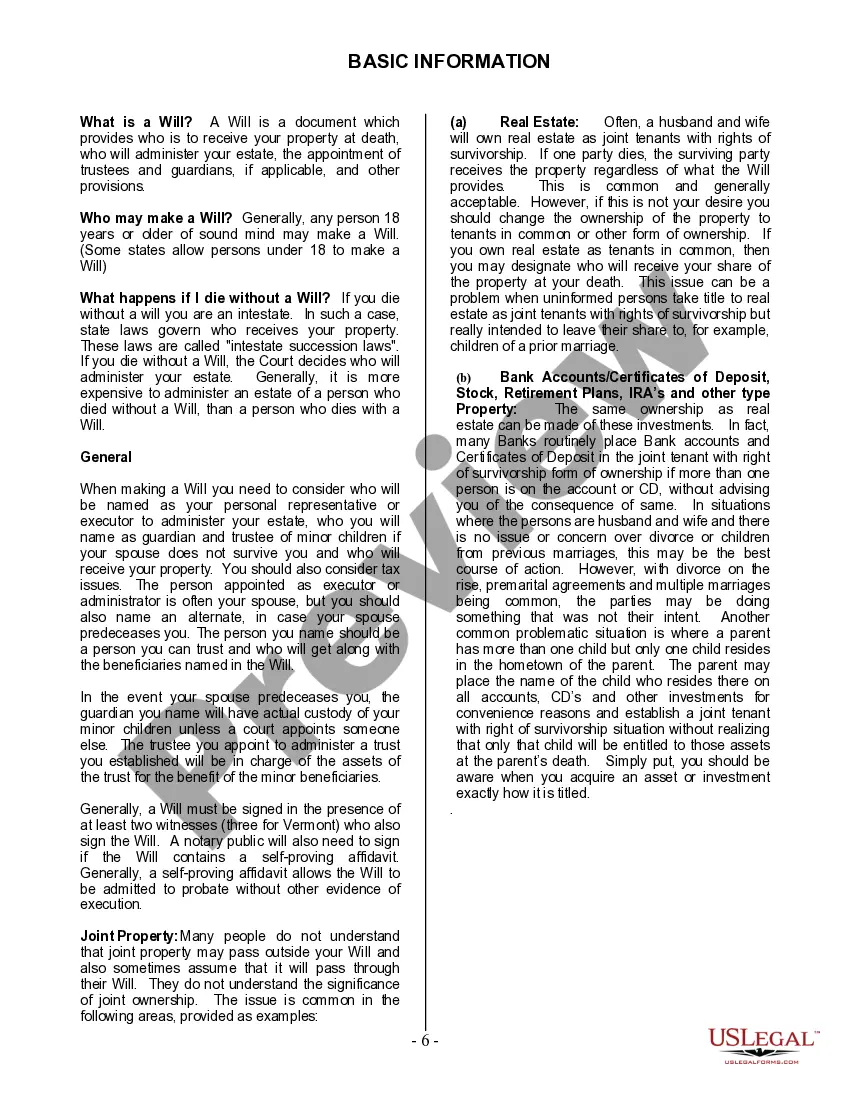
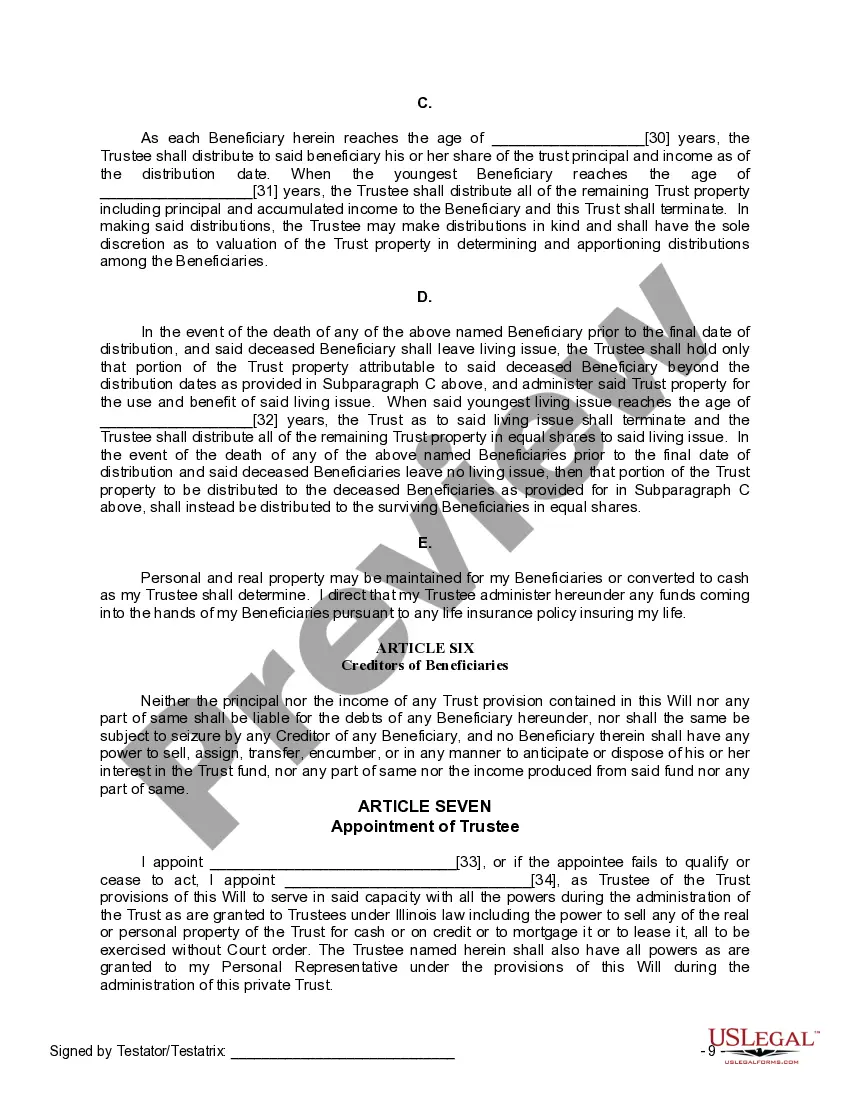
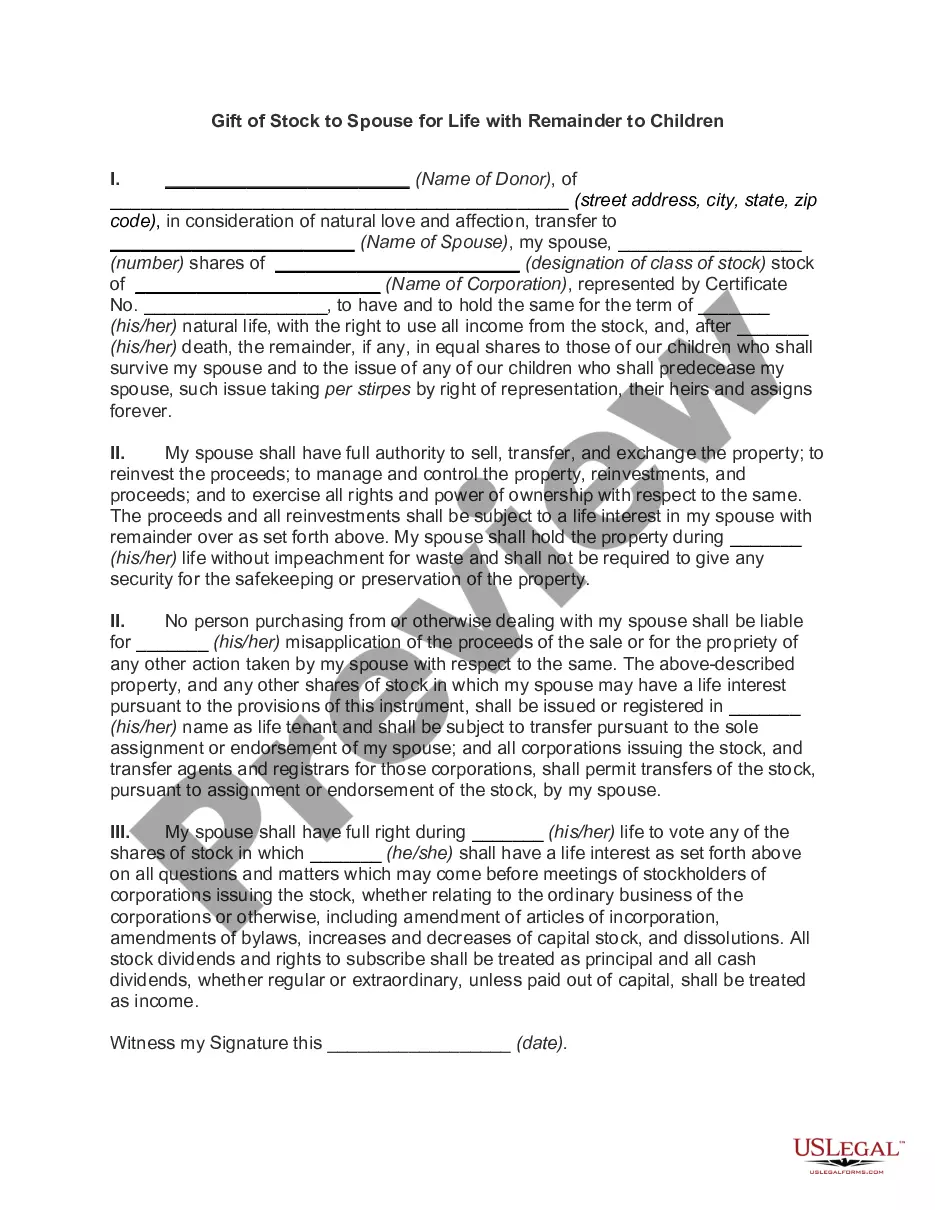
The Last Will and Testament for a Single Person with Minor Children is a legal document that outlines how a person's assets will be distributed after their death and designates a caretaker for their minor children. This form is specifically designed for individuals who are single and have minor children, differentiating it from wills intended for those with spouses or dependents. It also includes provisions for appointing a trustee for the childrenâs inheritance, ensuring their financial security until they reach adulthood.
Main sections of this form
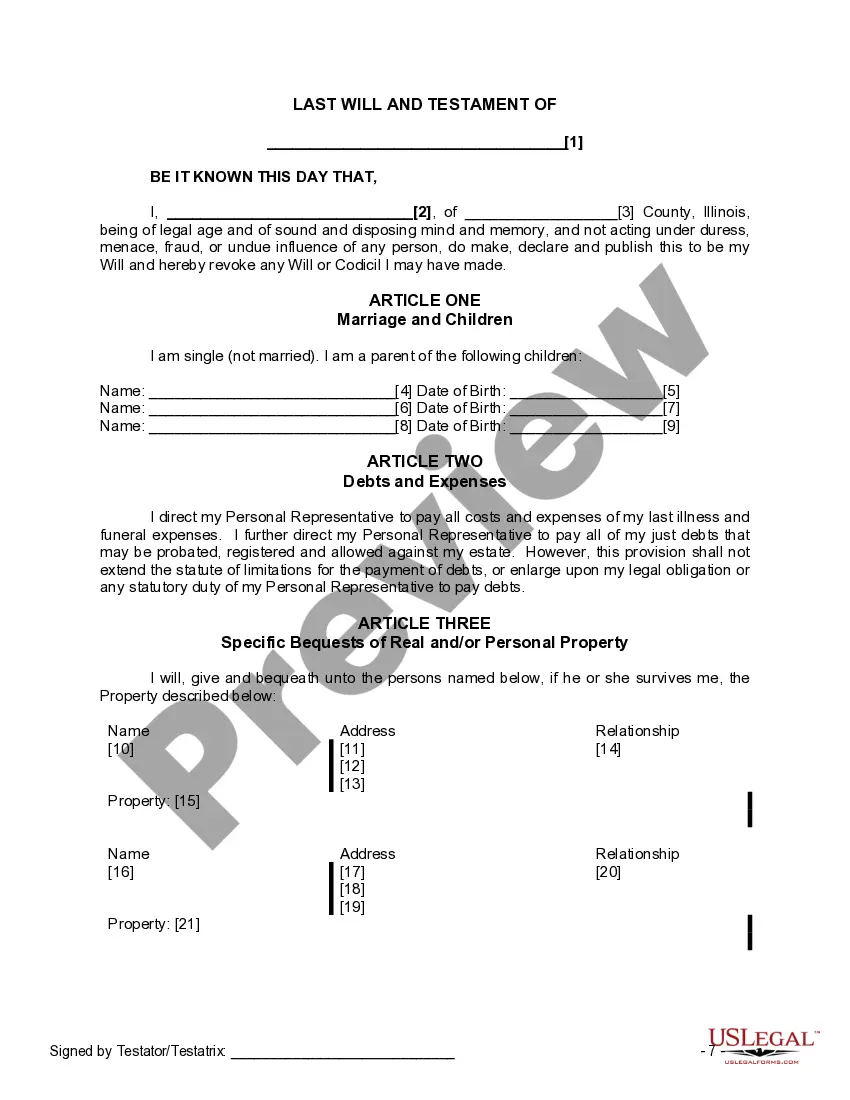
- Personal information, including the testatorâs name and county of residence.
- Appointment of a personal representative or executor to administer the estate.
- Designation of beneficiaries, including specific bequests to individuals.
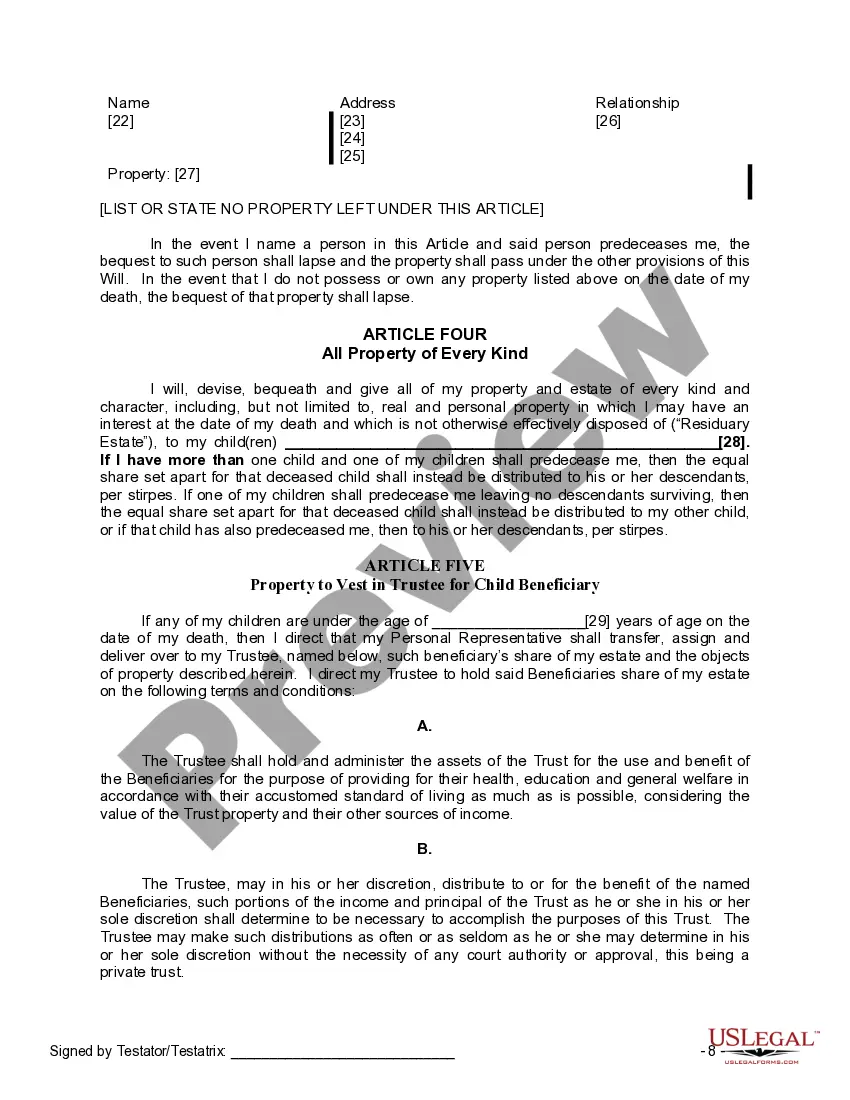
- Provisions for the equitable distribution of property among minor children.
- Appointment of a trustee to manage the estate for minor beneficiaries.
- Legal designations for a guardian to care for minor children.







Situations where this form applies
This form is essential when a single parent wants to ensure their minor children's welfare and specify the distribution of their assets after death. Use this will if you are single and have dependent children, especially if you want to appoint a guardian and trustee specifically for their benefit, or if you have specific property to bequeath to others.
Who needs this form
- Individuals who are single and have minor children.
- Parents seeking to ensure their children's financial security and proper guardianship in the event of their death.
- Anyone wanting to outline specific wishes regarding the distribution of their property.
Instructions for completing this form
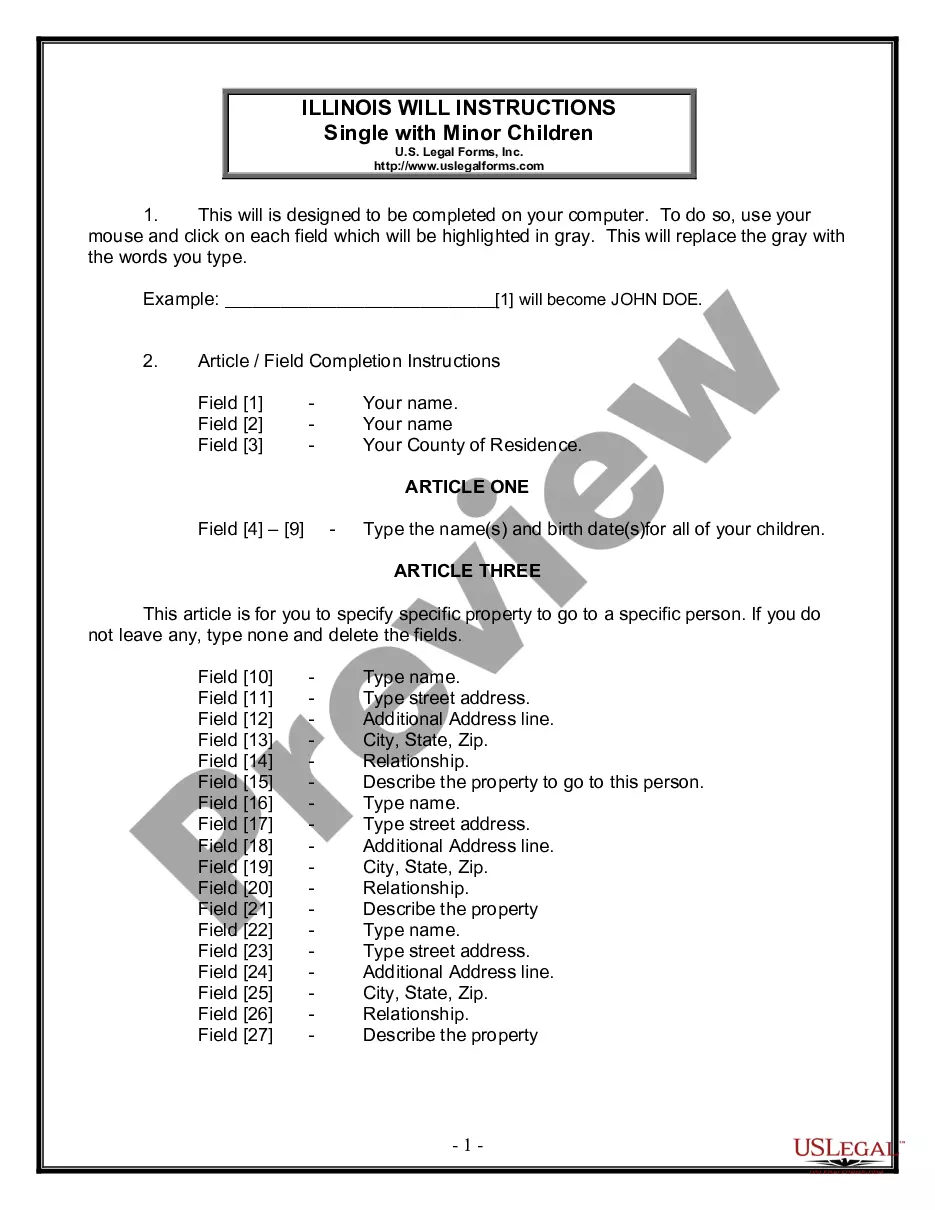
- Identify yourself by entering your name and county of residence at the beginning of the document.
- List your childrenâs names and birth dates to specify beneficiaries.
- Designate specific property you wish to bequeath to particular individuals, if applicable.
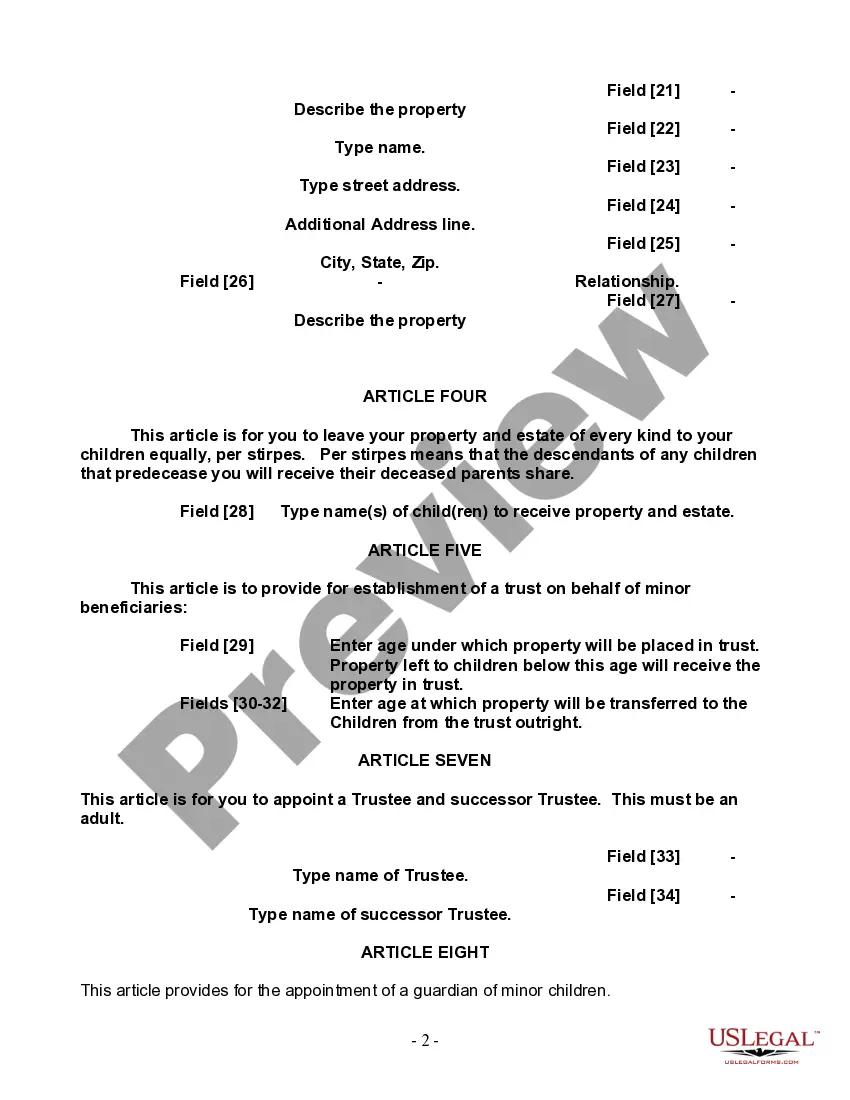
- Assign a trustee for any property intended for minor children and specify under what age the trust will hold the assets.
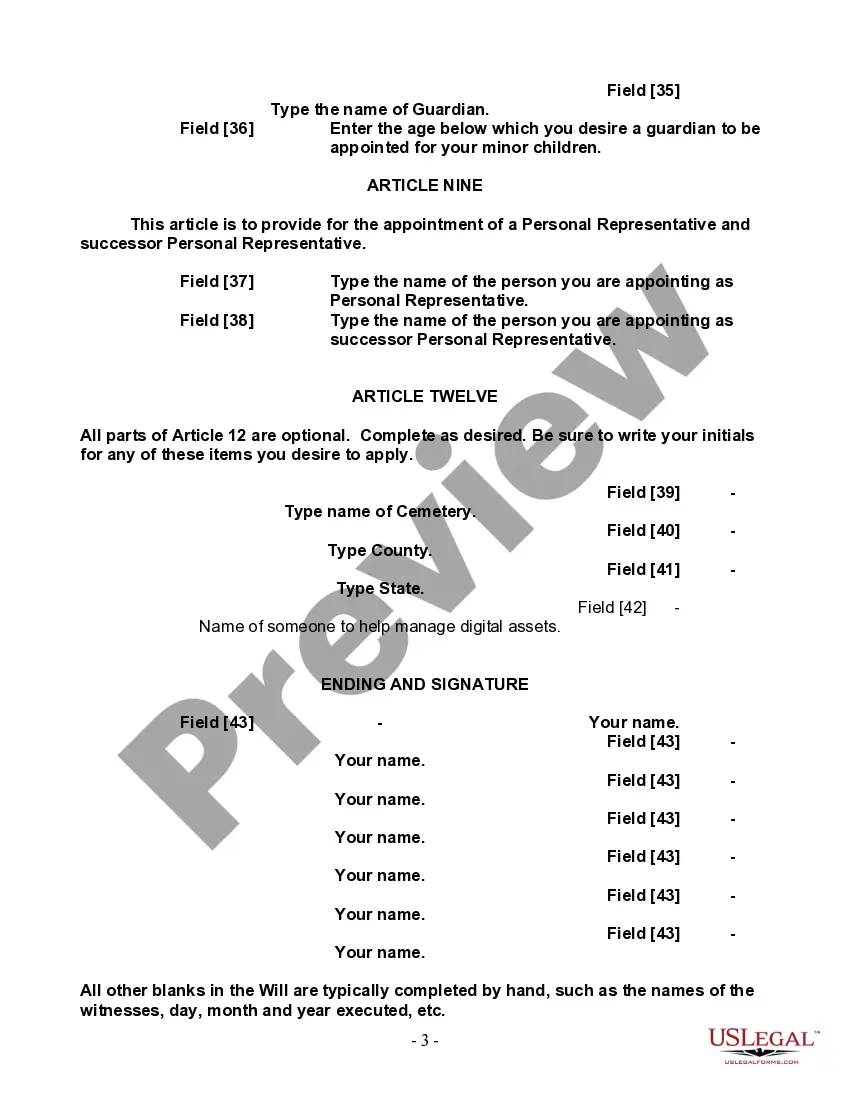
- Choose a guardian for your minor children and ensure this individual is willing to take on this responsibility.
- Sign the will in the presence of at least two witnesses and, if required, a notary public to ensure its validity.
Notarization requirements for this form
Yes, this form must be notarized to be legally valid if your state has adopted a self-proving affidavit statute. Ensuring notarization at the time of signing helps prevent disputes during the probate process and streamlines the legal proceedings following your passing.
Get your form ready online
Our built-in tools help you complete, sign, share, and store your documents in one place.
Make edits, fill in missing information, and update formatting in US Legal Forms—just like you would in MS Word.
Download a copy, print it, send it by email, or mail it via USPS—whatever works best for your next step.
Sign and collect signatures with our SignNow integration. Send to multiple recipients, set reminders, and more. Go Premium to unlock E-Sign.
If this form requires notarization, complete it online through a secure video call—no need to meet a notary in person or wait for an appointment.
We protect your documents and personal data by following strict security and privacy standards.

Make edits, fill in missing information, and update formatting in US Legal Forms—just like you would in MS Word.

Download a copy, print it, send it by email, or mail it via USPS—whatever works best for your next step.

Sign and collect signatures with our SignNow integration. Send to multiple recipients, set reminders, and more. Go Premium to unlock E-Sign.

If this form requires notarization, complete it online through a secure video call—no need to meet a notary in person or wait for an appointment.

We protect your documents and personal data by following strict security and privacy standards.
Common mistakes
- Failing to name an alternate guardian or trustee, which can cause legal complications if your first choice is unable to fulfill the role.
- Not signing the will in front of the required number of witnesses, potentially invalidating the document.
- Overlooking the need for a self-proving affidavit, which simplifies the probate process.
- Neglecting to update the will after significant life changes, such as the birth of a child or changes in family dynamics.
Advantages of online completion
- Convenient access from anywhere, allowing you to complete the will at your own pace.
- Editable templates that can be tailored to meet your specific needs and circumstances.
- Comprehensive guidance provided to help you navigate complex legal language.
- Immediate download options ensure you can print and sign your will quickly.
What to keep in mind
- A Last Will and Testament for a single person with minor children establishes clear plans for guardianship and asset distribution.
- Proper execution is critical. This typically includes signatures from witnesses and possible notarization.
- Using this form online offers convenience and access to legally sound templates.
Looking for another form?
Form popularity
FAQ
Illinois law states that the will must become public record upon the death of the person. As such, it must be filed with their local county clerk within 30 days of discovery.For instance, your will generally appoints a legal representative, called an executor, to carry out your wishes and oversee the probate process.
Handwritten Wills in Illinois In the state of Illinois, holographic wills are not considered to be valid. Illinois does recognize, however, handwritten wills that are signed by two witnesses and satisfy all other requirements for wills as stated in the law.
Do I Need to Have My Will Notarized? No, in Illinois, you do not need to notarize your will to make it legal.However, Illinois allows your will to be self-proved without a self-proving affidavit, as long as you sign and witness it correctly.
Do I Need to Have My Will Notarized? No, in Illinois, you do not need to notarize your will to make it legal.However, Illinois allows your will to be self-proved without a self-proving affidavit, as long as you sign and witness it correctly.
A notarized will does not need to be probated.When a person dies leaving behind a will that is not notarized, the law requires that its validity be ascertained by a notary or by a court. Similarly, any non-notarized modification made to a will must be probated, whether the will is notarized or not.
Handwritten Wills in Illinois In the state of Illinois, holographic wills are not considered to be valid. Illinois does recognize, however, handwritten wills that are signed by two witnesses and satisfy all other requirements for wills as stated in the law.
In Illinois, to have a valid will it is required that two or more credible witnesses validate or attest the will. This means each witness must watch the testator (person making his or her will) sign or acknowledge the will, determine the testator is of sound mind, and sign the will in front of the testator.
It's very common for a lawyer to charge a flat fee to write a will and other basic estate planning documents. The low end for a simple lawyer-drafted will is around $300. A price of closer to $1,000 is more common, and it's not unusual to find a $1,200 price tag. Lawyers like flat fees for several reasons.