Illinois Last Will and Testament for Single Person with No Children

What this document covers
The Last Will and Testament for a Single Person with No Children is a legal document that specifies how your property and assets will be distributed upon your death. This form is tailored for individuals who are single and do not have children, allowing them to appoint an executor, designate beneficiaries for their estate, and set various provisions. Unlike other wills, this form streamlines the process for those without dependents, focusing on asset distribution based solely on the individualâs wishes.
Form components explained
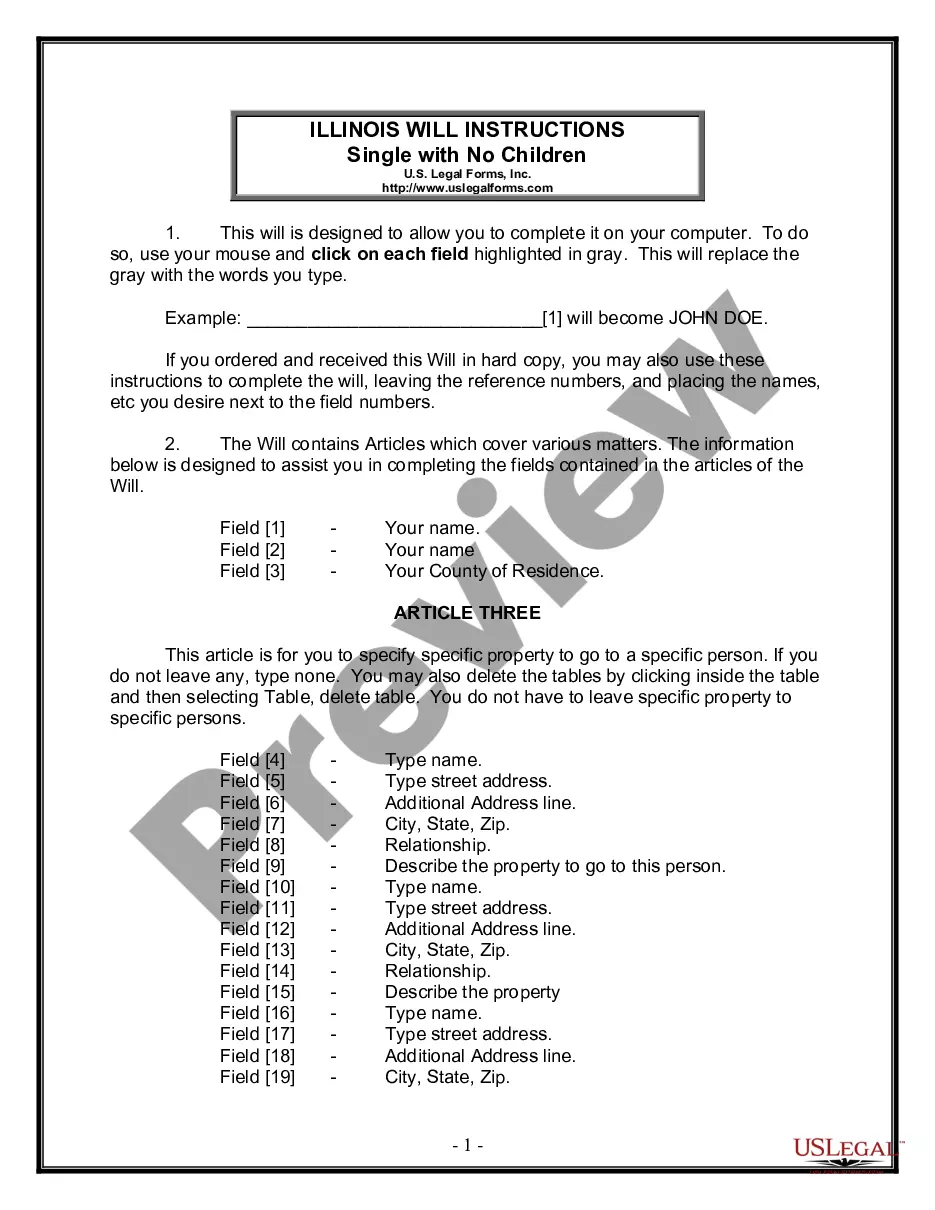
- Personal Information: Includes your name and county of residence.
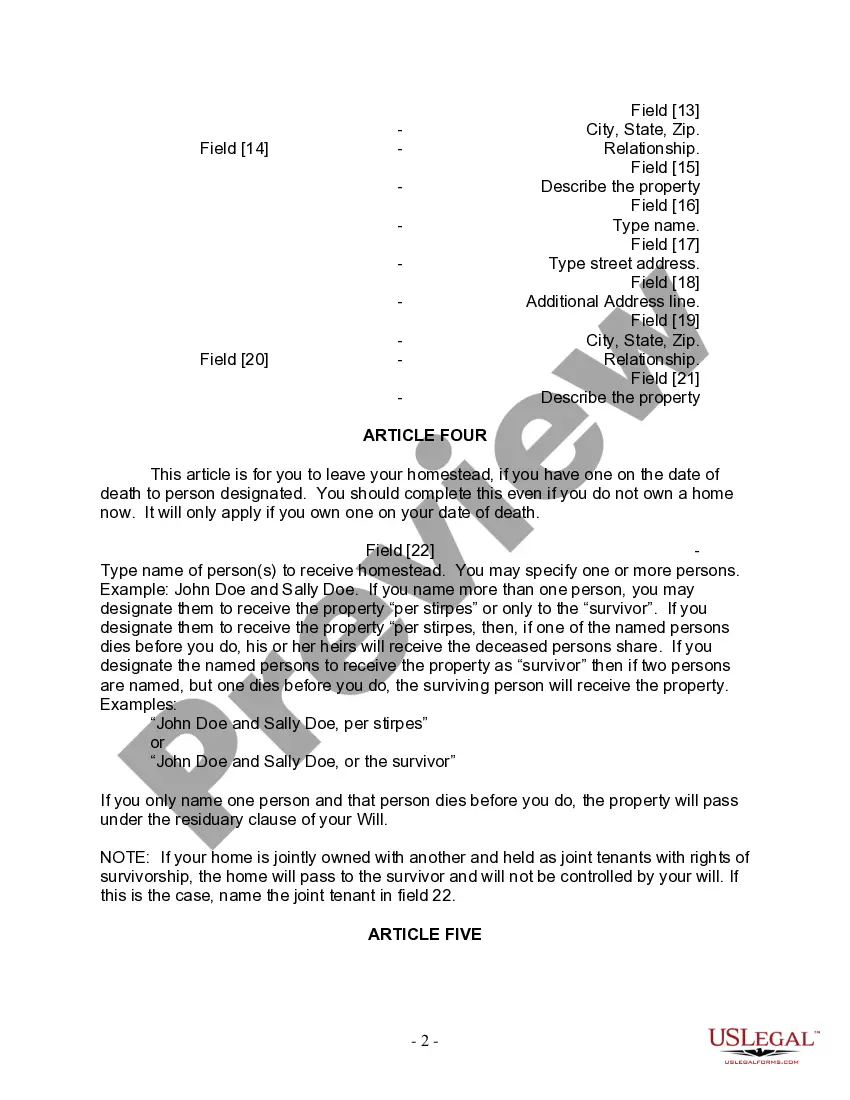
- Specific Bequests: Allows you to designate specific assets to individuals.
- Homestead Allocation: Details how your primary residence will be distributed.
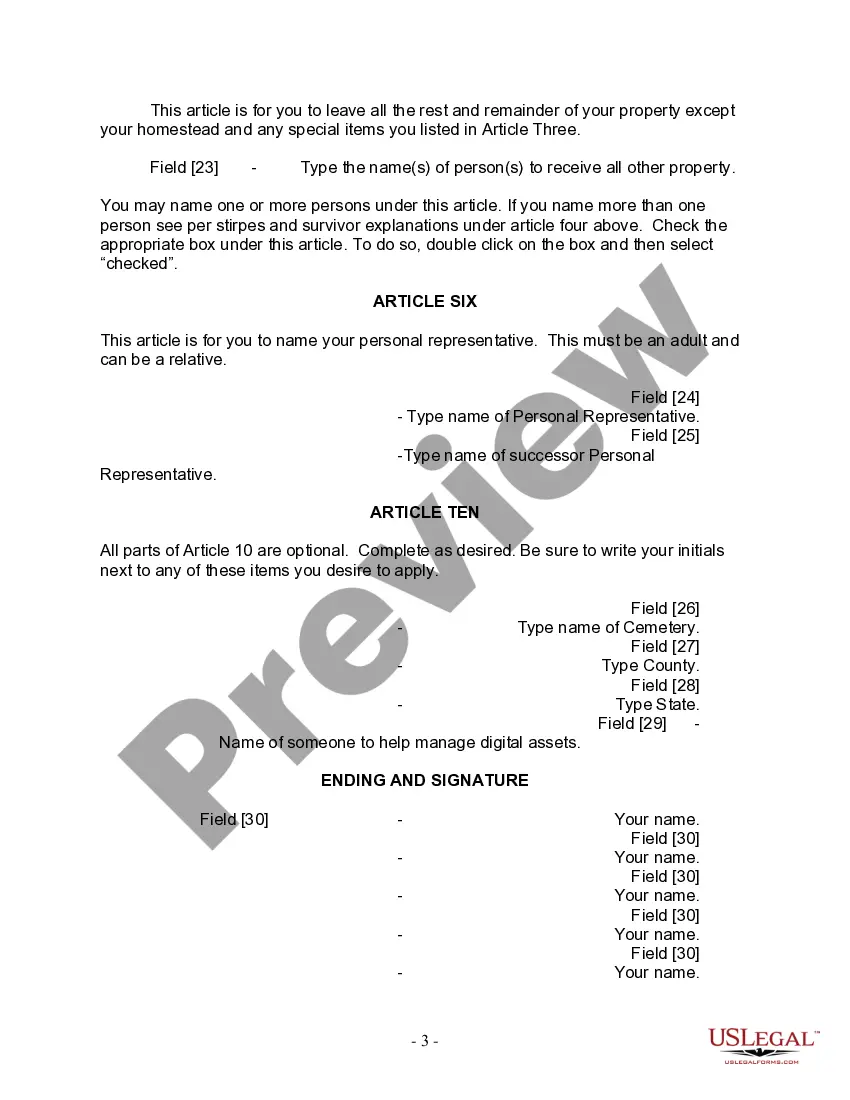
- Residuary Clause: Specifies who receives the remainder of your estate.
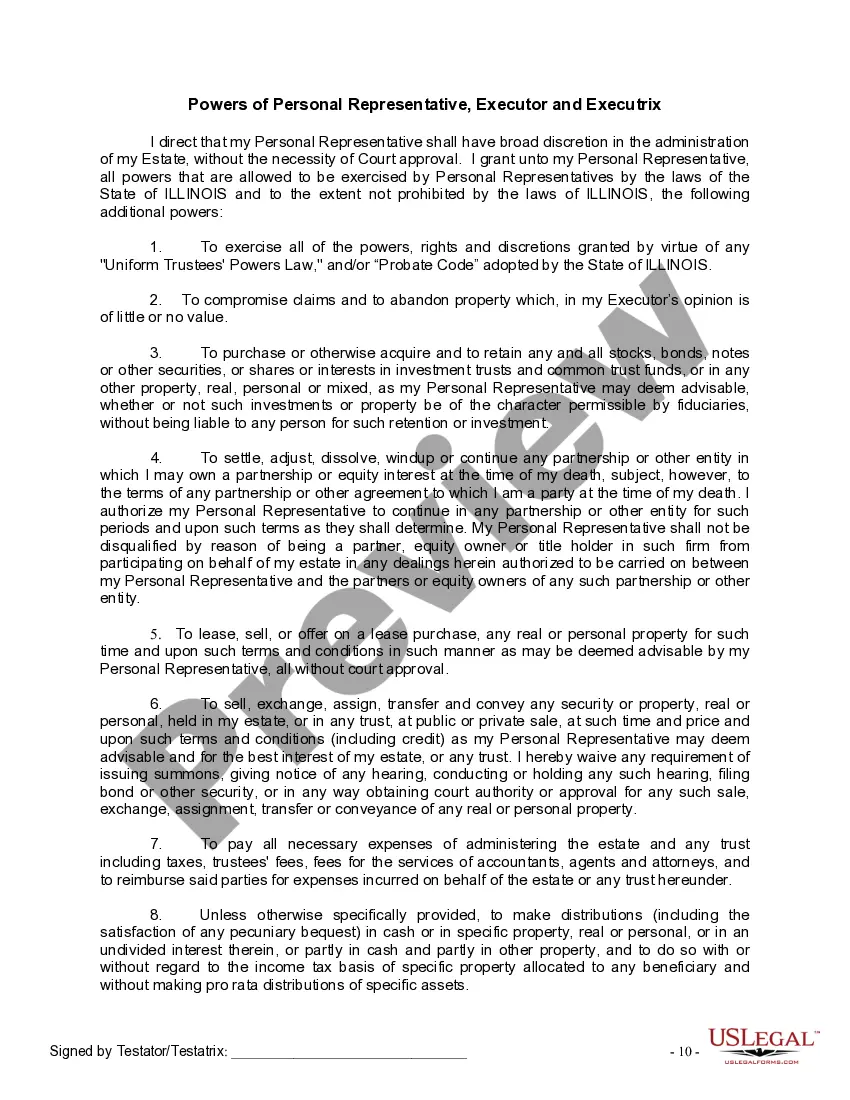
- Appointment of Personal Representative: Identifies the individual responsible for administering your estate.
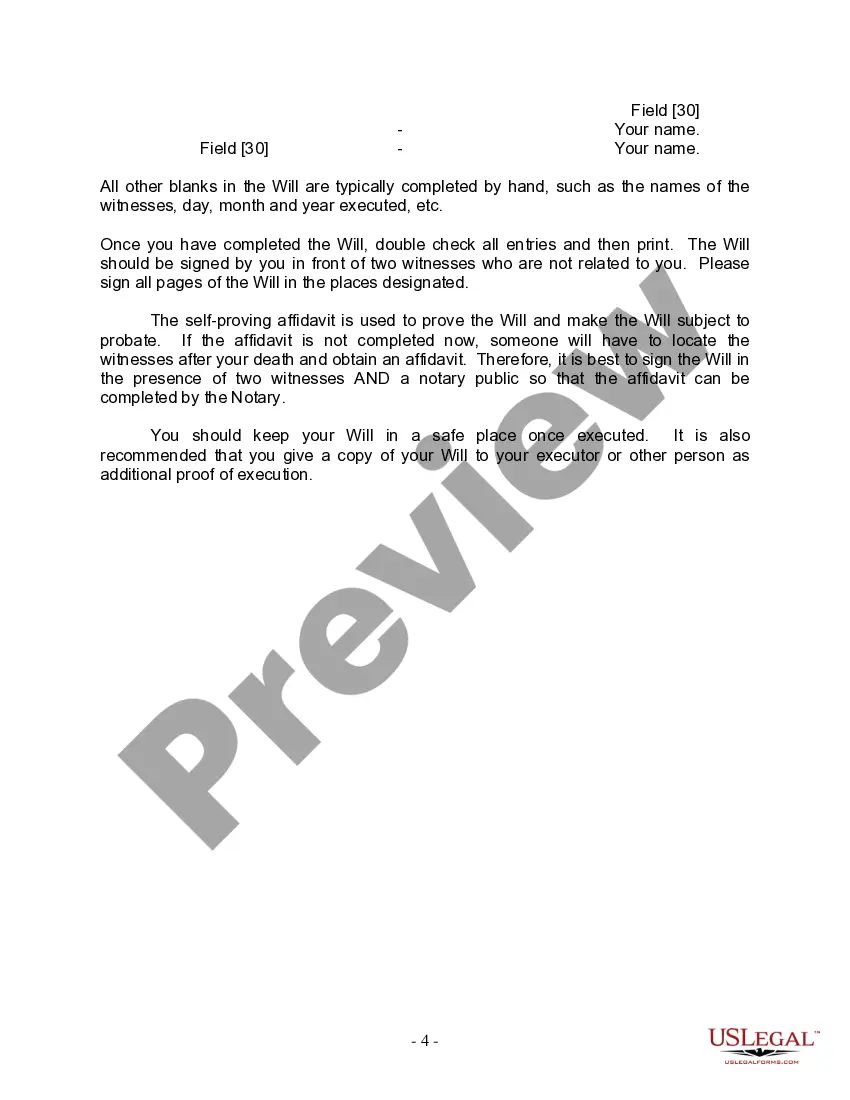
- Signature Requirements: Outlines the need for signatures from you and two witnesses, plus notarization if desired.







When this form is needed
This form is ideal in scenarios where an individual is single and has no children, and wishes to outline their wishes for posthumous asset distribution. This may include situations such as planning for the future, ensuring specific items go to trusted friends or relatives, and minimizing potential disputes after death. Using this form can provide peace of mind that your property will be distributed according to your preferences.
Who can use this document
- Individuals who are single and do not have children.
- Those wishing to ensure specific distribution of their assets without the complexities of involving children or spouses.
- Anyone looking to appoint a trusted person to manage their estate after their passing.
Instructions for completing this form
- Identify and enter your full name and county of residence in the designated fields.
- Specify any specific property you wish to bequeath to individuals in the appropriate section.
- Designate the individual who will receive your homestead, if applicable.
- Outline the residuary clause to determine who will receive any remaining property.
- Appoint a personal representative and a successor representative to manage your estate.
- Review your entries for accuracy, sign the document in the presence of two witnesses, and consider notarizing for added legal strength.
Notarization guidance
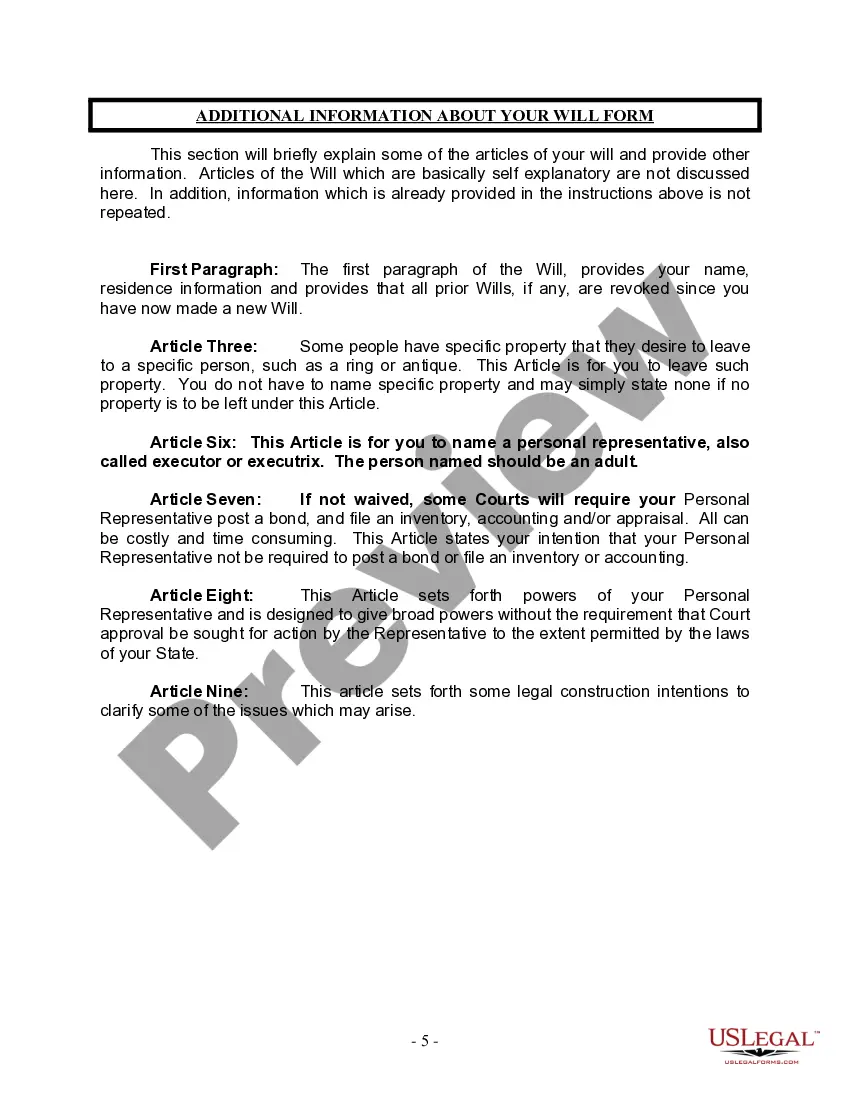
This form does not typically require notarization unless specified by local law. However, including a notary can simplify the probate process and enhance the validity of your wishes, especially if a self-proving affidavit is executed.
Get your form ready online
Our built-in tools help you complete, sign, share, and store your documents in one place.
Make edits, fill in missing information, and update formatting in US Legal Forms—just like you would in MS Word.
Download a copy, print it, send it by email, or mail it via USPS—whatever works best for your next step.
Sign and collect signatures with our SignNow integration. Send to multiple recipients, set reminders, and more. Go Premium to unlock E-Sign.
If this form requires notarization, complete it online through a secure video call—no need to meet a notary in person or wait for an appointment.
We protect your documents and personal data by following strict security and privacy standards.

Make edits, fill in missing information, and update formatting in US Legal Forms—just like you would in MS Word.

Download a copy, print it, send it by email, or mail it via USPS—whatever works best for your next step.

Sign and collect signatures with our SignNow integration. Send to multiple recipients, set reminders, and more. Go Premium to unlock E-Sign.

If this form requires notarization, complete it online through a secure video call—no need to meet a notary in person or wait for an appointment.

We protect your documents and personal data by following strict security and privacy standards.
Common mistakes to avoid
- Failing to properly sign the will in front of witnesses, making it invalid.
- Not designating a personal representative, leaving ambiguity about who will manage the estate.
- Neglecting to update the will after significant life changes such as marriage or acquiring new assets.
- Overlooking the requirement for a self-proving affidavit if applicable in your state.
Benefits of using this form online
- Convenience: Complete the form at your own pace from the comfort of your home.
- Editability: Easily modify sections to reflect your current wishes and circumstances.
- Assured reliability: Templates are drafted by licensed attorneys, providing a trustworthy legal foundation.
Summary of main points
- This Last Will and Testament is essential for single individuals with no children to ensure their assets are distributed according to their wishes.
- Proper execution with witnesses and notarization enhances the will's validity and simplifies probate.
- Utilizing this form saves time and ensures thoroughness, as it covers all necessary components for estate planning.
Looking for another form?


Form popularity
FAQ
Handwritten Wills in Illinois In the state of Illinois, holographic wills are not considered to be valid. Illinois does recognize, however, handwritten wills that are signed by two witnesses and satisfy all other requirements for wills as stated in the law.
Write an Introduction. Select an Executor. Identify Your Heirs and Beneficiaries. Nominate a Guardian for Your Minor or Dependent Children. Assess and Divide Your Property. State Your Funeral Wishes (If You Have Any) Sign and Notarize the Document.
Contrary to popular belief, you do not need to have an attorney draft a will for you. Anyone can write this document on their own, and as long as it meets all of the legal requirements of the state, courts will recognize one you wrote yourself.
Most single people should have a will. A will can help you determine who will get your property (including your home, business, pets, and digital assets), name guardians for your children, and name an executor. A will also puts your wishes in writing so there's no confusion about your intentions.
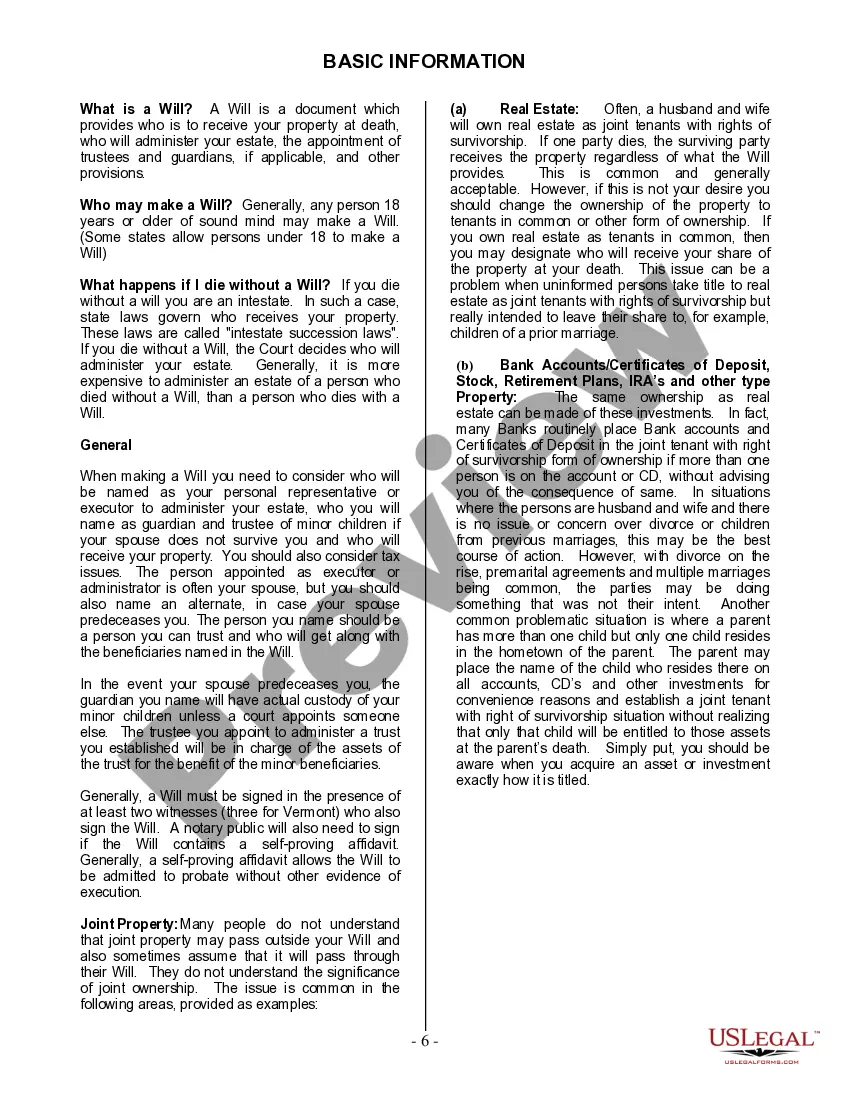
In Illinois, to have a valid will it is required that two or more credible witnesses validate or attest the will. This means each witness must watch the testator (person making his or her will) sign or acknowledge the will, determine the testator is of sound mind, and sign the will in front of the testator.
Handwritten Wills in Illinois In the state of Illinois, holographic wills are not considered to be valid. Illinois does recognize, however, handwritten wills that are signed by two witnesses and satisfy all other requirements for wills as stated in the law.
If you've got a life partner but no marriage (or civil union or domestic partnership) certificate, estate planning is a must. Without it, neither of you will inherit from each otherand neither of you will have a say in the other's end-of-life medical care.
Bank accounts. Brokerage or investment accounts. Retirement accounts and pension plans. A life insurance policy.
Do I Need to Have My Will Notarized? No, in Illinois, you do not need to notarize your will to make it legal.However, Illinois allows your will to be self-proved without a self-proving affidavit, as long as you sign and witness it correctly.