Illinois Central District Bankruptcy Guide and Forms Package for Chapters 7 or 13
What this document covers
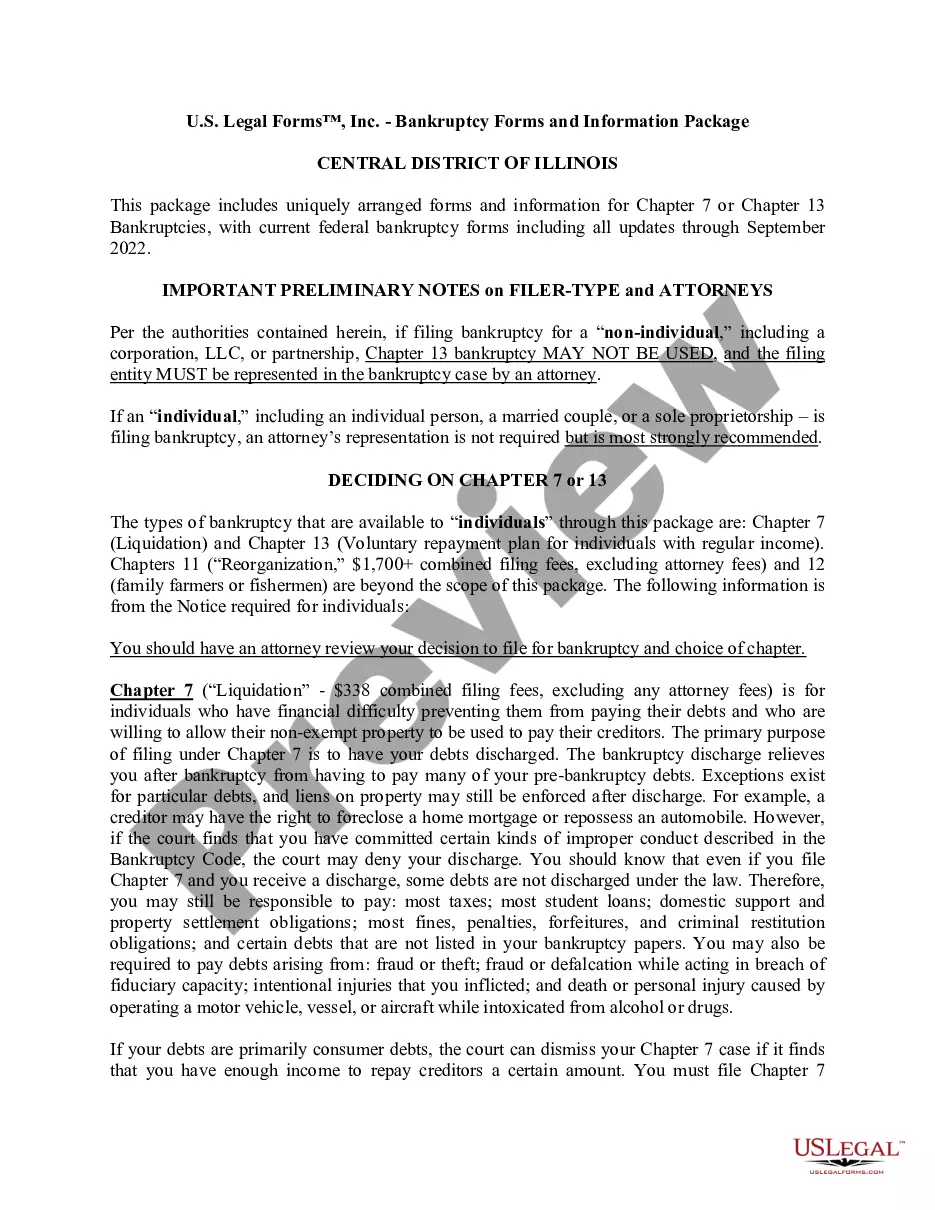
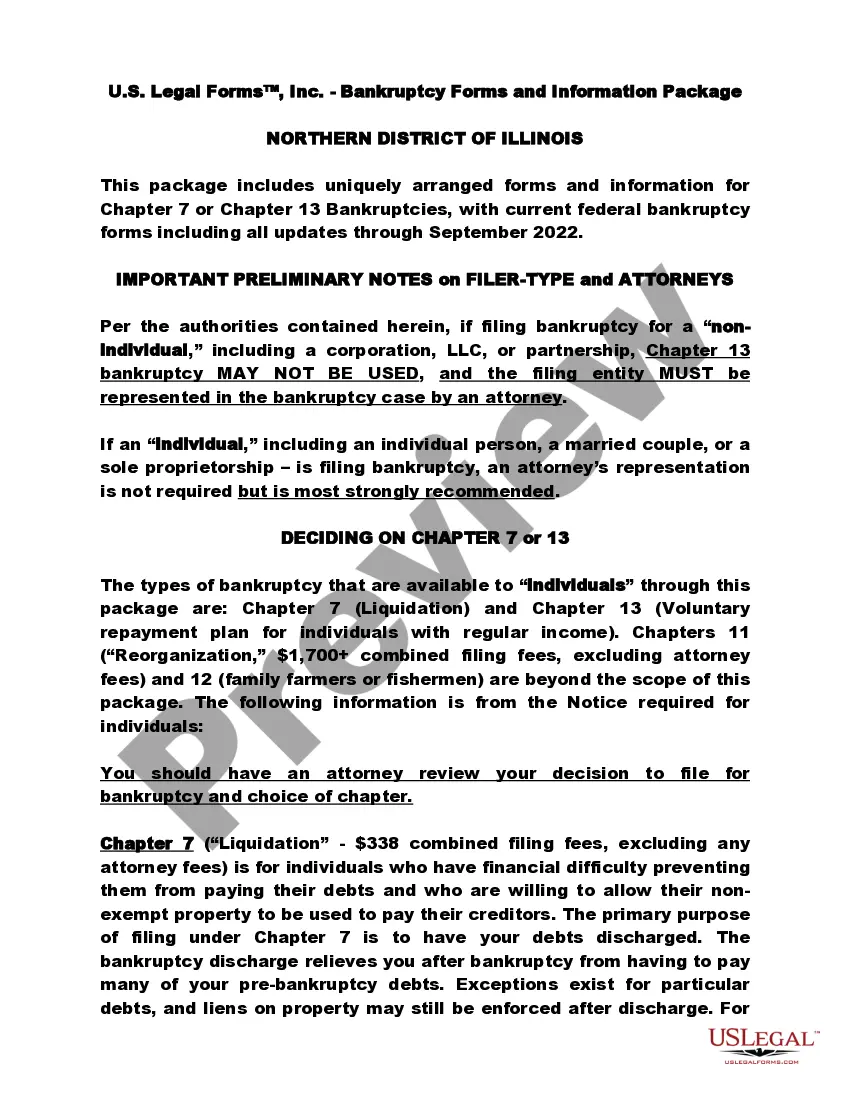
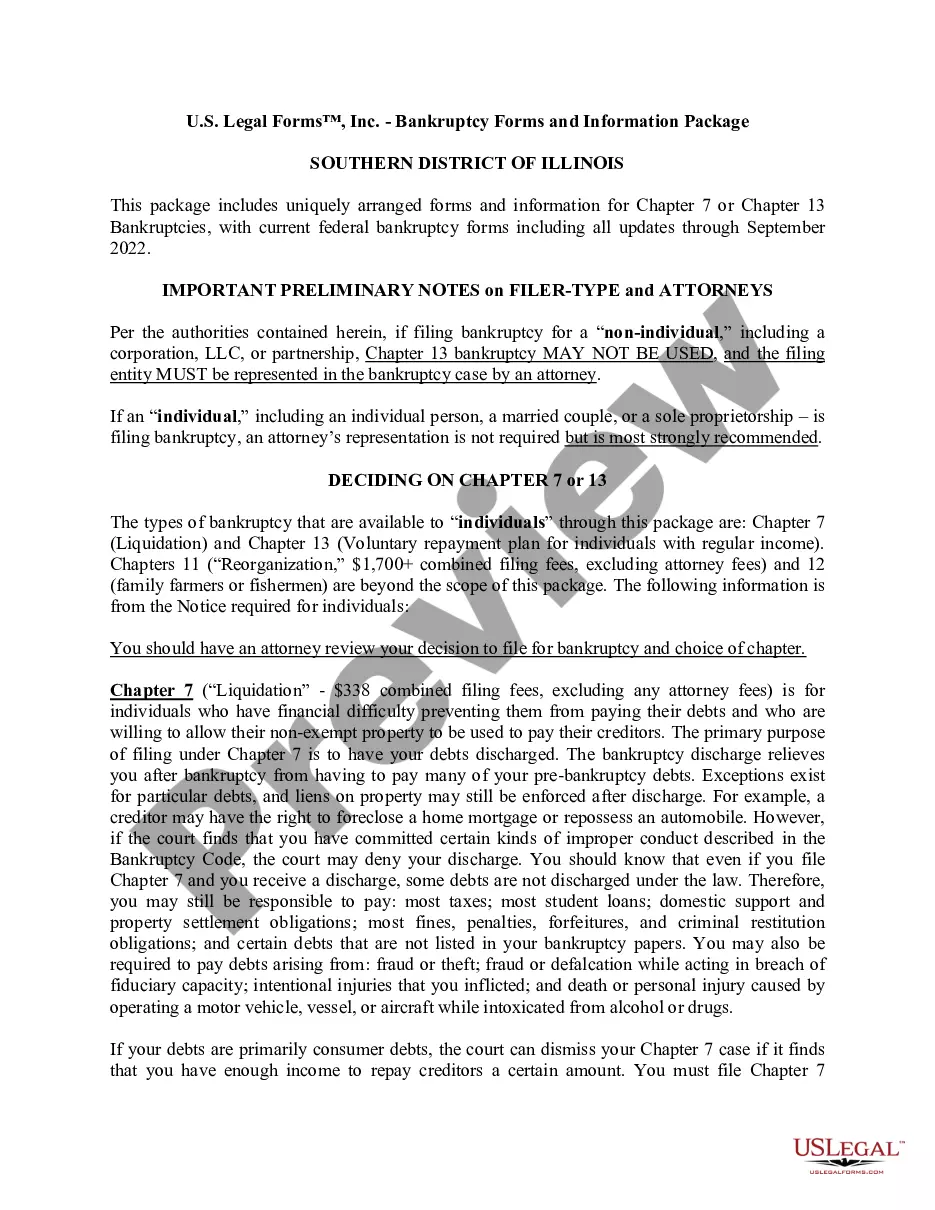
The Illinois Central District Bankruptcy Guide and Forms Package for Chapters 7 or 13 offers detailed instructions and essential forms for individuals filing for bankruptcy under either Chapter 7 (Liquidation) or Chapter 13 (Repayment Plan). This package is tailored to help users navigate the bankruptcy process efficiently, distinguishing it from other bankruptcy filings by focusing specifically on these two chapters while ensuring compliance with Illinois law.
Form components explained
- Chapter 7 Statement of Your Current Monthly Income (Official Form 122A-1)
- Chapter 7 Means Test Calculation (Official Form 122A-2)
- Schedule C: The Property You Claim as Exempt (Official Form 106C)
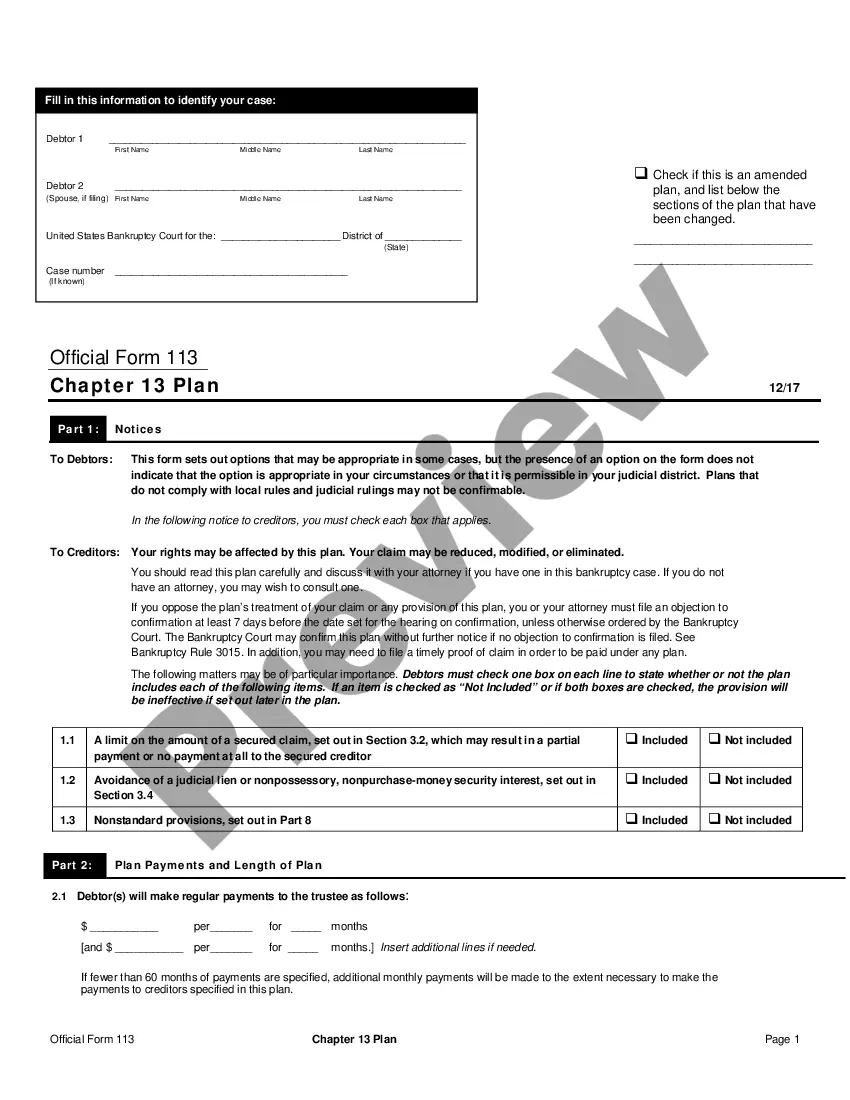
- Chapter 13 Repayment Plan form
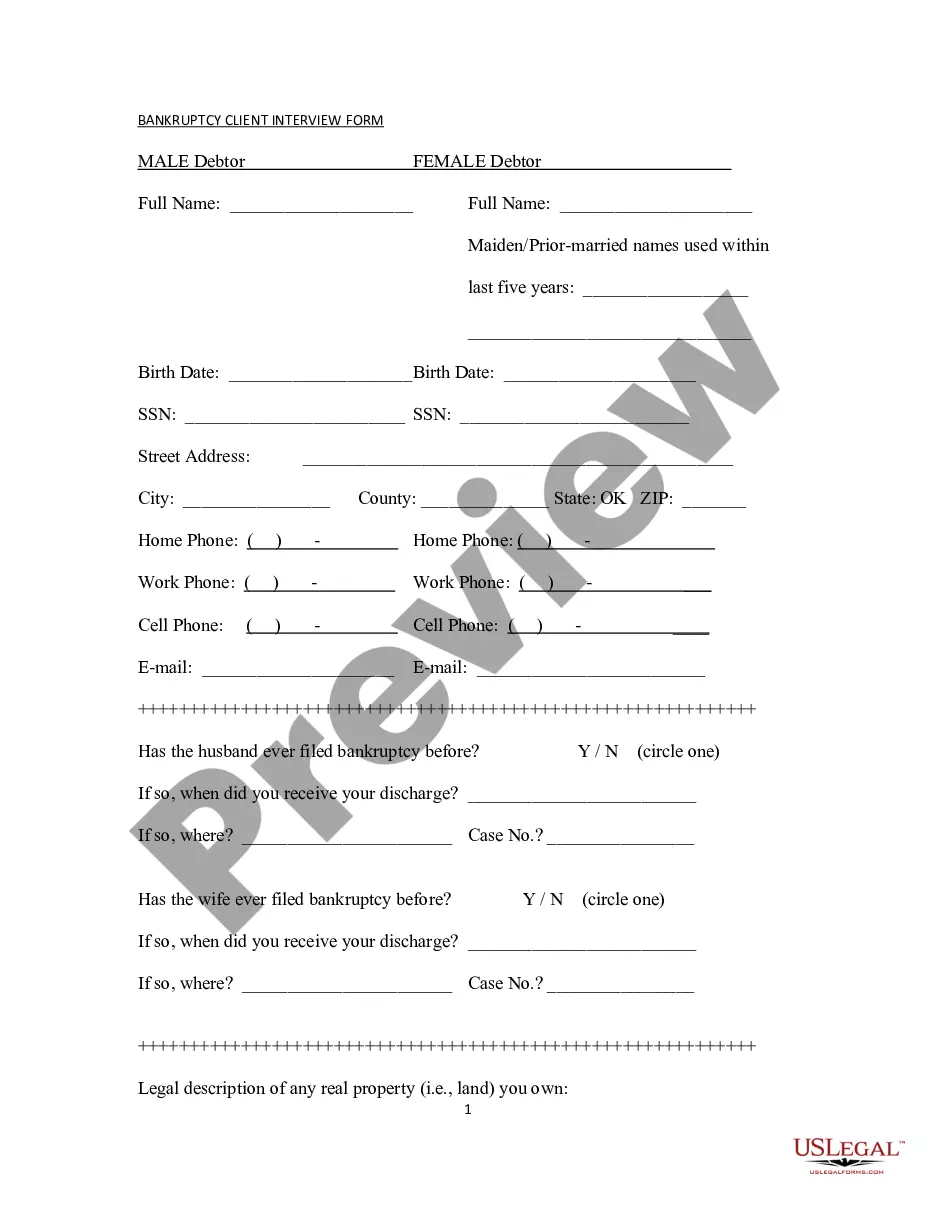
- Comprehensive instructions for completing each form

When to use this document
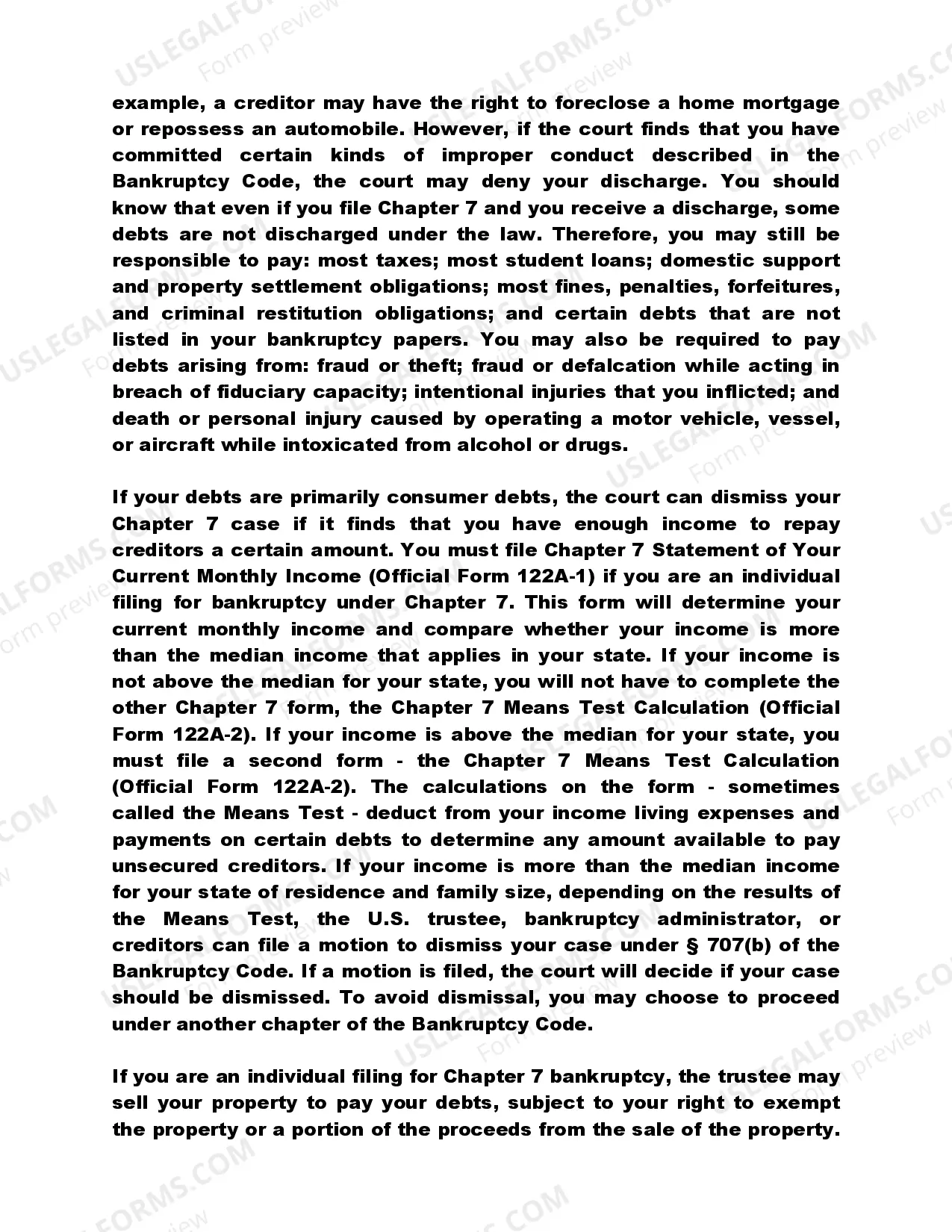
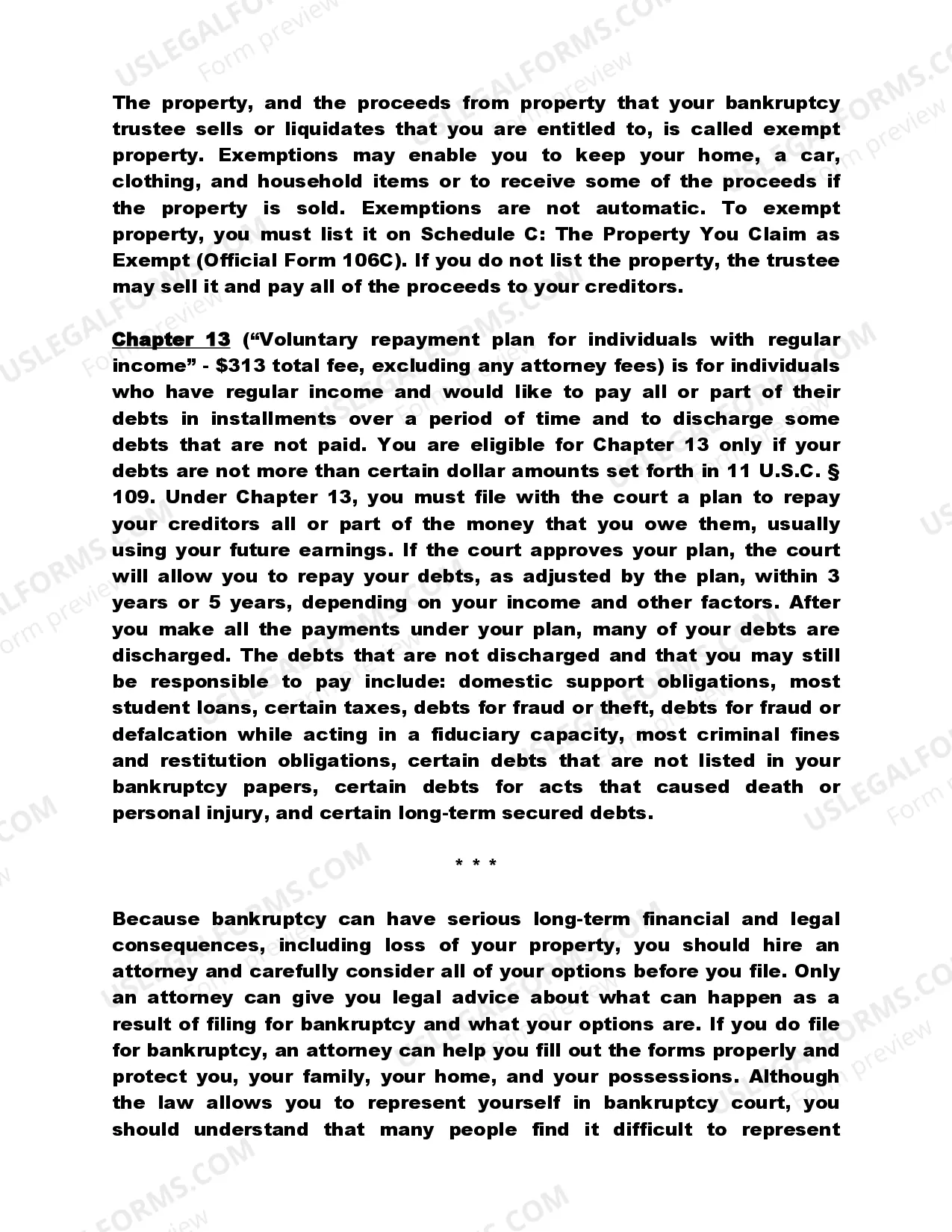
This package is useful when an individual needs to declare bankruptcy due to overwhelming debt. Individuals considering Chapter 7 should use this form when they cannot repay their debts and are willing to liquidate non-exempt assets. Conversely, Chapter 13 is appropriate for individuals with a steady income looking to reorganize and gradually pay off debts over time.
Who can use this document
- Individuals facing financial difficulties leading to bankruptcy.
- Married couples filing for joint bankruptcy.
- Sole proprietors seeking personal bankruptcy protection.
- Individuals wishing to understand their bankruptcy options.
How to complete this form
- Identify the type of bankruptcy you are filing for: Chapter 7 or Chapter 13.
- Complete the Chapter 7 Statement of Your Current Monthly Income (Official Form 122A-1) to assess your income status.
- If necessary, fill out the Chapter 7 Means Test Calculation (Official Form 122A-2) to evaluate your eligibility for Chapter 7.
- Prepare the Schedule C to list any property you wish to claim as exempt.
- If using Chapter 13, draft a repayment plan detailing your strategy to repay creditors.
Is notarization required?
In most cases, this form does not require notarization. However, some jurisdictions or signing circumstances might. US Legal Forms offers online notarization powered by Notarize, accessible 24/7 for a quick, remote process.
Get your form ready online
Our built-in tools help you complete, sign, share, and store your documents in one place.
Make edits, fill in missing information, and update formatting in US Legal Forms—just like you would in MS Word.
Download a copy, print it, send it by email, or mail it via USPS—whatever works best for your next step.
Sign and collect signatures with our SignNow integration. Send to multiple recipients, set reminders, and more. Go Premium to unlock E-Sign.
If this form requires notarization, complete it online through a secure video call—no need to meet a notary in person or wait for an appointment.
We protect your documents and personal data by following strict security and privacy standards.

Make edits, fill in missing information, and update formatting in US Legal Forms—just like you would in MS Word.

Download a copy, print it, send it by email, or mail it via USPS—whatever works best for your next step.

Sign and collect signatures with our SignNow integration. Send to multiple recipients, set reminders, and more. Go Premium to unlock E-Sign.

If this form requires notarization, complete it online through a secure video call—no need to meet a notary in person or wait for an appointment.

We protect your documents and personal data by following strict security and privacy standards.
Mistakes to watch out for
- Not including all assets in the exemption schedule, leading to potential property loss.
- Failing to complete the Means Test calculation accurately.
- Missing required signatures or not providing necessary documentation with the forms.
- Filing the wrong chapter of bankruptcy for your financial situation.
Why complete this form online
- Immediate access to up-to-date forms and instructions.
- The ability to fill out, save, and edit forms at your convenience.
- Reliable guidance based on current bankruptcy laws and regulations.
Legal use & context
- This package is created in alignment with Illinois bankruptcy laws.
- Filing this bankruptcy package properly can lead to legal discharge of certain debts.
- Failure to follow guidelines may result in dismissal of your case.
Quick recap
- This form package is essential for individuals filing for Chapter 7 or Chapter 13 bankruptcy in Illinois.
- Understanding the differences between Chapters 7 and 13 is crucial in selecting the appropriate filing option.
- Consultation with a qualified attorney is strongly recommended to navigate the complexities of bankruptcy.
Looking for another form?

Form popularity
FAQ
In general, attorney fees for a Chapter 7 bankruptcy range from $1,000 to $3,500 depending on the complexity of the case. Larger firms with more advertising and overhead costs sometimes charge more than a solo practitioner, but not always. Some larger operations offer low fees and count on a higher volume of cases.
In most cases, an individual files for bankruptcy, performs their required duties and receives an automatic discharge at the end of the process all without ever having to talk with a lawyer or appear in court. The role of the Bankruptcy Trustee is to be an impartial administrator.
Because a chapter 7 discharge is subject to many exceptions, debtors should consult competent legal counsel before filing to discuss the scope of the discharge. Generally, excluding cases that are dismissed or converted, individual debtors receive a discharge in more than 99 percent of chapter 7 cases.
What Documents Do You Need to File for Bankruptcy? Tax Returns. Income Documentation. Vehicle Registration, Proof of Value & Insurance. Retirement And Bank Account Statements. Identification. What Information Do You Need to Complete the Bankruptcy Forms? Credit Counseling Requirement.
Identifying Information. The Voluntary Petition for Individuals Filing for Bankruptcy form acts as the cover sheet for your paperwork. Your Property. Your Exempt Property. Your Collateralized Debt. Your Other Debt. Your Contracts and Leases. Your Codebtors. Your Income.
Collect Your Illinois Bankruptcy Documents. Take Credit Counseling. Complete the Bankruptcy Forms. Get Your Filing Fee. Print Your Bankruptcy Forms. Go to Court to File Your Forms. Mail Documents to Your Trustee. Take Bankruptcy Course 2.
There is no threshold amount that you need to reach to file a bankruptcy. Some chapters of bankruptcy have debt limits, but there is no such thing as a debt minimum. That being said, you certainly can and should evaluate if filing a bankruptcy makes sense in your current situation.
If your total monthly income over the course of the next 60 months is less than $7,475 then you pass the means test and you may file a Chapter 7 bankruptcy. If it is over $12,475 then you fail the means test and don't have the option of filing Chapter 7.
How much does it cost to file bankruptcy in Illinois depends on whether you file Chapter 7 bankruptcy or Chapter 13 bankruptcy, and also on how complicated your case is. There is a filing fee for a Chapter 7 of $306 and the filing fee for Chapter 13 is $281. The filing fee goes to the Clerk of the court.