Illinois Letter from Landlord to Tenant about time of intent to enter premises
What is this form?
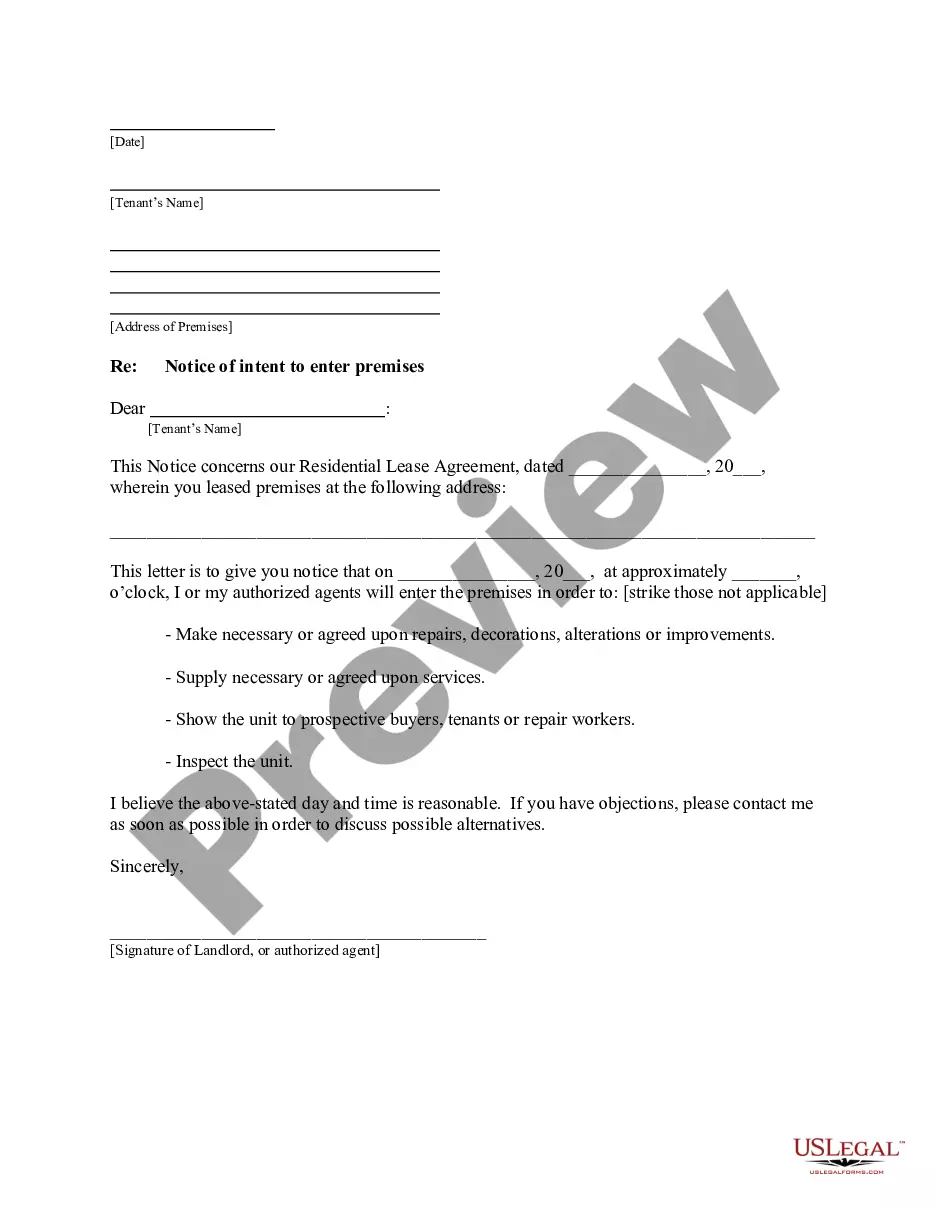
This form is a letter from a landlord to a tenant that provides notice of the landlord's intent to enter the leased premises. The purpose of this letter is to inform the tenant about the specific date and time the landlord or authorized agents will enter the property. This letter differs from other communications, such as repair requests or eviction notices, as it focuses specifically on the intent to enter for maintenance, inspections, or viewings.
What’s included in this form
- Identification of the residential lease agreement and property address.
- Notice of the date and time of the intended entry.
- Reasons for entry, which may include repairs, inspections, or showings.
- Contact information for the landlord for objections.
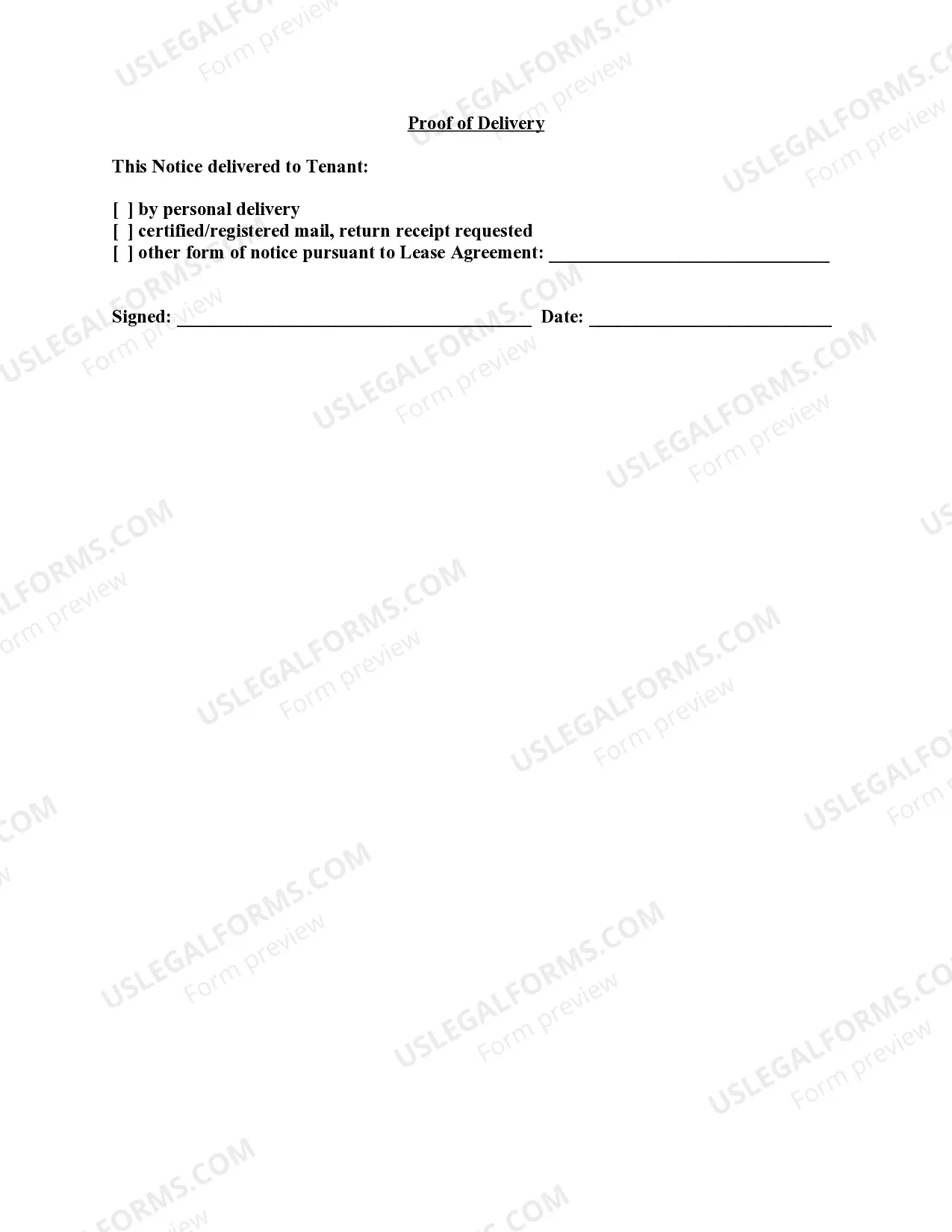
- Proof of delivery method for the notice.
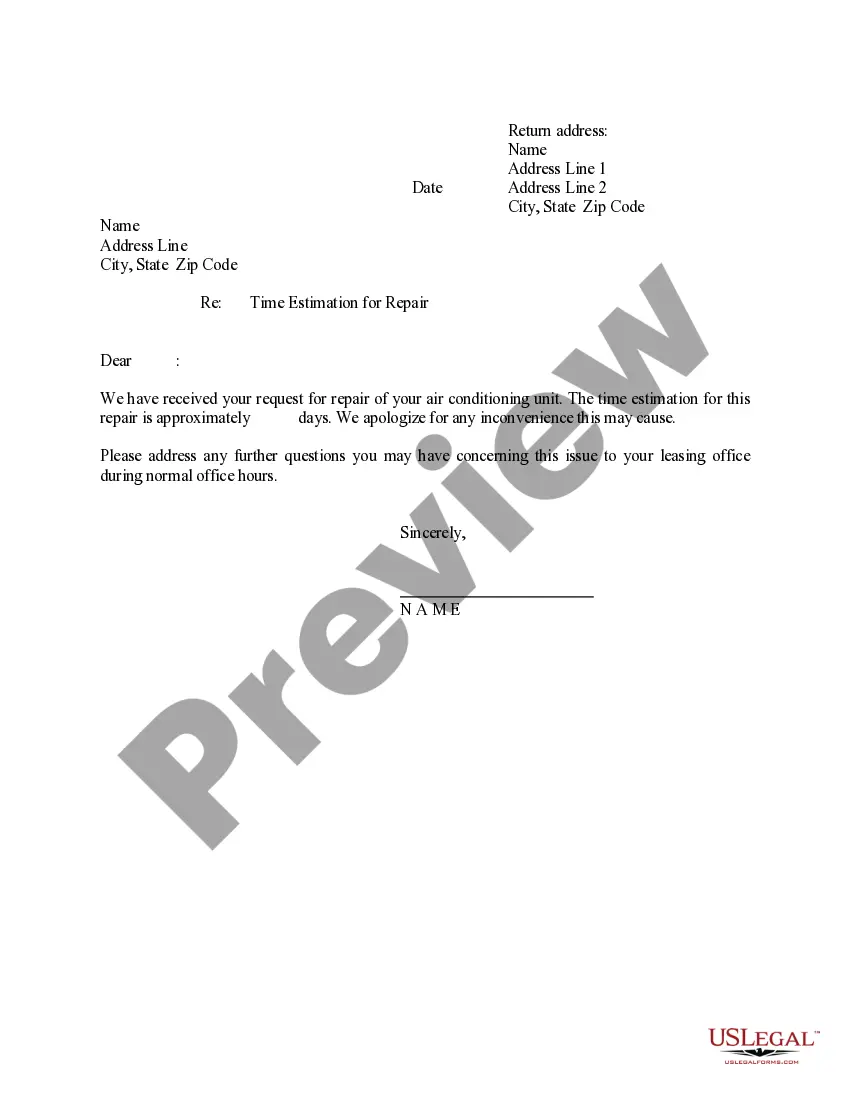
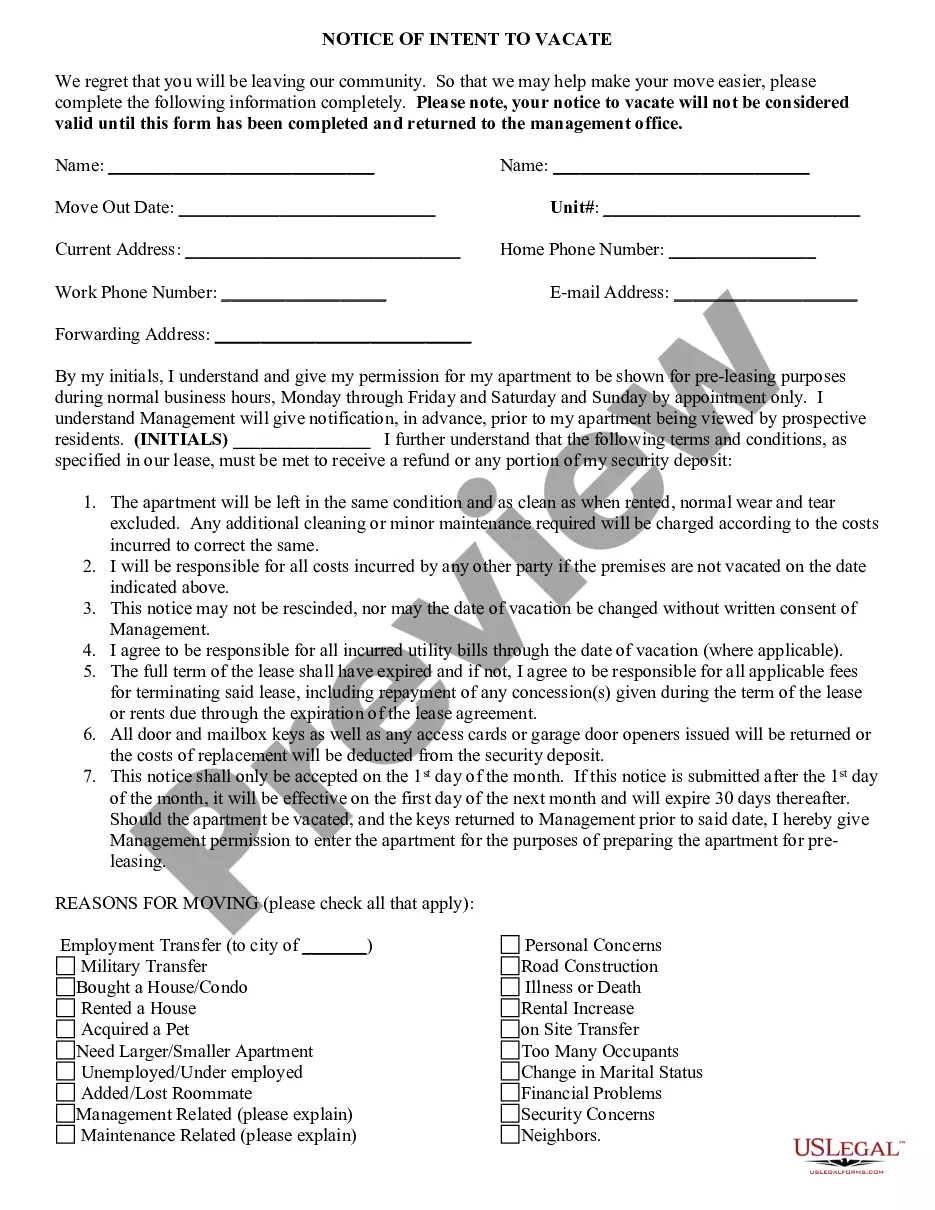
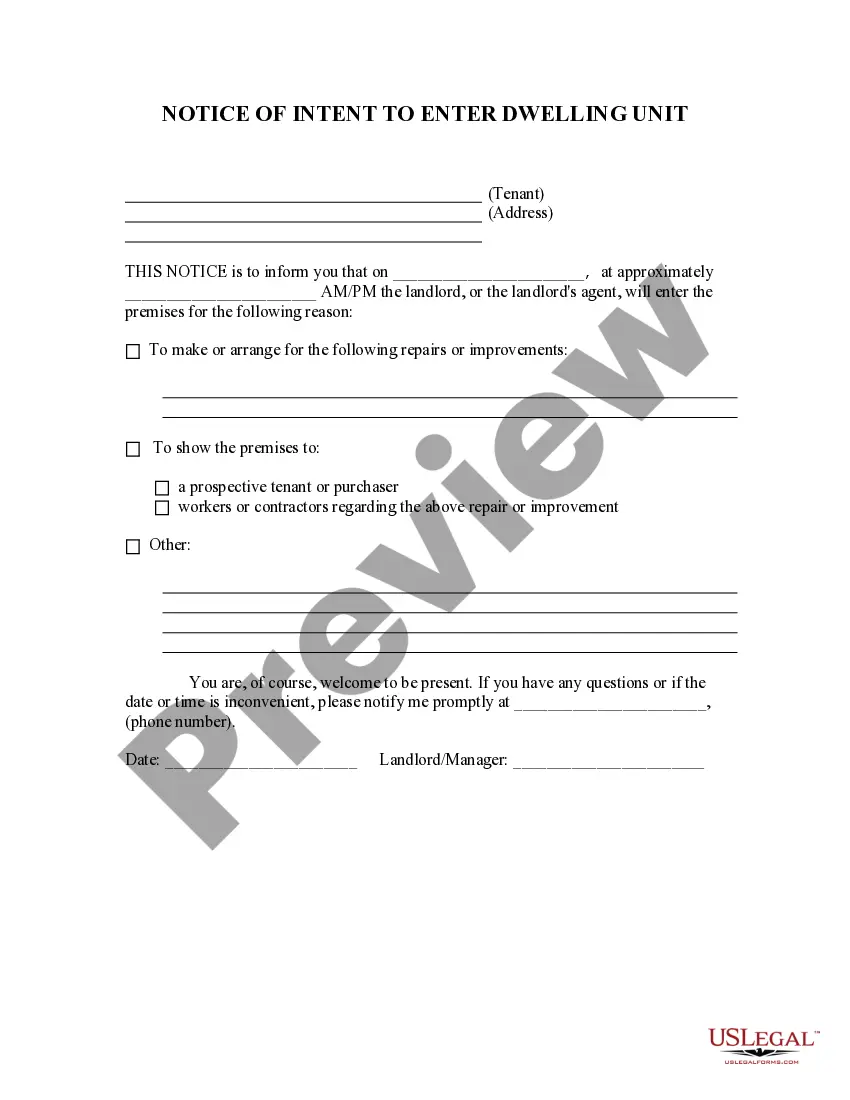
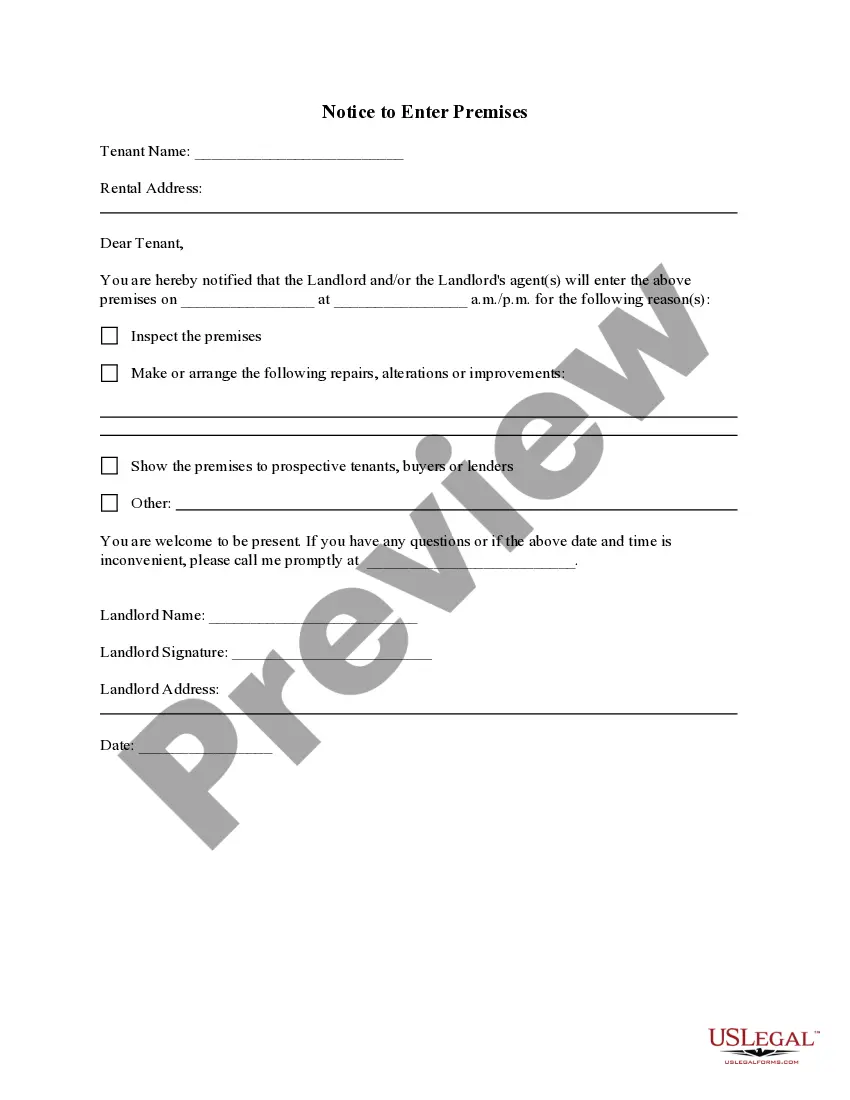
Common use cases
This letter should be used when a landlord needs to inform a tenant about entering the rental unit for any of the following reasons: making necessary repairs, conducting inspections, performing maintenance, or showing the property to prospective tenants or buyers. It ensures that the tenant is aware of the entry and the reasons behind it, fostering clear communication and compliance with lease agreement terms.
Who should use this form
- Landlords wishing to inform tenants of their intent to enter the property.
- Property managers acting on behalf of landlords.
- Real estate agents who need to show the property to potential buyers or renters.
Steps to complete this form
- Identify the date of the residential lease agreement and enter it in the designated space.
- Enter the complete address of the leased premises.
- Indicate the date and time when entry is intended.
- Select and strike out the reasons that apply for the planned entry.
- Provide your name, signature, and the date of signing at the end of the letter.
- Choose the method of delivery and complete the proof of delivery section.
Notarization requirements for this form
This form does not typically require notarization unless specified by local law. However, ensuring proper delivery methods as outlined in the lease agreement is essential for its legal validity.
Get your form ready online
Our built-in tools help you complete, sign, share, and store your documents in one place.
Make edits, fill in missing information, and update formatting in US Legal Forms—just like you would in MS Word.
Download a copy, print it, send it by email, or mail it via USPS—whatever works best for your next step.
Sign and collect signatures with our SignNow integration. Send to multiple recipients, set reminders, and more. Go Premium to unlock E-Sign.
If this form requires notarization, complete it online through a secure video call—no need to meet a notary in person or wait for an appointment.
We protect your documents and personal data by following strict security and privacy standards.

Make edits, fill in missing information, and update formatting in US Legal Forms—just like you would in MS Word.

Download a copy, print it, send it by email, or mail it via USPS—whatever works best for your next step.

Sign and collect signatures with our SignNow integration. Send to multiple recipients, set reminders, and more. Go Premium to unlock E-Sign.

If this form requires notarization, complete it online through a secure video call—no need to meet a notary in person or wait for an appointment.

We protect your documents and personal data by following strict security and privacy standards.
Typical mistakes to avoid
- Failing to provide adequate notice as specified in the lease agreement.
- Not specifying the reasons for entry, which can lead to confusion.
- Neglecting to include the date and time of the intended entry.
- Forgetting to sign the letter before sending it to the tenant.
Why use this form online
- Convenient download and easy editing to suit your specific needs.
- Reliable legal template drafted by licensed attorneys to ensure compliance.
- Access to a variety of legal forms in one easily navigable platform.
Legal use & context
- This notice provides evidence of the landlord's intent to enter, which can be important for legal compliance.
- Documentation is crucial in case of disputes between landlords and tenants.
Summary of main points
- A landlord must provide notice to a tenant before entering the premises.
- This form specifies the date, time, and reasons for entry.
- Proper completion and delivery of the notice help avoid disputes and ensure compliance with lease agreements.
Looking for another form?
Form popularity
FAQ
A landlord can only enter a tenant's unit for specific reasons, unless: the tenant has given the landlord permission to enter; there is an emergency that requires the landlord to enter the unit; or. the tenant has abandoned the property.
Let's be clear, other than in emergency it's illegal for a landlord or agent to enter a property without agreement from the tenant. The golden rule to abide by is always to provide your tenants with written notice at least 24 hours before any planned visits.
In Illinois, if there is no lease or if the lease does not specify a move out date, the Landlord must give at least 30 days of notice to a tenant that the landlord wants to move out. This notice must be in writing and must arrive to the tenant at least 30 days prior to their move out date.
Landlord Right to Entry in IllinoisIllinois law has no provisions governing landlord right to entry. However, in the city of Chicago, landlords must provide at least 2 days of notice before entering the premises.
The big take-away is that in most circumstances a landlord cannot enter a property without agreement from the tenant. And If the landlord ignores the law and enters the property without permission, the tenant may be able to claim damages or gain an injunction to prevent the landlord doing it again.
When you rent a property from a landlord it becomes your home. They should only enter the property without you being present, if you have given permission for them to do so, or in a genuine emergency.
Tenants can always give the landlord or agent permission to enter the property at any time for any reason.
In all states, a landlord can enter the property in an emergency without notice or permission.Even if your landlord gives you notice, he or she must have a good reason to enter the property. In most cases, your landlord can enter your home: In an emergency.
Provides that a landlord may enter only at reasonable times except in case of an emergency and that an entry between A.M. and P.M., or at a time requested by the tenant, shall be presumed reasonable.