Illinois Letter from Tenant to Landlord containing Notice that doors are broken and demand repair
What this document covers
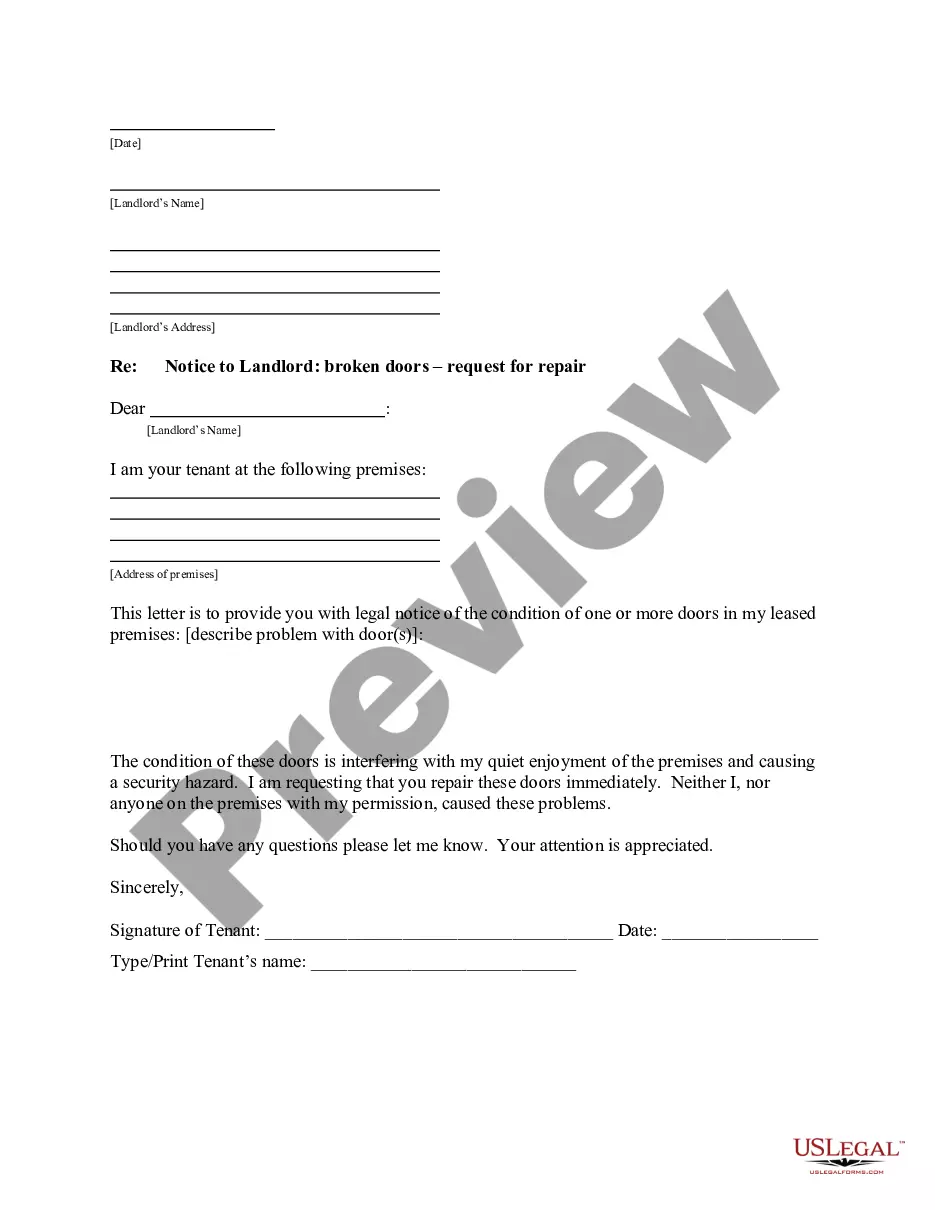
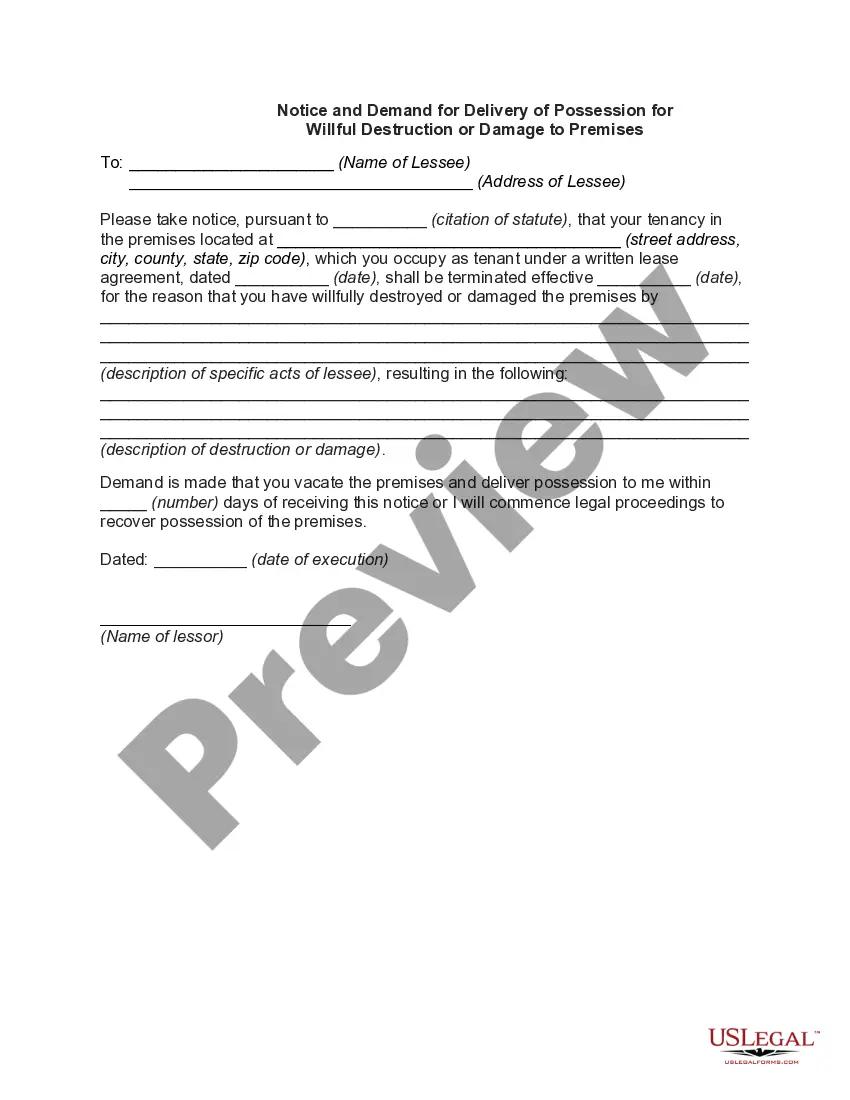
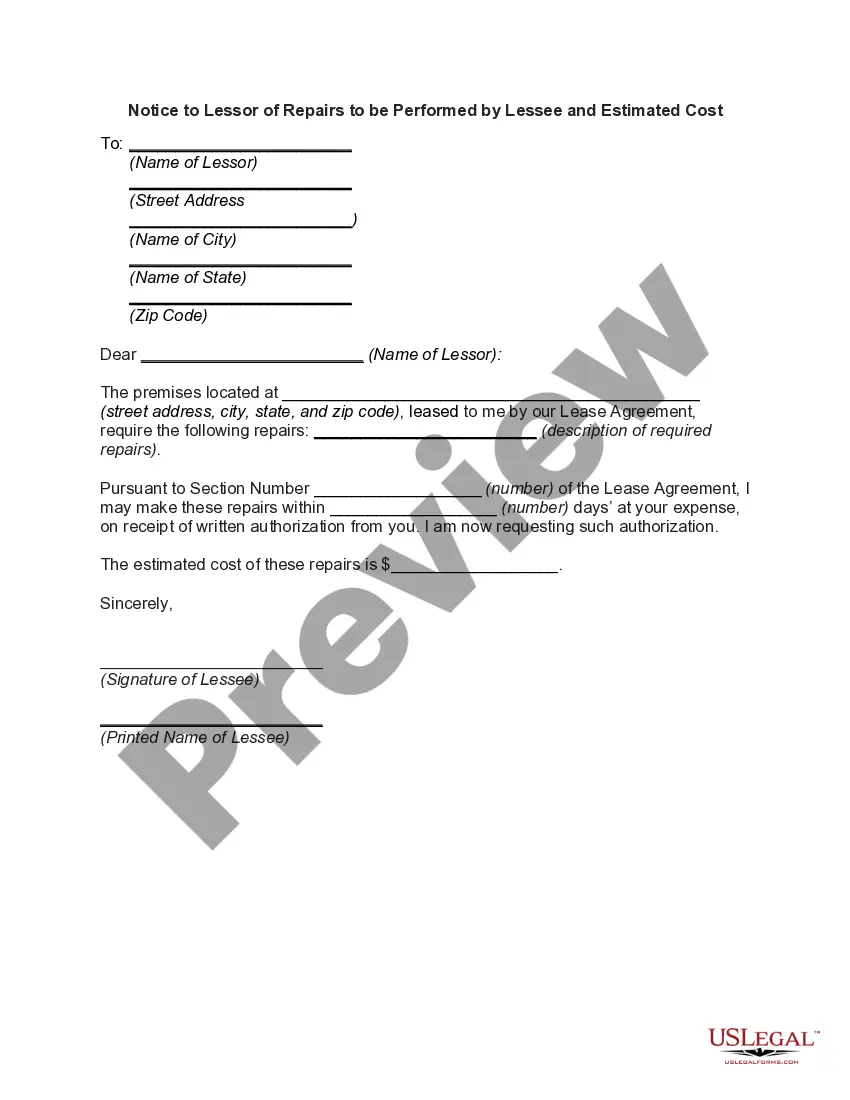
This form, known as a letter from tenant to landlord containing notice that doors are broken and demand repair, allows a tenant to formally notify their landlord of issues concerning broken doors in the leased property. This is an essential step in requesting timely repairs as required by the lease agreement, ensuring that the tenant's living conditions are safe and secure. Unlike informal communications, this letter serves as a documented request that can be used in future discussions or disputes, providing a clear record of the tenant's concerns.
Form components explained
- Tenant's contact information and address of the leased property.
- Description of the specific issue regarding the broken doors.
- Request for repair, outlining the urgency and need for action.
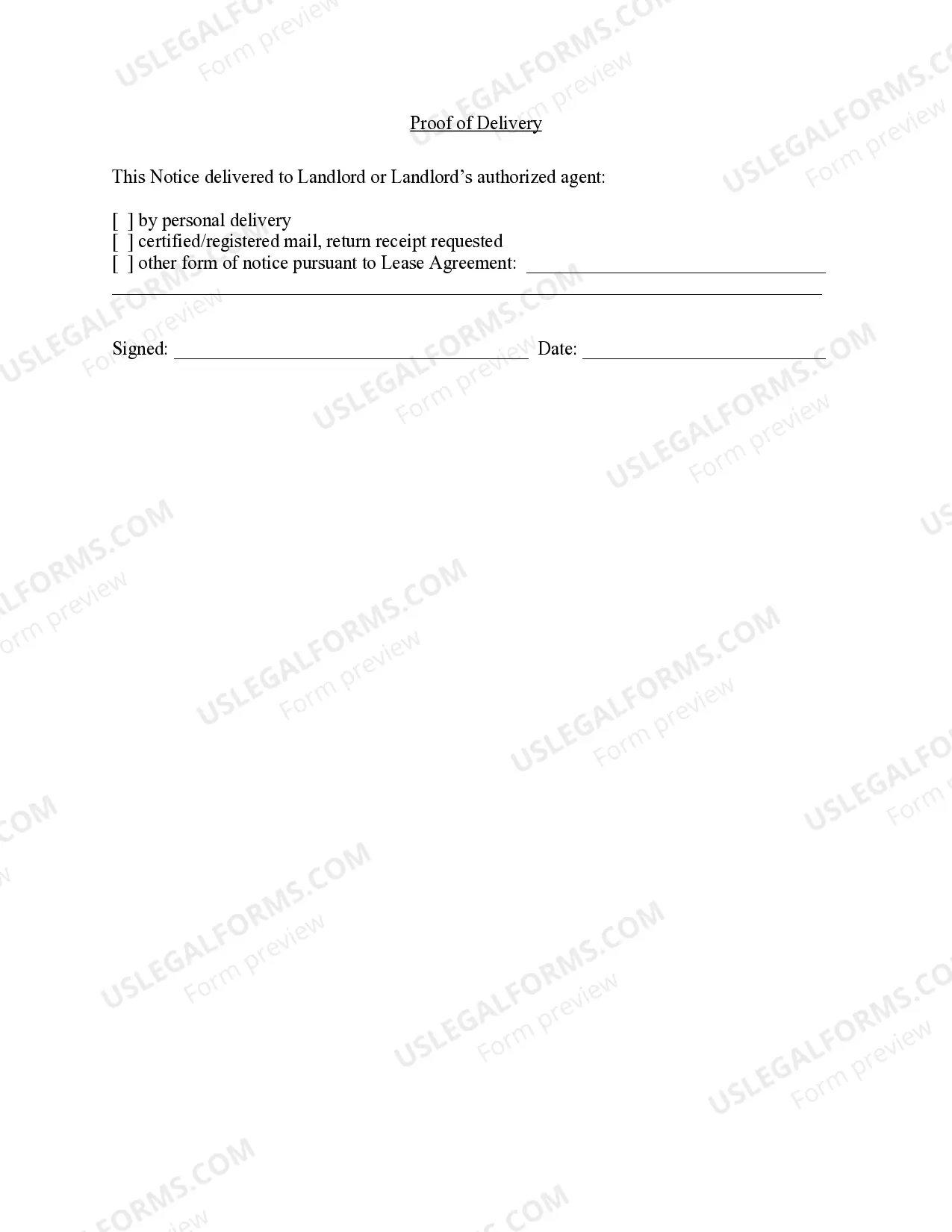
- Proof of delivery method to ensure the landlord receives the notice.
- Signature of the tenant and date of the letter.

When this form is needed
Who can use this document
This form is suitable for:
- Tenants experiencing issues with broken doors in their rental units.
- Individuals who want to document their repair requests to landlords.
- Residents who need to enforce their rights under a lease agreement regarding property maintenance.
How to prepare this document
- Enter your contact information and the address of the rental property.
- Clearly describe the problem with the broken doors.
- State your request for repairs and any relevant timelines.
- Select the method of delivery to document how the notice is sent.
- Sign the letter and date it, then keep a copy for your records.
Does this form need to be notarized?
Notarization is not commonly needed for this form. However, certain documents or local rules may make it necessary. Our notarization service, powered by Notarize, allows you to finalize it securely online anytime, day or night.
Get your form ready online
Our built-in tools help you complete, sign, share, and store your documents in one place.
Make edits, fill in missing information, and update formatting in US Legal Forms—just like you would in MS Word.
Download a copy, print it, send it by email, or mail it via USPS—whatever works best for your next step.
Sign and collect signatures with our SignNow integration. Send to multiple recipients, set reminders, and more. Go Premium to unlock E-Sign.
If this form requires notarization, complete it online through a secure video call—no need to meet a notary in person or wait for an appointment.
We protect your documents and personal data by following strict security and privacy standards.

Make edits, fill in missing information, and update formatting in US Legal Forms—just like you would in MS Word.

Download a copy, print it, send it by email, or mail it via USPS—whatever works best for your next step.

Sign and collect signatures with our SignNow integration. Send to multiple recipients, set reminders, and more. Go Premium to unlock E-Sign.

If this form requires notarization, complete it online through a secure video call—no need to meet a notary in person or wait for an appointment.

We protect your documents and personal data by following strict security and privacy standards.
Common mistakes to avoid
- Failing to include specific details about the repair needed.
- Not providing adequate contact information.
- Neglecting to keep a copy of the completed form for personal records.
- Using informal language instead of a professional tone.
Advantages of online completion
- Immediate access to a professionally drafted template tailored for your needs.
- The ability to customize the form easily to reflect your particular situation.
- Reliable and secure download options for your records.
Looking for another form?
Form popularity
FAQ
Dear (Name of landlord or manager), I am writing to request repairs to the (appliance, heating/air conditioning, plumbing issue be specific!) due to (reason for repair; this could include things such as broken handle, leaky sink hose, even normal wear-and-tear that would necessitate replacement).
Property Needs to Meet Local Health and Building Codes. Visible Mold. Pests. Changing Locks. Heat, Electric, Hot and Cold Water. Structural Integrity and Weather Protected. Regularly Discarding Trash. Damage Caused by the Tenant or Their Guests.
A burst water service or a serious water service leak. A blocked or broken toilet. A serious roof leak. A gas leak. A dangerous electrical fault. Flooding or serious flood damage. Serious storm or fire damage.
Make sure the repair is actually your landlord's responsibility. Document the problem thoroughly. Ask your landlord in writing to make the repair. Send your landlord a letter with return receipt requested.
Dear (Name of landlord or manager), I am writing to request repairs to the (appliance, heating/air conditioning, plumbing issue be specific!) due to (reason for repair; this could include things such as broken handle, leaky sink hose, even normal wear-and-tear that would necessitate replacement).
The landlord had a duty to reasonably maintain the property; The landlord knew or should have known of the dangerous condition; The landlord breached their duty by failing to repair/fix the dangerous condition;
In the occurrence of a break in, a landlord will be responsible for damage to the property itself and for ensuring the property is secure again while the tenants will be responsible for their own contents within the property.
Clearly, state what you demand to be repaired by the person. Mention the period since it has been causing a problem and that it is high time. Without being too harsh, the letter is written as a warning to the person. Address the person well.
When writing to your landlord, be specific in describing the problems you are having. Do not exaggerate or under-emphasize the extent of the problem. The landlord may show this letter to a judge if your problem is ever litigated.