Idaho Mutual Wills package with Last Wills and Testaments for Married Couple with No Children
Understanding this form
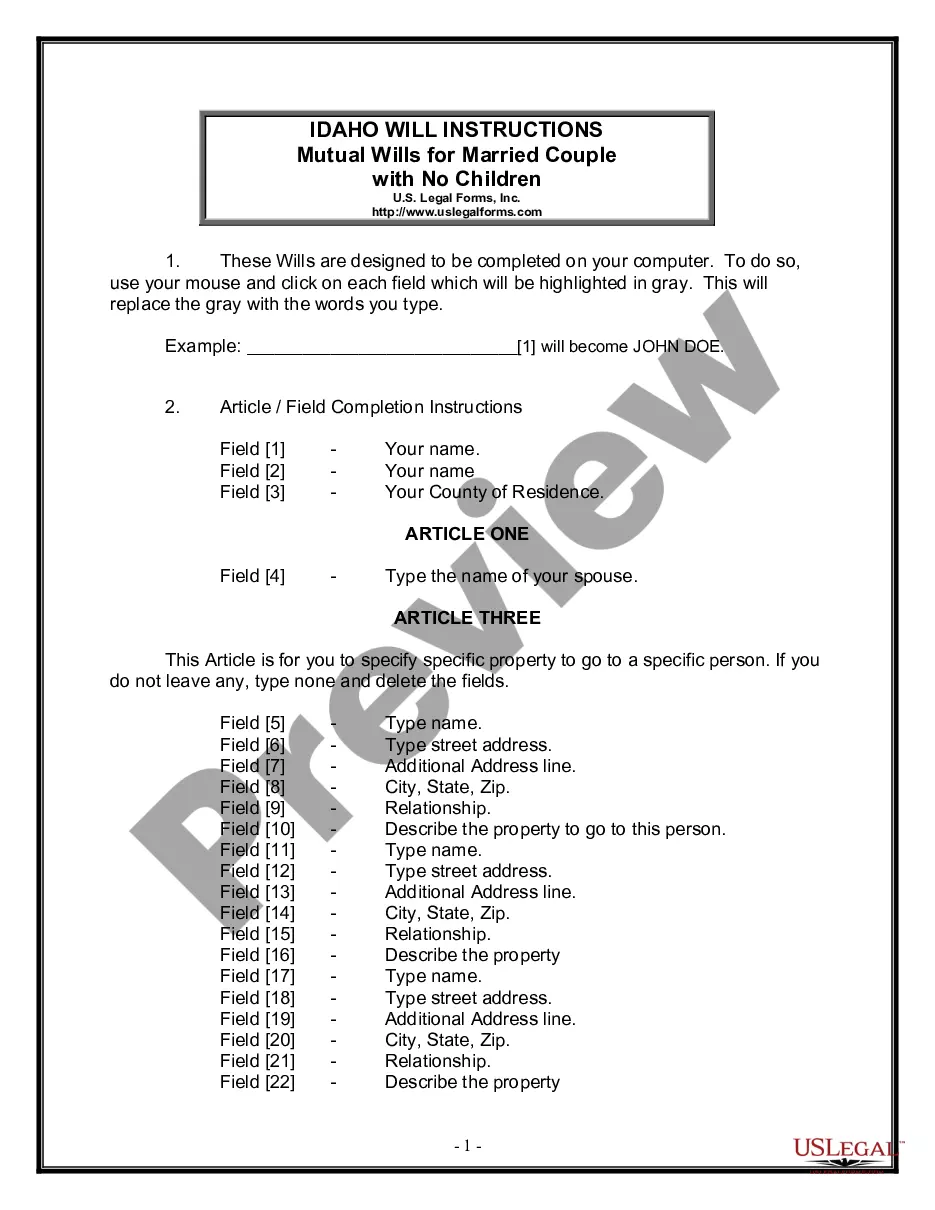
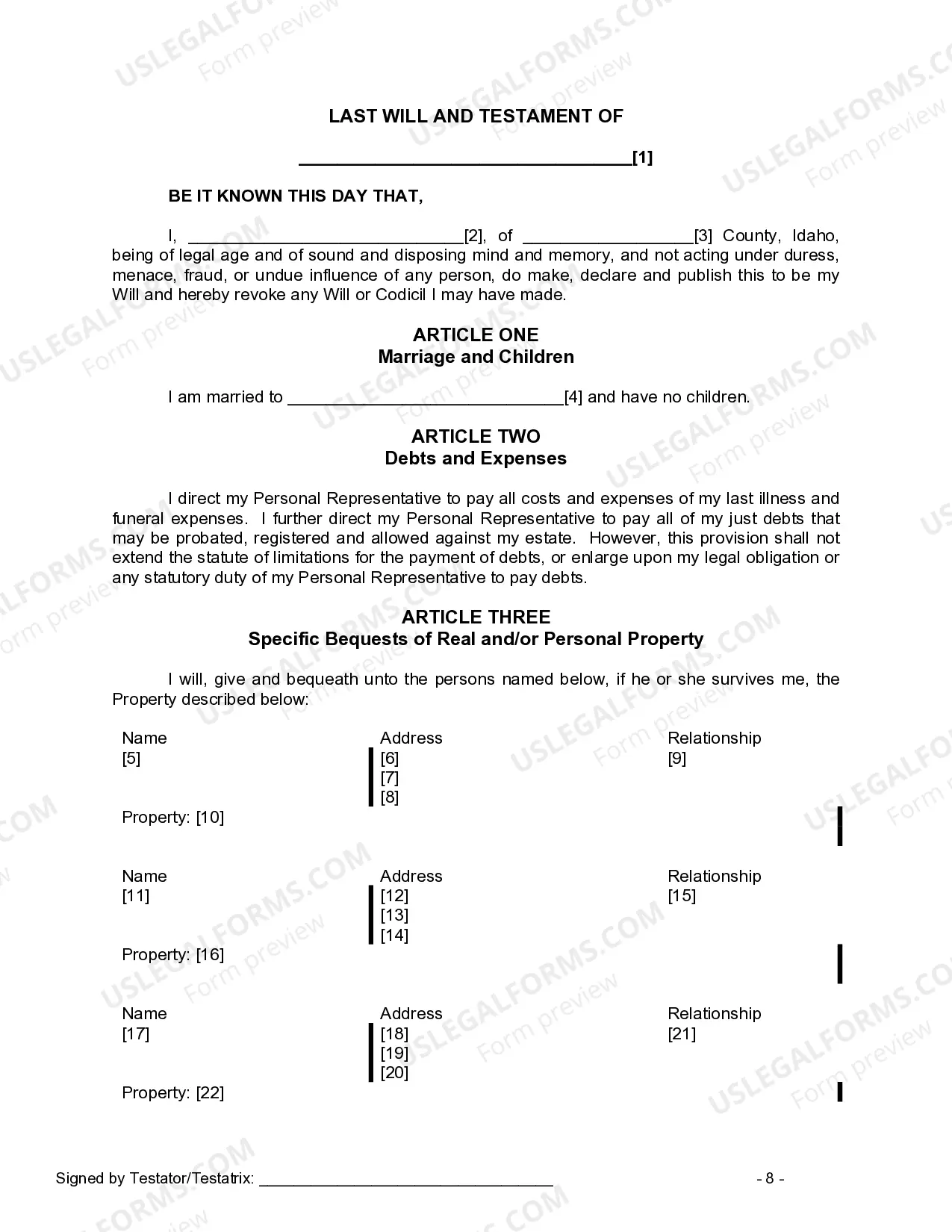
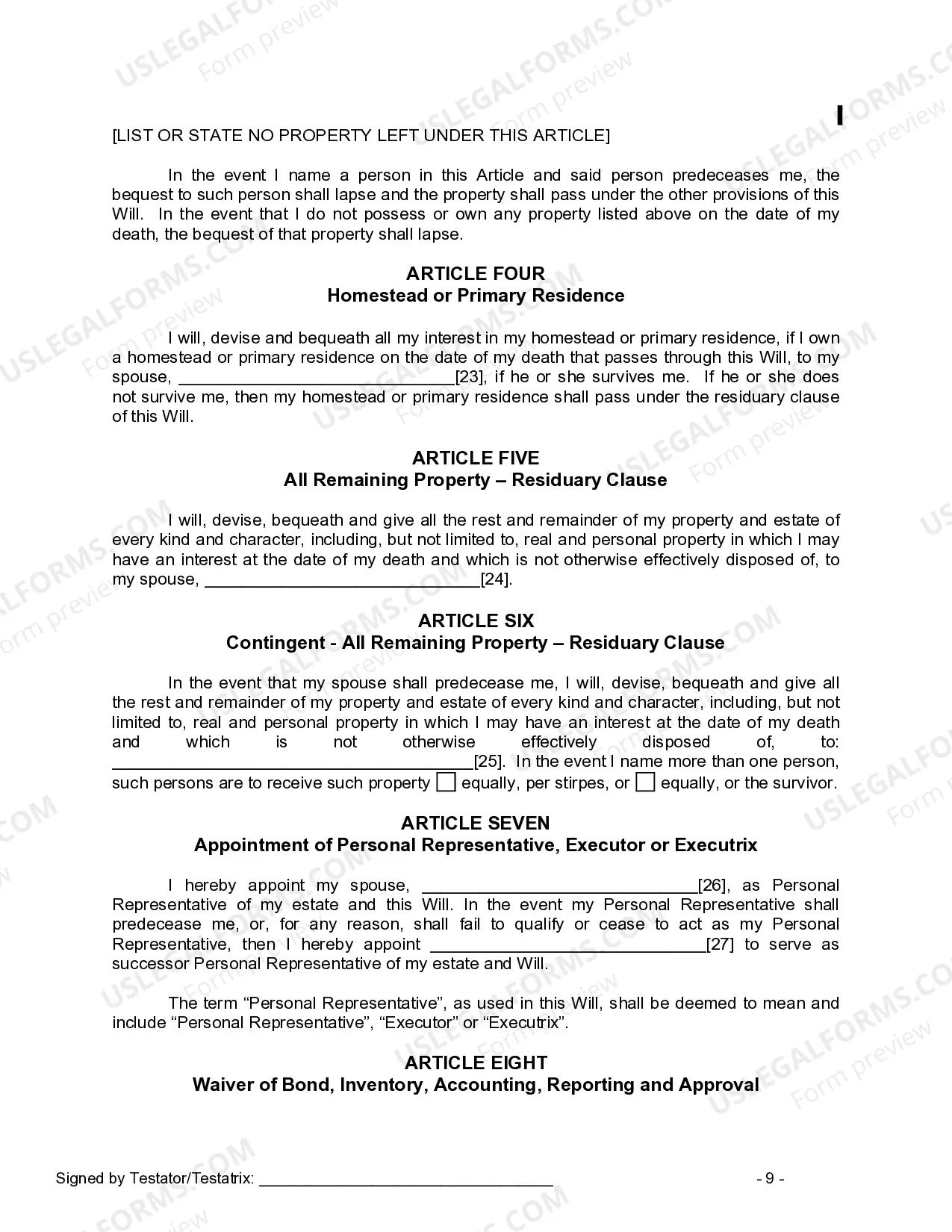
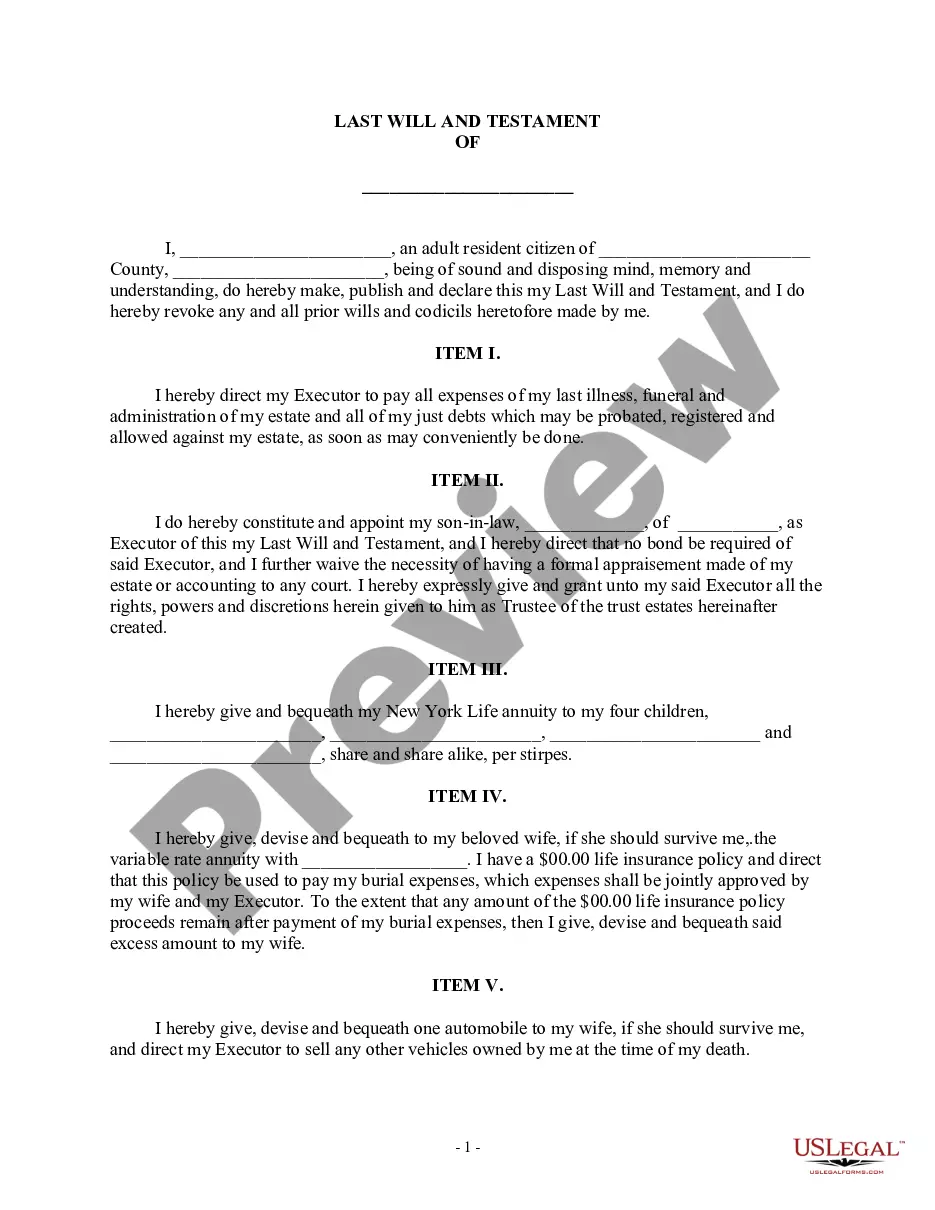
The Mutual Wills package with Last Wills and Testaments is a legal document designed for married couples with no children. It outlines how each spouse's property will be distributed upon their death, appoints a personal representative or executor, and includes provisions for the surviving spouse. This package contains two distinct willsâone for each spouseâand provides clear instructions for completion. This form is particularly useful as it contains mutual provisions ensuring consistency between both wills, differentiating it from standard wills created individually.
What’s included in this form
- Personal information fields for each spouse, including full names and counties of residence.
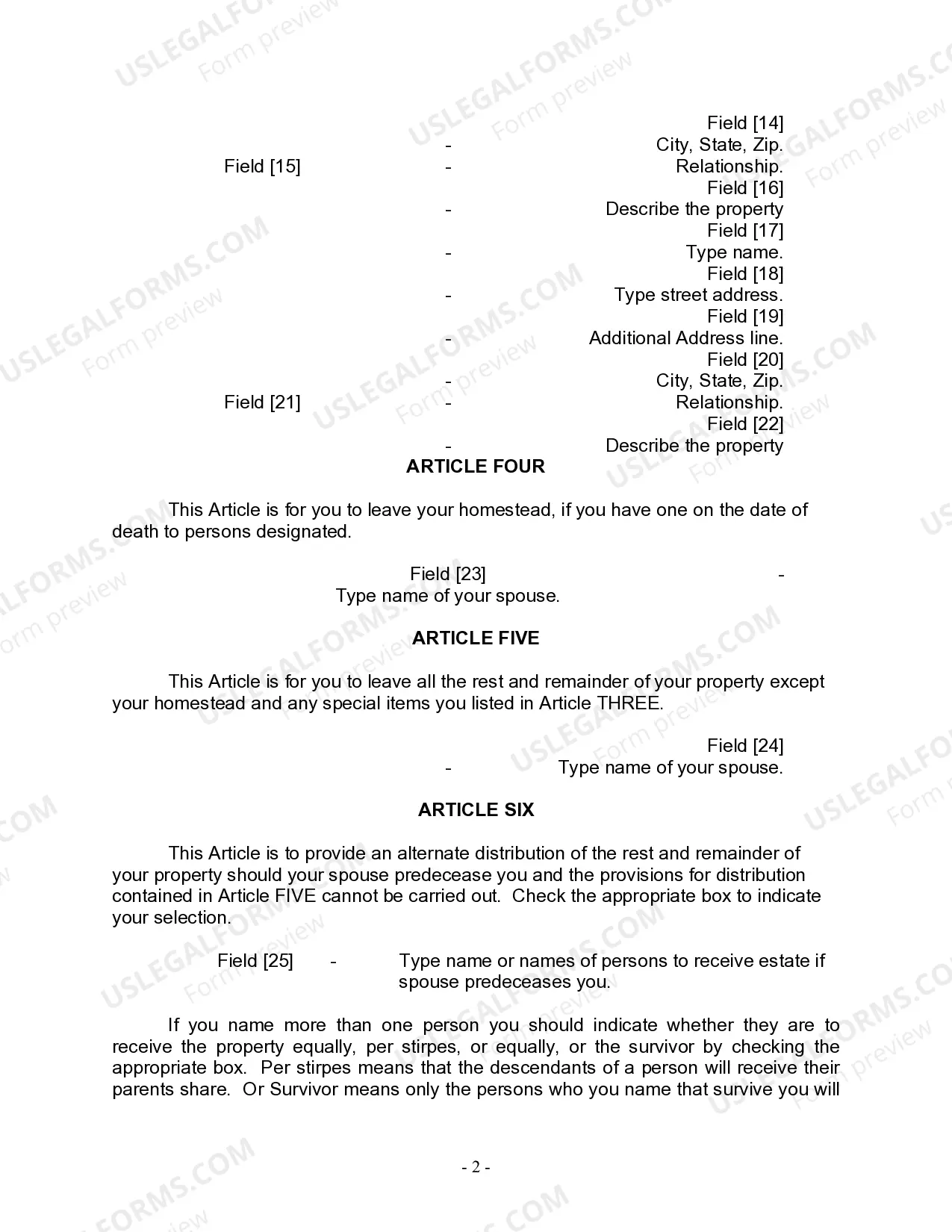
- Sections specifying how property will be distributed, including specific bequests and residuary clauses.
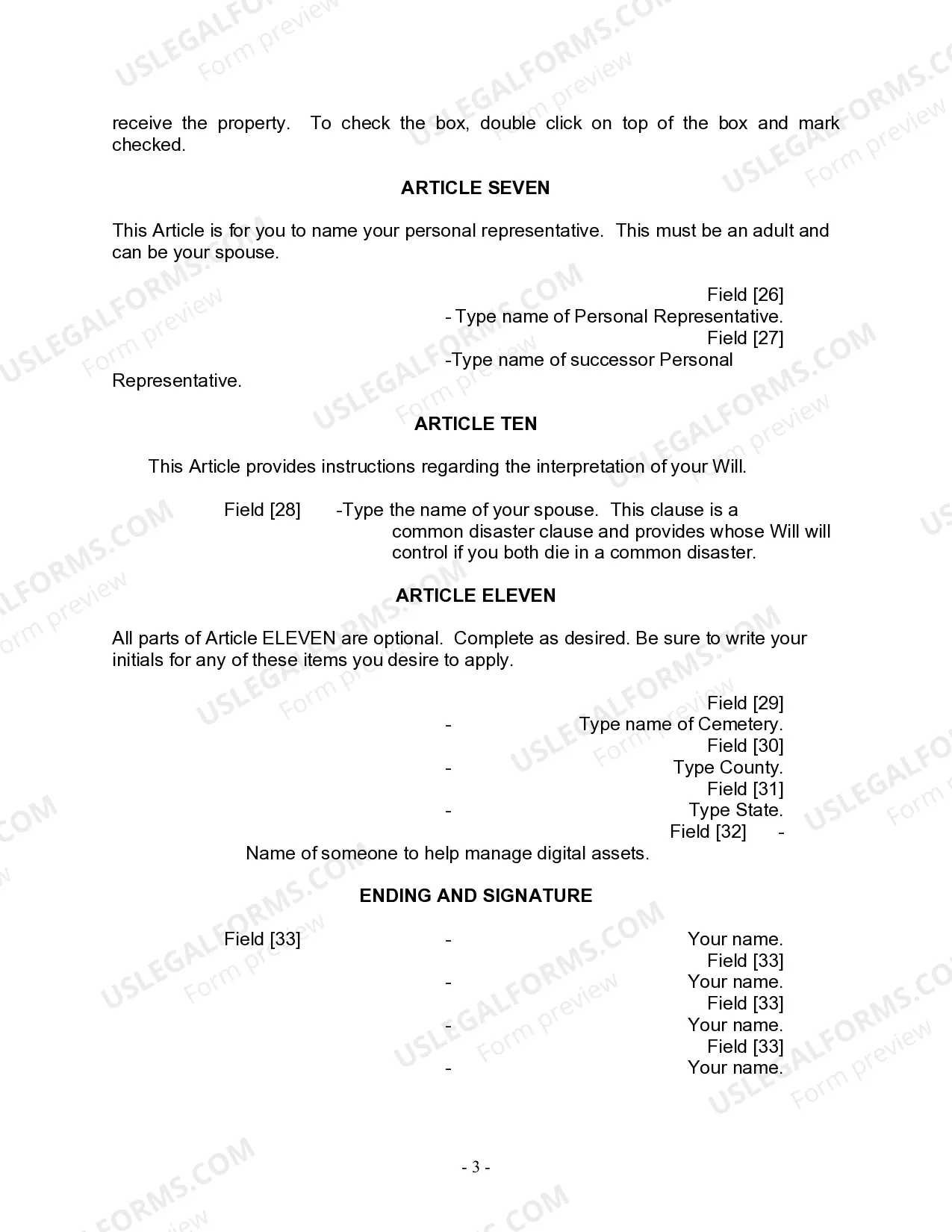
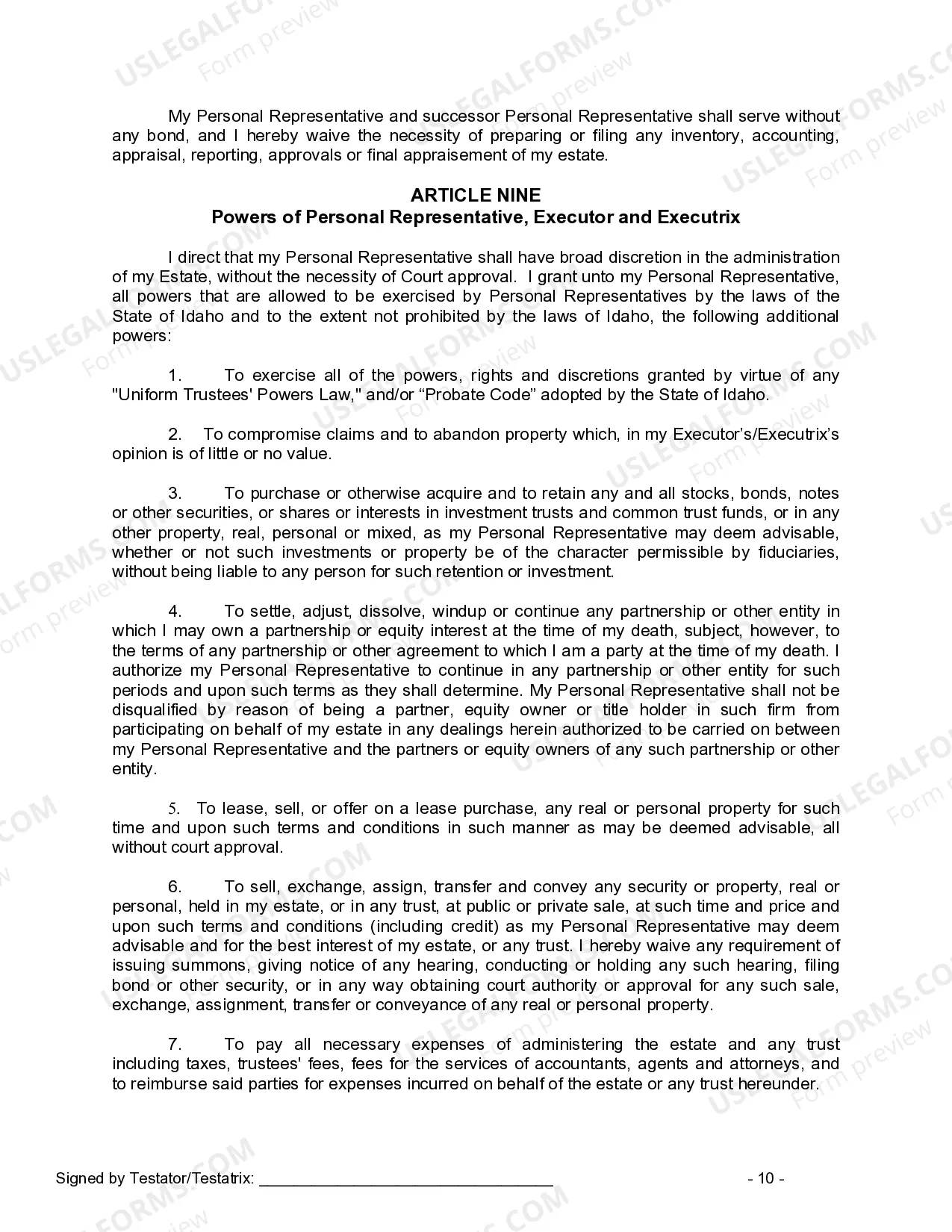
- Appointment of a personal representative to manage the estate and execute the will's terms.
- Provisions regarding debts and expenses, ensuring they are settled by the personal representative.
- Instructions for signing and witnessing the wills, including notary requirements if applicable.




Situations where this form applies
You should use the Mutual Wills package when you are a married couple without children and want to ensure that both spouses' wishes regarding the distribution of assets are clearly documented. This form is particularly beneficial if you wish to provide for your spouse in the event of your death and want to avoid potential disputes over property distribution later on. It is also useful if you wish to ensure that your wills reflect mutual intentions regarding estate management.
Who should use this form
The following individuals or couples may benefit from using this form:
- Married couples with no children looking to draft mutual wills.
- Individuals wanting to ensure their spouse's financial security after their death.
- Those wishing to simplify the estate distribution process and minimize the risk of disputes.
- Couples looking for an efficient method to document their final wishes regarding their assets.
Instructions for completing this form
- Start by filling in the personal information for each spouse at the designated fields.
- Specify how property will be distributed, including any specific items and beneficiaries in the appropriate sections.
- Appoint a personal representative by entering their details, ensuring they are an adult who can manage the estate.
- Carefully review your entries for accuracy and ensure no fields are left incomplete.
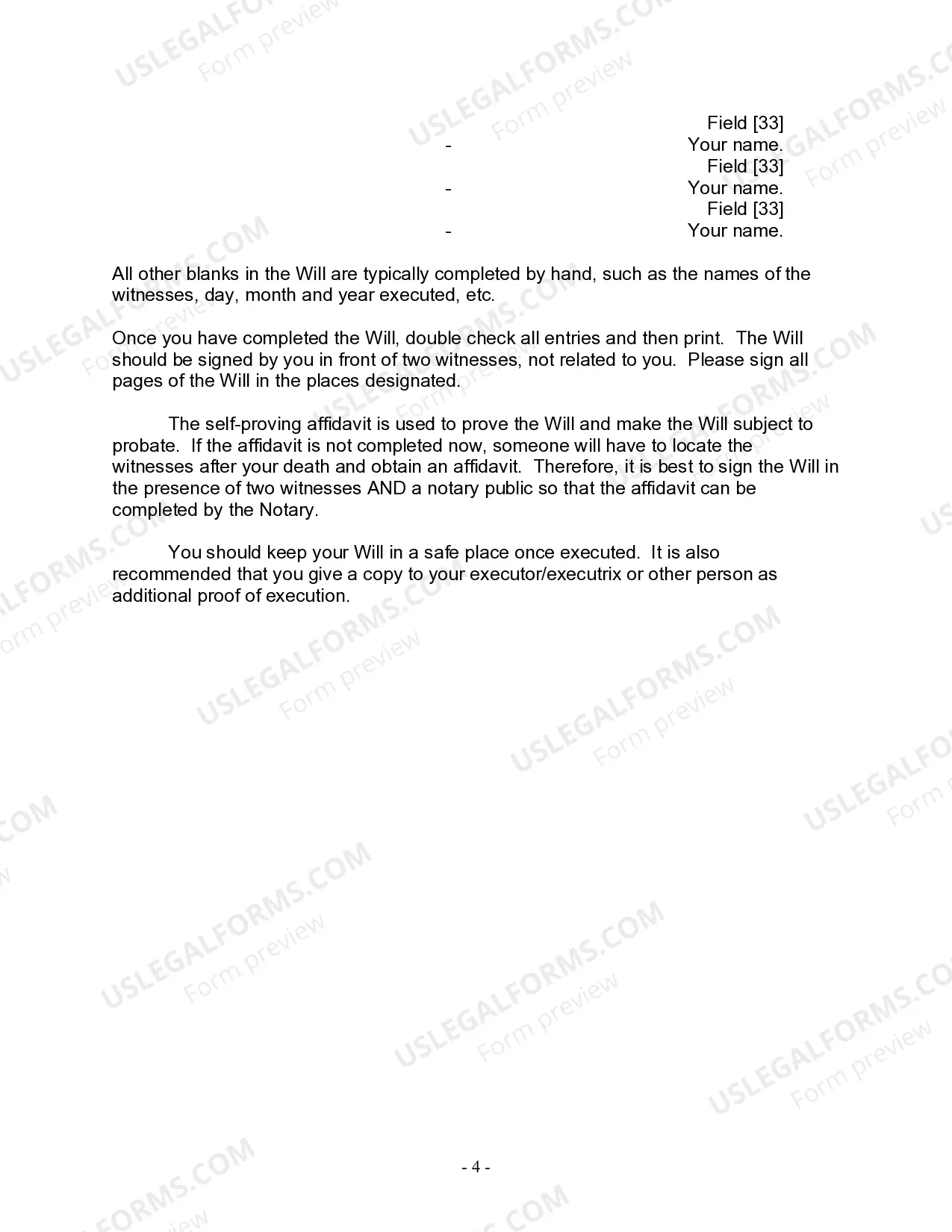
- Sign the wills in the presence of two witnesses and, if required by state law, have the wills notarized.
Is notarization required?
Yes, this form must be notarized to be legally valid in most jurisdictions. Notarization helps prove the authenticity of the will and may streamline the probate process. US Legal Forms offers an integrated online notarization service, allowing you to easily schedule a secure video call with a notary public.
Get your form ready online
Our built-in tools help you complete, sign, share, and store your documents in one place.
Make edits, fill in missing information, and update formatting in US Legal Forms—just like you would in MS Word.
Download a copy, print it, send it by email, or mail it via USPS—whatever works best for your next step.
Sign and collect signatures with our SignNow integration. Send to multiple recipients, set reminders, and more. Go Premium to unlock E-Sign.
If this form requires notarization, complete it online through a secure video call—no need to meet a notary in person or wait for an appointment.
We protect your documents and personal data by following strict security and privacy standards.

Make edits, fill in missing information, and update formatting in US Legal Forms—just like you would in MS Word.

Download a copy, print it, send it by email, or mail it via USPS—whatever works best for your next step.

Sign and collect signatures with our SignNow integration. Send to multiple recipients, set reminders, and more. Go Premium to unlock E-Sign.

If this form requires notarization, complete it online through a secure video call—no need to meet a notary in person or wait for an appointment.

We protect your documents and personal data by following strict security and privacy standards.
Common mistakes to avoid
- Failing to have the wills signed by the required number of witnesses.
- Omitting to complete all necessary fields, leading to potential disputes.
- Not reviewing state-specific laws regarding wills, which can affect validity.
- Forgetting to include a self-proving affidavit where required, which can complicate probate.
Why complete this form online
- Convenience in completing the form from home, eliminating the need for paper forms and physical visits.
- Editability allows for adjustments before finalizing the documents, ensuring accuracy.
- Access to a reliable source of legal templates drafted by licensed attorneys, enhancing trustworthiness.
Main things to remember
- This form is tailored for married couples with no children, facilitating mutual estate planning.
- It includes essential features such as appointment of a personal representative and property distribution clauses.
- Ensure all signatures and witness requirements are met to maintain the document's legal validity.
Looking for another form?
Form popularity
FAQ
Making one will for two people is usually not advisable because it's irrevocable after the first spouse's death.Even though married couples often have the same goals in mind when making their estate plan, most attorneys advise against joint wills.
The reality is, however, that both you and your spouse should each have your own will, and it should be planned as soon as possible. Some couples think that they can have one joint will together, but this is not a sound approach.
Here are our top 5 reasons why it is better to have a separate Will for each spouse. When someone dies, their Will becomes locked in since they can no longer express a change to their wishes. This means that if one spouse passes away, the joint Will would become locked and difficult to update for the surviving spouse.
The reason is that making it impossible for the surviving spouse to change the terms of the will can turn out to be a very bad result. The survivorwho may live years or decades after the first spouse's deathcannot react to changed life circumstances, and the family may suffer as a result.
Like most wills, a joint will lets the will-makers name who will get their property and assets after they die. Joint wills are usually created by married couples.After one spouse has died, all the couple's property will be left to the surviving spouse; and.
A joint will is one that two people, typically a married couple, sign together.Most joint wills are written such that when one spouse dies, their portion of the estate passes to the other. Then the entire estate goes to their children when the second spouse passes away.
It is a customary estate planning practice for each spouse to have his or her own will. While some practitioners may draft a joint will for a married couple, it is not recommended.
An adult can make a valid will without notifying their wife or husband. Not telling a spouse would be unusual, but not illegal.
Mirror wills are based on the idea that married or unmarried couples will likely have the same wishes regarding their estate. No matter which spouse dies first, the estates are handled the same way. The basic structure of a mirror will is similar to an individual last will.