Idaho Last Will and Testament for Married person with Minor Children
What is this form?
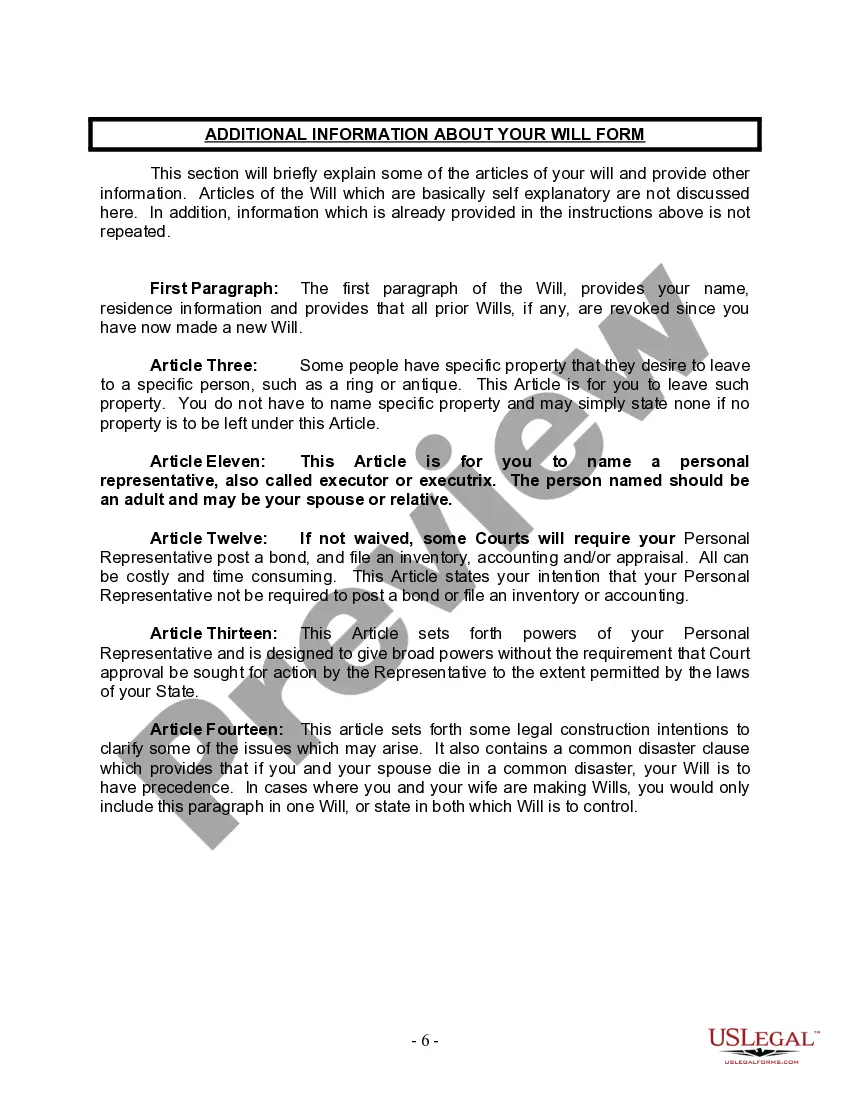
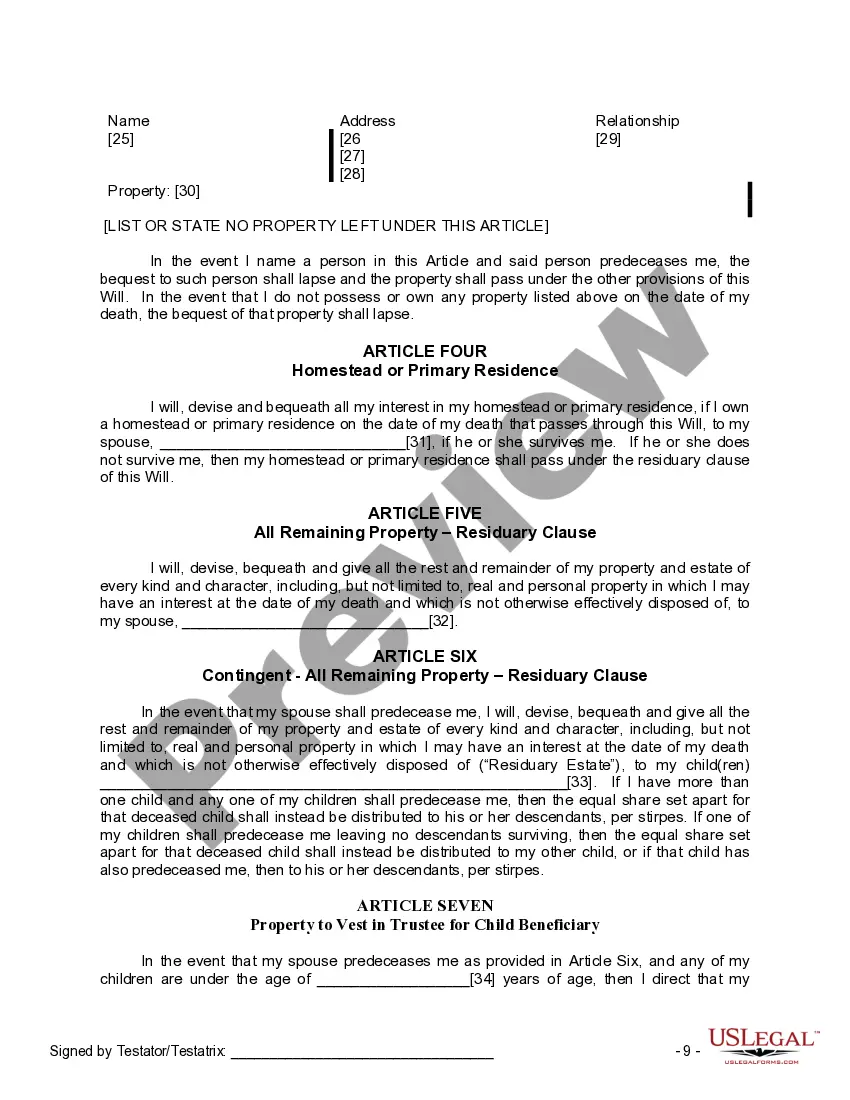
The Last Will and Testament for a married person with minor children is a legal document that outlines your wishes regarding the distribution of your assets upon your death. This form specifically addresses the needs of married individuals who have dependent children. It designates an executor to manage your estate and specifies who will inherit your property, including provisions for your spouse and children. Unlike other wills, this form includes specific clauses addressing guardianship and trust for minor children, making it essential for parents.
What’s included in this form
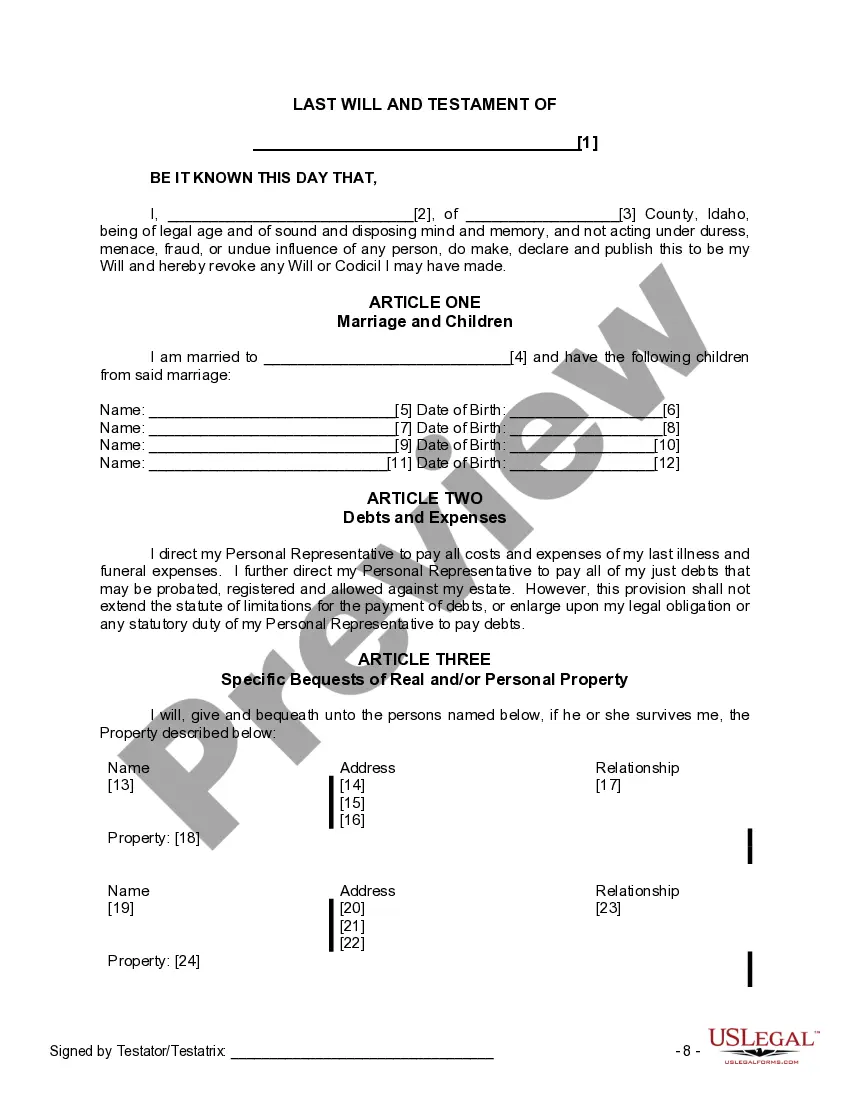
- Personal information: Your name, spouse's name, and children's names.
- Appointment of an executor: Designates who will manage your estate.
- Property distribution: Details on who receives specific assets and property.
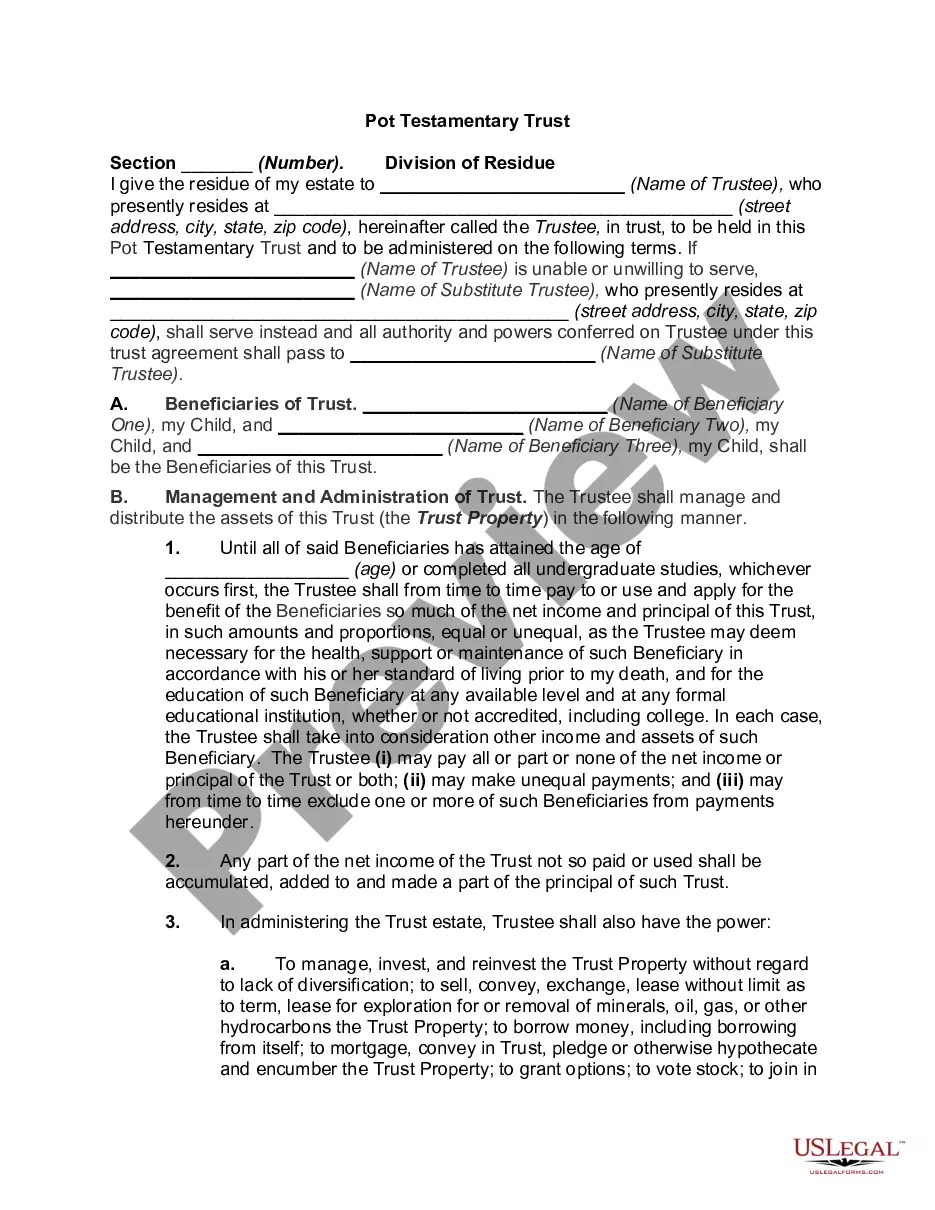
- Trust provisions: Establishes a trust for minor beneficiaries if necessary.
- Guardian appointment: Specifies a guardian for minor children in the event of your death.
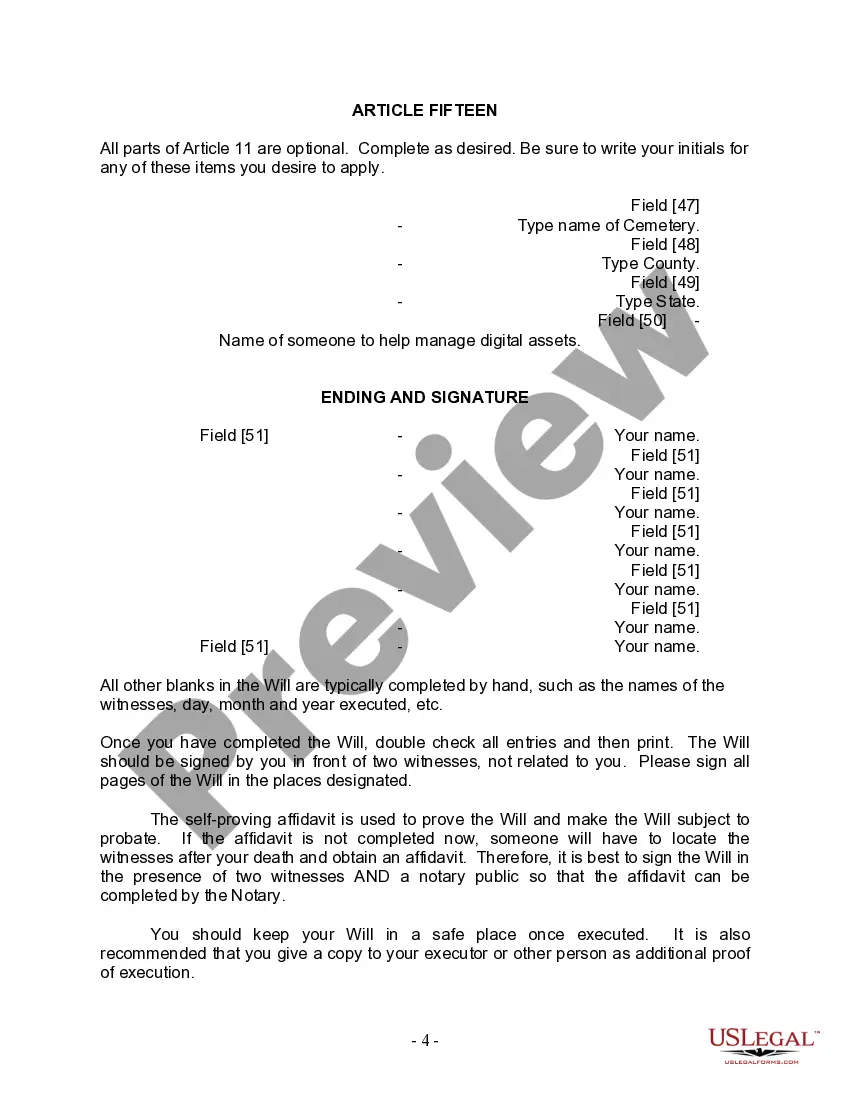
- Self-proving affidavit: Includes a section for notarization to validate the will.






When to use this document
This form is ideal for married parents who want to ensure their children are cared for and their assets are managed properly if something happens to them. You should consider using this Last Will and Testament if you:
- Are married and have minor children.
- Want to designate a guardian for your children.
- Wish to specify how your property and assets will be divided after your death.
- Want to simplify the probate process for your loved ones.
Intended users of this form
- Married individuals with minor children.
- Couples seeking to clarify asset distribution in case of death.
- Parents wishing to appoint a guardian for their children.
- Anyone wanting to ensure their wishes are formally documented and legally enforceable.
How to prepare this document
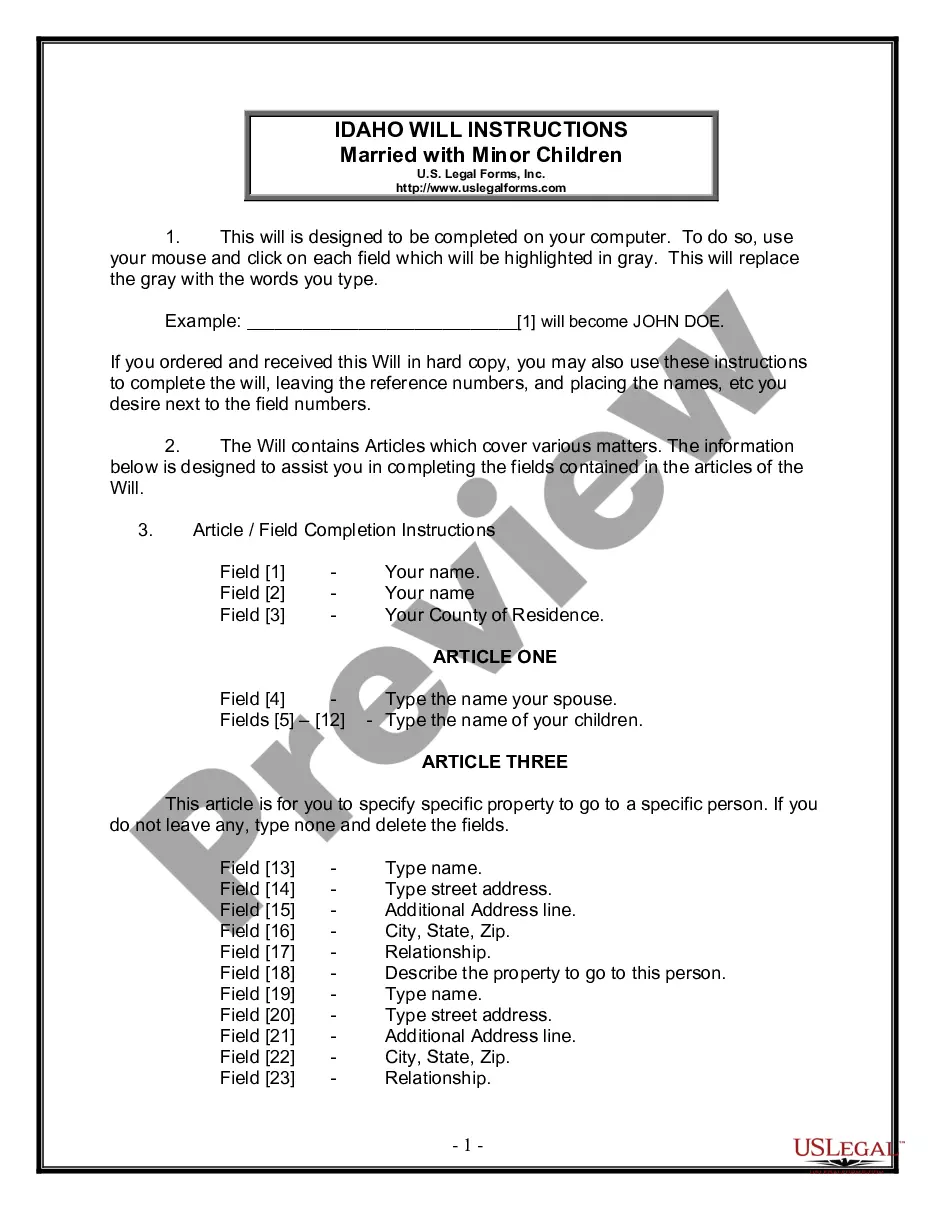
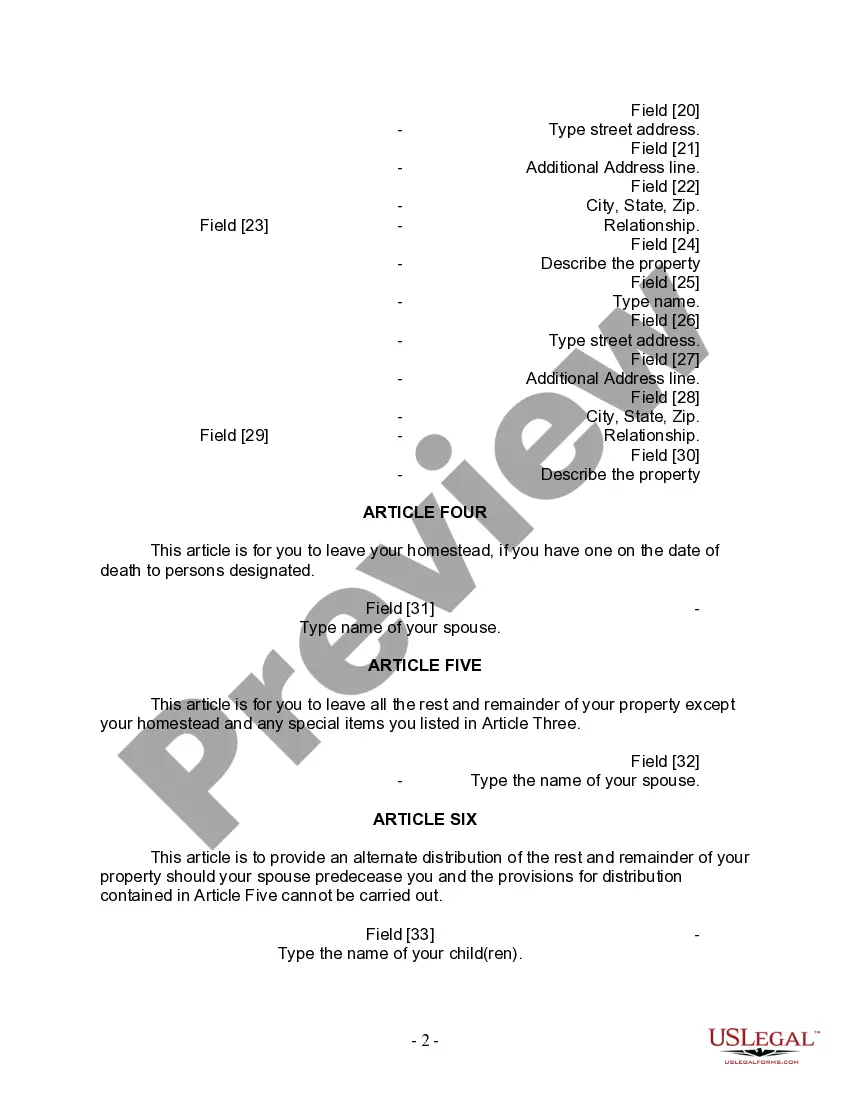
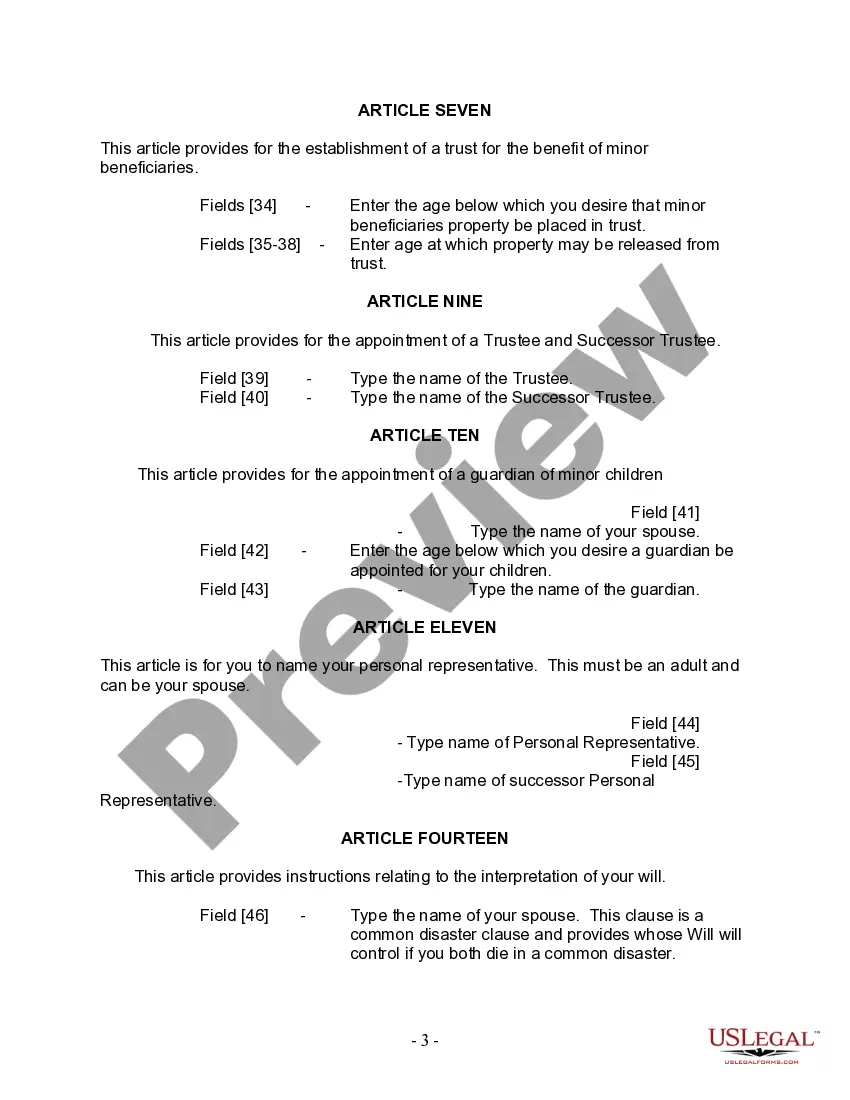
- Enter your full name, your spouse's name, and the names of your minor children.
- Designate an executor to manage your estate and a guardian for your children if necessary.
- Specify any particular assets you want to bequeath and to whom.
- Complete the self-proving affidavit if required by your state to avoid complications in probate.
- Have the will signed in the presence of two witnesses who are not beneficiaries.
- Consider notarizing the document to streamline the probate process.
Does this form need to be notarized?
Yes, this form must be notarized to be legally valid in states that require a self-proving affidavit. This ensures your will can be admitted to probate without additional witness testimony. US Legal Forms offers integrated online notarization for your convenience, allowing you to complete this securely from home.
Get your form ready online
Our built-in tools help you complete, sign, share, and store your documents in one place.
Make edits, fill in missing information, and update formatting in US Legal Forms—just like you would in MS Word.
Download a copy, print it, send it by email, or mail it via USPS—whatever works best for your next step.
Sign and collect signatures with our SignNow integration. Send to multiple recipients, set reminders, and more. Go Premium to unlock E-Sign.
If this form requires notarization, complete it online through a secure video call—no need to meet a notary in person or wait for an appointment.
We protect your documents and personal data by following strict security and privacy standards.

Make edits, fill in missing information, and update formatting in US Legal Forms—just like you would in MS Word.

Download a copy, print it, send it by email, or mail it via USPS—whatever works best for your next step.

Sign and collect signatures with our SignNow integration. Send to multiple recipients, set reminders, and more. Go Premium to unlock E-Sign.

If this form requires notarization, complete it online through a secure video call—no need to meet a notary in person or wait for an appointment.

We protect your documents and personal data by following strict security and privacy standards.
Avoid these common issues
- Failing to properly sign and witness the will, making it invalid.
- Not specifying a guardian for minor children.
- Leaving out pertinent information regarding specific assets.
- Not considering the implications of joint property ownership.
Benefits of using this form online
- Convenience: Complete the form at your own pace from home.
- Editability: Easily make changes as your circumstances change.
- Reliability: Access templates drafted by licensed attorneys to ensure legal compliance.
Looking for another form?








Form popularity
FAQ
What are my rights as a beneficiary?A beneficiary is entitled to be told if they are named in a person's will. They are also entitled to be told what, if any, property/possessions have been left to them, and the full amount of inheritance they will receive.
In order for a will to be valid, it must be: made by a person who is 18 years old or over and. made voluntarily and without pressure from any other person and.signed by the two witnesses, in the presence of the person making the will, after it has been signed.
Definition of TESTATOR: (noun) / one who makes and executes a last will and testament, for example, if Tiffany has a will drafted and she executes the will, then Tiffany is referred to as the Testator.
A will can be handwritten on a single piece of paper or elaborately typed within multiple pages, depending on the size of the estate and preference of the testator. It must also be signed and dated by the testator in front of two disinterested witnesses, who must also sign.
It must be in writing. Generally, of course, wills are composed on a computer and printed out. The person who made it must have signed and dated it. A will must be signed and dated by the person who made it. Two adult witnesses must have signed it. Witnesses are crucial.
No, in Idaho, you do not need to notarize your will to make it legal. However, Idaho allows you to make your will "self-proving" and you'll need to go to a notary if you want to do that. A self-proving will speeds up probate because the court can accept the will without contacting the witnesses who signed it.
During probate, the court-supervised process of distributing the property of a deceased person, a "self-proving affidavit" could help prove your will is valid. To execute this affidavit, you and your witnesses must appear in front of a notary public to sign this sworn statement.
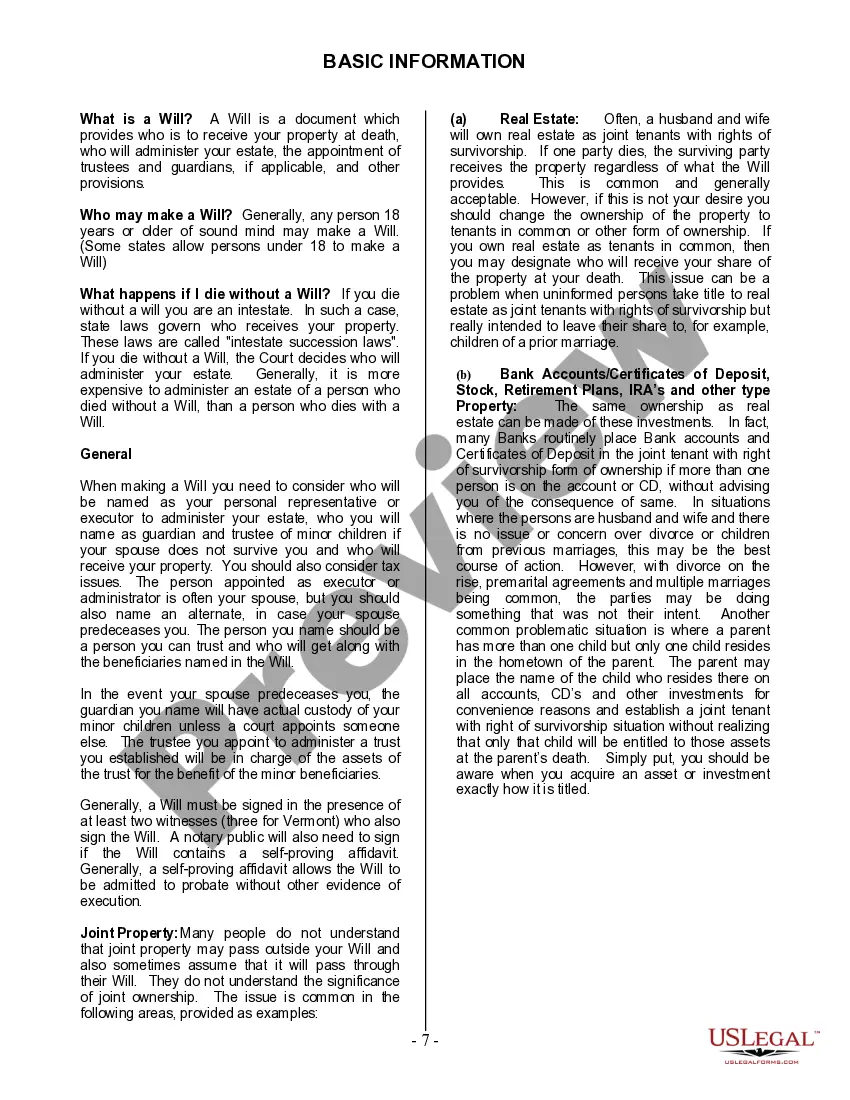
A will or testament is a legal document that expresses a person's (testator) wishes as to how their property (estate) is to be distributed after their death and as to which person (executor) is to manage the property until its final distribution.
Testator: Someone who writes and executes (signs) a will. Testatrix: The old-fashioned term for a female will-writer. Trustee: Someone who has legal authority over the assets in a trust.