Idaho General Power of Attorney for Care and Custody of Child or Children

About this form
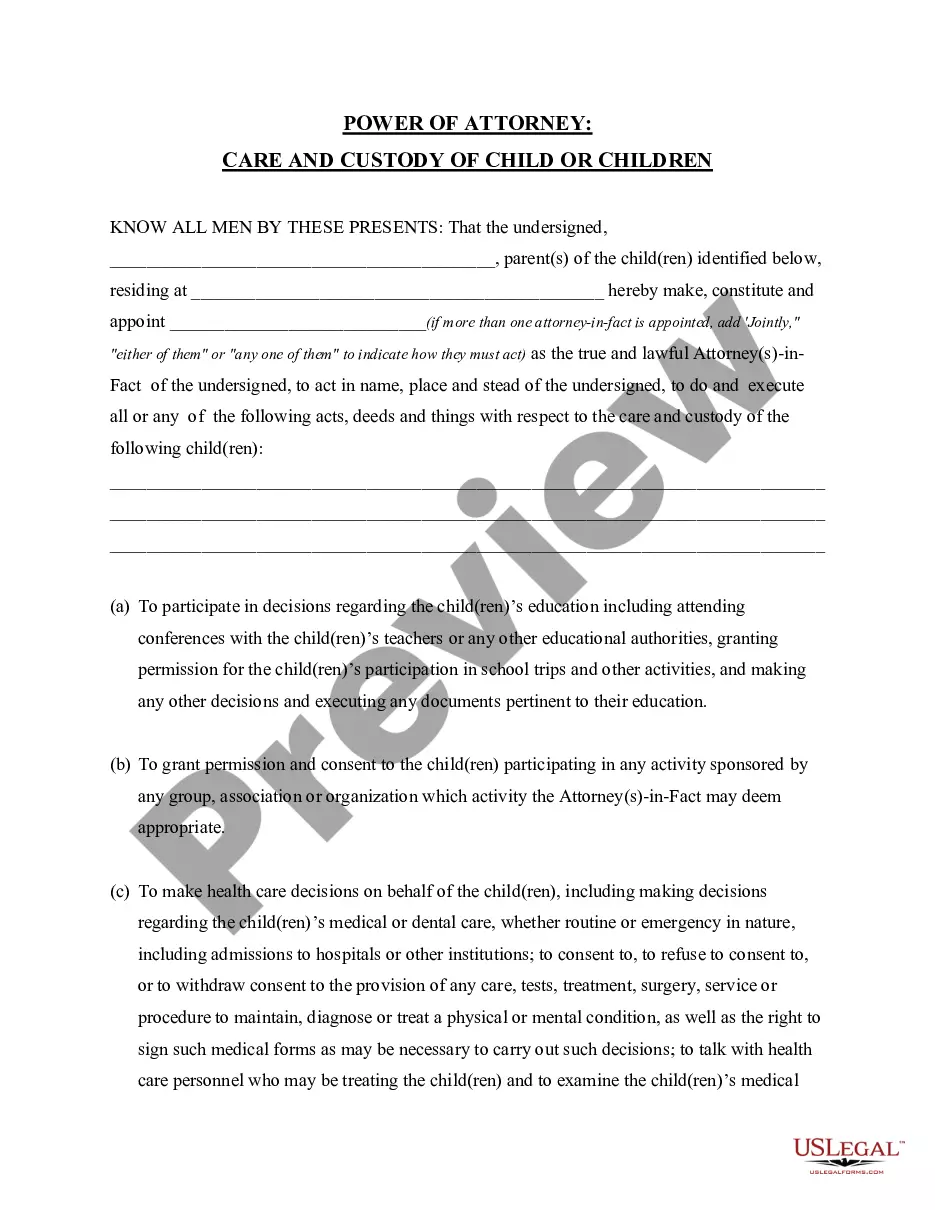
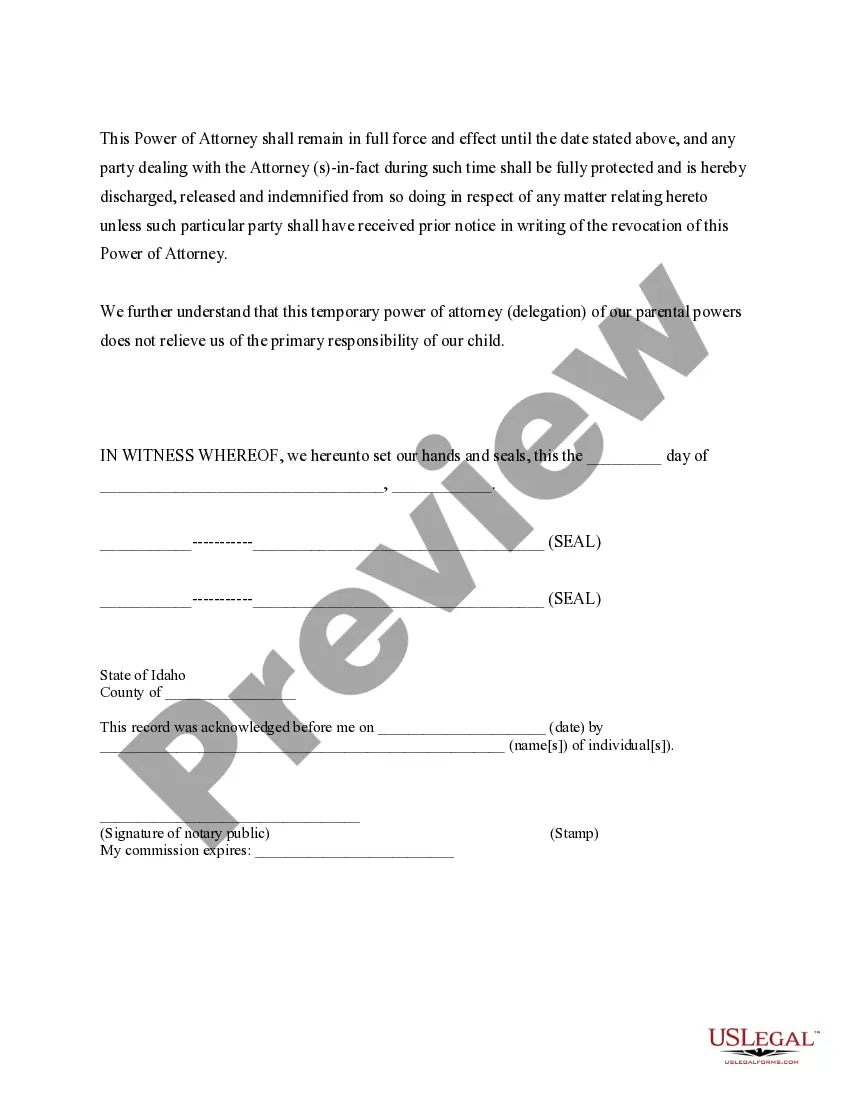
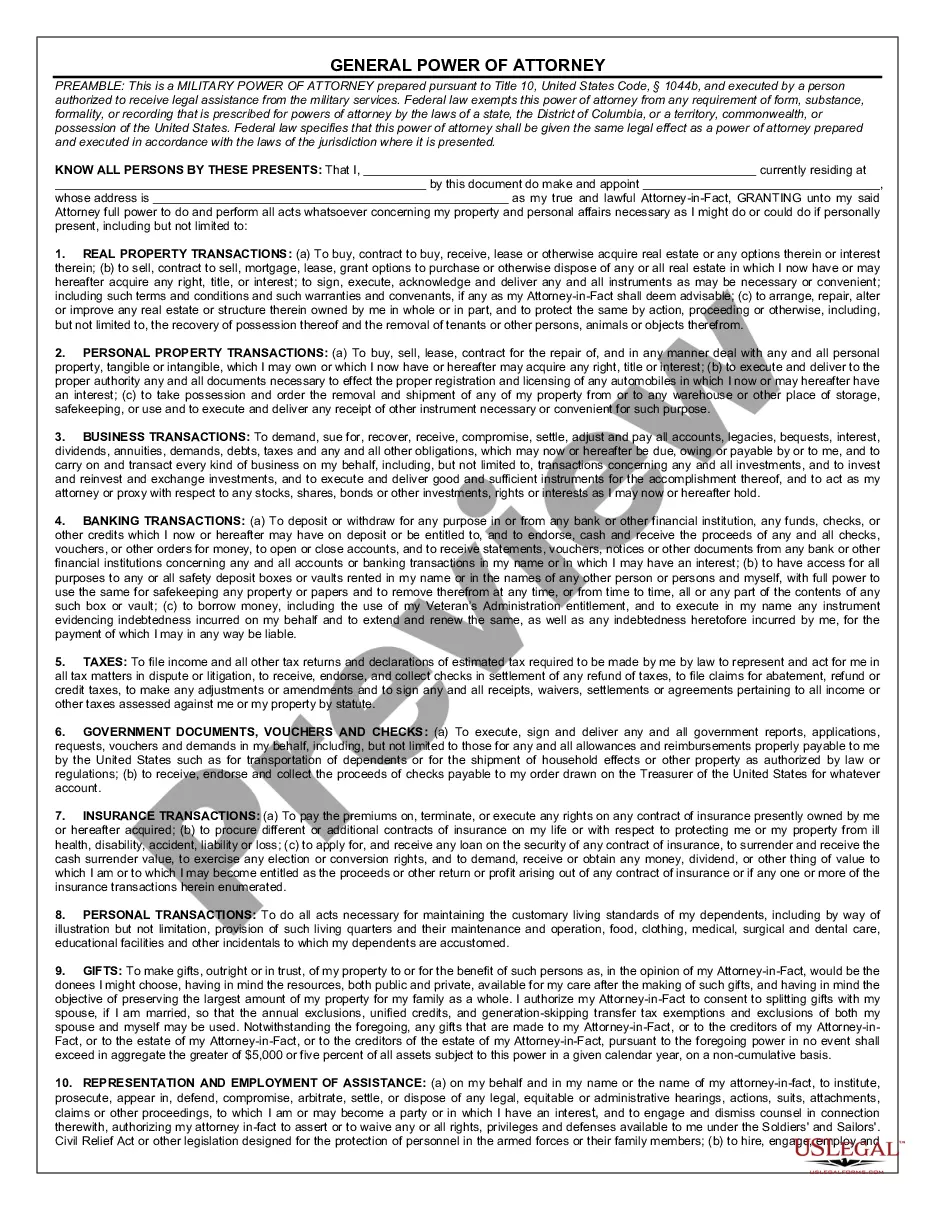
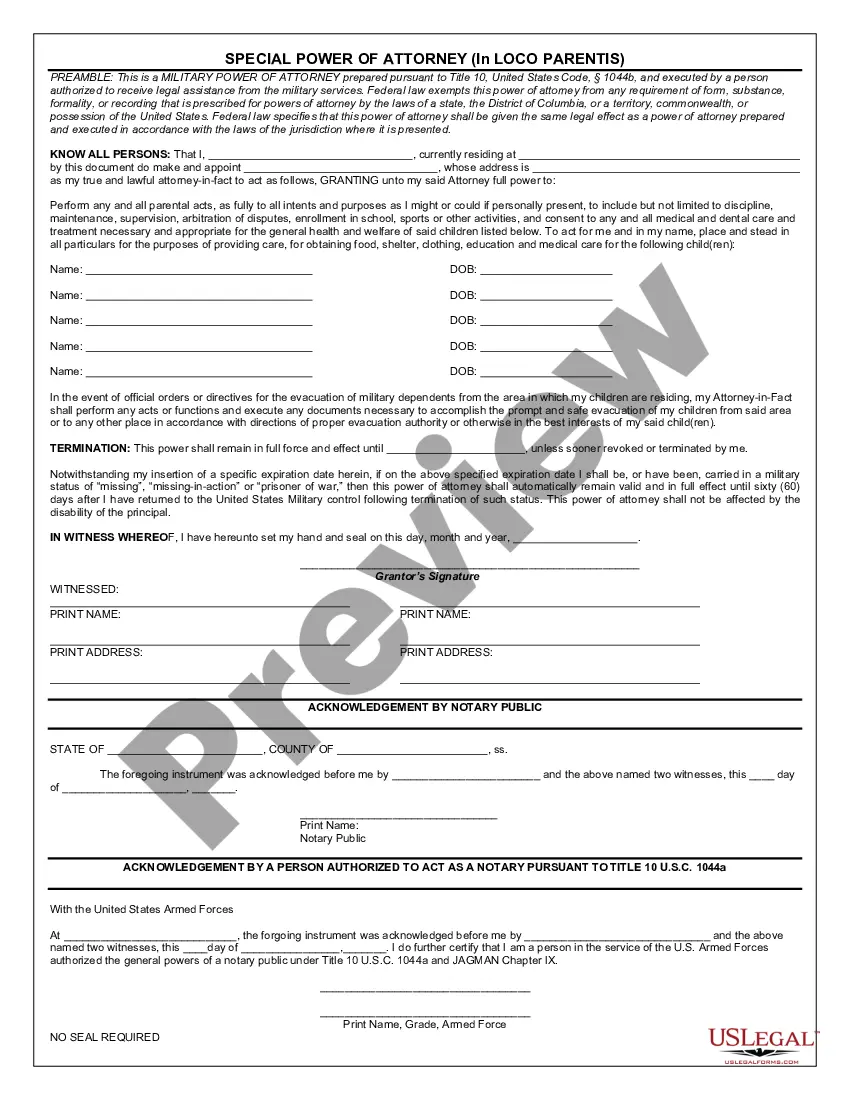
The General Power of Attorney for Care and Custody of Child or Children is a legal document that allows a parent to appoint an attorney-in-fact to make decisions about the care and custody of their child or children. This form is distinct as it includes both educational and health care decisions, ensuring that the appointed person can act on behalf of the parent in various situations such as health emergencies and school-related functions.
Main sections of this form
- Identification of the child or children involved
- Designation of the attorney-in-fact
- Authority over educational decisions
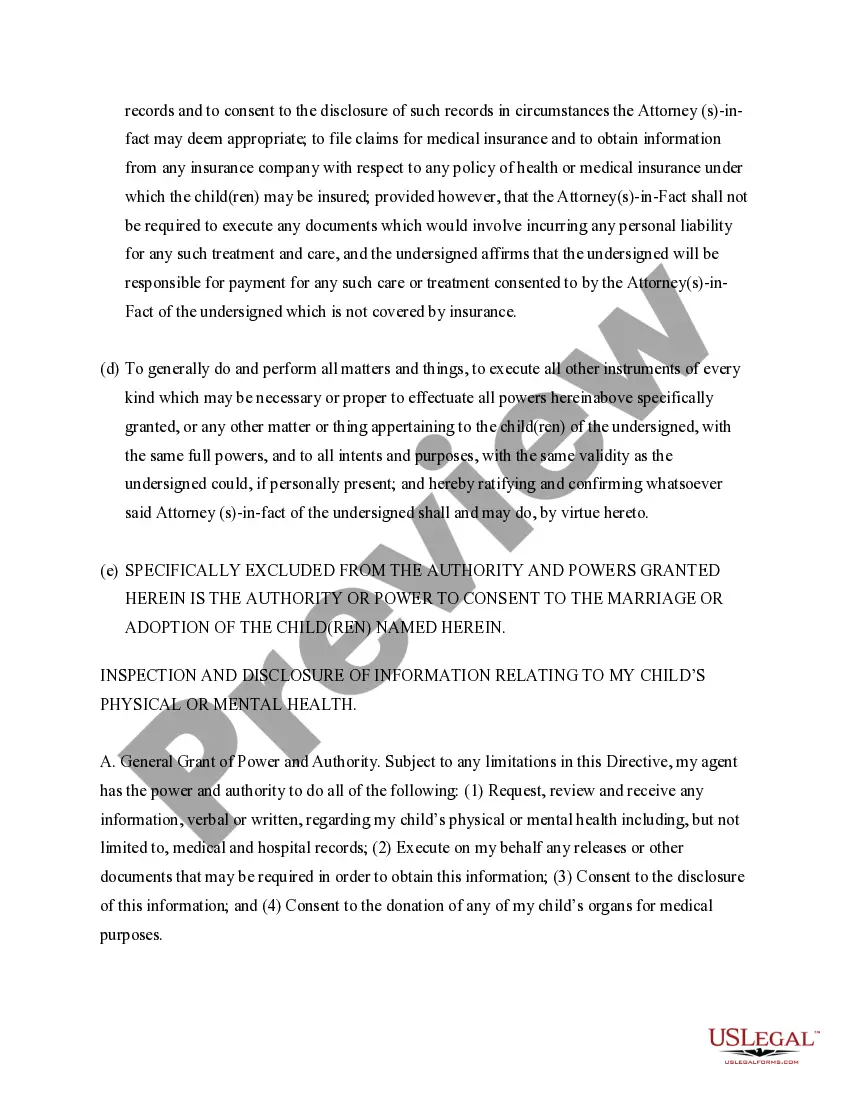
- Health care decision-making powers
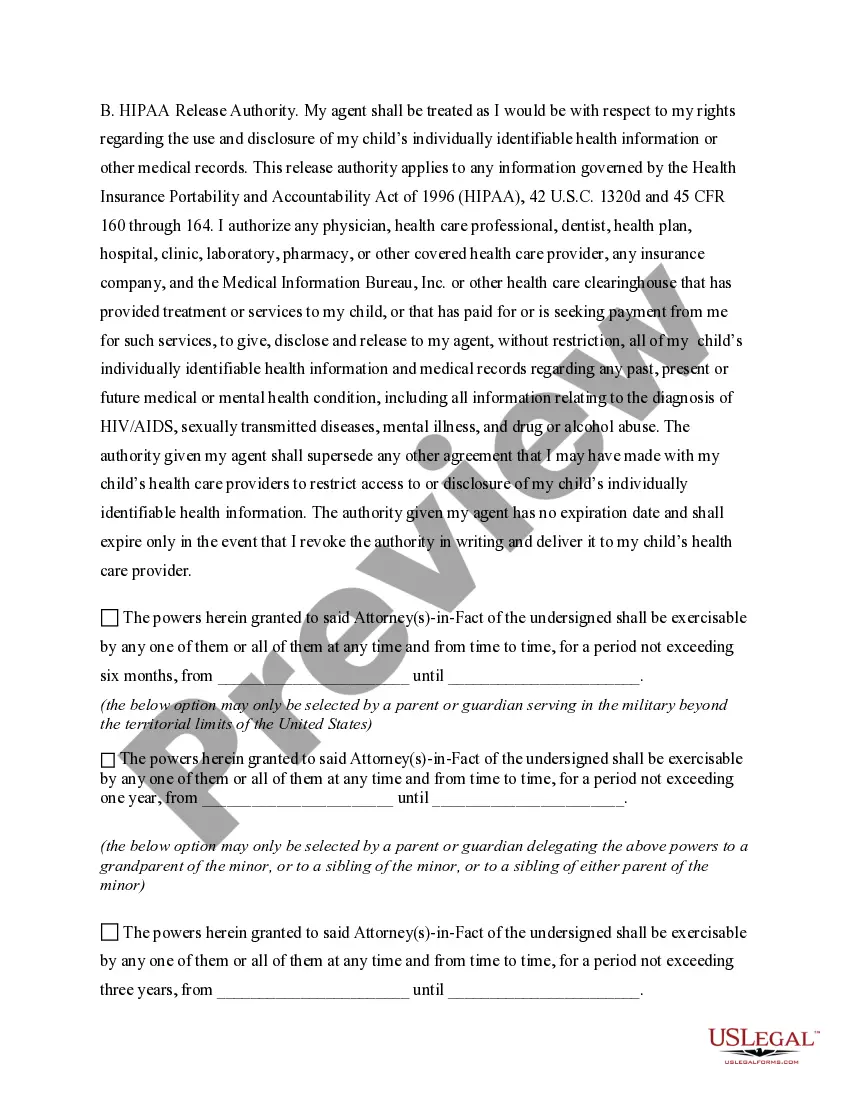
- Limitations of power, including marriage or adoption consent
- Notarization requirement for legal validity
When to use this form
This form is useful in situations where a parent needs to authorize another individual to make decisions for their child, such as when the parent is unavailable due to work, travel, or military service. This could involve coordinating health care, school activities, or emergencies.
Intended users of this form
- Parents or guardians needing temporary delegation of authority
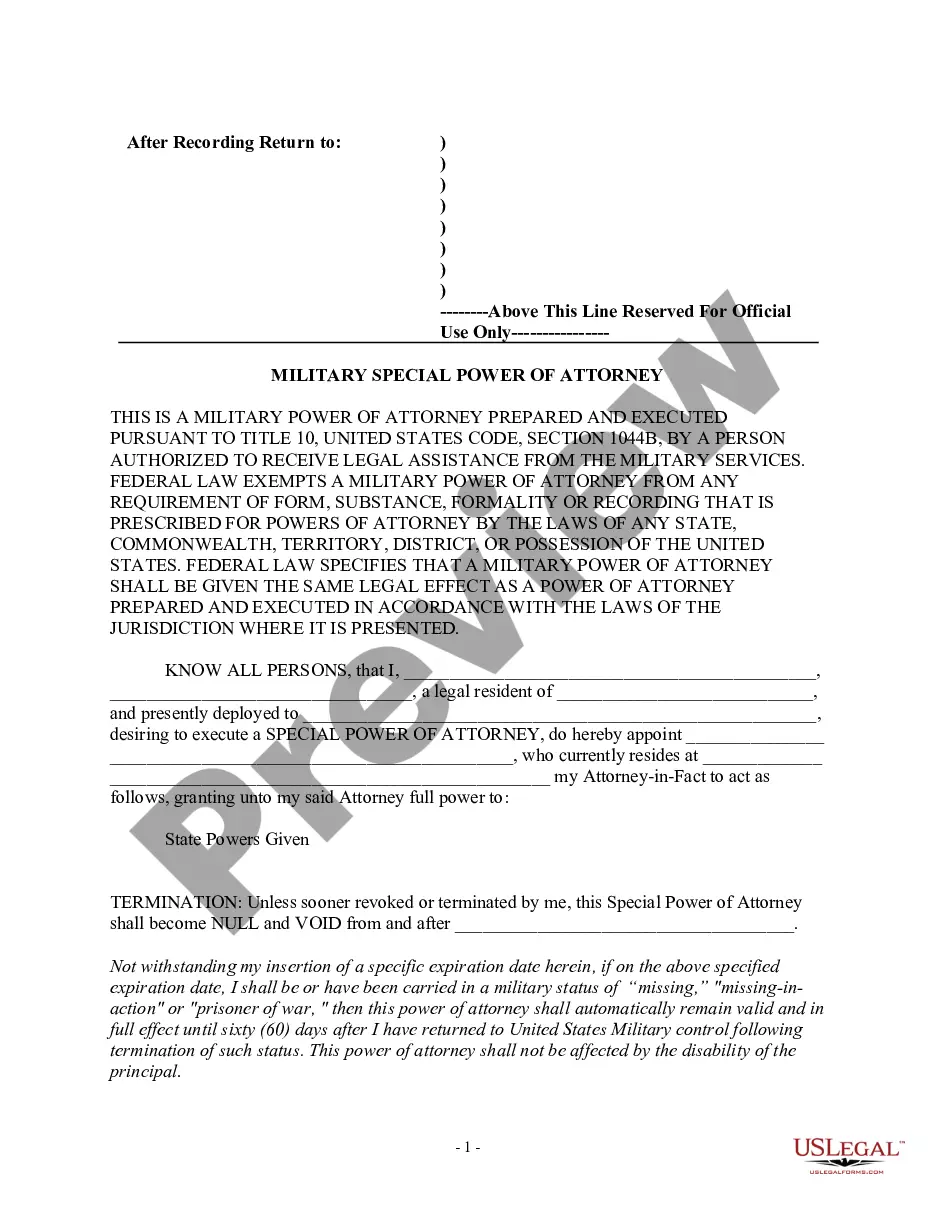
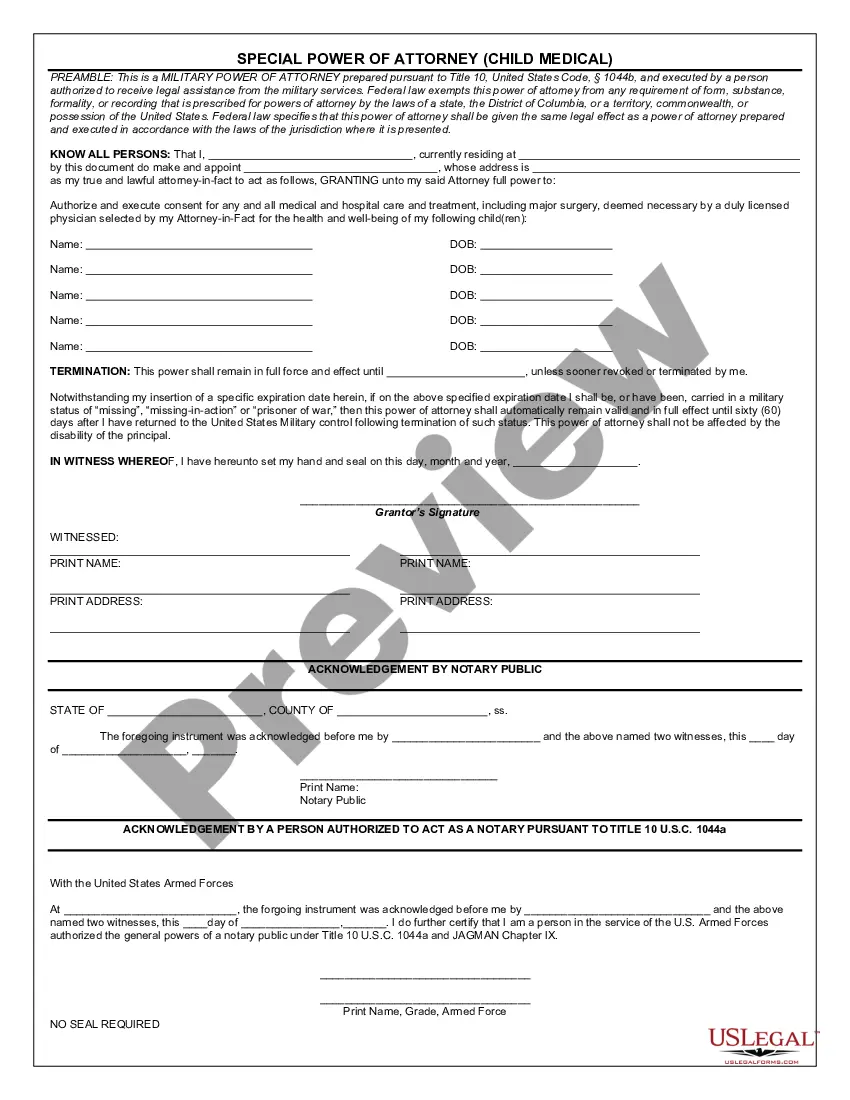
- Military personnel deployed away from home
- Individuals who need a trusted person to oversee their child's care
- Grandparents or relatives acting in place of a parent
Completing this form step by step
- Identify and write down the names of the parent(s) and child(ren).
- Designate the attorney-in-fact, specifying if multiple are appointed and their authority.
- Specify the permission for decisions regarding education and health care.
- Enter the start and end dates for the powers granted.
- Sign the document in the presence of a notary public for validation.
Is notarization required?
This form must be notarized to be legally valid. US Legal Forms provides secure online notarization powered by Notarize, allowing you to complete the process through a verified video call.
Get your form ready online
Our built-in tools help you complete, sign, share, and store your documents in one place.
Make edits, fill in missing information, and update formatting in US Legal Forms—just like you would in MS Word.
Download a copy, print it, send it by email, or mail it via USPS—whatever works best for your next step.
Sign and collect signatures with our SignNow integration. Send to multiple recipients, set reminders, and more. Go Premium to unlock E-Sign.
If this form requires notarization, complete it online through a secure video call—no need to meet a notary in person or wait for an appointment.
We protect your documents and personal data by following strict security and privacy standards.

Make edits, fill in missing information, and update formatting in US Legal Forms—just like you would in MS Word.

Download a copy, print it, send it by email, or mail it via USPS—whatever works best for your next step.

Sign and collect signatures with our SignNow integration. Send to multiple recipients, set reminders, and more. Go Premium to unlock E-Sign.

If this form requires notarization, complete it online through a secure video call—no need to meet a notary in person or wait for an appointment.

We protect your documents and personal data by following strict security and privacy standards.
Common mistakes
- Failing to have the document notarized, which is essential for legal recognition.
- Not clearly specifying the authority granted, leading to confusion.
- Designating an attorney-in-fact without ensuring that they understand their responsibilities.
- Not updating the form if circumstances change, such as a new caregiver becoming necessary.
Benefits of completing this form online
- Convenient access to legal forms that can be downloaded and completed at your own pace.
- Editable templates that allow for customization to meet specific needs.
- Reliability of forms drafted by licensed attorneys, ensuring compliance with legal standards.
Looking for another form?

Form popularity
FAQ
Differences Between a Power of Attorney and a Guardianship Another big difference is that if you execute a Power of Attorney, you will be able to choose the person who will be handling your financial matters. Under a Guardianship proceeding, the guardian is chosen by the judge.
1 attorney answer But no, a power of attorney is not somehow going to constitute or override a custody order, and as a non-parent, he doesn't have any standing to contest custody unless your daughter's been with him (and him alone, not with her mom...
Power of attorney gives someone other than a legal parent or guardian the right to make decisions about a child's welfare, but it does not establish legal custody. You can only modify legal custody through court proceedings.
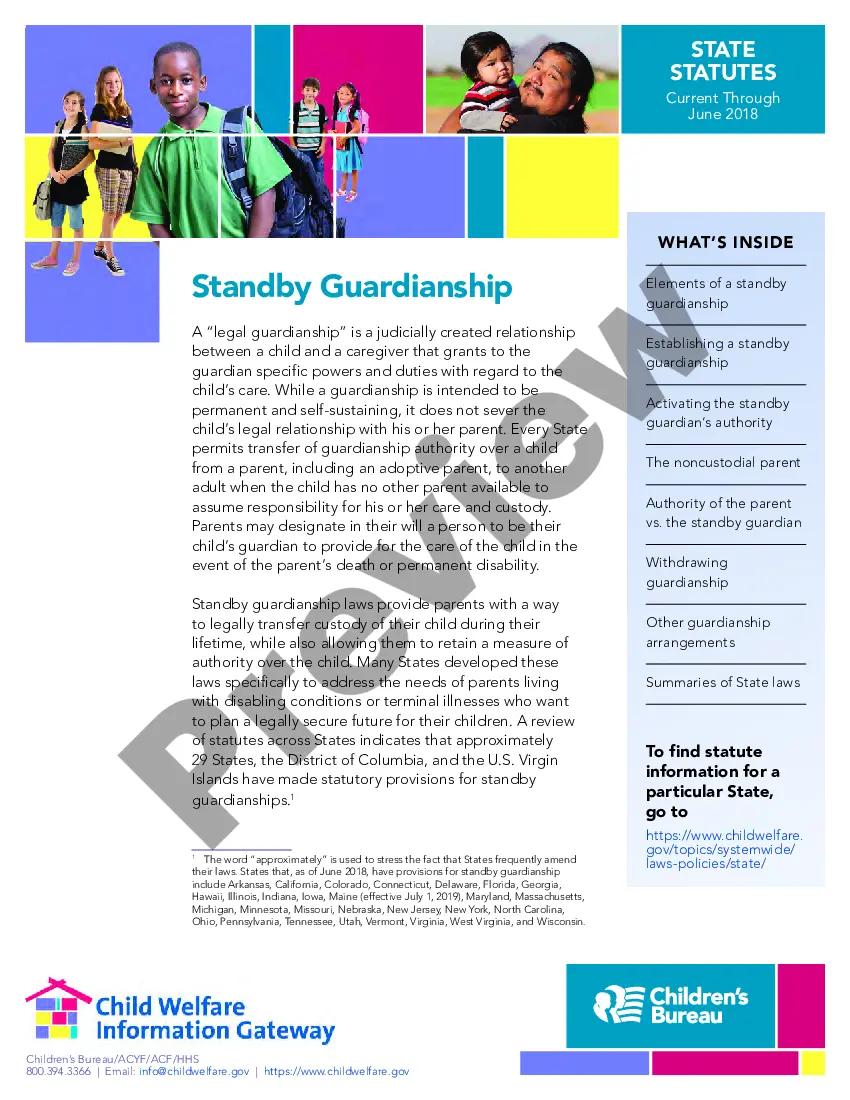
A Power of Attorney is a legal document that you can create to give another adult the authority to act on your behalf.The Parental Power of Attorney is used by parents and guardians to give another person temporary authority over their child. It is sometimes referred to as a form for Delegation of Parental Powers.
The names, addresses, and phone numbers of the parent(s) or guardian signing the document. The names and addresses of the agent (and any alternative agent). The name and date of birth of each child covered by the document.
A power of attorney and a guardianship are tools that help someone act in your stead if you become incapacitated. With a power of attorney, you choose who you want to act for you. In a guardianship proceeding, the court chooses who will act as guardian.
A power of attorney is a private way to decide who will have the legal authority to carry out your wishes if you can no longer speak or act for yourself. It is less costly than a guardianship, which is a public proceeding and the person appointed as your guardian may not be the person you would have chosen.
You will have to send notices to the child's parents that you are petitioning for a guardianship. The court will likely appoint a Guardian ad litem (an attorney) to speak for the child during the process. If you are appointed guardian, you will have to file an Annual Report with the court.