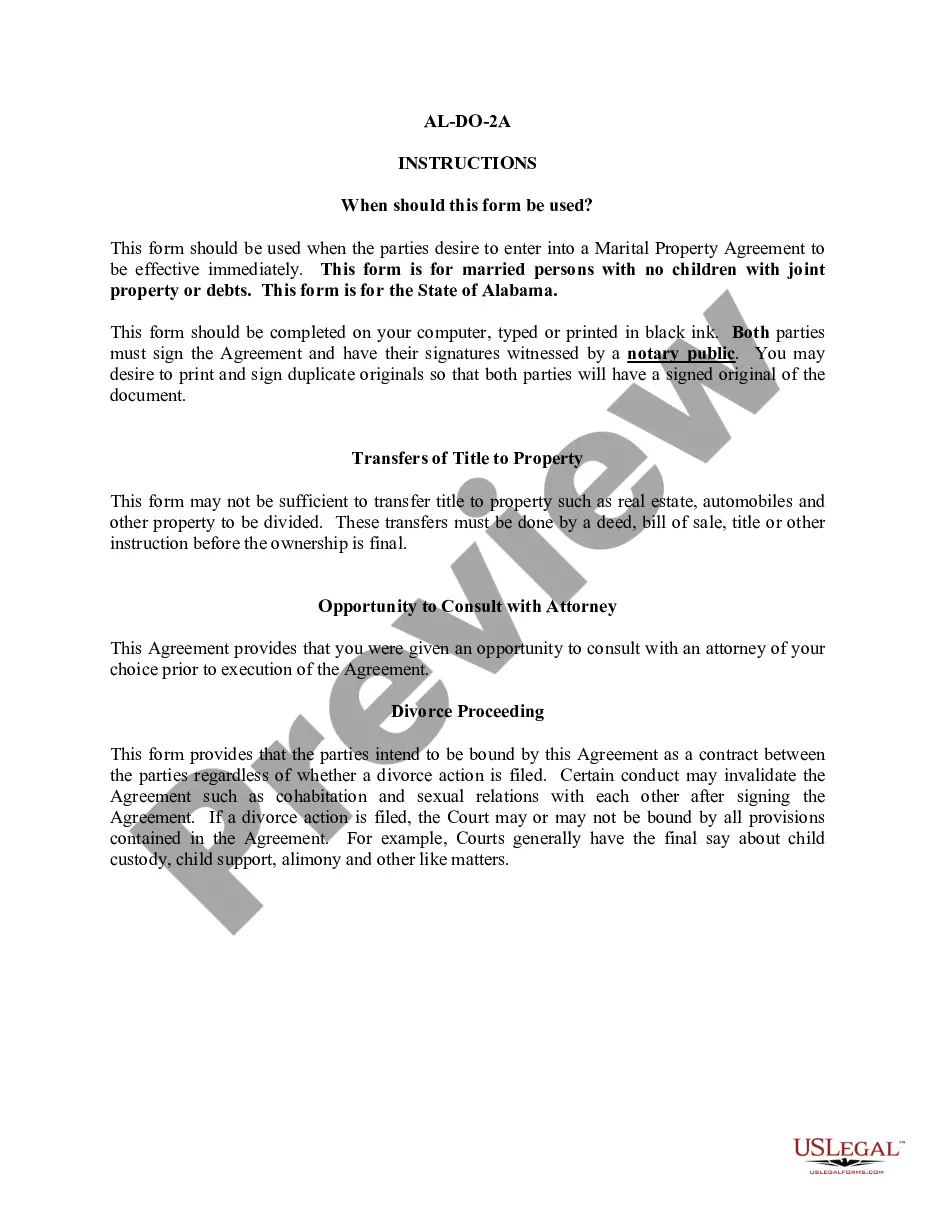
Idaho Letter from Tenant to Landlord containing Notice to landlord to withdraw retaliatory rent increase
What this document covers
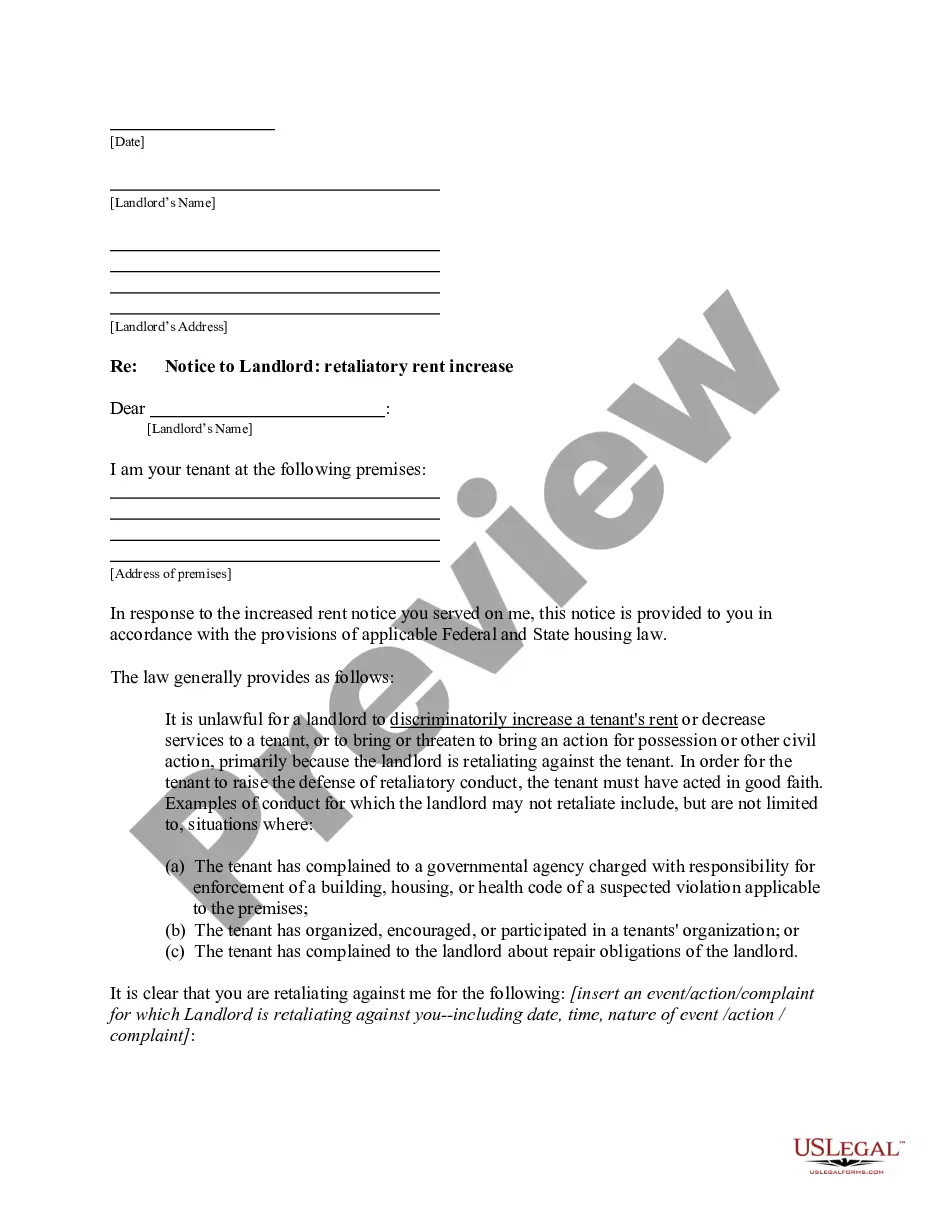
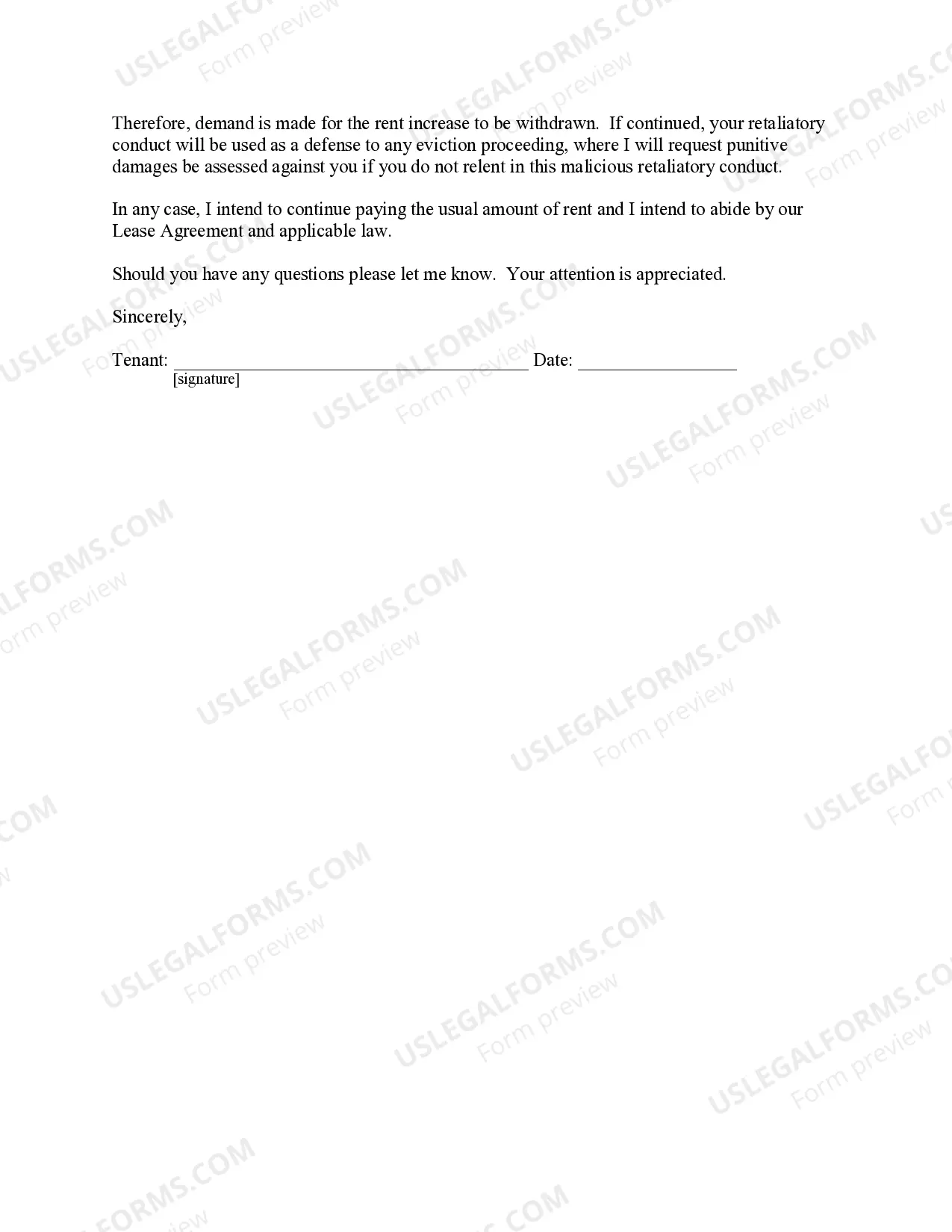
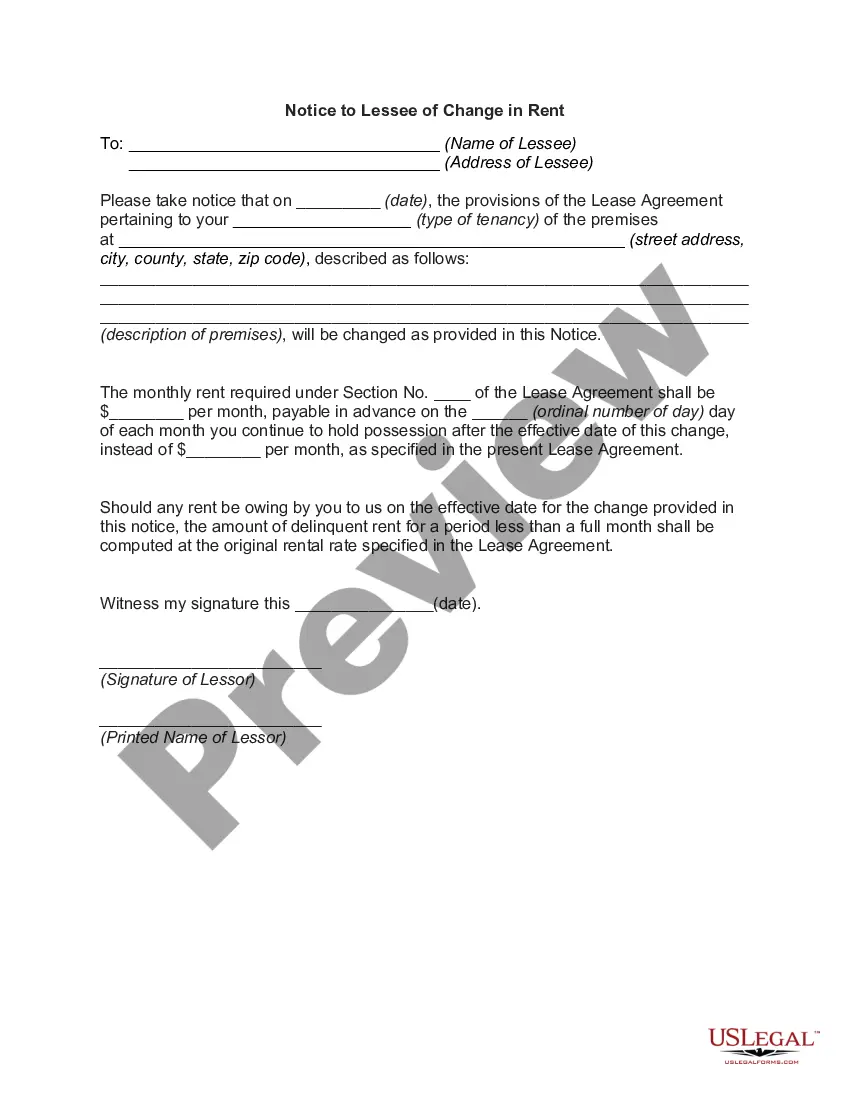
This letter from tenant to landlord containing notice to withdraw retaliatory rent increase allows tenants to formally notify their landlord that a recent rent increase is retaliatory and unlawful. This form helps tenants communicate their intent to continue paying rent as usual while asserting their rights under state housing laws. It provides a clear mechanism for tenants to voice concerns about discrimination or retaliation by landlords, distinguishing it from other landlord-tenant communications.
Main sections of this form
- Tenant's identification information
- Landlord's identification information
- Statement regarding the retaliatory rent increase
- Description of good faith actions by the tenant
- Signature section for both tenant and landlord
- Date fields for documentation


When to use this document
This form is essential when a tenant faces a rent increase shortly after engaging in protected activities, such as filing complaints regarding maintenance issues, participating in tenant organizations, or reporting housing code violations. It should be used to formally inform the landlord that such actions are considered retaliatory and violate housing laws.
Intended users of this form
- Tenants experiencing unlawful rent increases
- Individuals who have reported health or safety violations to authorities
- Members of tenant advocacy groups
- Any tenant concerned about potential retaliation from their landlord
Instructions for completing this form
- Identify the tenant and landlord by filling in their names and contact information.
- Clearly state the reason for the notice, emphasizing the retaliatory nature of the rent increase.
- Specify the protected actions taken by the tenant that may have prompted the increase.
- Include the tenant's intent to continue paying rent as specified in the lease agreement.
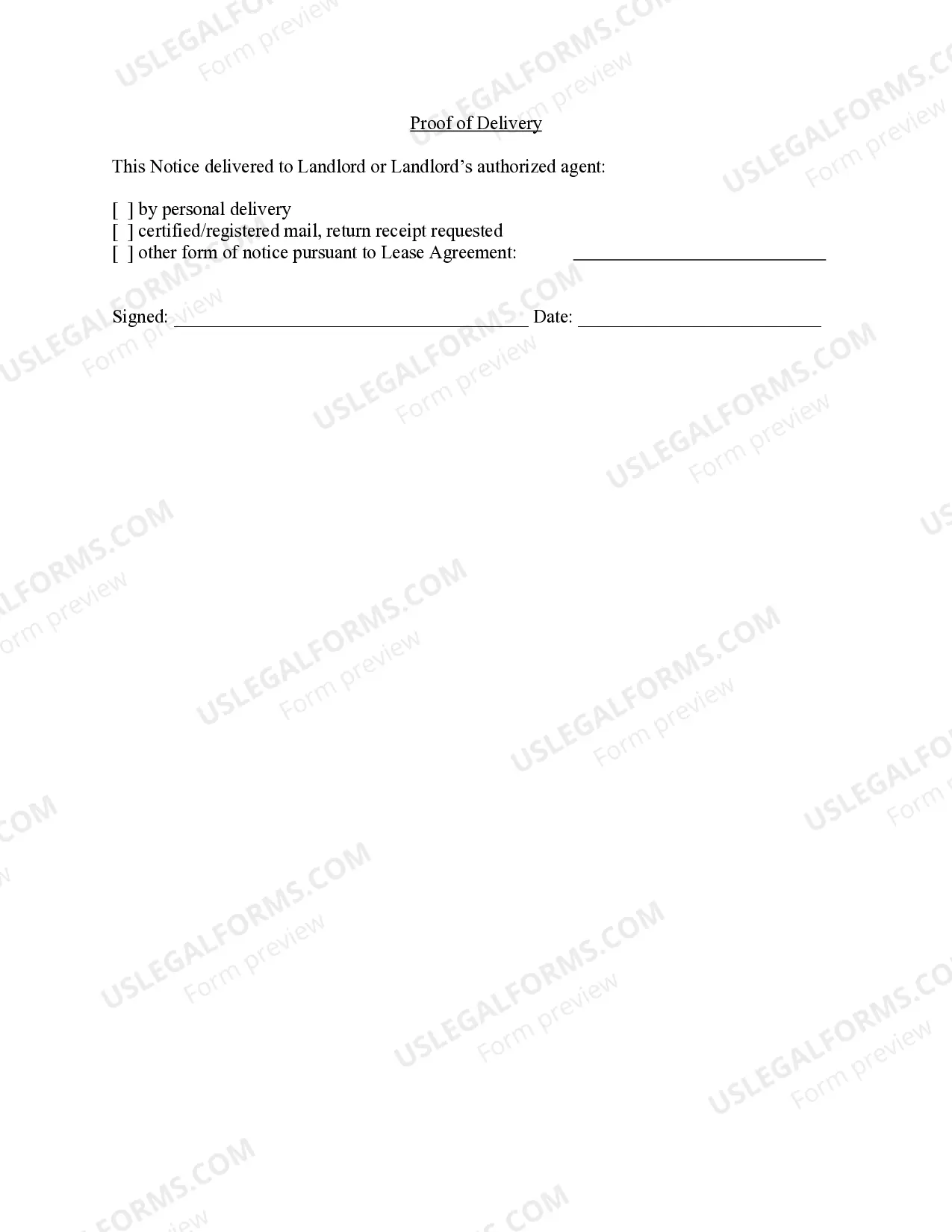
- Sign and date the letter, ensuring there is a copy retained for both parties.
Notarization guidance
In most cases, this form does not require notarization. However, some jurisdictions or signing circumstances might. US Legal Forms offers online notarization powered by Notarize, accessible 24/7 for a quick, remote process.
Get your form ready online
Our built-in tools help you complete, sign, share, and store your documents in one place.
Make edits, fill in missing information, and update formatting in US Legal Forms—just like you would in MS Word.
Download a copy, print it, send it by email, or mail it via USPS—whatever works best for your next step.
Sign and collect signatures with our SignNow integration. Send to multiple recipients, set reminders, and more. Go Premium to unlock E-Sign.
If this form requires notarization, complete it online through a secure video call—no need to meet a notary in person or wait for an appointment.
We protect your documents and personal data by following strict security and privacy standards.

Make edits, fill in missing information, and update formatting in US Legal Forms—just like you would in MS Word.

Download a copy, print it, send it by email, or mail it via USPS—whatever works best for your next step.

Sign and collect signatures with our SignNow integration. Send to multiple recipients, set reminders, and more. Go Premium to unlock E-Sign.

If this form requires notarization, complete it online through a secure video call—no need to meet a notary in person or wait for an appointment.

We protect your documents and personal data by following strict security and privacy standards.
Common mistakes
- Failing to provide accurate identification information of the tenant or landlord.
- Not citing specific actions taken that may have led to the retaliatory rent increase.
- Omitting the date on the notice.
- Neglecting to keep a copy of the communication for personal records.
Why use this form online
- Convenient access to a legally vetted document tailored for your needs.
- Easy to edit and customize your response based on your situation.
- Downloadable for immediate use, ensuring a timely response to your landlord.
Key takeaways
- This form allows tenants to notify landlords of unlawful rent increases due to retaliation.
- It is essential for tenants to assert their rights when faced with such increases.
- Completing the form accurately is crucial for legal protection.
- Keep a copy of the completed notice for your records.
Looking for another form?
Form popularity
FAQ
A 30-day notice to vacate in Idaho is a legal document that a landlord provides to notify a tenant they must leave the property within 30 days. This notice serves as a formal request for the tenant to vacate and usually includes the last day of tenancy. If you believe the notice is retaliatory, you can reference an Idaho Letter from Tenant to Landlord containing Notice to landlord to withdraw retaliatory rent increase to strengthen your case. Knowing your rights ensures you can protect yourself.
You can send your letter by email if your tenancy agreement says you can. You should say something like: I am giving 1 month's notice to end my tenancy, as required by law. I will be leaving the property on (date xxxxx).
Today's Date. Landlord's Name. Property Address and Unit Number. State Your Desire to Move Out of the Apartment. Include Desired Move-Out Date. That You Expect the Return of Your Security Deposit Under State Law. A Forwarding Address Where Your Security Deposit Can Be Sent.
Dear (Name of landlord or manager), This letter constitutes my written (number of days' notice that you need to give based on your lease agreement)-day notice that I will be moving out of my apartment on (date), the end of my current lease. I am leaving because (new job, rent increase, etc.)
When writing to your landlord, be specific in describing the problems you are having. Do not exaggerate or under-emphasize the extent of the problem. The landlord may show this letter to a judge if your problem is ever litigated.
Remember you're a business. Do your research. Raise the rent all at once or incrementally. Don't negotiate or ask tenants what they think a fair rent increase would be. Be courteous and firm. Find a template you like. Send a formal letter by certified mail. Give the tenant notice.
State who you are and why you need a rental. Mention where you found their ad and how you can afford the rental. Offer to provide references (work/volunteer/housing office) Include some highlighting feature from the original ad so that when you receive a response you can remember which rental you are talking about (ex.
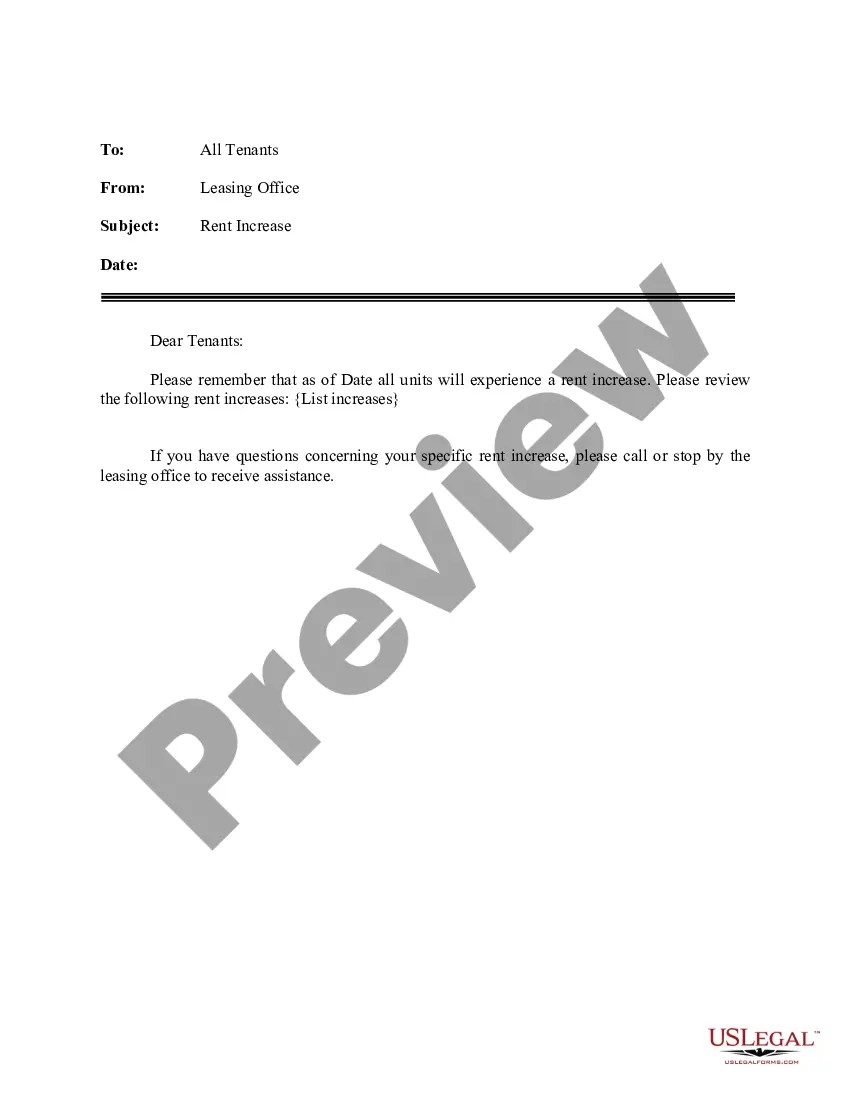
Tenant's name. Property address. Landlord name and contact information. Date the letter is written. Date the rent increase will take effect. Amount of rent increase. Current cost of rent.
If you're seeking damages for emotional distress caused by a landlord's discrimination, or punitive damages for especially blatant and intentional discrimination, a lawsuit may well be your best bet. Understand what's involved in suing your landlord. You may file a lawsuit in either federal or state court.
Write a letter to your landlord stating that you are aware of your rights as a tenant, that s/he is in clear violation of the law, and that you want the situation remedied with no further harassment. Keep a copy of the letter; it will be good evidence if you have to take the landlord to court later.